

Running a boutique catering company is a labor of love that involves early mornings, blistered feet, and the constant balancing act of maintaining margins while delivering culinary perfection. I’ve spent the last six years building ‘The Gilded Whisk’ from the ground up, turning small neighborhood events into a reputable brand known for artisanal plating and locally sourced ingredients. I pride myself on professionalism, transparency, and a client-first mentality, but I’ve learned the hard way that ‘friends and family’ discounts often act as a gateway to total exploitation.
My phone pinged on a Tuesday morning—a notification from someone I hadn’t spoken to since graduation decade ago. Sarah, a girl I vaguely remembered from tenth-grade biology, had messaged me with an ‘exciting opportunity.’ She was getting married in three months and wanted me to handle the catering. I was initially flattered, thinking of it as a potential business growth move, until the true nature of her ‘opportunity’ was laid bare. It wasn’t a business inquiry; it was a demand for charity, disguised as a favor for an old friend.
The dilemma was immediate and sharp. Sarah wasn’t asking for a discount; she was asking for my labor, my staff’s time, my premium ingredients, and my logistical expertise—all for the price of ‘exposure’ and a shoutout on her wedding day. It’s a tale as old as the gig economy itself: the assumption that a creative professional’s time has no inherent value because it’s something you happen to enjoy doing.
In this article, I want to pull back the curtain on what happened when I decided that ‘no’ wasn’t enough. Instead of simply blocking her, I chose to treat her request with the seriousness of a commercial contract. I sent her a full, itemized quote for 50 people, including the ‘friendship fee.’ What followed was an absolute explosion of entitlement, a viral group chat meltdown, and a lesson in why setting boundaries is the most important part of any business model.
The Initial Message That Sparked the Fire

The message hit my inbox at 9:14 AM while I was in the middle of prepping for a corporate luncheon. It was short, breezy, and entirely devoid of any acknowledgment that I might have a business to run. It started with a fake pleasantry about how ‘well’ I was doing, followed immediately by the hook. She wanted to ‘collaborate’ on her upcoming wedding, which she described as a ‘dream Pinterest aesthetic’ event.
The tone was condescendingly casual, as if she were doing me a massive favor by letting me cater her wedding for free. She didn’t ask for a price sheet; she simply assumed that because we shared a locker bay fifteen years ago, my professional services were suddenly part of her wedding budget surplus. She even mentioned that she had ‘plenty of other vendors’ who were excited to be part of her ‘big day,’ as if that was supposed to make me jealous or eager to compete for the privilege of working for nothing.
Hey! I saw your business page on IG and it looks like you’re doing so well! I’m getting married in October and I’d love for you to cater my wedding for 50 people. It’s going to be super chic, very high-end. I’m thinking rustic tapas and a signature cocktail bar. Since we go way back, I’m happy to feature you on my wedding blog and let you hand out business cards to all my guests. Let me know when you can start prepping!
— Sarah, via Facebook Messenger
I stared at the screen for a solid minute, my hands covered in flour. The audacity wasn’t just the request for free labor; it was the assumption that I would be thrilled to work for free in exchange for ‘exposure’ to fifty people who probably wouldn’t be interested in buying high-end catering anyway. The sheer lack of respect for my business was staggering.
I could have ignored it, but I’ve learned that ignoring these people only emboldens them. I decided to respond with the same professional, sterile tone I use for my highest-paying corporate clients. I told her I would be happy to draft a quote for her wedding, but that I required a date and venue to get started. She was ecstatic, clearly thinking she had successfully guilt-tripped me into her scheme.
The reality was that I had already decided what I was going to do: I was going to provide her with an invoice so detailed, so professional, and so expensive that she would have no choice but to realize exactly how much value she was trying to steal from me. This wasn’t about malice; it was about demonstrating the reality of what she was asking for.
The Breakdown of the ‘Friendship’ Invoice

I spent the next three hours creating a spreadsheet that would have made an accountant weep. I didn’t just guess a number; I calculated every single variable: the cost of organic ingredients, the labor hours for two servers and a chef, the liability insurance, the transport costs, the gas, the equipment rental, and even the ‘rush fee’ for a booking made on such short notice. I wanted her to see every single cent that she thought she could just breeze past with a mention of our high school connection.
The total came to $5,450. When I sent the PDF, I included a note stating that while I usually offer a 5% discount for long-term clients, I was unable to offer any discounts for this particular event due to the high demand of the October season. I was careful to keep the tone polite, detached, and utterly cold. I was selling her a service, and the service had a price tag.
Attached is your quote for the catering services. Please note that this is based on a standard ‘Gold Package.’ If you would like to scale back to a ‘Bronze Package’ with lower-cost ingredients, I can look into that, but the labor costs remain fixed regardless of the menu. I look forward to receiving your deposit.
— Me, responding to Sarah
I didn’t expect her to pay it. I expected her to complain, and that’s exactly what happened. The response came almost instantly. She was shocked, outraged, and genuinely confused. She seemed to think that the quote was a joke, or perhaps a test of her commitment to our ‘friendship.’ She didn’t understand why I was charging her for things like ‘prep time’ or ‘service staff,’ claiming those were things I would be doing anyway.
The argument that ensued was a classic masterclass in entitlement. Sarah tried to explain to me, a business owner, how my business should be run. She suggested that I should just ‘absorb the costs’ because it would look good on my portfolio. She even went so far as to claim that my prices were discriminatory because I was giving her a ‘professional rate’ instead of a ‘friend rate,’ which, in her mind, was essentially zero.
I stood my ground, responding to every single one of her objections with a fact-based explanation of overhead costs and small business margins. I wasn’t being rude; I was being objective. And that objectivity seemed to drive her absolutely insane. She couldn’t understand why I wouldn’t just fold under the pressure of her emotional appeals.
The Group Chat Explosion
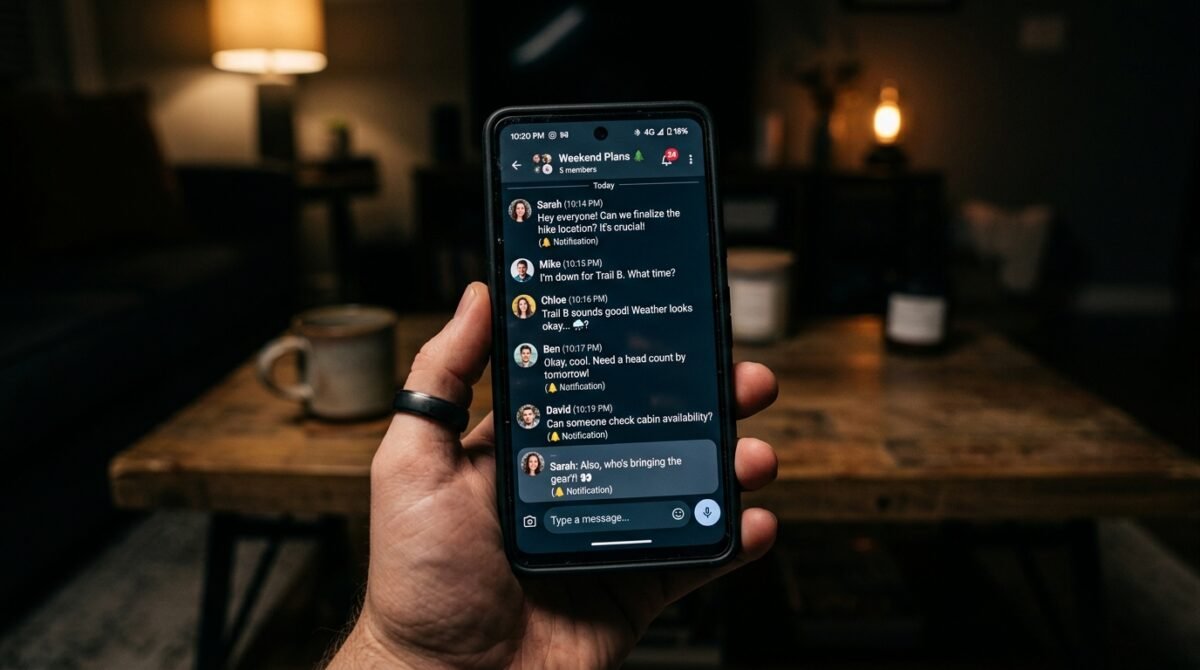
The conflict escalated when Sarah decided that she couldn’t win the argument on her own. She took our private conversation, screenshotted it, and posted it to a group chat that included several mutual friends from our high school days. I only found out about this because one of the people in the chat, a friend of mine named Jenny, felt uncomfortable and forwarded the screenshots to me. The chat was a cesspool of toxic entitlement and misinformation.
In the chat, Sarah painted herself as the victim of a greedy, former classmate who was trying to ‘price-gouge’ her on her wedding day. The other people in the group were chiming in with their own takes, many of them echoing the same sentiment: that I was being ‘petty’ and ‘unsupportive.’ They were discussing ways to ‘call me out’ on social media, even going so far as to suggest leaving one-star reviews on my business page.
I literally can’t believe her. She’s acting like I asked for her kidney. It’s just a wedding! She should be happy for the experience. I’m going to make sure everyone knows how she treats her old friends. Does anyone know how to report a business for price gouging?
— Sarah, in a leaked group chat screenshot
Seeing the messages, I felt a mix of anger and cold resolve. They weren’t just attacking me; they were threatening my livelihood. I decided that it was time to step out of the shadows. I reached out to Sarah directly, not to argue, but to inform her that I was aware of the group chat and that if she continued to harass me or threaten my business, I would be taking legal action. The shift in her tone was instantaneous.
The silence that followed was deafening. Sarah had clearly underestimated the amount of evidence I had collected. I didn’t want to sue her, but I wanted her to know that there were consequences for trying to destroy someone’s reputation because they wouldn’t work for free. The threat of legal action, specifically regarding the planned campaign of fake reviews, was enough to stop her in her tracks.
The group chat went quiet. I assume she deleted the messages, but the damage was done. The people in that chat had seen exactly how unreasonable Sarah was being, and several of them reached out to me privately to apologize for their behavior. It was a moment of vindication that I hadn’t expected, but it was incredibly validating.
The Reddit Community Weighs In

When I finally shared the story on a popular subreddit—anonymizing names, of course—I expected a mix of feedback. What I got was a massive outpouring of support. The post blew up, reaching the front page within hours. Thousands of people, many of them fellow small business owners, shared their own stories of being asked to provide free labor by ‘friends’ and ‘family.’
The debate in the comments was fascinating. Most people were firmly on my side, calling out Sarah’s behavior as textbook entitlement. They pointed out that if you can’t afford to pay your vendors, you can’t afford the wedding you are planning. Some even went into great detail about the logistics of catering, noting that fifty people is not a ‘small’ event, but a full-scale production that requires significant investment.
The audacity of people expecting free labor for a wedding is staggering. If your business is your ‘dream,’ that doesn’t mean your life is a charity. You handled this perfectly. An itemized invoice is the best way to shut down an entitled person because it forces them to look at the math. They can’t argue with math.
— u/CateringQueen99, 15.2k upvotes
There were, of course, a few dissenters. Some people argued that I could have handled it with more grace, suggesting that I should have just said ‘I’m not available’ instead of sending the quote. But the vast majority of the community understood that ‘not available’ isn’t a boundary—it’s an excuse that people like Sarah will eventually try to overcome. By sending the quote, I made it clear that my services are a business, not a hobby.
The thread became a repository of ‘entitled bride’ stories, and it was cathartic to see so many people sharing their experiences. It reminded me that I wasn’t alone in this. The phenomenon of people devaluing professional labor because of a personal connection is rampant, and it’s something that we, as business owners, need to continue to push back against.
I also received a lot of advice on how to handle future requests. People suggested having a standard ‘friends and family’ policy—which is basically ‘no discounts’—and sticking to it religiously. It was a great reminder that setting boundaries is a continuous process, not a one-time event.
The Fallout and the Follow-Up

The weeks following the incident were quiet. Sarah didn’t reach out again, and I didn’t reach out to her. It was the best possible outcome. I heard through the grapevine that she ended up going with a much cheaper, less professional option for her wedding, and the results were apparently… mixed. The food was cold, the service was disorganized, and there were several complaints from the guests. I took no joy in this, but it was a predictable outcome.
The experience changed how I approach my business. I’m much more direct when I get inquiries from people I know. I have a standard reply that explains my pricing policy and my commitment to quality. I don’t apologize for my rates, and I don’t feel the need to explain them beyond the basics. If someone wants to work with me, they know what they are paying for, and they know the value they are receiving.
I also became much more protective of my personal time. The incident made me realize that I was blurring the lines between my professional life and my personal life, and that was a mistake. I’ve started setting firmer boundaries with friends and family, and I’ve found that the people who truly respect me don’t mind. In fact, they appreciate that I have my own life and career.
The viral nature of the story also helped my business in unexpected ways. People who read the post and appreciated the way I handled the situation started looking me up. I had several inquiries from people who were impressed with my professionalism and my commitment to my craft. It turned out that a negative situation could actually be a growth opportunity, in more ways than one.
Reflecting on the ‘Friendship’ Myth

One of the hardest things about this whole ordeal was coming to terms with the fact that Sarah and I were never actually friends. We were classmates, yes, but we had no real connection. This is the ‘friendship’ myth: the idea that a past shared experience is enough to create a bond that entitles someone to your resources. It’s a dangerous assumption that leads to a lot of heartache and resentment.
True friendship, in my experience, is about mutual respect and support. It’s about celebrating each other’s successes, not trying to profit from them. When someone expects me to work for free, they aren’t valuing our friendship; they are devaluing my labor. And that’s a distinction that’s important to make.
I spent a lot of time thinking about why Sarah felt so entitled to my work. I think it comes down to a lack of awareness about what it takes to run a small business. She saw the end result—a beautiful plate of food—and she thought it was magic. She didn’t see the years of training, the late nights, the financial risks, or the constant pressure to maintain quality. She just saw something she wanted and decided she should have it for free.
This isn’t an excuse for her behavior, but it’s an explanation. And it’s why I believe so strongly in being transparent about the work that goes into what I do. If people understand the effort behind the curtain, they are less likely to demand it for nothing. Or, at the very least, they will understand why the answer is a firm ‘no.’
The Anatomy of a Professional Refusal
I’ve developed a protocol for handling these types of requests now. It’s not about being mean; it’s about being professional. When someone reaches out, I ask for the details, I provide the quote, and I explain the policies. If they push back, I reiterate the policies. If they continue, I end the conversation. It’s a simple process, but it’s incredibly effective.
The key is to never take the bait. Don’t get emotional, don’t get angry, and don’t get defensive. Just stick to the facts. The invoice is the most powerful tool in your arsenal because it removes the emotion from the equation. It forces the other person to confront the financial reality of their request, and that’s usually enough to stop the conversation.
I’ve also learned to be much more discerning about who I work with. I look for clients who value my work, who respect my time, and who understand the investment required to deliver a high-quality product. The people who are always looking for a ‘deal’ are almost always the most difficult clients to work with, and they are rarely worth the effort.
My business has grown, and I’ve become more confident in my value. I know what my services are worth, and I’m no longer afraid to state that. It’s a liberating feeling, and it’s one that I wish more business owners would embrace.
Setting Boundaries as a Growth Strategy

Ultimately, setting boundaries isn’t just about protecting your time; it’s about protecting your business. When you say ‘no’ to the wrong people, you open up the space to say ‘yes’ to the right ones. You attract the clients who are willing to pay for your expertise, and you build a brand that is respected and valued.
The Sarah incident was a turning point for me. It forced me to articulate my values and to stand by them, even when it was difficult. It reminded me that I’m not just a caterer; I’m a business owner, and my business is my life’s work. I’m proud of what I’ve built, and I’m going to protect it at all costs.
I encourage everyone, no matter their field, to be firm in their boundaries. Don’t let people undervalue your work, and don’t let them make you feel guilty for expecting to be paid for it. Your time is your most valuable asset, and it’s up to you to decide how you spend it.
The lessons I learned from this will serve me for the rest of my career. I’m more confident, more professional, and more committed than ever. And I have the satisfaction of knowing that I did the right thing, for myself and for my business.
Lessons from the Viral Feedback Loop

One of the most unexpected parts of this journey was reading the comments on the post I made. There were thousands of them, and reading through them gave me a real insight into the way society views labor. There is a huge divide between those who understand the value of work and those who see it as a commodity to be exploited.
I saw people sharing stories of being expected to design logos for ‘exposure,’ to write code for ‘experience,’ or to cook for ‘friends.’ It was a global phenomenon, and it was heartening to see so many people standing up for their worth. It made me realize that I was part of a much larger movement of professionals who are reclaiming their time and their value.
The feedback loop also provided me with new ways to frame my responses. People suggested different ways to say ‘no,’ different ways to explain pricing, and different ways to set expectations from the start. I’ve incorporated some of these strategies into my own business model, and they’ve made a world of difference.
I’m grateful for the community that supported me. They made a stressful situation feel like a shared experience, and they gave me the confidence to move forward with my head held high. It’s a reminder that even in the digital age, we can find support and validation in the most unexpected places.
Looking Forward: The Future of ‘The Gilded Whisk’
Looking back, I realize that the Sarah incident was exactly what I needed to take my business to the next level. It solidified my commitment to my standards, it forced me to refine my communication, and it gave me the confidence to stand by my prices. I’m now more focused than ever on delivering exceptional work for the clients who value it.
I have plans to expand my services, to reach new markets, and to continue growing ‘The Gilded Whisk’ into a brand that is recognized for its quality and professionalism. I know the challenges that lie ahead, but I also know that I have the skills and the resilience to overcome them.
I’m excited for the future, and I’m ready for whatever comes my way. I’ve learned that the most important thing is to stay true to yourself and to your vision. Everything else will fall into place.
If there’s one thing I want you to take away from this story, it’s this: don’t let anyone make you feel small for knowing your worth. You are the architect of your own career, and you have the right to define your boundaries. Stay strong, stay professional, and don’t be afraid to send the invoice.
Conclusion
This story serves as a reminder that your professional value is not a negotiation point for those who prioritize their own convenience over your livelihood. While the initial confrontation was stressful, the clarity it brought to my business model was invaluable. Setting boundaries, even when it feels uncomfortable, is the ultimate form of self-respect.
We have all been in situations where we felt pressured to sacrifice our time or expertise for the sake of ‘getting along.’ But as this experience demonstrated, the people who truly care about you will never ask you to compromise your success for their benefit. True support is collaborative and respectful, never exploitative.
I’d love to hear your take on this. Have you ever had to send a ‘wake-up call’ invoice to a friend or relative who didn’t understand the cost of doing business? How did you set your boundaries, and what was the outcome? Let’s continue the discussion in the comments below.
[POLL: Would you have sent the invoice, or would you have simply ignored the request?]
What's your verdict on this dilemma?
Vote below to contribute to the official community consensus.

Have a Dilemma Keeping You Up at Night?
Share your real-life feud, wedding chaos, or relationship crossroads anonymously with our editorial team.
What do you think ?
0 Comments🛡️ Comments are moderated to protect community integrity. Your comment will appear once approved by the editorial team.