

Friendship is often described as the family we choose for ourselves. For twelve years, Sarah and I were inseparable. We navigated the awkwardness of our early twenties, the heartbreak of failed career attempts, and the slow, steady grind of building independent lives. We were the kind of friends who had each other’s spare keys, who knew how each other took their coffee, and who assumed that, no matter what, we would be in each other’s lives until we were old and gray.
But cracks in a foundation don’t always appear as gaping chasms. Sometimes, they are hairline fractures, ignored because they are too small to acknowledge. For years, I excused Sarah’s entitlement as ‘just her personality.’ I brushed off the times she made my life small to make hers feel bigger. I told myself that the financial imbalance in our dynamic was just a reflection of our different career paths, never stopping to realize that the imbalance was actually a deep-seated lack of respect for my boundaries.
The breaking point wasn’t a grand, cinematic explosion. It wasn’t a public fight or a betrayal involving a partner. It was a Tuesday, a simple email notification, and a $500 invoice attached to a digital file. It was the moment I realized that, to Sarah, our twelve years of history had a specific, transactional dollar value—and apparently, my health was a luxury she couldn’t afford to subsidize.
What follows isn’t just a story about a birthday party gone wrong. It is a chronicle of a long-overdue realization. It is about the cost of saying ‘no’ when you have spent a decade saying ‘yes’ to someone who saw you as a prop in their own life rather than a person with needs, limits, and dignity. It is a story about the day I stopped paying for the privilege of being her friend.
The Invitation and the Rising Fever

The plan for Sarah’s 30th birthday had been in the works for months. It was an extravagant, destination-style weekend at a boutique vineyard resort two hours out of the city. Sarah had been planning every detail with the precision of a military operation, sending out spreadsheets and itinerary updates that felt more like corporate directives than casual friend-group planning.
I was genuinely excited. I had been working overtime for weeks to save up for the trip, eager to celebrate her milestone. However, three days before the departure, a persistent, tickling cough settled in my chest. I ignored it, drinking gallons of water and popping vitamin C, convinced that sheer willpower would keep the inevitable flu at bay. I didn’t want to be the friend who ruined the vibe.
By the morning of the trip, the fever had arrived. I woke up with my skin feeling like it was burning, my head pounding in rhythm with my pulse. I knew, with a sinking feeling in the pit of my stomach, that I couldn’t go. I was contagious, exhausted, and barely capable of walking to the kitchen, let alone embarking on a two-hour drive for a weekend of wine tasting and late-night festivities.
I texted Sarah immediately, my fingers trembling as I typed the message. I felt a wave of guilt, the kind that only years of conditioning can produce. I apologized profusely, explaining that I had caught something and was truly sorry for missing the celebration. I braced myself for a ‘don’t worry, get better’ reply, but the silence that followed for the next six hours was deafening.
“Sarah, I am so, so sorry. I woke up with a high fever and I can barely stand. I think I have a bad flu. I’m devastated to miss your birthday weekend, but I really can’t make it. I love you, and I hope you have the best time.”
— My text to Sarah
When the reply finally came, it wasn’t an inquiry about my health. It was a cold, short acknowledgment of my absence, followed by a remark about how ‘inconvenient’ it was to have to re-adjust the group dinner reservation. I felt a prickle of irritation, but I pushed it down, blaming my fever for my hypersensitivity.
The Cold Calculation of the Invoice

While I spent the weekend recovering under a mountain of blankets, my phone buzzed incessantly with updates from the trip. Photos of Sarah looking perfectly curated in front of rolling vineyards filled my feed. I saw the group dinners, the expensive brunch setups, and the laughter. I felt a twinge of sadness for missing out, but mostly, I was just grateful to be resting.
It was Sunday evening when the email hit my inbox. The subject line was simply ‘Birthday Expenses.’ I opened it, expecting a request for me to pay my share of the Airbnb or the final restaurant bill—which I fully intended to pay, as I knew my spot had been reserved. What I found instead was a itemized PDF that looked like an invoice from a small business.
The document included line items for everything. It wasn’t just my share of the lodging. It included a ‘lost deposit’ fee, a ‘group dinner per-head penalty’ that the restaurant supposedly charged, and, most bizarrely, a ‘lost time and emotional damages’ fee that Sarah had tacked on to the end. The total came to exactly $500.
I stared at the screen, my heart rate spiking. I couldn’t comprehend what I was looking at. A decade of friendship, of shared secrets, of supporting her through every breakup and career crisis, was suddenly being reduced to a line-item bill. My sickness wasn’t an unfortunate event; it was a financial liability that she expected me to settle immediately.
“I’ve attached the breakdown of the costs incurred due to your last-minute cancellation. Please Venmo me by the end of the day so I can clear the charges. It’s really disappointing that you couldn’t push through, but I shouldn’t have to pay for your lack of planning.”
— Sarah’s follow-up email
I read the email three times. ‘Lack of planning’? I had the flu. I couldn’t control my immune system. The audacity of her language made me feel physically ill all over again, though this time, it was from pure, unadulterated shock. I had been a supportive friend for twelve years, and this was how she treated me when I was at my lowest.
The Confrontation That Didn’t Go As Planned
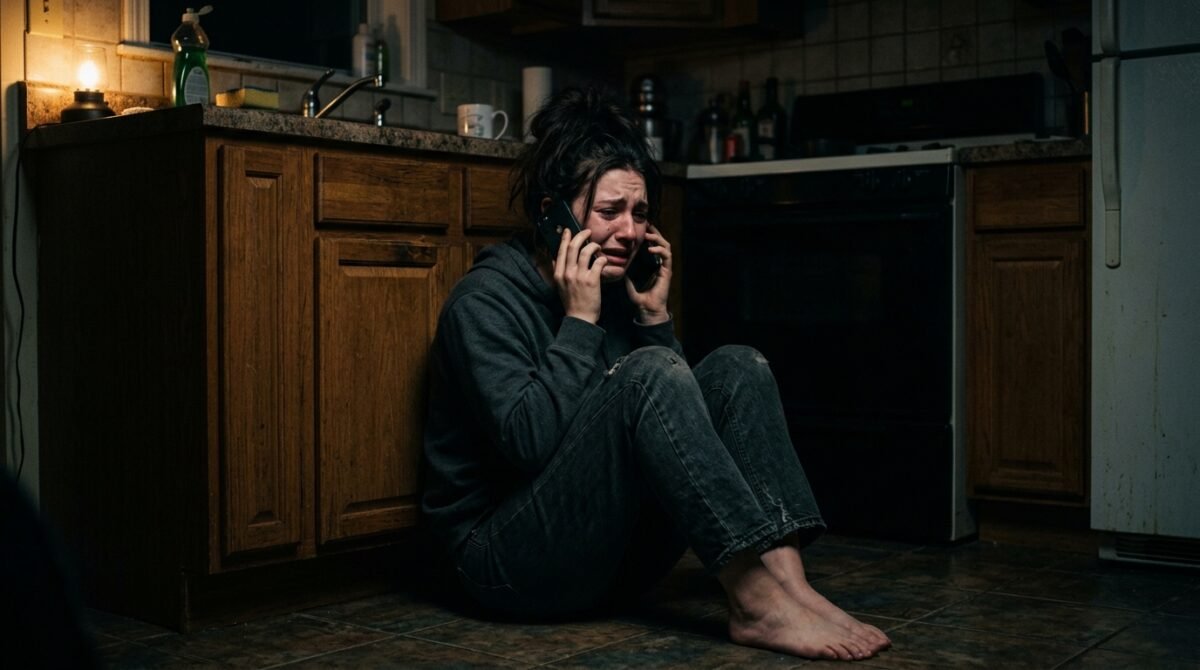
I didn’t pay the $500. Instead, I picked up the phone. I needed to talk to her, to see if she realized how insane this request was. I figured that once we spoke, she would see how hurt I was, and we would laugh it off or at least have a mature conversation about boundaries. I was still operating under the delusion that we were ‘us’—the unbreakable team.
When she picked up, her voice was clipped, professional, and entirely devoid of warmth. I tried to explain, calmly, that I was surprised by the invoice. I reminded her that I had been sick, that I didn’t cancel because I wanted to, and that the ’emotional damages’ fee was frankly insulting. Her response, however, made it clear that she had no interest in my perspective.
She started to list off all the ways I had ‘let her down’ over the years. She brought up a time I was late to her graduation, a time I hadn’t been able to afford a vacation she wanted to take, and a dozen other perceived slights that I thought we had put behind us. It felt like she had been keeping a ledger of my failures for years, just waiting for a moment to weaponize them against me.
“You’re always so self-centered. You think your life is the only one that matters. I planned this entire weekend for my 30th, and you ruined the dynamic. $500 is a small price to pay for the stress you’ve caused me, considering all the times I’ve had to carry this friendship.”
— Sarah during our phone call
I sat on my kitchen floor as she spoke, the reality of her words sinking in like lead. She didn’t see me as a friend. She saw me as a service provider who had failed to deliver a service. Every apology I had ever given her, every time I had swallowed my pride to make her feel better, had been logged and filed away as ammunition. The ‘twelve years’ we shared were clearly only valuable to her if I was serving her interests.
Leaking the Truth to the Group Chat
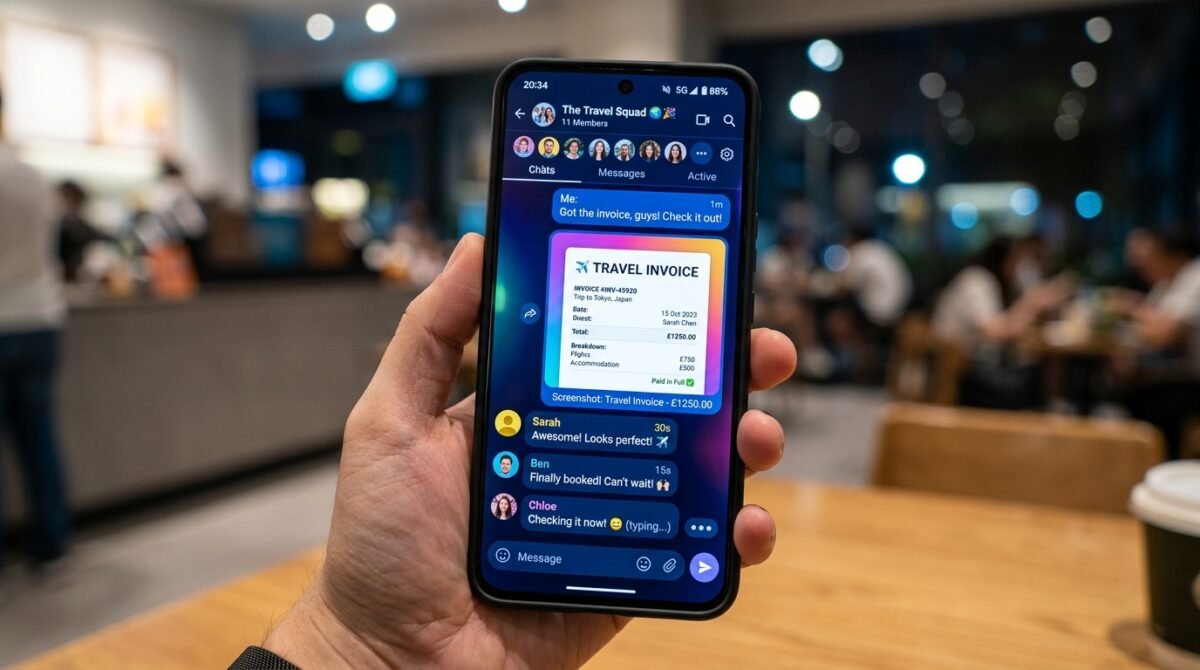
The next day, I found out from a mutual friend that Sarah had posted about the ‘disappointing’ situation in our shared group chat. She hadn’t mentioned the $500 invoice, but she had framed the story as if I had flaked on her birthday for no reason, making her look like a victim. She was playing the ‘abandoned birthday girl’ card to gain sympathy, and it was working.
I felt a flash of heat in my chest. I wasn’t going to let this be the narrative. I took a screenshot of the email—the one with the itemized invoice and the ’emotional damages’ fee—and I sent it to the group chat. I didn’t say anything mean, I didn’t use insults. I just posted the image and a simple caption: ‘I’m happy to pay for the shared costs, but I don’t appreciate being billed for emotional damages when I was in bed with the flu.’
The silence that followed was absolute. For an hour, no one typed a thing. Then, the messages started pouring in. Some were from friends who were just as shocked as I was, questioning why Sarah would think that was acceptable. Others, predictably, were from her inner circle, trying to defend her ‘stress’ and ‘perfectionism.’
“Wait, did she actually charge you for emotional damages? That’s not a real thing. That’s just being mean. I’m so sorry you had to deal with this while being sick.”
— A text from a mutual friend in the group chat
Seeing my friends validate my reaction was the first time I felt like I could breathe. I wasn’t crazy. I wasn’t being dramatic. The entire situation was, objectively, absurd. Sarah, however, left the group chat immediately. She didn’t try to explain, she didn’t apologize. She just vanished, leaving behind the wreckage of her own arrogance.
The Fallout of the Toxic Divide

Over the next few weeks, the fallout was inevitable. Our social circle, once tightly knit, began to splinter. People took sides, not necessarily because they wanted to, but because Sarah made it impossible to stay neutral. She started reaching out to people individually, giving them her version of events—the version where I was the unreliable friend who had ‘ruined’ her 30th.
I found myself in a position I had never been in before: defending my character to people I had known for years. It was exhausting. Some people believed her, or at least preferred to side with the person who hosted the best parties. Others reached out to me, sharing their own stories of being on the receiving end of Sarah’s ‘demands’ over the years. It turned out I wasn’t the only one she had billed for her happiness.
I realized that the toxic dynamic had affected everyone. We had all been walking on eggshells for years, terrified of the day we might also be ‘inconvenient’ enough to be sent an invoice. The revelation was liberating in a strange, painful way. Sarah wasn’t just a difficult friend; she was a gatekeeper who demanded constant validation and financial support in exchange for her presence.
“I feel like I’ve been living in a cult of personality. Every time we hung out, it was about her, her schedule, and her budget. I’m actually relieved this happened because it forced me to see her for who she really is.”
— A conversation with a former friend over coffee
I started distancing myself from the entire group. It was too much noise, too much drama. I realized that if I wanted to heal, I couldn’t do it while still being tethered to the environment that had allowed this behavior to fester for so long. I needed to build a life that wasn’t centered around someone else’s expectations.
Turning to the Reddit Community

When I finally shared my story on a popular subreddit, I wasn’t sure what to expect. I thought I might be judged for ‘ditching’ my friend, or for being too sensitive. I laid out the entire timeline, from the flu symptoms to the ridiculous $500 invoice. I wanted an objective perspective, something removed from our mutual social circle.
The response was overwhelming. Thousands of people resonated with the story. The community didn’t see me as the villain. They saw me as someone who had been trapped in a high-functioning toxic relationship. They pointed out the red flags I had ignored for years—the constant demands, the lack of empathy, and the way Sarah used money to control the power dynamic.
“OP, please listen to this: You didn’t lose a friend. You lost a financial burden masquerading as a person. Sending an invoice for ’emotional damages’ is the most sociopathic thing I’ve read all week. Stay away from her. NTA.”
— u/SupportiveStranger (Top Comment, 32.4k upvotes)
Reading the comments was like receiving a masterclass in boundary setting. People shared their own stories of ‘friendship breakups’ and the relief that followed. It made me realize that I wasn’t alone. There is a whole community of people who have had to learn the hard way that friendship shouldn’t come with a bill of sale.
The Final Communication

A month later, I received a final email from Sarah. It wasn’t an apology, nor was it a demand. It was a formal letter, drafted in the tone of someone trying to save face. She claimed that the invoice was just a ‘test’ to see how I would react, and that I had failed the test by being ‘unsupportive’ and ‘gossiping’ to the group.
I didn’t reply. There was nothing to say. A ‘test’ that results in the destruction of a twelve-year bond is not a test; it’s a power play. By responding, I would have been playing into her game, giving her the attention and the validation she so desperately needed. My silence was the only boundary I had left.
I blocked her on every platform. I deleted her number. I didn’t want to know if she was angry, or if she was trying to reach out again. I wanted to move on. I realized that closure isn’t something you get from the other person. It’s something you give to yourself by choosing to no longer participate in the narrative they’ve created for you.
“I’ve decided that my peace is worth more than any history we share. I won’t be responding to this or any future messages. I wish you the best, but our friendship is over.”
— The draft I wrote but never sent, choosing silence instead.
The act of deleting her information felt like taking a heavy backpack off after a long hike. I was lighter. I was freer. I stopped worrying about whether she was talking about me, or what she thought of my choices. I was finally, for the first time in a decade, living for myself.
Reflecting on the Twelve-Year Debt
Looking back, I see the twelve years not as a waste, but as a lesson. I learned what I am willing to tolerate and, more importantly, what I am not. I learned that loyalty shouldn’t be blind, and that if you have to pay to keep someone’s friendship, it was never really a friendship to begin with.
I realize now that Sarah’s entitlement was built on my willingness to be ‘the easy one.’ I was the one who always made excuses for her, who always forgave her, and who always showed up. She had become accustomed to a version of me that didn’t have a backbone. When I finally stood up for myself, she didn’t know how to handle it, so she lashed out.
This wasn’t just about a $500 invoice. It was about the moment I stopped being her accessory and started being my own person. It was a painful, expensive lesson, but one I am ultimately grateful for. I have better friends now—friends who care if I am sick, not because it affects their bank account, but because they actually care about my well-being.
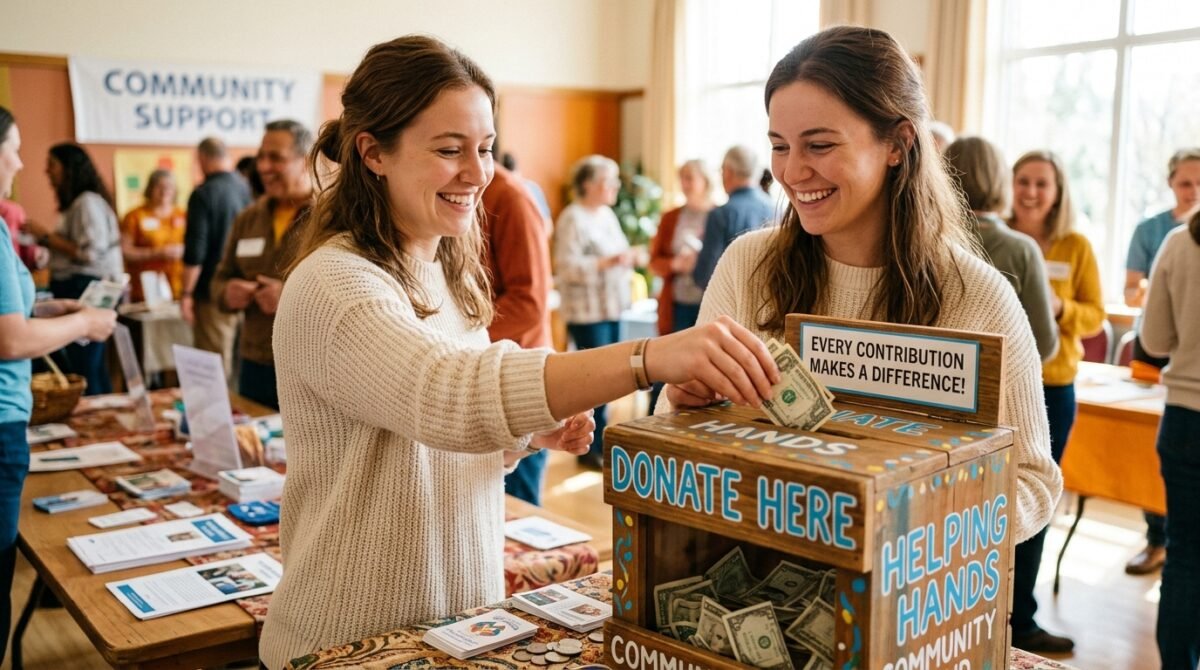
The $500? I donated it to a local charity. It felt right to take that money, the source of so much pain, and turn it into something positive. It was the final chapter in a book I was ready to close.
The Aftermath: Finding New Boundaries

Life today is drastically different. I am much more careful about who I allow into my inner circle. I no longer feel the need to justify my absences, my budgets, or my life choices to anyone. When someone shows me who they are, I believe them the first time, rather than waiting for twelve years of evidence.
I have learned that setting boundaries often means losing people who benefited from you not having them. It’s a harsh truth, but it’s a necessary one. If you find yourself in a friendship where you feel like you’re constantly walking on eggshells or paying for the privilege of being there, it’s time to take a hard look at the dynamic.
I still see Sarah’s friends around town sometimes. We nod, we exchange pleasantries, but the bridge is gone. There is no desire to go back. I have filled the space that Sarah occupied with hobbies, passions, and new connections that are based on mutual respect rather than mutual convenience.
For anyone else dealing with a toxic friend who keeps score, my advice is simple: stop paying the bill. You don’t owe anyone your peace, your health, or your dignity. Walk away, and don’t look back. The freedom on the other side is worth every bit of the initial discomfort.
Community Reflections: What We’ve Learned

The story of my friendship breakup became a touchstone for many in the online community. It sparked long threads about the nature of modern friendship, the pressures of social media, and the hidden costs of ‘curated’ lifestyles. It was heartening to see people opening up about their own experiences with financial manipulation and emotional abuse in friendships.
Many people noted that the ‘invoice’ culture is becoming more common as people treat every social interaction as a transactional event. They warned against the dangers of letting our personal lives mirror the cold, efficiency-focused world of business. Friendship is meant to be messy, imperfect, and forgiving—not a series of spreadsheets.
“This story is a perfect example of how we need to normalize saying ‘no’ to expensive social obligations. If your friends can’t handle you being sick or broke, they aren’t your friends, they are your debtors.”
— u/SocialPhilosopher (5.2k upvotes)
It’s clear that I’m not alone in this. There is a hunger for authentic, low-pressure connection. We are all exhausted by the performative nature of our current social lives. I hope that by sharing this, I can encourage others to stop, reflect, and demand the respect they deserve in their own relationships.
Conclusion
The final tally of my friendship with Sarah wasn’t measured in dollars or invoices. It was measured in the clarity I gained after the smoke cleared. Cutting off a toxic, long-term friend is one of the most difficult things you can do, but it is also one of the most transformative. It is an act of self-preservation that signals to the world—and to yourself—that your value is not determined by how much you can give to others.
Today, I am no longer the friend who is ‘always there.’ I am the friend who is there for the right reasons. I am the friend who has learned that saying ‘no’ is a full sentence. I am the friend who has finally realized that the best investment I can make is not in someone else’s 30th birthday, but in my own mental and physical well-being.
As you reflect on this story, consider your own circle. Are there people in your life who bill you—either literally or emotionally—for their own happiness? Are there expectations that make you feel small? Sometimes, the most important step forward is the one that leaves behind someone who was never truly walking beside you.
Discussion Poll: Have you ever had to ‘fire’ a long-term friend because of toxic entitlement? Share your experience in the comments below, or tell us: What is the most ridiculous request a friend has ever made of you?
What's your verdict on this dilemma?
Vote below to contribute to the official community consensus.

Have a Dilemma Keeping You Up at Night?
Share your real-life feud, wedding chaos, or relationship crossroads anonymously with our editorial team.
What do you think ?
0 Comments🛡️ Comments are moderated to protect community integrity. Your comment will appear once approved by the editorial team.