
Living with roommates is often described as a trial by fire, a sociological experiment that frequently ends in exhaustion and resentment. But for me, the experiment didn’t end in passive-aggressive sticky notes or disputes over the electric bill. It ended with the cold, calculated realization that the person sharing my living space had zero respect for my passions, my livelihood, or my property.
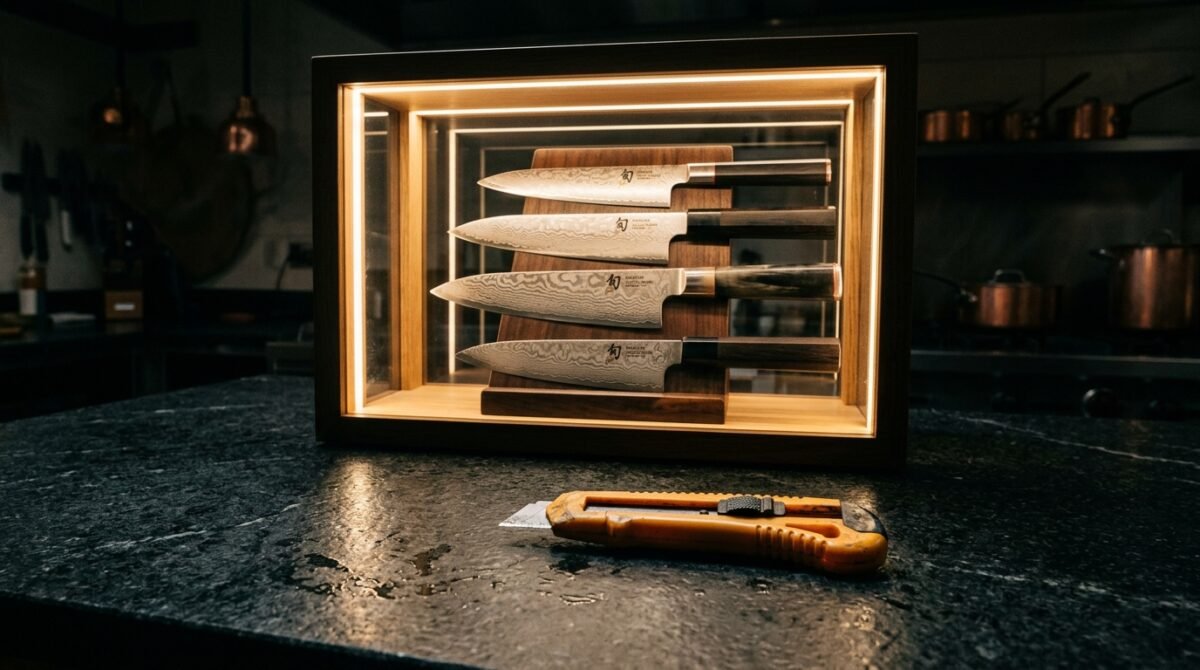
I am a culinary enthusiast and a hobbyist bladesmith. My collection of handcrafted Japanese knives—specifically my Shun and custom-forged Gyuto blades—aren’t just kitchen tools; they are years of savings and obsessive maintenance manifested in steel. When I returned from a weekend away to find my magnetic knife block occupied by flimsy, rusted utility cutters and my prized steel nowhere to be found, the silence in the apartment felt deafening.
My roommate, ‘Mark,’ had always been the type to ‘borrow’ things without asking. A splash of olive oil, a handful of flour, the occasional spice blend. I’d let it slide, assuming we were living in a collaborative environment. But this wasn’t a borrowing incident; this was a deliberate swap, a calculated act of disrespect that signaled a total breakdown of trust. He thought he could outsmart me, assuming I wouldn’t notice the weight difference or the pathetic sharpness of his hardware-store junk.
The moment I discovered the swap, a primal protective instinct kicked in. I didn’t scream. I didn’t call him. I simply walked into the hardware store, bought a high-security hasp and padlock, and spent the next hour securing every single drawer and cabinet in our shared kitchen. The message was clear: the pantry was closed for business. The war had begun, and I was holding all the keys.
The Disappearing Act of High-Carbon Steel
It started on a Thursday evening after I had spent hours prepping for a massive batch of vegetable stock. I had meticulously cleaned my Japanese set, honing each blade to a razor’s edge. I left them secured on their magnetic strip, confident that they would be waiting for me when I returned from my cousin’s wedding three days later. The apartment was empty when I left; Mark had told me he was heading to his girlfriend’s place for the weekend.
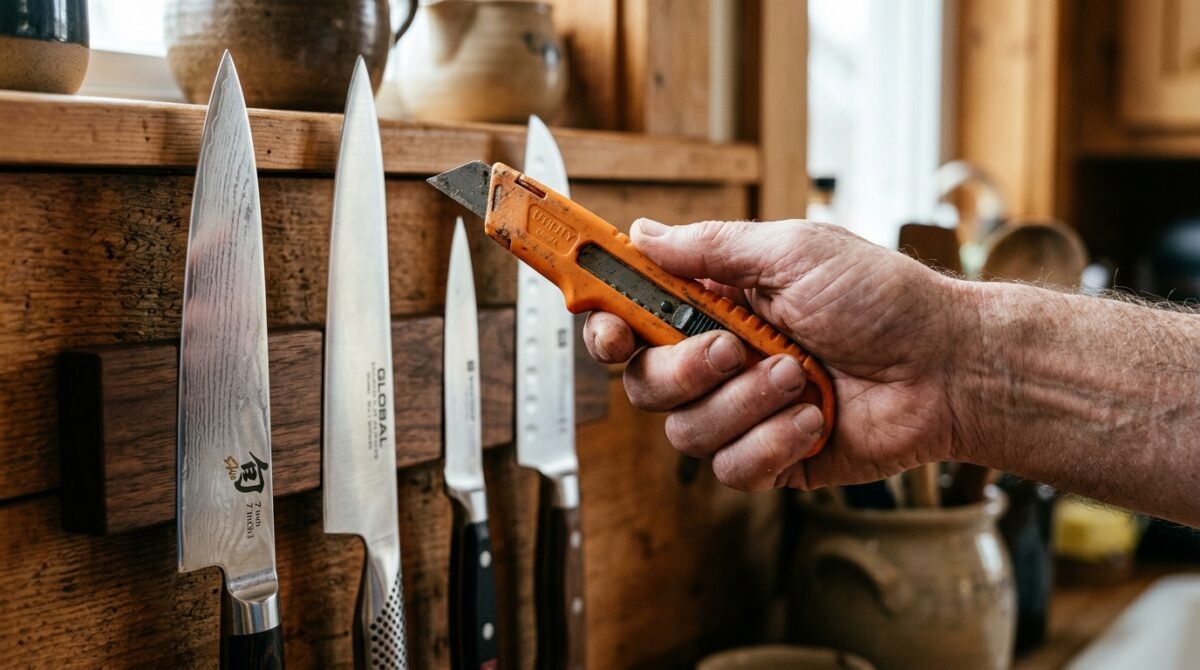
When I walked through the door on Sunday night, the kitchen felt wrong. The lighting was the same, but the atmosphere was thick with a strange, lingering scent of cheap machine oil. I walked toward the counter, my eyes immediately drawn to the magnetic strip. My heart skipped a beat, then plummeted. The elegant, dark wood handles were gone. In their place were three bright orange plastic utility knives and a serrated steak knife that looked like it had been pulled from a dumpster.
I felt a physical wave of nausea. These knives were not replaceable items. They were gifts to myself after graduating from culinary school, and the custom blade had been a commission I waited six months to receive. I checked the drawers, hoping he had just moved them for ‘cleaning’ or some other ridiculous excuse. Nothing. The drawers were barren, cleaned out with a surgical efficiency that suggested he had taken them somewhere else entirely.
I stood there, gripping the edge of the granite counter until my knuckles turned white. The realization that he had actually dared to touch, remove, and replace my professional-grade gear with absolute garbage was almost surreal. I didn’t know whether to burn the place down or call the police. I settled for the third option: complete emotional suppression and absolute tactical retaliation.
“I stared at those orange plastic abominations for twenty minutes, trying to comprehend the sheer audacity of someone thinking they could just trade my heirloom steel for a three-dollar box cutter. It wasn’t about the money anymore; it was about the fundamental violation of a person’s craft.”
I didn’t call Mark. I didn’t text him. I realized then that any conversation would be a waste of breath. He knew exactly what he was doing. He had likely taken them to his girlfriend’s place to ‘show them off’ or, more likely, he had let his friends use them to open boxes or perform some other mindless, destructive task. The disrespect was total, and my response would be equally uncompromising.
The Lockdown: Securing the Culinary Perimeter
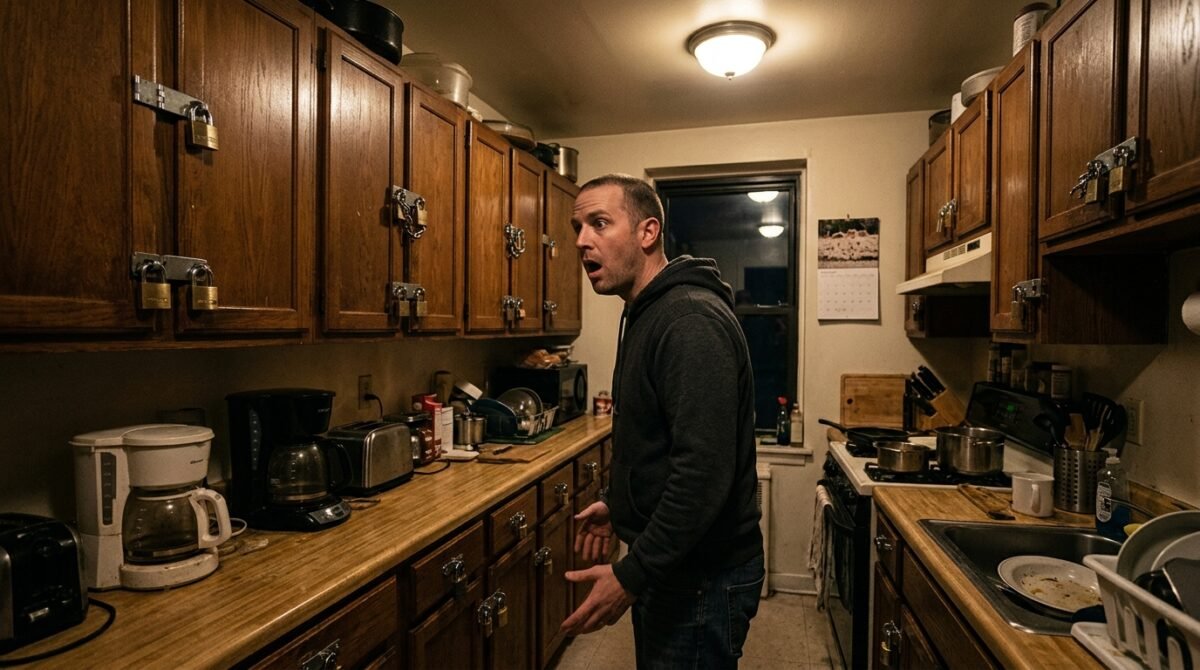
I left the house immediately, driving to the nearest home improvement store. I didn’t need furniture or paint; I needed security. I bought a heavy-duty industrial hasp and a high-security disc padlock. I also purchased several smaller locks for the pantry doors and the refrigerator freezer compartment. It felt like I was fortifying a bunker during a siege, and in a way, I was.
Back home, I spent the next three hours installing the hardware. I used a drill to secure the hasps into the solid wood cabinets. Every single drawer that contained anything of value—spices, specialty flours, expensive cookware—was soon locked tight. I left one drawer open: the one containing the cheap, flimsy tools he had left behind. It was a message that even a child could understand.
When the job was done, the kitchen looked like an evidence room. The clatter of the chains against the cabinets as I tested the locks was the most satisfying sound I had heard in months. I walked around the room, ensuring that every point of entry was secure. I wasn’t just locking away my gear; I was locking away my hospitality. The roommate who had shared my salt and my stove was now a stranger on the other side of a barricade.
I sat on the living room floor and waited. I heard his key in the lock around 9:00 PM. He walked in, humming to himself, clearly expecting a normal evening. He went straight to the kitchen to grab a snack, probably planning to use my high-end pans to heat up some frozen pizza. The sound of his fumbling with the cabinet handles was the highlight of my night.
“He yanked on the cabinet door, and the metal on metal CLANG echoed through the entire apartment. He tried the next one. CLANG. Then the pantry. He looked like a caged animal, confused and genuinely offended that his access to my domain had been revoked.”
I stood up from the couch and walked into the kitchen doorway, leaning against the frame with my arms crossed. I didn’t say a word. I just watched him pull on the locks, his face turning from confusion to a deep, ugly shade of red. He looked at me, expecting me to unlock them, expecting me to play the role of the obliging, quiet roommate he had grown accustomed to exploiting.
The Confrontation of the Padlocked Pantry
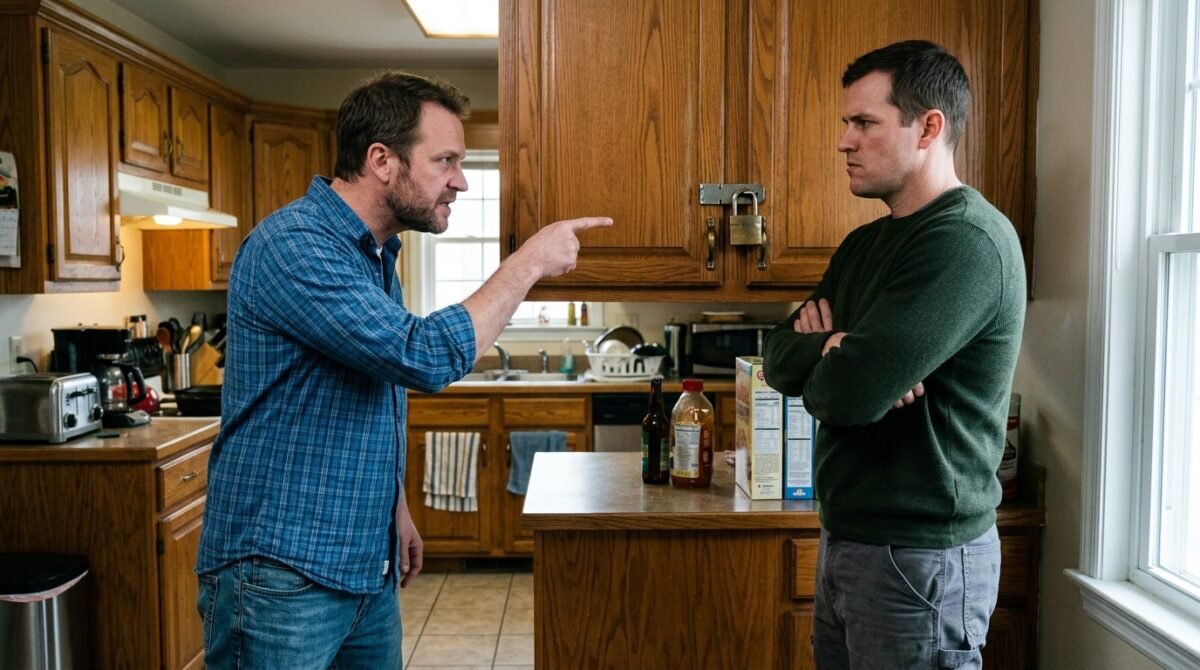
Mark finally stopped pulling at the drawers and turned to face me. He looked at the padlock on the main cupboard with genuine disbelief. ‘Are you kidding me? What is this? Are you having some kind of mental breakdown?’ He let out a harsh, nervous laugh, trying to play it off as if I were the one being irrational. He didn’t mention the knives, of course. He hadn’t even checked to see if I noticed they were missing yet.
‘You want to know what this is?’ I said, my voice eerily calm. ‘This is the cost of doing business. You took my knives, Mark. You took my professional equipment and replaced them with garbage. I don’t know where my steel is, but I know it’s not here. Until those knives are back in my hand, cleaned, polished, and undamaged, you aren’t touching a single thing I own.’
His face fell. He tried to pivot, claiming he had just ‘borrowed’ them for a party his girlfriend was hosting. ‘They were just sitting there! I thought it would be fine. It’s not like you were using them this weekend. Why are you acting like I committed a crime? They’re just knives!’ The way he said ‘just knives’ made my skin crawl. He truly had no concept of the value—monetary or sentimental—of what he had violated.
‘To you, they are just knives,’ I replied, stepping closer. ‘To me, they are my profession. They are the tools that allow me to do my job. You had no right to touch them, and you certainly had no right to replace them with literal trash. You’re locked out of the kitchen, Mark. Buy your own stuff, use your own pans, and eat off your own paper plates from now on.’
“He tried to push past me, but I didn’t budge. I looked him dead in the eye and told him, ‘If you touch a single one of these locks, I am calling the landlord and showing him the damage you’ve caused to my personal property. You want to see how fast we can get you evicted?'”
He scoffed, but the threat hit home. We were both on the lease, but the landlord was a stickler for property damage, and the drill holes in the cabinets were definitely an issue. He backed off, shouting about how ‘unhinged’ I was. I didn’t care. The power dynamic had shifted. For the first time in two years, I was in control of my home.
The Digital Paper Trail: Leaked Texts
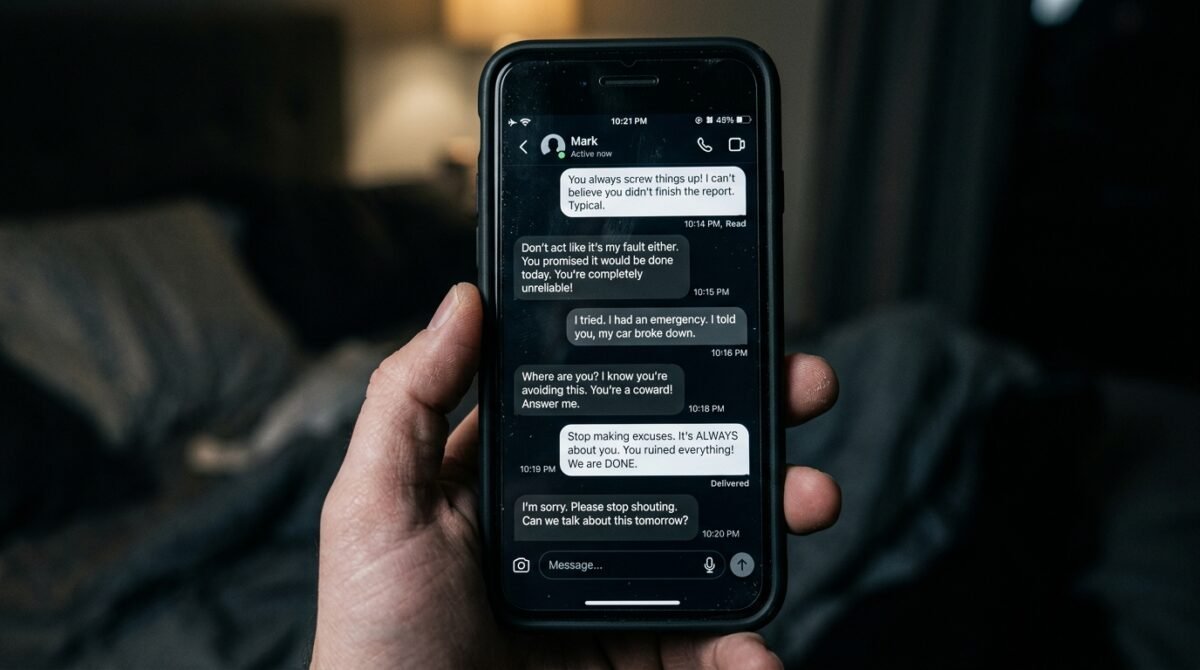
The next morning, I woke up to a flurry of notifications on my phone. Mark had apparently taken to our shared group chat—the one where we coordinated chores and split utility bills—to complain about me to his friends who were also on the lease. He was trying to paint me as the villain, hoping to get the others to pressure me into removing the locks.
“Can someone please come over and deal with [OP]? They’ve completely lost it. Put locks on all the kitchen cabinets because I used their knives for a dinner party. It’s pathetic. I need to get into the fridge to get my milk and they have it blocked off. Tell them to grow up.”
— Mark, in the Shared Living Room Group Chat
I didn’t reply immediately. I let his friends pile on for a bit. It was fascinating to see who would jump to his defense. Two of the roommates, who rarely spent time in the kitchen, were quick to side with him, calling me ‘dramatic’ and ‘controlling.’ They didn’t have skin in the game; they just wanted the peace restored so they didn’t have to hear the arguing.
I finally decided to respond, but I didn’t address the locks. I addressed the theft. I attached a photo of the cheap utility knives he had left behind, side-by-side with a picture of the professional-grade Japanese steel he had taken. I laid out the exact price of the blades and the fact that they were currently missing. The tone of the chat shifted instantly.
“Wait, you took his Shun knives to a house party? Those are like $300 each, man. Why would you even do that? I wouldn’t touch his stuff either. That’s actually pretty shitty, Mark.”
— Roommate Sarah, in the Shared Living Room Group Chat
The realization dawned on the others that Mark hadn’t just ‘borrowed’ a spatula; he had taken high-end equipment to a social event. The ‘dramatic’ label shifted from me to him. He tried to backpedal, claiming he was ‘just borrowing them,’ but the damage was done. The group chat fell silent for a few minutes before the accusations started flying his way.
The Financial Reality Check
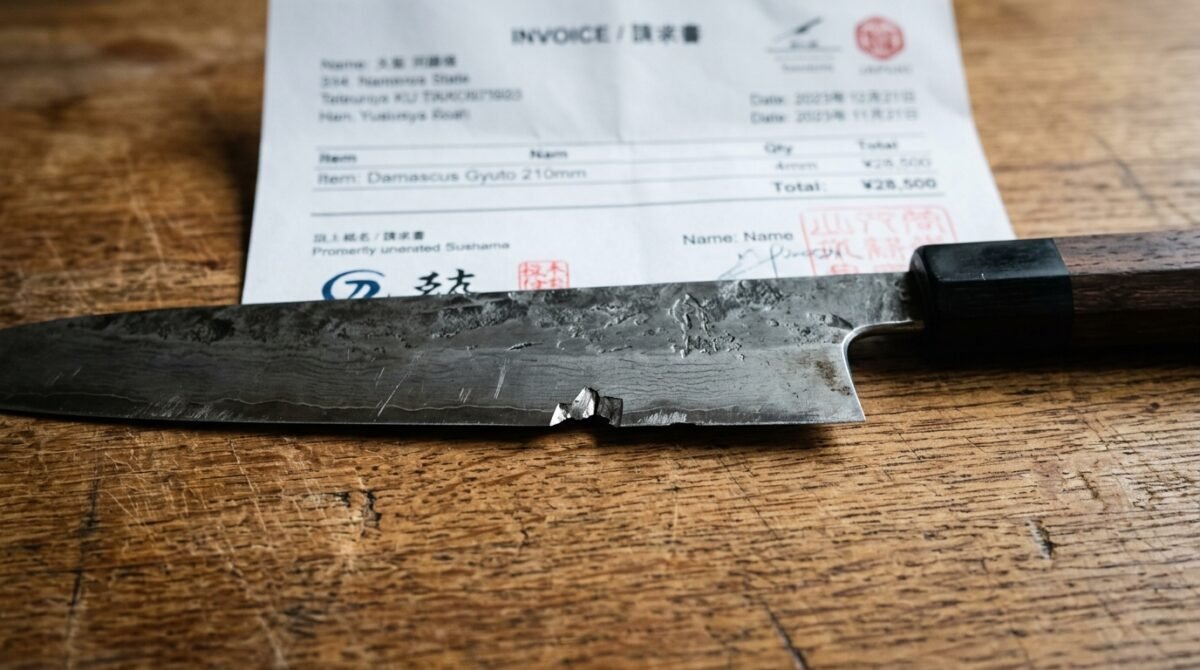
The situation escalated when I realized he hadn’t just taken them; he had damaged one. When he finally brought the knives back two days later—sheepishly dropping them on the entryway mat—I inspected them immediately. The tip of my favorite Gyuto blade was chipped. A micro-fracture in the Damascus steel. My stomach dropped. That was a professional repair job, if it could even be repaired at all.
I took the knife to a local master sharpener, the only person I trusted with my blades. His assessment was grim. ‘This was used to pry something open, or it was dropped onto a stone surface,’ he told me. The cost to repair the chip and re-hone the edge would be over $150. I took a picture of the bill and sent it to Mark, along with a formal request for reimbursement for the knife’s depreciation.
Mark’s reaction was explosive. He claimed the knife was ‘already like that’ and that I was trying to ‘extort him.’ I had photos of the knives, date-stamped from the week before, showing them in pristine condition. I had a paper trail. I had receipts. I told him that if he didn’t pay the repair bill and an additional fee for the disrespect, I would be taking him to small claims court.
The threat of legal action changed the dynamic completely. He wasn’t dealing with a ‘crazy roommate’ anymore; he was dealing with someone who was prepared to use the law to hold him accountable. He stopped shouting and started negotiating, which was exactly what I wanted. He was learning that there were consequences for his actions.
“He sat at the kitchen table, which I had unlocked just for this meeting, and tried to talk his way out of it. ‘Look, I’ll pay for the repair, but the locks have to come off. This is ridiculous.’ I told him the locks stay until the money hits my bank account. Period.”
He was fuming, but he paid. The money arrived in my account via Zelle within an hour. It was a small victory, but it felt like a massive shift in power. He realized he couldn’t push me around, and he certainly couldn’t damage my property without paying the full market price for his mistakes.
The Community Weighs In: Reddit’s Verdict
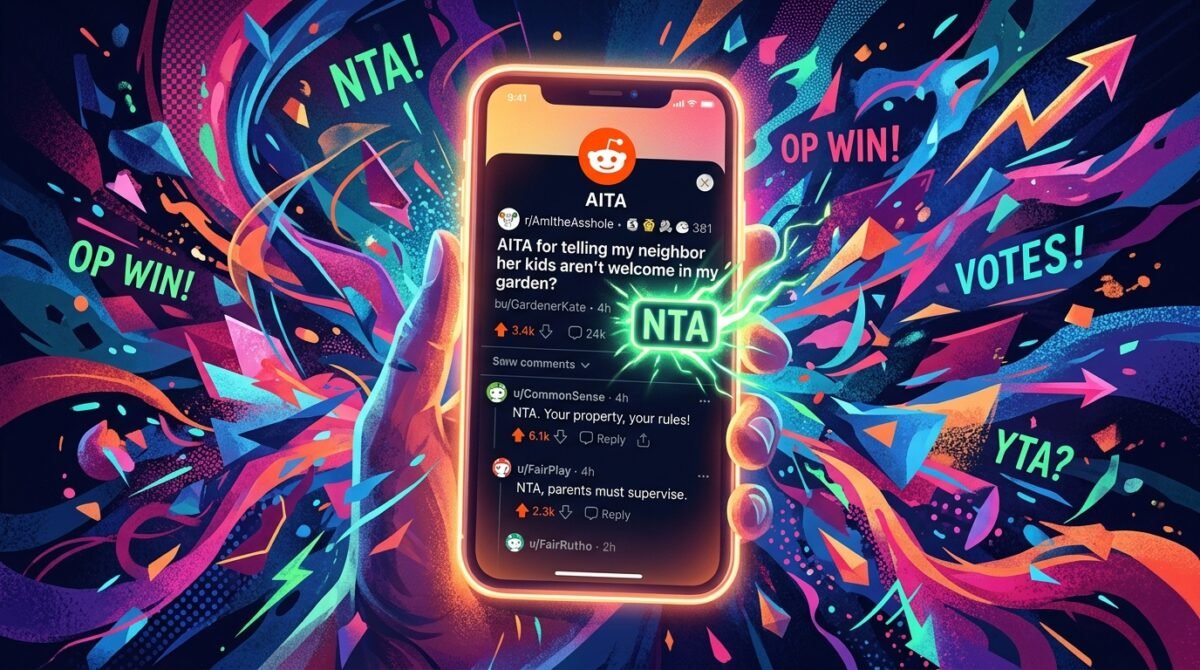
I decided to share the story on a popular subreddit dedicated to roommate disputes. I kept it objective, focusing on the facts: the swap, the damage, and the locking of the kitchen. Within hours, the post had thousands of upvotes and a comment section that was as divided as it was intense. The ‘NTA’ (Not The Asshole) camp was loud and clear.
“This is textbook entitlement. Mark thought he was entitled to your expensive tools because he was ‘just borrowing’ them. When you lock them away, he gets mad because the free ride is over. Keep the locks on. You’re teaching him a lesson he should have learned in kindergarten.”
— u/KitchenWarrior88 (Top Comment, 18.5k upvotes)
Of course, there were the ‘ESH’ (Everyone Sucks Here) voices. They argued that locking the kitchen was an ‘escalation’ and that I should have just had a ‘grown-up conversation.’ I read those comments with a smirk. They clearly hadn’t lived with a Mark before. Some people don’t respond to conversations; they respond to boundaries, and sometimes, those boundaries have to be physical.
“ESH. He’s a jerk for taking your knives, but locking the entire kitchen and making the apartment a war zone is just as toxic. You’re living in a prison now. Is it really worth the effort to keep the place locked up? Just move out as soon as the lease is up.”
— u/PeaceKeeper_Zero (4.2k upvotes)
The debate went on for days. People shared their own horror stories—roommates using their skincare products, roommates eating their expensive meals, roommates trashing their gaming setups. It was a collective catharsis. I realized that my story wasn’t just about knives; it was about the universal struggle of maintaining boundaries in shared spaces. It gave me the validation I needed to stand my ground.
The Slow Decay of a Living Arrangement
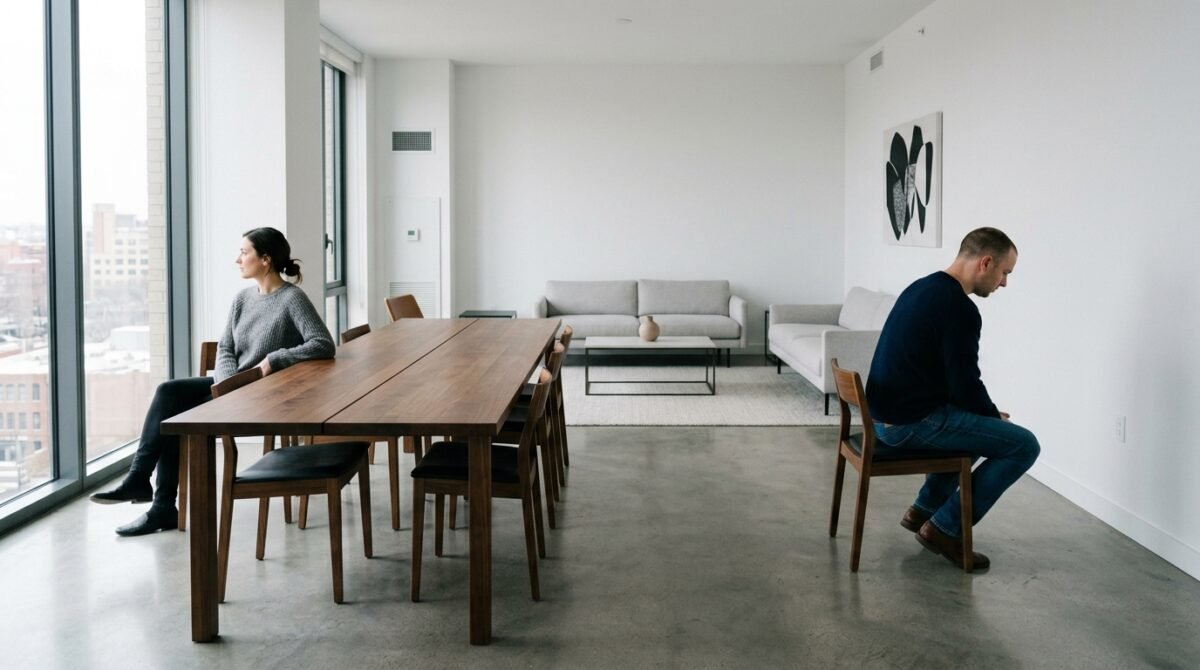
Even after the payment was made and the knives were ‘repaired,’ the atmosphere in the apartment had curdled permanently. The locks remained. I didn’t trust him, and I knew he didn’t trust me. Every time we passed in the hallway, it was like walking past a ticking time bomb. The silence was heavy, broken only by the sound of our respective doors closing.
He stopped trying to use my kitchen altogether. He started eating exclusively takeout or using a hot plate in his bedroom. It was a pathetic sight, watching him lug bags of groceries to his room, but it was the price of his own behavior. He had created this reality, and he was living it. I, on the other hand, had regained my peace of mind. I could cook my meals in my kitchen without worrying about my tools being damaged or missing.
The rest of the roommates started to get uncomfortable. They didn’t like the tension, and they didn’t like having to choose sides. One of them, Sarah, eventually tried to play the role of mediator, suggesting a ‘house meeting’ to resolve the friction. I told her I was happy to talk, but the locks weren’t coming off until the end of the lease. The ‘house meeting’ ended up being a disaster, with Mark screaming about ‘oppression’ and me calmly citing the price of the repair bill.
It was clear that the arrangement was dead. We were just sharing a roof, waiting for the clock to run out on our lease. I started looking for a new place, a studio where I wouldn’t have to worry about anyone else’s hands on my gear. It was the only logical next step. I had won the battle, but the war had made the apartment a place I no longer wanted to live in.
The Final Move-Out Day

When the lease finally expired, the move-out process was as tense as you’d expect. I packed my kitchen first, meticulously cleaning the locks and checking my knives one last time. They weren’t perfect—the chip had left a permanent scar—but they were mine. Mark watched from the doorway, his arms crossed, still harboring a grudge that he had lost the argument.
I didn’t say goodbye. I didn’t offer a final handshake. I just loaded my boxes into the truck and drove away. As I pulled out of the parking lot, I felt a weight lift off my shoulders. I was moving into a place where I could keep my kitchen open, where I could trust my housemates, and where my tools would remain exactly where I left them.
I think about that year often, not with anger anymore, but with a strange sense of clarity. It taught me that people will test your boundaries until they hit a wall. If you don’t build that wall, you lose the things that matter to you. I learned that sometimes, being ‘petty’ is just a form of self-preservation. You have to protect your craft, your property, and your peace.
Looking back, I don’t regret the locks. I regret that it came to that, but I don’t regret the action. It was the only way to signal that the game was over. I hope Mark learned something, though I doubt it. Some people go through life thinking everything belongs to them, until they run into someone who refuses to let it go.
Conclusion
The saga of the kitchen knives taught me more than just a lesson in property rights; it was a masterclass in human behavior. When we live with others, we assume a baseline of mutual respect. But when that respect is violated, we are often left with nothing but the choice to either surrender or fight back. I chose to fight back, and while it made for a miserable final year, it allowed me to keep my dignity and my blades intact.
The kitchen is more than just a room; it is a sanctuary for many of us. To see it violated is to see a part of your daily rhythm destroyed. If you find yourself in a similar situation, remember that you are not obligated to be the ‘bigger person’ at the expense of your own livelihood. Boundaries are not just suggestions; they are the bedrock of a healthy living situation.
I’m curious—what’s the most outrageous boundary violation you’ve experienced with a roommate? Have you ever had to resort to ‘petty’ measures to protect your property, or did you take the high road and regret it later? Let’s talk about it in the comments below—I’m dying to hear your stories of kitchen wars and roommate madness.
What's your verdict on this dilemma?
Vote below to contribute to the official community consensus.

Have a Dilemma Keeping You Up at Night?
Share your real-life feud, wedding chaos, or relationship crossroads anonymously with our editorial team.
What do you think ?
0 Comments🛡️ Comments are moderated to protect community integrity. Your comment will appear once approved by the editorial team.