
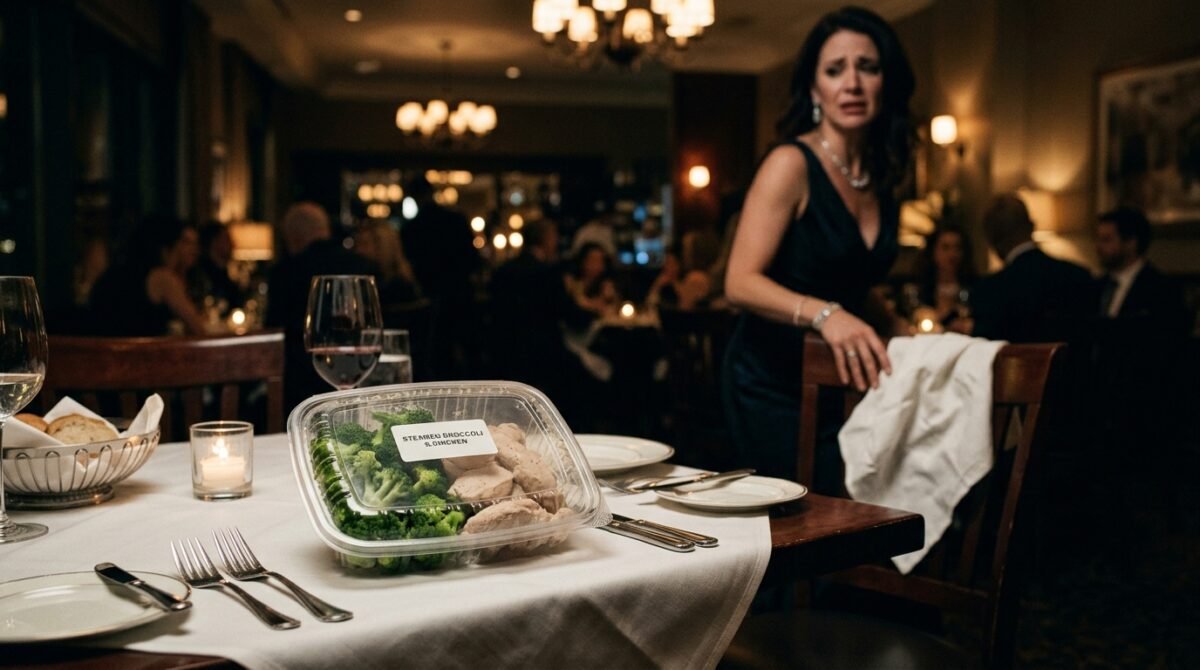
They say that marriage is a test of endurance, but I never expected the final exam to be administered in a dimly lit bistro on the night of our fifth anniversary. Mark and I had been through the usual marital rites of passage: the move-in, the shared debts, the minor disagreements over paint colors, and the subtle, creeping weight of complacency. But lately, things had taken a dark turn into the territory of unsolicited ‘self-improvement.’
For the past six months, Mark had become obsessed with my health—or, more accurately, his vision of what my health should look like. It started with subtle comments about my energy levels and escalated into him taking over my grocery shopping. I had let it slide, assuming it was a phase, a misguided expression of love. I was wrong. The obsession hadn’t just seeped into our home; it had followed us out to the most romantic night of our year.
Standing in that restaurant, the air thick with the scent of expensive wine and roasted garlic, I looked down at the plastic container he had slid across the table. It was a pre-packaged, vacuum-sealed ‘fitness meal’—dry, sad, and entirely devoid of joy. At that moment, the five years of patience I had carefully curated shattered. The moral dilemma wasn’t just about food; it was about the fundamental disrespect of a partner who decided that my worth was a project he was entitled to manage.
This isn’t a story about a diet. It is a story about the breaking point that occurs when a partner stops seeing their spouse as a teammate and starts seeing them as a subordinate. It’s about the realization that some bridges aren’t meant to be repaired; they are meant to be burned so you can finally walk toward something better.
The Prelude to the Plastic Container
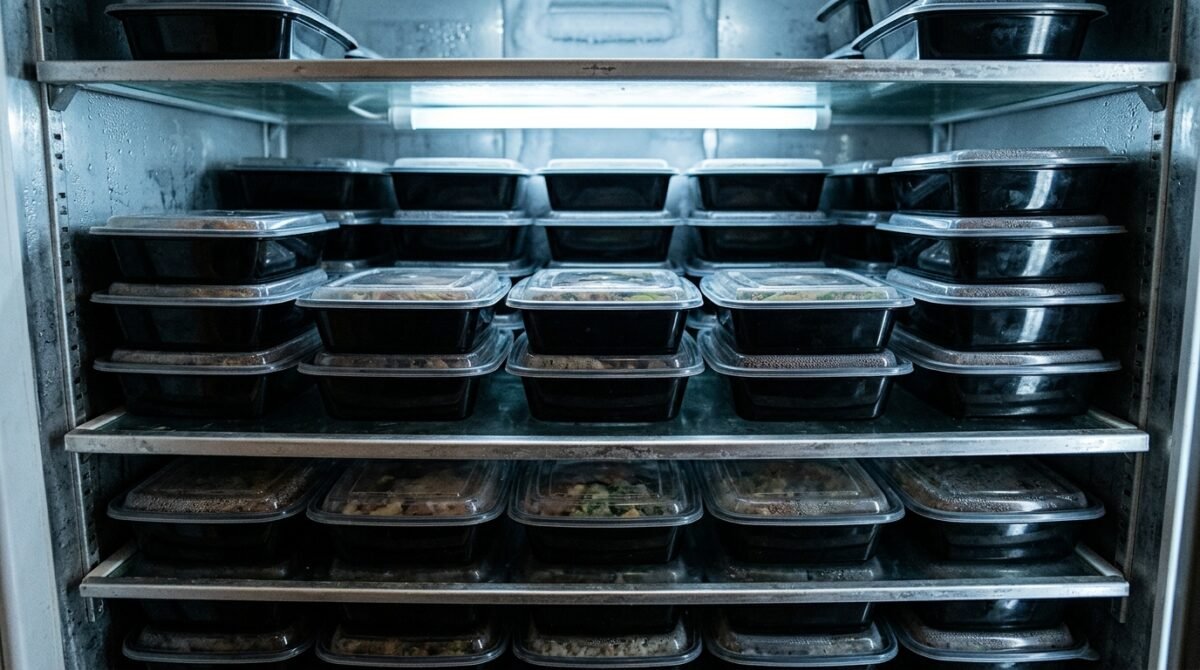
It began on a Tuesday morning. I woke up to find the refrigerator stripped of everything that brought me joy—no coffee creamer, no sourdough bread, just stacks of identical black plastic meal-prep containers. Mark was standing by the counter, his jaw set in that way that usually meant he had ‘optimized’ something without asking me.
“I took the liberty of clearing out the junk,” he said, not even looking up from his phone. “We need to get serious about our macros. You’ve been complaining about being sluggish, so I’ve curated a plan that will fix your metabolism. It starts today.” I remember feeling a cold spike of anxiety in my chest. This wasn’t about my health; it was about his control.
“I didn’t ask for a meal plan, Mark. I asked you to stop touching my coffee supplies. This is my body, not a project for your spreadsheet.”
He just chuckled, a patronizing sound that I was beginning to loathe. “You’re just being emotional. You’ll thank me in a month when you’re down ten pounds and actually have energy. It’s for our future.” He didn’t see the irony in talking about a shared future while actively dismantling my autonomy in the present.
Throughout that week, the gaslighting was constant. If I ordered takeout, he would look at the bag with a mixture of disgust and pity. He began commenting on my portion sizes at dinner, subtly shifting the bowl away from me. It was a slow, calculated erosion of my boundaries, masked as concern, and I, foolishly, stayed silent, waiting for the ‘phase’ to pass.
By the time our anniversary rolled around, I was exhausted. I had hoped the dinner would be a reprieve, a chance to reclaim our connection before the resentment turned into something permanent. Little did I know, he had other plans. He had decided that the anniversary was the perfect opportunity to ‘teach’ me the importance of discipline, right in the middle of a five-course meal.
The Table Setting for Disaster

The restaurant was the kind of place where the bread is warm, the butter is salted just right, and the atmosphere suggests that problems can be left at the door. I had been looking forward to this reservation for weeks, dreaming of the lobster bisque and the glass of wine that would finally allow me to unwind from a week of ‘macros-talk.’
When we were seated, Mark didn’t even look at the menu. He was focused on his messenger bag, pulling out something that felt heavy and oddly shaped. I watched him, confused, as he pulled out a small cooler bag. The waiter approached, beaming, and asked if we wanted to see the wine list. Mark waved him off dismissively.
“No wine for us. We’re on a strict protocol. I’ve brought our own meal. It’s more efficient and aligns with our goals. You can just bring us two glasses of sparkling water with lemon.”
The waiter’s smile faltered, replaced by that distinct look of professional confusion. I felt my face flush with a heat that had nothing to do with the room temperature. I hadn’t agreed to this. I hadn’t even been informed of this. The humiliation was immediate and stinging.
I looked at the table, now occupied not by menus or candles, but by a leaking plastic container of steamed gray chicken and soggy greens. Mark looked at me, beaming with pride, as if he had just presented me with a diamond ring rather than a sad, cold pile of protein. “I know it’s not the menu, but think of the calories we’re saving,” he whispered loudly.
The surrounding tables were quiet, their occupants subtly shifting their attention away from our booth. I felt like a zoo animal. I had spent months trying to be the ‘supportive wife,’ but in this moment, the mask slipped. I wasn’t a partner anymore; I was a child being lectured in public, and the public was currently watching the spectacle unfold.
The Moment of Unraveling

I didn’t scream. I didn’t throw the food. I simply sat there for a long moment, staring at the rubbery chicken. The silence between us stretched until it felt like a physical object. I could hear the clinking of silverware from the next table and the soft, ambient jazz playing in the background. It felt surreal, like I was watching someone else’s life.
Mark was still talking, explaining the ‘optimization’ of the meal prep, his voice droning on about protein synthesis and glycemic indices. He was so caught up in his own sense of self-righteousness that he hadn’t noticed the way my hands were trembling. He thought he was winning, but he was actually losing the only person who cared if he won at all.
“Mark, look at me. Do you honestly think this is okay? We are in a public restaurant on our anniversary, and you’ve brought your own food to feed to me like I’m a dog.”
He laughed, a sharp, dismissive sound. “You’re making a scene over nothing. I’m trying to help you. Most wives would be grateful that their husband is so invested in their health.” That was the trigger. The word ‘grateful’ hung in the air, acidic and sharp. I realized then that he didn’t view me as a person; he viewed me as a possession that was currently underperforming.
I stood up slowly. I didn’t care about the waiter, or the other diners, or the scene I was creating. I only cared about the exit. I picked up my purse, left my napkin on the chair, and looked down at him one last time. He looked genuinely confused, like a child who had followed all the instructions and still got a failing grade.
“Enjoy your protein, Mark. You’re going to be eating a lot of it alone from here on out.” I turned on my heel and walked out, my heart hammering against my ribs like a trapped bird. The cool night air hit my face, and for the first time in months, I felt like I could actually breathe.
The Fallout in the Family Group Chat
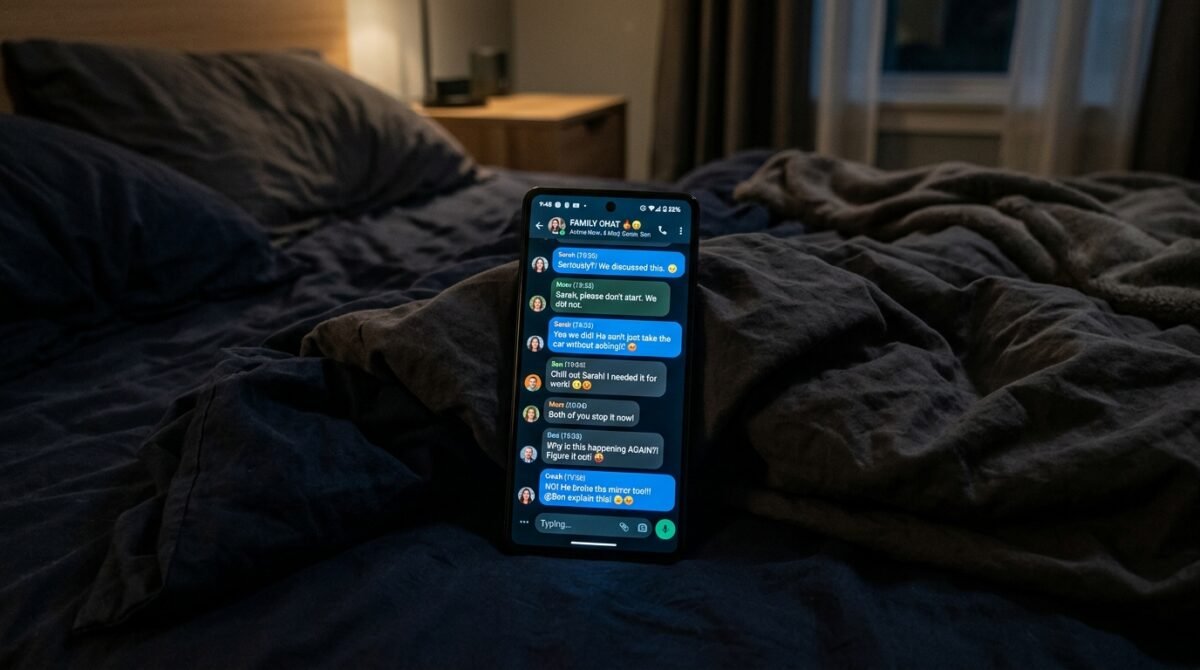
The walk home was a blur of adrenaline and clarity. By the time I reached the apartment, my phone was vibrating incessantly. Mark had wasted no time in framing his side of the story, reaching out to his mother and our shared friends to paint me as the ‘unstable’ one who threw a tantrum over a ‘healthy meal.’ The family group chat was already lit up with notifications.
“Can someone tell [OP] to grow up? I tried to do something nice for our anniversary and keep us on track, and she just walked out. It’s embarrassing. Everyone is staring at me.”
— Mark, Family Group Chat
My mother-in-law, always the mediator for Mark’s behavior, chimed in immediately. “Mark, honey, maybe she’s just tired. But that was a bit much, [OP]. He’s only trying to help you with your health goals. You know he loves you.” I stared at the screen, my thumb hovering over the reply button. I had spent years playing nice, but the exhaustion had finally overridden the fear of conflict.
“He brought a cooler of diet food to a restaurant. If you think that is ‘helping,’ you are part of the problem. I am done being his project.”
— Me, Family Group Chat
The silence that followed was deafening. I didn’t stay to see the fallout. I turned my phone off and threw it onto the couch. I spent the night in the spare room, listening to the muffled sounds of Mark pacing in the hallway, waiting for me to come out and apologize for ruining his ‘optimized’ anniversary.
The next morning, I woke up with a clarity I hadn’t felt since before we met. I realized that the entire marriage had been a series of these small, calculated subtractions of my personality, my preferences, and my comfort. The gym meal was just the straw that broke the back of a very tired camel. I wasn’t going back to that.
The Reality Check from the Internet

I posted my story on Reddit the next day. I needed to know if I was crazy. I needed the validation that I was right to walk out, because the gaslighting in my own home had made me doubt my own sanity. The response was overwhelming. Within an hour, my inbox was flooded with support, advice, and, most importantly, the perspective I desperately needed.
“This is classic coercive control. He isn’t ‘helping’ you; he is establishing dominance over your daily choices. Walking out was the best thing you could have done for your own self-respect. Do not apologize.”
— u/RelationshipGuru (Top Comment, 32.5k upvotes)
There were hundreds of comments. Some shared similar stories of partners who tried to ‘fix’ them, others were just horrified by the audacity of the gym meal stunt. It was a chorus of strangers telling me that I wasn’t just ‘sensitive,’ I was being mistreated. It was the validation that gave me the strength to look at the divorce papers I had been considering for months.
“The fact that he didn’t even consult you about the plan is the biggest red flag. It’s not about the food; it’s about the fact that he thinks your opinion is irrelevant to your own life. NTA, and honestly, run.”
— u/FreedomSeeker (15.2k upvotes)
Reading these comments felt like waking up from a long, feverish dream. I saw my own situation reflected back to me in the words of people who had survived the same thing. I wasn’t a failure for leaving; I was a survivor for finally seeing the truth of what my life had become.
I began to document everything—the meal-prep control, the comments about my body, the way he would mock me in front of friends, and the final straw at the restaurant. It was no longer a disagreement; it was a dossier of my own liberation. I was done with the ‘we’ and finally ready to start working on the ‘I’.
The Legal Reality of Shared Futures
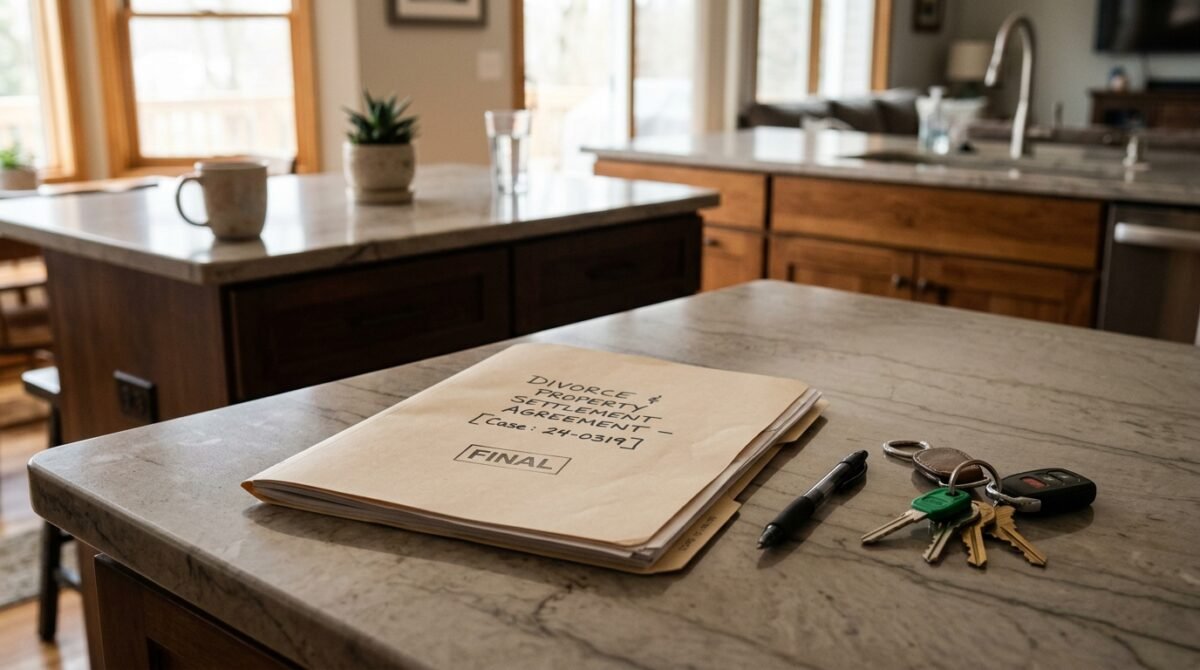
When Mark finally realized I wasn’t coming out of the spare room to apologize, he changed tactics. He started talking about the ‘financial impact’ of breaking our lease and the logistics of separating our lives. He wanted to talk about money, about who owned which appliance, and how we would split our assets. He thought that by making it a transactional issue, he could regain control.
I had already contacted a lawyer. I knew that in our state, the division of property was straightforward, but the emotional tax was what really mattered. I didn’t care about the furniture or the kitchen gadgets he loved so much. I wanted out, and I wanted it to be clean and final. I had saved enough to cover my own apartment, and I was ready to walk away from everything we had built together.
| Asset | Mark’s View | The Reality |
|---|---|---|
| Shared Apartment | Must stay together | Lease break is worth it |
| Kitchen Gadgets | His property | He can keep the ‘gym tools’ |
| Shared Savings | Joint, but he manages | Legal 50/50 split |
He was blindsided by my resolve. He expected me to cave, to worry about the money, to worry about the social stigma of being a ‘failed’ wife. He didn’t understand that when you reach the point where you don’t even like the person you’re married to, money is just a secondary concern to your peace of mind.
“You’re throwing everything away over a meal, [OP]?” he asked one night, his voice devoid of the usual ‘coaching’ tone. He sounded small, almost pathetic. I didn’t even look at him. I was busy packing my clothes into a suitcase, feeling the weight of the last five years lifting with every item I moved.
The Quiet After the Storm

Moving out was the most cathartic experience of my life. I didn’t take the fancy blender, or the expensive cookware he insisted we use, or the gym equipment he had forced on me. I took my books, my clothes, and my sense of self. When I closed the door on that apartment for the last time, I didn’t feel sadness. I felt a profound, quiet victory.
The first few weeks alone were strange. I had to learn how to cook for one again, how to grocery shop without feeling judged, and how to sit in a quiet living room without waiting for a lecture. It was the silence I had been craving for years—the absence of someone else’s voice telling me how to exist.
I started going to the gym on my own terms. I didn’t do it to lose weight or to meet a metric; I did it because I enjoyed the movement. I ate what I wanted, when I wanted, and the world didn’t end. My metabolism didn’t crash, and I didn’t become a ‘failure.’ I just became me again, the person I had been before I allowed someone else to curate my reality.
Friends reached out, some apologizing for not seeing the signs, others just relieved that I was out. It turned out that many people had noticed the way Mark treated me, but they had stayed silent because I was ‘happy.’ I wasn’t happy. I was just compliant. The difference was the most important thing I had learned.
The Unsolicited Apology That Wasn’t

A month after I left, I received a text from Mark. It was the first time he had broken the radio silence we had agreed upon through our lawyers. It wasn’t an apology. It was a justification, a final attempt to frame his behavior as a manifestation of his ‘care’ for me.
“I’ve been doing some research, and I realize my approach was too intense. But you have to understand, I only wanted the best for you. If you come back, we can change the rules. I’ll be more flexible.”
— Mark, Received via SMS
I read the message and deleted it. There was no ‘coming back.’ There was no ‘changing the rules’ because the game itself was rigged. He still didn’t get it. He still thought he was the one in charge of my life, even when I had clearly walked out of it. It was the final confirmation that I had made the right choice.
I didn’t reply. I didn’t block him, because that would have been a reaction; I simply ignored him. Ignoring him was the most powerful thing I could have done. It removed the audience he so desperately craved. He was a man holding a megaphone in an empty field, and I was no longer listening.
I went for a walk that afternoon, feeling the sun on my face. I stopped at a local deli, bought a sandwich with extra mayo, and sat in the park. It was a simple meal, but it was the best thing I had tasted in years. It was mine, and that made all the difference.
Reflecting on the Red Flags

Looking back, I can see the flags now, fluttering in the wind. They were everywhere. The way he would ‘joke’ about my appearance in public, the way he would subtly change the plans I made, the way he insisted on being the one to manage our budget—it was all part of the same pattern. I had ignored it because I thought that was what ‘marriage’ was: a compromise where you lose a little of yourself to gain a partner.
But a partnership isn’t a loss. A partnership is an addition. If you find yourself becoming less of a person, quieter, more anxious, or more controlled, you aren’t in a partnership. You are in a cage. And the most dangerous part of the cage is that the door is often unlocked, but we are too afraid to try the handle.
I spent years wondering if I was just difficult. I wondered if my resistance was a sign of my own personal failure. It took that one, ridiculous, pre-packaged gym meal for me to realize that the problem wasn’t my resistance; it was his imposition. My resistance was the only thing that kept me human.
I’m sharing this not because I want sympathy, but because I want others to know that it is okay to leave. It is okay to walk away from a life that doesn’t fit anymore, especially when the person you’re sharing it with is the one holding the scissors to your wings. Your life is yours to curate, and you don’t need anyone’s permission to be exactly who you are.
The New Normal

Today, my life is quiet, but it is my own. I have a job I love, friends who respect my boundaries, and a kitchen that is stocked exactly the way I want it. I still go to the gym, but I do it for me, and I never, ever bring a pre-packaged meal to a restaurant. I treat myself to whatever I want, and I do it with joy.
Mark is still out there, probably still trying to ‘optimize’ his life and everyone else’s. I don’t harbor any ill will toward him. He’s just someone I used to know, someone who taught me a very hard, very necessary lesson about my own worth. I am grateful for that lesson, even if the price was high.
I think about that night at the restaurant sometimes. I don’t feel the humiliation anymore; I feel a sense of pride. I stood up, I walked out, and I didn’t look back. That moment of defiance was the beginning of my new life. It was the moment I stopped being a project and started being a person.
If you are reading this and you feel like you are being managed, controlled, or subtly erased, please know that you are not alone. And you are not wrong for wanting more. You are not a project to be finished. You are a person who deserves to be seen, heard, and respected, every single day.
Conclusion
My journey from that restaurant table to where I am now has been a long one, but it has been worth every step. I have learned that the most important relationship you will ever have is the one you have with yourself. When you respect your own boundaries, you attract people who will respect them too.
I often wonder how many people are sitting in restaurants right now, staring at their own versions of ‘gym meals,’ wondering if they’re the ones in the wrong. To them, I say: trust your gut. If something feels like an insult, it is. If someone is trying to change you into someone they want, they are not your partner.
I’m curious to know what you think. Have you ever had a partner try to force their lifestyle on you under the guise of ‘help’? How did you handle it, and what did it teach you about your own boundaries? Let’s talk about it in the comments below.
Poll: Have you ever reached a ‘breaking point’ over a small, seemingly insignificant event in your relationship?
- Yes, and I left.
- Yes, and we worked through it.
- No, I’m still trying to figure out where my lines are.
- I’m currently going through something similar.
What's your verdict on this dilemma?
Vote below to contribute to the official community consensus.

Have a Dilemma Keeping You Up at Night?
Share your real-life feud, wedding chaos, or relationship crossroads anonymously with our editorial team.
What do you think ?
0 Comments🛡️ Comments are moderated to protect community integrity. Your comment will appear once approved by the editorial team.