
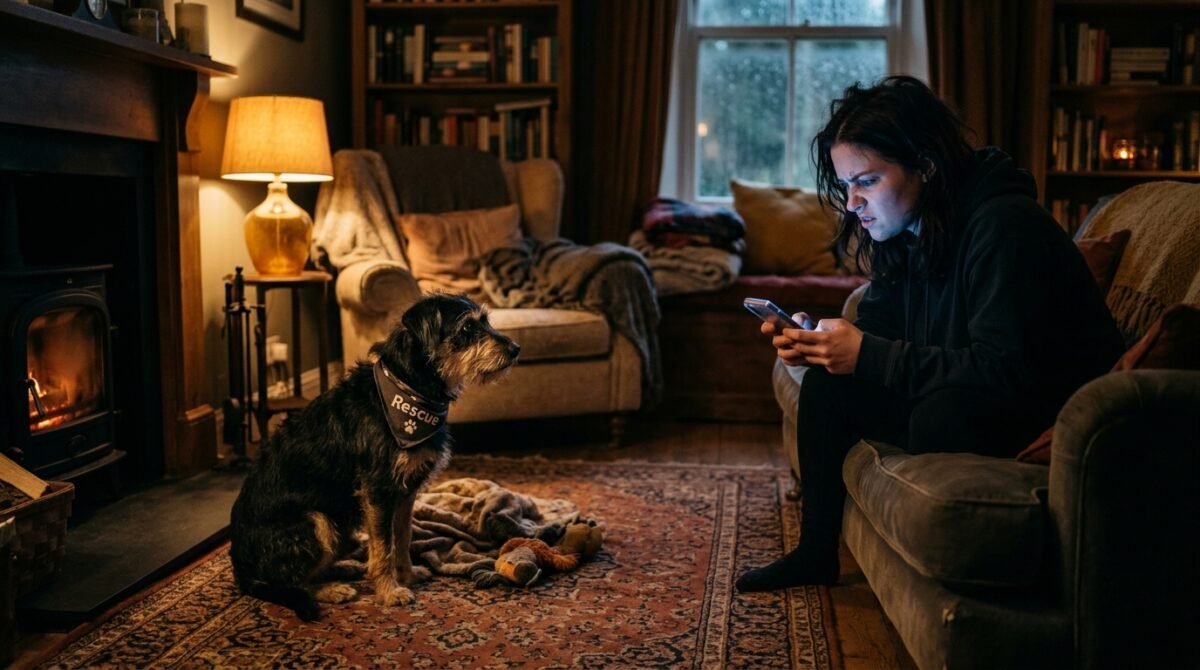
When I finally bought my first home, it felt like the culmination of years of sacrifice. I had worked double shifts, skipped vacations, and lived in a cramped apartment just to secure a place where my rescue dog, Barnaby, could have a backyard to run in. Barnaby isn’t just a pet; he’s a traumatized soul I rehabilitated from a high-kill shelter. His safety and comfort are non-negotiable, a fact that my childhood friend, Sarah, knew intimately.
We had been inseparable since kindergarten, but as we entered our late twenties, the cracks began to show. Sarah had always been the type to demand center stage, but her attitude toward my life choices had become increasingly critical. When I invited her to my housewarming dinner—a small, intimate gathering of my closest circle—I expected excitement. I did not expect a calculated attempt to police my household and jeopardize my dog’s emotional well-being.
The trouble began with a simple text chain. What should have been a planning session for appetizers turned into a bizarre, aggressive confrontation about where my dog would spend the evening. Sarah’s insistence that I lock Barnaby in the backyard shed during the party wasn’t just a suggestion; it was an ultimatum. For her, the shed was a ‘convenient storage unit’ for an animal she deemed ‘inconvenient.’ For me, it was the final straw in a decade-long struggle for respect.
This story isn’t just about a dog. It’s about the audacity of people who believe their comfort outweighs the safety of a living creature, and the inevitable fallout when someone finally decides to draw a hard line in the sand. As the messages flew back and forth, I realized that some friendships aren’t meant to survive the transition into adulthood, especially when one person refuses to respect the fundamental values of the other.
By the time I pressed ‘send’ on the final, uninviting text, my hands were shaking. I knew there would be consequences, potentially even a smear campaign among our mutual friend group, but I couldn’t allow myself to be bullied in my own home. This is the chronicle of how a housewarming dinner became the site of a profound, permanent severance.
The Initial Innocuous Planning Phase

The planning for the housewarming dinner started with such promise. I had created a private group chat titled ‘New Home, New Memories,’ inviting only five of my closest friends. Sarah was, of course, on the list. I was genuinely excited to show off the renovations I had done, particularly the kitchen and the garden where Barnaby spent his mornings chasing squirrels.
Sarah was the first to chime in. Her messages were enthusiastic, but they quickly pivoted to logistics. She started asking about the guest list, the menu, and whether I had considered the ‘nuisance factor.’ At the time, I brushed it off as her characteristic perfectionism. She had always been the one to organize our girls’ trips, so I assumed she was just being her usual, slightly controlling self.
The first red flag appeared when she asked if I had ‘dealt with the dog situation’ for the evening. I replied that Barnaby would be with us, as he was a well-behaved, social dog. I had assumed he would be part of the festivities, greeting people at the door and relaxing in the living room. It never occurred to me that he would be perceived as a problem.
“I’m just worried about the carpet and the allergies. Maybe we should keep the house pristine for the debut? Just a thought, but maybe the pup should have a quiet night in the yard?”
— Sarah, in the group chat
I responded politely, reminding her that Barnaby is a house dog and that I wouldn’t be banishing him for the sake of a rug. I thought that would settle it. I was wrong. The conversation shifted, but the underlying tension remained, a low-frequency hum that I failed to acknowledge until it was far too late.
Looking back, I realize that Sarah had been testing my boundaries for months. She had made snide comments about the adoption fees I paid and the extra money I spent on Barnaby’s training sessions. I had ignored them, thinking it was just her being ‘practical.’ But the housewarming dinner seemed to be the perfect venue for her to assert her dominance over my domestic space.
The Escalation to the Shed Ultimatum
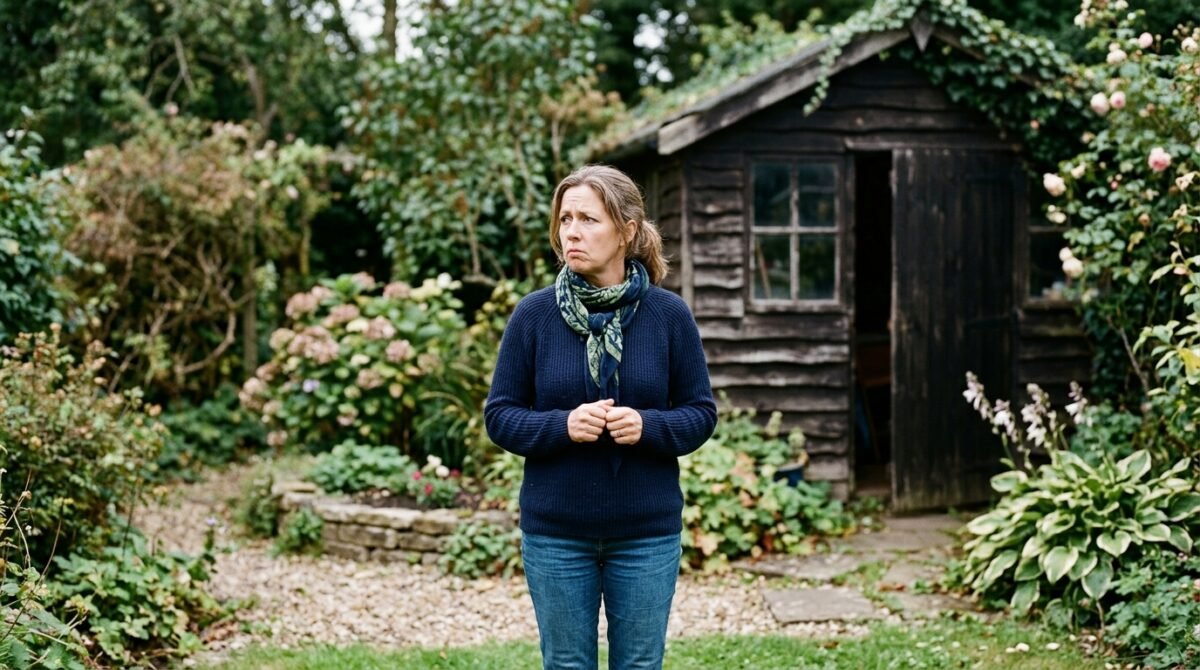
Two days before the dinner, the private messages started. Sarah decided to bypass the group chat and hit me directly. She sent a wall of text that left me reeling. It wasn’t just a suggestion anymore; it was a demand. She claimed that her new boyfriend, whom she was bringing as a plus-one, had ‘mild pet anxiety’ and that the sight of a dog in the living room would ruin the ‘aesthetic’ of the evening.
I told her, clearly and concisely, that the boyfriend was welcome, but so was Barnaby. I suggested that if he was truly that anxious, perhaps they should choose a different night to visit when I wasn’t hosting a housewarming party. That’s when the ‘shed’ comment surfaced. It was chillingly casual, as if she were suggesting I put away a folding chair.
“It’s just a dog, OP. Put him in the shed with some blankets. It’s warm, he’ll be fine for three hours. Don’t be dramatic, I want this night to be about us, not your rescue project.”
— Sarah, private message
I felt a surge of nausea reading those words. Barnaby has severe separation anxiety; he was abused before I got him, and being locked in a confined, dark space is his worst nightmare. He would panic, he would destroy the door, and he would likely break his teeth trying to escape. Sarah knew this. I had told her the story of his rescue many times.
I didn’t answer immediately. I walked into the backyard and looked at the shed. It was a dusty, spider-webbed structure meant for lawn mowers, not a living soul. The thought of putting my dog there to satisfy someone’s desire for a ‘clean’ party aesthetic made me physically ill. The betrayal felt sharp and cold.
I finally replied, telling her that the idea was cruel and that I was disappointed she would even suggest it. I reiterated that Barnaby was a member of the family and would not be locked away like property. I expected an apology. Instead, I got a lecture on my ‘obsessive’ nature and how I was ‘prioritizing a rescue over human relationships.’
The Uninvited Verdict

The night before the party, I made the decision. It wasn’t made in anger, but in a strange, calm clarity. I realized that if Sarah felt entitled to dictate the living conditions of my pet, there was no foundation for our friendship left. The housewarming party was supposed to be a celebration of my home, a place of peace. I couldn’t allow someone who held such contempt for my values to walk through the door.
I drafted the message carefully. I didn’t want to get into a shouting match or a debate. I simply stated that due to our fundamental disagreement regarding my dog’s welfare and her unacceptable request, she was no longer welcome at the housewarming. I told her I valued the history of our friendship, but I could not condone the way she spoke about Barnaby.
“I’ve decided it’s best if you don’t come tomorrow. I can’t host someone who views my dog as an obstacle to be locked away. I hope you understand that my pet’s safety comes before any social event.”
— My text to Sarah
The reply was instantaneous. She called me immediately, but I didn’t pick up. Then the texts started pouring in. She called me ‘crazy,’ ‘obsessed,’ and ‘a terrible friend.’ She threatened to tell the rest of our friend group that I had ‘lost my mind’ and that I was ‘choosing a beast over people.’ It was a classic projection of her own inability to respect a boundary.
I blocked her number shortly after. The silence that followed in the house was heavy, but it was also peaceful. For the first time in years, I didn’t feel the need to defend my choices to someone who refused to listen. I spent the evening with Barnaby, giving him extra treats and sitting on the floor with him while he napped peacefully at my feet.
The next morning, I woke up feeling lighter. The dread that had been sitting in my stomach for the last 48 hours had dissipated. I knew there would be fallout, and I knew Sarah would likely twist the narrative to make herself the victim, but I was ready for it. My home was safe, and my dog was happy. That was all that mattered.
The Fallout in the Friend Group
As expected, the fallout began within hours. My phone started buzzing with messages from mutual friends. Sarah had indeed gone on a scorched-earth campaign, claiming I had ‘kicked her out’ of my house because I was ‘having a mental breakdown over a dog.’ The narrative was carefully crafted to omit her demand about the shed entirely.
Some friends were genuinely concerned. One friend, Chloe, reached out asking if I was okay and what had actually happened. I sent her a screenshot of the original message where Sarah suggested the shed. Chloe was stunned. She had no idea Sarah was capable of being that cold-hearted. Others, however, took the bait and started sending me passive-aggressive messages about ‘being a good friend’ and ‘not letting a dog ruin a friendship.’
“Hey, I heard from Sarah that you’re going through a lot. She said you uninvited her for no reason. Is everything alright? Should we cancel the dinner?”
— Mutual friend, via text
I had to spend the afternoon doing damage control. I didn’t want to be the person who caused drama, but I also refused to be gaslit. I sent a simple, factual update to the group chat: ‘I uninvited Sarah because she demanded I lock my dog in the shed during the party. I won’t be doing that. The party is still on for those who want to come. No drama, just setting boundaries.’ The response was mixed.
Some people stayed silent. Those who knew Barnaby and knew how much I loved him immediately stood up for me. They knew that I would never uninvite someone for a trivial reason. It was an eye-opening moment, realizing who the real friends were and who was just an enabler of Sarah’s toxic behavior.
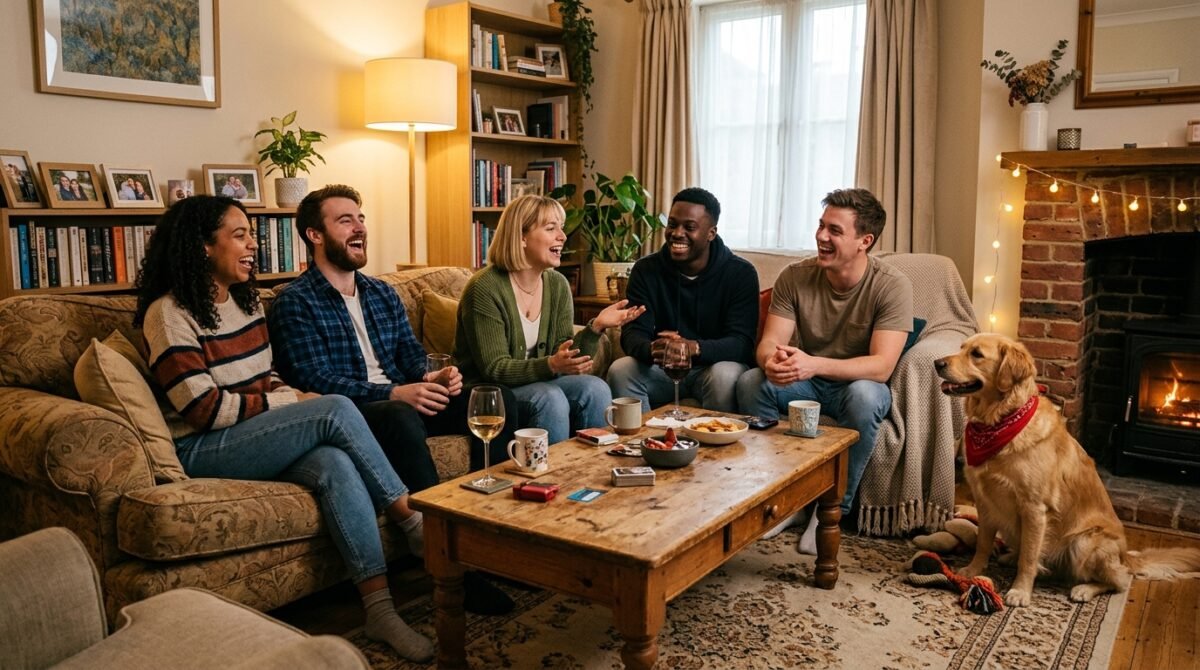
The housewarming party itself was smaller than expected, but it was far more meaningful. We had a great time, and Barnaby was the star of the show. He moved from person to person, getting ear scratches and treats, and the atmosphere was warm and genuine. There was no ‘aesthetic’ to maintain, just good food and good company. It was exactly what I had hoped for.
The Anatomy of a Toxic Friendship

Reflecting on the situation, I realized that the shed incident was just the final drop in a bucket that had been filling for years. Sarah had always been a ‘me-first’ kind of person. Our friendship had been built on a foundation of her needs and my compliance. Whenever I had a win, she had a critique. Whenever I had a struggle, she had a ‘worse’ story to tell.
She had consistently undermined my confidence, disguising her criticism as ‘brutal honesty.’ She had made comments about my career choices, my living arrangements, and even my dating life. I had stayed because we had so much history, and because I remembered the girl she was in high school. But people change, and sometimes, they don’t grow in the same direction.
The dog demand was different because it involved an innocent creature. It shifted the conflict from an abstract ‘friendship’ issue to a moral one. I could tolerate her petty jealousy or her need for attention, but I couldn’t tolerate cruelty. That, for me, was a non-negotiable line. The shed was a bridge too far, a symbol of how little she valued the things that made me, me.
“I think you just need to realize that some people don’t like animals. It’s not that deep, OP. You’re overreacting to a simple request for convenience.”
— A text from one of Sarah’s enablers
I realized then that ‘convenience’ is often used as a weapon by people who don’t want to deal with the reality of others’ needs. Sarah wanted the convenience of a party where she didn’t have to worry about a dog; I wanted the security of a home where my family member was safe. Our worlds were fundamentally incompatible.
Breaking free from a long-term friendship is a grieving process. Even though I was angry, I also felt a deep sense of loss. I lost the shared memories, the inside jokes, and the sense of security that comes with having someone who has known you since you were a child. But I gained something more important: the ability to prioritize myself and my boundaries.
The Reddit Trial: How the Internet Reacted

I decided to post my story on a popular forum to see if I was truly the ‘villain’ Sarah claimed I was. I expected some backlash, but the overwhelming support was staggering. Thousands of people commented, sharing their own experiences with toxic friends and boundary-crossing family members. The consensus was clear: I was not the one in the wrong.
The community was particularly incensed by the ‘shed’ comment. People who were dog owners, animal advocates, and even non-pet owners agreed that the request was inherently cruel. Many commenters pointed out that Sarah’s entitlement was a red flag that had likely been visible for a long time.
“NTA. The fact that she viewed your home as a stage for her boyfriend and not your living space is the real issue. The dog is just the catalyst. Cut the cord and don’t look back.”
— u/DogMomForever (Top Comment, 15.2k upvotes)
“I’m sorry, she wanted you to lock a traumatized dog in a shed? That’s not a friend, that’s a narcissist. You did the right thing by uninviting her. Block her on everything.”
— u/BoundarySetter (8.9k upvotes)
The discussion also turned to the nature of friendships in adulthood. Many people shared stories of ‘friendship breakups’ that were just as painful as romantic ones. It was validating to see that I wasn’t alone in this experience. The Reddit thread became a source of comfort and a reminder that setting boundaries is a sign of health, not a sign of ‘craziness.’
Some commenters were curious about the aftermath. They asked if Sarah had tried to reach out again or if the mutual friends had taken sides. I provided updates, explaining that Sarah had largely ignored me, but the group dynamic had definitely shifted. Some people were still on the fence, but that was fine. I didn’t need everyone to agree with me.
The most insightful comments were the ones that focused on the ‘why.’ Why would someone ask for a dog to be locked in a shed? The consensus was that it was a power move, a way to test how much I would sacrifice for her. By refusing, I had broken the cycle of control, and that was why she was so furious. The realization was both empowering and sobering.
The Aftermath: A New Chapter

Months have passed since the housewarming dinner, and life has settled into a new, healthier rhythm. I haven’t spoken to Sarah, and she hasn’t reached out. The group chat that once defined my social life has dissolved into smaller, more genuine interactions with the friends who actually support me. We have brunches, we go on hikes, and yes, Barnaby is always there.
My home feels truly mine now. There’s no pressure to keep it ‘perfect’ for visitors who don’t appreciate the love that went into it. The furniture is a little scratched, the rugs are a little worn, and there’s a permanent supply of dog toys in the living room. It’s exactly the home I always dreamed of—a place where we can be ourselves without apology.
I’ve learned a lot about the nature of boundaries. A boundary isn’t a barrier to keep people out; it’s a gate to protect what’s important. By keeping the wrong people out, I’ve created space for the right people to come in. I’ve become more selective with my time and energy, and I don’t feel the need to justify my choices to anyone anymore.
“The most important relationship you have is the one you have with yourself and those who rely on you for their safety and well-being. Never apologize for protecting that.”
— A note I keep on my desk
Barnaby seems happier, too. He’s more confident, more social, and he doesn’t have to deal with the stress of someone who doesn’t like him. He’s the heart of the house, and I wouldn’t have it any other way. We’ve found a community of fellow dog owners in the neighborhood, and our evening walks have become a highlight of my day.
If you’re in a similar situation, my advice is simple: trust your gut. If someone makes you feel guilty for caring for your pet or your values, they aren’t your friend. You don’t need to explain yourself, and you don’t need to negotiate your boundaries. It’s hard to let go, but the freedom on the other side is worth every bit of the struggle.
Refining the Inner Circle

The months following the incident forced a necessary audit of my social circle. It wasn’t just Sarah who fell away. A few other acquaintances, who had been vocal about their ‘disappointment’ in my behavior, eventually stopped reaching out as well. At first, this stung, but I quickly realized that these were people who had enjoyed the benefits of my hospitality without truly respecting the substance of my character.
It’s strange how quickly the social hierarchy of a friend group shifts when one pillar is removed. Sarah had always been the loudest voice, the one who decided who was ‘in’ and who was ‘out.’ With her gone, the group didn’t collapse; it simply reorganized. People who had been afraid to speak up started sharing their own stories of feeling stifled or judged by her.
I found myself closer to people I had previously seen only in passing. We bonded over the shared experience of having to navigate Sarah’s erratic moods. It turned out that I wasn’t the only one who had been walking on eggshells. We started a new group, sans the drama, and it has been the most refreshing, supportive social experience of my life.
“I’m so glad you stood your ground. I think we were all waiting for someone to finally be the one to say ‘no’ to her. It gave us permission to finally be ourselves too.”
— A text from a long-time acquaintance, now a close friend
This experience taught me that true friendship isn’t about constant agreement or endless compromise. It’s about mutual respect for the things that make each other unique. If a friend can’t respect your home, your pet, or your values, they aren’t looking for a friend; they’re looking for a mirror that only reflects their own desires back at them.
I’ve also become a bit of a local advocate for rescue animals. I volunteer at the shelter where I got Barnaby, and I’ve met some incredible people who share the same passion for animal welfare. It’s another layer of my life that wouldn’t have blossomed if I hadn’t made the choice to prioritize my home and my dog over a toxic friendship.
The Financial and Emotional Cost
When you cut someone out of your life, there’s always a cost. In my case, it was a few years of shared memories and some initial social awkwardness. But the emotional gain far outweighed the loss. I stopped having to spend my nights worrying about how to appease Sarah, or how to justify my expenses, or how to explain why my dog was the priority.
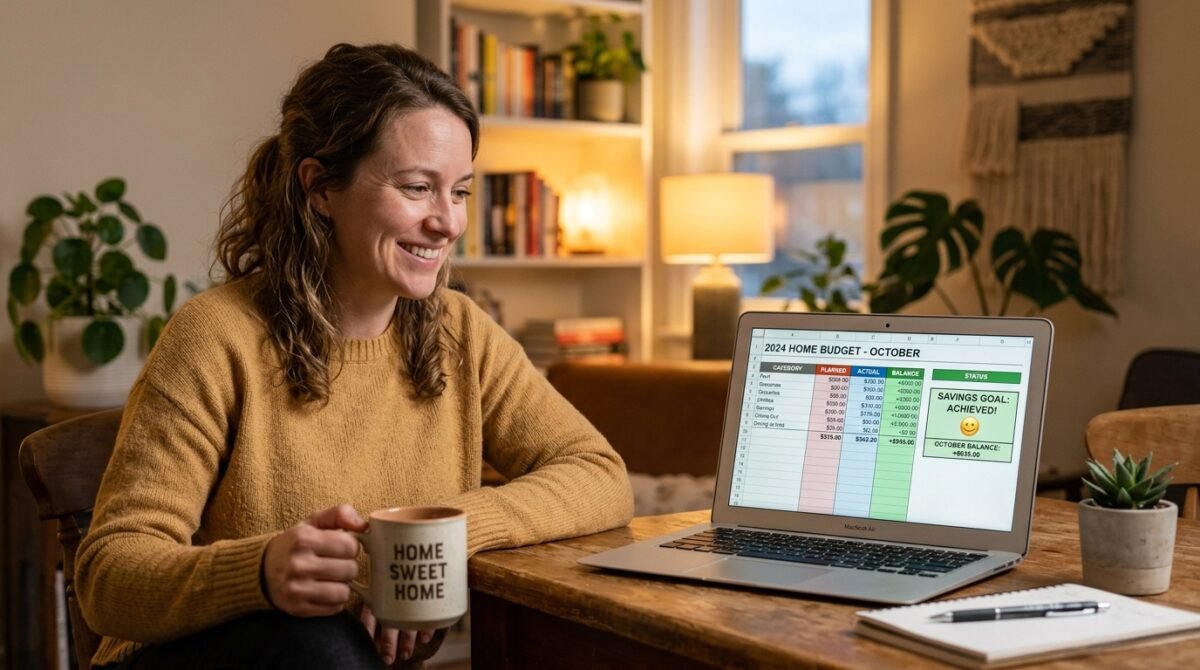
The financial aspect was also interesting. I had spent a lot of money over the years trying to keep up with Sarah’s lifestyle—the expensive dinners, the group trips, the ‘must-have’ trends. Once I stopped, I found that I had a lot more breathing room in my budget. I used that money to invest back into my home, making it a place I truly love.
Looking at my budget, I realized how much of it was spent on ‘maintenance’ of a friendship that wasn’t giving back. The dinners, the gifts, the ’emergency’ loans—it was a heavy tax on my well-being. Redirecting those funds into things that brought me actual joy, like better food for Barnaby, or new plants for the garden, or even a savings account for my future, felt like a massive victory.
“I never realized how much of my income was basically paying for the privilege of being criticized. It’s like a weight lifted off my bank account too.”
— My reflection in a personal journal
I realized that the ‘price’ of the friendship was actually much higher than I had ever calculated. It wasn’t just the money; it was the psychological toll. Every interaction had a hidden cost: the suppression of my feelings, the need to filter my words, the constant search for common ground. It was an expensive, exhausting way to live.
Now, I spend my money on things that align with my values. I don’t feel the need to impress anyone anymore. My home is a reflection of who I am, not who I’m trying to be for others. That is a kind of wealth that no amount of social prestige can match. I am finally, truly, at home.
The Long-Term Lesson in Boundaries

If there’s one thing I want people to take away from my story, it’s that boundaries are not negotiable, especially when it comes to the things you love most. Whether it’s a pet, a child, your personal beliefs, or your mental health, you have the right to protect it. People who don’t respect your boundaries are not entitled to a place in your life.
I’ve had to set boundaries in other areas of my life since the incident, and I find that it’s become easier each time. It’s like a muscle that gets stronger with use. The first time was the hardest, but every subsequent time has been more natural. People who respect you will appreciate your boundaries; people who don’t will show their true colors immediately.
I often look back at that text message, the one where I told Sarah she wasn’t invited, and I don’t feel regret. I feel proud. I feel proud that I protected my dog, I protected my home, and I protected myself. It was the moment I stopped being a supporting character in someone else’s story and became the lead in my own.
“Boundaries aren’t walls to keep people out; they’re gates to let the right people in. You set the rules of your own home, and you shouldn’t apologize for them.”
— A quote I found online that resonated deeply
I’ve also learned to be more compassionate with myself. I spent so long trying to be the ‘good’ friend, the one who never caused trouble, that I forgot that sometimes, causing trouble is necessary to stop a larger injustice. Standing up for Barnaby was a turning point. It was the moment I realized that my voice mattered, and that my actions had the power to shape my reality.
I hope that if you’re reading this and you’re in a similar situation, you’ll find the courage to set your own boundaries. You don’t have to be perfect, and you don’t have to be polite. You just have to be true to yourself. The right people will stay, and the wrong people will leave. And that, in the end, is exactly how it should be.
Conclusion
Looking back at the entire ordeal, I recognize that the shed demand was never really about the dog. It was a test—a litmus test for my autonomy and my willingness to sacrifice my well-being for the sake of someone else’s comfort. By passing that test with a firm ‘no,’ I not only saved my dog from unnecessary trauma but I also reclaimed my own life.
The internet community, specifically the Reddit thread that served as a sounding board, proved that I wasn’t alone in facing these challenges. It’s heartening to see that so many others are prioritizing their peace, their pets, and their boundaries over toxic social conventions. The debate continues, and I see it daily in comments sections: the tension between ‘being a good friend’ and ‘being a self-respecting adult.’ My conclusion is simple: you cannot be a good friend to someone who does not respect you. It is a one-way street that only leads to resentment.
Today, my life is quieter, but it is infinitely more authentic. Barnaby is thriving, my home is a sanctuary, and the friends I have left are the ones who truly earned their place in my circle. I don’t regret the severance; I only regret that I didn’t set my boundaries years earlier. The lesson is clear: if you allow people to walk all over your values, they will, and they will call you ‘dramatic’ when you finally ask them to stop.
What about you? Have you ever had to cut off a long-term friend because of a fundamental conflict in values? Did you feel the need to defend yourself, or did you just walk away? I’d love to hear your experiences in the comments. Does the ‘shed’ demand strike you as a clear dealbreaker, or do you think there’s a middle ground that could have been reached? Let’s talk about the reality of modern friendship in the comments below.
What's your verdict on this dilemma?
Vote below to contribute to the official community consensus.

Have a Dilemma Keeping You Up at Night?
Share your real-life feud, wedding chaos, or relationship crossroads anonymously with our editorial team.
What do you think ?
0 Comments🛡️ Comments are moderated to protect community integrity. Your comment will appear once approved by the editorial team.