
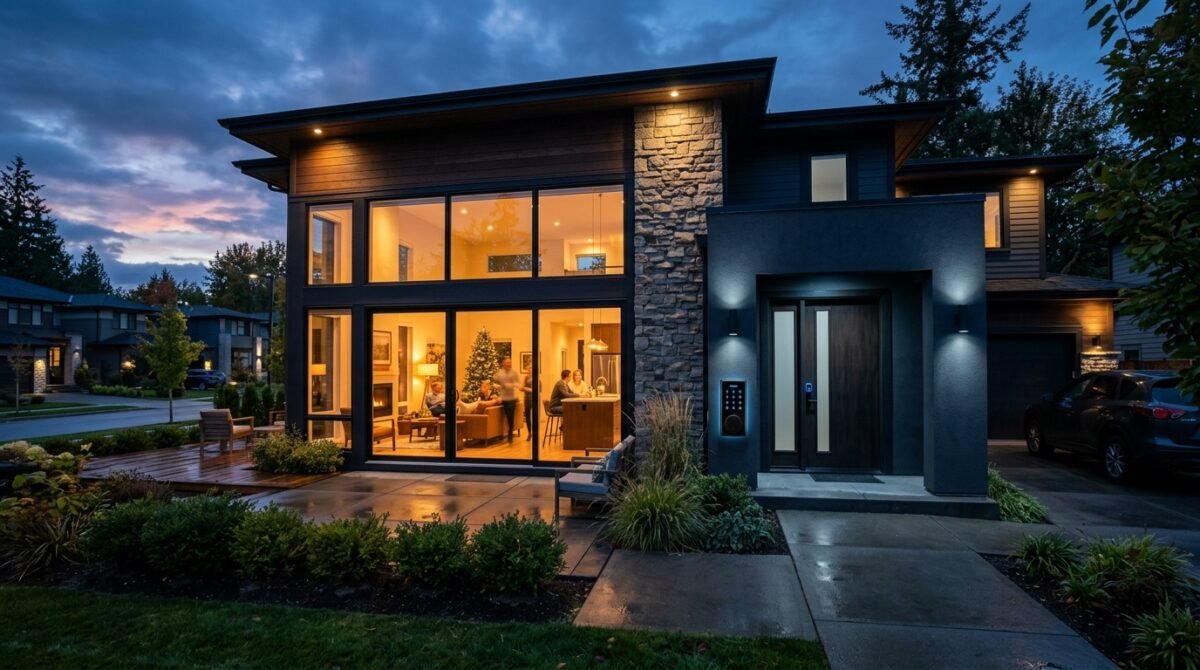
I never imagined that my own home—the place I worked sixty-hour weeks to pay off in full by the time I was twenty-seven—would become a battleground for my stepfather’s misplaced sense of authority. My dog, Barnaby, is a rescue beagle-mix with a heart of gold and a history of trauma, the kind of creature who curls into the smallest ball when he senses tension. When I moved my mother and stepfather into my guest house for a ‘temporary’ transition period while they sorted out their finances, I assumed we were a team.
The trouble began subtly. It was a series of small, nagging complaints about ‘hair on the rugs’ or ‘the smell of wet dog’ whenever Barnaby came in from a rainy walk. I dismissed it as typical adjustment friction, foolishly believing that kindness and space would resolve the issue. I was wrong. The resentment wasn’t about the dog; it was about the power dynamic. My stepfather, a man who had never held a deed in his life, suddenly decided that my house was his kingdom, and he was the monarch decreeing who—and what—was allowed to remain.
Things escalated rapidly when I returned from a weekend business trip to find a notice taped to my front door, authored by him, claiming the dog was a ‘sanitary nuisance’ and had to be rehomed by the end of the week. That moment was the catalyst for everything that followed. It wasn’t just an insult to my companion; it was a brazen violation of my autonomy. I didn’t yell. I didn’t argue. I simply walked inside, accessed my smart home dashboard, and revoked their access privileges, effectively turning my house into the fortress it was always meant to be.
This isn’t just a story about a dog. It’s a story about the intersection of financial independence, parental entitlement, and the moment a child realizes that ‘respect’ is something that must be enforced rather than requested. As I stood in my hallway, watching the notification on my phone confirm that the locks were secure, I knew the dynamic of our relationship had shifted irrevocably. The war for my living room had officially begun, and I was holding all the keys.
The Illusion of Temporary Hospitality
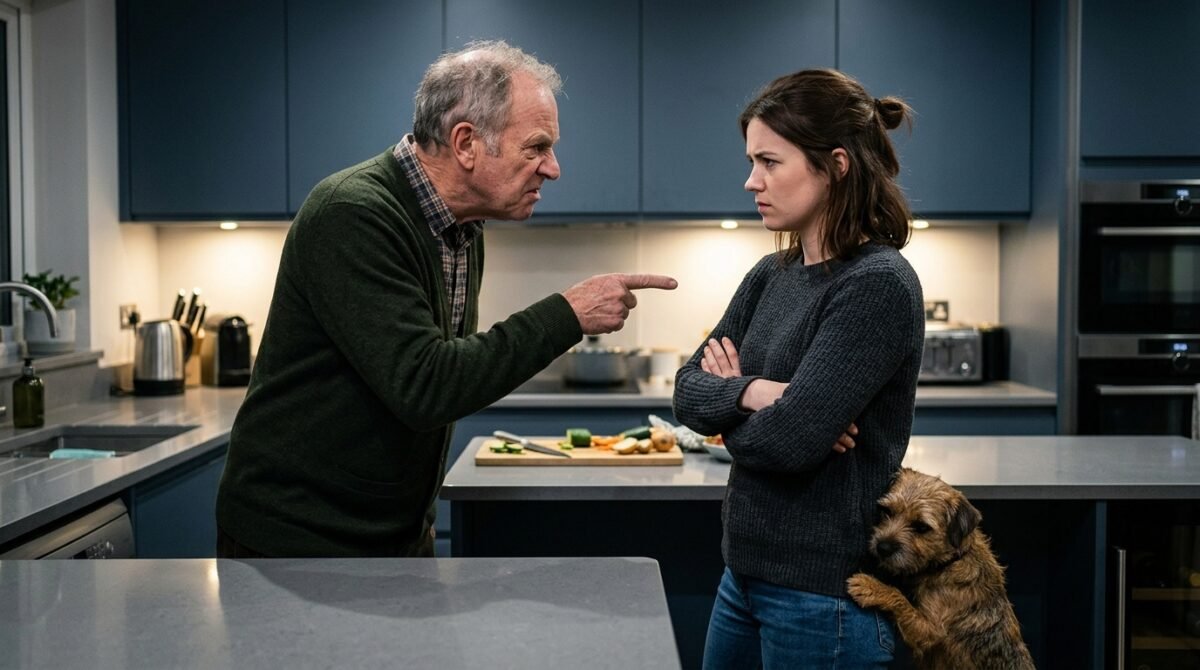
When I first invited my mother and stepfather to move into the guest cottage, the agreement was explicit: six months to get back on their feet after a failed business venture. I had just finished my final mortgage payment on the main house, a milestone that felt like the culmination of years of intense work. I was proud of that property. It was my sanctuary, my investment, and my personal accomplishment. I thought by housing them, I was offering a bridge to stability, not a permanent seat at the head of my household table.
The first few months were marked by a strange, creeping entitlement. My stepfather, Arthur, began making ‘suggestions’ about the landscaping and the interior layout. He would leave notes on the kitchen counter about how I should arrange my furniture to be more ‘efficient.’ I often joked it off to my mother, thinking it was just his way of feeling useful, but the frequency of these comments grew. It felt as if he was trying to paper over my life with his own preferences, disregarding the fact that he was, quite literally, a guest in my home.
Barnaby, my rescue dog, became the focal point of this growing tension. Because Barnaby had been abused by his previous owners, he was naturally wary of men with loud voices. Whenever Arthur would shout at the television during a sports game, Barnaby would bolt under my bed. Arthur’s response wasn’t empathy—it was annoyance. He began to frame the dog’s fear as a behavioral flaw that somehow infringed on his right to a ‘peaceful’ living environment.
“You need to get that mutt under control. He’s jumpy, he’s shedding everywhere, and he’s clearly not suited for a house of this caliber. I’ve looked into local rehoming shelters. It’s for the best, for everyone involved.”
— Arthur, during a Sunday morning confrontation
I remember staring at him, completely stunned. The audacity of him looking at my rescue dog, who had been my constant companion through two years of grueling graduate school and the stress of the mortgage, and suggesting I just ‘rehome’ him like a piece of faulty furniture. I felt the air leave the room. It wasn’t a suggestion; it was an ultimatum delivered with the casual arrogance of a man who thought his opinion had legal weight.
My mother, caught in the middle, just sat there stirring her coffee, avoiding my gaze. That was the most painful part—seeing her choose silence over defending the boundaries of her own daughter’s home. It was at that moment I realized this wasn’t about the dog at all. It was about seeing if he could force me to submit to his authority. If he could take away my dog, what was next? My car? The deed to the house? I had to act, and I had to be absolute.
The Six O’Clock Morning Intrusion
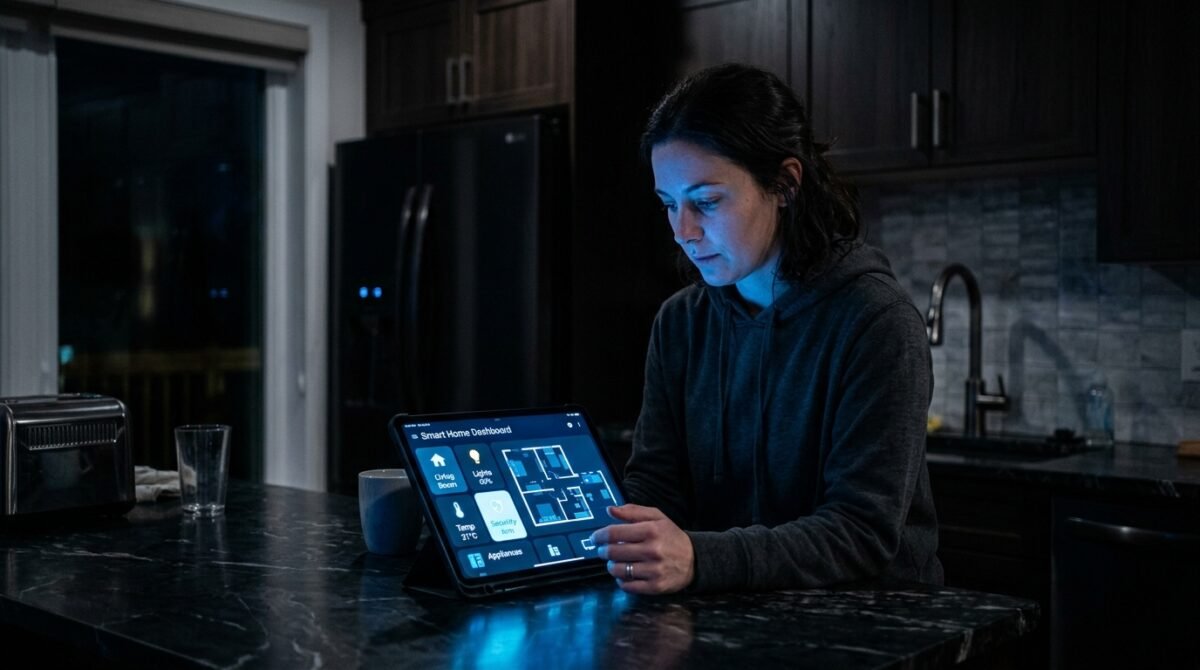
The tipping point arrived on a Tuesday morning. I was still asleep when I heard the distinct sound of the back door unlocking. I had provided them with a key for emergencies, but I had explicitly stated that they were not to enter the main house without asking. I threw on my robe and rushed down the stairs, heartbeat hammering against my ribs. I found Arthur standing in my kitchen, holding a clipboard and looking at the cabinets like he was conducting a property audit.
He didn’t even flinch when I entered the room. He just kept looking at the pantry shelves, nodding to himself. It felt like an invasion of my personal space that went beyond mere rudeness. This was a violation of the sanctity of my home. I stood at the threshold of the kitchen, feeling a cold, sharp anger override my initial shock. I realized then that my previous ‘niceness’ had been interpreted as weakness, an invitation for further overreach.
“What are you doing in my house, Arthur? And why are you holding a clipboard? I haven’t invited you over, and it’s barely six in the morning. This is not acceptable behavior.”
— My response to the intrusion
He turned around, his expression completely unfazed, as if he were the one in the right. He started listing off things he thought needed to be changed in the kitchen, complaining about the ‘organization’ and the ‘useless’ items I kept in the fridge. He spoke as though he were the head of the house and I was a wayward teenager failing to meet his standards. The condescension in his tone was suffocating, a toxic mix of patronizing advice and thinly veiled judgment.
I didn’t engage with his complaints. I didn’t defend my pantry choices. I simply held the door open and pointed to the exit. I told him in no uncertain terms that if he couldn’t respect the boundary of my home, he didn’t belong inside it. My mother, who had followed him in, looked horrified, but Arthur just scoffed, walking past me with a look of pure disdain. He seemed to think that his seniority gave him some sort of natural right to rule over me.
After they left, I sat on my kitchen floor, shaking. It wasn’t just the early hour. It was the realization that I had let a stranger into my sanctuary, and he had spent his time looking for ways to diminish me. The silence of the house felt heavy after they left, and Barnaby walked over, placing his chin on my knee. He was the only one who truly understood the need for safety. That day, I made the call to the security company to upgrade my systems, and I knew exactly what I was going to do next.
The Digital Fortress Goes Online
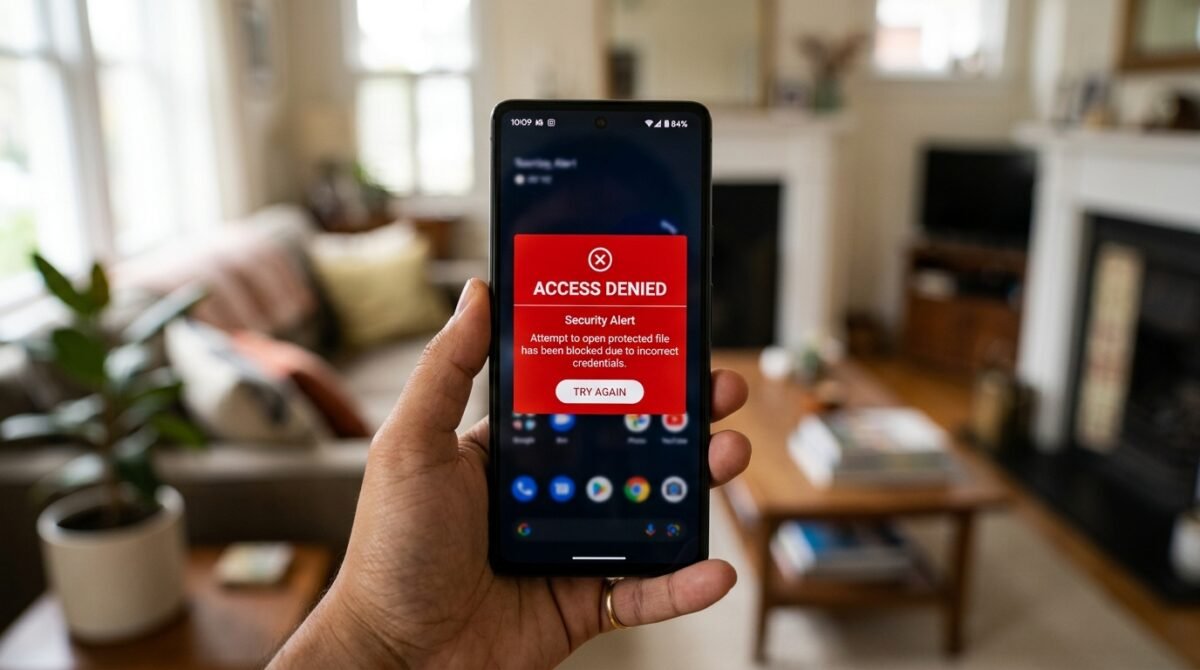
Upgrading the smart locks wasn’t just about security; it was a psychological statement. I spent the afternoon researching systems that allowed for granular, user-specific access. I chose a high-end system that integrated with an app where I could see exactly when a door was opened, by whom, and even revoke access with a single swipe. The irony of using the technology to lock out the very people who had tried to dictate my life wasn’t lost on me. It was a digital eviction of their influence.
As I installed the new deadbolts, I felt a strange sense of catharsis. Each turn of the screwdriver felt like setting a boundary that I had been afraid to establish for months. I wasn’t just protecting my home; I was protecting my peace. I set the permissions so that the codes previously given to my mother and Arthur would no longer function, effectively isolating the guest house from the main house. I kept the main house completely locked down, requiring a fresh request for entry.
“I don’t care how you feel about the locks. This is my property. You are guests. If you want to enter this house, you ask, I answer, and we decide if it’s appropriate. Those are the new rules.”
— My text message sent to the family group chat
The response was immediate and vitriolic. The family group chat, which usually consisted of benign updates and photos, turned into a digital battlefield. Arthur was furious, claiming that I was ‘locking out family’ and ‘acting like a dictator.’ He tried to frame my desire for privacy as a personal attack against him. He even roped in my mother to validate his outrage, though I suspect she was just terrified of the conflict he was stirring up.
I didn’t back down. I responded to every one of his demands with cold, hard logic. I pointed out that a home is a private space, not a communal gathering point for people to judge my life. I reminded them that the house was paid for by my labor, not theirs. It was the first time I had ever spoken to Arthur with such directness, and the shock in the chat was palpable. The ‘respect’ he demanded had been burned to the ground by his own entitlement.
By the time night fell, the house was silent and secure. I felt a profound sense of relief. For the first time in months, I wasn’t waiting for a knock at the door or a note on the counter. I was in control, and I was safe. Barnaby sensed the shift in my demeanor and finally relaxed, curling up on the sofa beside me. We were both finally at home, in the truest sense of the word.
The Failed Mediation Attempt

A few days later, my mother requested a meeting. She arrived alone, looking exhausted and carrying a bouquet of flowers that felt like a peace offering for a war she hadn’t started but was forced to navigate. She tried to frame it as a ‘misunderstanding,’ suggesting that if I just let Arthur back into the house, we could ‘talk it out’ like adults. I shook my head, knowing that ‘talking it out’ in this context meant me apologizing for protecting my own space.
I explained to her that the issue wasn’t the door; it was the lack of respect for the person who lived behind it. I laid out the history of the comments, the intrusion, the demand to remove my dog, and the general feeling of being a guest in my own house. She listened, but I could see the conflict behind her eyes. She wanted peace at any cost, and unfortunately, that cost was my happiness and my autonomy. She couldn’t understand why I was being so ‘rigid’ about the rules.
“You’re making this into such a big deal. He’s just a man with strong opinions. If you would just show him a little more respect, he wouldn’t feel the need to be so controlling. Why can’t you just be the bigger person?”
— My mother, pleading for ‘harmony’
I told her that being the ‘bigger person’ had been my default setting for far too long. I told her that ‘strong opinions’ don’t include trying to evict a family member’s pet or walking into someone’s home without permission. I told her that if Arthur couldn’t act like a guest, he didn’t need to be on the property. My mother left in tears, and I felt a heavy sadness, but I knew I hadn’t done anything wrong. The burden of this conflict belonged entirely to the person who refused to respect boundaries.
The next day, Arthur tried to approach me directly. He showed up at the main house, knocking loudly on the door. I didn’t open it. I spoke through the video doorbell, telling him that if he had anything to say, he could text it, but he was not welcome inside. The look of pure, unadulterated rage on his face when he realized I wouldn’t open the door was terrifying. He shouted insults at the camera, calling me ungrateful and spoiled. I just watched, disconnected and calm, knowing that he had lost his leverage.
This was the moment the mask slipped completely. The facade of the ‘helpful stepfather’ was replaced by the reality of a man who felt entitled to someone else’s life. It was a dark, revealing moment, but it was exactly what I needed to see to confirm that my decision was the right one. I wasn’t the one causing the drama; I was the one stopping the chaos. And for the first time, I felt powerful in my own home.
The Reddit Trial: Community Verdicts

I posted about the situation on a popular subreddit, needing an external perspective to ensure I wasn’t losing my mind. I laid out the facts: the mortgage payments, the guest house arrangement, the dog, the intrusion, and the locks. The response was overwhelming. Within hours, the post had thousands of upvotes and a deluge of comments that ranged from supportive validation to strategic advice on how to handle the inevitable fallout.
“NTA (Not the A-hole). Your house, your rules. The fact that he thinks he has any say over your pet or your property is a massive red flag. He’s not a guest; he’s an invader. Don’t back down. If he doesn’t like it, he can find somewhere else to live.”
— u/PropertyRightsAdvocate (Top Comment, 32.5k upvotes)
It was incredibly validating to see so many people recognize the absurdity of the situation. Many commenters shared their own stories of boundary-pushing family members, reinforcing the idea that ‘family’ is not a blank check for abuse. It helped me realize that the guilt I was feeling was a learned response, not an objective truth. I wasn’t being cruel; I was being assertive. The community helped me reframe the situation from ‘I am being difficult’ to ‘I am protecting my rights.’
“This is classic narcissistic entitlement. He’s testing your boundaries to see what he can take. First the dog, then the kitchen, next it will be your bank account. The locks were the smartest thing you could have done. Stay the course.”
— u/PsychologyBuff (18.2k upvotes)
Some users warned me about the potential for escalation, advising me to keep logs of every interaction in case things turned legal. That advice was invaluable. I started taking screenshots of every text message, documenting every ‘visit,’ and recording the dates of each conflict. It transformed the situation from a messy family drama into a manageable project. I wasn’t just reacting anymore; I was planning.
The community also gave me the courage to stand firm when my mother started pressuring me again. I realized that my mother had been conditioned to prioritize Arthur’s comfort, and it wasn’t my job to break that conditioning for her. I could love her, but I didn’t have to sacrifice my safety for her marriage. The Reddit thread became a source of strength, a digital support group that reminded me I wasn’t alone in this fight.
The Ultimatum and the Bag-Packing
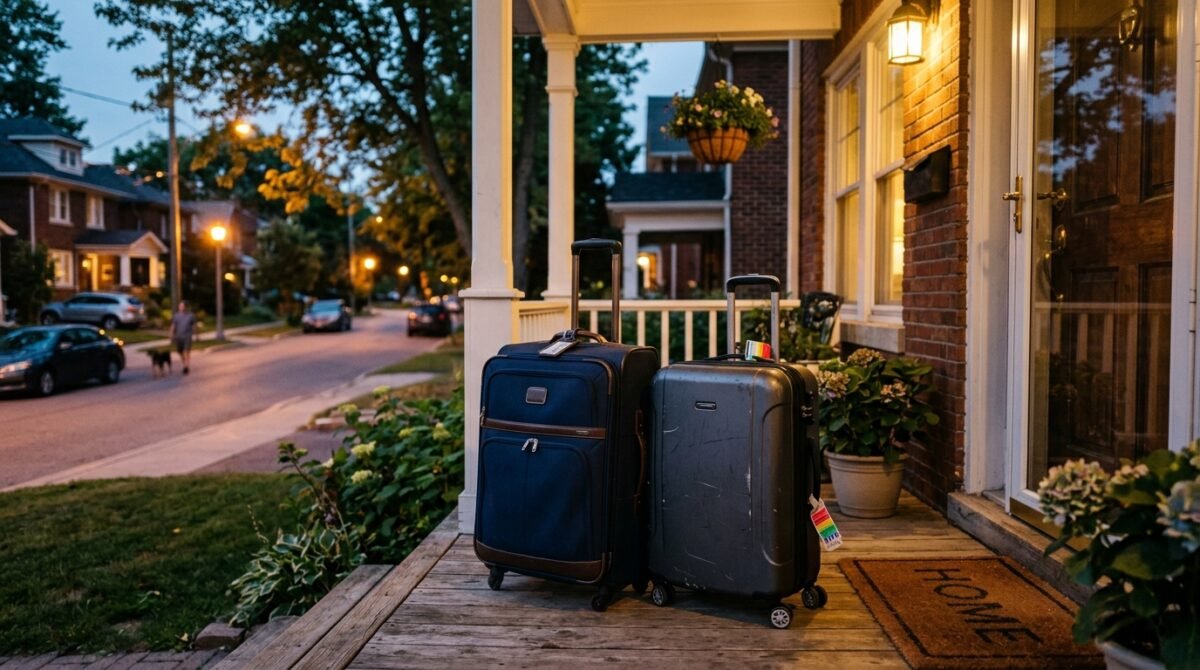
The final showdown arrived on a Saturday afternoon. Arthur and my mother appeared at the door again, but this time they had suitcases. It was a dramatic play, a classic ‘if you don’t do what I want, I’ll leave’ tactic. They were betting that I would fold under the pressure of them being ‘homeless.’ They were wrong. I met them at the door, cool and collected, holding my phone as if I were ready to call the police if things escalated.
Arthur started his speech about how ‘ungrateful’ I was, how I was tearing the family apart over a dog, and how I would regret this for the rest of my life. He looked at my mother, expecting her to chime in with support, but she was looking at her feet, clearly miserable. The drama of the moment felt theatrical, a last-ditch effort to reclaim the power he had lost when I changed the codes on the locks. He was a man who couldn’t handle not being the authority figure in the room.
“You have choices, Arthur. You can either respect the boundaries of this household and stay in the cottage, or you can find your own place. I am no longer accepting ultimatums, and I am no longer accepting your behavior. The choice is yours.”
— My firm stance as they stood with their suitcases
He scoffed, spinning on his heel as if he were walking out of my life forever. My mother lingered for a moment, looking at me with a mix of fear and confusion. I hugged her, told her I loved her, but reiterated that I would not be bullied in my own home. She left with him, and for a few hours, the silence in the house was deafening. I honestly didn’t know if they were coming back, and for the first time, I realized that I didn’t care.
The next few hours were spent in a state of strange calm. I walked around the house, checking the rooms, petting Barnaby, and enjoying the stillness. I had braced myself for an emotional breakdown, but it never came. Instead, I felt a deep, quiet resolve. I had stood up for myself, and the world hadn’t ended. In fact, it had become a much more peaceful, controlled place. I had successfully defended my sanctuary.
By evening, they were back. They hadn’t gone far—apparently, they had nowhere else to go—and they returned to the guest cottage with their tails between their legs. There were no more dramatic speeches. No more notes on the counter. The power dynamic had been permanently reset. They knew now that there was a line, and that I was willing to enforce it. It was a victory, but a quiet, somber one.
The New Normal: Living with Boundaries
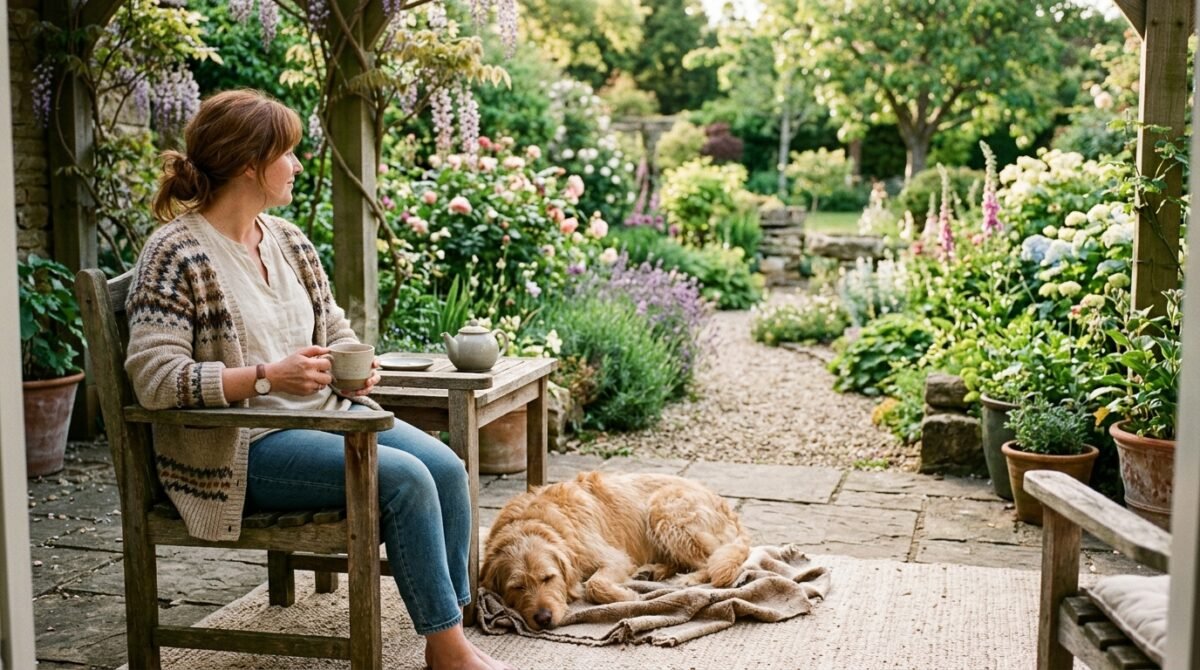
Life in the aftermath has been surprisingly routine. We coexist, but the intimacy of our relationship has been replaced by a polite, distant formality. I see them occasionally, we exchange pleasantries, but the ‘family’ dynamic is fundamentally changed. I don’t invite them into the main house anymore, and they haven’t asked. It’s a compromise that works, a way to maintain the familial connection without sacrificing my autonomy.
Barnaby seems to sense the change too. He’s more relaxed, less prone to hiding under the bed, and he finally feels like the master of his own domain. I don’t worry about him when I’m at work, and I don’t worry about him when I’m home. The fear that used to hover over our household has dissipated, replaced by a quiet, steady peace. It’s a testament to how much one person’s energy can affect an entire home.
“You’ve changed, you know. You’re much colder than you used to be. You used to be so accommodating, so willing to help. Now you’re just… rigid.”
— Arthur, during a brief, forced conversation
I told him that being ‘accommodating’ had been my way of being exploited, and that ‘rigid’ was just another word for ‘having boundaries.’ He didn’t like the answer, but he didn’t argue. He knows that if he pushes, I will push back. And that realization is enough to keep the peace. It’s a sad reality that some people only respect you when they fear the consequences of mistreating you, but it’s a reality I’ve accepted.
My mother and I have been working on our relationship separately. We go to lunch, we talk on the phone, but we avoid the topic of the ‘house conflict.’ It’s a delicate dance, but it’s working. I’ve learned that I can maintain a relationship with her without being subsumed by her marriage. It’s a lesson that I wish I’d learned years ago, but I’m grateful to have learned it now, before things got even more complicated.
I’ve also started looking into the future. The guest house won’t be occupied forever, and I’m starting to think about what I want to do with that space when they eventually move out. It’s a project for another day, but the prospect is exciting. I’m no longer tied to the idea that I have to provide for everyone else at the expense of my own comfort. I’m finally living for myself, and for my dog, and that feels like enough.
Reflecting on the Cost of Autonomy
Looking back, I realize that the most difficult part wasn’t the conflict itself, but the internal guilt I felt for asserting my rights. We are often socialized to believe that ‘family’ comes with an unconditional obligation to submit. We are taught that ‘being nice’ is the highest moral virtue, even when it means sacrificing our own dignity. Breaking free from that conditioning was the hardest thing I’ve ever done.
I think about the money I spent on the locks, the legal research, the emotional labor of holding the line. It was an investment in myself. I didn’t just buy hardware; I bought my peace of mind. I bought the right to exist in my own home without fear, without judgment, and without the constant pressure to conform to someone else’s expectations. And looking back, it was the best investment I’ve ever made.
“When you set a boundary, you will be met with anger, resentment, and manipulation. Do not mistake their reaction for your failure. It is simply the sound of a system that is no longer benefiting from your subjugation.”
— Advice from a therapist I consulted mid-crisis
The lessons I’ve learned extend far beyond my kitchen. I apply them in my career, in my friendships, and in how I view my own value. I no longer apologize for existing, for being successful, or for wanting to protect the life I’ve built. I’ve realized that my boundaries are not a wall to keep people out, but a filter to ensure that the people who remain are those who truly respect me.
It’s also made me a better dog owner. I see Barnaby’s resilience, his ability to overcome his trauma and trust me completely, and it reminds me that I need to be just as resilient in my own life. We’ve both built a sanctuary together, a place where we are both safe and respected. That’s a bond that nothing can break, and it’s one that I will protect at all costs, regardless of who might be offended by it.
If you’re reading this and you’re in a similar situation—if you feel like your home isn’t your own, or that your boundaries are being ignored—know that you have the power to change it. It won’t be easy. It might be messy. But it is worth it. You deserve to live in a space that reflects your values, your needs, and your autonomy. You deserve to be the person who holds the keys.
The Unspoken Lesson of the Smart Locks
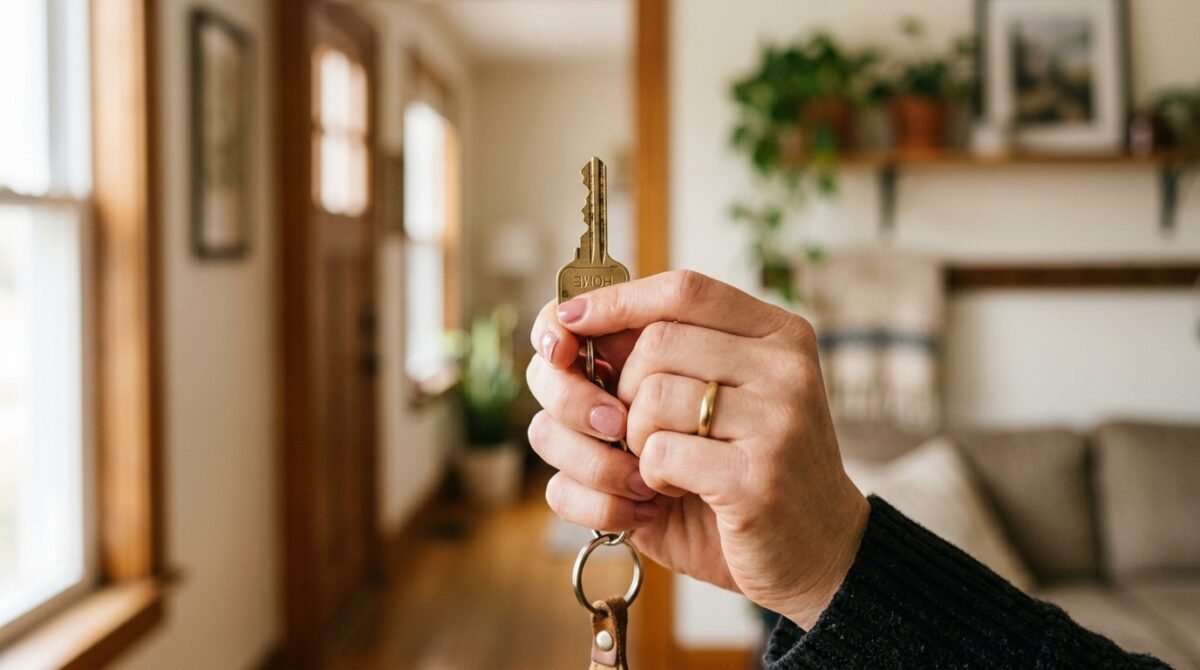
People often ask me if I would do it again—the standoff, the locks, the confrontation. And my answer is always the same: I would do it sooner. I spent so many months suffering in silence, trying to be the ‘bigger person,’ when the only thing that actually worked was being the ‘deciding person.’ The smart locks were just a tool, but they represented a shift in my consciousness that allowed me to reclaim my life.
I’ve learned that most people who push boundaries don’t do it out of necessity; they do it because they can. When you remove the ability for them to do it, the behavior stops. It’s not about being mean or cruel; it’s about being consistent. It’s about showing the world that your home is a space that must be earned, not taken. It’s a simple truth, but it took me a long time to understand it.
“Your home is the physical manifestation of your life’s work. If you don’t defend it, no one else will. Don’t let your kindness be the foundation of someone else’s entitlement.”
— A piece of advice I now pass on to others
The dynamic with Arthur is still strained, but it’s a ‘functional’ strain. We’ve established a hierarchy that works, even if it’s not the one he wanted. I see him differently now, not as an authority, but as a person who needs very clear instructions. It’s not the relationship I thought I would have, but it’s a sustainable one, and that’s good enough for me.
I’ve also started taking more ownership of my own life. I’m no longer waiting for validation from my family. I’m no longer seeking their approval for my choices. I’ve realized that I am the only person who has to live with my decisions, and that gives me the freedom to make the ones that truly matter to me. I’m living for myself, and for the first time, I’m actually happy.
In the end, it wasn’t about the dog. It was about the power of saying ‘no.’ It was about the moment I realized that my voice mattered, my labor mattered, and my home mattered. It was about standing up for what I had built, and refusing to let it be dismantled by someone else’s ego. And looking back, that moment changed everything.
Final Words on the Family Conflict

I think the most important thing to remember is that family is a choice. We are born into a certain set of circumstances, but we get to choose who we allow into our lives and how we allow them to treat us. That is a choice that I’ve made, and it’s one that I will continue to make every day. It’s not an easy one, and it certainly isn’t a popular one, but it’s the only one that allows me to sleep at night.
The Reddit community has been a mirror for me, reflecting the reality of my situation when I was too close to see it. It reminded me that there are thousands of other people going through similar struggles, and that there is strength in numbers. It taught me that I wasn’t alone, and that my experience was valid. It’s something that I will always be grateful for, a digital community that saved my home and my sanity.
“You didn’t break the family. The person who forced you to lock your doors broke the family. You just responded to the damage they were causing.”
— A final, poignant comment from the community
I’ve come to accept that I can’t change Arthur. I can’t change my mother’s reaction to him. I can only change how I respond to them. And that is a powerful realization. It takes the burden of ‘fixing’ things off my shoulders and puts the focus back on where it belongs: my own life, my own health, and my own happiness. It’s a shift that has brought me more peace than I ever thought possible.
So, here I am, living my life in a home that is truly my own. I have my dog, I have my privacy, and I have my peace. And I have the knowledge that I am capable of standing up for myself, even when the pressure is at its highest. It’s a lesson that I will carry with me for the rest of my life, a reminder that the most important locks are the ones we place on our own boundaries.
I hope that if you are in a situation like mine, you find the strength to do what you need to do. It might be hard, it might be painful, but it is worth it. You deserve to be the master of your own life, and you deserve a home that feels like a sanctuary. Don’t settle for anything less, and don’t let anyone convince you that you don’t have the right to protect what is yours.
Conclusion
Reflecting on this journey, the biggest takeaway has been that boundaries are not acts of aggression; they are acts of self-preservation. By changing the locks, I didn’t just prevent an intrusion; I signaled to myself and my family that my autonomy was non-negotiable. It wasn’t about the dog, and it wasn’t about the house—it was about reclaiming the space I had earned through hard work and determination.
The emotional turbulence of this conflict was a necessary forge. It stripped away the superficial expectations of family duty and revealed a core of strength I hadn’t known I possessed. I learned that true family respects your space and your companions, and that those who don’t should not be granted access to the inner sanctum of your life.
As I move forward, I am committed to maintaining these boundaries, not out of bitterness, but out of a genuine love for the peace I have created. My relationship with my mother remains a work in progress, and my relationship with my stepfather is essentially transactional, which is the only way it can be healthy for me. I’ve found that by limiting access, I’ve actually protected the good parts of the relationships that were worth saving.
I invite you, the readers, to weigh in. Have you ever had to draw a line in the sand with family, even at the cost of being labeled the ‘difficult’ one? How did you maintain your peace while navigating the fallout? Let’s discuss in the comments below—your stories of setting boundaries and finding your own independence are what make this community a place of growth and shared resilience.
What's your verdict on this dilemma?
Vote below to contribute to the official community consensus.

Have a Dilemma Keeping You Up at Night?
Share your real-life feud, wedding chaos, or relationship crossroads anonymously with our editorial team.
What do you think ?
0 Comments🛡️ Comments are moderated to protect community integrity. Your comment will appear once approved by the editorial team.