

Growing up, my relationship with my mother was always a fragile thing, held together by the thin threads of her desire for stability and my own need for a sense of belonging. When she married David, I was hopeful. He seemed kind, successful, and willing to provide the paternal presence I had lacked for years. Fast forward a decade, and that initial hope had curdled into something far more complicated. After my grandmother passed away, she left me a significant estate—a beautiful property that had been in our family for three generations. It was a windfall that fundamentally shifted the power dynamic between me and my stepfather.
Because I was still young and wanted to keep the family unit close, I invited my mother and David to move into the estate house with me. I handled the property taxes, the maintenance, and the insurance, effectively acting as their landlord, though I never asked for a dime in rent. It was a gesture of love, or perhaps a misguided attempt to earn the family connection I had craved for so long. Little did I know that my generosity would be perceived as weakness, and my boundaries—specifically those regarding my service animal, Barnaby—would become the catalyst for the most explosive confrontation of my life.
Barnaby isn’t just a pet. He is a trained medical service animal who performs tasks critical to my daily functioning. Without him, I am vulnerable, and my quality of life plummets. David, however, never saw him as a medical necessity. To him, Barnaby was a nuisance, a ‘beast’ that didn’t belong in his ‘home.’ The friction began with petty comments and escalated into active attempts to undermine my health. I thought we could resolve it through conversation, but David wasn’t interested in conversation; he was interested in control. He believed that because he was the older man, he was the head of the household, regardless of whose name was on the deed.
The breaking point arrived on a Tuesday afternoon, a day that felt like any other until I walked into the kitchen to find my medical equipment bag being tossed into the mudroom and my dog being cornered by a man whose face was twisted with irrational rage. That was the moment the facade finally shattered. I realized then that I wasn’t living with family; I was living with a guest who had forgotten his place. The next day, I didn’t reach for an apology; I reached for a lawyer. This is the story of how the house I inherited became the battleground for my independence, and how I ultimately chose my health over a toxic family dynamic.
The Escalation of Petty Aggressions
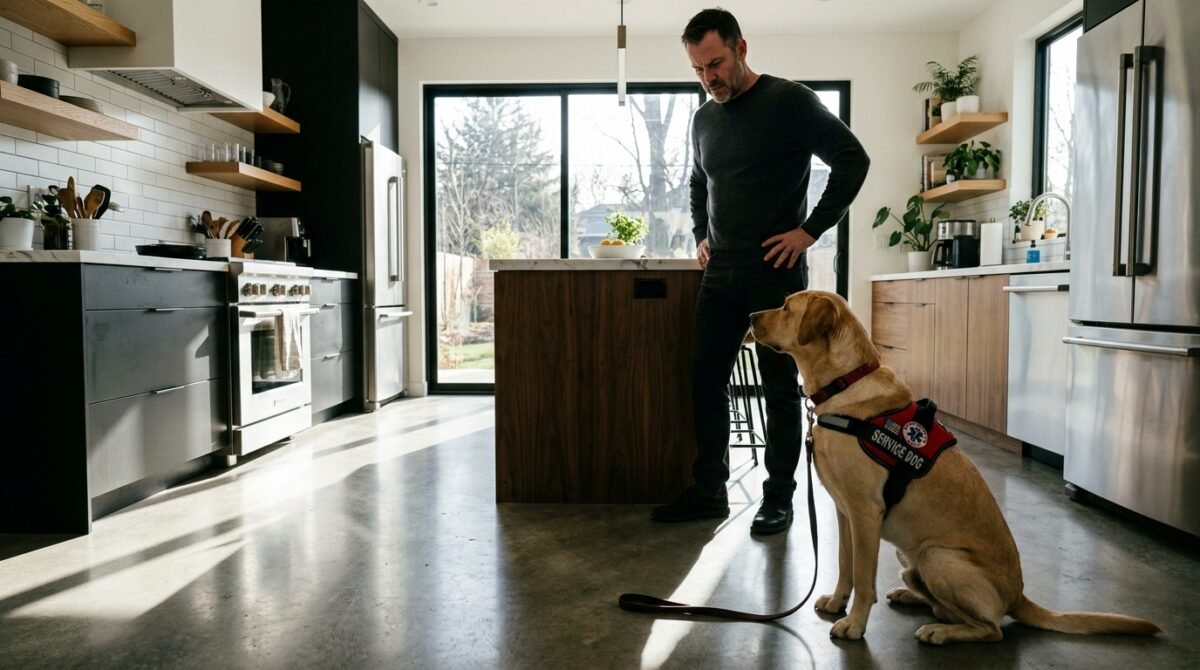
It didn’t start with an eviction threat. It started with the subtle, paper-cut insults designed to erode my confidence and make me feel like a guest in my own home. David began by complaining about ‘dog hair’ on carpets that I had professionally cleaned twice a month. He would make comments whenever Barnaby performed his alert tasks, mocking the medical necessity as ‘attention-seeking behavior’ by both the dog and myself. I tried to dismiss it, telling myself that he was just a man of his generation, someone who struggled with the concept of invisible disabilities.
The passive-aggressiveness soon moved into active interference. I would find my dog’s water bowl dumped out in the backyard, or his vest—which clearly states ‘DO NOT PET’—tossed into the hallway closet. Every time I confronted him, he would lean back, cross his arms, and give me a condescending smile. He insisted that he was ‘only trying to keep the house clean,’ as if my dog were a stray I had dragged in off the street. The environment became suffocating. My mother, caught in the middle, would only wring her hands and ask me to ‘just be patient’ with him, as if his blatant disrespect was something I could negotiate away.
“You need to understand, I’m the man of the house. I don’t care what the deed says, you don’t bring animals into living spaces where they aren’t wanted. You’re making your mother uncomfortable, and you’re being selfish.”
— David, during one of our many kitchen confrontations
The irony of him calling me selfish while living rent-free in a house I paid for was not lost on me. Every month, I watched the property taxes come out of my bank account, funds I had earmarked for my future education and medical costs. Yet, I felt like a silent boarder, afraid to speak up for fear of causing a ‘scene’ that would break my mother’s heart. I was trapped by my own kindness, and David knew exactly how to exploit that. He pushed, and he pushed, waiting for me to snap, never realizing that my threshold for disrespect was slowly reaching its limit.
I kept a meticulous log of these incidents. Not because I was petty, but because I had started to realize that my mother’s husband was capable of gaslighting me to the point where I questioned my own sanity. I would record the dates, the times, and the specific things he said. It felt like corporate training, but it was just trying to survive my own living room. I didn’t want to lose my mother, but I realized that as long as I prioritized his comfort over my own legal rights and my medical needs, I was essentially funding my own abuse. The power shift had to happen, and it had to be absolute.
The Kitchen Confrontation
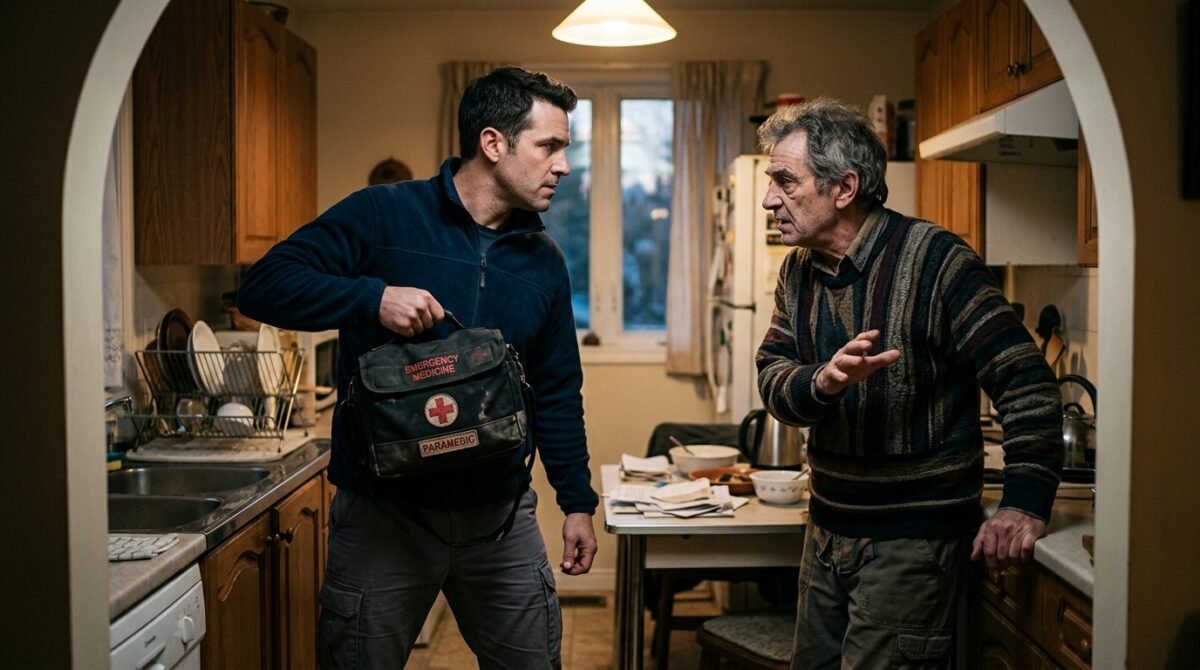
The Tuesday incident was the final straw. I had returned from a doctor’s appointment, my heart rate already elevated, when I walked into the kitchen to find my medical bag—the one containing my vital supplies and insulin—tossed on the mudroom floor. Barnaby was cowering in the corner, his ears back, clearly traumatized by someone yelling at him. David was standing over him, pointing a finger, his voice booming with a level of aggression I hadn’t witnessed before. The air in the room felt thick, charged with a malice that made my blood run cold. I realized immediately that the ‘petty’ stage of our conflict had officially ended.
I didn’t scream. I didn’t cry. I walked over to my dog, knelt down to comfort him, and then looked up at David with a level of coldness that seemed to startle him. He had expected an emotional outburst, a tearful plea for peace. Instead, he got the steely resolve of a person who had finally reached their limit. I asked him, in a voice that didn’t shake, why he thought he had the right to touch my property and threaten my animal. He didn’t answer with logic; he answered with pure, unadulterated entitlement. He told me the house was ‘our home’ and that he would do whatever it took to make it ‘livable’ for him.
“I am done with this dog, and I am done with you thinking you hold power here. This is a family home. You’re lucky we even tolerate this animal. If he’s not out by tonight, I’m putting him in the kennel myself. Don’t test me.”
— David, escalating the conflict
I felt a strange sense of clarity wash over me. For years, I had walked on eggshells to maintain the peace, but the peace was a lie. The moment he threatened my medical equipment and my service animal, he crossed a line that could never be uncrossed. I stood up, gathered my bag, and walked out of the kitchen without another word. I didn’t need to argue anymore. I had all the evidence I needed to prove that he was not only an unwelcome guest but a legitimate threat to my health and the safety of my service animal. The gears of a different kind of resolution began to turn in my mind.
That night, I didn’t sleep. I spent hours on my laptop, pulling up the original trust documents and the property deed. I called my lawyer the moment his office opened the next morning. I wasn’t just going to ask him to leave; I was going to make sure it was legally binding, and that if he didn’t comply, the consequences would be swift and severe. The realization that I owned the roof over his head was no longer a burden; it was my greatest tool for liberation. I was done being the victim in my own life.
The Legal Notice Heard ‘Round the House
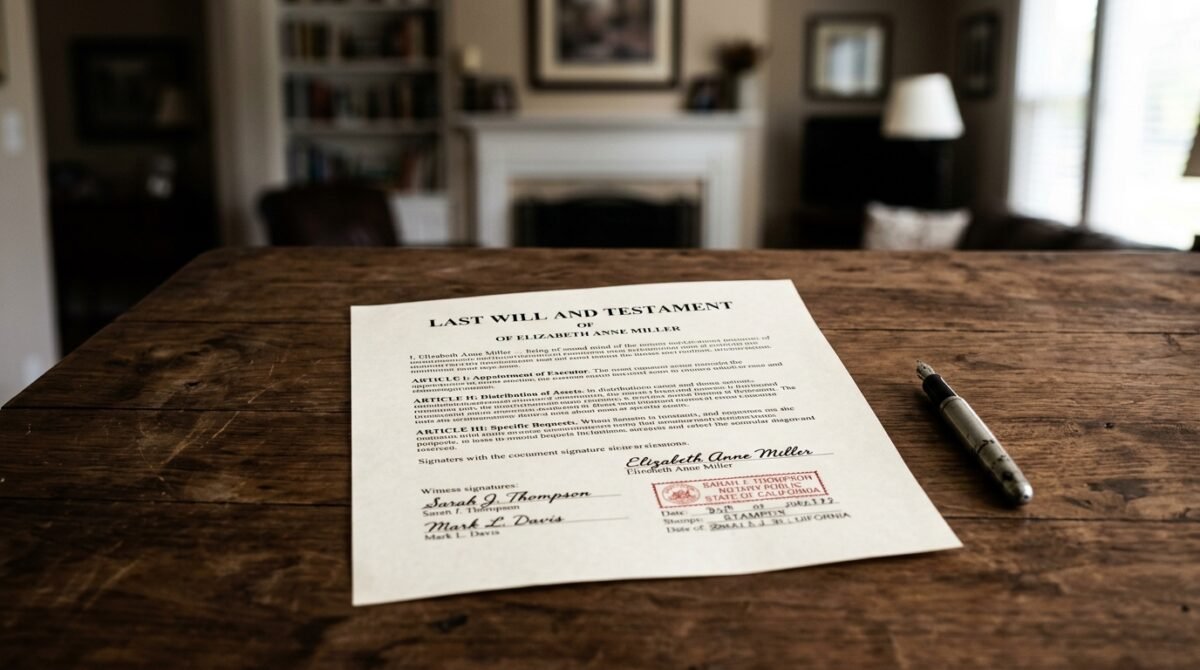
When the process server arrived on Thursday, I made sure I was not present. I didn’t want to see the look on David’s face, and I certainly didn’t want to be involved in the initial explosion. I had moved my most valuable belongings into a locked storage unit and had already made arrangements to stay with a friend for a week. The notice was formal, cold, and legally absolute. It cited the lease-like agreement we had informally operated under and the violation of quiet enjoyment and harassment of a service animal as grounds for termination of his residency. It was a 30-day notice, but I knew he would try to contest it immediately.
My mother called me ten minutes after the server left. She was hysterical, crying about ‘family values’ and how I was ‘betraying’ my own blood. I listened for a few minutes, my phone held away from my ear, before I calmly told her that David’s actions were the betrayal, not my response to them. She claimed she didn’t know what he was doing, that he was just ‘stressed.’ I told her that stress is never an excuse for abuse, and that the notice stood. I wasn’t asking for her permission; I was informing her of the reality. The silence on the other end of the line was deafening.
“How could you do this to us? We are a family! You’re throwing your own mother out because of a dog? You’ve changed, and not for the better. David has been nothing but supportive of you, and this is how you repay him?”
— My mother, during the aftermath of the eviction notice
I didn’t argue with her. I knew she was deeply enmeshed with him, and trying to convince her of the truth would be like trying to talk to a brick wall. I just reiterated that my medical needs and my personal safety were non-negotiable. I told her that she was welcome to stay, but that David had to go. I knew it was an impossible choice for her, but I refused to set myself on fire to keep them warm anymore. The decision to draw a line in the sand was the most difficult thing I’d ever done, but it was also the most liberating.
The next few days were a blur of texts, emails, and threats from David. He sent me screenshots of ‘legal advice’ from random forums, claiming I couldn’t evict him because he had ‘rights’ as a family member. He threatened to sue me for everything I owned, claiming he had ‘contributed’ to the property value through his presence. I forwarded every single one of his messages to my lawyer, who just laughed and told me to keep documentation. It was the first time I felt like I had a professional shield between me and the toxicity that had plagued my life for years.
The Fabricated Contributions and Financial Gaslighting

David’s desperation began to manifest in increasingly absurd ways. He started sending me itemized lists of what he called his ‘financial contributions’ to the house. He listed things like ‘garden maintenance’ at an exorbitant hourly rate, and even tried to charge me for ’emotional support’ he claimed to have provided over the years. It was laughable, but also deeply insulting. He was trying to frame his presence as a service, as if he were a contractor I had hired, rather than a guest who had overstayed his welcome in a home he never contributed to in any financial capacity.
I sat down with my spreadsheet and compared his claims to reality. The table below tells the story of the disparity between his perceived importance and the actual financial arrangement. It wasn’t about the money for me; it was about the principle of the matter. He believed that he could gaslight me into believing that I owed him, and that my ownership of the house was secondary to his ego. He even tried to claim that he had ‘invested’ in the property by painting the guest bedroom, as if a few cans of paint gave him permanent residency.
| Category | David’s Claim | The Reality |
|---|---|---|
| Rent | Contribution to mortgage | $0 (House is paid off) |
| Maintenance | $50/hr for yard work | Neglected the lawn entirely |
| Utilities | Shared burden | I paid 100% of bills |
| Improvements | Added value to home | Unapproved, DIY projects |
The audacity of these claims was staggering. He was attempting to build a case that he was a tenant-at-will who had been ‘wronged’ by a landlord. But because I had been the one paying all the utilities, taxes, and repairs, there was no paper trail to support his claims. I had the bank records, the receipts, and the property tax statements to prove that I was the sole provider. Every time he sent me a new ‘invoice,’ I would simply reply with a single sentence: ‘Please take this up with my legal counsel.’ It was the most effective way to shut him down.
“I’ve put years into this place. You can’t just kick me out like a common squatter. I have rights, and I will be looking into a lawyer to challenge this notice. You’re making a huge mistake that you’ll regret for the rest of your life.”
— David, in a text message
The threat of a lawsuit was a bluff, and we both knew it. He didn’t have the funds to hire a lawyer, and no lawyer would take a case where the landlord was the owner and the ‘tenant’ was a rent-free guest who had been abusive. He was just trying to scare me into backing down. But the fear was gone. I had spent so much of my life afraid of his temper and afraid of losing my mother’s approval. Now, I felt a sense of calm. I knew I was in the right, and more importantly, I knew that for the first time, my dog and I were safe.
The Group Chat Explosion

The drama spilled over into the wider family group chat. My mother, in a moment of panicked desperation, decided to loop in my aunts and cousins, hoping that public pressure would force me to back down. She painted a picture of me as a heartless daughter, ‘evicting her own family’ because of a ‘silly dog.’ The messages started pouring in, a mix of demands, guilt trips, and outright insults. It was a classic smear campaign, designed to make me feel like the villain in a story where I was the one being bullied.
I didn’t jump into the fray immediately. I watched the messages pile up, each one more absurd than the last. Some of my cousins, who had never even visited the house, were weighing in on how I was ‘destroying the family legacy.’ It was fascinating to see how quickly people would form opinions based on one side of a story. I took screenshots of everything. I knew that I might eventually need to present this to someone, or at the very least, use it to set a hard boundary with the extended family. When I finally decided to respond, I kept it short and surgical.
“I am not evicting my mother. David has been served a notice due to his repeated harassment of me and my medical service animal, as well as his refusal to respect the boundaries of my home. My mother is, and always has been, welcome to stay. This is a private matter, and I will not be discussing it further here.”
— My response in the family group chat
The response silenced the chat for a solid hour. Then, one of my cousins, the one who actually knew about my medical history, spoke up. She asked if it was true about the harassment. I didn’t need to elaborate. I just sent a single screenshot of one of David’s more aggressive texts. That was enough. The narrative shifted instantly. People started backtracking, realizing that they had been used as pawns in a much uglier game. The support I received privately in the following days was overwhelming, and it reinforced my decision to stand my ground.
David, however, didn’t stop. He started tagging me in public social media posts, complaining about ‘ungrateful children’ and ‘the breakdown of the family unit.’ It was a desperate attempt to save face, but it only made him look worse to anyone who knew the truth. I blocked him on every platform, ignoring the noise. I had realized that I didn’t need to control the narrative. The truth would hold up under scrutiny, and those who mattered would eventually see through his posturing. I was no longer interested in winning the argument; I was interested in peace.
The Day of Reckoning
The 30-day notice period felt like an eternity, but it also gave me the space to prepare for the inevitable. I moved more of my things into storage, made sure my safety and security were handled, and stayed mostly at a hotel. I didn’t want to be in the house when the final deadline arrived. I had arranged for a neutral third party to be present to oversee the move-out, ensuring that nothing was stolen or damaged on the way out. David continued to act as if he was going to win, telling my mother that I would ‘come to my senses’ and let him stay.
When the day finally arrived, the atmosphere was tense. I showed up with my lawyer and a witness. David was still in the house, surrounded by his belongings, which he had barely packed. He looked disheveled and angry, his face flushed with the exertion of his own pride. He refused to look at me, focusing entirely on my lawyer, who was patiently explaining the legal ramifications of him staying a single minute longer. It was a surreal moment, watching the man who had loomed so large in my life shrink down to such a small, pathetic figure.
“I hope you’re happy. You’re destroying your mother’s life. You think you’re so righteous with your little rules and your dog, but you’re just a spoiled brat who doesn’t know what real sacrifice is. You’ll be alone when this is all over.”
— David, as he finally started to pack his last boxes
I didn’t react. I didn’t feel the need to defend myself. I just watched, my dog by my side, feeling a profound sense of relief. As he walked out the door, the weight of a decade of tension seemed to lift from the house. It wasn’t the cathartic explosion I had imagined; it was a quiet, almost anticlimactic end to a long, drawn-out conflict. He was gone, and the house was mine again. For the first time, I felt like I could breathe. I walked into the kitchen, the scene of so many arguments, and for the first time, it just felt like a room.
My mother stayed, but the dynamic had shifted irrevocably. She was quiet, perhaps realizing that the man she had defended had been the source of so much pain. We didn’t talk about him for a long time. We just existed in the space, slowly rebuilding a relationship that was no longer filtered through his influence. It was a long road to recovery, and it wasn’t perfect, but it was real. I had reclaimed my home, my peace, and my autonomy. It was a victory, but a quiet one—the kind that settles deep in your bones and changes who you are for the better.
The Internet Weighs In

When I finally posted the full story to the subreddit where I had been lurking for months, I wasn’t prepared for the tidal wave of support. I expected judgment, or at least a healthy amount of ‘both sides’ commentary. Instead, the community rallied behind me, validating the pain I had suppressed for so long. People who had dealt with similar family dynamics and boundary violations flooded the comments with stories of their own. It was a reminder that I wasn’t alone, and that the struggle for independence is often a universal one.
The consensus was clear: I had done the right thing. The comments ranged from practical legal advice to heartfelt messages of support. I felt a sense of vindication that I hadn’t realized I needed until I read the words of strangers who truly understood the weight of what I had gone through. It was a powerful reminder that our stories, when shared, can provide comfort to others. The community reaction was the final piece of the puzzle, the validation that I had been right to trust my instincts all along.
“You didn’t evict your family. You removed a toxic, abusive guest who was threatening your medical safety. The fact that he’s your mother’s husband doesn’t give him a right to your property or your health. Stand tall, OP. You saved yourself.”
— u/ReasonableObserver (Top Comment, 32.5k upvotes)
Another user wrote about the psychological toll of such situations, noting how common it is for ‘family’ to be used as a weapon against the vulnerable. It was a sobering, insightful read that helped me process the emotional complexity of my mother’s reaction. I realized that my mother wasn’t necessarily a bad person, just a person who had been manipulated into a state of total dependency. Understanding that didn’t fix our relationship, but it helped me let go of the anger I had been carrying toward her. I was learning to separate her actions from his influence.
The thread became a hub for others to share their stories of boundary setting and the fallout that often ensues. It was a cathartic experience, not just for me, but for everyone involved. I realized that my story wasn’t just about an eviction; it was about the fundamental right to exist in one’s own space, safe and respected. The encouragement I received helped me navigate the subsequent months, as I continued to work on my recovery and the repair of my relationship with my mother. It was a community effort, and I was deeply grateful for every word of support.
Reflections on Boundaries and Belonging

Looking back, the entire experience feels like a fever dream. It’s hard to believe how much I tolerated in the name of ‘family.’ But that’s the trap, isn’t it? We’re taught that family is a fixed, immutable thing, a set of bonds that can never be broken, no matter how much they hurt. I learned that family is a choice, and that the strongest bonds are the ones built on mutual respect and healthy boundaries, not on obligation or silence. I had allowed myself to be a martyr for a decade, and all I got for it was a stolen sense of self.
The house, which I had once seen as a burden of inheritance, has now become a symbol of my independence. Every time I walk through the front door, I feel a sense of pride, not because I own it, but because I own the life that I live inside it. I no longer feel the need to justify my medical needs to anyone, and my service animal, Barnaby, is finally free to do his job without fear or interference. He’s happier, too—calmer, more focused, and no longer looking over his shoulder for the next threat.
“Boundaries are not a punishment for others; they are a protection for ourselves. If someone treats your boundaries as an act of war, it’s only because they were benefiting from you having none at all.”
— A thought that carried me through the healing process
I’ve also learned that forgiveness is a process, not a destination. I’m still working through my feelings toward my mother, and that’s okay. We’re in a different place now, one that requires more honesty and less sweeping things under the rug. She’s starting to see the man she married for who he really was, and that’s a painful process for her. I’m there to support her, but I’m no longer there to carry her burdens. We’re learning to be mother and daughter again, outside of the shadow of a man who tried to divide us.
I’m also much more conscious of the people I allow into my life. I’ve realized that the ‘people pleaser’ in me was the root cause of my vulnerability, and I’m actively working to silence that voice. It’s a daily practice, but it’s worth it. I’ve found a new sense of power in saying ‘no,’ and I’ve learned that the people who are truly meant to be in my life are the ones who respect that word. I’m no longer afraid of being the ‘difficult’ one, because I’ve learned that being difficult is often just another word for being honest about what you need.
What I Wish I Knew Sooner

If I could go back in time and talk to myself ten years ago, I would tell her that it’s okay to be ‘mean.’ I would tell her that her medical needs are not a negotiation, and that her home is not a community center for people who don’t respect her. I spent so much time trying to be the ‘nice girl,’ the one who kept the peace and made everyone happy, only to realize that the people I was trying to please were the ones who were slowly destroying me. I would tell her to trust her gut, to keep her boundaries firm, and to never let anyone make her feel small in her own space.
I’d also tell her to document everything from the start. I was lucky that I had the legal upper hand, but the process would have been much easier if I had been more diligent early on. I would tell her that being prepared is not the same as being cynical; it’s just being responsible. I would encourage her to seek therapy sooner, to have someone to talk to who isn’t involved in the family drama. It’s hard to see the forest for the trees when you’re living in the middle of a conflict, and having an outside perspective is invaluable.
“The hardest part isn’t the confrontation; it’s the guilt you feel for finally putting yourself first. That guilt is a lie. Don’t believe it for a second.”
— Advice I would give to anyone in a similar situation
Most importantly, I would tell her that she is stronger than she thinks. I was so convinced that I couldn’t handle the fallout, that the family would turn on me, that I would be left completely alone. But I survived, and I thrived. The people who were truly on my side stayed, and the ones who weren’t? They weren’t meant to be there anyway. I’ve learned that the fear of the unknown is often much worse than the reality of the change. Life on the other side of the boundary is beautiful, and I’m finally living it on my own terms.
I’m sharing this story not for attention, but because I know how many people are out there living in silent desperation, afraid to speak up for their rights. If you’re in a situation where your boundaries are being ignored and your health is being compromised, please know that you are not powerless. You have options, you have the right to protect yourself, and you have the right to live a life that is safe and respected. Don’t wait as long as I did. Your peace is worth more than any family obligation, and your home is yours to protect.
The Aftermath and Moving Forward

It’s been a year since the eviction, and life looks completely different. I’ve sold the house—a decision that was bittersweet but ultimately necessary for a fresh start. The proceeds allowed me to buy a smaller, more manageable place that fits my needs perfectly. My mother and I have moved closer to each other, but not under the same roof. We have our own spaces, our own lives, and a relationship that is slowly, steadily healing. It’s not the life I imagined ten years ago, but it’s a better one—one where I feel empowered, safe, and truly at home.
Barnaby is thriving. He doesn’t have to alert to stress anymore, and he’s finally just acting like a dog. We take long walks in the park, we spend quiet evenings together, and we’re no longer living under the shadow of someone else’s ego. I’ve learned that the smallest things—a quiet morning, a peaceful meal, a dog who isn’t being yelled at—are the things that matter most. I’ve found a new appreciation for the simple, quiet moments that I once took for granted.
“The journey from victim to survivor is one of the hardest things you’ll ever do, but the view from the other side is worth every step.”
— My reflection on the past year
I still get messages from the extended family occasionally, but I’ve learned to manage that, too. I don’t engage with the drama, I don’t respond to the guilt trips, and I don’t let their opinions weigh on my conscience. I’ve learned that I am not responsible for their feelings, and I’m certainly not responsible for their versions of the truth. I’m responsible for me, and that’s a full-time job that I’m happy to undertake. I’m building a life that I love, and for the first time, I’m the one in charge.
If you’re reading this and you’re struggling, please know that there is a way out. It might be messy, it might be painful, and it might be the hardest thing you’ve ever done, but it’s worth it. You deserve to live in a space where you are safe, where you are respected, and where you can truly be yourself. Don’t wait for permission to be happy, and don’t wait for the people who are hurting you to change. Take the step, set the boundary, and start building the life you deserve. It’s waiting for you, and it’s better than anything you can imagine.
Conclusion
My journey has been a testament to the fact that blood does not equate to a license to abuse. When we prioritize the comfort of others over our own medical and emotional survival, we aren’t just being kind; we are being complicit in our own downfall. The decision to evict my stepfather was not a cold act of malice, but a necessary reclamation of my dignity and my safety. It was the hardest thing I’ve ever done, but it was also the most essential.
Reflecting on this, I invite you all to consider the boundaries you hold in your own lives. Are you allowing people to infringe upon your peace in the name of ‘family’ or ‘duty’? What would change if you finally said ‘no’? I’d love to hear your thoughts or similar experiences in the comments below. Has anyone else had to take drastic steps to protect their independence from those who should have been supporting it? Let’s talk about it. Your story could be the catalyst for someone else’s liberation.
What's your verdict on this dilemma?
Vote below to contribute to the official community consensus.

Have a Dilemma Keeping You Up at Night?
Share your real-life feud, wedding chaos, or relationship crossroads anonymously with our editorial team.
What do you think ?
0 Comments🛡️ Comments are moderated to protect community integrity. Your comment will appear once approved by the editorial team.