
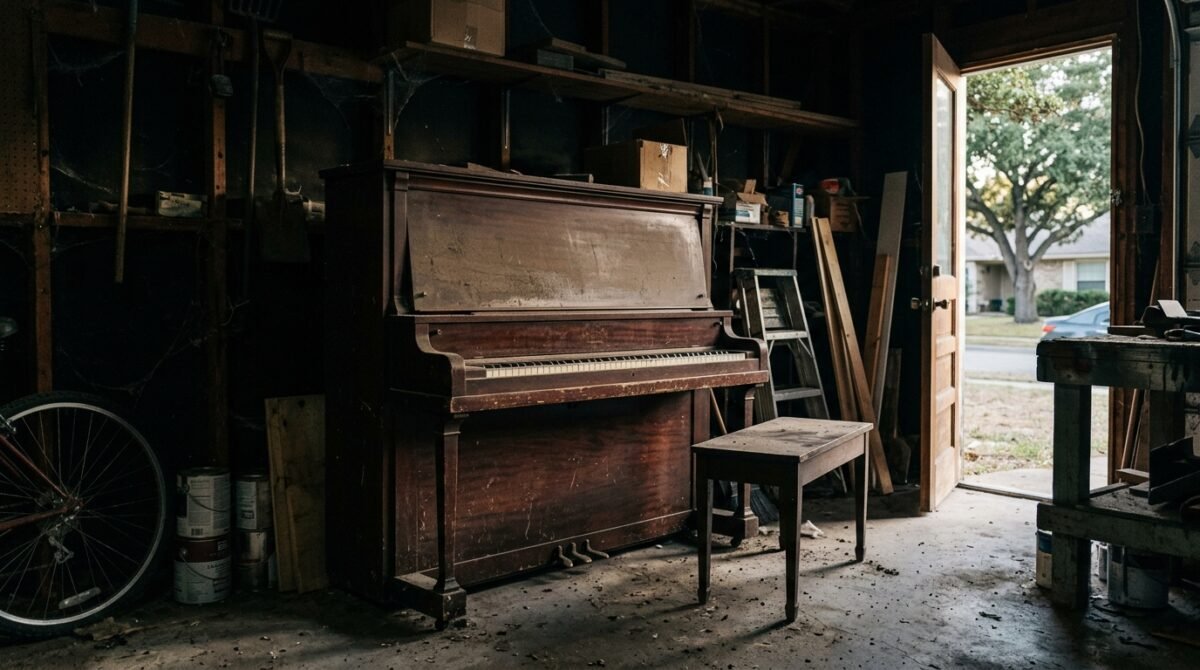
Inheritance is rarely just about the assets. It is about the physical manifestation of memory, the weight of history, and, unfortunately, the greed that often bubbles beneath the surface of grieving families. My grandmother was a woman of singular taste and profound grace. Her 1920s Steinway & Sons piano was not merely a musical instrument; it was the heart of our childhood home, the piece around which every holiday, every rainy afternoon, and every significant life event revolved. When she passed away, the legal documents were clear: the piano was bequeathed to me, the only grandchild who had actually bothered to learn how to play it and maintain it over the years.
My sister, Sarah, had never shown the slightest interest in classical music. In fact, she had spent the last decade complaining about the ‘clutter’ of Grandma’s home. Yet, the moment the probate process concluded and the instrument was safely secured in my garage—pending a move to my new home—her attitude underwent a radical, chilling transformation. She began to view the piano not as a family relic, but as a high-end decorative piece that would perfectly complement her minimalist, influencer-inspired living room.
I tried to be reasonable. I explained the sentimental value, the maintenance requirements, and the fact that it was legally mine. I assumed that by stating the facts, the issue would resolve itself. I was wrong. The issue didn’t just persist; it escalated into a calculated campaign of entitlement, culminating in a brazen act of trespassing that shattered the last remnants of our sibling relationship. When I realized my home had been breached, I didn’t reach for the phone to call her; I reached for the police report forms.
This is the story of how a priceless heirloom forced me to choose between blood relations and basic human integrity. It is a story about the boundaries we draw, the lines that get crossed when family assumes ownership of our property, and the heavy price of holding people accountable for their actions—even when those people share your last name. It serves as a reminder that family status is not a ‘get out of jail free’ card for criminal behavior.
The Subtle Erosion of Boundaries
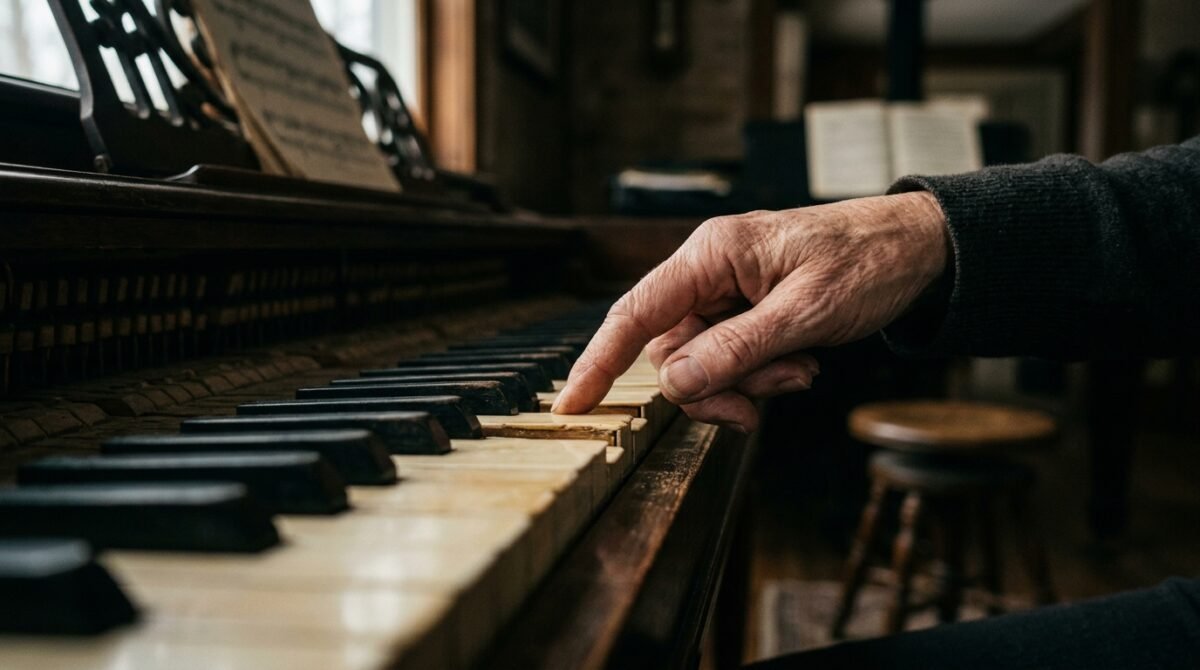
The weeks following the funeral were a blur of paperwork and emotional exhaustion. While Sarah was busy trying to sell Grandma’s antique china on various online marketplaces, I was focused on the logistics of moving the piano. It was a delicate, expensive operation, requiring specialized movers who understood the nuances of an instrument that had survived two world wars. I paid for the storage out of my own pocket, securing a climate-controlled space that would keep the soundboard from warping.
Sarah’s comments began during a casual Sunday brunch. She would casually drop remarks about how my garage was ‘no place’ for such a beautiful piece. At first, I ignored it, thinking she was merely projecting her own unresolved grief. However, the comments grew more frequent and more pointed. It wasn’t about the music; it was about the aesthetic value of the wood and the prestige of owning such an item. She wanted a conversation piece, not an instrument.
“You know, it’s really a shame that you’re just letting it rot in a garage. It’s a piece of art, and it belongs in a home where it’s actually displayed. I have that empty nook in my living room that is just begging for it. It would look perfect.”
— Sarah, during a family lunch
I pushed back gently but firmly. I reminded her that the piano had been left to me specifically because I was the one who had kept Grandma’s tradition of Sunday recitals alive. Sarah rolled her eyes, claiming that Grandma was ‘senile’ when she wrote the will, a comment that stung more than any theft could. It was clear that to Sarah, the piano was just another item to be liquidated or repurposed, devoid of the soul and history that defined our upbringing.
I started noticing that Sarah was asking questions about my travel schedule. She wanted to know when I would be at work, when I would be out of town for business, and whether I had installed a security system at the property. At the time, I attributed this to her being ‘nosy’ or perhaps concerned about my safety. I didn’t realize that she was conducting a reconnaissance mission, mapping out the vulnerabilities in my defenses.
By the time I realized that my sister was no longer interested in conversation, but in acquisition, it was already too late to salvage the relationship. She had already decided that my ownership was a technicality she could bypass. The entitlement wasn’t born overnight; it was a slow-growing rot, fed by years of her believing that she could have anything she wanted simply because she desired it enough to take it.
The Silent Alarm at 3:00 AM
The night of the incident was eerily quiet. I was sound asleep when the notification pinged on my phone, a sharp, digital intrusion into the silence. My security system—which I had installed at the last minute, thanks to a nagging feeling in my gut—was alerting me to motion in the detached garage. I sat bolt upright, heart hammering against my ribs. I scrambled to open the app, expecting to see a neighbor’s cat or a stray branch. Instead, I saw a familiar silhouette.
The video feed was grainy, illuminated only by the motion-activated floodlights, but there was no mistaking the figure. It was Sarah, accompanied by two men I didn’t recognize—likely a hired moving crew she had lied to. They were already inside the garage, the side door having been forced open with a crowbar. They were moving with a practiced, hurried efficiency, clearly having scouted the location beforehand.
“Hurry up! We need to get this thing out of here before she wakes up or checks the cameras. If this goes smooth, there’s an extra fifty in it for both of you.”
— Overheard on the security camera audio, Sarah directing her crew
I felt a cold wave of adrenaline wash over me. My hands shook as I dialed the non-emergency police line, then quickly upgraded to the emergency dispatcher when I realized they were actually beginning to lift the piano onto a dolly. The violation was so profound that I couldn’t even process the anger—it was purely a fight-or-flight response. I was watching my grandmother’s legacy being carted away like a stolen television set.
I didn’t wait for the police to arrive at my house. I got into my car and sped toward the garage, my mind racing with the consequences of what I was about to do. I knew that if I stopped them myself, it would devolve into a shouting match. I needed the weight of the law behind me. I wanted this to be a documented criminal event, not just a petty family spat that could be swept under the rug by our parents.
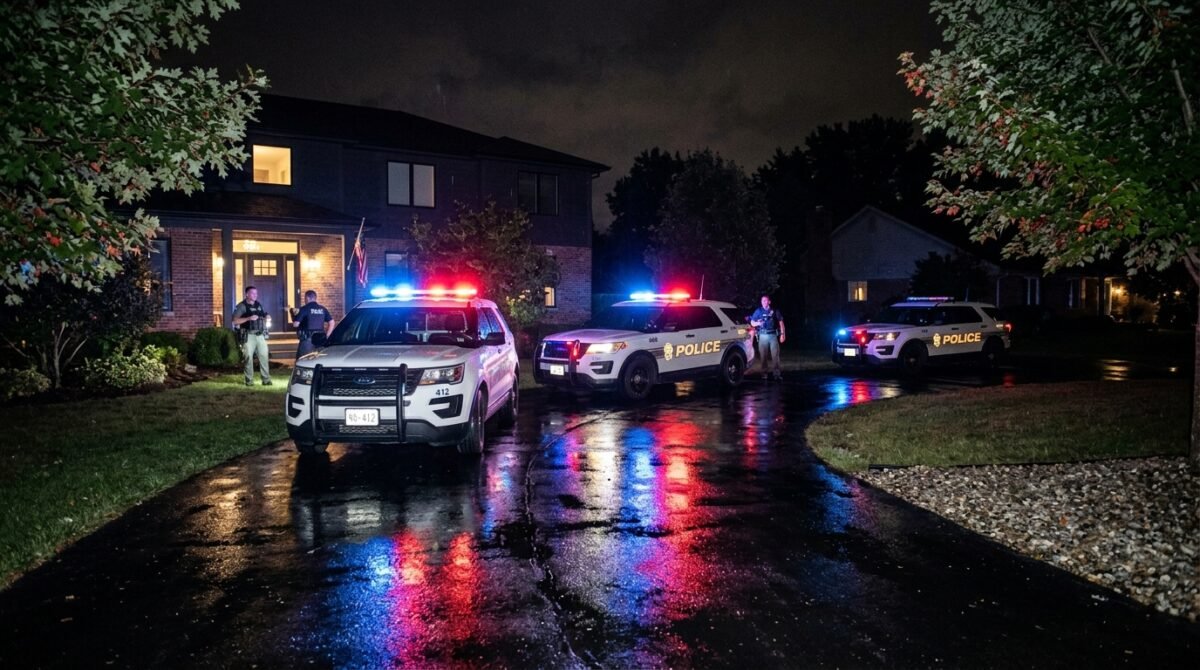
The police arrived just as Sarah was directing the men to load the piano into a nondescript moving van. The look on her face when the cruisers pulled up, sirens silenced but lights flashing, was one of pure, unadulterated shock. She hadn’t expected me to be watching. She hadn’t expected me to have a security system. Most of all, she hadn’t expected me to be willing to involve the authorities in a ‘family matter.’
The Confrontation Under the Floodlights
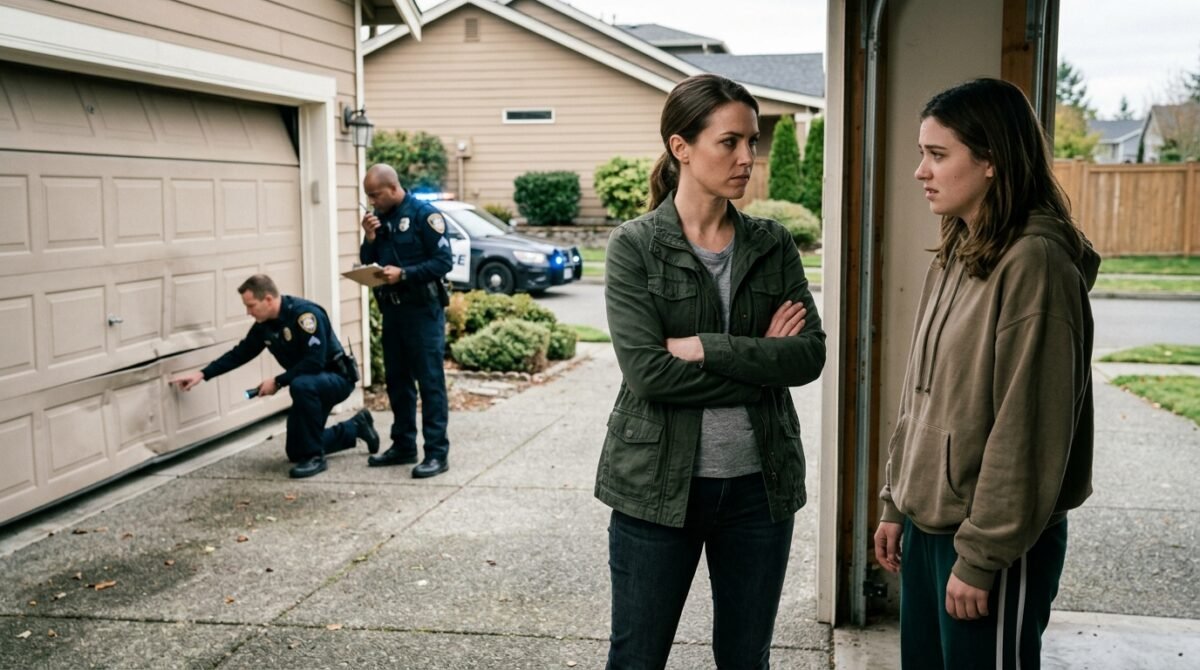
When I stepped out of my car, Sarah was already arguing with the officers. Her demeanor was classic Sarah: indignant, slightly hysterical, and utterly convinced that she was the victim. She was pointing at me, telling the police that I was being ‘vindictive’ and that I had ‘stolen’ the piano from her in the first place. The officers looked tired, clearly annoyed at being called out for what they initially assumed was a domestic dispute, but their tone shifted the moment I produced the legal documents proving ownership.
I walked up to her, keeping a safe distance. She was trembling, not from fear, but from the sheer audacity of being challenged. She had counted on me being too passive, too afraid of the family drama to actually fight back. She was wrong. The air was thick with tension, and the neighbors had started coming out onto their porches, drawn by the unusual sight of police activity in our quiet cul-de-sac.
“You’re really going to do this? You’re going to call the cops on your own sister because of a piano? You’re ruining this family over a piece of furniture!”
— Sarah, screaming at me while the officers stood by
I looked her straight in the eyes. I didn’t yell. I didn’t cry. I simply stated the facts. I explained that she had broken into a private structure, destroyed property, and attempted to steal a high-value heirloom. I told her that if she hadn’t wanted the police involved, she shouldn’t have resorted to burglary. The officers were taking notes, looking at the forced door, and looking at the piano that was now halfway to the driveway.
The moving crew, realizing they were on the hook for being involved in a felony, were quick to disavow Sarah. They told the police she had told them the piano was hers and that she had lost the key to the lock, hence the forced entry. They were clearly terrified of losing their own licenses. The shift in power was instantaneous. Sarah went from the aggressor to a cornered animal, realizing that her narrative wasn’t holding up against the cold, hard facts of the law.
I felt a strange sense of clarity. The years of navigating her moods, of excusing her behavior to keep the peace, were over. This wasn’t about a piano anymore. It was about the fact that she had finally crossed a line that could not be walked back. The police officers asked me if I wanted to press charges, and for the first time in my life, I didn’t hesitate. I said ‘yes’ without a second of doubt.
The Fallout: A Family Divided

The next few days were a whirlwind of legal proceedings and intense, vitriolic communication from the rest of the family. My parents were horrified—not at Sarah for breaking into my garage, but at me for ‘escalating’ the situation. They kept calling me, begging me to drop the charges, promising that if I just let it go, everything would return to normal. They didn’t seem to grasp that ‘normal’ was the problem.
My phone became a minefield of messages. My mother sent long, rambling texts about ‘forgiveness’ and ‘blood being thicker than water,’ while my father took a more aggressive approach, threatening to cut me off financially if I didn’t ‘stop this madness.’ It was a masterclass in gaslighting. They were blaming me for the consequences of Sarah’s actions, essentially telling me that I was the one who caused the drama by choosing to hold her accountable.
“You are destroying this family. Think about Grandma. Do you think she would want her grandchildren in court? You’re being petty and vindictive, and you will regret this for the rest of your life.”
— Text from my mother, sent at 2:00 AM
I stopped reading the messages eventually. I moved the piano to a more secure, undisclosed location—a professional facility that didn’t just have a keypad but full-time security staff. I didn’t tell my parents where it was, and I certainly didn’t tell Sarah. The silence I created felt like a shield. I was no longer interested in defending my decisions to people who didn’t respect my boundaries.
The legal process was slow and tedious. I had to file multiple statements, meet with the prosecutor, and prepare for the possibility of a trial. Throughout it all, Sarah kept trying to reach out. She left voice messages that swung wildly between tearful apologies and outright threats. She was desperate, and for the first time, she was experiencing the reality of living in a world where her actions had consequences that she couldn’t charm her way out of.
I started seeing a therapist to process the guilt that my family was trying to project onto me. It was helpful to realize that I wasn’t the one who broke the law; I was the one who was standing up for myself. The realization that I didn’t need their approval to be right was life-changing. I was reclaiming my life, one step at a time, and it started with refusing to let my family turn me into a victim of their own lack of boundaries.
The Internet Weighs In: A Reddit Investigation

I turned to the community to see if I was truly the villain they made me out to be. I posted the story on a popular forum dedicated to family conflict, anonymizing the names but keeping the details exact. The response was immediate and overwhelming. Thousands of people commented, and the general consensus was a stark contrast to what I was hearing from my parents. The internet, it seemed, had very little patience for entitlement.
“NTA. Your sister broke into your home to commit theft. This isn’t a family dispute; it’s a crime. The fact that your parents are siding with the criminal instead of the victim shows exactly why Sarah grew up to be this way. Hold the line.”
— u/JusticeSeeker99 (Top Comment, 32.1k upvotes)
The comments were a mix of validation and legal advice. Many users shared their own stories of inheritance disputes, pointing out that ‘family’ is often used as a weapon to force people into compliance. It was incredibly validating to read comments from people who had been through similar situations and had successfully cut off toxic relatives. I realized that my story wasn’t just my own; it was part of a larger conversation about toxic family dynamics.
Some users were more critical, suggesting that perhaps I should have tried mediation before going to the police. I took those comments seriously, but I kept returning to the fact that Sarah had broken into my property at 3:00 AM. Mediation works when both parties are interested in a solution. Sarah was only interested in theft. The nuance of ‘family’ didn’t change the fact that she had engaged in a premeditated criminal act.
“Honestly, if you hadn’t filed charges, she would have done it again. Maybe not a piano next time, but something else. By pressing charges, you’ve signaled that your home is not a store for her to shop in. Good on you.”
— u/RealityCheck_Admin (14.2k upvotes)
The Reddit thread became a source of strength for me. When my parents would call, I would remind myself of the thousands of people who were supporting my decision. It gave me the mental armor I needed to continue the legal process. I wasn’t just fighting for a piano; I was fighting for my dignity, and the community reinforced that I was worth the effort it took to stand my ground.
The Day of the Deposition

The deposition was the first time I had to see Sarah in person since the night of the incident. The atmosphere in the law office was sterile and tense. She looked disheveled, a far cry from the composed, entitled person I had dealt with for months. She tried to make eye contact, to pull the ‘sister card,’ but I stared through her, focusing on my lawyer. I was there to provide a truthful account, not to engage in a emotional dialogue.
When she was questioned, her story fell apart. She tried to claim that she had a right to the piano, that Grandma had promised it to her in a ‘verbal agreement’ that conveniently existed in her memory alone. The prosecutor systematically dismantled her claims, showing the probate documents that explicitly stated the piano was mine. She looked smaller with every question, her arrogance replaced by a frantic, nervous energy.
“Did you or did you not force the side door of the garage open with a crowbar?”
— The Prosecutor, during the deposition
She had to admit it. She had to admit that she had hired the moving crew, that she knew I wasn’t home, and that she knew she had no legal right to the instrument. Seeing her forced to admit her actions under oath was a turning point for me. The weight of the secret, the pressure of the ‘family code,’ and the fear of her reactions simply evaporated. The truth was on the record, and it was undeniably ugly.
I felt a strange sense of empathy, not for her actions, but for the life she was leading that made her feel this was acceptable. She was so desperate for external validation, so consumed by the need to have the ‘best’ things, that she had compromised her integrity and her relationships. It was a sad, hollow way to live. But that didn’t mean I had to be the one to pay for it.
The deposition ended with a clear sense that the case was moving forward. There would be no secret settlement, no sweeping this under the rug. Sarah would have to face the legal consequences of her actions. I left the office feeling lighter than I had in months. The burden of secrecy, the burden of trying to manage the family’s image, was lifted. I was just a person who had been wronged and was finally seeing justice done.
The Final Verdict and Legal Consequences

The court case was relatively short, given the overwhelming evidence provided by the security footage and the testimony of the moving crew. Sarah was found guilty of trespassing and attempted larceny. The sentence was not severe—probation, community service, and a hefty fine—but it was the conviction itself that mattered. It was a permanent mark on her record, a public acknowledgment that her sense of entitlement had crossed the line into criminality.
My parents were devastated. They acted as if I had personally escorted Sarah to jail. They stopped calling, which, in truth, was a relief. The distance allowed me to finally breathe. I realized that my family had been a source of constant, low-level anxiety, and their absence was the peace I hadn’t realized I was missing. I started focusing on my own life, my music, and my future, independent of their expectations.
“I just can’t believe you’d do this to your own blood. You’ve ruined her future over a stupid piano. I hope you’re happy with yourself.”
— The last text I received from my father before I blocked the number
I wasn’t happy, but I was at peace. I was satisfied that the law worked the way it was supposed to. I was satisfied that I hadn’t let my sister dictate the terms of my life. The piano was eventually moved into my new home, where it sat in a sunlit room, filling the space with the music that Grandma had loved. It wasn’t just a piece of furniture anymore; it was a symbol of my autonomy.
I occasionally think about Sarah. I wonder if she learned anything, if the reality of a criminal record will force her to reconsider the way she interacts with the world. But those thoughts are fleeting. I have stopped trying to ‘fix’ her or save the family from its own dysfunction. I have my own life to lead, and for the first time in a long time, I am leading it entirely on my own terms.
The experience taught me that boundaries are not just suggestions; they are the foundation of any healthy relationship. If someone cannot respect your boundaries, they do not belong in your life, regardless of their last name. I am grateful for the experience, as painful as it was, because it forced me to become the person who is strong enough to say ‘no’ and mean it.
Finding the Melody Again

With the legal drama behind me, I found that I could finally play the piano again without the shadow of the incident hanging over me. The instrument had been neglected for too long, and it needed a professional tuning. When the tuner arrived, he commented on the beauty of the piece, noting that it had clearly been well-cared for by its previous owner. It was a small but significant moment of validation.
I sat down and started to play a piece that Grandma used to love. The music filled the house, familiar and comforting. It was a reminder of the best parts of my past—the warmth of her home, the joy of learning, the connection we shared through music. It was a stark contrast to the coldness and betrayal of the last few months. I felt a sense of closure that I hadn’t expected.
“It sounds better than ever. You really have a gift. It’s a tragedy that so many people don’t appreciate the history behind an instrument like this.”
— The piano tuner, during his visit
I started inviting friends over, not to show off the piano, but to share the music. The house felt like a home again, not a storage unit or a battleground. I realized that the piano was meant to be played, not possessed. By letting go of the need to control it or protect it from my family, I had actually freed myself to enjoy it fully.
The silence from my family continued, and I grew to appreciate it. I stopped checking my phone for messages, stopped waiting for apologies that would never come. I realized that forgiveness wasn’t something I owed them; it was something I gave myself when I decided to move on. I was no longer waiting for the world to be fair; I was creating my own fairness.
I am grateful for the support I received, both from the online community and from the friends who stood by me throughout the ordeal. They helped me see that I was not alone and that my feelings were valid. It was a long journey, but it brought me to a place of strength and independence. I am, for the first time, truly at home.
Lessons in Radical Accountability

Looking back at the entire experience, I see it as a brutal but necessary lesson in accountability. We often fear that holding people accountable will ‘ruin’ our relationships, but the truth is that the relationship was already broken by the other person’s actions. By refusing to hold Sarah accountable, I would have been enabling the very behavior that was destroying my life. Accountability isn’t about punishment; it’s about setting the standard for how you expect to be treated.
I’ve learned that the people who tell you to ‘just forgive and forget’ are usually the ones who benefit from your silence. They want the peace without the resolution, the harmony without the justice. I am no longer interested in that kind of peace. I prefer the honest, difficult work of standing up for myself. It’s not easy, and it often comes with a high price, but the result is a life that you can actually live with.
“The most important boundary you can set is the one that prevents others from making your life their own. If they can’t respect that, they don’t deserve your time or your presence.”
— My therapist, during our final session
I have also learned that I am stronger than I thought. I survived the betrayal, the legal process, and the isolation of being cast out by my family. I learned that I can rely on myself and that the world is full of people who will support you if you are willing to be honest and stand your ground. The piano is just a piano, but the story of how I kept it is a story of reclamation.
To anyone out there struggling with a similar situation: you are not responsible for the choices of others. You are not responsible for their anger, their entitlement, or their refusal to respect your boundaries. You are only responsible for your own actions and your own integrity. If you have to burn a bridge to save yourself, do it. Sometimes the fire is the only thing that cleans the slate.
I have found peace in the silence of my family. I have found joy in my music. And most importantly, I have found a sense of self that is not dependent on the approval of others. I am the owner of my legacy, the keeper of my grandmother’s memory, and for the first time, I am truly the master of my own fate.
Reader Community Reflections: Where Do We Draw the Line?

The discussions in the aftermath of my story have been incredibly enlightening. It’s clear that the ‘piano incident’ struck a chord (no pun intended) with many people. The debate about when it is appropriate to involve the police in family matters continues to rage on. I’ve read dozens of comments from people who have been in my shoes, and the variety of perspectives is fascinating.
“I had a brother who sold my childhood memorabilia the moment I left for college. I never called the police, and I regret it every day. I should have drawn a line, but I was scared of the family fallout. You did the right thing.”
— u/LostMemories88 (5.2k upvotes)
Some people argue that family should always be given ‘one more chance.’ Others argue that a boundary is not a boundary if it doesn’t have a consequence. I find myself firmly in the latter camp. If someone is willing to commit a crime against you, they have already decided that their desire is more important than their relationship with you. Why should you continue to prioritize them?
I’ve also seen some really thoughtful comments about the nature of heirlooms and how they are often used as tools for manipulation in families. It seems to be a universal problem. Many people have shared how they handled these issues—some through legal means, others through ‘quiet’ strategies. It makes me realize that I am not the only one dealing with this, and that there is a need for more open dialogue about these topics.
“Is it really ‘family’ if they are willing to break into your home and lie to the police? At some point, you have to realize that family is not just blood. It’s about respect, and she lost that respect a long time ago.”
— u/TruthTeller_2024 (8.9k upvotes)
I appreciate everyone who has shared their thoughts and experiences. Even the critical comments have helped me refine my perspective. It’s been a long journey, but hearing from all of you has made it feel like a shared experience rather than a lonely struggle. We are all trying to navigate the complexities of our families, and I think we can all learn something from each other’s stories.
As I move forward, I am committed to keeping this dialogue open. I believe that by sharing our stories, we can help others navigate their own family dilemmas with more clarity and strength. It’s not an easy process, but it is a necessary one for our own personal growth and happiness.
Conclusion
Looking back at the path that led me to file grand larceny charges against my sister, I see a journey of transformation. It wasn’t just about the piano; it was about the slow, painful realization that I had been sacrificing my own well-being to maintain a façade of ‘family harmony.’ By choosing to hold Sarah accountable, I wasn’t just protecting a piece of property—I was protecting my soul from the erosion caused by constant boundary violations.
Today, my life is profoundly different. The silence from those who chose to enable her behavior is no longer a source of pain; it is a testament to the fact that I am finally surrounding myself with people who respect me. The piano sits in my living room, a beautiful reminder that I am capable of standing my ground, even when the world—and my own family—tells me I should just ‘let it go.’ I have learned that the most important inheritance we receive isn’t the physical objects left behind, but the strength to decide who we want to be and what we are willing to accept.
I invite you to share your own experiences in the comments below. Have you ever had to choose between your family and your integrity? Where do you draw the line when it comes to property and inheritance disputes? Let’s keep this conversation going.
Community Poll: Should family members be given a ‘get out of jail free’ card when they commit a crime against one of their own, or should the law apply equally to everyone regardless of relation? Vote in the comments: A) Blood is thicker than water; forgive and forget. B) Laws apply to everyone; accountability is essential.
What's your verdict on this dilemma?
Vote below to contribute to the official community consensus.

Have a Dilemma Keeping You Up at Night?
Share your real-life feud, wedding chaos, or relationship crossroads anonymously with our editorial team.
What do you think ?
0 Comments🛡️ Comments are moderated to protect community integrity. Your comment will appear once approved by the editorial team.