
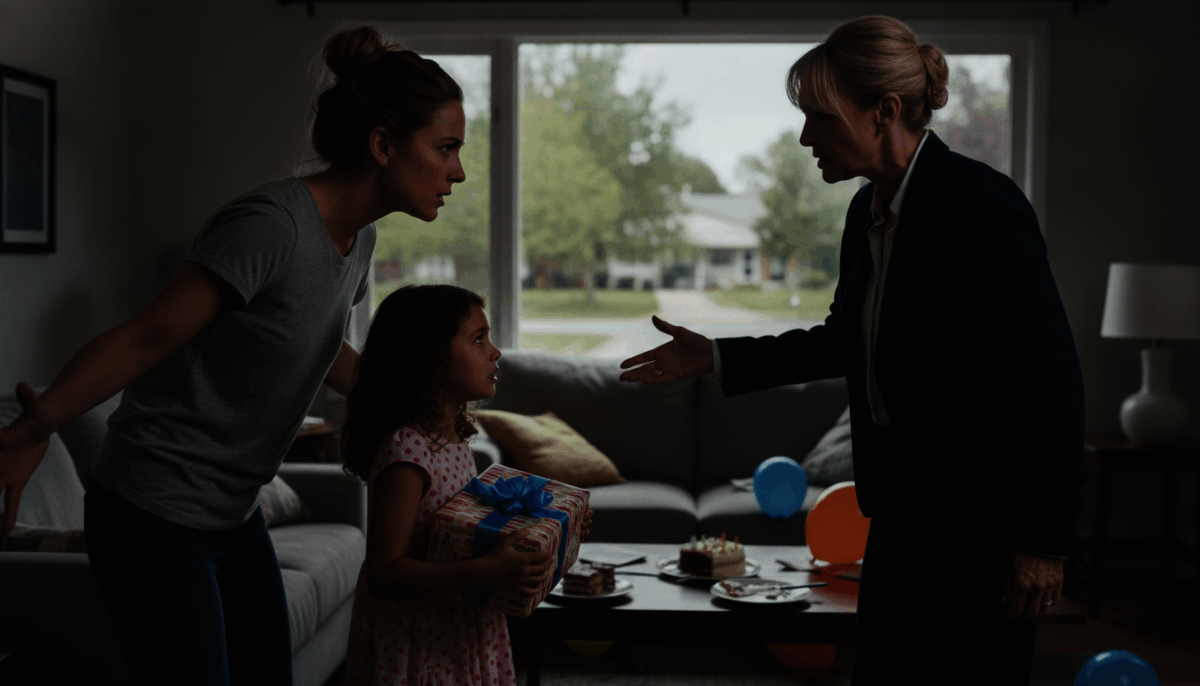
Birthdays are supposed to be sacred milestones in a child’s life, a day where they feel celebrated, seen, and secure in their own small orbit of joy. For my seven-year-old daughter, Lily, this year’s celebration was meant to be a culmination of months of excitement. She had spent weeks talking about a specific art set and a telescope she’d been saving her allowance to supplement, finally receiving them from her grandparents and friends. But what started as a bright afternoon quickly descended into a nightmare of entitlement and coercive parenting that forced me to make the hardest decision of the day.
My sister, Sarah, has always operated under the belief that her son, Leo, is the sun around which our family orbit should revolve. While I have historically tried to maintain peace for the sake of family harmony, I never imagined that this dynamic would metastasize to the point of outright theft—or, as Sarah calls it, ‘sharing.’ The incident was not merely a disagreement over a toy; it was a fundamental clash of values that laid bare years of suppressed resentment.
When the shouting started, it wasn’t coming from the children. It was coming from the adults, specifically my sister, who decided that my daughter’s happiness was secondary to her son’s immediate, impulsive desire for a toy that wasn’t his. As I watched the situation unravel, I realized that my own childhood of being told to ‘just let him have it’ was being repeated in front of my eyes, and I wasn’t going to let Lily become the next victim of the family tradition of compliance.
The sheer audacity of the demand—to strip a child of her birthday joy to pacify a tantrum-throwing relative—left me stunned. But it also provided a sudden, crystal-clear moment of clarity. Sometimes, the only way to protect your children from toxicity is to physically remove them from the environment, regardless of who is watching or what they might think of you.
In the pages that follow, I will recount the events of that afternoon, the conversations that led to the breaking point, and the aftermath of a decision that has effectively changed my family dynamic forever. This isn’t just about a birthday present; it’s about the cost of keeping the peace at the expense of our children’s dignity.
The Setup: An Afternoon of Expectant Joy
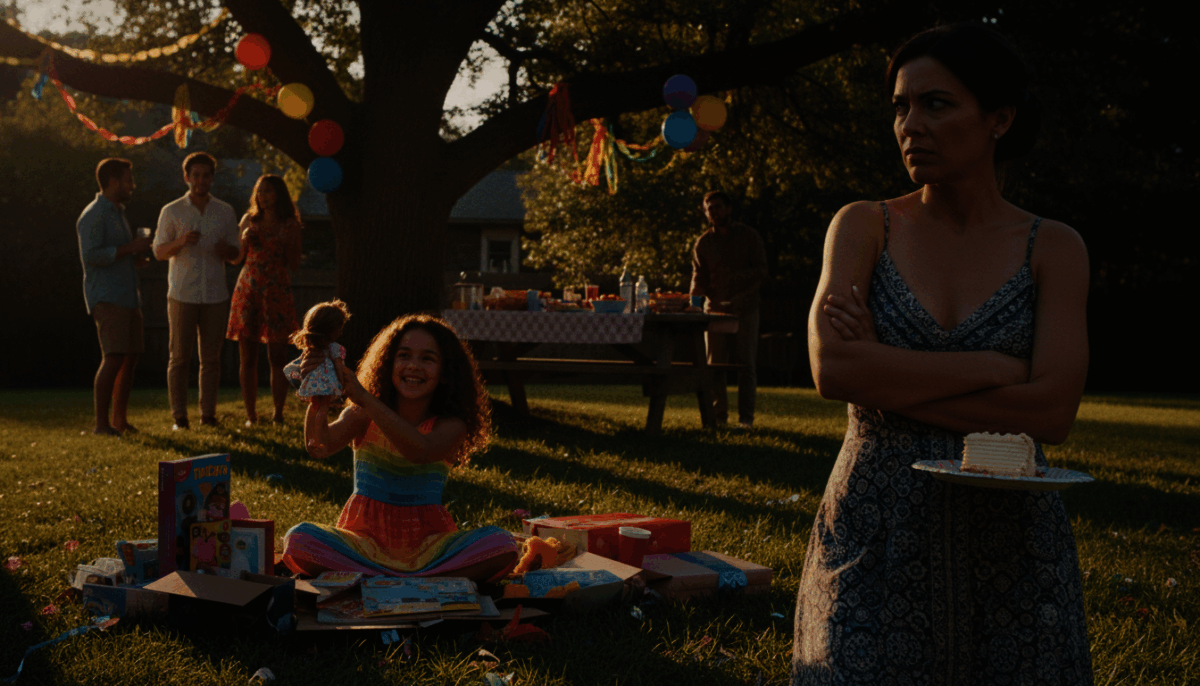
The party was held at our parents’ house, a neutral ground that usually managed to dampen the sparks of inter-family conflict. Lily was turning seven, and she was in high spirits, wearing a dress she had picked out specifically for the occasion. The garden was decorated with streamers, and the scent of grilled food filled the air. Everything felt right, at least until Sarah arrived with Leo in tow, twenty minutes late and already visibly agitated.
Sarah has a way of entering a room that demands immediate attention. She carries an air of martyr-like exhaustion, constantly complaining about how hard it is to parent a ‘spirited’ child. Leo, at six years old, is a bright kid, but he has been conditioned by his mother to believe that his unhappiness is a crisis that must be solved by everyone else in the vicinity.
As Lily began opening her gifts, the atmosphere shifted. She was genuinely excited, thanking everyone profusely. When she opened the large easel and art kit I had helped her pick out, her face lit up with pure delight. It was a beautiful moment, but I noticed Sarah’s eyes scanning the room, not at the joy, but at the value of the items being unwrapped.
“Oh, wow, that’s quite the setup,” Sarah remarked, her voice dripping with a subtle, jagged edge. “Leo has been asking for an art set just like that for months, hasn’t he, sweetie? It’s almost unfair that Lily gets the good one while you’re stuck with those cheap crayons at home.”
I ignored the comment, focusing on Lily. I wanted her to enjoy her spotlight. But the comment was a seed, and I could already tell it was going to sprout into something ugly. I should have seen the red flags then, but I was blinded by the belief that family events were, at the very least, civil.
The Inevitable Tantrum and the Demand
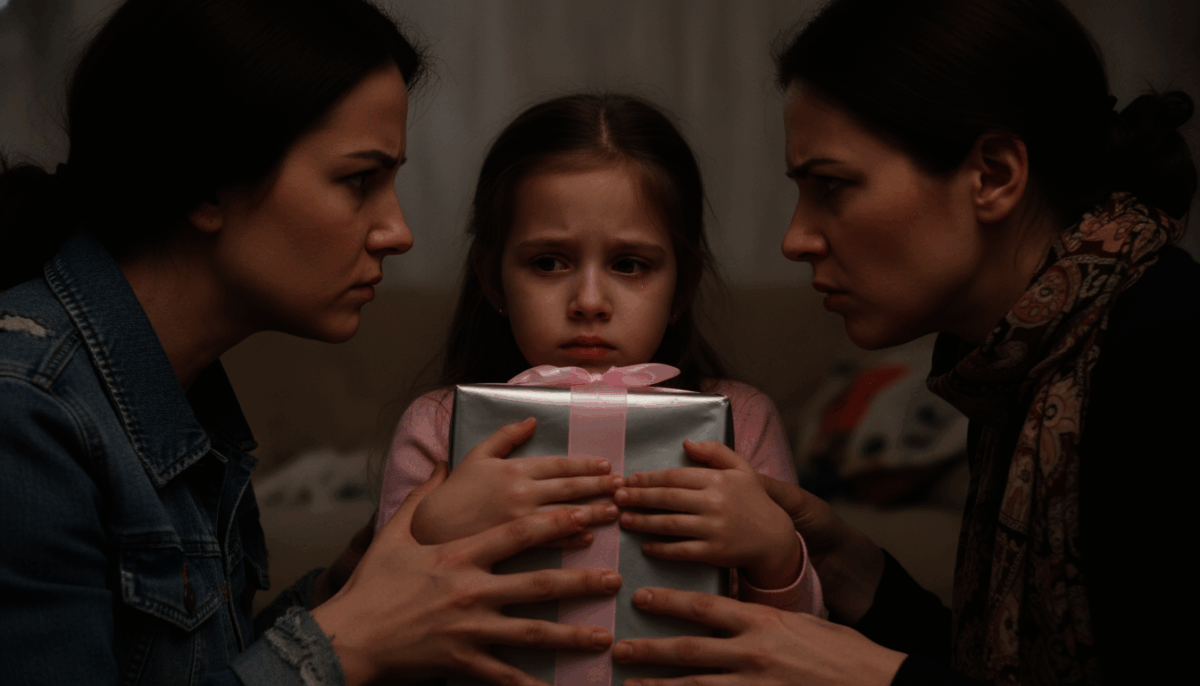
The explosion happened shortly after cake. Leo, seeing Lily playing with the art set, decided he wanted it immediately. When Lily politely told him that she was going to use it for her drawing project, Leo dropped to the floor and began a performance of epic proportions. He kicked his heels against the grass, screaming that his birthday was ‘wrong’ and that it wasn’t fair that his cousin had better things.
Instead of disciplining him or redirecting his focus to his own toys, Sarah swooped in. She walked over to where Lily was sitting and loomed over her, blocking the sunlight. The look on her face wasn’t one of maternal guidance; it was one of cold, calculated entitlement.
“Lily, honey, look at your cousin,” Sarah said, her voice sugary but sharp. “He’s so upset. Why don’t you be a sweet girl and give him the art set? You have so many other presents, and he doesn’t have anything like this at home. It’s just the right thing to do to make him feel better.”
Lily looked up at me, her eyes wide with confusion and hurt. She clutched the box to her chest, her knuckles turning white. “But it’s my birthday present, Aunt Sarah. I just opened it.”
“Lily, I’m not asking you, I’m telling you. It’s important to share with family. Give the box to Leo right now, or you’re going to be in big trouble for being selfish.”
— Sarah, during the confrontation
I felt a surge of adrenaline that was part rage, part protective instinct. I stepped between them, my heart hammering against my ribs. The audacity of her speaking to my child that way in my presence was staggering. I realized in that moment that this was not a one-off event; this was a lifetime of her pushing boundaries, and today, she had pushed one too far.
The First Confrontation: Drawing the Boundary

I stood my ground, my voice steady despite the trembling in my hands. “Sarah, don’t you dare talk to my daughter like that. She is not giving away her birthday gift to stop your son from throwing a tantrum. If he’s upset, that’s something you need to handle as his mother, not something my daughter needs to pay for with her property.”
Sarah looked at me as if I had just slapped her. Her face turned a shade of crimson that mirrored her son’s. “Excuse me? You’re going to teach her to be a greedy brat? It’s a box of markers and paper. It won’t kill her to be generous. You’re being incredibly petty, and you’re ruining this party for everyone.”
The rest of the family had gone quiet. My parents were looking at their shoes, clearly uncomfortable, which only fueled my anger. I wasn’t asking for help; I was asking for the environment to be safe for my child. When nobody stepped in to back me up, I realized I was entirely on my own in this fight.
“She isn’t being greedy,” I countered, keeping my eyes locked on Sarah’s. “She’s being a child who is being asked to give up a gift she was just given because you refuse to parent your child. I will not have her forced to sacrifice her happiness just because you think the world owes your son a consolation prize.”
The silence in the yard was deafening. Even Leo had stopped his screaming, looking up to see what would happen next. For a moment, the air felt like it was charged with electricity, the kind of tension that leaves a permanent mark on a family gathering.
The Escalation: The Secret Group Chat

The party ended shortly after, but the conflict was just beginning. As we left, I could see Sarah typing furiously on her phone, and I knew exactly what was happening. By the time we reached the car, my phone buzzed with a notification from the family group chat, which had been dormant for months. It was a message from Sarah, addressed to the entire family.
“I am honestly appalled by the behavior I witnessed today. To see my own sister prioritize a stupid art kit over the feelings of her own nephew is beyond me. I hope you’re happy with yourself, [My Name], for teaching Lily that selfishness is a virtue. My poor Leo is crying himself to sleep because he doesn’t understand why his aunt hates him.”
— Family Group Chat, Sarah
The venom in the message was palpable. She was trying to spin the narrative, painting me as the villain and herself as the victim. I felt a cold knot in my stomach. She knew exactly what she was doing—using the group chat to rally the family against me, to force me into a position where I had to defend myself against a lie.
I didn’t respond immediately. I drove home, my mind racing. Lily sat in the back seat, uncharacteristically quiet. She asked me, “Mom, am I a bad person for not wanting to give him my toy?” That was the moment that broke me. Hearing that doubt in her voice, planted by her own aunt, was enough to push me into a state of permanent protective mode.
I pulled the car over and turned around to look at her. “Lily, you are not a bad person. You are kind, and you are generous, but you are not required to give away your things to someone who is being unkind to you. Never let anyone tell you that you owe them your joy.”
The Fallout: Community Reactions and Reality Checks
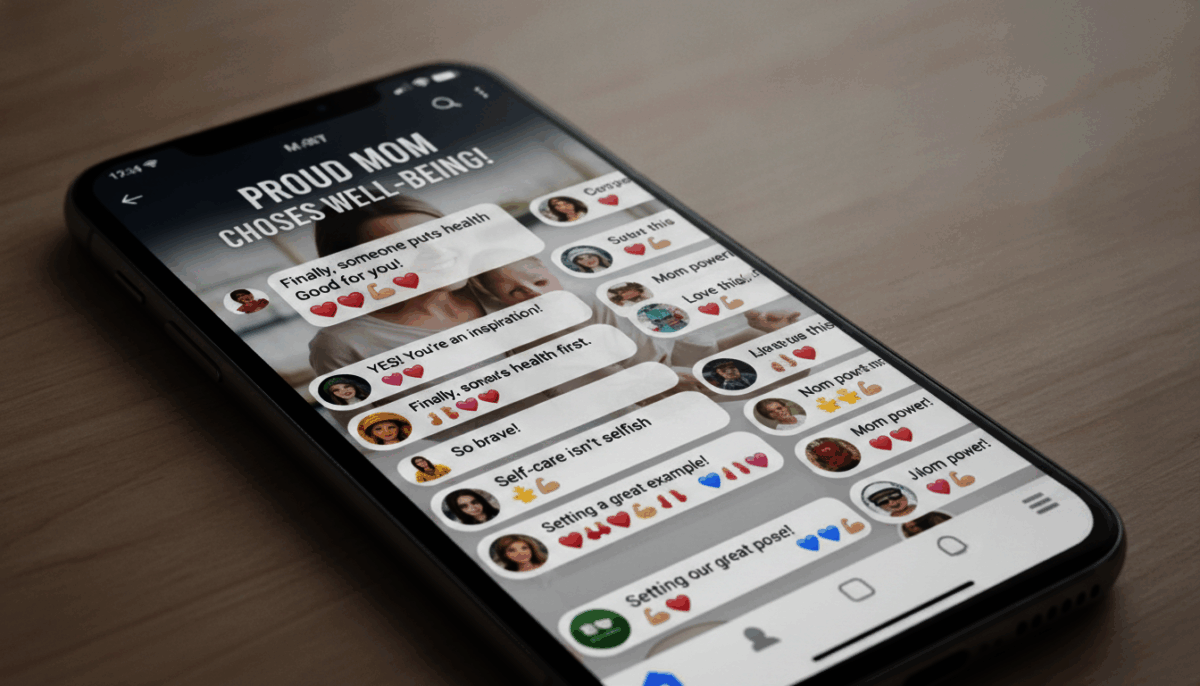
I decided to reach out to the internet, needing an objective perspective. I posted the story to a popular subreddit, expecting a mix of opinions. I wasn’t prepared for the sheer volume of support that poured in. People from all over the world were echoing my sentiments, validating the decision I had made.
“NTA. Your sister is training her son to be a bully, and she’s using your daughter as the practice target. If you don’t stand up for her now, she’s going to be a doormat for the rest of her life. You did the right thing by leaving.”
— u/ParentWarrior99 (Top Comment, 15.2k upvotes)
The feedback was overwhelmingly in my favor. It wasn’t just about the toy; it was about the precedent of boundary-setting. Many commenters shared their own stories of being forced to ‘share’ with entitled cousins, and how it had affected their adult relationships. It was a sobering realization that this was a common, systemic issue in many families.
However, there were also the ‘peacemakers’ who suggested I should have just given in to keep the peace. “It’s just a toy, why die on this hill?” one user commented. I found these comments the most infuriating, as they completely missed the point that this was never about the toy. It was about the principle of bodily and emotional autonomy.
Reading through the comments, I felt a sense of relief. I wasn’t crazy. I wasn’t being overly sensitive. I was protecting my daughter from a toxic cycle that would have only continued if I hadn’t drawn the line. The validation from strangers was the armor I needed to face the next stage of the conflict.
The Confrontation at the Sunday Dinner
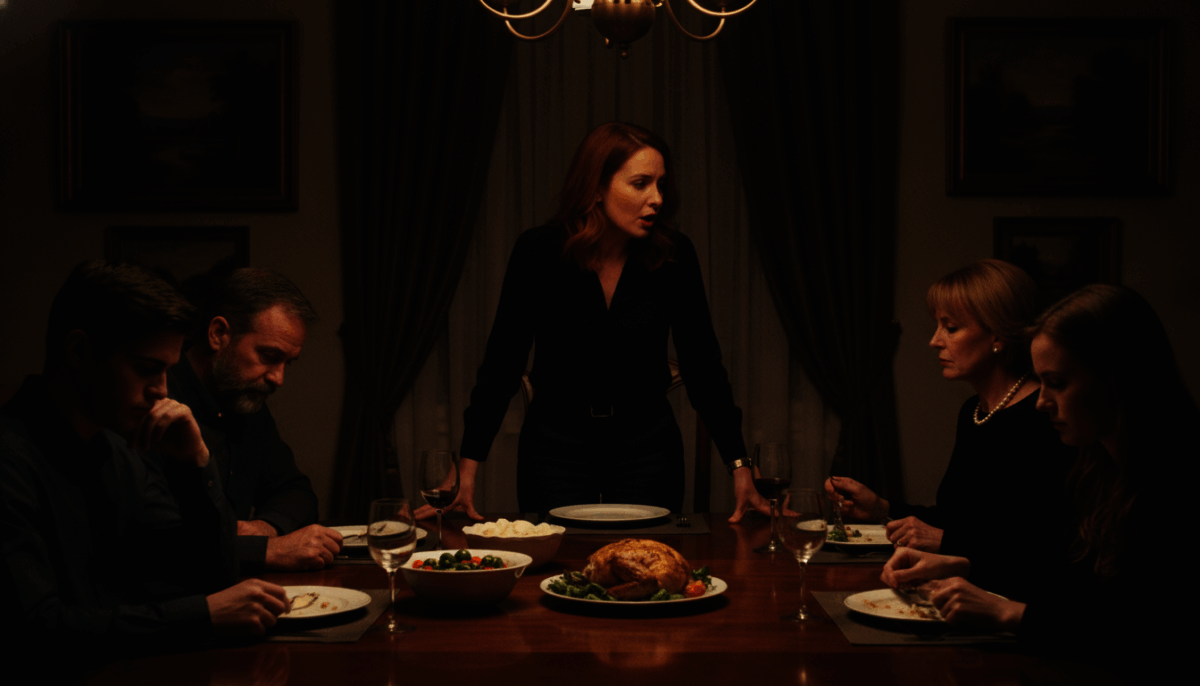
The following Sunday, my parents insisted on a dinner to ‘clear the air.’ I knew it was a setup to have me apologize to Sarah. I brought Lily, but I made it clear to her that if anything went wrong, we were leaving immediately. I was not going to be lectured by my sister in front of our parents.
When we arrived, the tension was thick enough to cut with a knife. Sarah didn’t even look at me. She spent the entire time cooing over Leo, making sure he was the center of attention. When we sat down to eat, she started in on the ‘lesson’ she wanted me to learn. She framed it as a conversation about ‘family values’ and ‘the importance of unity.’
“I think it’s time we all grow up,” Sarah said, addressing the table. “Families are supposed to be there for each other. When one child is sad, we should all pitch in to fix it. It’s a simple concept that seems to have escaped [My Name].”
“Sarah, if you want to teach your son about ‘family values,’ you should start by teaching him that he isn’t entitled to other people’s property. Until you do that, don’t lecture me on how to raise my daughter.”
— Me, responding at the dinner table
My father tried to intervene, saying, “Can’t we just let this go?” but I shook my head. “No, Dad. We can’t let this go. Because it isn’t going away. Every time this happens, you let it slide, and it gets worse. I’m done with the letting it slide.”
The Breaking Point: No-Contact Decision

The fallout from the dinner was immediate. My mother called me the next day, crying, asking why I couldn’t just apologize to make things easier. I told her that making things ‘easier’ for Sarah was exactly why things were so difficult for me. I had to draw a hard line.
I made the decision to go no-contact with Sarah. It wasn’t an easy decision, but it was necessary. I told my parents that I would still see them, but that Sarah and Leo were no longer allowed at events where I and my daughter were present. If they wanted to see her, that was their business, but they were not to try to force a reconciliation.
“You’re cutting off your sister over a birthday present?” my mother asked, her voice incredulous. I corrected her: “No, Mom. I’m cutting her off because she has no respect for me, my daughter, or my boundaries. The birthday present was just the final straw.”
The relief I felt after making that declaration was immense. It was as if a weight I hadn’t realized I was carrying had been lifted. I knew there would be pushback, but I was prepared for it. My daughter’s well-being was worth more than the comfort of a sibling who only viewed me as a tool to serve her own ends.
The Aftermath: Rebuilding Our Peace

In the weeks following, our lives shifted in small but significant ways. We stopped waiting for invitations to family events that were likely to be toxic. We started creating our own traditions, our own ‘family’ of friends who respected us. Lily seemed lighter, more confident. She didn’t feel the need to constantly look over her shoulder, wondering if her toys were safe.
I also spent time reflecting on my own upbringing. I realized how much of my own behavior had been shaped by the need to avoid conflict, to be the ‘good, easy’ child. Breaking that pattern was hard, but it was incredibly rewarding. I was teaching my daughter that her voice mattered, that her property mattered, and that she was a person, not a prop.
I also noticed how my other relatives reacted. Some stopped calling, siding with Sarah. Others reached out, admitting that they had been wanting to set similar boundaries for years but were afraid to. It turned out that by standing up, I had given others the permission they needed to do the same.
The cost was high, but the reward was higher. I had traded the illusion of family harmony for the reality of genuine respect and peace. It was a trade I would make a thousand times over.
The Certified Letter: A Final Attempt at Manipulation
Just when I thought the dust had settled, a certified letter arrived from Sarah. It was a long, rambling missive about how I was ‘tearing the family apart’ and that I owed her an apology for ‘denying her son the opportunity to learn how to share.’ She even threatened to ‘involve’ my parents in a legal way if I didn’t ‘cooperate.’
I laughed when I read it. It was such a transparent attempt at control. I didn’t even respond. I kept the letter in a file, a physical reminder of why I had made the right decision. I didn’t need to engage with her nonsense anymore. I had moved past the point of needing to justify my existence to her.
The threat was empty, of course. There was no legal standing for her complaints. It was just another attempt to use intimidation to get her way. By ignoring it, I took away the only power she had—the ability to get a reaction out of me. It was the most satisfying moment of the whole ordeal.
I shared the contents of the letter with my parents, not to convince them to take my side, but to show them exactly what I was dealing with. They didn’t say much, but I could see the shift in their eyes. They finally understood that this wasn’t just a petty disagreement; it was a campaign of harassment.
Reflecting on the Cost of Compliance

As I look back on everything, I realize that the most dangerous thing in a family is the pressure to stay silent. We are taught that ‘blood is thicker than water,’ which is often used as a weapon to demand blind loyalty, regardless of how we are treated. We are taught to endure disrespect in the name of love, but that isn’t love—it’s control.
My daughter has learned a valuable lesson, one that she will carry with her for the rest of her life. She knows that she is worthy of respect, that her boundaries are valid, and that she doesn’t have to sacrifice herself to appease others. That lesson is worth more than any gift, any party, or any family gathering.
I don’t regret walking away. I don’t regret the silence that followed. I regret that it took me so long to realize that I had a choice. We always have a choice, even when it feels like we don’t. And sometimes, the most courageous thing you can do is to walk away from the things that don’t serve your well-being.
The peace we have now is fragile, but it is ours. It is earned, and it is guarded. And that is exactly how it should be.
Conclusion
The story of Lily’s birthday is more than just a tale of an entitled relative; it is a testament to the power of setting boundaries in a world that often demands we sacrifice our own happiness for the sake of appearances. By choosing to walk away, I didn’t just protect my daughter’s property—I protected her sense of self-worth and her understanding of what it means to be treated with dignity.
The fallout has been significant, but it has also been clarifying. It showed me exactly who was in my corner and who was waiting to see me fold. It taught me that real family isn’t just about blood; it’s about mutual respect, honesty, and the shared commitment to each other’s well-being. If you have been in a similar situation, know that you are not alone, and you are not obligated to continue the cycle of toxicity.
I hope this story serves as a reminder that it is never too late to stand up for yourself and your children. Your boundaries are not negotiable, and your peace is not for sale. Have you ever been forced to deal with an entitled family member who expected you to ‘share’ against your will? How did you handle it? Let’s talk about it in the comments below.
What's your verdict on this dilemma?
Vote below to contribute to the official community consensus.

Have a Dilemma Keeping You Up at Night?
Share your real-life feud, wedding chaos, or relationship crossroads anonymously with our editorial team.
What do you think ?
0 Comments🛡️ Comments are moderated to protect community integrity. Your comment will appear once approved by the editorial team.