

Success, in the eyes of many, is a beacon. When I finally landed the Senior Director role at my firm, it wasn’t just a win for my bank account; it was the culmination of six years of eighty-hour weeks, missed holidays, and a relentless commitment to climbing the corporate ladder. I thought my family would be proud, or at the very least, indifferent. I was wrong.
My sister, Chloe, had chosen a different path. For the last three years, she had been ‘building her brand’ as a lifestyle influencer. It mostly involved overpriced lattes, curated travel photos, and a mortgage on a trendy downtown condo that seemed to be permanently hovering on the edge of foreclosure. I admired her hustle, at least in theory, but I never expected to be the one funding it.
The trouble began exactly three days after my promotion was announced on LinkedIn. A celebratory dinner, intended to be a joyous occasion, turned into a cold, calculated business proposition that would eventually tear my family dynamic apart. It wasn’t a request for a loan; it was a demand for a recurring subsidy, framed as a moral obligation to ‘keep the family aesthetic alive.’
This is the story of how my hard-earned career success became the focal point of a toxic entitlement, and the difficult, soul-crushing boundaries I had to set to protect my sanity and my future. It is a lesson in why professional boundaries must be as rigid as personal ones, especially when family members see you not as a person, but as a resource to be tapped.
The Celebration That Wasn’t

The dinner was meant to be at a nice bistro downtown, one of those places that pride themselves on tiny portions and massive prices. I had invited my parents and Chloe, eager to share the news of my raise and the accompanying relocation package. For the first thirty minutes, things were civil. My parents beamed, asking about my new team and the responsibilities of the role.
Chloe, however, was restless. She checked her phone constantly, her thumb hovering over the screen as she curated her next ‘aesthetic’ post. When the champagne arrived, she finally looked up, a thin, tight smile plastered across her face. She waited for my father to finish his toast before she cleared her throat, the sound sharp enough to cut through the ambient jazz in the room.
“It’s really great that you’re doing so well, truly. But you know, now that you’re hitting that executive tax bracket, it’s going to be so much easier for you to help out with the family brand. We need to talk about the mortgage on the condo.”
I blinked, genuinely confused. I asked her what she meant, assuming she had hit a temporary snag with a brand deal. She didn’t hesitate. She explained that with my ‘massive’ salary bump, paying her monthly mortgage of four thousand dollars wouldn’t even be a noticeable dip in my lifestyle. She argued that since I was now ‘rich,’ it was only fair that I supported the family’s image, which included her living in a location that looked good on camera.
My parents shifted uncomfortably in their seats. My mother tried to intervene, but Chloe cut her off, rattling off a list of expenses—ring lights, editing software, subscriptions—as if they were essential human rights. The air in the restaurant felt like it had been sucked out of the room. I wasn’t being asked for a favor; I was being presented with a line item in her budget.
I looked at my sister, really looked at her, and realized that she didn’t see me as a sibling at all. She saw me as a venture capitalist who had failed to invest in her startup, and she was correcting that error in real-time. The bill came, and for the first time in my life, I didn’t offer to cover it. I paid for my own plate and stood up, leaving the rest of the conversation hanging in the air.
The Digital Siege Begins

The next morning, my phone was a graveyard of notifications. Chloe had sent me a barrage of messages, each one more aggressive than the last. She wasn’t just asking for the money; she was gaslighting me about my own success. She claimed that my promotion was ‘luck’ and that, as a family, we had a responsibility to ensure everyone was at the same level of comfort.
“You’re really going to be this petty? I’m building a business that represents our family name, and you’re acting like a corporate sellout. Pay the mortgage for this month. I have a campaign coming up, and I can’t afford for the background of my videos to be a foreclosure notice. Don’t be the reason I fail.”
— Text from Chloe, 7:14 AM
The audacity was breathtaking. I had spent years in graduate school, nights in the office, and weekends finishing projects while she spent her twenties ‘finding her vibe.’ Now, she wanted to treat my hard-earned salary as her safety net. I didn’t reply, but the constant buzzing of my phone throughout the day made it impossible to focus on my actual job.
By noon, she had shifted tactics. She began posting cryptic stories on her social media, lamenting about how ‘some family members don’t understand the struggle of entrepreneurship’ and how ‘success should be shared.’ It was a blatant attempt to shame me into submission, using her followers as a bludgeon. I felt a cold knot of dread in my stomach; this was no longer a private family squabble.
I blocked her on social media, but that only made her more erratic. She started texting me from burner numbers and having her ‘assistant’—a friend of hers who worked for free—email me professional-sounding invoices for ‘family branding services.’ It was absurd, a surrealist nightmare of entitlement and delusion.
I eventually had to put my phone on ‘Do Not Disturb’ for the entire weekend just to keep from throwing it through a wall. Every time I looked at the screen, my heart rate spiked. She wasn’t asking for help; she was attempting to establish a parasitic relationship that would last as long as my career did.
The Intervention Nobody Wanted
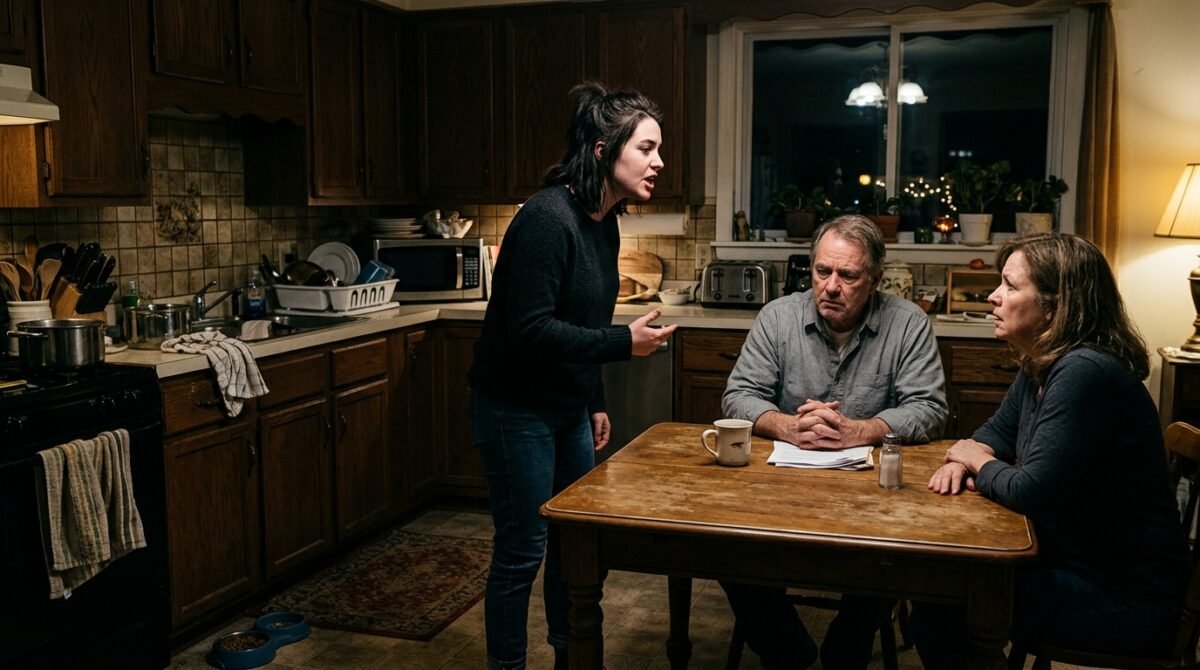
My parents decided to host a ‘family meeting’ at their house the following Sunday. I walked in, expecting a mature conversation about boundaries and expectations. Instead, I walked into a room where my father was trying to soothe a weeping Chloe, who had clearly been rehearsing for this performance.
They sat me down at the kitchen table, the same table where I had done my homework for twelve years. My mother started by saying that ‘perhaps we can find a middle ground.’ She suggested that I pay half the mortgage for six months, just until Chloe’s ‘brand’ took off. I felt like I was in an alternate dimension where my money belonged to the collective.
“I am not an ATM, Mom. I am not a charity. Chloe chose a career path that is volatile. I chose one that is stable, but it required sacrifice. Why is my sacrifice expected to subsidize her risk?”
My father looked down at his coffee, refusing to meet my eyes. He whispered that it was ‘just money,’ and that family should help family. I asked him, very clearly, if he would be willing to dip into his retirement savings to cover her rent. The silence that followed was deafening. It was a litmus test of their hypocrisy; they were happy to spend my money, but not their own.
Chloe stopped crying instantly. Her face hardened into a mask of pure indignation. She stood up, paced the kitchen, and started listing off all the ways I had ‘failed’ her. She mentioned the time I didn’t buy her a gift for her birthday three years ago, and the time I missed a dinner to attend a work conference. It was a catalog of perceived slights, all being used as currency to justify her current demand.
The meeting ended with me leaving. I told them I wouldn’t pay a single cent, and that if they kept pushing this, I would have to take a step back from all of them. I left the house with my mother sobbing in the doorway and my father looking at me like I was a stranger. I had never felt more isolated, yet more resolved, in my entire life.
The Fallout on Social Media

True to her word, Chloe took the fight public. Within forty-eight hours, she had created a series of videos titled ‘Toxic Family Dynamics & Financial Gaslighting.’ She didn’t name me directly, but the context clues—the ‘corporate sister,’ the ‘new promotion,’ the ‘lifestyle of greed’—were impossible to miss. She framed herself as a victim of a sibling who had ‘abandoned her roots’ for the sake of material wealth.
My friends from the office started asking questions. People I didn’t even know were sending me links to her TikToks, asking if ‘that influencer girl’ was actually my sister. The professional reputation I had spent years building was being eroded by a smear campaign built entirely on lies and distorted half-truths.
I had to meet with HR. My manager, a kind woman who had helped me reach this level, pulled me into her office. She didn’t fire me, but she expressed concern about the ‘public-facing nature of my personal life’ and asked if there were any legal issues I needed to address. It was the most humiliating meeting of my professional career.
“This is not just about a mortgage anymore. This is about my livelihood. You are actively trying to sabotage the career that you are so desperate to leech off of. If you don’t stop, I’m talking to a lawyer about defamation.”
— Email sent to Chloe, 11:30 PM
Chloe didn’t respond to the email, but she did take down the videos—only to replace them with a ‘tell-all’ blog post about how ‘siblings should be the first line of support.’ She had turned our private family drama into content, monetizing the destruction of our relationship. I realized then that she didn’t care about the money as much as she cared about winning, about proving that her life was just as ‘valid’ as mine, even if she had to burn me to prove it.
I realized I needed to stop checking her accounts. I was feeding the monster by paying attention. I started documenting everything: screenshots, emails, logs of the calls. I was building a paper trail, not because I wanted to sue her, but because I needed to be ready if she ever escalated this into a legal battle.
The Reddit Trial: How the Internet Saw It

I finally broke down and posted the situation on a popular subreddit. I needed a reality check, a way to know if I was truly the villain in this story. The response was overwhelming. Thousands of people weighed in, and the consensus was not what my parents or Chloe would have expected.
“Your sister is not an entrepreneur; she’s a professional parasite. You owe her absolutely nothing. The moment you start paying her bills is the moment you lose your autonomy. Cut them off and don’t look back. You aren’t the villain; you’re the target.”
— u/FinancialFreedomSeeker (Top Comment, 32.5k upvotes)
The thread became a repository for similar stories. It was heartbreaking to see how many people had been guilt-tripped into supporting ‘family’ who had no intention of ever becoming independent. It validated my decision, but it also made me realize how widespread this type of emotional manipulation really is. The ‘family loyalty’ card is often used to mask plain, old-fashioned greed.
Some commenters were harsher, suggesting that I was ‘enabling’ the behavior by even engaging in the conversation. They told me that by trying to explain myself, I was giving Chloe the fuel she needed to keep the fight going. The advice was unanimous: stop explaining, stop arguing, and stop caring about her opinion of me.
Reading the comments, I saw the patterns I had missed. I saw how my parents’ desire for ‘family harmony’ was actually a form of enabling. They didn’t want a healthy relationship; they wanted the path of least resistance, and that path was paved with my money. I realized I had been the family’s secret foundation for a long time, and now that I was trying to move the foundation, the house was starting to tilt.
The community support gave me a strange kind of strength. I wasn’t crazy. I wasn’t being ‘petty.’ I was being a responsible adult who was setting a boundary that should have been respected years ago. The validation was exactly what I needed to prepare for the final confrontation.
The Final Ultimatum

The situation came to a head when I received a letter in the mail. It was a formal notice from a lawyer, drafted on behalf of Chloe, claiming that I had ‘promised’ to support her in the past and that she had structured her finances based on that ‘verbal commitment.’ It was a blatant lie, but it was a scary one. It was the first time she had threatened legal action.
I didn’t panic. I called a lawyer of my own—a real one, not one of her ‘influencer’ friends. We spent an hour going over everything: my texts, my emails, the lack of any written agreements. The lawyer told me that she had zero case, but that she could make my life miserable with frivolous filings if I didn’t shut it down immediately.
I sent one final message to Chloe and my parents, cc’ing all of them. I was done with the drama, done with the guilt trips, and done with the parasitic demands. I laid out the terms of our new relationship, if we were to have one at all. No more mention of money, no more public smear campaigns, and no more ‘family meetings’ about my finances.
“If you continue this path, you will have no sister. I am done being the bank for your lifestyle. The next time I hear about a mortgage payment, a lawyer, or a social media campaign, I will be cutting off contact with all of you indefinitely. This is not a negotiation.”
I waited for the explosion. I waited for my parents to call me, screaming about how I was tearing the family apart. I waited for Chloe to post a new video about how I had ‘abandoned’ them. But for the first time in months, there was nothing. The silence wasn’t empty; it was heavy with the weight of the new reality I had created.
I felt a strange sense of loss, but also a profound sense of relief. I had finally stopped being the person who was responsible for everyone else’s happiness. I had reclaimed my own life, even if the cost was a temporary severance from the people who raised me. It was the hardest thing I’ve ever done, but it was the only way to survive.
The Aftermath: A Quiet Life

It has been six months since I sent that email. The silence from Chloe has been absolute, though I see her posting on social media about ‘new chapters’ and ‘cutting out negative energy.’ It’s ironic, honestly, but I don’t let it bother me anymore. My parents and I have a strained, distant relationship. We talk, but the conversations are shallow and scripted.
I moved to a new apartment, a place I chose for myself, not for the aesthetic or the influence. I’ve started investing my money into my own future—retirement, travel, experiences that don’t involve a camera. I’ve never been happier, or more at peace with the decisions I’ve made. The corporate promotion is still challenging, but it no longer feels like a burden I’m carrying for three other people.
I learned that boundaries are not just about protecting yourself from others; they are about protecting the life you’ve worked so hard to build. If you don’t stand up for your value, no one else will. My sister taught me a valuable, albeit painful, lesson about who actually has my back, and who is just waiting for me to hit a new level of success so they can climb on top of it.
I look back at the person I was a year ago—the one who felt guilty for being successful, the one who tried to fix everything—and I barely recognize them. Success is a tool, not a public utility. I’m proud of what I’ve achieved, and for the first time, I’m able to enjoy it without the shadow of someone else’s expectations looming over my shoulder.
The Lessons of Financial Entitlement
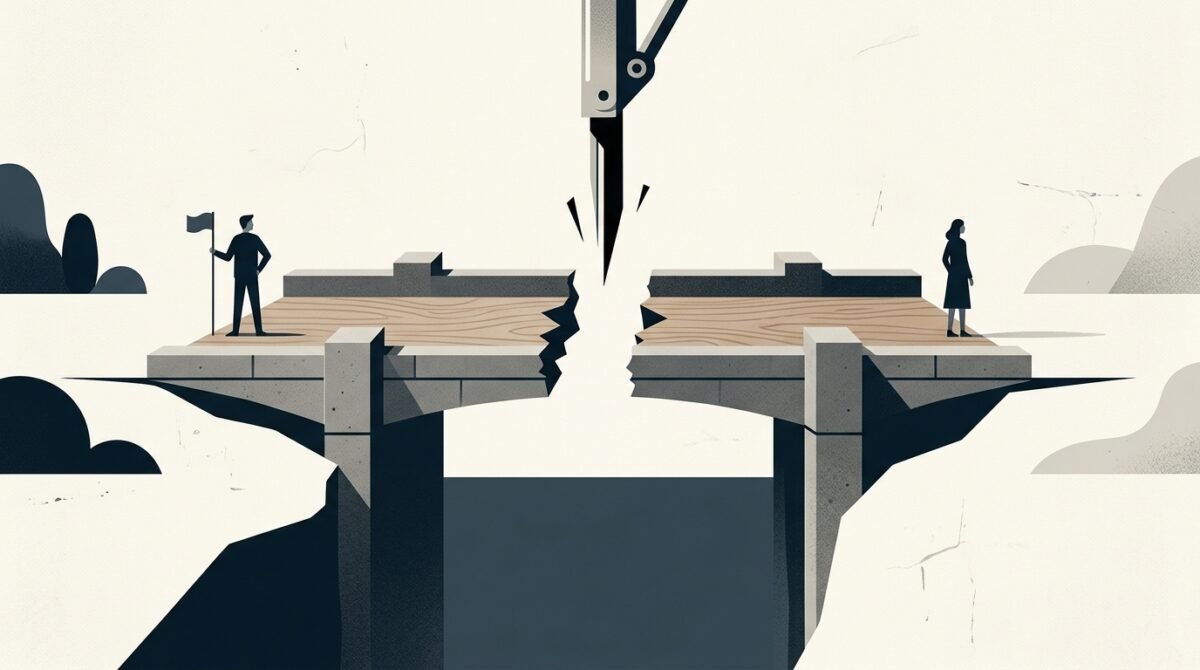
When we look at stories like this, it’s easy to get caught up in the drama of the ‘who is right and who is wrong.’ But the real lesson lies in the mechanics of entitlement. Why do family members feel comfortable asking for money that isn’t theirs? It often stems from a lack of respect for the labor that goes into acquiring that money. In Chloe’s world, content is created with a filter; she assumed that my money was created with the same ease.
We need to stop viewing success as a communal pot. When you work for your income, you are also working for your autonomy. By letting others dictate where your money goes, you are effectively working for them. This is the trap that many successful siblings fall into, and it is a trap that can destroy relationships faster than any argument ever could.
Setting boundaries is not an act of cruelty; it is an act of necessity. By saying ‘no,’ I wasn’t just refusing to pay a mortgage; I was affirming my own worth and my own autonomy. It forced my family to see me as an individual, rather than an extension of their own financial needs. That adjustment is painful, both for the person setting the boundary and the people who have to accept it.
In the end, I realized that family loyalty is a two-way street. It requires mutual respect and a baseline of understanding. If one side is only there to extract value, it isn’t a family; it’s a business arrangement where you’re the only one losing money. I chose to close the business, and I’ve never looked back.
The Community Weighs In: A Second Look

Since the initial explosion, the discourse in my circle of friends and the online community has shifted. Some people have reached out, sharing their own stories of ‘sibling leeches.’ It’s clear that this is a widespread phenomenon, often hidden under the guise of family duty. We are conditioned to think we owe our families everything, even when they take until there is nothing left.
“The hardest part of growing up is realizing your parents and siblings are just people who are flawed. Once you strip away the ‘family’ title, would you be friends with them? Would you give them money if they weren’t blood? If the answer is no, stop paying.”
— u/RealTalkMama (12.4k upvotes)
The community has helped me process the lingering guilt. There are days when I still feel like the ‘bad guy,’ especially during the holidays or family events I’m no longer invited to. But then I remember the feeling of the kitchen table, the silence of my parents, and the sheer audacity of the demands. The guilt is just a residual side effect of a lifetime of conditioning.
I’ve started a small group for people in similar positions—high earners whose families treat them as ATMs. We talk about the guilt, the pressure, and the strategies for keeping those boundaries intact. It’s been more healing than any therapy session I’ve ever had. We aren’t just ‘the successful ones’ to each other; we’re just people trying to live our lives without being exploited.
The internet, for all its toxicity, has been a lifeline for me. It provided the clarity I couldn’t find within my own home. It reminded me that I don’t owe anyone my future. I owe it to myself to be the best version of me, and that version doesn’t include being a supporting character in someone else’s manufactured lifestyle.
Moving Forward: The Future of Our Relationship

Where does this leave us? I don’t know if I’ll ever have a normal relationship with Chloe again. The trust was not just broken; it was exploited. I don’t want a relationship where I have to constantly guard my finances and my career from someone I love. That’s not a relationship; that’s a war zone.
My parents and I are in a slow, awkward state of reconciliation. They are beginning to realize that I wasn’t bluffing. They don’t push the money issue anymore, mostly because they know that if they do, the conversation ends. It’s a sad, limited version of what we once had, but it’s real. It’s based on who I am now, not who they want me to be.
I’ve learned to value my own time and energy. I no longer feel the need to justify my success to anyone. If people want to be part of my life, they have to be part of the person I am, not the bank account they think I am. It’s a simple rule, but it’s transformed my entire world.
I’m looking forward to the next year with a sense of optimism I haven’t felt in a long time. I’m not worried about my sister’s mortgage, or my parents’ disappointment, or the opinions of anonymous internet followers. I’m worried about my own growth, my own happiness, and my own future. And that, I’ve finally realized, is exactly how it should be.
Conclusion
The saga of the ‘influencer sister’ vs. the ‘corporate sibling’ is more than just a viral drama; it is a mirror reflecting our modern struggles with boundaries, entitlement, and the true cost of success. When we allow others to stake a claim on our achievements, we lose the very thing that made those achievements possible: our own drive, our own peace, and our own autonomy.
I hope this story serves as a reminder to anyone currently being used as a financial safety net for their family: you are allowed to say no. You are allowed to prioritize your own stability over someone else’s ‘lifestyle.’ You are not a bad person for wanting to build a future for yourself, even if those around you want a piece of it.
I’d love to hear from you. Have you ever had to draw a hard line with family over money or career expectations? How did you handle the backlash, and what did you learn about yourself in the process? Let’s keep the conversation going in the comments below.
What's your verdict on this dilemma?
Vote below to contribute to the official community consensus.

Have a Dilemma Keeping You Up at Night?
Share your real-life feud, wedding chaos, or relationship crossroads anonymously with our editorial team.
What do you think ?
0 Comments🛡️ Comments are moderated to protect community integrity. Your comment will appear once approved by the editorial team.