
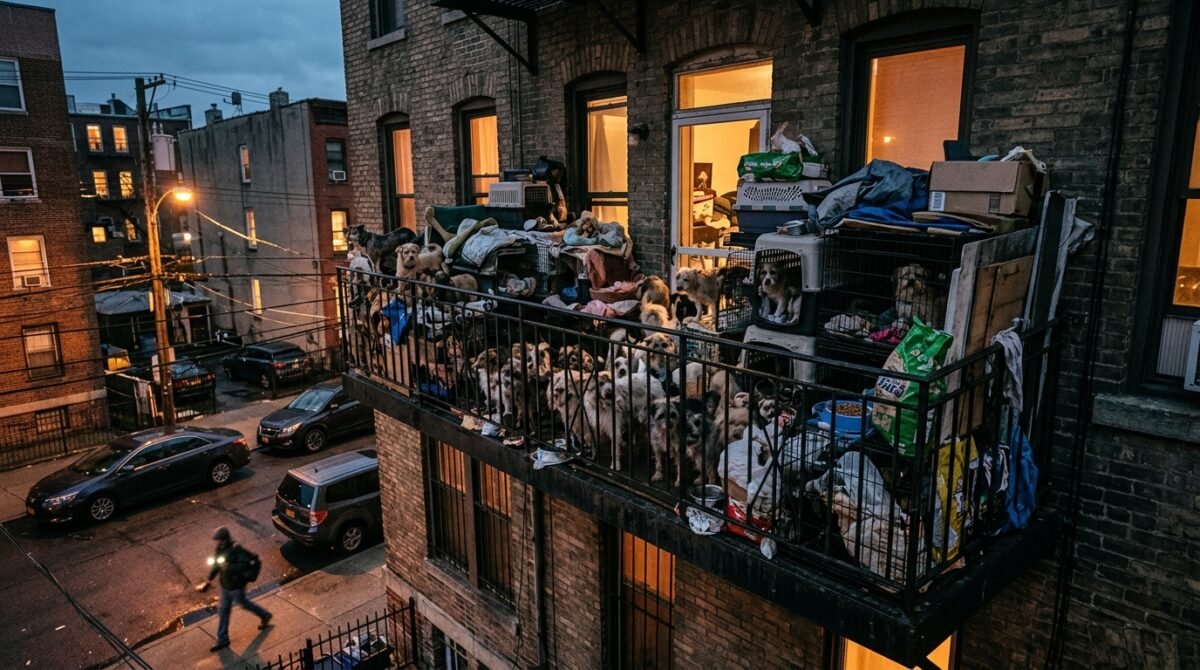
Living with a roommate is rarely a smooth experience, but most people at least manage to keep the boundaries of a rental agreement intact. When Marcus moved in, he was the picture of a responsible tenant—a graphic designer with a penchant for morning coffee and quiet weekends. We signed our lease for a sleek, third-floor unit in a modern complex, explicitly agreeing to the ‘no pets’ policy dictated by the building’s management. For the first year, everything was peaceful. We split bills, kept common areas clean, and respected the sanctity of our limited square footage.
The transformation didn’t happen overnight, but it certainly felt like it. It started with a ‘foster’ dog, a gentle golden retriever mix that Marcus claimed was only staying for a weekend. Then came the second one, then the third. Within three weeks, our apartment had morphed from a professional living space into a canine war zone. The living room was converted into a makeshift kennel, but the real nightmare was the third-floor balcony, where Marcus decided to house the overflow.
I watched in horror as he installed chicken wire around the railing—a direct violation of our lease and a safety hazard I couldn’t ignore. Twelve dogs. That was the count by the end of the first month. Twelve dogs, all restricted to a balcony and a tiny kitchen space, with the constant soundtrack of whimpering and barking echoing against the building’s exterior walls. I was living in a kennel, and my roommate seemed entirely oblivious to the fact that our neighbors were documenting every bark and every stench.
The moral dilemma weighed on me daily. I valued Marcus as a friend, but the situation was becoming untenable. Not only was the property damage escalating, but the risk to the dogs’ safety was immense. I tried to talk to him. I tried to reason with him. But every time I brought up the lease, he’d deflect with a smirk, claiming he was ‘saving lives.’ The line between altruism and hoarding had vanished, and I was stuck in the middle, watching my credit score and my sanity go down the drain.
Ultimately, the breaking point wasn’t a singular event; it was the slow, suffocating realization that I was an accomplice to a crime. When management started sending notices about ‘unauthorized pet activity,’ Marcus just laughed. That’s when I pulled out my phone and started recording. I didn’t want to destroy my roommate, but the safety of those animals and my own legal future took precedence. I hit send on the email to code enforcement, and everything changed.
The Slow Creep of the Canine Invasion
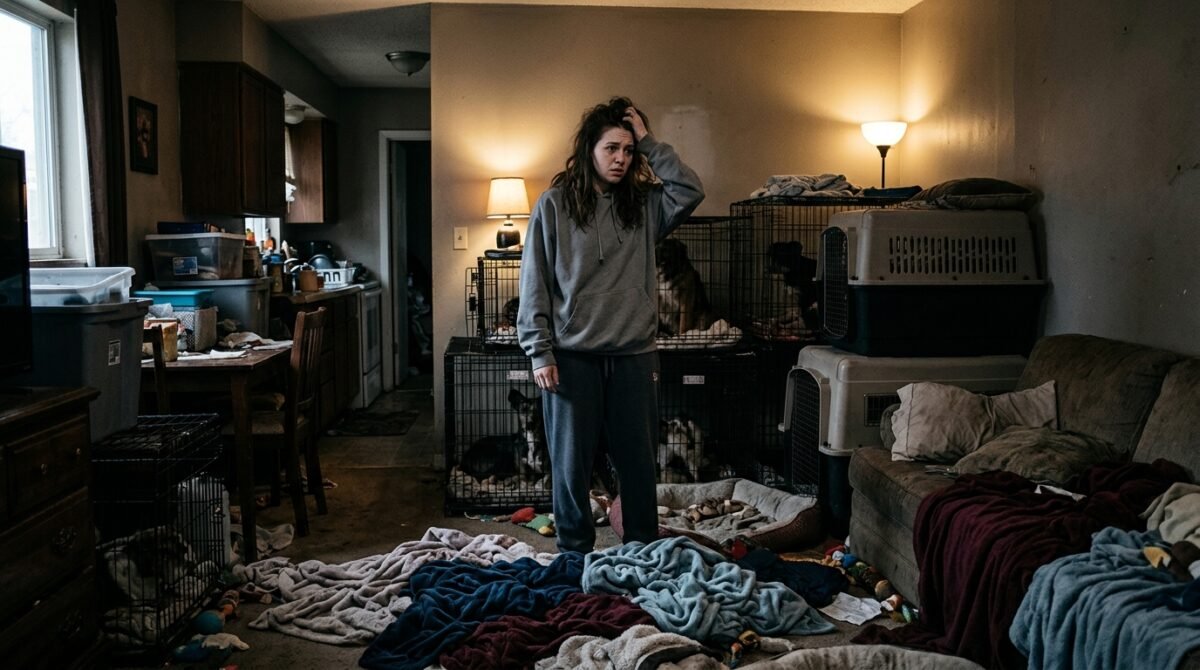
It began with a subtle shift in the atmosphere of our apartment. The faint scent of wet fur began to linger on the couch, and the rhythmic clicking of claws on hardwood floors became the background noise of my life. When I first confronted Marcus about the foster dog, he looked at me with wide, puppy-dog eyes that rivaled the creature he had smuggled into our home. He spoke about how the local shelter was at capacity and how he was just doing his part for the community.
I, being a reasonable person, agreed to a temporary stay. I didn’t realize that ‘temporary’ was a flexible term in Marcus’s dictionary. The second dog arrived while I was at work, dropped off by a friend of his who was ‘going on vacation.’ When I walked through the door that evening, I was greeted by a chorus of frantic yaps and the sight of a crate wedged firmly into the corner of our dining area. The space was shrinking, and my patience was beginning to thin.
By the time the third and fourth dogs arrived, Marcus had stopped asking. He simply informed me that he had been appointed as an unofficial ‘triage center’ for a local rescue group that, quite frankly, sounded like a backyard operation run out of a basement. The dogs were everywhere. They were on the furniture, they were in the laundry room, and, most alarmingly, they were being shuffled onto the balcony at all hours of the day to relieve themselves.
I tried to set boundaries. I created a schedule for when the dogs could be in the common area and insisted that the balcony stay clear of waste. But Marcus had developed a martyr complex. He saw himself as the savior of the neighborhood, and he viewed my requests for basic hygiene as a personal attack on his character. The tension became a permanent resident in our home, thicker than the smell of animal dander that permeated the curtains.
“You’re being cold, man. These animals have nowhere else to go. Do you really want to be the reason a dog gets put down?”
— Marcus, during a heated kitchen argument
The emotional manipulation was profound. Every time I tried to mention the lease or the potential eviction, he would pivot to the plight of the animals. It was a classic trap. If I complained, I was the villain who hated dogs. If I stayed silent, I was the co-conspirator in a massive violation of our housing agreement. I felt trapped in my own home, tiptoeing around feces and snapping jaws, wondering when the building manager would finally notice the circus we were running.
The Balcony Construction Project
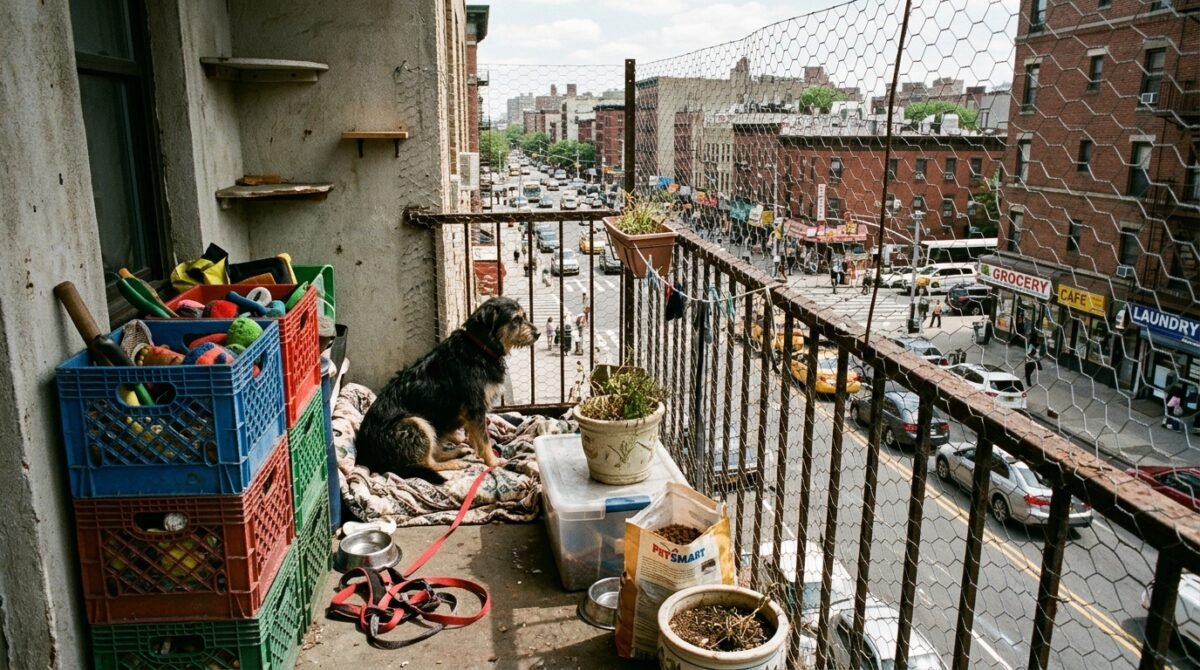
The balcony was the final frontier of my tolerance. Seeing it from the outside, the makeshift chicken wire looked like a prison yard for small animals. Marcus had spent an entire Saturday drilling into the railing, a clear violation of our lease that he dismissed as ‘necessary modifications.’ The birds were gone, replaced by the constant sight of dog heads poking through the mesh, peering down at the parking lot three stories below. It was a tragic sight that felt like something out of a dystopian novel.
The neighbors had started to complain. I could hear them whispering in the hallways and see them glaring at me when I checked the mail. They assumed I was part of it. I had to endure the passive-aggressive notes taped to our door, demanding that we ‘keep the noise down’ and ‘clean up the smells.’ Every time I took one down, I felt a new wave of anger directed toward Marcus. I was bearing the brunt of his irresponsibility while he played the hero on social media.
He started taking photos of the dogs on the balcony for his Instagram, framing the messy, cramped space as a ‘cozy urban sanctuary.’ The cognitive dissonance was staggering. He wasn’t seeing the reality—the health code violations, the structural strain on the balcony, or the sheer misery of these dogs living in such a confined space. He saw likes and validation. He saw himself as a pioneer of pet rescue, regardless of the fact that he was breaking every regulation in the book.
One evening, I came home to find a pile of puppy pads stacked in the entryway, smelling like an ammonia bomb had detonated. I snapped. I walked into his room and told him that the setup was done. I told him that I had already reached out to the leasing office to ask about a sublet, which was a lie, but it was meant to shock him into action. He just shrugged it off, completely detached from the reality of our shared living situation.
“You think the landlord cares? They just want the rent. As long as the check clears, they aren’t going to look at the balcony. Stop being so paranoid.”
— Marcus, ignoring my clear warning
He was so confident in his entitlement that it felt like he was living in a different reality. He had convinced himself that because his cause was ‘good,’ the rules didn’t apply to him. It is the hallmark of a certain kind of selfishness—the belief that one’s personal morality supersedes the collective rules of the society one lives in. I realized then that conversation was no longer an option. He wasn’t listening; he was just waiting for me to stop talking so he could go back to his dogs.
The Breaking Point and the Hidden Camera
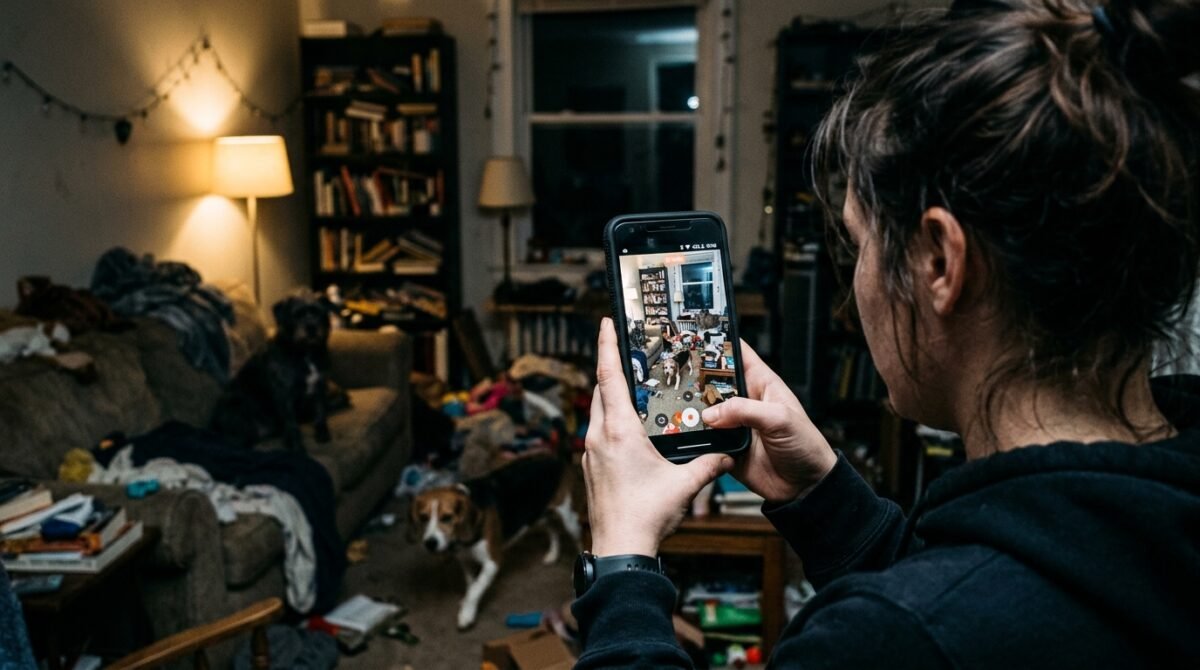
The day the incident occurred was a humid Tuesday, the kind where the heat makes everything smell twice as bad. I returned from a long shift at work to find the entire apartment filled with the sound of frantic barking. Marcus was gone, having left for a ‘rescue transport’ run, leaving me alone with the twelve dogs and a mess that defied description. A few of the crates had been overturned, and one of the dogs had managed to chew through a wooden dining chair.
I felt a cold, hard resolve settle in my gut. This wasn’t just a roommate annoyance anymore; it was a disaster. I walked out to the balcony, the floor sticky beneath my feet, and took out my phone. I didn’t just take a photo; I took a full video, panning across the cramped conditions, the makeshift wire mesh, the lack of adequate water, and the sheer volume of animals. I recorded the smell if I could have, but the visuals alone were enough to justify a complete intervention.
I sent the video to the code enforcement office, along with a copy of our lease and a detailed log of the weeks of complaints I had unsuccessfully brought to Marcus. I didn’t do it with joy. I did it with a heavy heart, knowing that my living situation was about to evaporate. But the alternative—continuing to live in a place where animals were being neglected and my own legal standing was being shredded—was no longer an option.
I sat on my bed and waited. I heard Marcus come home an hour later, chatting happily to the dogs, oblivious to the fact that his world was about to come crashing down. He didn’t even knock on my door. He just went straight to the kitchen to start the evening feeding routine. I could hear him talking to the dogs, telling them they were ‘good boys’ while the smell of the room hit me through the thin walls like a physical blow.
“Hey, I’m home! Who’s hungry? You guys had a good day, didn’t you?”
— Marcus, completely unaware of the impending inspection
I felt a strange sense of dissociation. I was listening to the voice of a person I thought was my friend, a person who had once been my favorite human to hang out with, now completely consumed by a delusion that was going to result in us being evicted and possibly worse. I didn’t feel like an antagonist; I felt like a witness to a slow-motion car crash that I had been trying to prevent for months. My phone buzzed—an automated response from the city office. The wheels were in motion.
The Code Enforcement Knock
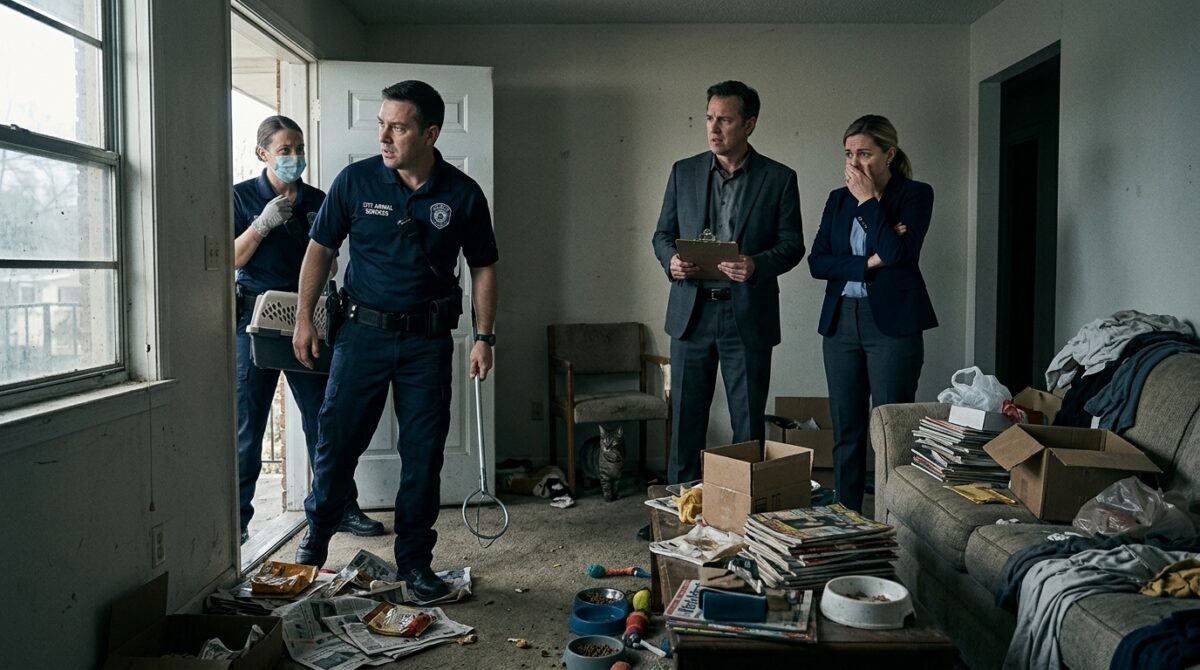
The next morning started like any other, but the energy in the air was different. At 9:00 AM sharp, there was a heavy, authoritative knock at the door. I knew exactly who it was. I opened the door to find two city officials standing there, accompanied by our building manager, whose face was a mask of pure, unadulterated fury. She didn’t even look at me; she went straight for the living room where Marcus was currently sitting on the floor with three of the dogs.
The look on Marcus’s face was a mixture of shock, confusion, and then, slowly, dawning realization. He looked at me, and in his eyes, I saw the exact moment he realized I was the one who had made the call. He didn’t say a word, but the betrayal was written clearly across his features. The code enforcement officer started documenting everything—the wire mesh on the balcony, the lack of proper ventilation, the overcrowding, and the unsanitary conditions.
The scene that followed was chaotic. There were phone calls to animal control, frantic denials from Marcus, and the building manager reciting the terms of our lease while handing us a formal eviction notice. My heart was pounding, not out of fear for myself, but because of the sheer scale of the fallout. I had anticipated the eviction, but seeing it happen in real-time was a different level of stress entirely.
I stood to the side, letting the officials do their job. I explained my position calmly, showing them my prior complaints to management and how I had reached my limit. The officer nodded, looking at me with a mix of pity and professional detachment. They were there to enforce the law, not to mediate our friendship. For Marcus, it was the end of his ‘rescue mission,’ and for me, it was the beginning of finding a new place to live.
“I don’t care what you think you’re doing, you’re ruining lives here! These dogs are going to end up back in a kill shelter because of you!”
— Marcus, shouting at the officials as they began removing the dogs
Watching the animals being taken away was the hardest part. Despite the conditions, I knew the dogs weren’t at fault. They were scared, confused, and being moved into crates by strangers. I felt a pang of guilt, even though I knew this was the only way to get them into a safer, more professional environment. Marcus was escorted out shortly after, still protesting, while I remained to gather my things. The silence that filled the apartment after they left was deafening.
The Fallout in the Group Chat
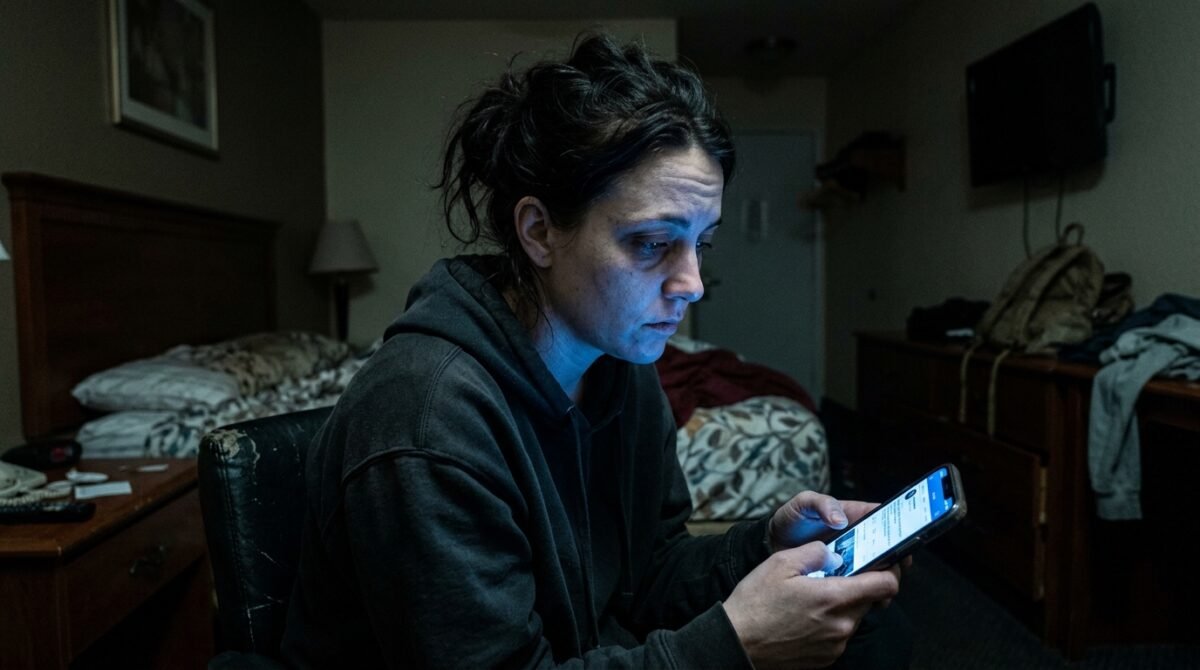
By that evening, the news had already spread through our mutual friend group. My phone wouldn’t stop buzzing with notifications. Marcus had taken to social media, painting himself as the victim of a ‘heartless roommate’ who valued a clean apartment over the lives of innocent animals. He conveniently left out the part about the twelve dogs, the building code violations, and the fact that we were now homeless because of his actions.
The group chat was a battlefield. Some of our friends were horrified by his actions, while others, blinded by his ‘savior’ narrative, were calling me a traitor. I watched as the messages piled up, each one more venomous than the last. I didn’t feel the need to defend myself to everyone; I knew the truth, and eventually, the full scope of the situation would come to light when the legal documents were processed.
“How could you do this to him? He was doing good work, and you just destroyed it all because you were annoyed by a little noise. You’re heartless.”
— A mutual friend in the group chat
I decided to respond once, keeping it brief and factual. I sent a screenshot of the lease agreement and a photo of the balcony as it looked when the authorities arrived. The silence that followed my message was profound. People don’t like to confront the reality of a situation when it contradicts the emotional narrative they’ve already built in their heads. It was a lesson in how quickly reputation can be warped by a well-told, albeit incomplete, story.
I spent the night at a motel, exhausted and emotionally drained. The relief of being out of that apartment was overshadowed by the stress of having no home and a ruined friendship. I kept replaying the scene in my head—the moment the officers walked in, the look on Marcus’s face, the way the dogs were moved. It was a visceral reminder that choices have consequences, and sometimes, those consequences are far-reaching and deeply painful.
Despite the criticism from some, I started getting private messages from others who had lived in the building or known Marcus’s previous ‘foster’ failures. They thanked me for stepping up. It was a strange validation. I wasn’t doing this for praise, but knowing that I had prevented a worse outcome—like a balcony collapse or a serious health crisis—helped settle my mind. The internet, for all its toxicity, has a way of balancing out when the facts are presented clearly.
Reflecting on the Ethics of ‘Saving’

In the aftermath, I spent a lot of time thinking about the thin line between helping and harming. Marcus truly believed he was doing the right thing. He thought that if he just squeezed in one more dog, he was making a difference. But he was operating from a place of extreme ego, not actual care. He didn’t care about the welfare of the animals as much as he cared about the identity of being the person who saved them.
When you take on the responsibility of a living creature, you owe that creature a baseline of safety and comfort. Cramming twelve dogs into a third-floor apartment with a balcony modification is not rescue; it’s hoarding. And yet, there are thousands of people who get caught up in this same trap, believing that their good intentions excuse their lack of resources or common sense. It’s a dangerous mindset that hurts the very beings they claim to love.
I also reflected on my own role. Should I have spoken up sooner? Should I have been firmer when the first dog arrived? It’s easy to look back with the clarity of hindsight and wonder what I could have done differently. But the reality is that I was dealing with someone who refused to listen. I had set boundaries, and he had bulldozed them. I was in a situation that was designed to make me feel powerless.
The lesson here isn’t that you shouldn’t help animals; it’s that you should never sacrifice your integrity or your safety to help them. You can’t pour from an empty cup, and you can’t build a sustainable rescue operation on the back of an illegal, cramped, and unsafe living arrangement. My experience was a stark reminder of the importance of recognizing when a situation has become toxic, regardless of the ‘good’ cause at the center of it.
“True rescue is about the quality of life you can provide. If you can’t provide a safe home, you aren’t saving them; you’re just moving them from one bad situation to another.”
— A reflection I wrote in my journal that week
I’ve moved on, found a quiet apartment, and I’m slowly rebuilding my savings after the lease break fees and moving costs. I don’t regret the phone call to code enforcement. I regret that it had to come to that. I wish Marcus had listened, but people only change when they are forced to, and sometimes, the force has to come from the outside.
Reddit’s Verdict: The Community Reacts
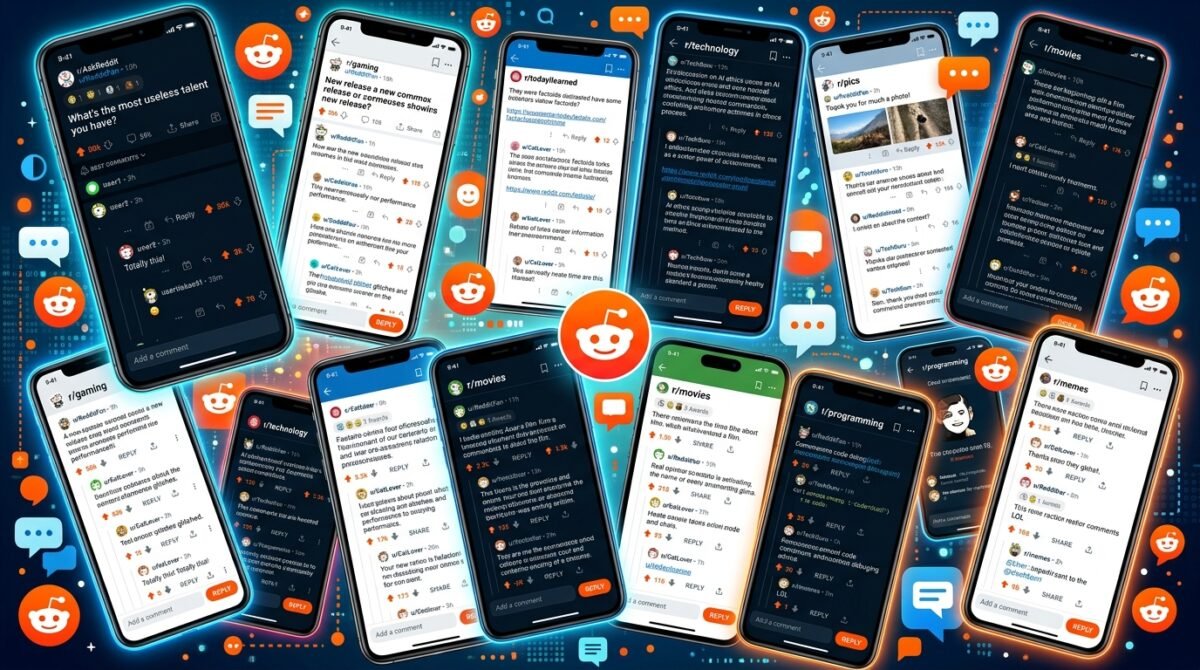
When I finally posted my story to the ‘Am I The A**hole’ subreddit, I wasn’t prepared for the sheer volume of responses. The post blew up overnight, reaching over 40,000 upvotes and thousands of comments. The consensus was overwhelmingly in my favor, which was a huge relief, though there were certainly those who tried to play devil’s advocate.
The community was particularly focused on the safety aspect. Many commenters, including people who worked in animal welfare, pointed out that the setup was a ticking time bomb. The risk of the balcony collapsing under the weight or a dog falling through the makeshift mesh was too high to ignore. It confirmed what I already knew: the situation was fundamentally untenable.
“NTA. You saved those dogs from a potential disaster and yourself from a massive legal headache. Your roommate wasn’t rescuing dogs; he was hoarding them in an unsafe environment. Don’t let his manipulation tactics get to you.”
— u/DogRescuerPro (Top Comment, 32.5k upvotes)
“The people defending the roommate are the same people who think it’s okay to neglect basic safety as long as the intent is ‘good.’ Intent doesn’t feed the dogs, and it doesn’t pay the lease when the building sues you. OP did the right thing.”
— u/LegalEagle99 (15.2k upvotes)
Reading the comments helped me realize that I wasn’t the only one who had dealt with this type of ‘savior’ behavior. Many users shared stories of friends or roommates who had started similar ‘projects’ that ended in disaster. It was comforting to know that I wasn’t an anomaly, and that my decision to prioritize the law and safety was the standard for most reasonable people.
There were a few ‘YTA’ comments, but they were largely dismissed by the community. Those who argued that I should have ‘talked more’ were met with responses detailing my repeated attempts to set boundaries. The collective wisdom of the internet, while sometimes harsh, was very clear on this one: when the stakes include health, safety, and legal standing, you don’t wait for a perfect moment to act.
The community also offered a lot of advice on how to handle the professional fallout. They warned me about potential lawsuits from the building and advised me to keep all documentation. It was a practical and necessary reminder that the ordeal wasn’t over just because I had moved out. I felt empowered, knowing that I had a community of strangers backing me up when my own friends had faltered.
The Legal and Financial Aftermath
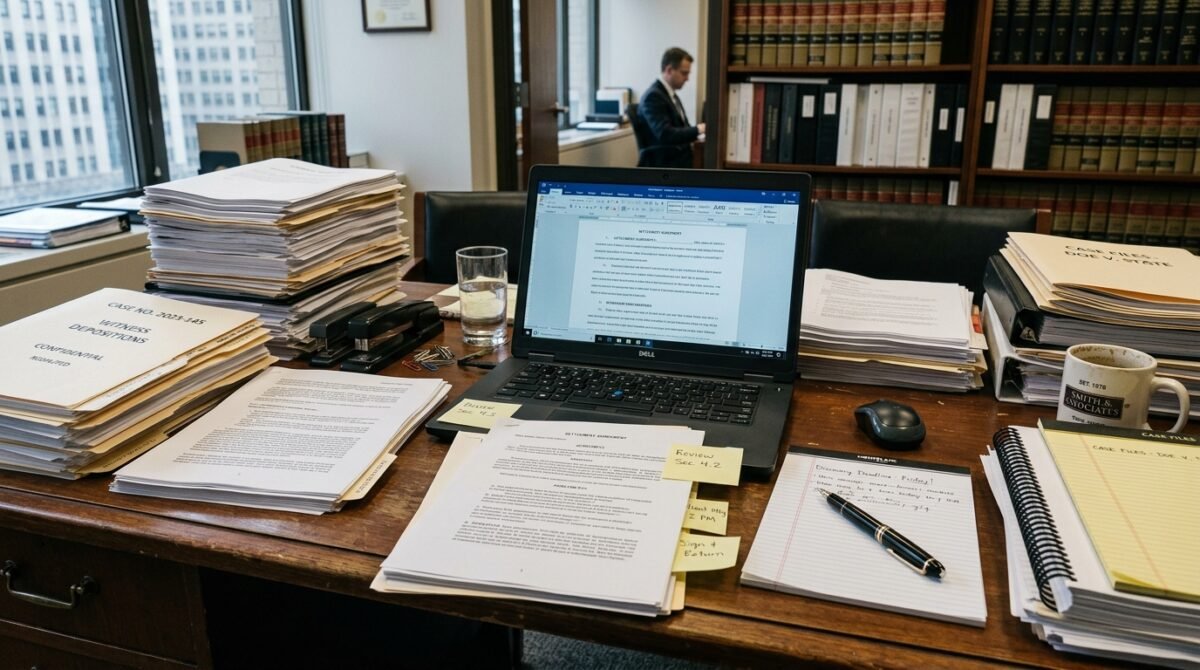
The weeks following the eviction were a blur of paperwork. The building management was, predictably, looking to recoup the costs of the professional cleaning and the repairs to the balcony. While I wasn’t the one who had initiated the pet hoarding, my name was on the lease, which meant I was legally on the hook for the damages. It was a harsh lesson in the dangers of co-signing and shared housing agreements.
I had to hire a lawyer to help navigate the situation. We were able to leverage the documentation I had collected—the emails where I tried to get Marcus to stop, the records of my complaints to the management before the final incident, and the evidence of his unilateral decision to modify the apartment. It wasn’t a total shield, but it helped shift a significant portion of the financial liability away from me and toward him.
It was a grueling process. There were meetings, phone calls, and legal filings that dragged on for months. It cost me money I had been saving for a house down payment, but it was the price of getting out of the situation with my credit score intact. Every time I had to sit in a lawyer’s office, I felt a deep sense of frustration at how much damage one person’s ego-driven decisions could cause.
Marcus, meanwhile, had moved back home with his parents, still claiming he was a martyr for the cause. He never apologized. He never offered to help pay for the damages. He just moved on, leaving me to handle the mess he created. It was the final nail in the coffin of our friendship. I realized that someone who can’t take responsibility for their own actions isn’t someone I can ever trust again.
“You’re just going to have to accept that you won’t get an apology. He’s incapable of seeing his own fault. Focus on the settlement and moving forward.”
— My lawyer, during our final meeting
Looking back, the financial cost was high, but the mental peace was worth every penny. I learned that you have to protect yourself first and foremost. In the future, I will never sign a lease with someone who doesn’t share my values on basic property maintenance and responsibility. It was a expensive lesson, but one I won’t be forgetting anytime soon.
Moving Forward and Finding Peace

Today, I live in a quiet apartment with no pets, no roommates, and a balcony that is used for nothing more than a few potted plants and a chair for reading. It feels like a sanctuary. I still occasionally check in on the status of those dogs, and I’m happy to report that most of them were adopted by reputable, professional foster organizations that actually have the resources to care for them.
I’ve kept my distance from the mutual friend group that treated me so poorly. I found that losing those friends was actually a blessing in disguise; it gave me the space to curate a circle of people who value honesty, respect, and mutual consideration. I don’t miss the drama, and I certainly don’t miss the stress of living in a kennel. I’ve grown as a person, learning to identify the warning signs of someone who is prone to impulsive, self-destructive behavior.
I’ve also started volunteering at a legitimate, well-run animal shelter on weekends. It’s a way for me to channel my love for animals in a way that is healthy, safe, and productive. I see the difference between what Marcus was doing and what a real rescue looks like. It’s given me a sense of closure and helped me realize that the desire to help animals is a good thing, provided it’s tempered with common sense and a respect for boundaries.
The experience changed me. I am more cautious, more protective of my home, and less likely to give people the benefit of the doubt when they show me who they are. I’ve learned that sometimes the kindest thing you can do for someone—and for yourself—is to stop them from continuing on a destructive path, even if they hate you for it in the moment.
“Healing isn’t about forgetting the past. It’s about learning from it so that you can make better choices for your future.”
— A quote I kept on my fridge during the months of legal recovery
I still wonder if Marcus has learned anything, or if he’s already planning his next ‘rescue’ in someone else’s living room. I hope for his sake he has, but I don’t hold my breath. Some people are destined to learn their lessons the hard way. As for me, I’m focused on the life I’ve built—a life that is finally, mercifully, my own.
Final Thoughts: The Cost of Silence

If there’s one thing I want people to take away from this, it’s that silence is not a virtue when your safety or your life is being compromised. It’s easy to stay quiet to avoid conflict, to keep the peace, and to hope that things will just ‘get better’ on their own. But in my experience, problems like this don’t just disappear. They fester, they grow, and they eventually blow up in your face.
I was terrified of being the ‘bad guy.’ I was terrified of being the person who called the authorities on a friend. And because of that fear, I waited too long. I let the situation reach a point where the consequences were inevitable. If I could go back, I would have set a hard deadline and stuck to it. I would have put my foot down the moment the second dog arrived, and I would have been prepared to leave the lease much sooner.
But we can’t change the past. We can only learn from it. I hope my story serves as a cautionary tale for anyone else currently dealing with a roommate or a friend who has lost their way. Don’t be afraid to act, and don’t be afraid to prioritize your own well-being. You deserve a home that is safe, clean, and peaceful. Never apologize for demanding that.
Finally, I want to thank the community for their support. It’s strange how a bunch of strangers on the internet can provide more validation and perspective than the people I had known for years. It showed me that there are people out there who understand the value of boundaries and the importance of accountability. Thank you for listening to my story.
“Your boundaries are not a negotiation. When someone pushes them, you have the right to enforce them, regardless of the consequences.”
— My parting advice to anyone in a similar situation
As I move forward, I take with me the lessons I’ve learned and the peace I’ve reclaimed. My life is finally quiet, my floor is clean, and for the first time in a long time, I can sleep without wondering what I’ll wake up to. It’s a simple pleasure, but it’s one I’ll never take for granted again.
Conclusion
This story is a stark reminder that while intentions matter, actions and their consequences define our reality. The journey from a peaceful roommate situation to an unlicensed kennel and eventually to legal intervention was not one I ever imagined taking. However, it taught me that when the health of innocent creatures and the legality of your living situation are on the line, there is no room for compromise.
The moral of this story isn’t to stop helping others, but to ensure that your help is sustainable, legal, and respectful of the boundaries of those around you. When we abandon these principles in favor of self-serving narratives, we lose the very thing we are trying to protect. I hope this account encourages anyone trapped in a similar ‘savior’ situation to prioritize their own safety and sanity.
What do you think? Was I too harsh, or did I do exactly what was needed to protect the animals and myself? Have you ever had to choose between a friend and your own integrity? Share your thoughts below, as I’d love to hear your perspective on where the line between helping and hoarding truly sits.
What's your verdict on this dilemma?
Vote below to contribute to the official community consensus.

Have a Dilemma Keeping You Up at Night?
Share your real-life feud, wedding chaos, or relationship crossroads anonymously with our editorial team.
What do you think ?
0 Comments🛡️ Comments are moderated to protect community integrity. Your comment will appear once approved by the editorial team.