
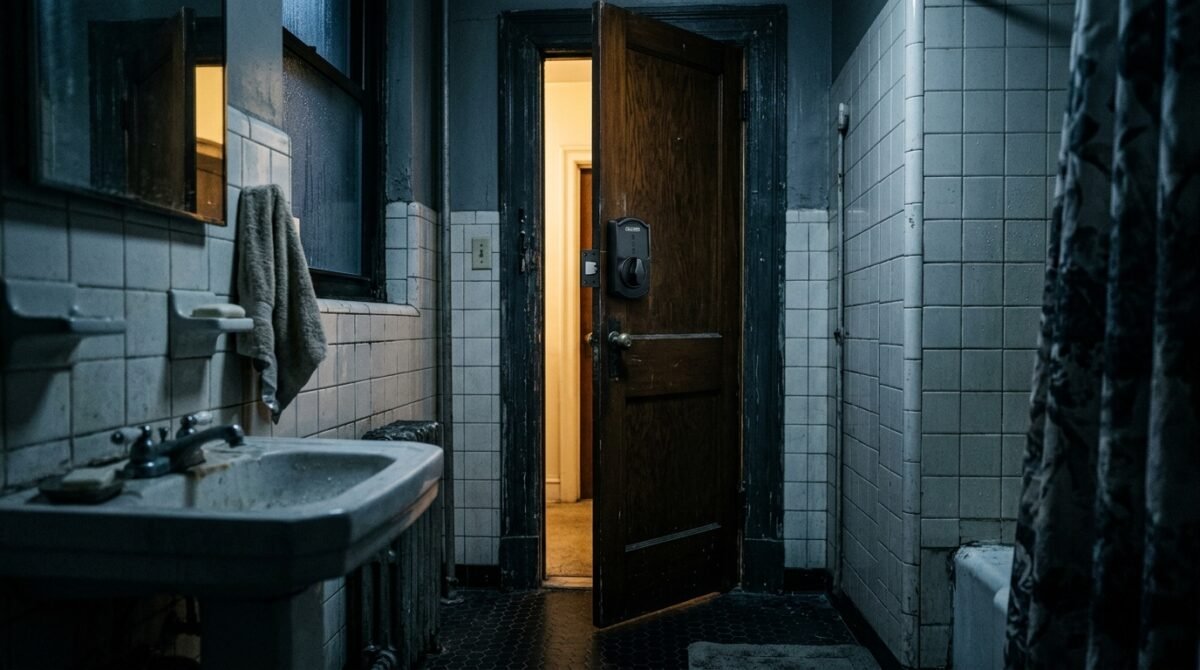
Living in the city is an exercise in compromise. You trade square footage for proximity, privacy for affordability, and usually, your sanity for a decent location. My roommate, Marcus, had always been the type to look for ‘hustles.’ It started with dropshipping kitschy kitchen gadgets and moved toward questionable crypto schemes, but I never expected his entrepreneurial spirit to bleed into the physical sanctuary of our apartment—specifically, our bathroom.
It began as a subtle shift in energy. There were extra towels in the hallway closet that I didn’t recognize, and the bathroom soap seemed to disappear at an alarming rate. At first, I attributed it to Marcus having friends over, or perhaps a new gym habit he hadn’t mentioned. It wasn’t until I found a strange, damp pair of flip-flops in the corner of our shower stall that the pieces started to click into a disturbing, nonsensical reality.
The moral dilemma here wasn’t just about the water bill or the privacy violation; it was about the fundamental erosion of trust. When you sign a lease, you agree to share a space with a specific person. You do not agree to host a revolving door of strangers who have paid a premium to use your amenities. The audacity required to commodify someone else’s comfort is something that defies logic, yet here I was, standing on the precipice of a full-scale domestic war.
This story isn’t just about a shower. It is about the boundary between a ‘shared space’ and a ‘public utility.’ It explores the moment you realize that your home is no longer a fortress, but a marketplace for someone who views your private life as their personal inventory. When I realized what was happening, I didn’t want to talk it out—I wanted to reclaim my home, and I was prepared to do it with a heavy-duty deadbolt and a very short fuse.
The Damp Flip-Flops and the Mystery of the Extra Towels
The realization didn’t hit me all at once. It was a slow, creeping sensation of discomfort that started on a Tuesday evening. I came home from a double shift, exhausted and craving a hot shower, only to find the bathroom floor soaked with water and a lingering scent of unfamiliar, citrus-heavy body wash. It was jarring, but I assumed Marcus had simply had a guest over. I cleaned the mess, grumbled to myself, and went to bed.
Three days later, the frequency increased. I noticed that our utility bill, which we split down the middle, had seen a strange, upward trend in water consumption. I brought it up over coffee, trying to keep my tone casual. Marcus just shrugged, blaming it on ‘longer morning routines’ and the heatwave. I wanted to believe him, but the visual evidence—the wet floor mats, the displaced toiletries, and the ever-present smell of strangers—told a different story.
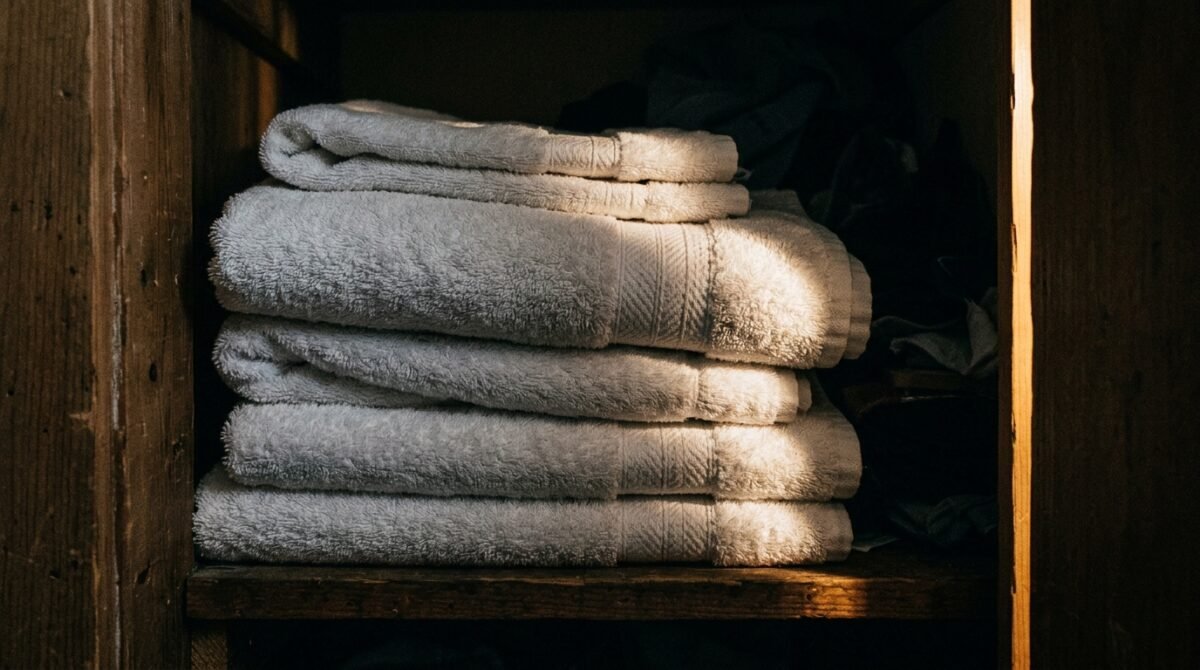
Then, I found the evidence. I was looking for a spare lightbulb in the hallway closet and stumbled upon a stack of high-end, embroidered towels that were definitely not ours. They were folded neatly, hotel-style, and smelled faintly of lavender. My heart skipped a beat. This wasn’t a friend crashing on the couch; this was a service being provided. I felt a cold knot of dread form in my stomach as I stared at the neatly stacked linens.
“Marcus, I need to know why there is a stack of professional-grade towels in our linen closet that I didn’t buy. And why does the shower smell like a spa I didn’t sign up for?”
— Me, confronting Marcus in the kitchen
Marcus didn’t even look up from his laptop. He just laughed, a dismissive, airy sound that made my blood boil. He told me I was being ‘paranoid’ and that he was just ‘helping out some friends’ who didn’t have hot water in their units. He painted himself as a saint, a benevolent neighbor, while I stood there feeling like a lunatic for questioning why my bathroom was suddenly a community bathhouse.
I didn’t buy it for a second. The level of organization—the towels, the specific soap, the way the floor was always wiped down—suggested a level of preparation that went far beyond ‘helping a friend.’ This was a operation. I spent that night lying awake, listening to the muffled sounds of the apartment, waiting for the sound of the shower to start again.
The 3:00 AM Intruder in the Hallway
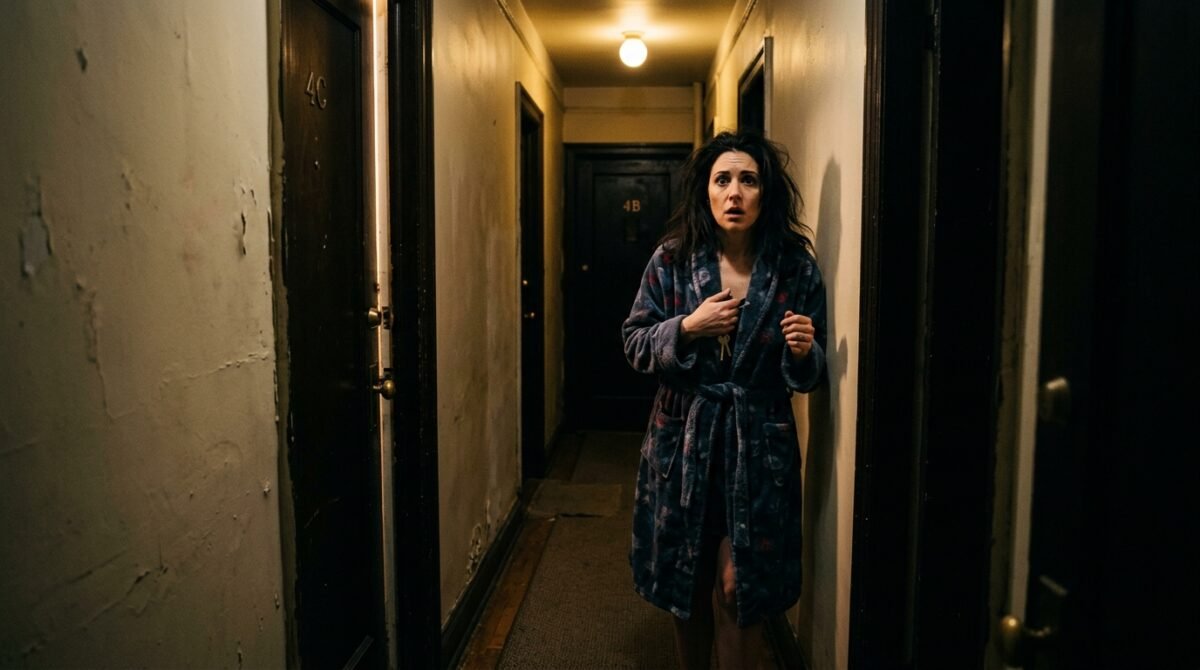
The breaking point came at 3:15 AM. I was headed to the kitchen for a glass of water when I heard the distinct, rhythmic sound of the shower running. It was dead of night, and Marcus was supposedly asleep in his room. My legs moved before my brain could process the danger. I walked toward the bathroom, expecting to find Marcus, but instead, I heard a voice—a woman’s voice—humming to herself.
I stood outside the door, frozen. The absurdity of the situation hit me with the force of a physical blow. Someone I didn’t know, in my apartment, in my shower, while I was supposedly sleeping down the hall. I didn’t knock. I gripped the handle and pushed, but the door was locked. The realization that they had locked me out of my own bathroom in my own home was the catalyst for everything that followed.
I began to pound on the door. The singing stopped instantly. A few seconds later, the water clicked off, and I heard the frantic rustling of clothes. I stood there, arms crossed, waiting. When the door finally opened, a woman in her early twenties stumbled out, clutching a gym bag, looking terrified. She didn’t even look at me; she just bolted toward the front door, leaving a trail of water behind her.
“Wait! Who are you? How did you get in here? Marcus! Get out here right now!”
— My panicked, sleep-deprived outburst
Marcus emerged from his room, looking incredibly annoyed, not by the fact that there was a stranger in our house, but by the fact that I had ‘interrupted’ his business. He started lecturing me about ‘curbing his potential’ and how I was ‘ruining the vibe.’ The utter lack of remorse was the most shocking part. He really believed that because he paid half the rent, he owned the right to monetize our shared square footage.
I didn’t yell. I realized that screaming at him would be useless. I just walked back into my room, locked the door, and spent the next three hours scouring the internet for any sign of what he was doing. It didn’t take long. A quick search of local neighborhood groups revealed a post on a private forum: ‘Exclusive, high-pressure shower access in the city center. $15 per 30 minutes. Towels provided.’ My jaw hit the floor.
The Price of a Hot Shower
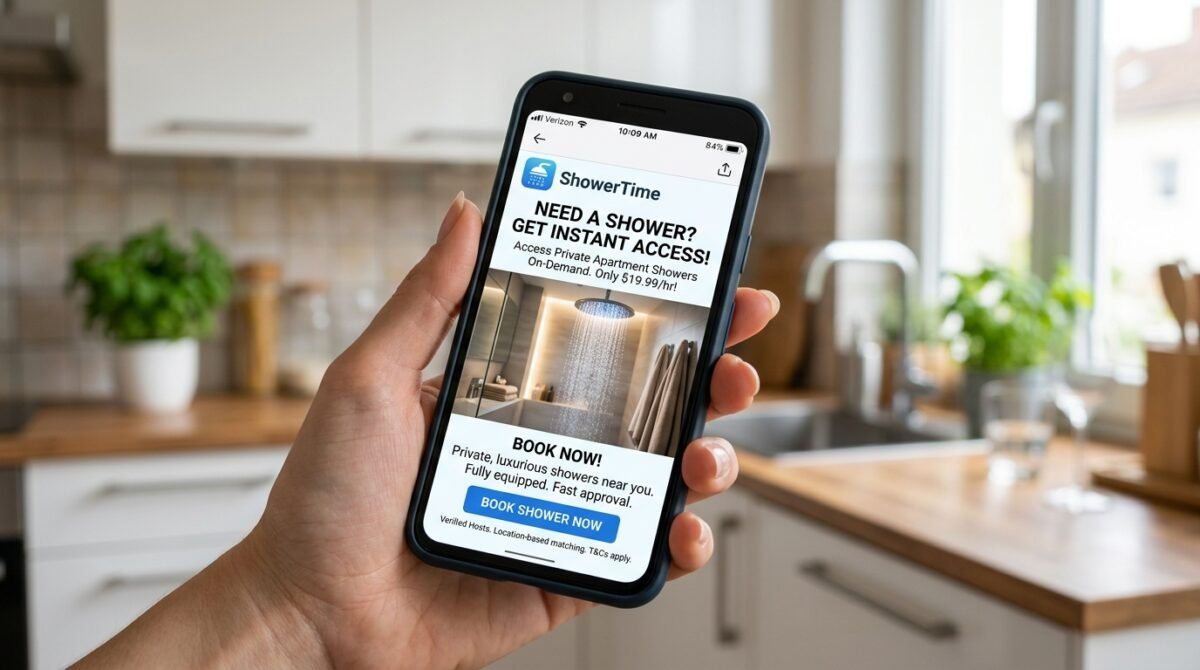
The post was real. It was on a niche site for commuters and students living in older, run-down buildings that lacked reliable hot water. There were even reviews. ‘The water pressure is incredible,’ one user wrote. ‘The owner is super discrete and the towels are always fresh.’ I read through them like I was reading a horror novel. My apartment—my home—was being reviewed like a short-term rental on a travel site.
The audacity of the pricing model was the next shock. He was charging $15 for thirty minutes. If he had even three or four people a day, he was clearing a significant amount of cash. He wasn’t just ‘helping friends’; he was running a micro-business using my utilities. I looked at the history of the posts, and he had been doing this for at least two months. My utility bills had been skyrocketing while he was lining his pockets.
I printed out the screenshots. I didn’t want to confront him without proof, even though I had plenty of evidence. I wanted to see his face when I showed him exactly what he had been doing. The level of entitlement required to put strangers into a shared living space without consulting the person you live with is a boundary violation of the highest order. I felt violated, unsafe, and furious.
“Look at this, Marcus. You aren’t ‘helping friends.’ You are running an illegal business out of our bathroom. Do you have any idea how dangerous this is?”
— Me, presenting the printed screenshots to Marcus
Marcus looked at the papers, laughed, and tossed them on the kitchen table. He told me that since I didn’t pay for the ‘extra’ water, it shouldn’t bother me. He tried to argue that he was providing a ‘community service’ and that I was just being selfish because I didn’t want to share. He acted as if his illegal side-hustle was a moral crusade for the underprivileged.
I told him that the safety risk was the issue. I didn’t know who these people were. I didn’t know if they were stealing, scoping out our stuff, or worse. He just rolled his eyes, telling me that I was ‘uptight’ and that he was ‘handling the vetting process.’ His arrogance was a bottomless pit. He really believed that his desire for a quick buck superseded my right to live in a secure, private environment.
The Deadbolt Ultimatum
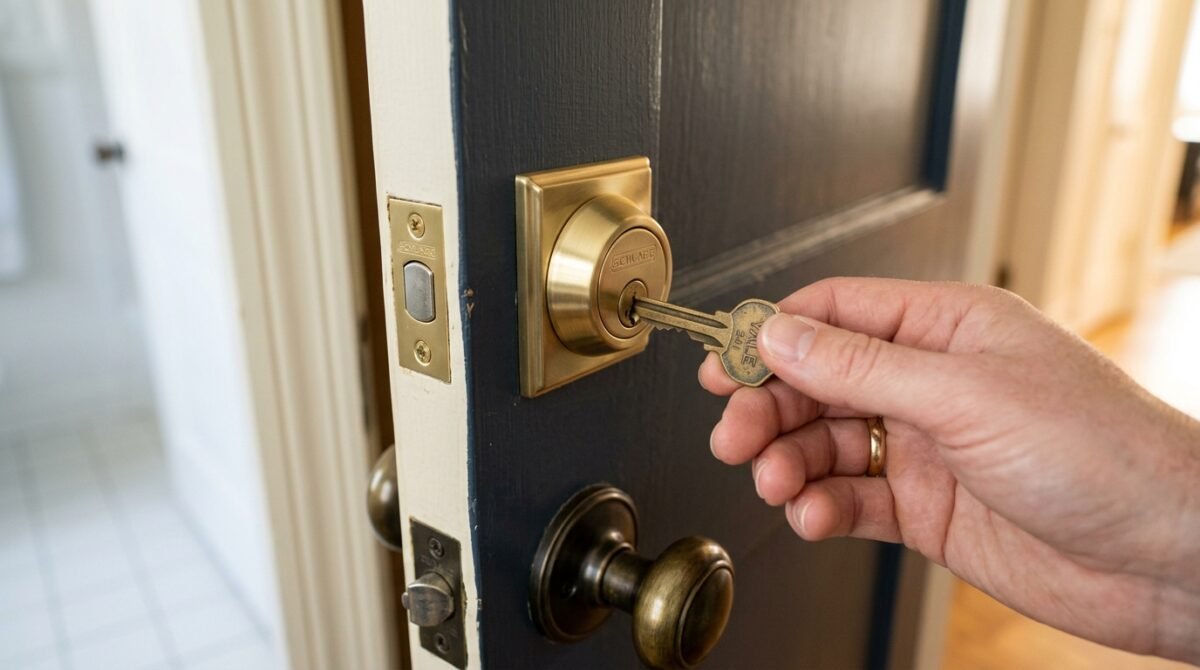
I knew then that talking wouldn’t work. Logic had no place in his worldview. He was motivated by profit and his own sense of self-importance. I needed to act decisively. The next morning, while Marcus was out at his ‘day job,’ I went to the hardware store. I didn’t buy just any lock; I bought a heavy-duty, keyed deadbolt that would require a physical key to open from the inside, not a simple privacy handle.
I spent an hour carefully installing the lock. I knew he would be furious, but I didn’t care. I replaced the interior privacy handle with the deadbolt. Now, the only person who could open the bathroom door was the person who held the key. I had one key, and I decided that if he wanted to use the bathroom, he would have to ask me for the key. It was a petty, aggressive move, but it was the only way to reassert control.
When Marcus came home, he went straight to the bathroom. I heard the jiggling of the handle, the frustration of the mechanism not working, and then the sound of him kicking the door. He came out into the living room, face red with rage. He demanded to know what I had done, shouting that I was holding his ‘infrastructure’ hostage. I just sat on the couch, reading a book, feeling a strange sense of calm.
“You want to keep the business running? Fine. But you’re going to need a key to get in, and the only key is currently in my pocket. If you have guests over, they’re going to have to wait for me to unlock the door.”
— My response to Marcus’s shouting
He threatened to call the landlord, but I reminded him that if the landlord found out about the ‘shower business,’ we would both likely be evicted. That shut him up pretty quickly. He started pacing, trying to figure out a way around it, but the reality was that he was completely blocked. I had effectively shut down his enterprise, and he had no recourse without exposing himself to the very person who could kick us both out.
The power shift was immediate. For the first time in months, the apartment felt quiet. There were no strangers, no wet floors, and no lingering scents of strangers’ soap. I held the key in my pocket, feeling the weight of it. It wasn’t just a key; it was a boundary, a physical manifestation of my refusal to be treated like a secondary character in my own life.
The Digital Fallout and the Reddit Thread
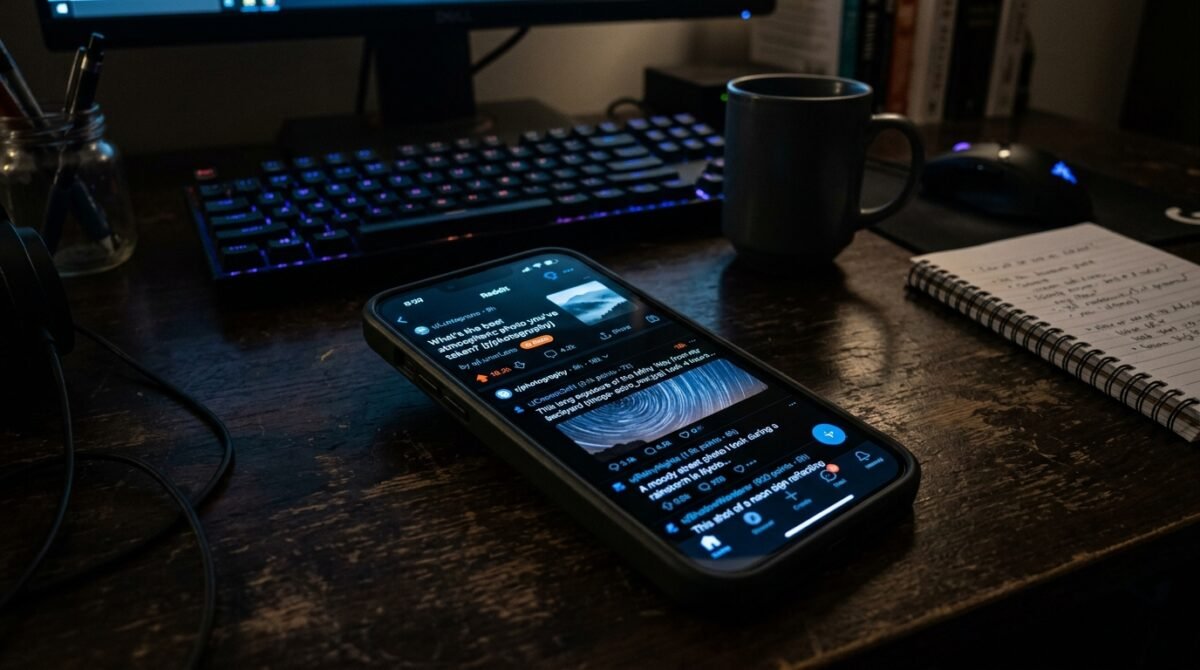
I knew Marcus would try to retaliate, so I took the offensive. I went on Reddit and posted the entire story on a popular ‘AITA’ (Am I The Asshole) subreddit. I didn’t mention the location or names, but I laid out the facts: the business, the strangers, the deadbolt. The response was immediate and overwhelming. Thousands of people commented, most of them expressing complete disbelief at the audacity of my roommate.
The internet, for all its faults, has a way of validating your sanity when you feel like you’re losing it. Reading the comments helped me realize that I wasn’t the ‘uptight’ one—I was a victim of a massive violation of privacy. People were suggesting legal action, telling me to contact the landlord immediately, and some were even worried about the liability of having strangers in our private, rented unit.
“NTA. Your roommate is literally running a business out of your home. This is a massive lease violation and a huge safety risk. Change the locks back to normal and tell him that if he continues, you are going to the landlord and the police.”
— u/CityLife_Survival (Top Comment, 18.2k upvotes)
“This is not just about a shower. This is about a roommate who thinks your property is his commercial asset. You are 100% in the right to lock the door. Do not back down.”
— u/JusticeForRenters (12.1k upvotes)
The thread became a rallying point. I felt less alone. Marcus, who usually lurked on the same subs, must have seen it. He started acting even weirder, trying to play the ‘victim’ to our mutual friends, claiming I was ‘locking him out of his own home.’ But the narrative had already shifted. Once people knew what he was actually doing, the sympathy he was trying to garner evaporated instantly.
I kept the thread updated with every new development. It became a chronicle of our descent into domestic madness. Every comment was like a check-and-balance, reinforcing my resolve. I wasn’t going to let him gaslight me into believing that my reaction was disproportionate. The truth was out there, and it was clear to everyone except him.
The Landlord’s Unannounced Arrival
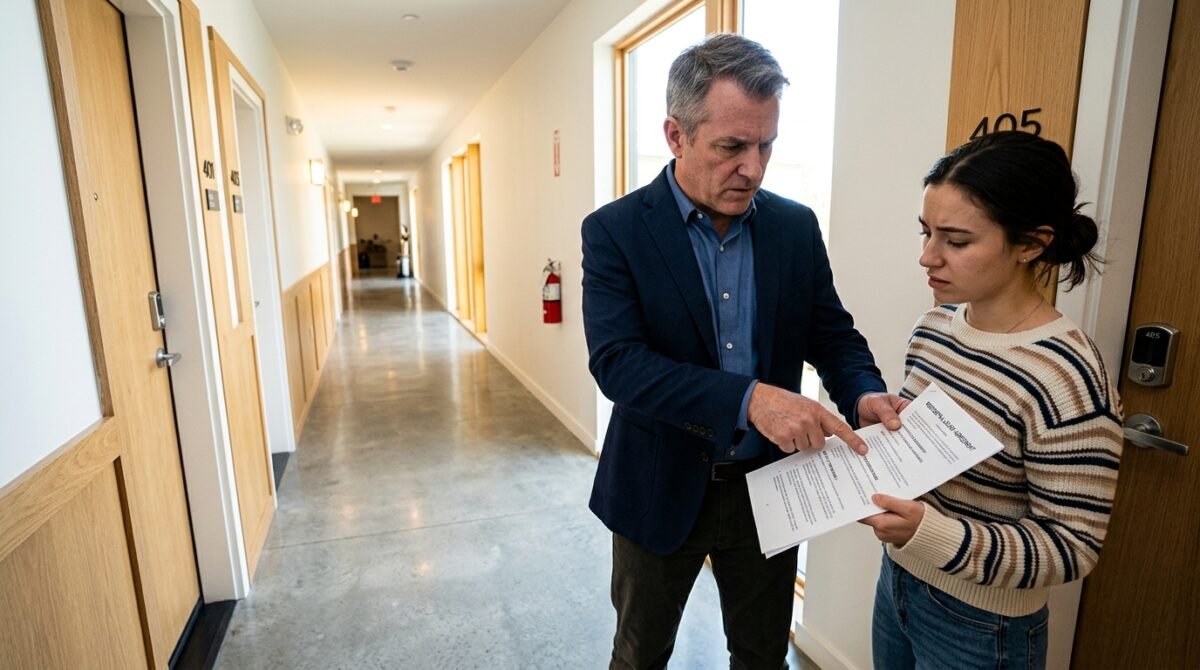
Just as I thought things had settled down, the landlord showed up. It was a Thursday morning, the one day I usually slept in. He knocked on the door with a sense of urgency that I didn’t like. When I opened it, he looked stern. He didn’t say a word, just walked past me into the apartment, looking at the layout like he was searching for something. I knew immediately that someone had complained.
It wasn’t just the shower business; it was the foot traffic. A neighbor had reported constant people entering and leaving our apartment at odd hours. The landlord had received enough reports to warrant a ‘surprise inspection.’ I stood there, heart racing, as he walked toward the bathroom. He saw the new deadbolt, the one I had installed, and asked me why it was there.
I decided to be honest. I didn’t mention the Reddit post, but I explained the situation: the strangers, the towels, the business. I told him that I had installed the lock because I didn’t feel safe with strangers using our bathroom. His face softened, then hardened again as he turned to look for Marcus. Marcus was nowhere to be found, but the evidence of his ‘business’ was still visible in the closet.
“I don’t care about your internal disputes, but this is a residential lease, not a hotel. If I hear one more report of an unauthorized person in this unit, you are both out on the street. Do you understand?”
— Our Landlord, during the tense inspection
The threat was real. The landlord was not joking. He gave us a formal warning, and told us that he would be doing monthly inspections from now on. I felt a surge of relief that he was on my side, but also a lingering anxiety about the state of my living situation. I was paying half the rent, but my life was being held hostage by Marcus’s stupidity.
When Marcus finally returned home, he was livid. He blamed me for the ‘snitching’ and tried to claim that the landlord just didn’t understand the ‘modern gig economy.’ I didn’t even argue. I just pointed to the lease, which I had printed out, and highlighted the section about subletting and commercial activity. The gig was up, and he knew it.
The Silent Treatment and the Moving Boxes
The atmosphere in the apartment became suffocating. We stopped talking altogether. We communicated through Post-it notes on the fridge or, if necessary, short, curt texts. The trust was entirely gone. I spent most of my time in my room, making sure my door was locked at all times. I started looking for a new place, knowing that I couldn’t stay here with him, but the housing market was brutal.
Marcus, meanwhile, seemed to be spiraling. He was trying to find other ways to make money, but nothing seemed to be working. He would pace the living room at night, muttering to himself, probably about how his ‘genius’ ideas were being thwarted. It was pathetic, honestly. He had sacrificed a stable home and a decent roommate for a few extra dollars, and he had nothing to show for it.
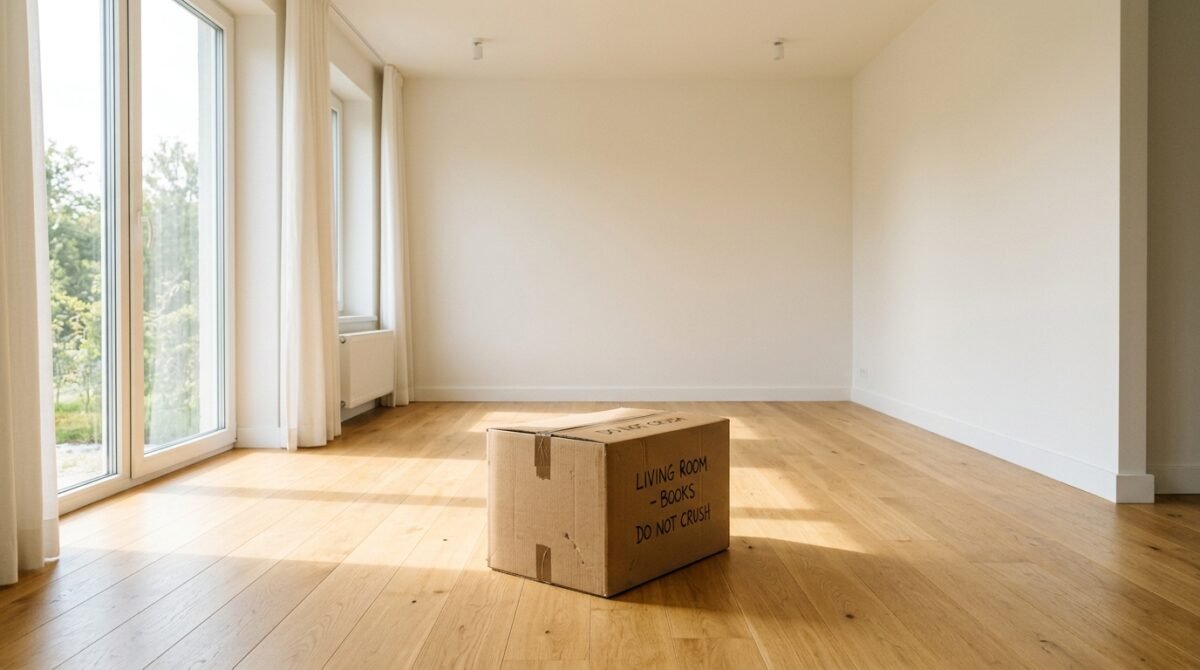
One day, I came home to find a stack of moving boxes in the living room. I didn’t ask him where he was going. I just felt an overwhelming sense of relief. He had finally realized that he couldn’t maintain his lifestyle here, and he was packing his bags. The silence in the apartment, for the first time, felt peaceful rather than tense.
“I’m leaving at the end of the month. You win. Hope you’re happy with your quiet, empty bathroom.”
— Marcus, in a final, bitter note left on the kitchen counter
I didn’t answer him. I didn’t need to. I watched him move his things out, one box at a time, until the living room was empty. He didn’t even say goodbye. He just slammed the door, and that was it. The apartment felt like a tomb, but a clean one. I spent the next two days scrubbing every surface, removing the last traces of his ‘business,’ and finally, I felt like I was back in control.
I removed the deadbolt, feeling a bit symbolic about it. I put the original handle back on. The apartment was mine again, in a way it hadn’t been for months. I sat in the living room, in the quiet, and realized that I had survived. I had set a boundary, held it, and come out on the other side. It was a lesson in the importance of standing up for yourself, even when it feels like you’re the only one who sees the truth.
Reflecting on the Cost of Convenience
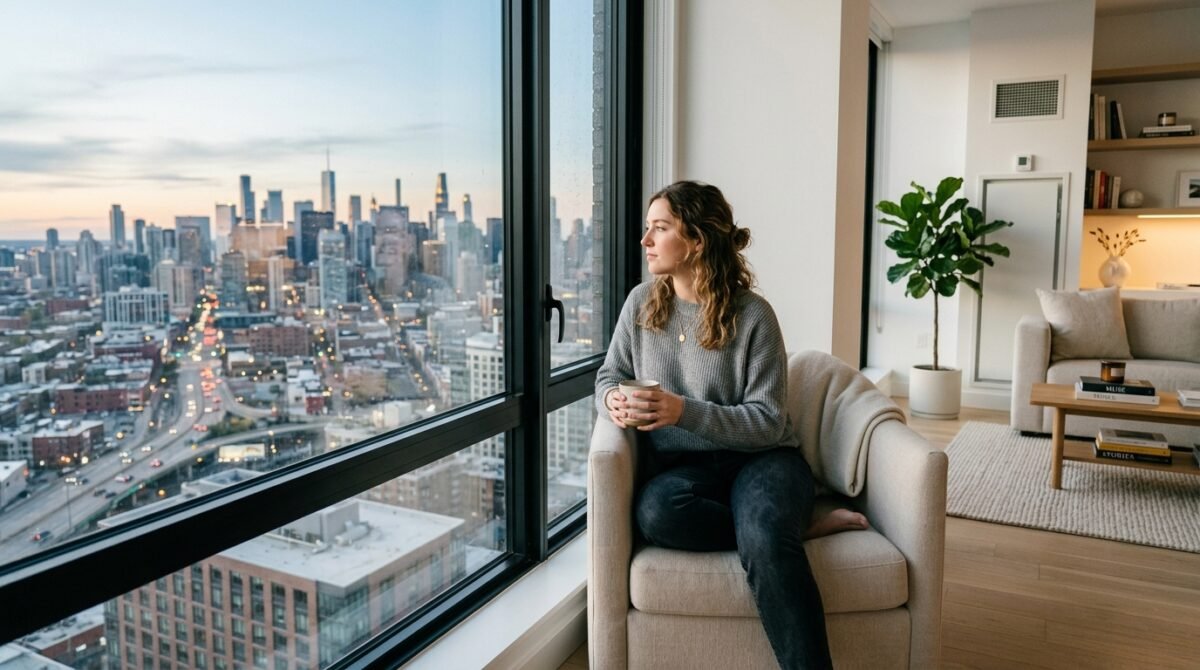
Looking back, it’s easy to see the red flags. The little things—the extra towels, the water bills, the constant chatter—should have been enough to alert me earlier. But we often ignore the small violations because we don’t want to cause conflict. We want to be ‘easy’ to live with. We want to be the ‘cool’ roommate. But being ‘cool’ can sometimes be the same thing as being a pushover.
The moral of this story isn’t just about a roommate; it’s about the erosion of personal space in an era of hyper-connectivity. We are so used to renting out our homes, our cars, and our time that we start to view our own living space as a commodity. We forget that a home is meant to be a sanctuary, a place where you are allowed to be vulnerable and safe. When you allow someone else to commodify that space, you lose that sanctuary.
I learned that boundaries are not just for others—they are for you. They are the lines you draw in the sand that tell you who you are and what you deserve. If you don’t enforce them, no one else will. It took a while for me to trust a new roommate, but I did eventually, and this time, the first thing we did was sit down and lay out every single expectation, from water usage to guest policies.
“Boundaries aren’t about being mean. They’re about protecting your peace. And sometimes, that means locking the door and refusing to open it for anyone who doesn’t respect your home.”
— A thought from my journal
I still see Marcus’s name pop up on social media sometimes. He’s moved on to new ‘hustles,’ usually short-lived and doomed to fail. I don’t feel anger anymore; just a sense of detachment. He was a person who never learned how to respect the space of others, and he paid for it with his own stability. I, on the other hand, learned how to hold my ground.
If you’re in a situation where you feel your space is being violated, don’t wait. Don’t worry about being ‘polite.’ Your home is your foundation, and if that foundation is shaky, everything else in your life will be too. Speak up, set the boundary, and if they don’t respect it, take the necessary steps to protect yourself. You deserve to feel safe in your own home.
The Aftermath: Moving On

Life after Marcus was surprisingly simple. I found a new roommate, a quiet student who respected my boundaries and shared my values. We had an unspoken agreement about the apartment: it was a place for living, not for business. The utility bills returned to normal, the bathroom was consistently clean, and the front door was only ever used by people I invited over. It felt like a fresh start.
I still think about the ‘shower business’ sometimes, especially when I’m walking through the city. I see people rushing to work, people struggling with the high cost of living, and I understand why someone might want a cheap, hot shower. But there is a right way and a wrong way to solve those problems, and commodifying someone else’s space is definitely the wrong way. The city can be a cold, hard place, but it shouldn’t make you a cold, hard person.
My experience became a bit of a local legend among my friend group. People still bring it up at parties, usually followed by ‘Wait, you’re the one with the shower guy?’ It’s a funny story now, but at the time, it was genuinely stressful. I hope that by sharing it, I’ve helped someone else realize that they don’t have to put up with nonsense just to avoid an awkward conversation.
“It’s okay to be the person who says ‘no.’ It’s okay to be the one who changes the lock. Your peace is worth more than someone else’s temporary convenience.”
— Final thought from the narrator
I am now more conscious of the people I let into my life, and more assertive about the things I value. I don’t apologize for my boundaries, and I don’t feel guilty for wanting to live in a secure, private environment. If you ever find yourself in a similar situation, remember that you have the power to change it. Don’t let someone else’s ambition override your right to peace of mind.
The apartment is now exactly what I need it to be. A home. A sanctuary. And most importantly, a place where I never have to worry about who is using my shower. It’s the little things that make the biggest difference, and I’m grateful for every single one of them.
Community Perspectives and Final Lessons

The Reddit thread stayed active for weeks. Even after the situation was resolved, people kept coming back to share their own roommate horror stories. It became a community of sorts—a place where people could vent about the absurd, the unfair, and the downright crazy things they’ve had to deal with. It reminded me that we all struggle with boundaries, and that we all need a little bit of support sometimes.
I read through the later comments, which were mostly people cheering me on for finally reclaiming my space. Some people shared their own stories of ‘entrepreneurial’ roommates who had tried similar schemes. It seems that the ‘side hustle’ culture has reached a point where people think everything is for sale. It’s a dangerous mindset, and I hope we see a shift back to valuing private space and mutual respect.
“OP, you’re an inspiration. It’s rare to see someone stand their ground so firmly. You taught your roommate a lesson he clearly needed to learn. Don’t ever change.”
— u/SupportiveNeighbor (Top Comment, 9.5k upvotes)
“I had a roommate once who tried to rent out my bed while I was at work. I changed the locks and kicked them out the next day. Sometimes you just have to burn the bridge to save the house.”
— u/BeenThereDoneThat (8.2k upvotes)
The lessons learned were simple: trust your instincts, communicate early and often, and never be afraid to set a boundary. If something feels wrong, it probably is. And if someone doesn’t respect your boundaries, they don’t respect you. It’s a hard lesson, but it’s an important one. I’m thankful for the experience, as difficult as it was, because it made me a stronger, more assertive person.
I hope this story helps others realize that their boundaries are valid, and that they have the right to demand respect in their own homes. The world is a better place when we hold each other to a standard of decency. And if that means changing a few deadbolts along the way, so be it.
Conclusion
My journey from a helpless roommate to someone who reclaimed their home was long and fraught with stress, but the end result was worth every second of the struggle. Setting boundaries isn’t just about the physical space; it’s about defining the terms of your own life. When I installed that deadbolt, I wasn’t just locking a door—I was locking out the entitlement, the disrespect, and the chaos that had been threatening my sanity for months.
The internet community’s reaction was the final piece of the puzzle, reinforcing the reality that my discomfort was not just valid—it was the correct response to an unreasonable situation. I hope this story serves as a reminder to anyone struggling with a difficult roommate or a boundary violation: your home is your sanctuary, and you have every right to protect it. Don’t be afraid to take the necessary steps to ensure your own peace and security.
What about you? Have you ever had a roommate whose ‘side hustle’ crossed the line? How did you handle it? Did you take the high road or the ‘change-the-locks’ road? Let’s talk about it in the comments below—I’d love to hear your stories of boundary reclamation and domestic justice.
What's your verdict on this dilemma?
Vote below to contribute to the official community consensus.

Have a Dilemma Keeping You Up at Night?
Share your real-life feud, wedding chaos, or relationship crossroads anonymously with our editorial team.
What do you think ?
0 Comments🛡️ Comments are moderated to protect community integrity. Your comment will appear once approved by the editorial team.