
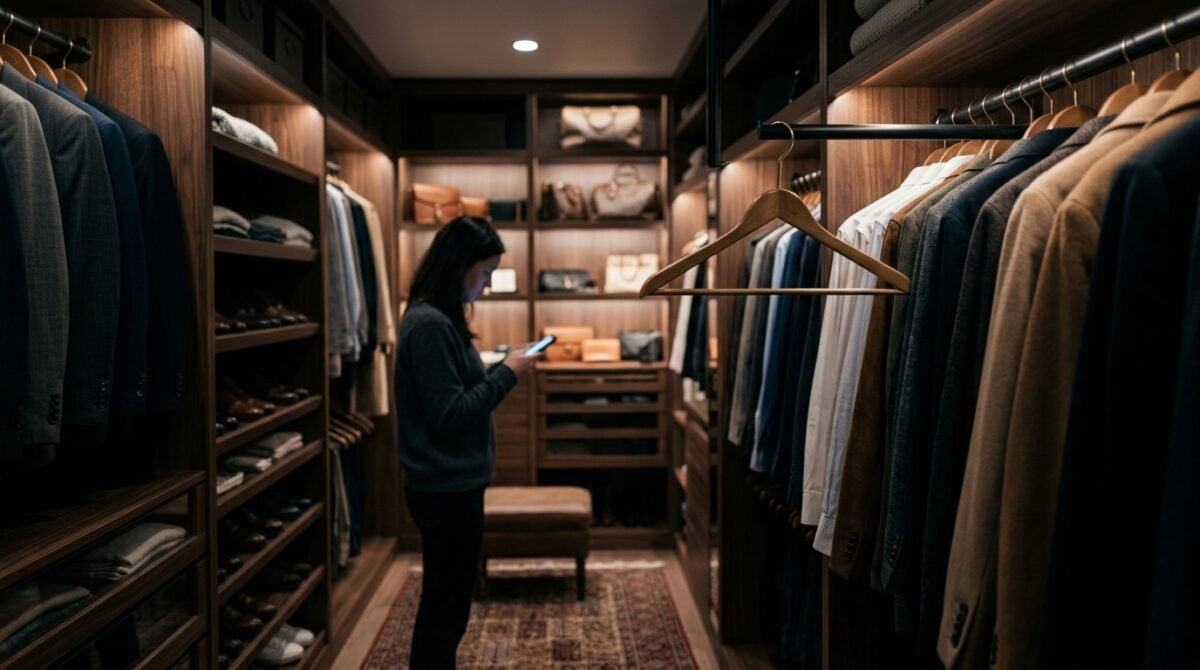
Living with a friend is supposed to be the hallmark of young adulthood—a shared experience of late-night takeout, budget-conscious grocery runs, and mutual support. For years, I believed Sarah and I had mastered this dynamic. We were two young professionals navigating the city, sharing an apartment that felt like a sanctuary amidst the chaos of our careers. We trusted each other with our keys, our secrets, and, occasionally, our belongings. But I never imagined that the trust I placed in her would be the very thing that allowed her to systematically strip me of my most prized possessions.
It started with the subtle disappearance of a pair of vintage sunglasses. I blamed myself, assuming I had left them in an Uber or misplaced them at a bar. Then, a silk scarf went missing, followed by a limited-edition handbag I had saved months to purchase. At first, I was simply annoyed. Then, as the list of missing items grew, the annoyance hardened into a cold, sinking suspicion. I wasn’t just losing things; I was being targeted by someone who lived ten feet away from me.
The breaking point arrived on a Tuesday evening, a day that started like any other but ended with a revelation that shattered my reality. I was scrolling through a fashion resale app, looking for a specific vintage jacket, when a familiar pattern caught my eye. The background was unmistakable: the same beige rug, the same lighting, the same distinct, hand-painted wooden dresser. It was my closet. It was my life, being sold off in increments of fifty dollars at a time to anonymous strangers.
As I sat on my sofa, staring at the screen, the room seemed to spin. I went from denial to rage in a matter of seconds. Every item listed was mine. The seller, operating under a clever pseudonym, was clearly Sarah. I wasn’t just looking at a shop; I was looking at the physical evidence of a betrayal so deep that it felt personal and predatory. The items weren’t just clothing; they were milestones of my career, gifts from family, and pieces of my identity that she had chosen to liquidate for her own gain.
I had two choices: I could confront her and be gaslit into silence, or I could treat this as what it truly was: a criminal act. I chose the latter, not out of malice, but out of a desperate need for justice. This is the story of the fallout, the police report, and the moment I realized that some bridges aren’t meant to be saved—they are meant to be burned to the ground to ensure no one else can cross them.
The Digital Breadcrumb Trail
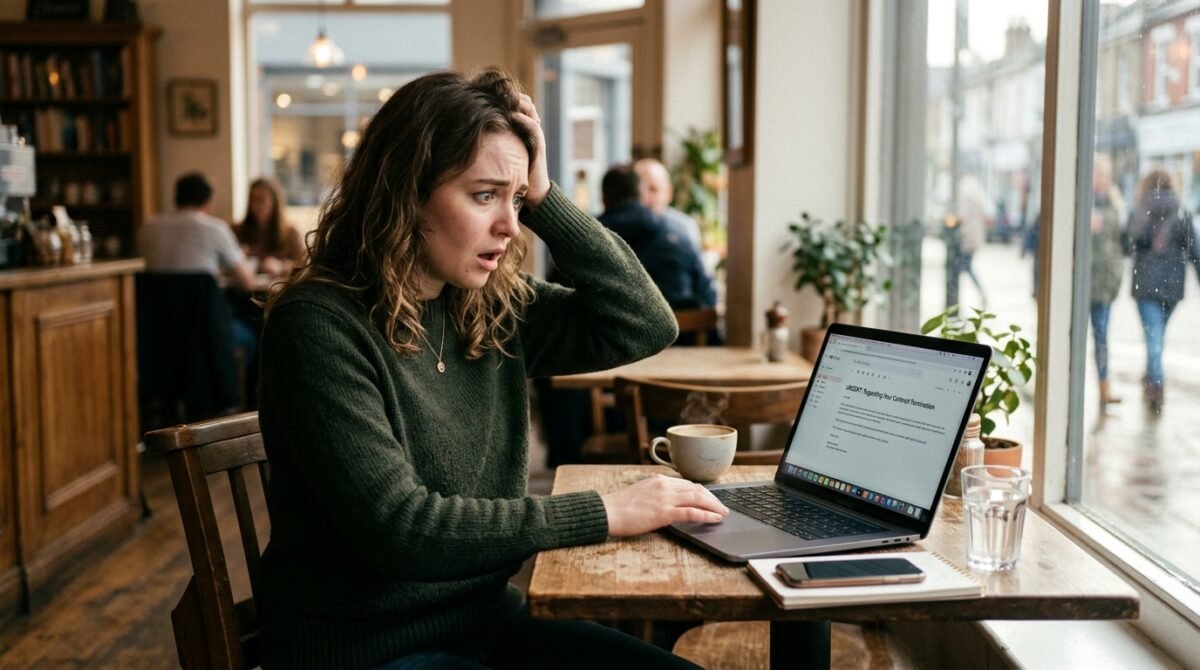
The discovery didn’t happen all at once. It was a series of small, nagging realizations that, when placed side-by-side, formed an undeniable picture of guilt. I had been browsing Poshmark, a habit I picked up during the pandemic, when a notification for a ‘Vintage Designer Silk Scarf’ popped up. The price was suspiciously low, far below market value. Curiosity led me to click on the seller’s profile, ‘FashionFinds_CityGirl’.
Scrolling through the listings, my pulse began to race. There was the Gucci belt I thought I’d lost in the laundry room. Next to it was the pair of designer heels I hadn’t worn in months, tucked away in the back of my closet. The background of the photos was the kicker—a distinct, slightly chipped white baseboard that I knew because it was in our shared hallway.
“I couldn’t believe it. I checked the photos again, zooming in on the rug. It was our living room rug. I felt sick to my stomach, like I’d just been punched.”
I didn’t immediately confront her. I knew Sarah. She was charming, manipulative, and incredibly good at flipping the narrative. If I accused her without proof, she would make me look like the crazy, paranoid roommate. I needed a trail. I spent the next four hours taking screenshots of every single listing, cross-referencing them with my own bank statements and original purchase receipts. The total value of the items listed was staggering—well over five thousand dollars.
My heart pounded as I downloaded a copy of the ‘sold’ items history. She had been doing this for months, selling things I hadn’t even realized were gone yet. It was a calculated business. She wasn’t just stealing; she was curating my wardrobe and profiting from the labor of my life. I realized then that our ‘friendship’ was a transactional relationship from her perspective, and I was the mark.
The final confirmation came when I logged into her laptop—which she had left open in the kitchen while she was in the shower—and found the Poshmark app logged in. My name, my card, my clothes. It was all there. I took a deep breath, closed the laptop, and walked out of the apartment. I couldn’t breathe in that space anymore. I went to a local coffee shop and called my older brother, who worked in law enforcement. I didn’t want advice; I wanted to know the law.
The Morning Confrontation

I didn’t sleep that night. I laid in bed, listening to the muffled sounds of Sarah moving around the apartment, completely unaware that her secret life was about to implode. I had already made a decision: I wasn’t going to have a ‘talk.’ There was nothing to talk about. This wasn’t a misunderstanding about a borrowed sweater; this was grand larceny. When she finally walked into the kitchen at 8:00 AM, looking perfectly polished, I was waiting.
I had the police non-emergency number on my phone, ready to go. I also had the printed receipts and the screenshots of the listings. She looked at me, gave a bright, fake smile, and asked if I wanted coffee. I didn’t move. I just looked at her, and the smile slowly faded from her face. I asked her point-blank why she was selling my belongings on a secondary market app.
“Sarah, I know about the Poshmark account. I know about the Gucci belt, the heels, and the vintage silk. How could you do this to me?”
She tried the classic approach: denial. She laughed it off, calling me paranoid and suggesting I had been hacked. ‘You’re losing it,’ she said, her voice dripping with condescension. But when I pulled up the app on my phone and showed her the listings, her face turned pale. She started stuttering, trying to backtrack, claiming she was ‘holding’ them for me, or that she had ‘borrowed’ them and intended to return them before selling them.
I didn’t buy any of it. I told her that I had already contacted the police and that they were on their way to take a statement. The transformation in her was instantaneous. She went from dismissive to desperate, trying to grab my phone, begging me to stop, saying this would ‘ruin her future.’ I stood my ground, my back against the wall, refusing to give her an inch.
She started crying—the fake, performative crying that she used whenever she needed to get out of a mess. She told me she was in debt, that her student loans were crushing her, and that she thought I wouldn’t notice because I had ‘so many clothes.’ The entitlement was breathtaking. She genuinely believed that because I worked hard and had a nice wardrobe, it was okay for her to treat me like her personal inventory depot.
The Police Report
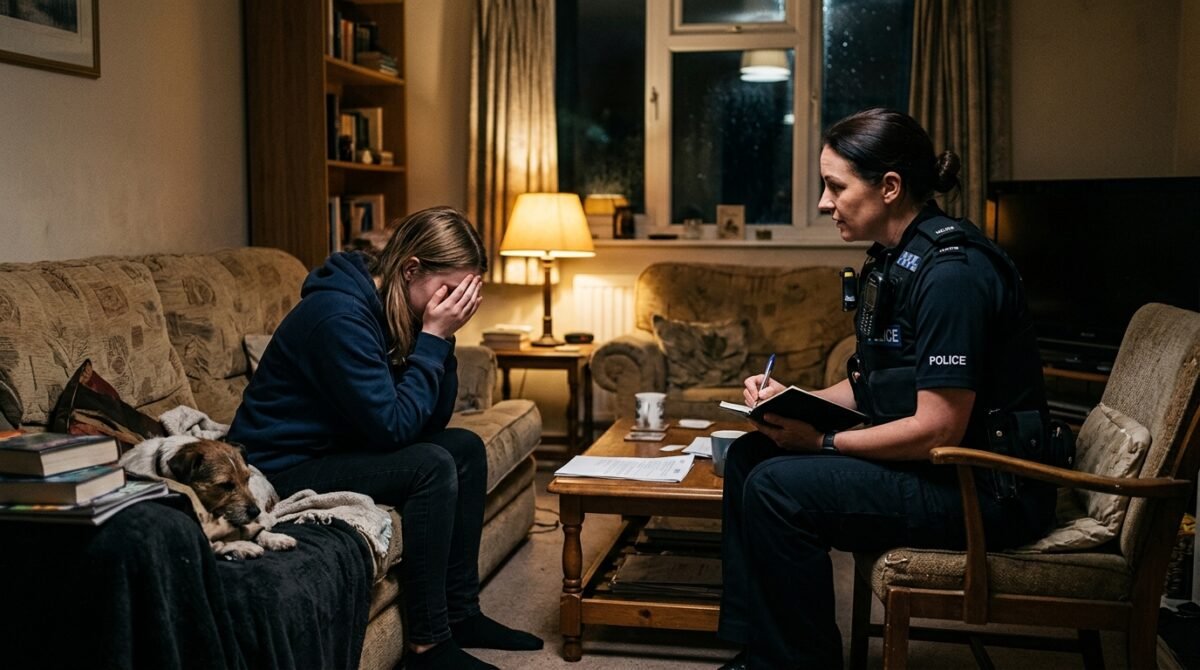
When the police arrived, they were professional but clearly tired. They had seen it all before, but a roommate theft of this scale was slightly more involved than the usual domestic disputes they handled. I sat with the officer, handing over the documentation I had spent all night organizing. I was shaking, not from fear, but from the adrenaline of finally doing something about the situation.
Sarah tried to intervene, telling the officer that I was just ‘overreacting’ and that we were ‘best friends.’ The officer silenced her immediately, telling her to stand back and let me speak. It was the first time in years I had felt heard. I detailed every item, the estimated value, and the evidence of the Poshmark account. The officer looked at the photos, then at Sarah, and then back to me. The look on his face told me everything: this was a felony case.
“Ma’am, do you understand that selling property that does not belong to you, especially at this value, constitutes felony theft? This is not a civil matter.”
The reality of the situation finally seemed to hit Sarah. She looked smaller, defeated. As the officers began to process the scene, I retreated to my room to pack a bag. I knew I couldn’t stay there. I gathered my things, leaving behind anything that might have been compromised or handled by her, and decided to stay with a friend for a few days. The air in the apartment felt toxic.
While I packed, I could hear the muffled voices in the living room. Sarah was being read her rights. It sounded unreal, like a scene from a movie, but the weight of it was entirely real. I wasn’t happy about it. I wasn’t looking for a ‘win.’ I was looking for the restoration of my own boundaries. I had been violated in the one place where I should have been safe, and the law was the only way to reconcile that.
As I walked out the door for the final time, I caught a glimpse of Sarah through the hallway. She looked at me, not with remorse, but with pure, unadulterated hatred. I realized then that she didn’t blame herself. She blamed me. She blamed me for catching her, for caring about my things, and for refusing to let her continue to exploit me. It was the final confirmation I needed that I had made the right choice.
The Fallout on Social Media

The news didn’t stay private for long. Within forty-eight hours, our mutual friends were calling, texting, and showing up at my door. Sarah had already spun the narrative. According to her, I was a ‘controlling, rich girl’ who was trying to destroy her life over a ‘few old clothes.’ She had framed herself as the victim, the one who was just trying to get by while I lived in luxury. It was a masterful display of gaslighting.
“Hey, I heard about what happened with Sarah. She’s really upset and said you called the cops over some misunderstandings. Can you just drop the charges?”
— Text from a mutual friend
I didn’t respond to them. I knew that if I engaged, I would just be adding fuel to the fire. Instead, I wrote a single, neutral post on my social media, stating that I had moved out due to a ‘breach of trust’ and would not be discussing the matter further. I let the truth speak for itself. Eventually, the reality came out: people started talking to the police, and the evidence was too clear to ignore.
The backlash was intense. I received messages from people I barely knew, calling me cruel and unforgiving. I also received messages from people who had been burned by Sarah in the past—people who had lost money, jobs, or friendships because of her. It turned out I wasn’t the first person she had exploited; I was just the first one who finally decided to push back.
I stayed offline for a week, focusing on my job and my own mental health. The stress was immense, but for the first time in months, I could sleep. I wasn’t waiting for the other shoe to drop. I wasn’t wondering what was missing from my closet. The silence was golden, even if it was punctuated by the occasional angry message from Sarah’s ‘defenders.’ I learned that true friends don’t care about the gossip; they care about the person.
My brother was my rock. He helped me navigate the legal proceedings, reminding me that Sarah’s choices were her own. I wasn’t responsible for her future, her debt, or her reputation. I was only responsible for my own safety and dignity. It was a harsh lesson, but a necessary one. We are often taught to be ‘kind’ to a fault, but kindness without boundaries is just self-destruction.
The Lawyer’s Perspective

When I finally sat down with my lawyer, he was incredibly clear about where we stood. ‘This isn’t just about the money,’ he said. ‘This is about a pattern of behavior. The prosecution is looking for evidence of intent, and the Poshmark history is a goldmine for us.’ He explained that because Sarah had gone to such lengths to hide her identity and sell the items systematically, it was easy to prove that this wasn’t an impulsive mistake.
He guided me through the process of valuing the lost items. We had to dig up old receipts, bank statements, and photos to prove the provenance and the value of the goods. It was a tedious process, but it was necessary to ensure that the charges stuck. The value of the goods was well into the felony range, which made the prosecutors take the case much more seriously.
He also cautioned me about the potential for Sarah to try and settle out of court or offer to pay it back. ‘She’s going to try to buy her way out of this,’ he warned. ‘Don’t accept any money without a formal agreement. If you accept her money now, it might look like you’re dropping the charges, and that could complicate everything.’ It was sound advice. I had to focus on the legal system, not on personal reconciliation.
“Justice is not about revenge. It is about accountability. If she isn’t held accountable now, she will continue to do this to everyone else in her life.”
The months that followed were a blur of depositions and legal filings. I learned more about the law than I ever wanted to know. I saw Sarah a few times during the hearings, and she looked different—not the vibrant, entitled person I used to know, but someone who was genuinely terrified of the consequences. It didn’t make me feel good, but it did make me feel validated.
I realized that the legal system is slow, grinding, and often frustrating, but it provides a framework for truth. Sarah couldn’t lie her way out of the evidence. She couldn’t gaslight the judge. For the first time, she was forced to face the reality of her actions without the benefit of manipulation. It was the most empowering moment of my life, seeing the machinery of justice work for me rather than against me.
Reddit Community Reactions

I eventually decided to share my story on Reddit to see if I was truly the ‘villain’ as Sarah’s friends had claimed. I didn’t expect the flood of support that followed. The thread went viral, with thousands of comments debating the ethics of my decision. The majority of the community was on my side, arguing that theft is theft, regardless of the relationship.
“NTA. She wasn’t just a roommate; she was a predator. You didn’t ‘destroy’ her life—she destroyed it when she started selling your property. Don’t let her play the victim.”
— u/JusticeForOP (Top Comment, 32.5k upvotes)
There were, of course, the contrarians. Some argued that I should have handled it ‘internally’ or that I was being ‘too harsh’ on a friend. These comments were quickly buried by others who pointed out the absurdity of that argument. The consensus was clear: when someone violates your trust to this degree, you are under no obligation to protect them from the consequences.
“People who say ‘family/friends don’t sue’ are usually the ones who steal from their family and friends. Stand your ground. You’re setting a boundary for the rest of your life.”
— u/NoMoreDoormats (12.2k upvotes)
Reading the comments was a therapeutic experience. It made me realize that my internal monologue—my guilt, my worry—was a product of gaslighting, not a reflection of my character. I wasn’t being ‘mean’; I was being assertive. The community reinforced my decision, showing me that there were millions of people who understood that boundaries are not negotiable, especially when it comes to property and personal respect.
I also saw stories from others who had been in similar situations. The shared trauma of being exploited by someone you trust was universal. It made me feel less alone. The Reddit hive-mind, for all its flaws, was a powerful tool for validation. It turned my private agony into a public lesson about accountability and self-respect.
The Day of the Plea
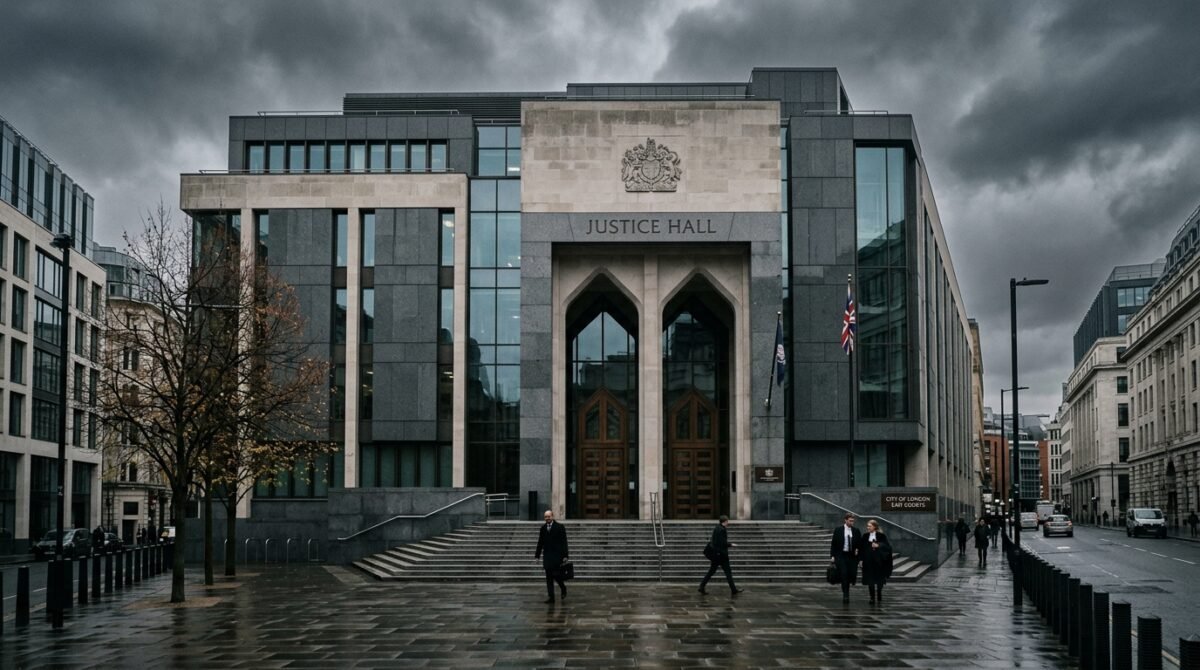
The day of the court appearance arrived with a cold, biting wind. I walked into the courthouse feeling like a stranger in my own life. I was dressed in a suit, my hair pulled back, feeling completely detached from the girl who used to lounge on the couch with Sarah, sharing secrets and laughter. The courthouse was sterile and intimidating, a stark contrast to the cozy, if now tainted, apartment we had shared.
Sarah was there, sitting in the front row with her lawyer. She looked tired, her eyes red from crying. She didn’t look at me, and I didn’t look at her. It was a strange, silent standoff. The bailiff called the case, and the judge took the bench. The prosecution presented the evidence—the receipts, the screenshots, the Poshmark history. It was all there, laid out in plain sight.
She entered a plea. It was a moment I had imagined a thousand times, and when it finally happened, it felt remarkably small. She wasn’t fighting it anymore. She couldn’t. The evidence was insurmountable. The judge looked at her, then at the documents, and sentenced her to a period of probation, restitution, and community service. It wasn’t prison, but it was a permanent mark on her record—a consequence she would have to live with for the rest of her life.
“I just wanted her to say sorry. But even as she stood there, she wouldn’t look me in the eye. She still didn’t think she did anything wrong.”
I didn’t feel a sense of triumph. I felt a sense of closure. The chapter was closed. I had done what I set out to do: I had held her accountable. I didn’t need an apology—I knew I would never get a sincere one—but I had the verdict. I walked out of the courthouse, took a deep breath, and felt the weight of the last six months lift off my shoulders.
I realized that the only person who could truly ‘win’ in this situation was me, by moving on. I wasn’t going to spend another minute of my life thinking about Sarah or her choices. I was done. I had my life back, and for the first time, I felt like I was fully in control of it again. I walked to my car, turned on the radio, and started the drive home to a new, quiet, and secure apartment.
Reclaiming My Space

Moving into my new place was an exercise in rebuilding. I was hyper-aware of everything—my keys, my wallet, my clothes. I set up a new system, one that prioritized my own security. I didn’t invite people over immediately. I spent the first month alone, just enjoying the silence. I bought new furniture, new decor, and started to curate a home that was uniquely mine, one that didn’t have any traces of the past.
I also started therapy to work through the betrayal. It wasn’t just about the money; it was about the realization that I had misjudged a person so fundamentally. How had I not seen the signs? What was I missing that allowed someone like Sarah to enter my life and wreak such havoc? My therapist helped me understand that this wasn’t a failure of my intuition; it was a failure of the other person’s integrity.
I stopped worrying about ‘being nice.’ I learned that it’s okay to have boundaries, and it’s okay to enforce them. I learned that true trust is earned, not just given because we share a space. I started to appreciate my things again, not as status symbols, but as reflections of my hard work and personal taste. Every time I reached into my closet, I felt a sense of gratitude for what I had, and the pride of having stood up for myself.
The most important part of the recovery was forgiving myself. I realized that I had spent months blaming myself for Sarah’s actions, thinking I had left doors open or had been too trusting. I had to let that go. I wasn’t responsible for someone else’s choice to be a thief. Once I forgave myself, I felt lighter, more confident, and ready to move forward.
Today, I have a new roommate—someone I vetted thoroughly, someone I respect, and someone who respects me. We have clear rules, open communication, and a foundation of mutual trust. We don’t share everything, and that’s okay. We are individuals sharing a space, not two halves of a codependent unit. It’s a healthier, more balanced way to live, and I wouldn’t have it any other way.
Lessons in Boundaries

Looking back, the entire ordeal seems like a fever dream. It’s hard to believe that I once shared a life with someone who looked me in the eye every day while actively selling my belongings behind my back. But it taught me more about boundaries than any book or lecture ever could. I learned that when someone shows you who they are, you should believe them, even if it’s inconvenient.
I learned that financial independence is the ultimate security. If I hadn’t had the means to pack up and leave that night, I would have been stuck in that toxic environment for months. I learned that you don’t need permission to say ‘no’ to people who don’t have your best interests at heart. And most importantly, I learned that you are the primary guardian of your own life.
“I don’t regret the police report. I regret that I waited so long to trust my own judgment. Never prioritize someone else’s comfort over your own peace of mind.”
I see Sarah’s name pop up occasionally on social media, or I hear through the grapevine that she’s struggling. A part of me—a very small part—still feels a twinge of sadness for what could have been. But then I remember the stolen Gucci belt. I remember the look on her face when she realized she couldn’t lie to the police. And that sadness vanishes, replaced by a firm, unwavering resolve.
I’m not a bitter person. I’m a person who knows the value of my own worth. I’m a person who has seen the worst of human nature and decided to keep the best of myself. I’m stronger, smarter, and significantly more careful about who I allow into my inner circle. And that, in the long run, is worth more than any designer handbag ever was.
The ending of this story isn’t about the money or the items. It’s about the reclamation of self. I took my life back from someone who tried to dismantle it for scraps. And I would do it again in a heartbeat. Because my peace of mind is not for sale—not on Poshmark, not on any platform, and not to anyone who doesn’t respect it.
The Final Verdict

I often wonder what would have happened if I had never found that Poshmark account. Would she have eventually stopped? Or would she have escalated to something even worse? The thought is terrifying, but it also underscores the importance of being vigilant. We live in a world where we are constantly connected, and that connectivity is a double-edged sword. It can lead to incredible opportunities, or it can lead to total, public betrayal.
The legal system, for all its faults, provided me with the closure I needed. It validated my experience and forced Sarah to face the reality of her choices. It wasn’t about revenge; it was about the objective truth. And the truth, as it turns out, is the only thing that really matters. Everything else is just noise.
I encourage anyone who finds themselves in a similar situation to speak up. Don’t be afraid of the social fallout. Don’t be afraid of being labeled ‘difficult’ or ‘unforgiving.’ Your life is your own, and you have the right to protect it. If someone is exploiting you, you owe it to yourself to put an end to it, regardless of the relationship or the history you have with them.
“If you are reading this and you suspect you are being taken advantage of, trust your gut. It’s never wrong. Document everything, and don’t be afraid to take legal action if you need to.”
I’ve moved on, and I’m happy. I’m successful in my career, I’m surrounded by people who love and respect me, and I’m living a life that is authentically mine. The scar from this experience is there, but it’s a mark of strength, not a weakness. I learned to build a house, not just share an apartment, and that’s a lesson I will carry with me for the rest of my days.
What about you? Have you ever had to draw a hard line in a friendship that completely changed your life? I’d love to hear your stories in the comments. We can all learn from each other’s experiences, and perhaps, in doing so, we can create a community where betrayal is a little less common and boundaries are a little more respected.
Conclusion
This journey from the shock of discovery to the finality of the courtroom has been one of the most defining experiences of my life. It taught me that while we cannot always control the actions of others, we have absolute dominion over how we respond to them. Choosing to press charges wasn’t an act of cruelty; it was an act of self-preservation that ultimately saved me from a cycle of manipulation and theft.
If there is one takeaway from this ordeal, it is that your boundaries are not negotiable. Whether it is your financial assets, your personal space, or your emotional energy, you are the final arbiter of what you will tolerate. Do not let anyone convince you that your need for safety is ‘too much’ or that your insistence on justice is ‘petty.’ Protect what you have worked for, and never apologize for holding others accountable for their behavior.
I want to thank the community for the outpouring of support and the perspectives shared. It made a world of difference to know that I wasn’t alone in this. Now, I turn the question to you: Have you ever been pushed to the point where you had to end a friendship through the legal or formal system, and what was the ultimate impact on your peace of mind? Share your thoughts below.
Discussion Poll:
1. Would you have pressed charges, or tried to resolve it privately?
2. Do you believe the legal system is the right place for roommate disputes?
3. Have you ever cut someone out of your life for a betrayal of trust?
What's your verdict on this dilemma?
Vote below to contribute to the official community consensus.

Have a Dilemma Keeping You Up at Night?
Share your real-life feud, wedding chaos, or relationship crossroads anonymously with our editorial team.
What do you think ?
0 Comments🛡️ Comments are moderated to protect community integrity. Your comment will appear once approved by the editorial team.