
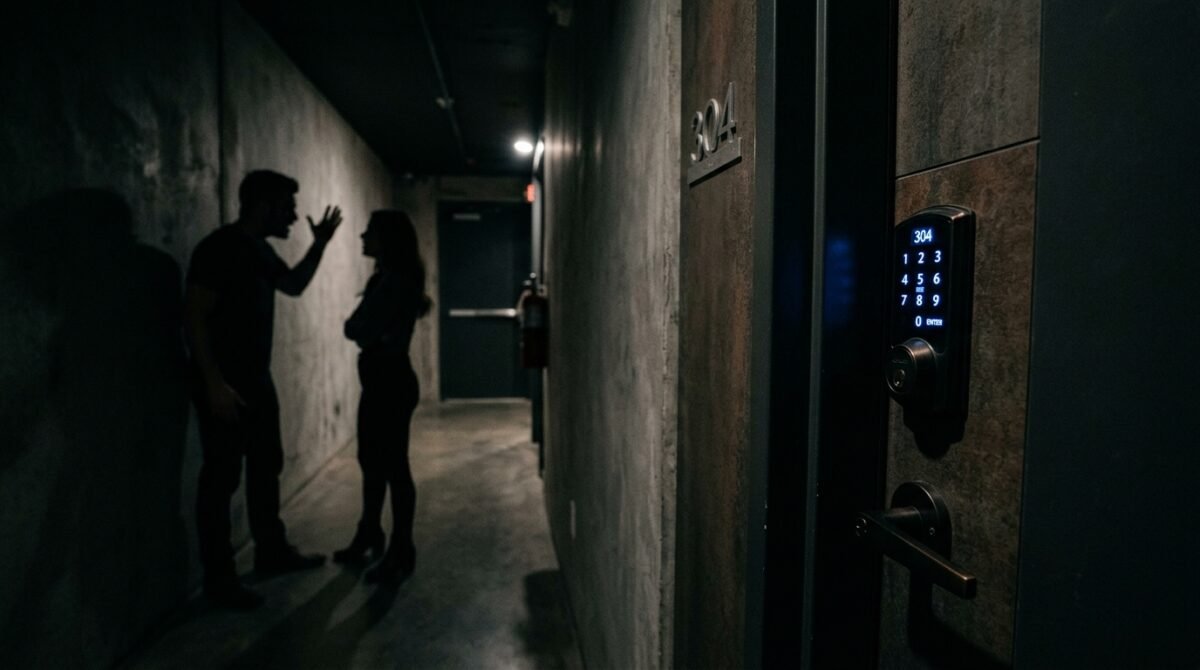
Living with a roommate is a delicate dance of shared expenses, mutual respect, and unspoken rules. We had signed the lease together—a two-bedroom sanctuary in the city—with clear expectations. I handle the utilities; he handles the shared cleaning supplies. We were friends, or at least that’s what I told myself for the first six months. But the slow creep of entitlement began with borrowed hoodies and escalated into something far more dangerous.
It started with the lingering scent of unfamiliar cologne and the occasional forgotten pair of earrings on the coffee table. I didn’t mind him having a social life, even if the rotation of faces became a bit dizzying. But the dynamic shifted when I began noticing shifts in the apartment’s rhythm—items displaced, the thermostat turned up to an uncomfortable heat, and my own high-end toiletries disappearing at an alarming rate.
The moral dilemma crystallized the afternoon I returned home early from a business trip to find a stranger sitting on my sofa, scrolling through my Netflix account as if it were his own. When I asked how he got in, he mentioned a ‘digital entry code’ provided by my roommate. I wasn’t just living with a messy roommate; I was living with an unauthorized hotelier who had turned our private space into a playground for strangers.
The betrayal wasn’t just about the privacy violation. It was the realization that my home was no longer a safe space. Every stranger invited into our living room was a liability I hadn’t signed up for. The locks were the final straw. If he wanted to run a business, he would have to find a venue that didn’t involve my front door and my peace of mind.
The Subtle Unraveling of Domestic Peace
In the beginning, Marcus was the ideal roommate. He was quiet, paid his rent on time, and kept his space relatively tidy. We had a solid routine: Sunday morning coffee, Tuesday night takeout, and a mutual understanding of personal boundaries. It felt like the perfect urban co-living arrangement until the dating apps started consuming his every waking hour.
The first sign of trouble was the frequency of guests. It wasn’t just a partner staying over on weekends anymore. It was a revolving door of people I had never met, staying for longer durations. I’d walk into the kitchen to make breakfast and find someone I didn’t recognize staring at the toaster, looking equally confused. Marcus would just shrug and say, ‘Oh, that’s just Jamie, he’s crashing for a bit while his place gets fumigated.’
I started keeping a mental inventory of the ‘guests.’ There was a guy who stayed for three days while Marcus was at work, and a woman who used my shower products without asking. When I brought it up, Marcus would laugh it off, calling me uptight. He argued that since he paid half the rent, he had a right to host whoever he wanted.
“You’re acting like the landlord, not a roommate. It’s a spare couch, and I’m just being a good guy helping people out. Why are you so obsessed with who walks through that door?”
— Marcus, during a heated kitchen confrontation
The resentment bubbled beneath the surface. I wasn’t just dealing with a roommate anymore; I was dealing with a stranger-host who didn’t respect my right to know who was in my home. I felt like a ghost in my own apartment, constantly checking the peephole before I dared to walk down the hallway in pajamas.
I began to notice that Marcus wasn’t just ‘helping friends.’ He was hosting people he met on dating apps, often for extended stays. The sheer volume of traffic was exhausting. I reached a breaking point when I discovered a strange phone charger plugged into my wall in the bedroom he claimed was ‘empty’ while I was out of town.
The Smoking Gun Beneath the Coffee Table
The discovery that changed everything happened on a Wednesday. I had arrived home from the office early, nursing a migraine and desperate for silence. I expected the apartment to be empty, as Marcus usually worked late at the tech firm. Instead, I heard muffled laughter coming from the living room.
I walked in to find a man I had never seen before lounging on my expensive velvet armchair, eating takeout from a box he’d clearly pulled from the fridge. He didn’t look like a friend. He looked like someone who had booked a room. When he saw me, he jumped up, clearly startled, and stammered, ‘Oh, hey! Are you the property manager? Marcus said the cleaning fee was already included in the app.’
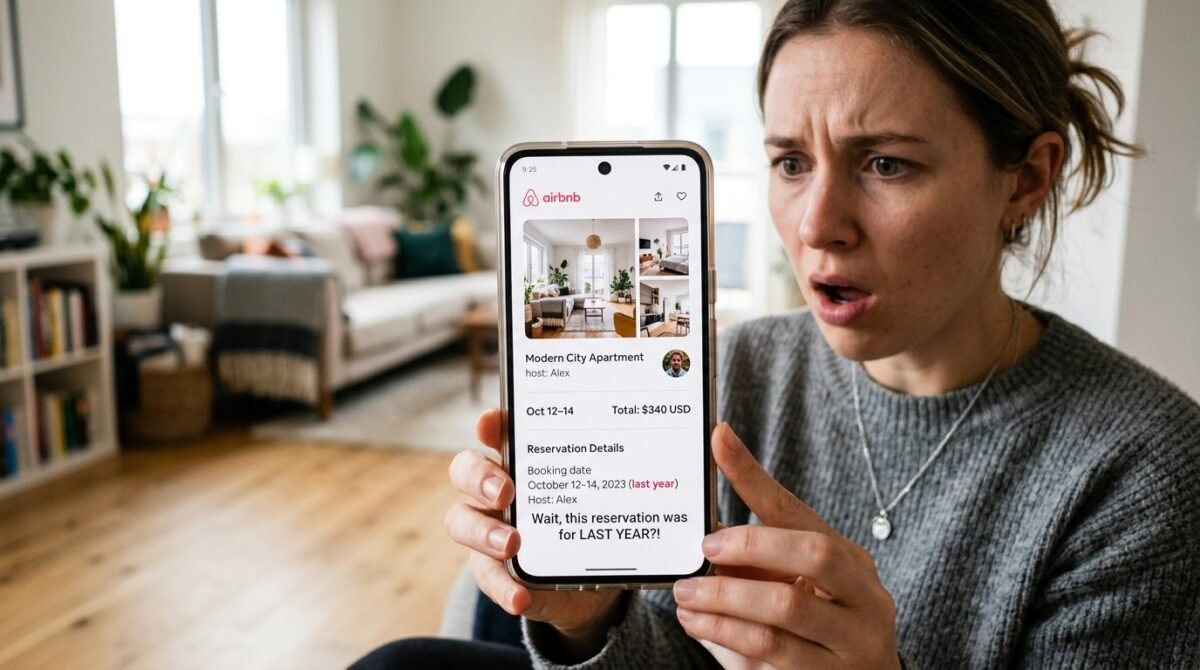
My heart stopped. Cleaning fee? My brain struggled to process the words. I looked at the stranger, then at the app he was holding open on his phone. It was a peer-to-peer lodging platform, and there, in plain, high-resolution detail, was a listing for our living room couch, complete with photos of my furniture and a glowing description of the ‘amenities’—including my coffee machine and my high-speed Wi-Fi.
“Wait, you paid for this? How much did you pay Marcus to sleep on my couch for two nights?”
— My question to the stranger, barely keeping my voice steady
The stranger pulled up the transaction history. He had paid $120 for the privilege of crashing in my living room, while Marcus kept every cent. The sheer audacity of the betrayal left me shaking. He wasn’t just hosting friends; he was subletting our home without my permission, without the landlord’s consent, and behind my back.
I realized then that my trust in Marcus hadn’t just been misplaced—it had been monetized. He was profiting off my security, my space, and my sanity. Every interaction I’d had with him regarding his ‘friends’ was a calculated lie to keep the money flowing into his pockets while I dealt with the repercussions.
The Silent Siege of the Smart Lock
The moment the stranger left, I didn’t scream. I didn’t throw things. I simply sat down on the floor and stared at the keypad lock on our door. It was a digital system, installed by us when we first moved in, linked to a central hub that I had set up on my phone. Marcus had his own code, and I had mine.
I knew if I confronted him immediately, it would turn into a shouting match where he would gaslight me, tell me I was crazy, and delete the app before I could get any evidence. I needed to act fast. My hands were shaking as I logged into the security dashboard. With a few taps, I removed his access codes and set a new, master password that only I held.
I changed the Wi-Fi password, too. It was a small, petty move, but it felt like the first step in reclaiming my territory. I then spent the next hour documenting everything—screenshots of the listing, the reviews from other ‘guests,’ and the payment history the stranger had accidentally revealed. I had a digital dossier of his betrayal.
“I am not just changing the locks because I’m mad. I’m changing them because you’ve compromised our home for profit and lied to my face for months.”
— Draft of the text I was preparing to send to Marcus
As the sun went down, the apartment felt different. It felt like mine again, but the looming confrontation hung in the air like heavy static. I knew Marcus would be home soon, expecting to waltz in with a guest or simply finish his workday, only to find himself locked out of the home he thought he owned.
I sat on my bed, listening to the silence, waiting for the inevitable ping of his phone or the sound of the handle jiggling. I had taken the nuclear option, but in that moment, it felt like the only way to establish who was actually in charge of the space we shared. The power balance had shifted, and I was holding the key.
The Midnight Knock and the Truth Revealed
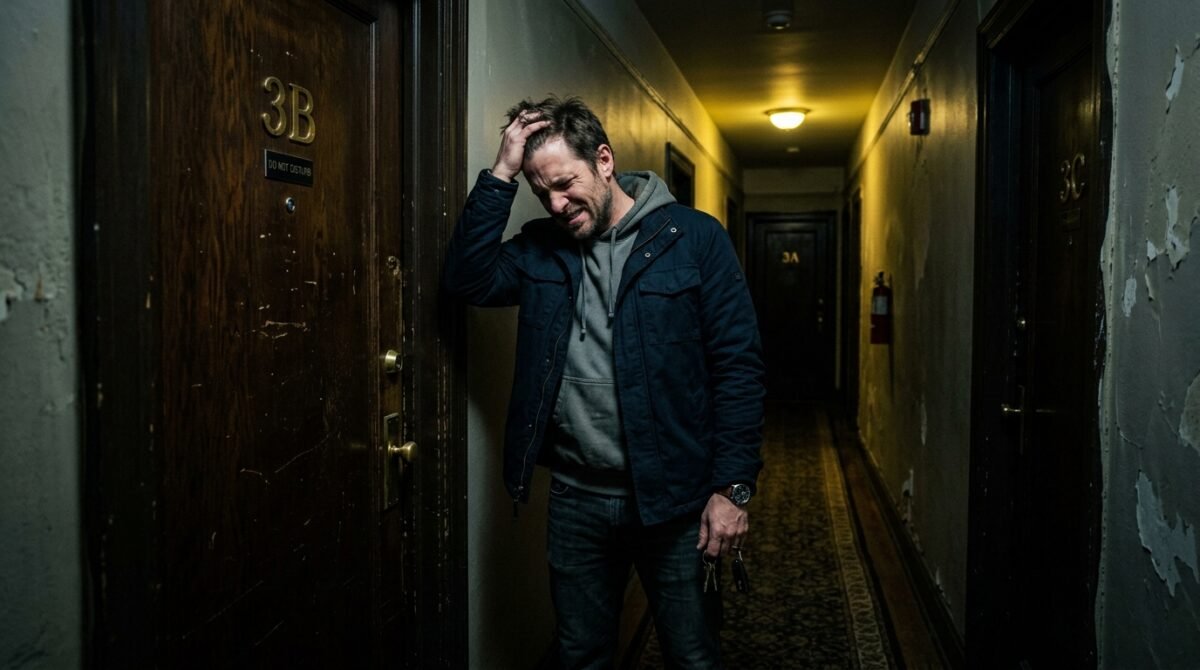
Marcus returned home at 9:00 PM, his key fob failing to open the door with a sharp, electronic chirp. I watched from the peephole as he grew increasingly agitated, trying the code again and again. Eventually, he started pounding on the wood, his voice muffled but clearly rising in volume. I opened the door just a crack, keeping the safety chain firmly in place.
His face was flushed, a mix of anger and sheer confusion. ‘What the hell did you do?’ he demanded, his voice echoing in the hallway. ‘My code isn’t working, and the Wi-Fi is down. Are you having some kind of mental breakdown?’ I didn’t flinch. I kept my face blank, forcing him to witness the consequence of his actions.
I didn’t answer his questions. Instead, I pulled out my phone and held up the screen, showing the listing he had created. His expression shifted from aggression to pure, unadulterated panic. He didn’t even try to deny it; he just started stuttering, trying to find an excuse that would make the situation go away.
“You’re really going to lock me out because of a little side hustle? Do you have any idea how much money I need for my student loans? You’re being incredibly selfish.”
— Marcus attempting to justify his behavior
I laughed, but there was no humor in it. ‘Side hustle? You turned our home into a public boarding house without asking, without paying the landlord extra for the risk, and without considering for one second that I might not want random strangers in my bathroom.’ I closed the door on him, leaving him standing in the hallway.
He spent the next hour sending me a barrage of texts. It was a masterclass in deflection. He claimed he was ‘helping people in need’ and that I was ‘jeopardizing his ability to pay rent.’ The irony was so thick it was suffocating. He thought he was the victim because I had stripped him of the power to exploit me.
Digital Evidence and the Escalation
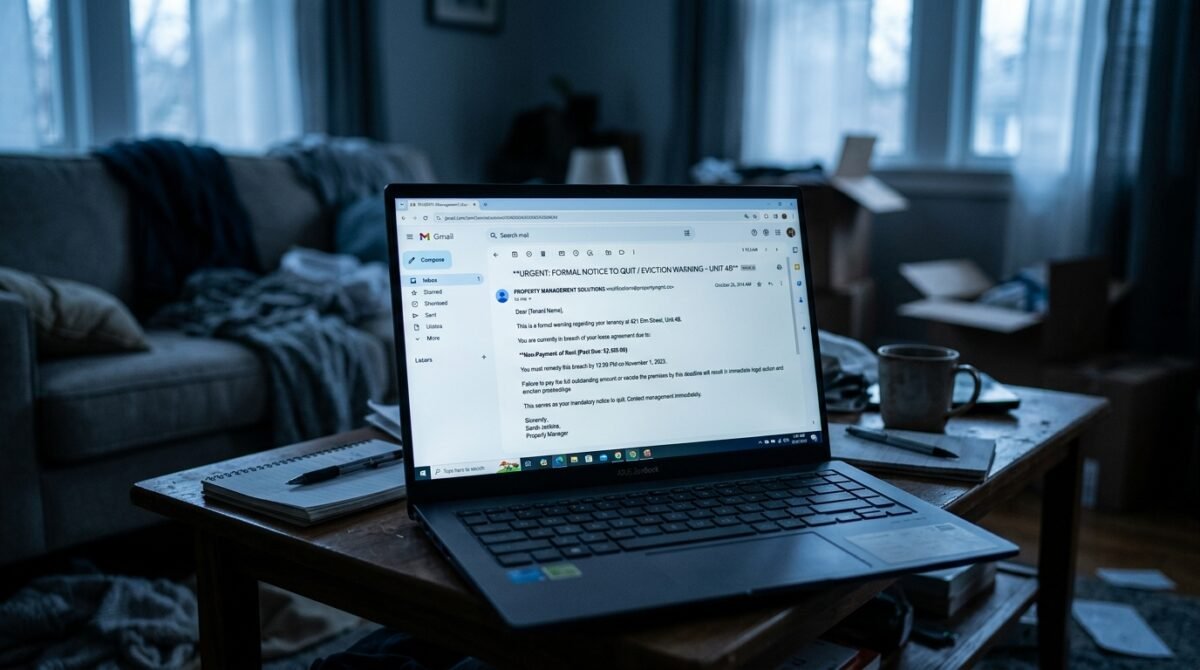
I didn’t stop at the lock. I knew I needed to cover my bases. I reached out to our landlord, providing the screenshots of the listing and the dates of the guests. I knew this might jeopardize my own lease, but I was willing to move out rather than live with a parasite. It was a gamble, but one I had to take for my own sanity.
The landlord’s response was swift and brutal. Within an hour, he had sent an email to both of us stating that unauthorized subletting was a direct violation of our lease agreement and grounds for immediate eviction. Marcus’s face when he saw the email—which I forwarded to him—was priceless. He realized he hadn’t just lost his ‘hustle’; he had potentially lost his home.
He tried to come to the door again, this time with a sob story. He claimed he had nowhere else to go and that if I didn’t help him smooth this over with the landlord, he would be homeless. It was the classic tactic of someone who had never had to face the consequences of their own choices.
“Please, just tell the landlord it was a misunderstanding. I’ll delete the profile, I’ll never do it again. Don’t ruin my living situation over this.”
— A text message from Marcus
I remained firm. I told him he had until the end of the month to find a new place. I was no longer interested in ‘smoothing things over.’ The breach of trust was too profound to be fixed with a few apologies. I had spent months feeling vulnerable in my own home, and that was a feeling that didn’t just vanish because he was suddenly remorseful.
My friends were supportive, but a few of them wondered if I was being too harsh. They didn’t see the stranger on the sofa or the feeling of violation every time I walked through the door. Only when I showed them the income he had made from our living room did they start to understand why I was so resolute.
The Viral Thread: Reddit Weighs In

I posted the situation on a popular subreddit, keeping the names and locations vague but detailing the sequence of events. The response was overwhelming. Within hours, the post hit the front page, with thousands of comments debating the ethics of my decision to change the locks.
The consensus was heavily in my favor. People were horrified by the idea of a roommate hosting strangers, especially with the ‘cleaning fee’ scam. It felt like a violation of the most fundamental social contract of living together. I realized I wasn’t just a disgruntled roommate; I was a cautionary tale for anyone looking to share space.
“NTA. You didn’t lock him out of his home; you locked a business owner out of a space he was using without a commercial license. He breached the contract first. You just enforced the terms.”
— u/HousingExpert (Top Comment, 32.1k upvotes)
There were, of course, the contrarians. Some argued that I should have talked to him before going nuclear. But those people hadn’t lived through the slow, agonizing erosion of privacy. They hadn’t felt the creeping dread of knowing that, every time they left the house, the security of their personal sanctuary was being auctioned off to the highest bidder on an app.
Reading the comments, I felt a strange sense of validation. The situation was objectively wrong, and the community reinforced that. It gave me the strength to follow through with the eviction process, even when Marcus started playing the victim card with our mutual friends, framing me as the heartless roommate who kicked him out for no reason.
I kept a separate file of all the evidence, just in case he tried to take me to small claims court or escalate things further. The internet, as it turned out, was a surprisingly good source of support, providing both moral reinforcement and practical advice on how to handle the legal ramifications of a broken lease.
The Legal Tangle and Landlord’s Ultimatum
The landlord’s involvement meant that we were both under a microscope. He insisted on a full inspection of the apartment, which led to even more discoveries. There were scuffs on the hardwood floor from suitcases, damage to the paint in the hallway, and, most egregious of all, the realization that Marcus had been using the apartment’s electricity for high-demand appliances that the guests were bringing in.
The financial ledger was grim. I spent hours calculating the difference between the utility bills of previous months and the current ones. The increase was staggering. Marcus had essentially been running a high-traffic hotel on my dime, while I was subsidizing the operational costs. I presented this to the landlord, who was furious.
| Category | Marcus’s Claim | The Reality |
|---|---|---|
| Guests | Occasional Friends | 14 Paid Strangers |
| Revenue | $0 | Estimated $1,800 |
| Utilities | Normal Usage | +45% Spike |
The landlord gave us both a choice: either we both vacate, or Marcus moves out and I sign a new, solo lease with a significant increase in security deposit. It was a stressful ultimatum, but I was determined to stay. I loved the apartment; I just hated the person I was living with. I managed to negotiate a new lease, provided I could prove I had the means to cover it alone.
Marcus tried to fight it, claiming that he had rights as a tenant, but the evidence of the subletting was ironclad. The landlord wasn’t interested in his excuses. He wanted the liability gone, and I was the one who provided the proof. It was a ruthless game, but it was one where Marcus had made all the bad moves.
The Final Moving Day Confrontation
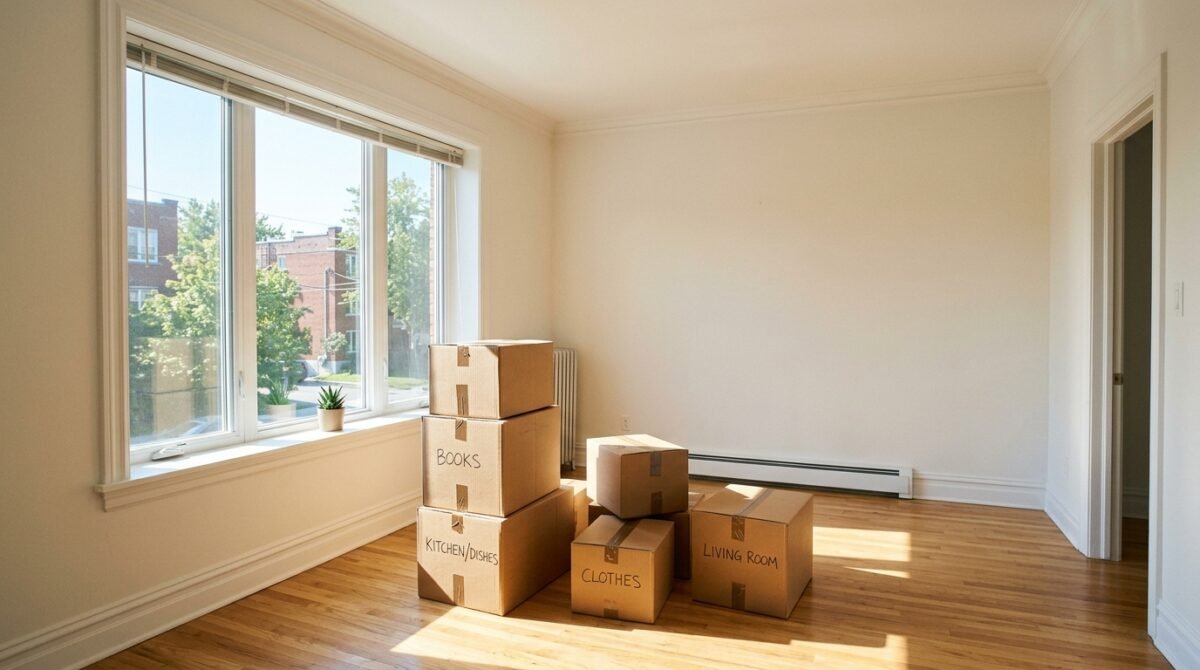
The day Marcus moved out was the most awkward experience of my life. He didn’t say a word, just packed his bags in a flurry of resentment, slamming every drawer and cupboard as he went. I stood in the middle of the kitchen, arms crossed, watching him leave. There was no closure, no apology, and no reconciliation.
He stopped at the door, bags in hand, and looked at me with a mixture of contempt and disbelief. ‘I hope you’re happy in your perfect, lonely little box,’ he spat. I just nodded. ‘I’d rather be lonely than live with someone who treats my home like a profit-margin,’ I replied. The door clicked shut, and for the first time in months, the apartment was truly silent.
I felt a massive weight lift off my chest. The tension that had defined my life for the past few months vanished, replaced by a quiet, steady peace. I went to the window and looked out at the street, realizing that I was finally in control of my own environment again. The chaos was gone.
“You have no idea how much you’ve ruined for me. I had a whole system set up, and you just had to be the hero of the story.”
— Marcus’s final words before leaving
I didn’t need to be a hero. I just needed to be a human being with a right to privacy. As I walked around the empty apartment, I felt a sense of ownership I hadn’t felt in a long time. I started planning how I would redecorate, finally painting the walls a color I liked and filling the space with things that felt like me, not like a temporary waiting room for strangers.
The process of moving on wasn’t just about cleaning the apartment; it was about reclaiming my identity. I had spent so long accommodating someone else’s dysfunction that I had forgotten what it felt like to simply exist in a space that was entirely my own.
Reflecting on the Boundaries We Forget to Set
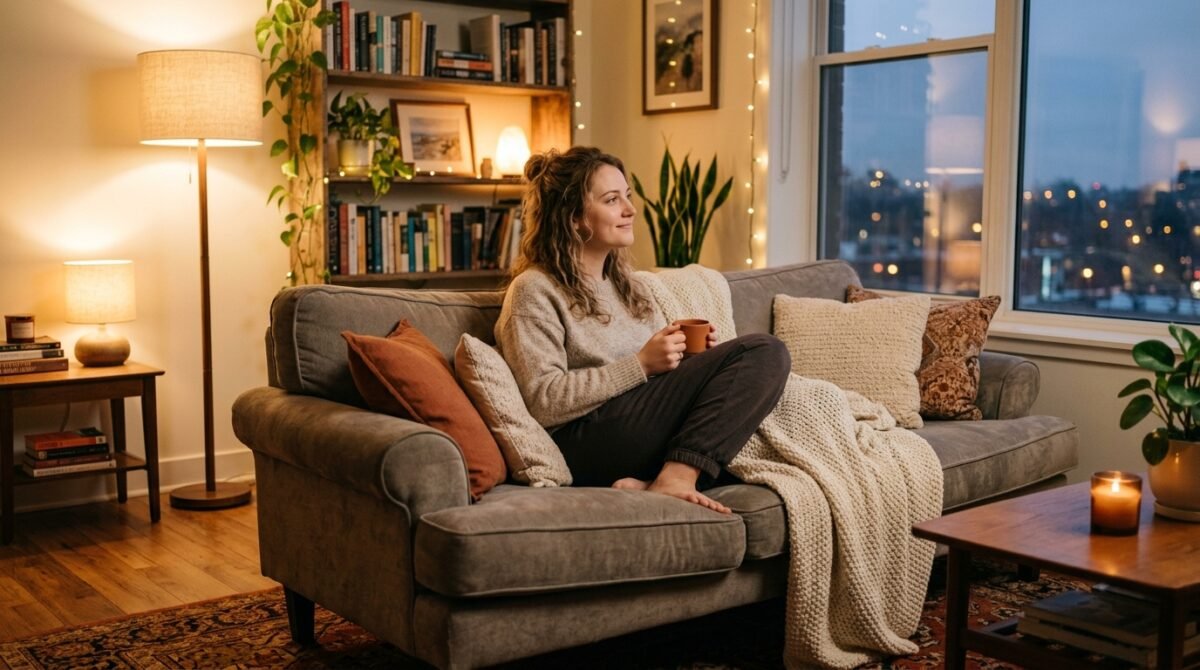
Looking back, I realize how many warning signs I ignored. I wanted to be the ‘cool’ roommate, the one who didn’t care about rules or schedules. But there is a fine line between being flexible and being a doormat. I allowed the boundaries to erode because I was afraid of conflict, and that fear cost me my security.
This entire experience taught me that boundaries are not about being controlling; they are about being protective. If someone gets angry when you set a boundary, it is usually because that boundary was protecting you from their behavior. It’s a hard lesson, but it’s one that has changed the way I approach every relationship in my life, personal or professional.
I’ve become much better at saying no, at being transparent about expectations, and at not apologizing for wanting my own home to be a safe, private space. I don’t regret changing the locks. If I had to do it all over again, I would have done it the moment the first stranger showed up unannounced.
“Boundaries aren’t walls to keep people out; they’re gates to let the right people in and keep the wrong ones from causing damage.”
— A piece of advice I read online that resonated with me
I still get nervous when I hear a knock at the door late at night, a lingering effect of the constant intrusion. But it’s getting better. I’ve started inviting friends over, people I actually trust, and the apartment has regained its warmth. It’s no longer a hostel for strangers; it’s a home.
I hope anyone reading this learns from my mistake. Don’t wait until you’re being exploited to take charge. Your home is your peace. Protect it at all costs, even if it means having the uncomfortable conversation or making the difficult choice to end a living arrangement.
The Aftermath: Life After the Eviction

It has been six months since Marcus left. I’m still in the apartment, and I’ve finally signed a lease on my own terms. The rent is higher, but the peace of mind is worth every extra dollar. I’ve even adopted a rescue dog, something I never could have done with a roommate who was constantly bringing people in.
I occasionally see Marcus around the neighborhood. We don’t speak. He still tries to tell our mutual friends that I was the one who ‘went crazy’ and ‘ruined a perfectly good setup.’ But I don’t care anymore. The truth is out there, and the people who actually matter know what really happened. I’ve cut ties with anyone who still tries to justify his behavior.
My life has taken a turn toward the professional, and I’ve been able to focus on my career without the constant distraction of domestic chaos. I’ve started a small interior design project, slowly turning the apartment into a reflection of my own interests. It’s been a healing process, one box at a time.
“The best thing you can do when someone tries to exploit your space is to reclaim your own narrative. I’m not a victim; I’m a survivor of a very poor roommate decision.”
— My closing thought for the journal I kept throughout the process
I’ve learned to value my privacy more than ever. I’m more selective about who I let into my inner circle, and I’m much more direct about what I expect from the people I live with. If I ever decide to get another roommate, the contract will be iron-clad, with very clear rules about visitors and subletting.
Ultimately, this was a growth experience. It was painful, frustrating, and at times, absolutely terrifying, but it forced me to step into my own power. I’m no longer the person who lets things slide to keep the peace. I’m the person who keeps the peace by setting the rules.
Conclusion
My story serves as a reminder that your home is the one place where you should feel entirely in control. When that control is taken away, whether by a roommate, a partner, or a friend, you have every right to reclaim it. It isn’t ‘petty’ to protect your sanctuary; it is essential for your mental health.
I’ve learned that the people who benefit from your lack of boundaries will always try to make you feel like the villain when you finally stand up for yourself. Don’t listen to them. Trust your instincts, document your reality, and never be afraid to change the locks when your trust has been sold out.
What about you? Have you ever had a roommate who crossed the line in a way that made you question your own sanity? How did you handle it? Let’s discuss in the comments below—I want to hear your stories of boundary reclamation and the lessons you learned along the way.
What's your verdict on this dilemma?
Vote below to contribute to the official community consensus.

Have a Dilemma Keeping You Up at Night?
Share your real-life feud, wedding chaos, or relationship crossroads anonymously with our editorial team.
What do you think ?
0 Comments🛡️ Comments are moderated to protect community integrity. Your comment will appear once approved by the editorial team.