

It wasn’t just a pan. To anyone else, it was a heavy, blackened piece of iron, perhaps better suited for a garage sale than a modern kitchen. To me, it was the only physical tether I had left to my great-grandmother, a woman who had survived the Great Depression by cooking meals for a family of seven using nothing but that skillet and sheer willpower. For years, I had meticulously seasoned, cleaned, and cared for the iron, maintaining a glass-like finish that could slide an egg across the surface without a drop of oil.
My roommate, Chloe, had always harbored a strange, simmering resentment toward my kitchen habits. She found my rules about no soaking, no soap, and absolutely no dishwashers to be pretentious and inconvenient. But the tension had never boiled over into outright destruction until that fateful Tuesday. I came home to find the kitchen smelling like a chemical plant, and my heirloom pan sitting in the bottom rack of our dishwasher, stripped of its seasoning and etched with the tell-tale white streaks of a caustic, heavy-duty lye cleaner.
When I confronted her, the response wasn’t an apology. It was a cold, calculated justification—a claim that my ‘obsession’ with the pan made the kitchen unusable for her. That night, I didn’t yell. I didn’t throw her belongings out onto the curb. I simply called a locksmith and installed a digital keypad on the kitchen pantry and the shared refrigerator access. The war for the kitchen had begun, and the fallout would eventually tear our fragile living arrangement to shreds.
This isn’t just a story about a ruined piece of cookware. It is a study in entitlement, the violation of boundaries, and the moment a person decides that peace is no longer worth the price of submission. As this story made its rounds on social media, the internet found itself deeply divided: was I the villain for gatekeeping a kitchen, or was she the monster for attacking a person’s history out of pure, unadulterated spite?
The Morning The Seasoning Died
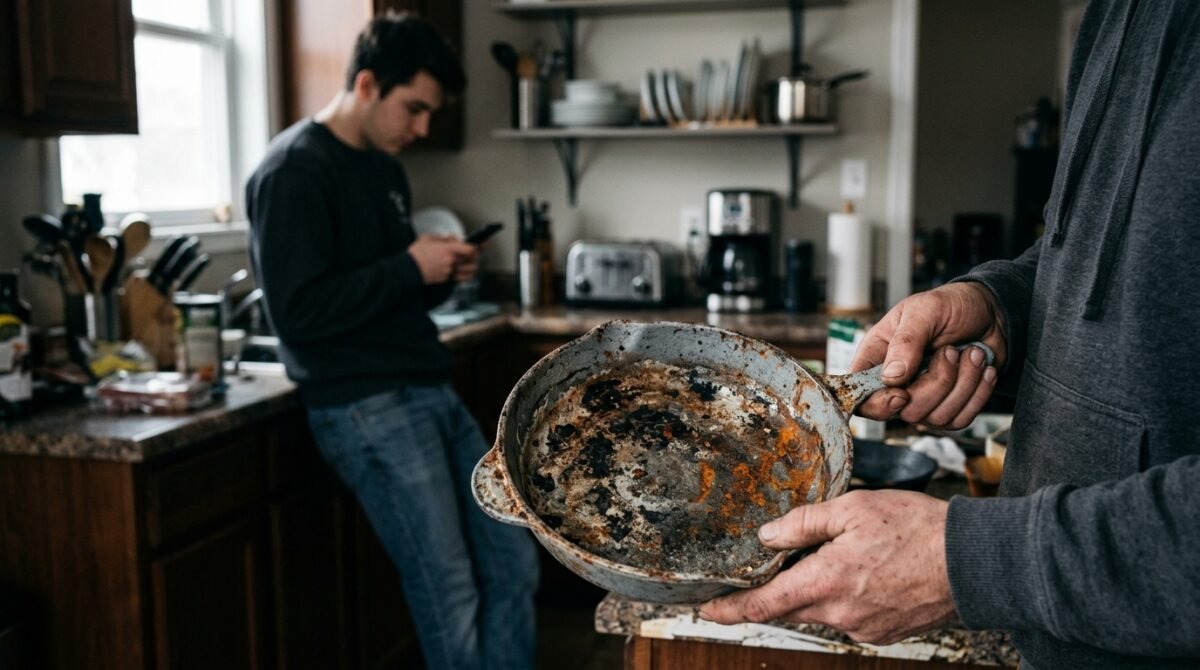
The realization didn’t hit me all at once. It was a slow, agonizing process of visual processing. As I walked into the kitchen, the scent of harsh chemicals hung heavy in the air, cloying and synthetic. My eyes moved instinctively to the drying rack, then to the stovetop, and finally, to the open maw of the dishwasher. There it was: my great-grandmother’s pan, looking like a corpse in a morgue. It was gray, pockmarked, and utterly ruined.
I stood there for a long time, the hum of the refrigerator filling the silence. The pan looked alien. The years of love, the memories of my grandmother teaching me to flip pancakes, and the specific, golden-brown patina I had spent a decade cultivating were gone, scrubbed away by a high-temperature cycle and a chemical agent that had no business being anywhere near seasoned iron.
Chloe walked in just as I was pulling the pan from the dishwasher. She didn’t look remorseful. She looked annoyed, as if I were the one interrupting her morning routine. She took a sip of her coffee, leaned against the counter, and checked her phone, barely acknowledging my presence. I held the pan up, my hands trembling with a mix of fury and disbelief.
“Chloe, please tell me you didn’t put this in the dishwasher. Please tell me you didn’t use lye on it. This is a hundred-year-old heirloom. It’s ruined.”
— OP, speaking to the roommate
She looked up, her expression hardening. She didn’t offer a sorry. Instead, she sighed, a long, dramatic sound that signaled she was ready for an argument. She walked over, grabbed a towel, and began drying her own dishes with deliberate slowness. The air in the kitchen felt suffocating. I realized then that she hadn’t done this by accident. She had done it because she knew exactly how much it mattered to me.
The Justification Of A Petty Saboteur

When she finally spoke, her words were sharper than the chemicals she had used. She claimed that my ‘ridiculous’ maintenance routine was a ‘neurotic burden’ on our shared space. She argued that having a pan that couldn’t go in the dishwasher was a form of passive-aggressive control, a way for me to dictate how the kitchen should function for everyone involved.
I couldn’t fathom the leap in logic. How does someone decide that because they dislike a chore, they have the right to destroy someone else’s property? The entitlement was staggering. She didn’t see the pan as an heirloom; she saw it as an obstacle in her path toward a more convenient, lazy lifestyle. It wasn’t about the dishes; it was about the power to decide whose comfort mattered more.
“You act like this kitchen is a museum dedicated to your ancestors. It’s an apartment. I shouldn’t have to worry about whether my cleaning methods offend your precious ‘patina.’ If you want it protected, put it in your bedroom.”
— Chloe, defending her actions
I felt a cold detachment wash over me. This was the moment the friendship died. There was no room for negotiation or understanding when one person viewed the other’s most cherished possessions as mere annoyances to be cleared away. I realized that keeping the peace with Chloe had been a one-way street, and I was done paying the toll.
I didn’t argue back. I didn’t scream or break her things in return. I simply placed the ruined pan on the counter, turned, and walked out of the room. I spent the next two hours in my room, staring at the wall, feeling the weight of the loss and the sudden clarity of what needed to be done. The boundary had been crossed, and now, it was time to build a wall.
The Installation That Changed Everything

By noon, I had called a local contractor. I wasn’t just talking about a simple lock; I wanted a smart, keypad-enabled system for the pantry and the refrigerator. It was a drastic, expensive move, but the satisfaction I felt as I watched the installer drill the holes was worth every penny. Chloe was at work during the installation, and I made sure to be finished before she returned.
When she walked through the front door that evening, she headed straight for the kitchen, likely expecting to grab a snack or prepare dinner. The look of confusion on her face when she saw the keypad on the fridge was priceless. She tried the handle, realized it was locked, and then stared at the keypad, her mouth agape. She turned toward my bedroom door, her face a mask of indignation.
“Are you kidding me? A lock on the fridge? How are we supposed to live like this? You are acting like a total sociopath, OP.”
— Chloe, upon discovering the kitchen lock
I didn’t flinch. I explained that if she couldn’t respect the property in the kitchen, she no longer had access to the kitchen’s resources. I told her that she could buy her own small mini-fridge for her room, or she could find a new place to live. The rules were simple: respect the boundaries, or lose the privileges. It was the only way to ensure my remaining items remained safe.
She threatened to call the landlord, to claim I was violating the lease, and to make my life hell. I told her to go ahead. I had already sent the landlord photos of the ruined pan and a detailed list of the damages, framed as a dispute over property destruction. I was ready for the fallout. I had moved from being a victim to being a strategist in my own home.
The Escalation In The Group Chat
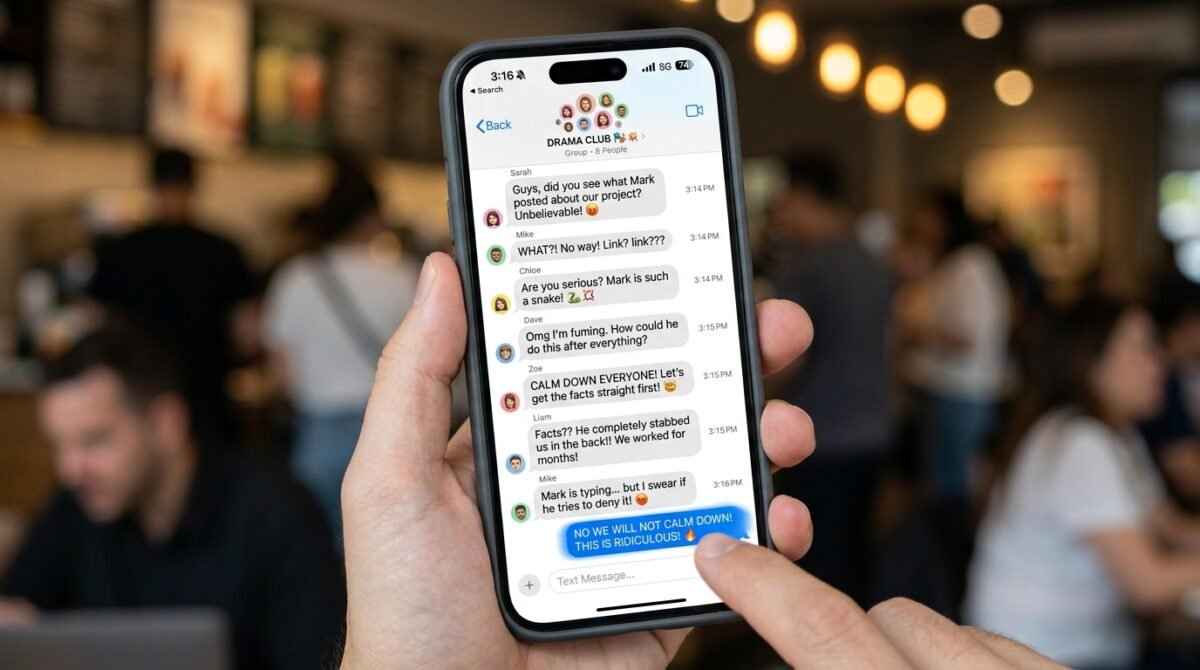
The news of the ‘Kitchen Lockout’ hit our shared friend group within twenty-four hours. Chloe, predictably, played the victim. She told everyone that I had gone insane, that I was hoarding food, and that I was trying to starve her out. The messages started flooding in, a mixture of concerned friends and people who were clearly just looking for drama.
“Hey guys, just a heads up, OP has officially lost it. Installed a keypad on the fridge because I used a little soap on a pan. I literally can’t eat without a code. Help?”
— Chloe, in the shared group chat
I didn’t defend myself immediately. I let the comments pile up. Some people took her side, calling me ‘controlling’ and ‘unhinged.’ Others, specifically the ones who actually knew me and the history of that pan, started pushing back. The thread became a battlefield of opinions, a microcosm of the very real tension that existed in our apartment.
I finally stepped in, not with an emotional plea, but with photos. I sent the high-resolution images of the destroyed cast iron, the lye-etched surface, and a screenshot of the manufacturer’s instructions on how to care for vintage iron. I kept the tone clinical. I wasn’t asking for validation; I was presenting evidence. The conversation shifted almost instantly.
“That’s not ‘a little soap,’ Chloe. That is chemical destruction of a family heirloom. OP isn’t acting out of nowhere. You literally ruined something that can’t be replaced. Honestly, I’d lock the fridge too.”
— Sarah, mutual friend
The tide of public opinion was turning. It was fascinating to watch how quickly people changed their tune once they saw the visual proof. It wasn’t about the fridge anymore; it was about the lack of respect for someone else’s space and possessions. Chloe stopped responding in the group chat, but the damage to her reputation among our friends had already been done.
The Landlord’s Unexpected Intervention
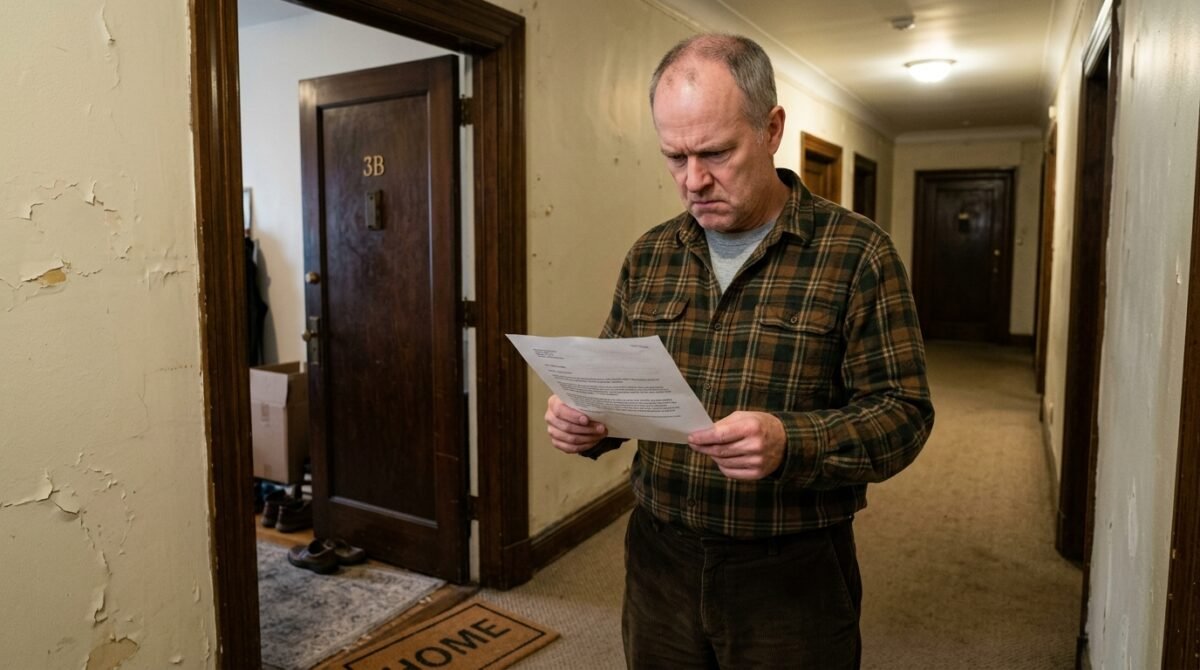
Two days later, I received a formal email from our landlord. Chloe had indeed tried to report me, claiming I was interfering with ‘reasonable use’ of the kitchen. I had prepared a dossier for this exact moment. I included the photos, a copy of our lease agreement noting that tenants are responsible for damage to shared property, and a calm, professional explanation of why I felt forced to take such measures.
The landlord, a woman who had lived in the building for decades and knew exactly how well I cared for the unit, took my side completely. She told me that while she didn’t approve of the permanent alteration, she understood the necessity of protecting my belongings. She gave us an ultimatum: either we resolve the dispute, or one of us would have to move out at the end of the month.
This was the turning point. Chloe had expected the landlord to force me to remove the lock, but instead, the landlord had put the pressure back on her to be a better roommate. She was furious. She spent the evening slamming doors and playing loud music, trying to goad me into a confrontation. I stayed in my room, wearing noise-canceling headphones, and began looking for a subletter for her room.
I realized then that this was never going to work. The trust had been shattered, and there was no rebuilding it. The pan was just the catalyst for a much deeper incompatibility. She didn’t want to live with a person; she wanted to live in a place where her lack of boundaries would go unchecked. I was no longer interested in teaching her how to be a decent human being. I just wanted my life back.
The Unannounced Midnight Visit
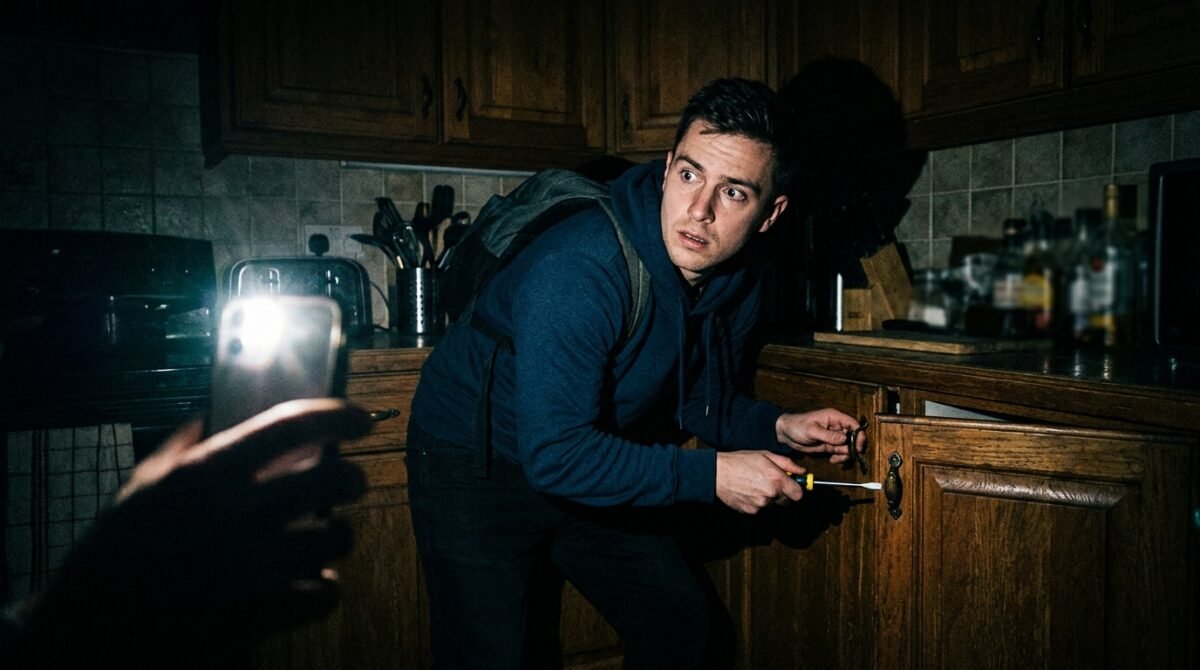
The situation turned ugly when I found her trying to force the lock on the pantry. It was 2:00 AM, and the sound of scratching metal woke me from a dead sleep. I walked out to the kitchen to find her standing there with a flat-head screwdriver, her face illuminated by the pale blue light of the refrigerator’s internal glow that she had managed to partially crack open.
“What are you doing, Chloe? Are you seriously trying to break into the pantry? This is criminal damage. Get out of the kitchen right now before I call the police.”
— OP, confronting the roommate at 2 AM
She looked at me, caught red-handed, and didn’t even try to hide it. She looked desperate, erratic. She claimed that she was ‘starving’ and that I had no right to restrict her access to basic necessities, even though she had a perfectly functioning kitchen at her boyfriend’s place just a few blocks away. It was a bizarre display of entitlement, a refusal to accept the consequences of her own actions.
I didn’t call the police, but I did pull out my phone and record the interaction. Having the evidence of her trying to break in was the final piece of the puzzle I needed to break the lease early or force her eviction. She retreated to her room, but the fear in the air was palpable. I didn’t sleep the rest of the night; I sat in the living room, watching the door, realizing that I was living with a stranger who had lost all touch with reality.
The next morning, I sent the video to the landlord. By the afternoon, Chloe received an eviction notice for lease violations, specifically regarding harassment and property damage. The speed of the resolution surprised me, but it also made me realize how precarious my situation had actually been. I had been living on a powder keg, and the cast iron pan was the spark that finally set it off.
The Fallout And The Moving Boxes
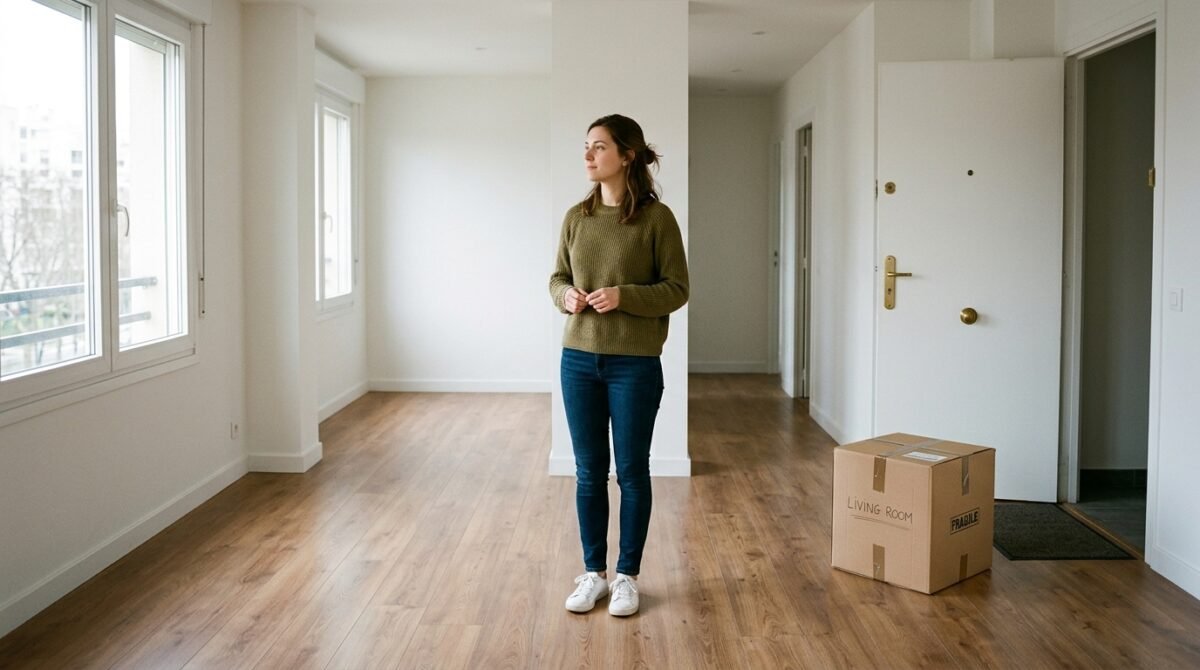
The week leading up to her departure was a masterclass in passive-aggression. She left trash on the counters, ‘accidentally’ spilled things in the common areas, and refused to speak a single word to me. I ignored it all. I spent my evenings researching how to restore cast iron, finding a local specialist who could re-season the pan professionally. It was a small comfort, but it felt like a way of reclaiming what had been stolen.
Our mutual friends were split. Some felt I had overreacted, believing that locking the kitchen was an extreme measure that ruined the ‘vibe’ of our home. I stopped trying to convince them. If they wanted to live with someone who destroyed their things and then blamed them for it, that was their choice. I was focused on the end goal: a quiet, safe, and respectful living environment.
When she finally packed her last box, she didn’t look at me. She left the keys on the counter and slammed the door. As the lock clicked, I felt a wave of relief so strong it made me lightheaded. The apartment felt like it had been scrubbed clean, not just of her, but of the toxicity that had permeated every corner of the living space.
I walked into the kitchen, removed the keypad, and looked at the empty spot where her dishes used to be. It was quiet. It was peaceful. I made myself a cup of tea, using the kettle I hadn’t been able to use in weeks, and breathed in the scent of a home that was finally my own again. The pan was in the shop, but the peace of mind was priceless.
The Professional Restoration
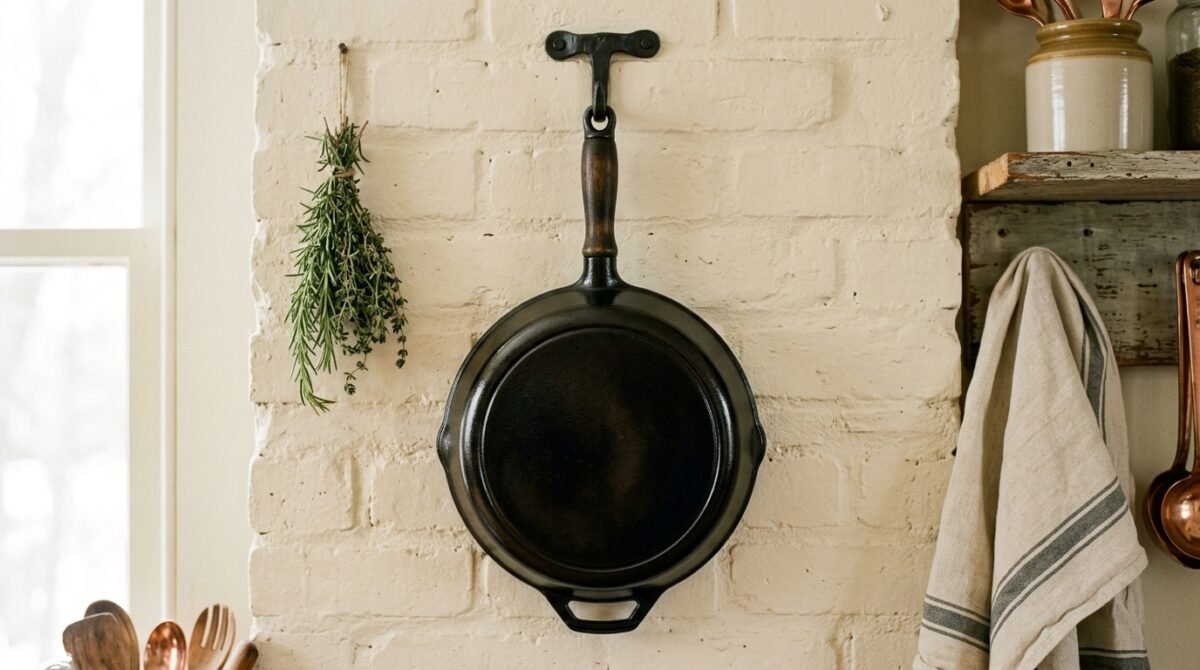
A month later, I got the call. The cast iron was ready. When I went to pick it up, the specialist—a man who looked like he’d spent his life surrounded by iron—handed it over with a look of reverence. It was black, smooth, and beautiful. He had spent hours stripping the chemical damage and re-seasoning it with natural flaxseed oil. It wasn’t the exact same patina I had grown up with, but it was a new beginning.
I took it home and made dinner that night. I didn’t think about Chloe, or the locksmith, or the group chat. I focused on the sound of the sizzle, the way the oil pooled, and the weight of the pan in my hand. It was a reminder that some things can be salvaged if you put in the time and care to fix them, even if they’ve been dragged through the mud.
This whole ordeal taught me more about boundaries than any self-help book ever could. I learned that you don’t owe people an explanation for wanting to protect what you love. You don’t owe them a ‘fair’ version of your own life at the expense of your own happiness. Sometimes, the most radical act of self-care is simply saying ‘no’ and locking the door.
I still live in that apartment, but the kitchen is a sanctuary now. There are no more arguments, no more stolen property, and no more chemical-laden surprises. The cast iron pan hangs on the wall, a testament to the fact that while some people will try to ruin your history, you are the only one who gets to decide how much of it survives.
Internet Perspectives: Was I The Villain?

When I shared my story on Reddit, the response was overwhelming. Thousands of comments poured in, debating the ethics of my decision. The ‘AITA’ crowd was split, but the consensus shifted toward a surprising realization: the kitchen lock wasn’t the issue; the violation was the catalyst. People resonated with the feeling of having their boundaries ignored until they had to take extreme measures.
“NTA. Your roommate didn’t just ruin a pan; she assaulted your sense of safety in your own home. The fact that she tried to break in later proves that she was never going to respect your boundaries. You did what you had to do.”
— u/KitchenWarrior99 (Top Comment, 32.5k upvotes)
However, there were dissenting voices. Some argued that I had escalated a social problem into a logistical one, and that I should have handled it with more ‘maturity.’ I found these comments fascinating. It’s easy to talk about maturity when it isn’t your own property being destroyed by someone who refuses to apologize. The debate highlighted how differently people view the ‘social contract’ of shared living.
“ESH. You both sound like a nightmare to live with. Yeah, she was wrong to ruin your pan, but putting a digital lock on the fridge? That’s nuclear. You guys clearly shouldn’t have been roommates in the first place.”
— u/NeutralObserver (12.4k upvotes)
The variety of responses reminded me that everyone has a ‘breaking point.’ For some, a pan is just a pan. For others, it’s a connection to the past. The internet helped me see that my reaction was less about the object and more about the fundamental lack of respect in my living situation. It provided a mirror to my own actions, and while I stand by what I did, I learned a lot about how people perceive power dynamics in the home.
Reflections On The Cost Of Peace
Looking back, the cost of the lock was minimal compared to the cost of my mental health. I spent roughly $400 on the locksmith and the equipment, and I spent another $150 on the restoration of the pan. The price of peace was less than the price of a mid-range phone. It’s a small price to pay for the ability to walk into my own kitchen without feeling a pit in my stomach.
I think about the people who are currently in similar situations—trapped with roommates who don’t respect their space, their belongings, or their rules. I hope they realize that they don’t have to wait until something is destroyed to start setting boundaries. It’s okay to have rules. It’s okay to demand respect. And it’s definitely okay to take drastic steps when those boundaries are ignored.
I’ve become much more selective about who I let into my space. I have a new roommate now, and the first thing I did was sit down and discuss expectations. Not as a way to control, but as a way to ensure we’re both comfortable. We have a shared respect for the kitchen, and it makes all the difference in the world.
The cast iron pan is used at least three times a week. It’s a part of my daily ritual, a constant, solid presence in a world that can be chaotic and unpredictable. It reminds me that I can protect what matters, and that, in the end, I am the guardian of my own peace.
Conclusion
The story of the cast iron pan and the kitchen lock has sparked a broader conversation about boundaries, entitlement, and the sanctity of personal property in shared living spaces. It serves as a reminder that we are often expected to suppress our needs to keep the peace, but there comes a moment where silence only enables further destruction. Whether you agree with my decision to lock the kitchen or think I went too far, the core of the issue remains the same: respect is the foundation of any healthy relationship, and without it, no amount of compromise will save the living arrangement.
As I move forward, I find myself more confident in setting boundaries early, rather than waiting for them to be smashed to pieces. We all deserve to feel safe and respected in our own homes, and sometimes that means making the difficult choice to prioritize our own well-being over the comfort of those who do not value us.
What about you? Have you ever had to take drastic measures to protect your property or your peace of mind from a disrespectful roommate or guest? What was the ‘breaking point’ that forced you to act? Let’s talk about it in the comments below.
What's your verdict on this dilemma?
Vote below to contribute to the official community consensus.

Have a Dilemma Keeping You Up at Night?
Share your real-life feud, wedding chaos, or relationship crossroads anonymously with our editorial team.
What do you think ?
0 Comments🛡️ Comments are moderated to protect community integrity. Your comment will appear once approved by the editorial team.