

We all have that moment where we realize our living situation has reached a breaking point. For me, that moment arrived on a rainy Tuesday evening, exactly at 6:15 PM. I walked into my apartment, keys jingling in my hand, ready to shed my professional facade and collapse into the silence of my own home. What I found instead was a sea of unfamiliar faces, the frantic tapping of mechanical keyboards, and the distinct, overwhelming aroma of burnt espresso. My living room had been transformed, without a whisper of warning, into a high-intensity, pay-to-play co-working hub.
My roommate, Sarah—a woman I had lived with for two years under the guise of mutual respect and financial stability—was nowhere to be seen. In her place, a man in a crisp navy blazer gestured aggressively at a whiteboard she had clearly hauled out from the hallway closet. I stood there, frozen, gripping my work bag as if it were a shield, while twelve strangers treated my private sanctuary like a public utility. The cognitive dissonance was deafening. This wasn’t just a party; it was a business transaction, and I was the uninvited guest in my own lease.
The moral dilemma of communal living usually revolves around shared chores or guest policies, but this was a structural betrayal of the highest order. Sarah hadn’t just ‘had friends over’; she had monetized our shared square footage on a platform designed for renting event spaces, Peerspace, without consulting me. She had sold my comfort, my peace, and my privacy to the highest bidder under the assumption that I was ‘too passive’ to do anything about it. I wasn’t just angry; I was witnessing the total collapse of a friendship built on a foundation of hidden greed.
As I navigated the maze of laptop chargers snaking across the floorboards, I felt a cold, sharp clarity wash over me. This wasn’t an accident. This was a calculated move, one that ignored every boundary I had ever set. The resentment that had been quietly fermenting for months—over late rent, dirty dishes, and unannounced guests—suddenly crystallized into a singular, burning question: how far could she push the limits before I stopped being a roommate and started being an adversary?
This article chronicles the descent into this madness, the explosive confrontations that followed, and the eventual legal and social fallout that left our living situation in ruins. It is a cautionary tale about the dark side of the ‘gig economy’—where the urge to monetize everything eventually costs us the one thing we can’t replace: our sense of home.
The Corporate Takeover of My Living Room
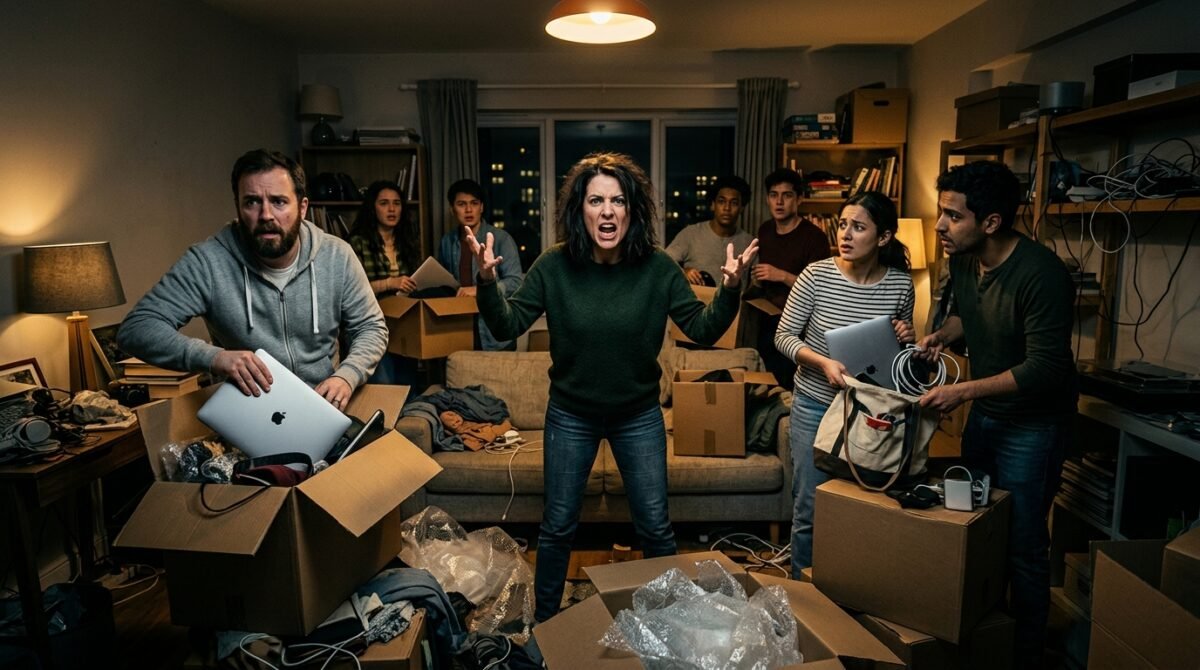
I stood in the entryway, watching as a woman in the corner of my couch took a conference call, her voice echoing off the walls I pay half the rent for. I looked at the coffee table, which was now stacked with ‘day passes’ printed on cheap cardstock. The audacity was so profound it was almost impressive. I finally caught the eye of the man in the navy blazer, who simply nodded at me as if I were a new attendee, gesturing toward an empty chair.
“Excuse me,” I said, my voice cutting through the hum of the room like a blade. The typing stopped. Conversations died out. Twelve pairs of eyes turned toward me, waiting for the interruption to conclude. I didn’t care about being polite anymore; the time for pleasantries had passed the second they stepped over my threshold. I walked directly to the middle of the room and dropped my bag, making a loud thud that signaled the end of their productive afternoon.
“I don’t know who told you this was a public space, but you have exactly five minutes to pack up your things and get out of my apartment before I call the building manager and the police for trespassing.”
The man in the navy blazer stood up, looking confused. “We paid for a full-day booking. The host told us the common areas were fully accessible for ‘creative collaboration.’ We have a confirmation receipt from Peerspace.” He held up his phone to show me the screen. There it was: a confirmation for a ‘Professional Studio & Workspace’ rental, booked for six hours at a rate that would have covered half of my monthly utilities. Sarah had been running a business on my dime, and she wasn’t even here to face the music.
I pulled my own phone out, my fingers trembling as I dialed Sarah. She didn’t pick up on the first ring, nor the second. I sent a text, short and venomous. The room was tense, thick with the discomfort of twelve people who suddenly realized they were in the middle of a domestic hostage situation. They began packing their bags, the silence replaced by the sound of zippers and shifting chairs. They weren’t angry at me; they were confused, looking between the door and each other, realizing they’d been scammed by a host who wasn’t even present.
By the time the last laptop was stowed, I was pacing the room, checking to see what had been damaged. My favorite rug had a coffee stain, and someone had pushed my bookshelf against the wall to make room for a standing desk. The violation felt physical, a lingering stain on the place I was supposed to feel safe. I waited for Sarah, knowing that when she finally showed up, the conversation was going to be the most difficult one we had ever shared.
The Confrontation at Midnight

Sarah didn’t come home until well after 11:00 PM. She walked in carrying a bag of takeout, humming a tune as if she hadn’t just turned our home into a circus. When she saw me sitting at the kitchen table, the light from my laptop casting long, harsh shadows across my face, her smile faltered. She knew. She had seen my texts, and she had likely seen the messages from the Peerspace users asking why the ‘host’ had abandoned them mid-booking.
“Oh, you’re home,” she said, her voice dripping with a forced casualness that made my skin crawl. “I saw your messages. I think you overreacted. You really embarrassed me in front of those people. They were paying clients, and you just chased them off like they were criminals.” I couldn’t believe my ears. The gaslighting started before she had even taken her coat off. She genuinely believed that because she had secured the booking, the rules of our cohabitation didn’t apply.
“You turned our home into a workspace without asking me, Sarah. You didn’t just ‘book a space’; you sold my privacy. You kept the money, didn’t you? Where is the money you made today?”
She tossed her bag onto the counter, avoiding my eyes. “It’s not like it’s a big deal. The living room is communal. I thought, since we’re both struggling with the rent hike, I’d find a way to make us some extra cash. I was going to split it with you after I took a small commission for managing the account. You’re being incredibly shortsighted. We could have been doing this every Tuesday and Thursday.”
The audacity of her ‘commission’ logic was the final nail in the coffin. She didn’t just want to pay the rent; she wanted to be a landlord, using property she didn’t own and a partner she didn’t respect. I told her that if she wanted to be a property manager, she could move out and buy her own place. The argument escalated quickly, moving from the kitchen to the hallway, with voices rising and old grievances being dragged into the light like skeletons from a closet.
She argued that I was ‘privileged’ for not needing the money, while I reminded her that my ‘privilege’ was actually just a job I worked ten hours a day for. She slammed her bedroom door, leaving me in the living room with the lingering scent of her perfume and the crushing realization that I no longer knew the person I lived with. The friendship was dead, and the lease, which had six months remaining, suddenly felt like a prison sentence.
The Digital Trail of Betrayal

That night, I didn’t sleep. Instead, I did what anyone in the modern age does: I looked for evidence. I logged onto the Peerspace website, and through a lucky guess of her username, I found our apartment listing. It was titled ‘Modern Minimalist Studio with Abundant Natural Light,’ complete with professional-grade photos of my bedroom—my personal, private sanctuary—that she had somehow managed to stage while I was at work. My blood ran cold as I scrolled through the reviews.
There were dozens of them. ‘Great location,’ one read. ‘The host is very accommodating, though the roommate seems a bit grumpy,’ another noted. She had been doing this for months. Every Tuesday and Thursday, she had been renting out our space while I was at the office. She hadn’t been ‘out with friends’ as she claimed; she had been hosting coworking sessions, photoshoots, and even a small focus group meeting. The money she had ‘saved’ for rent was likely a fraction of what she had actually pocketed.
“I am absolutely disgusted. You didn’t just violate my trust; you exploited my private property for profit, and you had the audacity to lie to my face for months about where you were going.”
I took screenshots of everything—the listings, the dates of the bookings, and the glowing reviews that confirmed the duration of her scheme. This was beyond a roommate dispute; this was a breach of contract and potentially a violation of our lease agreement. I knew if the landlord found out, we would both be evicted, regardless of who was at fault. The risk she had been taking with our housing was astronomical. She was playing a dangerous game with our livelihood.
I realized then that she hadn’t just been ‘helping with rent.’ She was running a business, using my vulnerability as a partner to shield herself from the full weight of the responsibility. If a guest had broken something, or if the building manager had caught them, I would have been on the hook, too. I felt a deep sense of betrayal, not just for the money, but for the safety she had compromised without a single thought for my well-being.
I started a spreadsheet, documenting every instance I could cross-reference with my own schedule. The sheer scale of her operation was staggering. She had been using the apartment as a commercial office while I was struggling to pay my own share of the bills. The resentment I felt wasn’t just about the money; it was about the fundamental disrespect for the space that was supposed to be my home.
The Landlord’s Unannounced Inspection
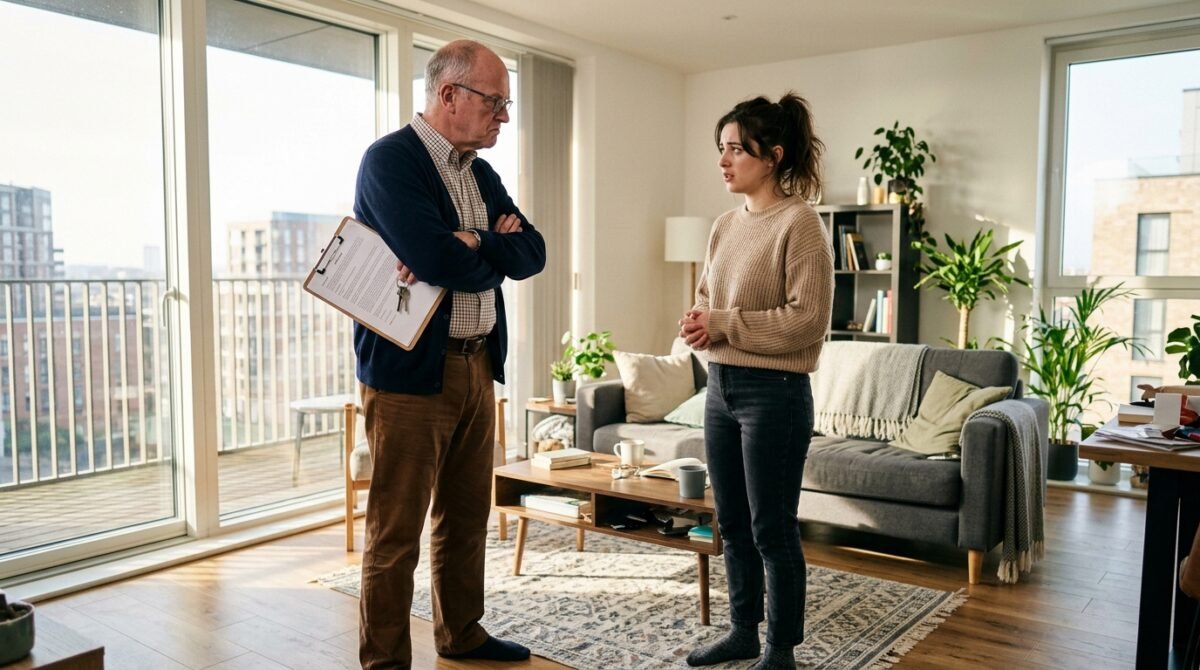
Three days later, the inevitable happened. Our landlord, a man who rarely checked in, stopped by the building to fix a leak in the unit below ours. He knocked on the door just as I was heading out for work. I opened it, expecting a quick greeting, but he looked past me, his eyes scanning the living room. Sarah had left the ‘coworking’ whiteboard out, and there were still a few stray chargers plugged into the wall. He walked in, uninvited, and his face dropped.
“What is that?” he asked, pointing at the whiteboard, which was covered in project timelines and ‘brainstorming’ notes. I didn’t know what to say. If I told the truth, we were both out on the street. If I lied, I was complicit. He moved further into the living room, noticing the wear on the floorboards and the suspicious lack of furniture in the spots where the rented tables usually sat. He wasn’t a fool; he knew something was off.
“I noticed a lot of foot traffic lately, and I’ve had neighbors complaining about the noise during the day. Is there something you want to tell me, or do I need to look at the security footage from the lobby?”
I felt the weight of the moment. Sarah walked out of her room, hearing the commotion. Her face went pale as she saw the landlord standing there, his arms crossed. She tried to stammer out an excuse, something about ‘having a study group,’ but the landlord wasn’t buying it. He had the Peerspace printouts in his hand—he had seen the reviews online after a neighbor reported the activity to him earlier that morning.
The confrontation was swift and brutal. He didn’t care about our excuses. He informed us that operating a commercial business in a residential unit was a direct violation of our lease agreement. He gave us 24 hours to rectify the situation or face immediate eviction proceedings. The look he gave Sarah was one of cold, professional disdain. She had put us both in a position where we were essentially homeless if we couldn’t resolve this immediately.
After he left, the silence in the apartment was suffocating. Sarah started crying, not out of regret, but out of frustration that her ‘hustle’ had been discovered. She turned on me, blaming me for ‘not being more discreet’ with my complaints. It was then that I realized she would never take responsibility. To her, I was just a cog in her wheel, a nuisance that had finally broken the machine she had built.
The Reddit Community Weighs In

That night, I posted the full story on a popular subreddit for roommate drama. I needed an outside perspective. Was I overreacting? Was I being too rigid about the ‘communal’ nature of the apartment? The response was immediate and overwhelming. Within an hour, my post had thousands of upvotes, and the comments section was a battlefield of opinions, ranging from legal advice to personal anecdotes of similar betrayals.
“NTA. This is massive fraud. She’s not just your roommate; she’s a liability. Move out immediately or get her off the lease. You are in danger of being evicted because of her greed.”— u/LegalEagleEye (15.2k upvotes)
The consensus was clear: I was not the problem. Users pointed out that Sarah’s actions were not just rude; they were a violation of civil law. Many recommended I document everything and speak to a lawyer if she tried to sue me for ‘damages’ or ‘interrupted business.’ The community was supportive, offering templates for how to draft a formal roommate notice and how to handle the inevitable fallout with the landlord.
Some users shared their own horror stories. One person had a roommate who rented out their spare room on Airbnb without consent, which led to a burglary. Another had a roommate who used their kitchen for a catering business, leaving the oven greasy and the fridge filled with rotting produce. The stories made me realize that my situation, while extreme, was part of a larger trend of ‘gig economy’ boundary-smashing that left people feeling violated in their own homes.
“You need to stop thinking about her feelings and start thinking about your credit score. If you get evicted, that stays on your record for years. Cut her loose.”— u/RealistRoomie (9.8k upvotes)
Reading the comments helped me detach from the emotional manipulation Sarah had been using against me. She had made me feel like the ‘bad guy’ for wanting a place to sleep, but the internet reminded me that my right to safety and privacy outweighed her right to make a profit. I felt a surge of strength. I wasn’t just a roommate; I was a tenant with rights, and it was time to exercise them.
I spent the rest of the night responding to comments, absorbing the advice, and preparing a plan for the next day. I realized that my previous passivity had been a mistake. I needed to be firm, clear, and unyielding. The digital validation gave me the backbone I had been missing, and I felt ready to face the final confrontation that would ultimately end our living arrangement.
The Ultimatum
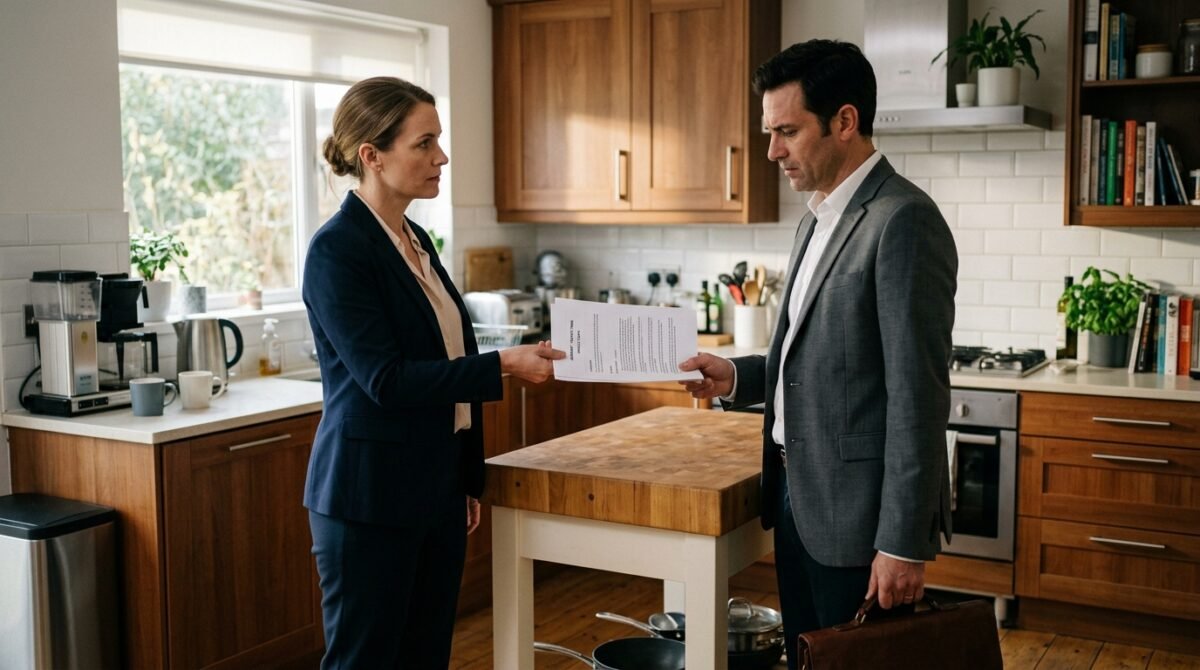
I approached Sarah the next morning with a printed document. It was a formal roommate agreement, outlining clear boundaries, the prohibition of commercial activity, and a request for her to pay the remaining rent if she intended to stay. I didn’t want to fight, but I wasn’t going to live in fear of eviction any longer. I handed it to her, watching as she skimmed the pages, her expression turning from annoyance to shock.
“You’re really doing this? You’re going to formalize our living situation like we’re strangers?” she asked, incredulous. She didn’t seem to understand that she had already destroyed the ‘friendship’ part of the equation. I stood my ground, my posture firm, my voice steady. I told her that if she couldn’t sign it and commit to following the lease rules, she needed to vacate the apartment by the end of the month.
“I’m not doing this because I want to be a stranger. I’m doing this because I can no longer trust your judgment. You’ve put our housing at risk, and I need to protect myself.”
She tried to bargain, offering to pay me a portion of the earnings from the past few months. I refused. I didn’t want her money; I wanted security. I told her that any money she had made was irrelevant to the fact that she had broken the rules of our cohabitation. The conversation was short, devoid of the usual emotional back-and-forth. It was transactional, which is exactly what she had turned our home into.
She eventually signed the document, but I could tell she was already planning her next move. She wasn’t sorry; she was just biding her time. That was fine by me. I had achieved what I needed: a legal paper trail that protected me if the landlord came knocking again. My goal was to survive the next few months until the lease expired and I could move somewhere where I would finally have control over my environment.
The atmosphere in the house changed after that. It was cold, functional, and efficient. We no longer shared meals, we didn’t watch TV together, and we communicated through text messages about bills and maintenance. It was a sterile existence, but it was safe. I felt a strange sense of peace in the distance. The chaos of the twelve strangers had been replaced by a quiet, controlled environment where I could finally breathe.
The Final Move-Out

The final three months were a test of endurance. Sarah eventually moved out two weeks before the lease ended, leaving the apartment in a state of disarray that required a professional cleaning service. I didn’t complain. I paid for the cleaners myself, wanting to ensure the apartment was in perfect condition for the final walkthrough with the landlord. I wanted no trace of her presence left behind.
When the landlord came for the final inspection, he noticed the difference immediately. He saw that the living room was empty, the walls were clean, and there wasn’t a single sign of commercial activity. He seemed pleased, confirming that he had seen no further complaints from the neighbors. I handed him the keys, feeling a weight lift off my shoulders that I hadn’t realized I was carrying.
“I appreciate you handling the situation. It’s a shame it had to end this way, but I’m glad we didn’t have to escalate to a formal eviction.”
I left the apartment that day with my belongings, looking back one last time at the space where so much had happened. I had learned a lot about myself—about my ability to stand up for what I need, and about the danger of letting others dictate the terms of my life. I had walked into that apartment a passive, trusting roommate and walked out a person who knew exactly where their boundaries stood.
Sarah and I never spoke again. I heard through mutual acquaintances that she tried the same ‘Peerspace’ stunt in her new apartment, but it didn’t last long there either. She had a habit of prioritizing her short-term gain over her long-term stability, a cycle I was no longer part of. I moved into a smaller, studio apartment, one where I had total control over who entered and what happened within its four walls.
The relief of having my own space was profound. I spent my first night in the new apartment sitting on my floor, enjoying the absolute, unadulterated silence. No strangers, no business meetings, no hidden agendas. Just me, my books, and the quiet comfort of a home that was truly mine. It was the most expensive apartment I’d ever rented, but the peace of mind was worth every single penny.
The Financial Ledger of Deception
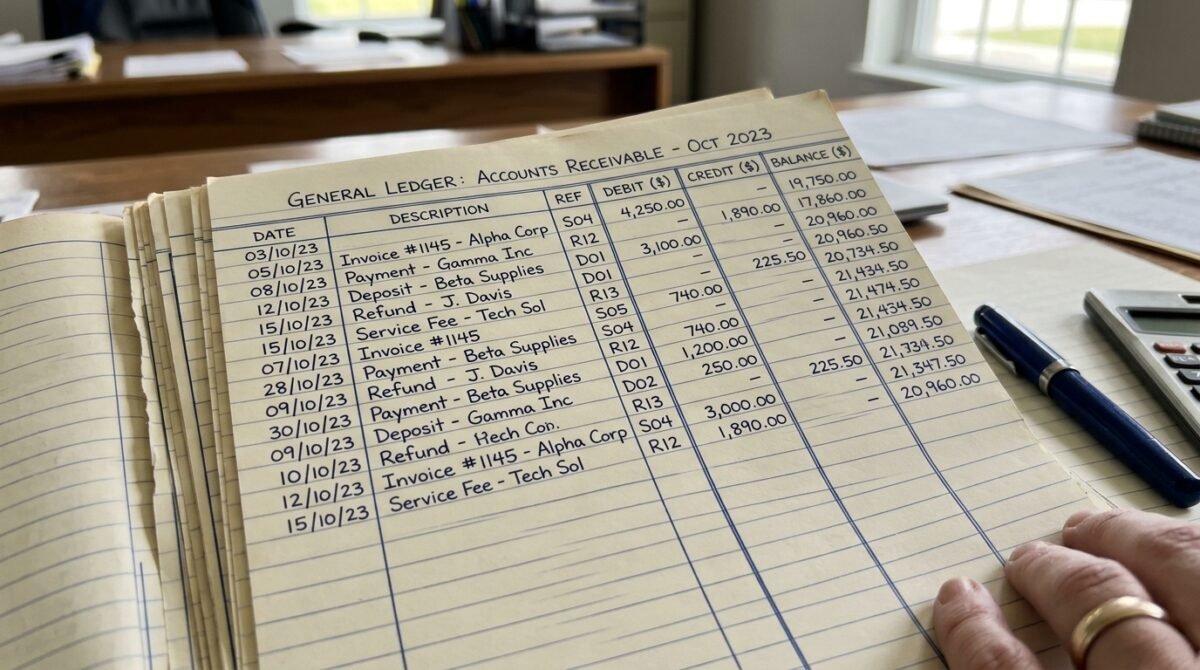
I kept the spreadsheet I created during the height of the drama. Looking back at the numbers, the scale of her scheme was even more infuriating than I had initially thought. She had been charging a premium for a space that, in reality, was worth far less, and she was pocketing the difference while I was paying for the electricity, the cleaning supplies, and the wear and tear on the common areas.
| Category | Sarah’s Earnings | My Cost | The Reality |
|---|---|---|---|
| Peerspace Fees | $4,200 | $0 | Pure Profit |
| Utilities | $0 | $650 | Subsidized by OP |
| Cleaning Costs | $0 | $300 | Paid by OP |
| Damages/Wear | $0 | $150 | Paid by OP |
The table tells a story of systematic exploitation. While she was celebrating her ‘side hustle,’ I was effectively bankrolling her business. She wasn’t just ‘helping out’; she was running a fraudulent enterprise at my expense. It was a hard lesson to learn, but it made me realize the importance of financial transparency in any living arrangement. I will never again share an apartment without a clear, written agreement regarding the use of space and the division of costs.
I shared this table on my social media after everything was resolved, and the feedback was incredible. People reached out to tell me that they had been in similar situations, unaware of how much they were actually losing until they sat down and mapped it out. The data didn’t lie. It showed that what I had perceived as a ‘roommate dispute’ was actually a case of financial abuse, and it gave me the closure I needed to move on.
I look at these numbers now and I don’t feel anger anymore; I feel gratitude. They serve as a reminder of the value I place on my own resources. I know how much I am worth, and I know how much my peace of mind costs. These numbers are a monument to the end of my gullibility and the beginning of a life where I am in control of my own narrative.
Moving forward, I’ve implemented a policy of ‘transparency first’ with everyone I interact with. Whether it’s a new roommate, a landlord, or even a friend asking to crash on my couch, I set expectations early and clearly. I’ve learned that setting boundaries isn’t mean; it’s necessary for the preservation of trust. And in the world of shared living, trust is the only currency that actually matters.
The Psychological Toll of Boundary Erosion

Beyond the money and the legal drama, there was a deeper, psychological cost to the entire ordeal. The erosion of my sense of home was the most difficult thing to heal from. For months, I walked through my front door with a feeling of apprehension, wondering what I would find—a photoshoot? A focus group? A business seminar? That constant state of hyper-vigilance is exhausting, and it took a toll on my mental health that took a long time to shake.
I started seeing a therapist shortly after I moved out, and we talked extensively about why I allowed this to go on for so long. She helped me realize that my upbringing had conditioned me to be ‘accommodating’ and to avoid conflict at all costs. I had confused ‘being a good roommate’ with ‘being a doormat.’ It was a painful realization, but it was necessary for my growth. I had to learn that saying ‘no’ is a form of self-care.
“You weren’t just protecting the apartment; you were protecting your right to exist in your own space without being commodified. That’s not being difficult; that’s having self-respect.”
The lessons I learned weren’t just about real estate or lease agreements; they were about the inherent value of my boundaries. I realized that when I allow others to walk over me, I’m not being ‘kind’ or ‘flexible’—I’m losing myself. I started practicing setting boundaries in other areas of my life—at work, with my family, and in my social circles—and the results were transformative.
People treated me with more respect, not less, when I started asserting my needs. I found that the people who were ‘upset’ by my boundaries were the ones who benefited from me not having any. It was a filtering mechanism, a way to ensure that the people in my life were there for the right reasons. I’ve become much more selective about who I share my time and space with, and the quality of my life has improved tenfold.
I still sometimes walk into my new apartment and feel a twinge of anxiety, but it passes quickly. I’ve built a home that is truly my own, a sanctuary where I can be myself without fear of intrusion. It’s not just a place to live; it’s a physical manifestation of my growth and the lessons I’ve learned. And that, more than anything, is the true value of the space I now inhabit.
Lessons Learned from the Gig Economy

The ‘gig economy’ is often marketed as a way to empower individuals, but my experience showed me that it can also be a catalyst for exploitation if there isn’t a robust framework of rules and ethics. My roommate saw Peerspace as a tool for success, but she ignored the humanity of the people involved. We are living in a time where everything can be monetized, but that doesn’t mean everything *should* be. Our homes are the most intimate spaces we have, and they deserve protection.
I’ve become a vocal advocate for better protections for tenants in the age of short-term rentals. I’ve participated in local housing board meetings and shared my story to illustrate the need for clearer regulations. If you’re living in a shared space, you need to know your rights. Don’t assume your roommate has the same moral compass you do. Document your agreements, stay informed, and don’t be afraid to speak up when your boundaries are crossed.
“Your home is your sanctuary. Do not let the promise of ‘side hustle’ income convince you to trade your peace for someone else’s profit.”
I’ve also learned to be more skeptical of ‘get rich quick’ schemes. The allure of easy money is powerful, but it often comes with hidden costs—social, emotional, and legal. Sarah’s desire to get ahead blinded her to the reality of her actions, and in the end, she lost more than she gained. She lost a friend, she gained a bad reputation, and she created a mess that she wasn’t prepared to clean up.
Life is about balance. It’s about finding a way to succeed without sacrificing our integrity or the well-being of others. I’ve found that true success comes from working hard, setting realistic goals, and surrounding myself with people who share my values. The shortcut Sarah took was a dead end, and I’m glad I wasn’t there when it reached its conclusion.
As I look back on this journey, I don’t see it as a tragedy. I see it as a turning point. It was the moment I stopped being a participant in someone else’s drama and started writing my own story. And in this story, the boundaries are firm, the space is safe, and the only people invited are the ones I choose to trust. That is the greatest reward of all.
Conclusion
My experience with the ‘twelve strangers’ was the most challenging event of my adult life, but it was also the most clarifying. It taught me that I am capable of standing up for myself, even when the pressure is immense. It taught me that my peace is non-negotiable and that I have the right to claim my space. Most importantly, it taught me that I am the architect of my own life, and I get to decide who enters my world and on what terms.
If you find yourself in a situation where your boundaries are being tested or your space is being commodified, take this as your sign to step up. You aren’t being ‘difficult’—you’re being essential. You owe it to yourself to advocate for your own comfort and security. Don’t wait until you’re staring down a dozen laptops to realize you’ve reached your limit. Trust your instincts, document your needs, and never be afraid to walk away from a situation that compromises your worth.
I’m curious to hear from you all—have you ever had a roommate situation that went completely off the rails? How did you handle the boundary violations, and what did you learn about yourself in the process? Drop your stories in the comments below—let’s talk about how we can support each other in navigating the increasingly complex world of shared living.
What's your verdict on this dilemma?
Vote below to contribute to the official community consensus.

Have a Dilemma Keeping You Up at Night?
Share your real-life feud, wedding chaos, or relationship crossroads anonymously with our editorial team.
What do you think ?
0 Comments🛡️ Comments are moderated to protect community integrity. Your comment will appear once approved by the editorial team.