

Living with roommates is often described as a trial by fire, a social experiment that tests the limits of human patience, hygiene, and personal boundaries. For Sarah, a dedicated professional with a penchant for high-altitude, single-origin Ethiopian espresso, the living arrangement started with a simple agreement: ‘Stay out of my pantry staples.’ It was a boundary she thought was clear, reasonable, and respected. Little did she know that for ninety days, her morning ritual had been systematically sabotaged by a roommate who considered her specialty goods ‘community property’—or worse, a target for a bizarre, low-stakes psychological game.
The realization didn’t come with a bang, but with a flat, lifeless crema. When Sarah finally unearthed the truth—a hidden container of dried, spent decaf grounds tucked behind the pantry—the betrayal felt personal. It wasn’t just about the money, though the math was damning. It was the gaslighting, the fake apologies, and the blatant disregard for her comfort in her own home. When the lease finally ended and the roommate demanded her security deposit back, Sarah saw her moment of clarity.
This story explores the intersection of petty bureaucracy and moral justice. As the tension mounted, the battle moved from the kitchen counter to the digital realm, as screenshots of the unfolding drama found their way to local community forums. The resulting fallout left friendships shattered, bank accounts drained, and a lingering question that divides the internet: at what point does petty revenge cross the line into professional misconduct?
We dive deep into the timeline of the ‘Espresso Sabotage,’ the face-to-face confrontations that turned volatile, and the ultimate decision that led to a small-claims court standoff. Through the lens of the Reddit community’s most vocal voices, we examine the complexities of property rights, lease agreements, and the visceral satisfaction of holding someone accountable for their chronic entitlement.
The Morning Ritual That Soured

It began as a subtle shift in the flavor profile. Sarah had been buying her coffee from a local roaster that charged $60 per 12-ounce bag. It was her one indulgence, a necessary kickstart to a high-pressure career. She kept the beans in a vacuum-sealed canister, stored on the top shelf, away from the chaos of the communal kitchen. For months, it was perfect. Then, one Tuesday, the espresso pulled thin and watery, tasting faintly of cardboard and burnt dust.
Initially, Sarah assumed it was a machine issue. She performed a deep clean of the group head, recalibrated the burr grinder, and even called the manufacturer’s support line. She spent four hours on a Saturday taking the internals apart, only to find nothing wrong. She bought a new bag of beans, thinking perhaps the previous batch had been over-roasted, but the problem persisted with the fresh supply. She felt like she was losing her mind, unable to get a decent pull from equipment that cost more than her first car.
The suspicion didn’t fall on her roommate, Chloe, immediately. Chloe was a chaotic roommate—dishes were often left to soak for days and the recycling was frequently ignored—but she wasn’t a thief. Or so Sarah thought. It wasn’t until she noticed a faint dusting of dark, fine powder on the counter near the bean storage that the puzzle began to click into place. It looked wrong. It looked… used.
“I thought my palate was failing. I spent weeks trying to diagnose my machine, thinking it was a pressure pump issue. It never occurred to me that someone was literally swapping my premium beans for literal trash until I saw the residue on the counter.”
Sarah decided to conduct a sting operation. She dusted the top of the vacuum canister with a harmless, fluorescent UV powder and waited. She told Chloe she was going away for the weekend to visit family, giving the perfect window for a pantry raid. She didn’t actually leave; she spent the weekend at a friend’s place nearby, checking the apartment’s smart doorbell feed whenever she could. The footage confirmed her worst fears: Chloe sneaking into the kitchen at 2:00 AM, canister in hand.
The audacity of the move was staggering. Chloe wasn’t just stealing the coffee; she was replacing the expensive beans with dried-out, spent grounds she likely saved from a commercial office machine or a local cafe. It was a calculated, deliberate act of theft designed to keep Sarah from noticing until it was too late. The financial loss was mounting into the hundreds, but the sense of violation felt much, much worse.
The Confrontation at the Kitchen Island

When Sarah returned home on Sunday night, the air in the apartment felt thick with unspoken tension. She checked the canister; it was half-full of the same dry, stale mixture. The UV powder on the seal was smudged, a glowing testament to the intrusion. She didn’t wait. She marched into the living room where Chloe was watching television and set the canister down on the coffee table with a thud that resonated through the floorboards.
Chloe barely looked up, though her posture stiffened. Sarah opened the canister and poured the contents onto a white plate. The contrast between the rich, oily beans Sarah expected and the dusty, gray-brown sediment on the plate was undeniable. ‘Explain this,’ Sarah demanded, her voice shaking with a mix of fury and disbelief. She didn’t raise her voice; the cold, controlled nature of her anger was far more terrifying than a scream.
“I just wanted to see if you’d admit it. I have the video, Chloe. I have the timestamps. Why the hell are you stealing my coffee and replacing it with literal garbage? Is this some kind of sick joke?”
Chloe’s reaction was a masterpiece of gaslighting. She laughed, a nervous, high-pitched sound that grated on Sarah’s nerves. She claimed it was a ‘mistake,’ a confusion of bags, though the logic fell apart immediately under questioning. She then pivoted to victimhood, claiming that Sarah was ‘obsessed’ with expensive things and that she was just trying to ‘stretch’ the household resources. It was a nonsensical defense that served only to inflame the situation further.
The argument escalated quickly. Chloe accused Sarah of being ‘classist’ for caring about the origin of her coffee beans, as if the price of the item somehow invalidated her right to her own property. It was the classic deflection technique—taking an objective breach of trust and reframing it as a moral failing of the person who was wronged. Sarah realized then that Chloe had no intention of apologizing or paying her back.
For the next hour, they traded barbs. Sarah laid out the costs: three months of $60 bags, plus the $40 she’d wasted on machine maintenance. The total wasn’t astronomical, but it represented a clear, malicious pattern. Chloe sat there, arms crossed, refusing to acknowledge the bill. ‘It’s just coffee, Sarah. Get over yourself,’ she muttered, before retreating to her room and locking the door behind her.
The Digital Breadcrumb Trail
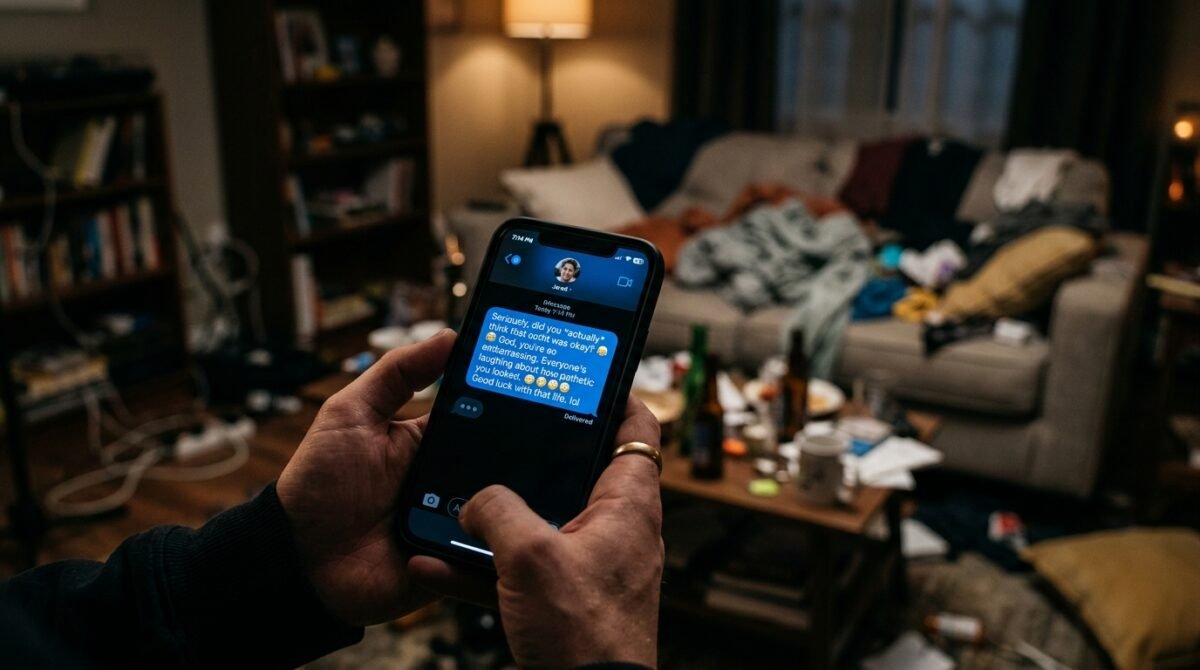
The days following the confrontation were cold. They communicated exclusively through sticky notes and passive-aggressive text messages. Sarah began to document everything. She kept the receipts for the coffee, the maintenance invoices, and even the text messages where Chloe had previously joked about ‘borrowing’ things, which Sarah now recognized as a pattern of entitlement. She wasn’t just building a case for a conversation; she was preparing for the end of their lease.
She discovered that Chloe had been bragging about her ‘gourmet espresso’ in a private group chat with their other roommates, a chat Sarah wasn’t part of. One of the other roommates, feeling guilty about the general toxicity in the house, leaked the messages to Sarah. The messages were damning: Chloe wasn’t just stealing the coffee; she was mocking Sarah’s ‘pretentiousness’ while simultaneously enjoying the high-quality product. It was a level of duplicity that solidified Sarah’s resolve.
“LOL, Sarah is so mad about the beans. She really thinks her $60 beans are a personality trait. Little does she know she’s been drinking my recycled office grounds for weeks and hasn’t noticed a thing. It’s hilarious.”
— Leaked Group Chat, 11:42 PM
The realization that her personal habits were the subject of ridicule in a private chat stung worse than the theft itself. Sarah felt foolish for having been so trusting. She had always viewed her home as a sanctuary, a place where she didn’t have to be on guard. Now, she realized she was living with someone who actively sought to undermine her. The documentation grew: she printed out the screenshots, filed them away, and began looking into the legalities of the security deposit.
She spoke to their landlord, a hands-off property management firm that cared little for interpersonal squabbles, but they did confirm that the security deposit was held in an escrow-like account until the end of the lease. Sarah learned that if she could prove ‘damages beyond normal wear and tear,’ she might have a path to deducting costs. Theft, however, was a gray area, but the documentation of the sabotage felt like a strong argument for a breach of the implied covenant of quiet enjoyment.
Sarah started to view the apartment through a new lens. She began inventorying everything. She took photos of the walls, the baseboards, and the appliances. She was determined that when the time came, there would be no excuses. Chloe would be held to the same standard of ‘perfection’ she had seemingly demanded from the state of the apartment, despite her own blatant disregard for the rules.
The Lease Expiration Ultimatum

As the final month of the lease approached, the atmosphere in the apartment hit a breaking point. Chloe, sensing the shift in dynamic, began acting out in other ways—leaving the heat running, inviting friends over without notice, and failing to move her belongings out of shared spaces. She was clearly trying to provoke Sarah into a meltdown, but Sarah remained eerily calm. She had her plan, and she was waiting for the final walk-through.
On move-out day, the landlord arrived early. Sarah had already packed everything, cleaned the apartment until it sparkled, and taken high-resolution photos of every square inch. Chloe, on the other hand, had left a mountain of trash, a stained mattress, and several holes in the drywall from where she had mounted shelves. The contrast was stark. When the landlord noted the damages, Chloe immediately turned to Sarah, demanding her share of the security deposit back.
“You’re really going to try and pin this on me? My room is clean. You’re just trying to keep my money because you’re spiteful. Give me the deposit check or I’m calling the police.”
Sarah didn’t flinch. She pulled out the folder she had meticulously compiled over the last three months. She handed the photos of the damages and the receipts for the coffee theft to the landlord. She explained the situation clearly, detailing the theft, the sabotage, and the documented evidence of Chloe’s disregard for the property. The landlord looked over the documents, noting the extensive damage to the walls and the cost of replacing the ruined espresso machine parts.
The landlord’s face remained impassive, but he nodded slowly. He informed Chloe that the damages to the walls alone exceeded her portion of the security deposit. Any remaining funds would be held to cover the professional cleaning services required for the common areas. Chloe exploded, accusing the landlord of being in ‘cahoots’ with Sarah, but the landlord simply handed her a formal notice and walked out the door, leaving the two of them in the now-empty apartment.
The silence that followed was heavy with the weight of the last three months. Chloe stood in the center of the kitchen, surrounded by her remaining boxes, looking small and defeated. She had expected to walk away with a windfall, but instead, she was facing a bill for the damages. Sarah walked past her, keys in hand, and didn’t look back. She had done what she set out to do—not just for the money, but for the principle of the thing.
The Viral Aftermath

Sarah didn’t plan on posting the story, but after a glass of wine and a sense of lingering frustration, she decided to share the timeline on a popular subreddit dedicated to roommate disputes. She kept names out of it, focusing on the facts: the bean swap, the gaslighting, and the ultimate resolution with the security deposit. The response was immediate and overwhelming. Within hours, the post had thousands of upvotes and a comment section filled with people sharing their own ‘roommate horror stories.’
The community was largely on her side, with many praising her for her meticulous record-keeping. The ‘Espresso Sabotage’ became a bit of a legend in the subreddit. People were fascinated by the pettiness of the act—the idea that someone would go to such lengths to steal and then mock the victim was almost too bizarre to be true. The comments section became a space for people to validate their own experiences with similar toxic living situations.
“The level of gaslighting here is insane. People like this think they can get away with anything until they meet someone who documents everything. You didn’t just win, you set a standard for petty justice.”
— u/JusticeForBeans (Top Comment, 32.1k upvotes)
However, there were dissenting voices. Some argued that keeping the security deposit was a ‘legal grey area’ and that Sarah might have overstepped. Others debated whether the cost of the coffee was worth the emotional toll of the conflict. The debate highlighted the different perspectives people take on ‘petty revenge’—some seeing it as a necessary deterrent, others as a slippery slope that could land the victim in legal trouble.
Sarah spent the next few days reading through the comments, feeling a strange sense of catharsis. It wasn’t about the $60 a month anymore; it was about the collective acknowledgment that she hadn’t been crazy. The support of the community, even the anonymous, virtual kind, helped her process the anger. She realized that her reaction—the documentation, the calm confrontation—was the right one. She hadn’t sunk to Chloe’s level; she had just played the long game.
The story continued to circulate, eventually getting picked up by various social media outlets. It became a cautionary tale about the importance of boundaries and the dangers of living with people who don’t respect them. Sarah eventually deleted the account, but the lesson remained. She found a new place, a quiet studio where the kitchen was hers and hers alone, and where the only coffee grounds in the canister were exactly what she had paid for.
The Legal Reality Check

While the internet celebrated the victory, the real-world implications were a bit more complex. Sarah consulted with a friend who was a paralegal to ensure she hadn’t accidentally crossed into illegal territory. She learned that while the security deposit deduction was standard for physical damages, using it to cover ‘theft of personal property’ was a bit more nuanced. The landlord had been within his rights to deduct for the drywall and the cleaning, but the coffee was technically a civil matter between roommates.
The paralegal advised her that if Chloe decided to fight the deduction in small claims court, Sarah would need to be prepared to present all her evidence—the photos, the timestamps, and the receipts. The burden of proof would be on the landlord to justify the deductions, and Sarah would be the primary witness. It was a sobering thought, but Sarah felt confident. Her documentation was thorough, and she had the text message evidence to show the intent behind the damage.
“Documentation is the difference between a ‘he said, she said’ dispute and a slam-dunk case. You did the right thing by keeping the paper trail. Never underestimate the power of a well-organized folder in a small claims courtroom.”
— u/LegalEagle_Throwaway (Legal Advice, 8.4k upvotes)
The conversation served as a reminder that emotions in a conflict are rarely enough; the cold, hard facts are what prevail in a legal or financial dispute. Sarah realized that her need for ‘justice’ had been channeled correctly, but she had also been lucky. Had she not been so detail-oriented, she could have easily been the one losing money. The experience taught her a valuable lesson about protecting oneself in any shared living or business situation.
She also reflected on how she could have handled things differently. Perhaps she should have addressed the coffee issue the very first time she noticed it, rather than waiting for the sting operation. But she also understood why she had waited—she needed the proof, or she would have been labeled ‘the crazy roommate.’ It was a catch-22 that so many people face when living with toxic individuals.
In the end, the legal reality check reinforced her decision. She hadn’t acted out of malice; she had acted out of necessity. She had protected her interests and held her ground in a situation where she was being taken advantage of. The peace of mind that came from that realization was worth far more than the $180 she had lost in coffee beans.
The Psychology of the ‘Petty Theft’

Why do people like Chloe do things like this? A psychologist friend of Sarah’s suggested that the behavior often stems from a distorted sense of entitlement or a lack of boundaries instilled early in life. For Chloe, the espresso wasn’t just coffee; it was a symbol of the lifestyle she felt she was entitled to, even if she wasn’t the one paying for it. Swapping the beans was a way to maintain that lifestyle without the financial burden.
The gaslighting aspect—the way Chloe mocked Sarah in the group chat—was a classic defense mechanism. By turning Sarah into the ‘pretentious’ one, Chloe was able to justify her own actions to herself and her peers. It was a way to preserve her self-image as a ‘cool, chill roommate’ while engaging in behavior that was fundamentally dishonest. It’s a common pattern in toxic relationships, where the aggressor frames the victim as the problem to avoid taking responsibility.
“Gaslighting isn’t just about making the other person doubt their reality; it’s about shifting the narrative so the perpetrator can walk away feeling like the ‘good guy.’ It’s a deep-seated lack of empathy, plain and simple.”
— u/PsychTalk (Community Insight, 15.2k upvotes)
Sarah found this perspective helpful. It didn’t excuse Chloe’s actions, but it explained them. It moved the conflict from a personal attack on Sarah’s character to a symptom of Chloe’s own issues. This realization allowed Sarah to let go of the anger more effectively. She wasn’t dealing with a mastermind; she was dealing with someone who lacked the maturity to respect others’ boundaries.
This understanding also helped Sarah spot the red flags in her own future relationships. She became more observant of how people handle communal responsibilities and personal property. She learned that a lack of respect in small things—like a coffee canister—is often a predictor of how someone will handle bigger responsibilities. It was a hard-learned lesson, but one she felt better prepared to apply in her future living arrangements.
The experience, while painful, had been a crucible of sorts. Sarah emerged from it with a stronger sense of self and a much clearer understanding of her own boundaries. She stopped feeling guilty for wanting to protect her belongings and started feeling empowered by her ability to stand her ground. It was a growth spurt, albeit an unpleasant one.
Moving On and Setting Boundaries

The months after moving out were quiet and restorative. Sarah focused on her work, her hobbies, and her new, peaceful living environment. She no longer had to worry about hidden cameras, secret stashes of garbage, or the constant need to police her own pantry. The silence in her new apartment was a luxury she truly appreciated. She spent her mornings enjoying her coffee, finally able to taste the notes of jasmine and dark chocolate she had been paying for all along.
She started to share her experiences with friends, realizing that she wasn’t the only one who had dealt with such situations. She became an advocate for clear, written agreements in roommate scenarios—outlining everything from food sharing to cleaning schedules. She found that having these conversations upfront prevented a lot of the ‘he said, she said’ drama that had defined her previous living experience.
“The best way to avoid roommate drama is to treat the living arrangement like a business contract. Be clear, be firm, and don’t be afraid to put everything in writing. It’s not about being ‘extra’; it’s about being secure.”
— Sarah (Personal Reflection)
She also learned the importance of listening to her gut. If a potential roommate gave her ‘off’ vibes or seemed to lack basic empathy, she walked away. She stopped prioritizing the need to fill a room over the quality of the person who would be living there. Her standards were higher now, and she was much more selective about who she invited into her personal space.
The story of the espresso beans became a lighthearted anecdote she shared at parties, a reminder of a time when she stood her ground. It was no longer a source of pain, but a badge of honor. She had faced a difficult situation, handled it with maturity, and emerged stronger. She was proud of the way she had navigated the conflict, and she was grateful for the lessons it had taught her.
As she looked back, she realized that the most valuable thing she gained from the experience wasn’t the security deposit; it was the confidence to set boundaries and the knowledge that she could rely on herself in a crisis. The coffee tasted better now, not just because it was the right beans, but because it was a symbol of her independence and her ability to protect what was hers.
Community Reflection: The Ethics of Revenge

The internet debate continued, with many users questioning if the ‘petty revenge’ was truly a healthy way to resolve conflict. Some argued that revenge, no matter how justified, keeps you tethered to the person who wronged you. Others argued that in a world where there is little legal recourse for these kinds of interpersonal slights, petty revenge is the only form of justice available to the average person.
The community analysis was deep and varied. Some users shared their own stories of ‘petty’ victories, while others expressed a desire for more restorative justice practices. It was a reflection of the larger societal struggle to find balance between holding people accountable and maintaining one’s own peace. The ‘Espresso Sabotage’ became a microcosm of this debate, a way for people to explore their own feelings about fairness and retribution.
“We all love a good revenge story, but at what point does it cost us our own peace? Sarah’s story is a great example of ‘clean’ revenge—she didn’t break any laws, she just held someone to the standard of their own contract.”
— u/MoralCompass (Community Forum, 9.2k upvotes)
The conversation reminded Sarah that everyone handles conflict differently. She felt she had found a middle ground: she didn’t act out of blind rage, but out of a calculated, principled response. She didn’t seek to destroy Chloe; she simply ensured that she wasn’t the one paying for Chloe’s choices. This distinction, she felt, was crucial.
She also appreciated the variety of perspectives. It allowed her to see her actions from different angles and acknowledge the complexities of human interaction. She wasn’t looking for a ‘right’ answer, but a broader understanding of how these situations shape us. The community’s engagement provided a space for this reflection, turning her personal story into a shared learning experience.
Ultimately, the experience reinforced her belief in the power of accountability. When we hold people responsible for their actions, we create a more predictable and respectful environment for everyone. Whether it’s a roommate, a coworker, or a friend, the principle remains the same: we teach people how to treat us, and sometimes, that lesson requires a firm, principled boundary.
The Final Brew: Lessons Learned

Looking back at the entire ordeal, Sarah realized that the $60 specialty beans had served a greater purpose than just providing caffeine. They had been the catalyst for her own personal evolution. The entire three-month period was a test of her character, her patience, and her ability to advocate for herself. She didn’t just survive the roommate from hell; she managed to come out on top, both financially and emotionally.
She learned that silence is often mistaken for weakness, and that when you don’t speak up, you give others permission to continue their behavior. She learned the value of documentation—not just for legal reasons, but for her own sanity. She learned that she is capable of handling conflict without losing her composure, and that there is a deep, quiet power in knowing your own worth.
“The most important thing I learned? Never, ever compromise on your peace. If someone makes you feel small in your own home, it’s time to set a boundary. And if they cross it? Well, make sure you have the receipts.”
— Sarah (Final Reflection)
She also learned the importance of letting go. Once the lease was over and the deposit issue was resolved, she made a conscious choice to move forward. She didn’t dwell on the injustice or the anger; she focused on the life she was building for herself. She realized that holding onto the resentment would only hurt her, not Chloe. And so, she left the bitterness behind, one cup at a time.
The story of the espresso beans became a part of her history, a chapter that helped define the person she was becoming. She was grateful for the lesson, even if she wouldn’t choose to repeat the experience. She moved forward with a lighter heart and a much clearer sense of purpose, knowing that she had the strength to handle whatever life threw her way next.
Her final piece of advice for anyone dealing with a similar situation? Trust your gut, document everything, and never be afraid to stand up for yourself. You are your own best advocate, and sometimes, the most important thing you can do is hold the line—and enjoy the coffee, exactly how you like it.
Conclusion
The story of the espresso bean swap remains a powerful reminder of how quickly domestic tranquility can erode when boundaries are ignored and entitlement takes root. It was never really about the coffee; it was about the fundamental respect that forms the bedrock of any shared living arrangement. Sarah’s journey from frustration to empowerment, through the lens of meticulous documentation and principled boundary-setting, offers a valuable blueprint for others navigating similar conflicts.
As we reflect on her story, it’s worth considering the role of accountability in our own lives. Have you ever had to draw a hard line with a roommate, a partner, or a colleague? Did you find that clear documentation and firm boundaries were the key to your resolution, or did you take a different path? The community debate continues, and we invite you to weigh in: was keeping the deposit a step too far, or was it the only just outcome in a system that often fails the victim?
Share your experiences in the comments below. Whether you’ve dealt with a ‘serial borrower,’ a gaslighter, or a landlord-tenant dispute that tested your patience, your stories matter. Let’s keep the conversation going about how we can protect our peace and foster environments built on mutual respect and clarity.
What's your verdict on this dilemma?
Vote below to contribute to the official community consensus.

Have a Dilemma Keeping You Up at Night?
Share your real-life feud, wedding chaos, or relationship crossroads anonymously with our editorial team.
What do you think ?
0 Comments🛡️ Comments are moderated to protect community integrity. Your comment will appear once approved by the editorial team.