
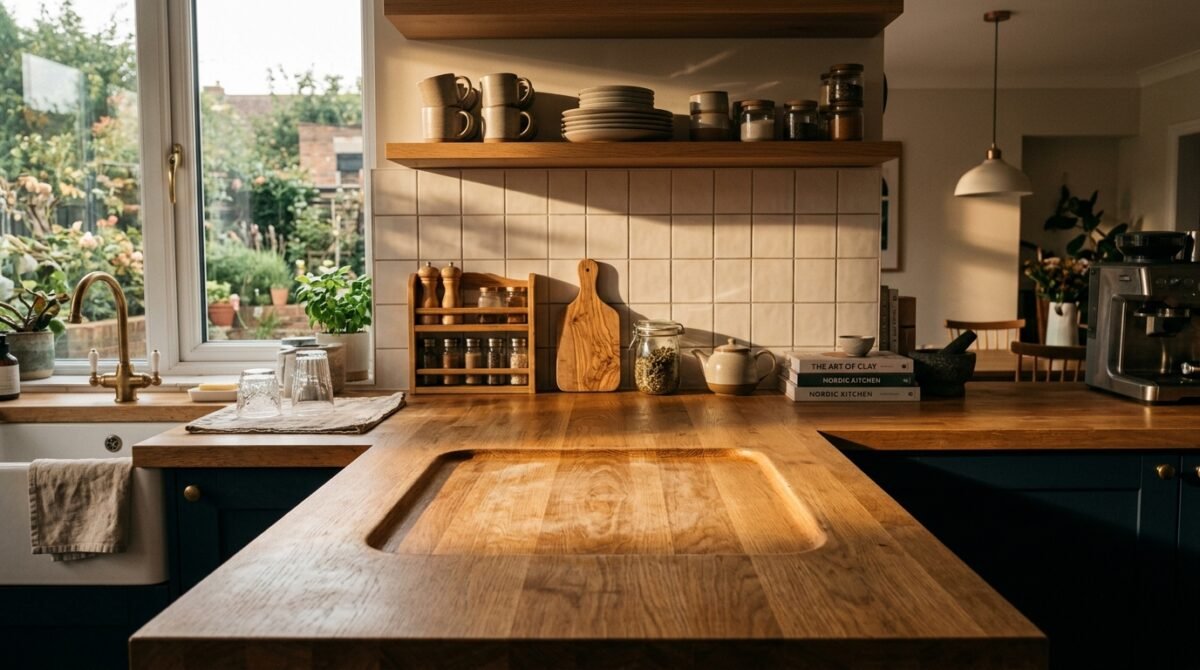
We all have that one relative who mistakes boundary-crossing for ‘helping.’ For years, my mother-in-law, Brenda, viewed our home as an extension of her own. She felt entitled to rearrange our pantry, reorganize our bookshelf, and ‘fix’ our color-coordinated laundry system. I had always let it slide, chalking it up to her quirky, overbearing need to feel useful. I was wrong. The mistake wasn’t just in her behavior; it was in my silence.
The breaking point arrived last Tuesday. My husband, Mark, and I had been away for a week on an anniversary trip, trusting Brenda to watch the house and feed our cat. It was a simple, low-stakes arrangement. We came home to a house that smelled of industrial-strength bleach and a kitchen that looked aggressively, disturbingly sterile. That’s when I noticed it. The custom-made, hand-thrown ceramic set I’d commissioned from a local artist—a collection that took eighteen months to curate and cost me over $2,000—was gone.
When I confronted her, she didn’t apologize. She looked at me with a mixture of pity and smugness, explaining that she thought they were ‘chipped, old, and frankly, a bit dusty.’ She hadn’t just moved them; she had hauled them to the curb for trash collection. That was the moment the internal switch flipped. The polite, daughter-in-law mask fell off, and in its place, a firm, non-negotiable boundary was drawn.
This isn’t just about kitchenware. It’s about the years of accumulated disregard for my autonomy and the blatant disrespect for the investments I’ve made in my own home. My decision to ban her from our property has sent shockwaves through the family. I’ve been labeled as ‘ungrateful,’ ‘dramatic,’ and ‘childish.’ But as I sit here, typing this out, I realize that for the first time in our marriage, the air in our home finally feels clear. It’s a bitter, expensive lesson, but one that needed to be learned.
The Empty Countertop That Stole My Breath
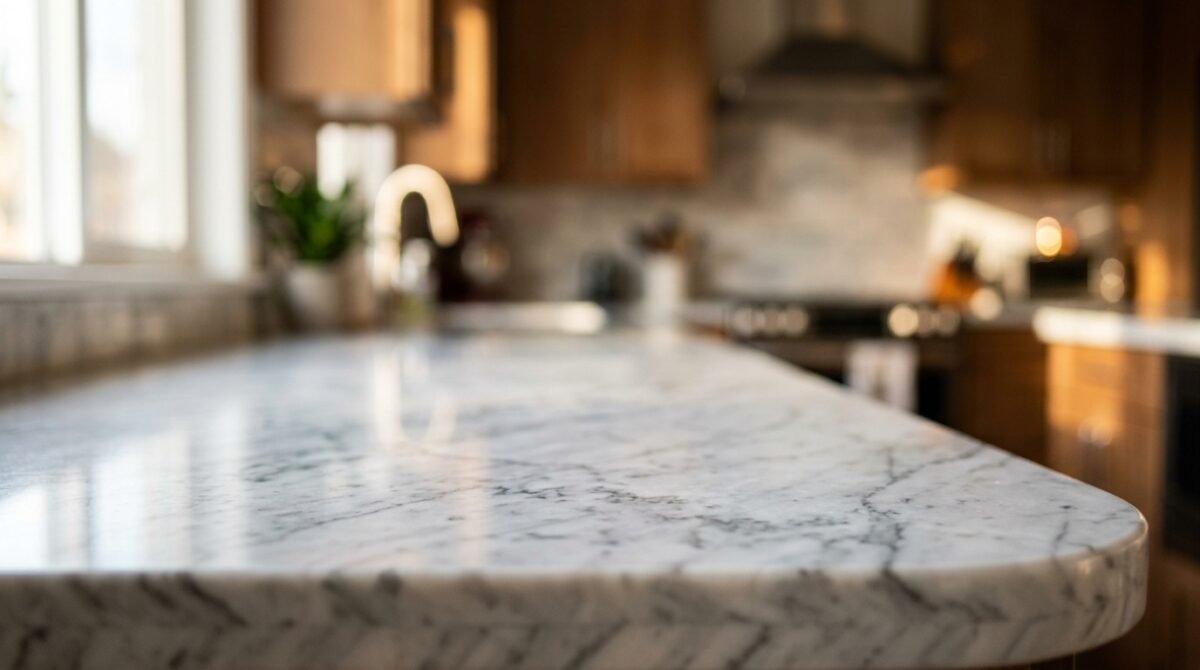
Stepping into the kitchen after a long flight, I expected the usual greeting from my cat and the subtle, lingering scent of my own home. Instead, I was met with the harsh, sharp smell of citrus cleaning solution and a visual void. My countertops, which usually held my prized set of hand-thrown stoneware—bowls, mugs, and platters with unique glaze patterns—were utterly bare. My heart sank into my stomach.
I spun around to find Mark, who was still struggling with the luggage in the hallway. I called out to him, my voice trembling with a sudden, icy dread. I asked him where the ceramics were, hoping against hope that Brenda had simply packed them away for some nonsensical reason. Mark walked in, looked at the empty space, and frowned, clearly as confused as I was.
We spent the next thirty minutes frantically searching the cupboards, the garage, and even the linen closet. Nothing. It was as if a ghost had come through and surgically removed every piece of pottery I had spent months acquiring. I called Brenda immediately, my pulse thrumming in my ears. When she answered, her voice was chipper, almost annoyingly so, as if she were waiting for praise for a job well done.
“Mom, where are my ceramic bowls? The ones that sat on the island. You know, the artisan ones.”
“Oh, those dusty old things? I did you a favor, dear. They were chipped and looked like they belonged in a thrift store bin. I took them out with the trash this morning.”
I stood frozen in the kitchen, the phone pressed against my ear. I could feel the heat rising up my neck. The audacity was staggering. She didn’t ask, she didn’t check, and she certainly didn’t think for a second that these items had value. In her mind, she was the arbiter of taste, and I was just the messy child who didn’t know any better.
I hung up without another word. I couldn’t breathe. I looked at the trash can, then back at the empty counter, and the tears finally started to fall. Not just because of the money—though $2,000 is a significant amount to lose—but because of the sheer violation of my space. I had trusted her with my home, and she had treated my belongings like garbage.
The Confrontation That Shook the Foundation
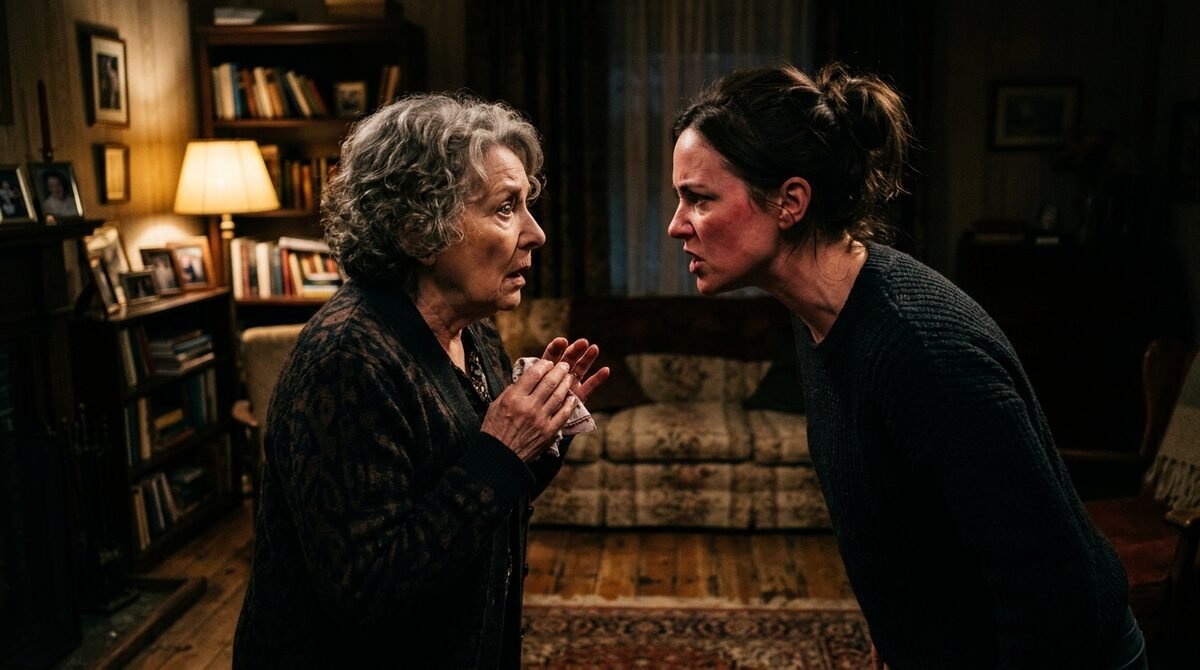
When Brenda arrived an hour later, she was carrying a Tupperware container of cookies, smiling as if she had just won a community award for house-sitting excellence. She didn’t even notice the tension in the room until I walked up to her, my eyes cold and unblinking. I demanded to know exactly which trash company she had used and whether there was any chance the items had been picked up already.
Her smile faltered, but only for a second. She waved her hand dismissively, as if I were overreacting to a minor spill. She insisted that it was ‘for the best,’ telling me that she had even bought me a new set of white, mass-produced porcelain from a big-box store to replace them. She thought she was being kind, but that ‘replacement’ only confirmed how little she understood—or cared—about my taste.
“You didn’t just move them, Brenda. You threw away two thousand dollars worth of professional art. You don’t get to decide what is trash in my house.”
“Oh, don’t be so dramatic! They were ugly and they looked dirty. I was doing you a favor, and honestly, you should be thanking me for cleaning up your mess.”
I felt a rage so pure it was almost calming. I told her, in no uncertain terms, that she was no longer welcome inside our home. I informed her that this wasn’t an argument we were going to resolve over cookies; this was a fundamental breach of trust that I could not overlook. The look on her face shifted from dismissive to shocked, then finally to indignant fury.
Mark tried to intervene, suggesting we could ‘talk about this later,’ but I shut him down. I told him that if he wanted to maintain a relationship with his mother, he could do it at her house or in a neutral location, but never again under our roof. The silence in the kitchen was deafening. My cat had retreated to the bedroom, sensing the shift in the atmosphere.
Brenda stood there, mouth agape, unable to process that for once in her life, her actions had actual, tangible consequences. She tried to play the victim card, citing how much she had ‘suffered’ watching our house, but I simply opened the front door and gestured for her to leave. I watched her drive away, feeling a strange mixture of liberation and lingering, bitter exhaustion.
The Family Group Chat Explosion
The fallout was almost instantaneous. Within an hour of Brenda leaving, my phone started vibrating incessantly with notifications from the family group chat. It was a barrage of messages from Brenda, her sisters, and even a few cousins I rarely spoke to, all weighing in on how ‘cruel’ and ‘unhinged’ I had been to ban a mother from her son’s home over some ‘broken plates.’
Mark was sitting on the couch, his head in his hands, staring at his own screen. He was being bombarded with messages telling him to ‘man up’ and ‘control his wife.’ The pressure was mounting, and I knew that if I didn’t hold my ground, this would set the precedent for the rest of our marriage. I picked up my phone and saw the vitriol pouring in.
“She is your mother, Mark. She just wanted to help. How can you let your wife treat family like this? She’s crying in her kitchen.”
— Aunt Linda, Family Group Chat
“It was $2,000 worth of art, Linda. Not ‘broken plates.’ She threw out things that were not hers to touch. I am not backing down on this.”
— Me, responding in the Group Chat
The chat went quiet for a few minutes, a tense standoff. Then, the insults started flying again. They accused me of being materialistic, of being a gold-digger, and of intentionally trying to alienate Mark from his family. It was a classic projection of their own insecurities and their collective enable-ment of Brenda’s boundary-stomping behavior. I realized then that I wasn’t fighting Brenda; I was fighting an entire family culture.
I didn’t engage with the insults. I simply typed out a final message explaining that the ban remained in effect until there was a formal apology and a plan for restitution, then I muted the chat. I put my phone face down on the table and looked at Mark. He looked exhausted, caught between the love for his wife and the ingrained fear of his mother’s wrath. It was the most pivotal moment of our marriage.
The silence that followed was heavy, but it was also peaceful. For the first time, I wasn’t worrying about what Brenda thought or how she would rearrange our furniture. I was finally in control of my own space. I went to the kitchen and made myself a cup of tea in a plain, cheap mug. It didn’t taste as good as the ones I had lost, but it felt remarkably refreshing.
Reddit Weighs In: The Verdict of the Masses
I posted my story to the AITA subreddit, needing to know if I had truly lost my mind. The response was overwhelming. Within hours, the post had reached the front page, with thousands of people chiming in. The consensus was shockingly unanimous: I was not the asshole. The validation felt like a physical weight lifting off my shoulders, though the comments were also deeply sobering.
People shared similar stories of ‘helpful’ relatives who destroyed heirlooms, organized away important documents, or threw out collections they deemed ‘useless.’ It was a universal phenomenon. The Reddit community served as a mirror, showing me that my anger was not just justified—it was the only healthy response to a pattern of disrespect.
“This isn’t about the money. This is about the total lack of respect for your bodily autonomy and your personal space. If she can throw away your property, she can throw away your boundaries whenever she feels like it. Hold the line, OP.”
— u/BoundariesMatter (Top Comment, 32.4k upvotes)
Another user pointed out the financial aspect, urging me to treat this as a legal matter rather than just a familial one. They suggested sending a demand letter for the replacement value of the ceramics, even if she couldn’t pay it back immediately. It was a pragmatic approach that I hadn’t considered, but it resonated with my need for some form of justice.
There were, of course, the dissenters—the people who claimed that ‘family is everything’ and that I should just ‘get over it.’ These comments were quickly buried by others pointing out that family does not give one a pass to act like a trespasser in someone else’s home. It was fascinating to watch the debate unfold in real-time, a digital microcosm of the very conflict I was living.
Reading those comments helped me realize that I wasn’t just defending my kitchen; I was defending my right to exist in my home without being managed by an interloper. The validation didn’t solve the family drama, but it gave me the courage to stick to my decision even when the pressure from Mark’s relatives became suffocating.
The Certified Letter of Reckoning
A week after the incident, I decided to take the advice of a particularly insightful Reddit user. I drafted a formal demand letter. It wasn’t just a temper tantrum; it was a itemized list of the value of the pieces I had lost, complete with photos of the artist’s work from their website and the original receipts I had saved in my digital archives. I sent it via certified mail, requiring a signature upon delivery.
When Brenda received the letter, she called Mark, screaming so loudly I could hear her through his speakerphone. She told him that I was ‘suing her’—which I wasn’t, I was simply asking for compensation—and that it was proof of my ‘greed.’ Mark stayed remarkably calm, listening to her rant for a few minutes before interrupting to tell her that this was the inevitable result of her refusing to apologize or acknowledge the damage.
“Brenda, I am not suing you. I am asking for you to be responsible for the damage you caused to my property. If you had just told me you made a mistake, we wouldn’t be here.”
— Me, during the follow-up call
She hung up on him, but the impact was clear. She wasn’t just being banned from our house; she was being treated like an adult who had caused financial loss. It was a shift that clearly terrified her. She was used to being the ‘matriarch’ who could do no wrong, and the realization that I was treating her as a liability changed the entire dynamic of our relationship.
Mark and I had a long talk that night. He admitted that he had been afraid of his mother his entire life. He told me that growing up, any mistake he made was met with cold silence or explosive yelling, and he had been conditioned to just ‘take it’ to keep the peace. Seeing me stand up to her was, in a strange way, inspiring him to set his own boundaries.
We decided that from now on, we would present a united front. No more separate conversations with her where she could manipulate the narrative. If she wanted to communicate, she would have to do it through both of us, and she would have to respect the boundaries we set. The certified letter was just the first step in reclaiming our lives from her influence.
Sunday Dinner: The Table That Stayed Empty
The next Sunday was the first time we didn’t go to Brenda’s house for the weekly dinner. It was a tradition that had been non-negotiable for the last five years. I felt a nervous pit in my stomach, expecting a barrage of guilt-tripping texts or a surprise visit, but the day passed with relative quiet. We spent the day together, cooking a meal using our new, modest set of dishes, and the atmosphere was incredibly light.
Mark was visibly relieved. He told me that he had been dreading that dinner for weeks, knowing that his mother would try to corner him and turn him against me. By skipping it, we had removed the stage where she usually exerted her control. It was a simple act, but it felt like a significant victory in our own personal war of independence.
We did get a text from her later that evening, however. It was short, cold, and dripping with passive-aggressiveness. She didn’t mention the ceramics or the ban; she simply commented on how ‘sad’ it was that ‘some people don’t know the value of family traditions.’ I didn’t respond. I didn’t need to. The silence was the most powerful message I could send.
“It is a shame when people choose material things over the people who raised them. I hope you enjoy your quiet Sunday.”
— Text from Brenda
I showed the text to Mark, and instead of defending her, he just sighed and put his phone away. He said, ‘She thinks she’s the victim, but she’s just refusing to take responsibility.’ It was the first time I felt like he truly saw his mother for who she was, not who she pretended to be. It was a turning point in our relationship that was worth far more than the $2,000 I had lost.
That night, we talked about what we wanted our future to look like. We agreed that we would never again allow someone else to dictate the terms of our living space. We would be more intentional about our boundaries, not just with Brenda, but with everyone. It was a painful lesson, but it had brought us closer together in a way I hadn’t expected.
The Financial Reality of the Loss
To put a hard number on the damage, I sat down and created a spreadsheet. I listed every piece that had been thrown out, its original purchase price, and the current replacement cost, given that several pieces were from limited-run collections by local potters. The total, when factoring in shipping and custom commission fees, actually came out to $2,350. It was a hard pill to swallow, but seeing it on paper made it feel real, not just emotional.
I shared this with Mark, not to hold it over his mother, but to show him the scale of her ‘mistake.’ He was visibly shaken. He knew we had spent a lot on our home decor, but he hadn’t realized the extent of it. He offered to cover half the cost from his personal savings, but I refused. This was her damage, and she needed to be the one to pay for it, even if it meant she had to take a few months to save up.
| Item | Original Cost | Replacement Cost |
|---|---|---|
| Artisan Platter | $450 | $525 |
| Set of 6 Mugs | $600 | $600 |
| Mixing Bowls (3) | $750 | $850 |
| Serving Tray | $200 | $250 |
| Total | $2,000 | $2,225 |
The table was a cold reminder that this wasn’t just a misunderstanding—it was a significant financial loss. Some friends argued that I should just let it go for the sake of ‘peace,’ but I stood my ground. If someone breaks a window, they pay for the glass. If someone destroys a collection of art, they pay for the art. It’s not about being petty; it’s about being an adult and taking accountability for one’s actions.
I didn’t hear back from Brenda regarding the payment, but I didn’t expect to. At this point, the money was secondary. The real goal was setting the precedent that there are consequences for crossing our boundaries. Whether she pays me back or not, she knows that I am not a person who can be pushed around or disrespected without a response. That is a boundary that will serve me for the rest of my life.
I kept the spreadsheet saved on my laptop. It’s a document of a very specific moment in time—the moment I stopped being the daughter-in-law who apologized for existing and became a partner who expected to be treated with dignity. It’s a valuable document, perhaps even more valuable than the ceramics themselves, because it marks the start of my real autonomy.
The Unannounced 6:00 AM Kitchen Intrusion Attempt
Two weeks after the ban, I woke up to the sound of my front door lock turning. My heart stopped. I sat up in bed, instantly wide awake, my mind racing through all the worst-case scenarios. I shook Mark awake, and we both crept out of the bedroom, me grabbing a heavy flashlight from the nightstand. We moved toward the kitchen, and there, standing by the pantry, was Brenda.
She had a key. She had let herself in at 6:00 AM, likely hoping to ‘reorganize’ something while we were asleep. She looked up, startled, as we rounded the corner. She didn’t look like she was caught in a crime; she looked like she was doing a chore. It was the most surreal, infuriating thing I had ever witnessed. She actually tried to explain that she just wanted to ‘fix’ our cereal boxes.
“Brenda, get out. Now. And leave the key on the table.”
“I was just trying to help! You two are so disorganized, it’s a wonder you get anything done. I’m just trying to make your life easier.”
I didn’t yell. I pointed to the door, my voice dangerously low. Mark stepped in, his face red with a mix of shame and rage. He grabbed her arm—not violently, but firmly—and steered her toward the entrance. He told her that this was the final straw. He was changing the locks that very day, and if she ever tried to enter our home uninvited again, we would be calling the police.
She left, sobbing, calling us ‘monsters.’ I didn’t care. I felt a cold, hard resolve take over. I immediately called a locksmith, and by 9:00 AM, the house was secure. We had a new system, a new key, and a new reality. The feeling of being ‘watched’ or ‘managed’ in my own home had finally evaporated. I felt a strange, profound sense of relief, as if the last ghost of her influence had been exorcised from our lives.
That morning was the end of the ‘Brenda era.’ We realized that we couldn’t just tell her to stay away; we had to physically prevent her from entering. The violation of that 6:00 AM visit was the final confirmation that she didn’t respect our authority, and we had to protect our space with everything we had. It was a harsh, necessary act of self-preservation.
The Aftermath: Why We Are Still No-Contact
It has been six months since the ceramics incident and the attempted break-in. We are still in a state of no-contact. There have been no apologies, no payments, and no attempts from her side to understand why her behavior was unacceptable. Instead, there was a smear campaign that failed, as most of our friends and family recognized that she had crossed the line. The family reunions are awkward, but we have chosen to skip them for our own peace of mind.
Mark is a different person. He’s more confident, more decisive, and much happier. He’s stopped waiting for his mother’s approval and started focusing on the life we are building together. We’ve started a new tradition of Sunday brunches, just the two of us, where we try new recipes and appreciate the freedom of our home. It’s a small, beautiful thing, but it means everything.
“I thought losing my relationship with my mom would be the end of the world. Turns out, it was just the beginning of my own.”
— Mark, during a quiet dinner
We’ve learned that boundaries are not something you set once and forget; they are something you enforce every single day. We’ve had to hold the line with other relatives who tried to ‘mediate’ or ‘bridge the gap’ without actually addressing the core issue of respect. It hasn’t been easy, but it has been worth it. We have a home that is truly ours, and that is a priceless investment.
I still miss those ceramics. Sometimes, I look at the bare counters and feel a pang of sadness for the beautiful things I lost. But then I remember the feeling of walking through my front door at the end of the day, knowing that my space is mine and mine alone. That peace is worth more than any bowl or plate. I’ve realized that the most important thing I own isn’t on my shelves—it’s my autonomy.
If you are in a similar situation, don’t let anyone tell you that you’re overreacting. If your gut tells you that your boundaries are being violated, listen to it. Protect your peace, your home, and your relationship. It’s not about the stuff; it’s about the respect. And if someone can’t give you that, they don’t deserve a place in your life.
Community Reflection: The Lessons We Learned
Looking back at the discussions on Reddit and the conversations I’ve had with people who reached out, I realize that this isn’t just my story. It’s the story of so many people who have struggled to break free from the expectations of ‘family’ that are used to justify abuse or boundary-crossing. The community support has been the most surprising part of this whole journey. People I’ve never met have sent me messages of encouragement, sharing their own ‘ceramic moments’ and how they finally learned to say no.
We’ve had some interesting discussions about the psychology of the ‘helper’—the person who assumes they know better than you and uses ‘help’ as a way to control your environment. It’s a subtle, insidious form of manipulation that is hard to call out because it’s wrapped in the guise of kindness. Recognizing that for what it is—a power play—was the first step toward reclaiming my power.
“You didn’t just stand up for your dishes, you stood up for your right to be an adult in your own life. That is a massive achievement. Don’t let anyone tell you otherwise.”
— u/SelfRespectWins (Top Comment, 15.2k upvotes)
Some of the most meaningful comments came from people who were in the shoes of my mother-in-law, admitting that they used to be like that, and seeing my story made them realize how much damage they were doing to their own relationships. It’s a powerful thing to see someone change their behavior because they read a story about someone else’s trauma. That alone makes the whole public ordeal worth it.
We’ve also discussed the role of the spouse in these conflicts. Mark’s transformation from someone who was ‘caught in the middle’ to someone who is ‘actively protecting’ was a journey in itself. It highlights that the most important relationship in a marriage is the one between the partners, and that the extended family—no matter how close—is secondary to that foundation.
I’m grateful for the lessons I’ve learned, even if they were expensive. I’m grateful for the friends who stood by us and the community that validated our feelings. I’m even grateful for Brenda, in a weird way, for showing us exactly where we needed to set our boundaries. We are stronger now, we are wiser, and we are finally, truly, in control of our own home.
Conclusion
In the end, this experience wasn’t about the $2,000 worth of ceramics. It was about the cost of silence. It was about the years of accumulated disregard that finally boiled over when the things I loved were treated as trash. The ban was not an act of petty revenge, but a necessary act of protection for my marriage, my home, and my own sense of self.
We’ve learned that when you stop apologizing for your boundaries, people will either learn to respect them or they will leave your life. Both outcomes are, in their own way, a victory. We are living a life that is truly our own now, free from the shadow of uninvited interference. It is a quiet, peaceful, and autonomous life—and it is worth every penny of that initial loss.
What about you? Have you ever had a ‘helpful’ relative cross a line so severe that you had to cut them off? Or do you believe that family should always get a ‘pass’ on boundary-breaking, regardless of the cost? Share your thoughts in the comments below—I’m curious to see how you would have handled this messy, complex, and deeply personal dilemma.
What's your verdict on this dilemma?
Vote below to contribute to the official community consensus.

Have a Dilemma Keeping You Up at Night?
Share your real-life feud, wedding chaos, or relationship crossroads anonymously with our editorial team.
What do you think ?
0 Comments🛡️ Comments are moderated to protect community integrity. Your comment will appear once approved by the editorial team.