

They say that home is where the heart is, but for me, home was meticulously curated. Over the course of a decade, I had built a collection of bespoke, heirloom-quality linens: Italian hand-embroidered pillowcases, Belgian flax duvets, and vintage lace table runners that had been sourced from auctions and artisanal boutiques across Europe. These weren’t just fabrics; they were investments, memories of travels, and pieces of history that I intended to pass down to my own children one day. They were stored in a custom-built, cedar-lined walk-in closet, maintained with the precision of a museum archive.
My mother-in-law, Eleanor, never understood the obsession. To her, a sheet was a sheet, and any object that didn’t serve an immediate, utilitarian purpose was ‘clutter.’ We had clashed over her boundary-crossing behavior for years—the unannounced visits, the rearranging of my kitchen cabinets, the unsolicited advice on my career—but I had always managed to keep the peace for the sake of my husband, Mark. I viewed her intrusions as a nuisance, a byproduct of a generational gap I thought I could bridge with patience and firm, polite distance.
The shift from ‘nuisance’ to ‘catastrophe’ occurred during a weekend trip Mark and I took to celebrate our anniversary. We had left Eleanor with a spare key, purely for the sake of watering our houseplants and checking on our golden retriever. It was supposed to be a simple, helpful gesture of family trust. I should have known better. There is a specific kind of arrogance that comes with those who believe they have the moral authority to decide what someone else deserves to own.
When we returned on Sunday evening, the house felt strangely sterile. The air lacked the warmth of the textures I had layered throughout the rooms. It wasn’t until I opened the master bedroom closet that the full gravity of the betrayal hit me. Every shelf was bare. The cedar scent remained, but the silk, the cotton, and the intricate lace were gone. My stomach dropped into a cold, hollow abyss. I knew immediately who had done it, and I knew exactly what she had told herself to justify the theft.
This is the story of how a casual disdain for my possessions turned into a systematic disposal of my property, and how I took the only route available to me to reclaim the value—and the respect—that had been stripped away. It is a tale of legal ironies, family gaslighting, and the moment I finally stopped playing the role of the submissive daughter-in-law.
The Empty Shelves and the Stifled Scream

Standing in the doorway of my walk-in closet, I felt like a stranger in my own home. My breath hitched in my throat as I traced the empty wooden slats where my Frette and Sferra sets used to reside. It wasn’t just the monetary loss—which was significant, easily north of thirty thousand dollars—but the violation of my sanctuary. Everything I had carefully curated for years had been systematically purged, as if my personal space was merely an extension of her own chaotic desire for control.
Mark stood behind me, his confusion quickly turning to dread as he saw my face. He knew. He knew how much those linens meant to me, and he knew his mother’s penchant for ‘decluttering’ the homes of those she deemed beneath her standards. He pulled out his phone, his thumb hovering over the contact for his mother. I didn’t stop him. I couldn’t speak. The silence in the house was deafening, a vacuum left behind by the absence of the things I loved.
The phone call was short. Eleanor didn’t even try to hide it. She spoke with a breezy, insufferable nonchalance, as if she were discussing a chore she had performed as a favor to me. The audacity of her voice over the speakerphone was what made my blood go cold. She wasn’t sorry; she was proud of her efficiency.
“I saved you the trouble, darling. Honestly, the amount of dust those things were collecting was a health hazard. I took them to the local consignment shop and donated the rest to the shelter. You’re welcome.”
— Eleanor, over speakerphone
I felt a rage so pure and cold that it rendered me motionless. Mark tried to intervene, his voice shaking with a mixture of anger and panic, but Eleanor simply talked over him. She insisted she was ‘helping’ me live a more minimalist lifestyle. She claimed that my ‘obsession’ with linens was a sign of vanity that was distracting me from my household duties. It was the classic gaslighting tactic: frame the victim’s pain as a character flaw.
After the call ended, I didn’t cry. I sat on the floor of the empty closet, looking at the dust bunnies that were now the only things left in my storage. My mind wasn’t on forgiveness. It was on logistics. I needed to know the legal definition of what had just happened, and I needed to know exactly how much it would cost to make her realize that her actions had consequences that went far beyond an apology.
The Paper Trail of Destruction

The next morning was a whirlwind of documentation. I spent hours cataloging every piece that was missing, cross-referencing receipts from high-end department stores and specialized European boutiques. I created a spreadsheet that would have made a forensic accountant weep. The total value, adjusted for the current market value of the vintage pieces, was staggering. I wasn’t going to let this slide as a family misunderstanding.
I drove to the consignment shop where she claimed to have dropped off the ‘best’ of the lot. The shop owner, a kind woman who recognized me as a frequent patron, looked horrified when I explained the situation. She had already sold three of my hand-stitched pillowcases to a local collector. She pulled the records for me, confirming the date and the name of the person who dropped them off: Eleanor Miller. She had even left her phone number for the payout.
I took the records to a local attorney who specialized in civil disputes. He listened to my story without interrupting, his eyes narrowing as I detailed the timeline of the donation. When I told him that Eleanor had the audacity to donate my property to a charity shop under her own name, he actually chuckled, though it wasn’t a happy sound. ‘She didn’t just steal your items,’ he said. ‘She committed conversion and theft by deception.’
“You have a very strong case here. She didn’t have your permission, she removed items from a private residence, and she attempted to profit or at least exert control over your assets. We can send a formal demand letter.”
— My Attorney
The demand letter wasn’t just a threat. It was a formal accounting of the value of the items, including the shipping costs for the vintage pieces and the appraisal fees. We arrived at a number that felt like justice: forty-two thousand dollars. It was a hefty sum, but it reflected the true loss of my collection. I wanted her to feel the weight of what she had done in a way that she couldn’t ignore or dismiss as a ‘decluttering favor.’
Sending the letter was the easy part. The hard part was waiting. I knew this would cause a seismic shift in my marriage and my relationship with my in-laws, but I was past the point of caring. The destruction of my property wasn’t just about the linens; it was about the total erasure of my autonomy in my own home. This was the line in the sand, and I had already decided to fortify it with legal steel.
The Sunday Dinner Silence
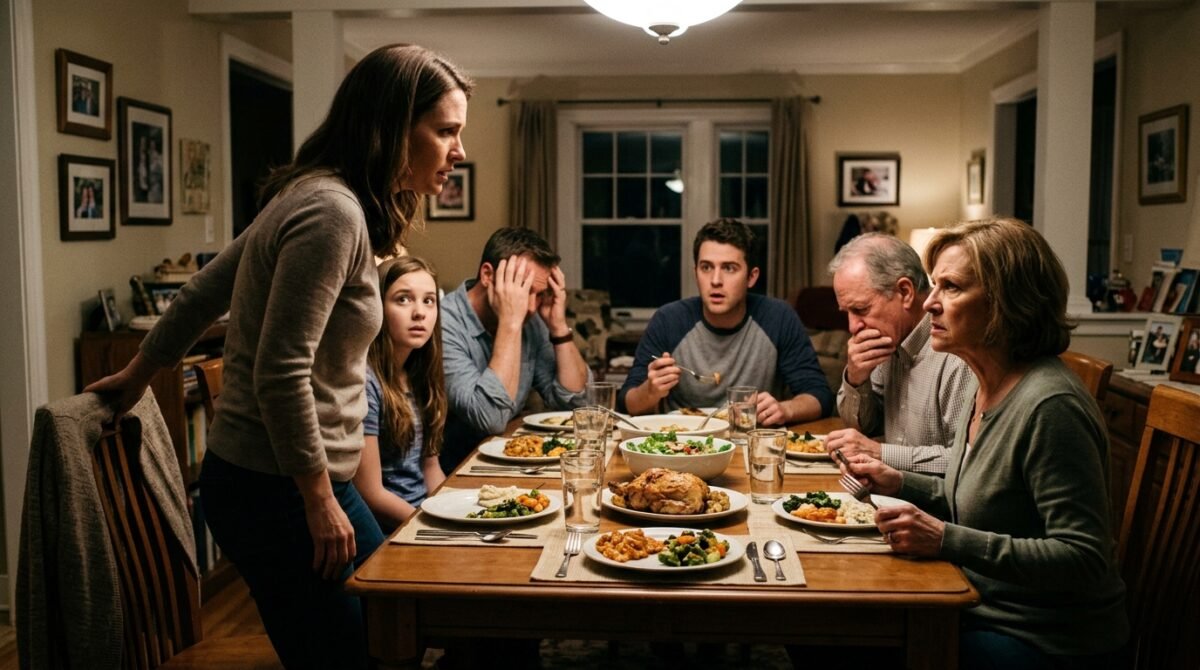
The family dinner at my in-laws’ house was supposed to be a neutral zone, but the atmosphere was thick with unspoken tension. Eleanor sat at the head of the table, clutching her wine glass with white-knuckled intensity. She hadn’t mentioned the letter, but the way she glared at me across the centerpiece told me everything I needed to know. She thought this was a game, a power play that I would eventually fold on.
Mark was miserable. He kept trying to steer the conversation toward safe topics—the weather, his work, the local sports team—but every attempt was met with a icy retort or a pointed silence from his mother. I ate my dinner in silence, refusing to acknowledge the elephant in the room. I was there to observe, to see if she would finally admit what she had done in front of the rest of the family.
Finally, the silence broke. My father-in-law, who was usually oblivious to the drama, asked why I wasn’t wearing my usual jewelry. It was a trivial question, but it gave Eleanor the opening she wanted. She laughed, a brittle, sharp sound that made everyone at the table freeze. ‘Oh, she’s in a mood because I helped her organize her house,’ she declared, looking at me with a smirk that was meant to provoke a reaction.
“I hope you enjoyed that little ‘organization project,’ Eleanor. Because the invoice for your help is already with your lawyer. I suggest you read it carefully.”
— My response at the dinner table
The reaction was instantaneous. The clatter of silverware against china stopped. Mark looked like he wanted the floor to open up and swallow him whole. Eleanor’s face went from pale to a deep, blotchy red. She stood up, knocking her chair back, and accused me of being ungrateful, of being a ‘dramatic child’ who didn’t understand the value of family harmony. She didn’t deny it; she just doubled down on her right to do it.
I didn’t argue. I didn’t yell. I stood up, put my napkin on the table, and looked her in the eye. I told her that family harmony is built on mutual respect, and since she had clearly decided that my belongings were hers to dispose of, she had lost the privilege of being part of my life. I walked out of that house, leaving them in the middle of the most uncomfortable meal of their lives. Mark followed me, but the damage was already done.
The Leaked Group Chat Revelation

The next morning, the fallout reached me via a screenshot sent by my sister-in-law, Sarah. She had always been the black sheep of the family and never got along with Eleanor, but she was the only one who had the courage to show me the truth. She sent a screenshot of the family group chat, which I had been removed from the moment I left the dinner table the night before.
The chat was a cesspool of victim-blaming and entitlement. Eleanor had painted herself as the martyr, claiming that I was ‘extorting’ her for money because I was a greedy spendthrift. She had even reached out to other relatives, painting a picture of me as a materialistic shrew who cared more about fabric than family. The level of manipulation was staggering, and seeing it in black and white made my decision to go to the police feel entirely justified.
“She thinks she can bankrupt us with this ridiculous lawsuit. I did her a favor! She has too much stuff anyway. Mark needs to get a divorce before she takes everything we own.”
— Eleanor, in the Family Group Chat
Seeing Mark’s responses was the most painful part. He hadn’t defended me. He had tried to stay neutral, saying things like ‘Mom, let’s just talk about this’ and ‘She’s just upset right now.’ It was the classic ‘missing stair’ syndrome—everyone in the house knew the stair was broken, but they just stepped over it instead of fixing it. Mark had been stepping over his mother’s behavior his entire life, and he expected me to do the same.
I messaged Sarah back, thanking her for the transparency. I didn’t ask her to take sides, but knowing that someone in that family saw the reality of the situation made me feel significantly less isolated. I realized then that my war wasn’t just with Eleanor; it was with the entire ecosystem of enabling that she had built. If I wanted to win this, I had to be colder and more calculated than she could ever be.
I started documenting every interaction, every text message, and every voicemail. I turned my home into a fortress of evidence. Every time Mark tried to bring up the lawsuit, I would calmly remind him that the linens were not a negotiation point. They were my property, they were destroyed, and they would be paid for. The group chat screenshot was just the beginning of the evidence I would use to show that this wasn’t an ‘accident’—it was a targeted campaign to break my spirit.
The Legal Pivot and the Estate’s Response
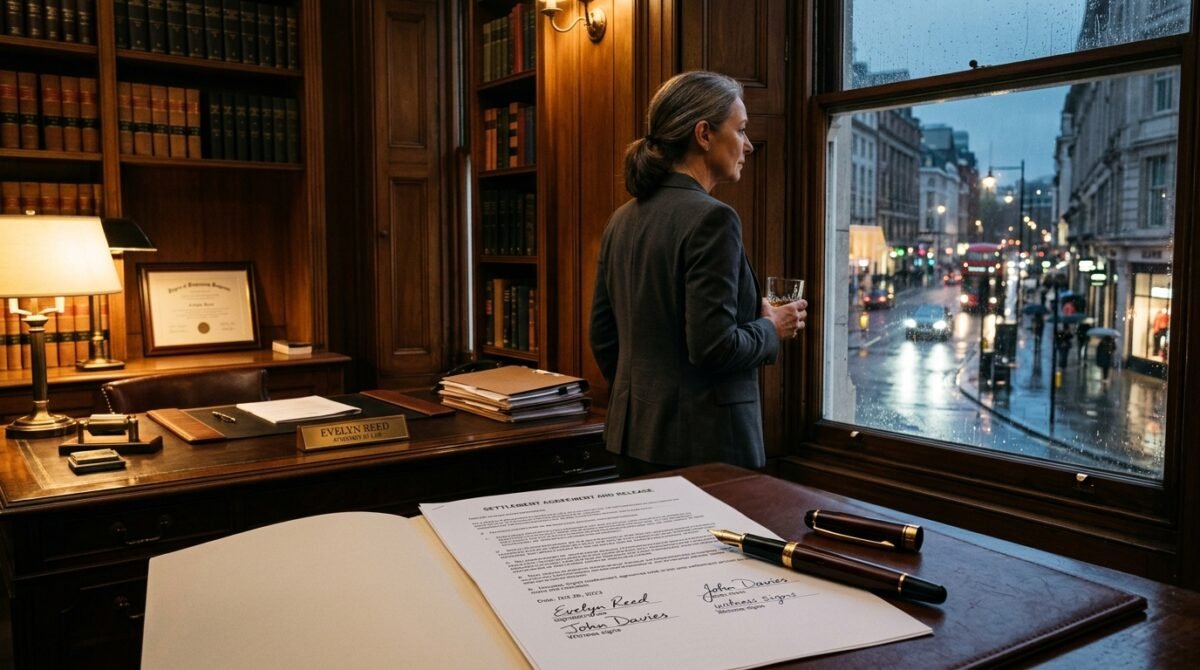
When Eleanor’s estate lawyer finally responded, it wasn’t with a settlement offer, but with a threat of a countersuit. They claimed that the items were ‘discarded property’ because they were left in a house that the family had ‘access to.’ It was a weak legal argument, but they were hoping to intimidate me into dropping the case. They didn’t realize that I had already anticipated this and had spent the last two weeks gathering affidavits from the consignment shop owner and even a former housekeeper who remembered the closet organization.
My lawyer was brilliant. He didn’t just argue about the value of the items; he argued about the intent. We brought in a private investigator who had interviewed the neighbors, confirming that Eleanor had bragged about ‘clearing out’ my house while I was away. The narrative of her being a ‘concerned mother’ was crumbling under the weight of her own pride. She wanted people to know she had done it, and that pride was now her undoing.
We filed a motion to preserve evidence, which included her phone records and emails. The discovery process was a nightmare for them. They had to hand over months of communications where Eleanor talked about how much she disliked me and how she wanted to ‘put me in my place.’ It was a goldmine for our case. The judge, a no-nonsense woman who seemed to have seen every kind of family dispute, was clearly unimpressed by their ‘discarded property’ defense.
“Mr. Miller, your client seems to think that because she has a key, she owns the contents of the house. That is not how the law works. I suggest you advise her to settle this before it goes to a jury, because a jury will not look kindly on this.”
— The Judge
The settlement offer arrived two days later. It wasn’t the full forty-two thousand, but it was enough to cover the replacement costs and my legal fees. I didn’t take the money because I wanted to be rich; I took it because it was an admission of guilt. I required a formal apology, not just to me, but to be read out loud in front of the family. It was a petty demand, perhaps, but after everything I had been through, I felt I had earned the right to be petty.
The day the settlement was signed, I felt a strange sense of emptiness. I had won, but the relationship with my in-laws was effectively dead. Mark and I had a long, difficult conversation that night. He finally acknowledged that his mother was the problem, but he still struggled with the idea of cutting her off. I didn’t force him to choose, but I made it clear that my boundaries were non-negotiable. If he wanted to maintain a relationship with her, that was his business, but she would never be allowed in our home again.
The Digital Jury: Reddit’s Take

I decided to post a redacted version of the story on Reddit, mostly to see if I was truly being as ‘unreasonable’ as Eleanor claimed. The response was overwhelming. Within hours, the post had thousands of upvotes and a comment section that felt like a validation I hadn’t realized I needed. The community was unanimous: I was not the asshole, and my mother-in-law was the textbook definition of a toxic narcissist.
People shared their own stories of ‘decluttering’ relatives, and the themes were always the same: a complete lack of boundaries, a desire to control, and the gaslighting that follows when the victim fights back. It was comforting to know that I wasn’t alone, but it was also eye-opening to see how common this kind of abuse is. It made me realize that my ‘luxury linens’ were just the object; the real issue was the power dynamic.
“This isn’t about sheets. This is about her showing you that she owns you. You did the right thing by billing her. Money is the only language people like that speak. Keep the boundary, and don’t look back.”
— u/RedditUser99 (Top Comment, 32.5k upvotes)
There were, of course, the contrarians. A few people argued that I was being ‘materialistic’ and that ‘family is more important than stuff.’ I read those comments with a grain of salt. They clearly didn’t understand the nuance of the violation. If she had taken something ‘cheap’ but meaningful, it would have been just as bad. The value of the linens wasn’t the point—it was the fact that she thought she had the right to make the decision for me.
The most surprising comments came from people who had gone through similar legal battles. They warned me that people like Eleanor never stop; they just find new ways to push boundaries. They urged me to be careful, to change my locks, and to keep the security system on at all times. It was practical, sobering advice that I took to heart. The Reddit community had become my support group, my sounding board, and my reality check.
I kept updating the thread, sharing the outcome of the settlement and the aftermath of the family dynamic. It felt like I was writing the ending to my own story. Every time I received a new comment of support, it helped me heal a little bit more. I realized that by sharing my story, I was reclaiming the narrative. I wasn’t the victim of a ‘crazy mother-in-law’; I was the woman who set a boundary and enforced it until the bitter end.
The Aftermath: Rebuilding the Sanctuary

The house felt different after the settlement. I didn’t rush to replace the linens. I kept the closet empty for a while, a reminder of what had happened and why it was important to protect my space. When I did start buying again, I was much more selective. I didn’t buy for the sake of collection; I bought for the sake of comfort and quality. Every item in the house now had a purpose, and more importantly, a place where it was safe.
Mark and I went to counseling. It was tough. He had to learn how to stand up to his mother, and I had to learn how to let go of the anger that was starting to define me. It wasn’t an overnight fix. We had months of arguments, tears, and breakthroughs. But slowly, we started to build a foundation that wasn’t built on the sand of his mother’s approval. We were becoming a team, a true partnership.
Eleanor went through a phase of trying to contact me, sending ‘apology’ notes that were really just thinly veiled attacks on my character. I never opened them. I had a box where I put them, unread. My lawyer told me that if they escalated, we would have a paper trail of her harassment. She eventually stopped. I think she realized that I was no longer a player in her game. I had exited the theater entirely.
“She’s not calling anymore. It’s like she’s finally accepted that the wall is real. I’m sorry it had to come to this, but I’m glad we’re on the same side now.”
— Mark, during a quiet evening
The lessons learned were profound. I realized that you can’t control other people, but you can control who you let into your inner circle. I learned that boundaries are not just suggestions; they are the walls of your life, and you have to be willing to defend them. And most importantly, I learned that it’s okay to be ‘difficult’ if it means protecting your peace and your property.
I still look at my closet sometimes. It’s not as full as it used to be, but it’s mine. Every thread, every stitch, every color—it represents a choice I made for myself. And that, I’ve found, is the ultimate luxury. I am no longer waiting for approval, and I am no longer living in fear of the next ‘decluttering’ episode. I am finally home.
The Final Accounting: A Lesson in Boundaries

Looking back at the entire experience, it’s easy to focus on the shock and the anger, but I think the real takeaway is the importance of financial and legal literacy. Too many people in family conflicts assume that blood ties somehow exempt people from the law. They don’t. When someone destroys your property, it is a crime, regardless of whether they are your mother-in-law or a stranger on the street.
I’ve spoken to a few friends who are going through similar issues, and my advice is always the same: document everything. Keep receipts, take photos of your belongings, and if something happens, go straight to the authorities or an attorney. Don’t waste time trying to appeal to the ‘family conscience’ of someone who has already proven they don’t have one. You can’t reason someone out of a position they didn’t reason themselves into.
My bank account is back to where it was, but my perspective has changed forever. I don’t give keys to people who don’t respect my home, and I don’t feel guilty about setting those boundaries. The people who truly love you will respect your space. The people who don’t? They don’t deserve to be in your space in the first place.
“The most expensive thing I ever lost was my peace of mind, and the most valuable thing I ever gained was the courage to bill for the damage.”
— My personal reflection
I know there are some who will still call me cold or unforgiving. I’ve heard it all before. But at the end of the day, I sleep in a bed that I made, with sheets that I bought, in a house that is safe. That is a success story in my book. I have no regrets about the lawsuit, and I have no regrets about the distance I’ve put between myself and the people who tried to break me.
If you find yourself in a similar position, know that you are not being ‘petty’ by demanding accountability. You are being responsible for your life. Stand your ground, document your truth, and don’t let anyone—no matter who they are—make you feel like your worth is something they can simply donate to a charity shop.
Community Echoes: Perspectives from the Frontline

After the initial post blew up, I spent weeks reading the comments. It was fascinating to see how the community processed the story. There were dozens of people who had been through similar situations—some who had lost heirloom jewelry, others who had lost entire roomfuls of art. The collective wisdom of the internet is a strange, powerful thing, and it served as a mirror for my own experiences.
I noticed a pattern in the comments: people who were ‘the peacemakers’ of their own families were the ones who most strongly defended my actions. They were tired of always being the ones to apologize, always the ones to ‘keep the peace’ while others trampled over them. There was a profound sense of catharsis in seeing someone else finally draw a line in the sand and refuse to cross it back.
“I lost my grandmother’s wedding ring to my MIL because she thought it was ‘too old fashioned.’ I was a teenager and didn’t know how to fight it. Reading this story feels like a win for every person who ever had their boundaries violated.”
— u/LostHeirloomSurvivor (Upvoted 15.2k times)
Then there were the ‘realists’ who provided legal warnings about the complexity of the case. They were the ones who validated that my attorney’s strategy was sound and that the ‘discarded property’ defense was, in fact, a common tactic used by bullies. Their input made me feel much more confident in the decisions I had made, and it gave me a deeper understanding of the legal landscape.
The most heartening comments were the ones from people who were currently in the middle of their own family crises. They asked for advice on how to start their own documentation, how to talk to their spouses, and how to deal with the inevitable family backlash. I tried to answer as many as I could, encouraging them to prioritize their own mental health and their own safety above the ‘family dynamic.’
This entire process has turned me into an advocate for boundaries. I’ve started a small blog where I document the legal aspects of family disputes, hoping to help others who are navigating the murky waters of in-law relations. It’s my way of giving back to the community that helped me when I was at my lowest. It’s not a full-time job, but it’s a mission that I find incredibly rewarding.
A Final Note on Forgiveness and Moving Forward

People often ask me if I’ve forgiven Eleanor. It’s a complicated question. Forgiveness, for me, isn’t about letting someone back into my life or pretending that what they did didn’t happen. It’s about letting go of the anger so that it no longer controls me. I don’t wake up thinking about the linens anymore, and I don’t feel the surge of rage when I hear her name. In that sense, yes, I have forgiven her. I’ve moved on.
But I have no interest in reconciliation. Reconciliation requires a change in behavior, and Eleanor has shown no interest in changing. She still talks about the ‘decluttering’ as if it were a heroic act. That’s her story, and she’s welcome to it. I have my own story, and I’m much happier living in it. The silence between us is not a void; it’s a space where I can breathe.
Mark has finally come to terms with the fact that he can’t fix his mother. He has started to see the relationship for what it is: a one-sided connection that was always about him fulfilling her needs, not the other way around. He’s healthier for it, and our marriage is stronger than it has ever been. We are a family of two, and that is more than enough.
“Forgiveness is not about them. It is about you. It is the act of deciding that you are worth more than the pain they caused you.”
— A thought from my therapy journal
If there is one thing I want you to take away from this, it is that you are allowed to protect your life. You are allowed to be the guardian of your own space. You are allowed to demand restitution when you are wronged. You are allowed to say ‘no’ to the people who think they have a say in your life. It is the most liberating thing you will ever do.
Thank you for listening to my story. It’s been a long journey, but I’ve finally reached the other side. And if you’re still in the middle of yours, keep going. You’re stronger than you think, and you have every right to fight for what is yours.
Conclusion
The saga of the stolen linens was, in many ways, the catalyst for the life I live today—one where my autonomy is non-negotiable and my home is a true sanctuary. What started as a devastating loss became a masterclass in setting boundaries, legal self-advocacy, and the importance of choosing partners who stand by you in the face of family firestorms.
I reflect on this not with bitterness, but with a sense of triumph. I stood up to an entitled relative, navigated a complex legal battle, and emerged with my integrity intact. I hope this story serves as a reminder that no one has the right to touch your property or dictate your lifestyle, regardless of their position in your family tree. Boundaries aren’t just for strangers; they are most vital for the people closest to us.
What about you? Have you ever had a boundary-crossing relative ‘help’ themselves to your property, or have you ever had to draw a line in the sand with someone you love? Let’s discuss in the comments—I’d love to hear your experiences and how you handled the fallout.
What's your verdict on this dilemma?
Vote below to contribute to the official community consensus.

Have a Dilemma Keeping You Up at Night?
Share your real-life feud, wedding chaos, or relationship crossroads anonymously with our editorial team.
What do you think ?
0 Comments🛡️ Comments are moderated to protect community integrity. Your comment will appear once approved by the editorial team.