
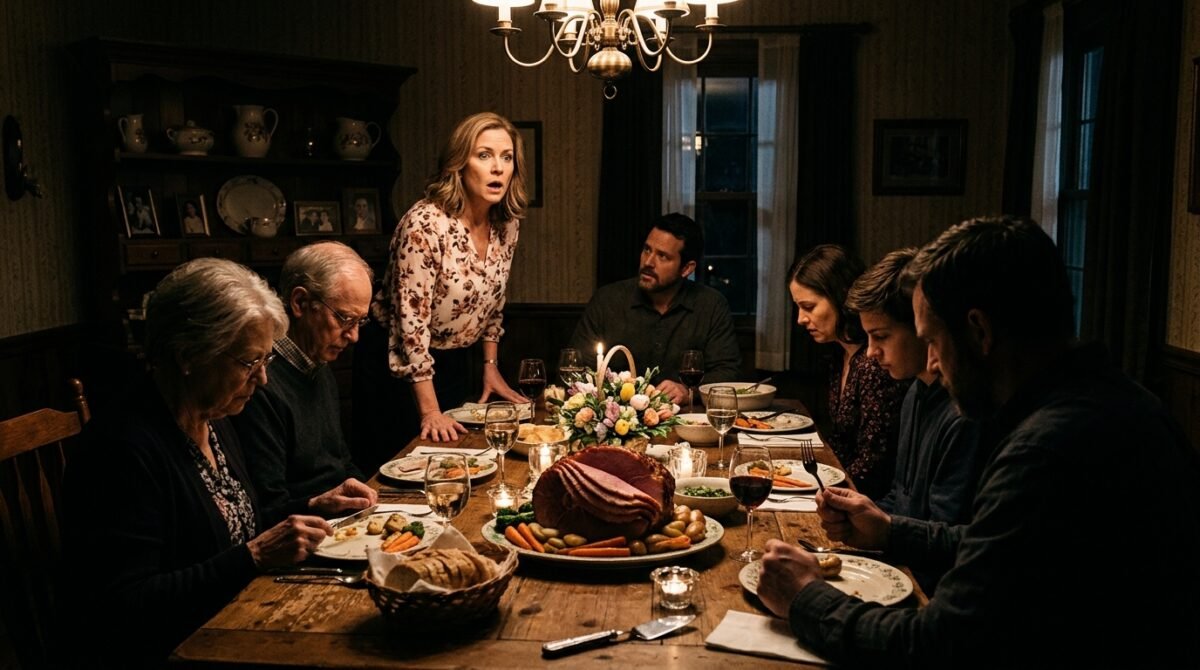
Easter has always been a complicated affair in our family, a delicate dance of perfectly roasted side dishes, passive-aggressive comments about my life choices, and the persistent, unvoiced expectation that I should be grateful for the ‘acceptance’ I receive from my husband’s mother, Brenda. For years, I kept my personal history tightly under wraps. Adoption is a beautiful journey, but it is also a private one—a story that belongs to me, to be shared only when and if I feel ready.
My husband, Mark, knew the truth from the day we met. He had promised to keep it sacred, believing, as I did, that my biological origins were irrelevant to the life we were building together. But Brenda, a woman who treated information like currency, had spent years fishing for ‘something’ that didn’t quite fit her rigid, traditionalist narrative of our family tree. She viewed my lack of shared history not as a boundary, but as a challenge to be conquered.
The morning of the dinner, I had spent hours in the kitchen, meticulously glazing a twenty-pound spiral ham, a centerpiece I had insisted on bringing as my contribution to the holiday feast. I felt a strange, lingering sense of unease, a prickle at the back of my neck that I couldn’t quite shake. Little did I know, the morning’s peace was merely the calm before a storm that would permanently alter my relationship with the entire clan.
As we arrived, the house smelled of lilies and woodsmoke, a domestic tableau that felt suffocatingly staged. Brenda greeted us with a smile that never quite reached her eyes, her gaze lingering on me with an intensity that felt predatory. I settled into the kitchen, focusing on the ham, trying to ignore the way she paced behind me, her presence heavy and suffocating in the small space. I wasn’t just bringing food; I was bringing a target on my back, though I didn’t realize it yet.
The tragedy of the situation was that I truly wanted this year to be different. I had brought gifts, I had dressed for the occasion, and I had braced myself for the usual barbs about my career path or our lack of children. I was prepared for the petty. I was not, however, prepared for the nuclear option she had decided to deploy before the first course was even served. My life was about to be turned inside out in front of three generations of people I barely knew.
The Pre-Dinner Interrogation
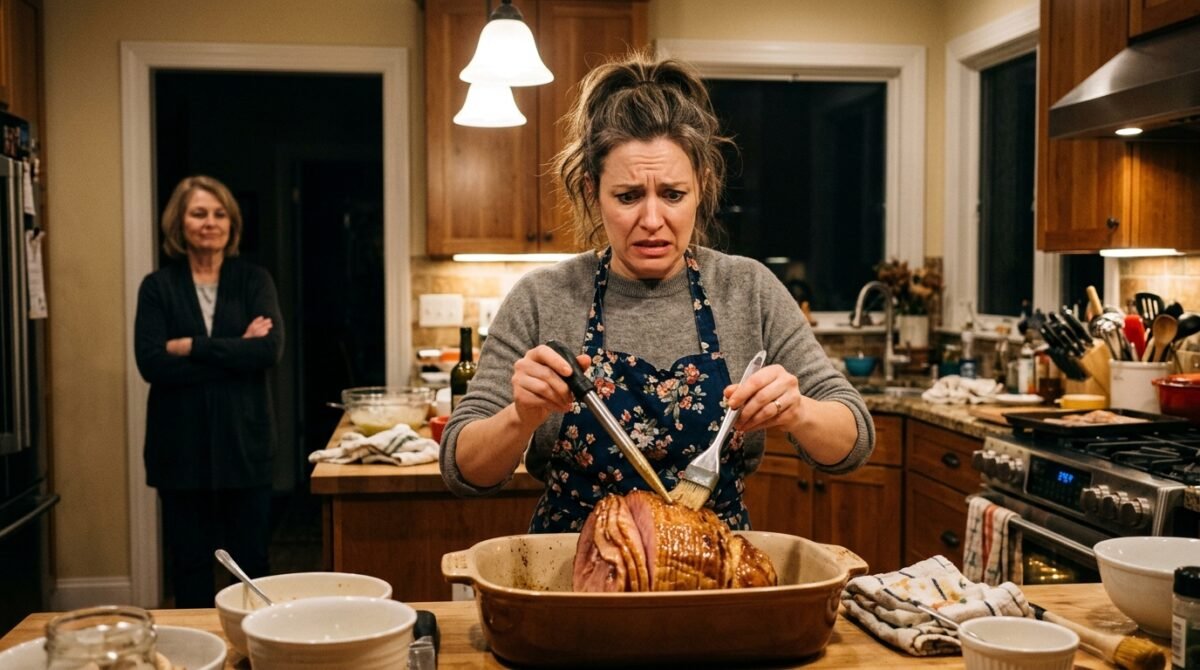
Brenda started the afternoon with the usual surgical strikes. It was never a direct attack; it was always framed as concern. She hovered near the stove while I basted the ham, asking pointed questions about my childhood, my parents, and why I supposedly ‘didn’t look like anyone in my family photos.’ I kept my back to her, my hands shaking slightly as I pressed the cloves into the glaze.
She kept pushing, her voice dropping to a conspiratorial whisper. She mentioned a ‘genealogy kit’ she had gifted us for Christmas, the one I had conveniently lost in a drawer. She wanted to know why I was so hesitant to participate in the ‘family legacy’ project she was curating. I brushed it off, citing my lack of interest in ancestry, but Brenda wasn’t having it. She had that look in her eye—the one that signaled she had done some digging.
“You know, dear, it’s quite common for people to feel a bit insecure when their roots don’t match the garden they were planted in. I’ve done some research. It’s not shameful to be a late-in-life discovery. Why keep up the charade?”
— Brenda, while watching me work
I felt a cold sweat break out across my shoulders. My heart hammered against my ribs like a trapped bird. How had she found out? Had she gone through my medical records? Had she hired someone? The violation felt physical, a sharp, stabbing sensation in my gut. I told her, as calmly as I could, that she was overstepping, but she just chuckled and walked into the dining room, smoothing her apron.
I stayed in the kitchen for a moment, gripping the counter until my knuckles turned white. I thought about leaving right then, but the house was already filling with aunts, uncles, and cousins. Mark was in the living room, laughing with his brother, completely oblivious to the fact that his mother had just signaled the start of a war. I had to stay. I had to protect my own narrative, or so I told myself.
The atmosphere in the house was dense, suffocating. Every laugh sounded brittle, every clink of silverware like a gavel hitting a block. I felt like an animal caught in a cage, waiting for the keeper to open the door and reveal the trap. I didn’t realize that the trap wasn’t for me to escape—it was for me to spring.
The Unveiling at the Main Course
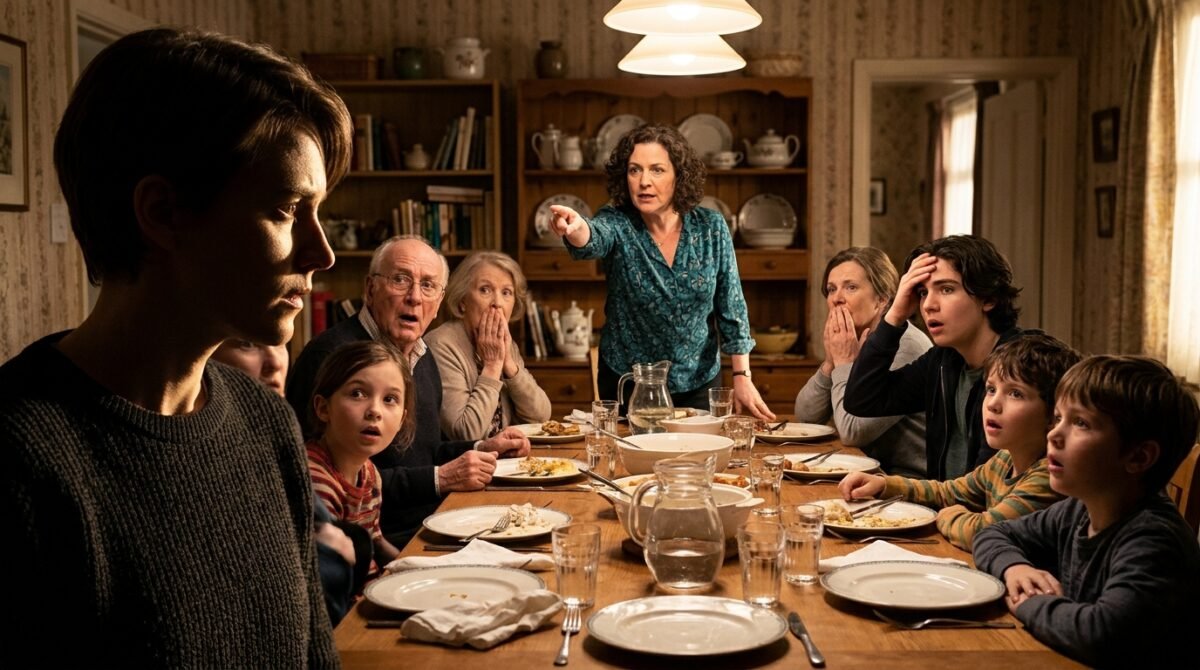
When we finally sat down, the air felt thin. Brenda stood at the head of the table, tapping her glass with a silver knife. It was a ritual she performed every year, a short speech about family, gratitude, and the ‘blessings’ of the past year. But this time, her gaze was fixed entirely on me, a predatory glint that made the hair on my arms stand up.
She began with the usual platitudes, but then she took a sharp left turn. She spoke about ‘honesty’ and ‘truth’ and how ‘secrets have a way of poisoning the roots of the family tree.’ The room went deathly silent. Even the children stopped fidgeting with their napkins. Mark looked at me, his eyes widening in alarm, sensing the shift in the room’s energy.
Brenda cleared her throat and looked around the table. She began to weave a narrative, painting my adoption as a ‘hidden burden’ that I had been ‘tricked’ into keeping, and then, with a flourish, she gestured toward me. She didn’t just mention it; she made a spectacle of it, turning my existence into a tragic backstory she had ‘uncovered’ for the sake of the family’s ‘transparency.’
“We are a family that believes in the truth. And today, I feel it is my duty to bring our newest, and perhaps most interesting, chapter to light. My daughter-in-law has been living a secret her entire life—she was adopted. Isn’t it time we all stopped pretending?”
— Brenda, addressing the entire room
The silence that followed was absolute. It was the kind of silence that feels heavy, physical, and suffocating. My face burned, then went deathly pale. I felt the collective eyes of twenty people drilling into me, assessing me, wondering if I was somehow ‘less’ because of the truth Brenda had just laid bare. The audacity was staggering.
I looked at Mark, expecting him to defend me, to stand up and tell his mother to stop. But he was paralyzed, his mouth slightly open, looking between me and his mother in a state of shock. That moment—that singular second of his hesitation—was the moment I realized I was entirely on my own. The bond of marriage had just been tested, and he had failed the first inspection.
The Packing of the Ham
Something snapped inside me. It wasn’t a loud noise, not a scream, but a quiet, cold realization that I had reached my absolute limit. I looked at the spiral ham, the centerpiece of my hard work, the very thing I had brought to feed these people who had just been invited to judge me. It suddenly felt like the most ridiculous, pointless object in the world.
I stood up, pushing my chair back with a scrape that echoed in the silent room. I didn’t say a word to Brenda. I didn’t address the table. I just walked back into the kitchen, my movements mechanical and focused. I grabbed a large, heavy-duty foil sheet and a plastic container I had brought specifically for leftovers. I began to carve the ham, not neatly, but efficiently.
My hands were steady now. I was operating on pure, cold adrenaline. I wrapped the ham, the remaining slices, and the serving platter I had used. I heard footsteps behind me—Mark, finally coming to his senses. He started to speak, to apologize, to try and diffuse the situation, but I ignored him as if he were a ghost.
“Are you serious? You’re leaving over this? It’s just a dinner, it’s just family! Please, sit down. Don’t make a scene.”
— Mark, whispering urgently in the kitchen
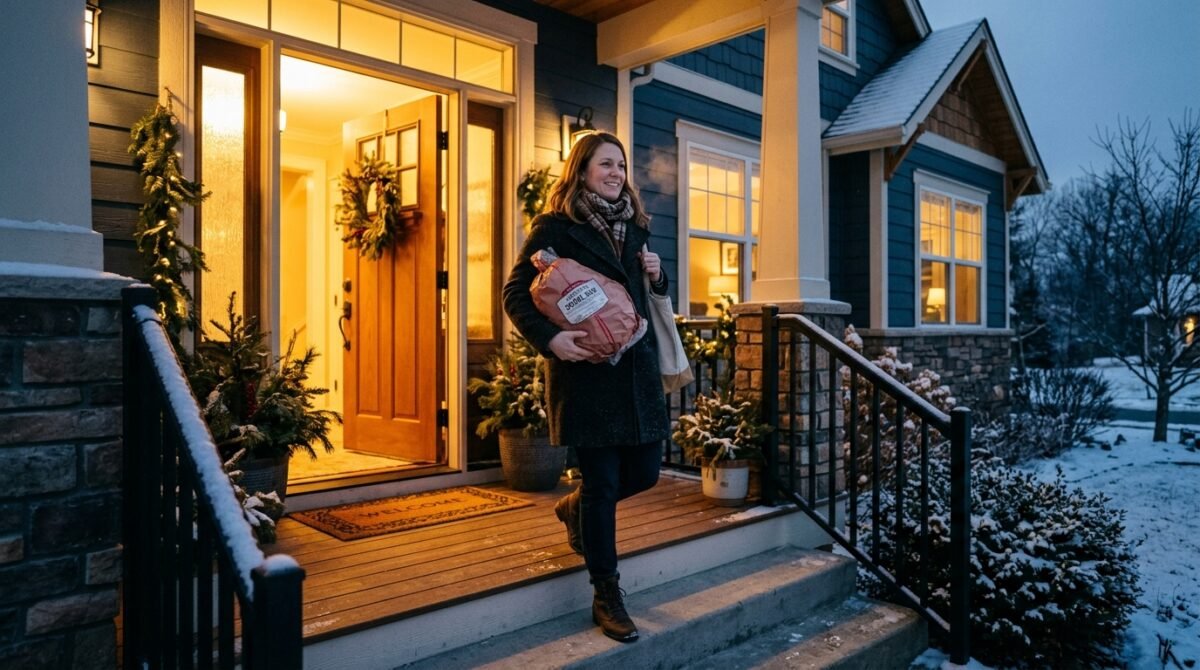
I didn’t answer him. I grabbed my purse and the platter, the weight of the ham grounding me. I walked out of the kitchen, past the table where everyone was still frozen in awkward, horrified silence, and headed straight for the front door. Brenda was still standing, her face a mask of feigned concern, waiting for me to break down so she could play the victim.
I didn’t give her the satisfaction. I unlocked the door, stepped out into the crisp spring air, and for the first time in years, I felt a sense of absolute clarity. I had no idea what would happen with my marriage, or with my relationship with the rest of the family, but I knew one thing: I was never, ever coming back to this house.
The Aftermath and the Silent Phone
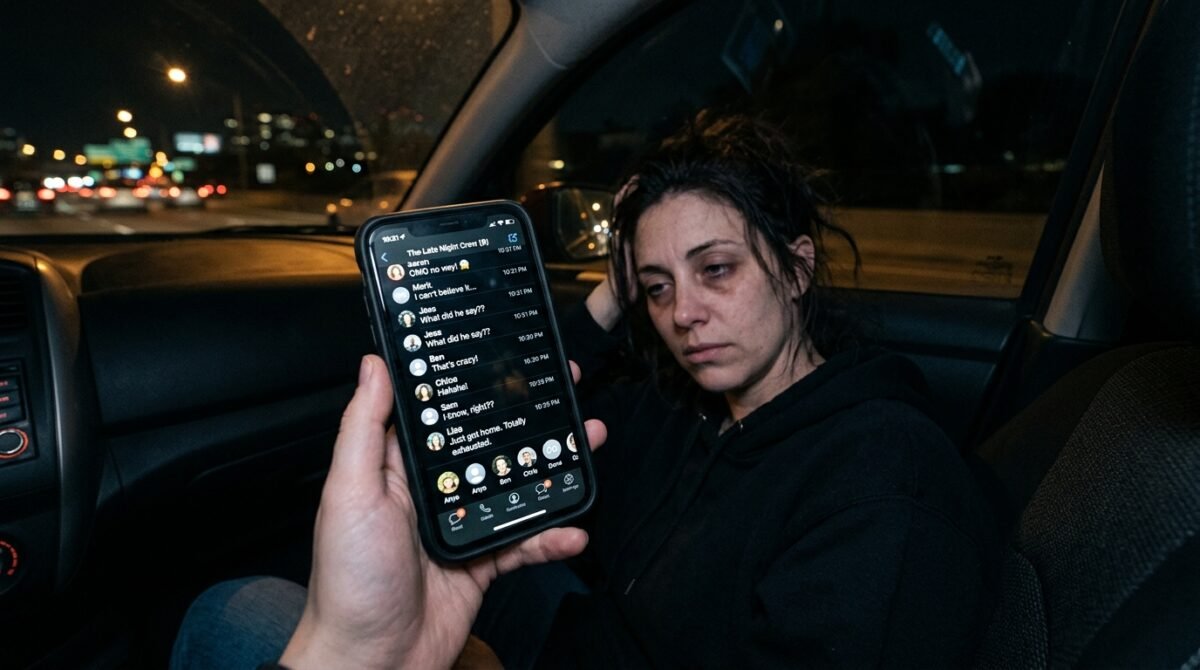
I drove for hours, not really caring where I was going. My phone buzzed incessantly in the passenger seat, a cacophony of incoming texts, missed calls, and notifications. I didn’t look at any of them. I pulled into a rest stop, parked the car, and just sat there, listening to the silence of the night. The ham sat on the passenger seat, a surreal companion to my newfound freedom.
When I finally checked my phone, the volume of messages was overwhelming. Mark had sent dozens, ranging from defensive pleas to angry accusations that I had ‘ruined’ the holiday. Brenda had sent a long, rambling message about how she only wanted ‘the truth to set me free.’ It was the kind of gaslighting masterpiece I had expected from her.
The family group chat, which I had somehow never left, was lighting up with opinions. Some relatives were horrified by Brenda’s behavior, while others were busy debating whether or not I had ‘overreacted’ to a simple family secret. It was a masterclass in toxic family dynamics, and seeing it all laid out on a screen made the reality of the situation even more jarring.
“She’s family, we love her! But you have to admit, that was a very dramatic exit. We’re all just trying to understand the situation. Can you please come back and talk to us like an adult?”
— Aunt Susan, in the family group chat
I realized then that I wasn’t just fighting Brenda; I was fighting an entire system of people who valued the status quo over basic human decency. They didn’t care that my privacy had been violated; they cared that the dinner was ruined. They cared that I had walked out, effectively ‘stealing’ the ham and the dignity they were trying to extract from me.
I typed out a single reply to the group chat, a short, final statement that set the terms of my absence. I didn’t apologize. I didn’t explain. I just stated my boundary. Then, I blocked every single one of them. The relief that washed over me was intoxicating. I was finished with the performances, the secrets, and the hollow promises of acceptance.
Community Analysis: The Verdict
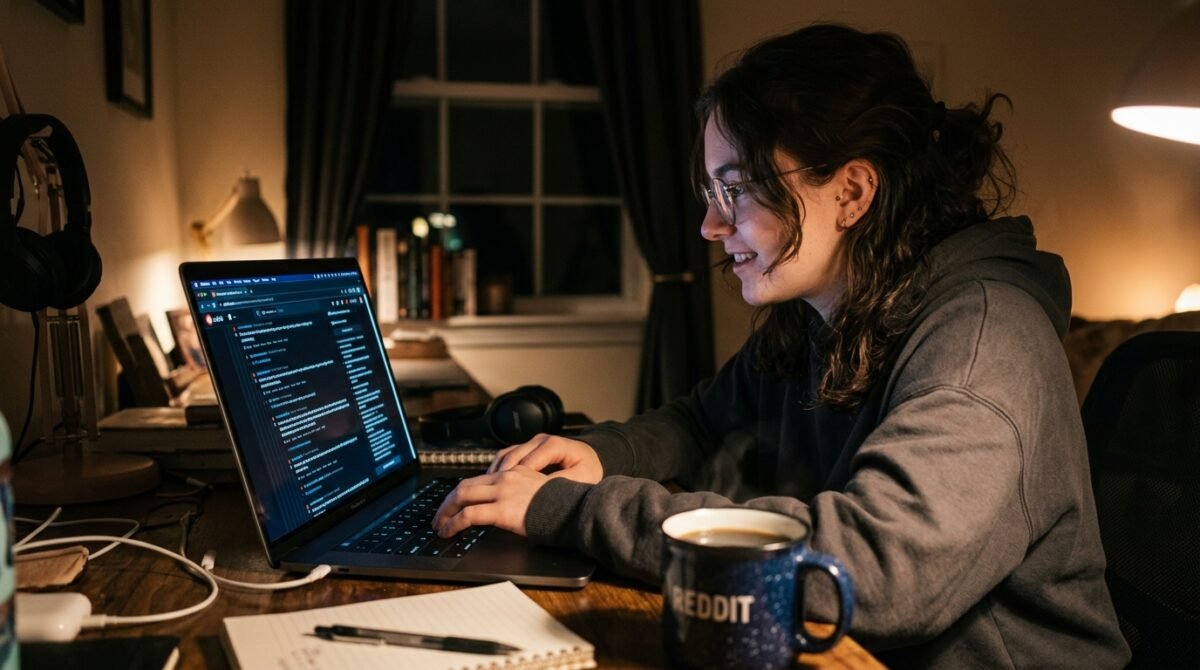
I decided to post a summary of the situation on a popular subreddit to see if I had lost my mind. The response was immediate and overwhelming. Thousands of people commented, weighing in on the absurdity of the situation. It was validating to see that I wasn’t the one who had crossed the line, even if it felt like the world was telling me otherwise.
The comments were a mix of outrage, solidarity, and practical advice on how to handle the inevitable fallout. People pointed out the sheer entitlement of my mother-in-law, identifying her behavior as a textbook case of control through information manipulation. The Reddit community, in all its chaotic glory, became my surrogate family for those few days.
“This is not just about the adoption; it’s about power. She held a secret over your head that she didn’t even earn the right to know. Walking out was the most powerful thing you could have done. Keep that ham, and keep your boundaries.”
— u/BoundariesQueen (Top Comment, 45.2k upvotes)
Others warned me that the family would likely try to spin the narrative, painting me as the ‘unstable’ one. They advised me to keep receipts, save every text, and prepare for the long haul. It was sobering advice, but it gave me a concrete plan of action. I wasn’t just an emotional victim anymore; I was a person with agency and a community standing behind me.
I started reading the comments aloud to myself, laughing at the sheer absurdity of it all. There was something profoundly healing about strangers from all over the world telling me that my reaction was valid. The shame I had been carrying—the shame Brenda wanted me to feel—dissolved in the face of thousands of people saying, ‘She was the one in the wrong.’
The thread became a hub for other people who had been through similar ‘holiday reveal’ disasters. We swapped stories, shared coping strategies, and built a small, digital support system. The isolation I had felt in that dining room started to fade, replaced by a sense of belonging to a tribe of people who knew exactly what it was like to be the scapegoat of a narcissist.
The Fallout with Mark
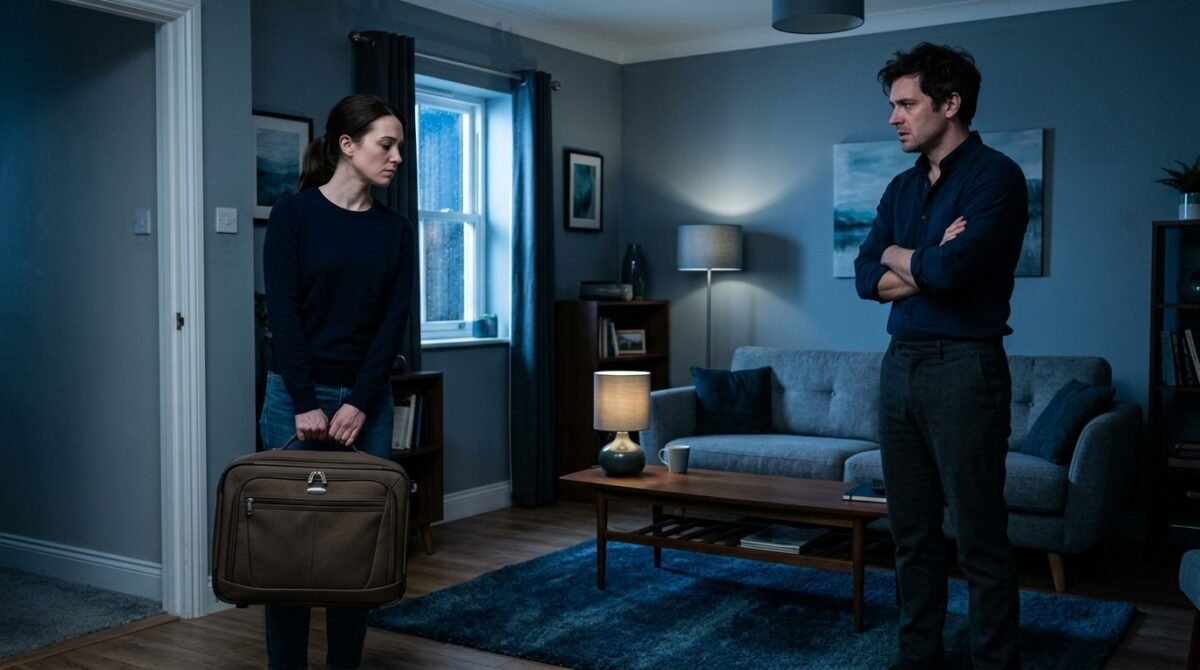
The real trouble started when Mark came home. The house was quiet, and the tension was thick enough to cut with a knife. He tried to rationalize his mother’s behavior, saying she ‘didn’t mean any harm’ and that she was ‘just trying to integrate me more.’ It was the same old song, but this time, the music had changed.
I told him that he had a choice. He could either stand with me, as his partner, or he could stay loyal to his mother’s toxic games. I wasn’t giving him an ultimatum; I was stating the terms of our marriage. I told him that if he couldn’t see why what she did was a violation, then we had bigger problems than just an Easter dinner.
“You don’t understand the pressure she puts on me! She’s my mother. You just expect me to cut her off because she’s, what, old-fashioned? This is my family, and I’m not losing them over a secret that shouldn’t have been a secret anyway.”
— Mark, during our final confrontation
That was the moment I knew he wasn’t ready to grow up. He was still the little boy, still the one trying to appease the woman who held the strings of his life. I realized then that my adoption wasn’t the real issue; the issue was his inability to prioritize his spouse over his mother’s whims. The marriage had been built on a foundation of his mother’s approval, and that foundation was rotting from the inside out.
We spent the next few days in a cold war. I started packing my things, quietly and efficiently. I didn’t tell him at first, but he knew. He watched me, pleading, bargaining, and eventually, getting angry. But the anger didn’t work on me anymore. I had found my voice, and I wasn’t going to let him shout it down.
I moved out a week later. It wasn’t the ending I had envisioned, but it was the ending I needed. I left behind the life that was curated for me, and I walked into the uncertainty of my own life. It was terrifying, but it was the first time I felt like I was actually living, and not just acting in someone else’s play.
Reflecting on the ‘Secret’

For years, I had treated my adoption like a shameful secret, something to be tucked away and guarded against the light. Brenda’s reveal, as cruel as it was, accidentally forced me to confront that narrative. Why was it a secret? Why was it something that felt like a leverage point? I realized that the shame wasn’t coming from me; it was coming from the stigma that society, and people like Brenda, placed on the concept of family.
I started going to therapy to work through the abandonment issues and the trauma of being treated like an ‘other’ by my in-laws. My therapist helped me see that my mother-in-law’s actions were a reflection of her own insecurities, not my worth. She was terrified of the unknown, and because she couldn’t control my origin story, she had to label it as ‘wrong’ or ‘shameful’ to exert power over it.
I began to share my story more openly, not as a victim, but as a person with a complex, beautiful history. I stopped apologizing for my existence and started embracing the fact that I was chosen, not just born. The power dynamic shifted, and the ‘secret’ lost its sting. It was no longer a weapon she could use; it was just a fact, one that I owned entirely.
“Adoption is not a mystery to be solved. It is a reality to be embraced. When you let go of the shame, you take away the power that others try to hold over you.”
— My Therapist, during a session
It was a slow process, but I started to feel stronger. I stopped looking for approval from people who didn’t respect me. I started surrounding myself with people who saw me, really saw me, for who I was, not for where I came from. The tragedy of the Easter dinner transformed into the catalyst for my liberation.
I still think about that ham sometimes. It was a good recipe, a labor of love. I laugh when I think about the image of me walking out of that house with it. It was such a ridiculous, human thing to do, a small act of defiance that became the defining moment of my life. I had walked out with my dignity, and more importantly, I had walked out with my own truth.
The New Normal

Today, life looks very different. I am living on my own, in a small apartment that I decorated exactly how I wanted. I have a job that fulfills me, and I have friends who value me for my character, not my lineage. I am in low-contact with Mark, and no-contact with Brenda. It was a hard boundary to draw, but it has been the healthiest thing I have ever done for myself.
I still get the occasional ‘checking in’ text from his relatives, but I ignore them. I don’t owe them my time or my explanation. They can wonder all they want; it doesn’t touch me anymore. I have a peace of mind that I never had when I was trying to please them. The silence of my home is not empty; it is full of possibilities.
I’ve learned that family is not just about blood or legal documents; it’s about respect, safety, and mutual support. If a family member can’t provide that, then they don’t deserve a place at your table. I have built my own ‘found family’ now—a group of people who celebrate each other, not just on holidays, but every single day. We don’t have secrets, and we don’t hold things over each other’s heads.
“You have to be willing to lose people who are not willing to grow. It’s painful, but it’s the only way to save yourself.”
— A piece of advice from a friend
I don’t regret walking out. If I had stayed, I would have been swallowed up by their expectations. I would have been the ‘adopted daughter-in-law’ with the ‘tragic secret’ for the rest of my life. Instead, I am just me—fully, unapologetically, and authentically me. And that is worth more than any holiday dinner could ever offer.
So, here is to the spiral hams, the dramatic exits, and the boundaries that save us. May we all have the strength to stand up when we need to, and the wisdom to know when to leave the table for good.
The Lessons Learned

The biggest lesson I took from this whole ordeal was that my silence was never protecting me. It was only protecting the people who wanted to hurt me. By keeping my adoption a secret, I gave them control over a narrative they didn’t understand. Once I stopped trying to hide it, I realized it was never a weakness; it was a testament to the fact that I was wanted.
I also learned that marriage requires a united front. If your partner isn’t willing to defend you against their family, then you are essentially alone in the relationship. That was a hard realization, but it was a necessary one. It taught me to be more discerning, more protective of my own heart, and more willing to walk away when the red flags are flying high.
I have forgiven myself for the years I spent trying to fit into their mold. It’s easy to look back and wonder why I didn’t leave sooner, but I know now that I wasn’t ready. The trauma had kept me small, and it took a public betrayal to finally push me out of the nest. I am grateful for that push, even if it came from the person who meant me the most harm.
“Forgiveness is not for them. It is for you. It is the act of letting go of the anger so that you can move forward with your own life.”
— A thought from my journal
I am no longer the woman who was afraid of a dinner table. I am a woman who knows her worth, who knows her history, and who knows exactly how to walk away from anyone who tries to diminish her. The journey was long, and it was painful, but I wouldn’t change a thing. It led me to the woman I am today.
If you are in a similar situation—if you are being controlled, silenced, or betrayed by the people you are supposed to trust—know that you have options. You are not trapped. You have the right to your own life, your own privacy, and your own dignity. And sometimes, the best thing you can do is just walk out the door and never look back.
Final Thoughts: Moving Forward

As I write this, I’m looking forward to my first ‘solo’ Easter. I’m planning a small dinner for my friends, and for the main course, I’m making a roast chicken. It’s a quiet celebration, one that is truly my own, without the weight of expectations or the fear of hidden agendas. It’s the celebration I always wanted but never thought I could have.
I don’t think about Brenda much anymore. She’s become a distant memory, a shadow that no longer has the power to loom over my life. The drama that felt so world-ending at the time has become just another chapter, a story I can tell with humor and grace. It’s no longer a wound; it’s a scar, a sign that I survived and that I am stronger for it.
I hope that if you take anything away from my story, it’s the importance of valuing yourself above all else. Don’t let anyone turn your life into a spectacle. Don’t let anyone use your history as a weapon. And above all, don’t be afraid to leave. Sometimes, the most heroic thing you can do is realize that you don’t belong in a room, and simply walk out.
“Your worth is not defined by their opinion. It is defined by the truth you carry within you. Own your story, and no one can ever take it from you.”
— My closing message to anyone reading
Thank you to everyone who supported me during that time. Your words, your advice, and your solidarity were the bridge that got me to the other side. This isn’t just my story; it’s a story for everyone who has ever had to stand up for themselves against the odds. Keep your boundaries, keep your truth, and never, ever settle for less than the respect you deserve.
Conclusion
My life is finally mine again. I’ve realized that the greatest tragedy wasn’t the announcement of my secret, but the years I spent trying to be someone else for a family that never truly accepted me. By leaving that day, I didn’t just walk away from a dinner; I walked away from a lifetime of suppression.
The community support I received showed me that I am part of something much larger. We all have stories we carry, and the power is in the telling. I encourage you to reclaim your narrative and never let someone else dictate your worth. To all the readers who have supported me: what is the boundary you have been afraid to set for too long? Is it time to finally walk out of the room?
Tell me in the comments below: have you ever had to stage a dramatic exit to protect your own sanity, or are you still struggling with a family dynamic that leaves you feeling unseen? Let’s keep this conversation going.
What's your verdict on this dilemma?
Vote below to contribute to the official community consensus.

Have a Dilemma Keeping You Up at Night?
Share your real-life feud, wedding chaos, or relationship crossroads anonymously with our editorial team.
What do you think ?
0 Comments🛡️ Comments are moderated to protect community integrity. Your comment will appear once approved by the editorial team.