

For most of my adult life, ‘mother’ was a title I reserved for the woman who raised me, but rarely for the person who supported me. The history of our relationship was a tapestry of broken promises, casual cruelty, and a persistent, gnawing sense of obligation that she seemed to believe was her birthright. I had been no-contact for three years when the accident happened—a hit-and-run that left me with chronic pain and a long road of physical rehabilitation. The settlement that followed wasn’t a lottery win; it was the price of my future mobility and medical care.
When the notification from my lawyer arrived, I felt a fleeting sense of relief. It was enough to cover my bills and perhaps a modest apartment, but certainly not a fortune. The moment the funds hit my account, the digital ‘ghost’ of my mother materialized in my inbox. She hadn’t reached out for birthdays, holidays, or my graduation, but the prospect of a payout acted like a magnet for her long-dormant maternal instinct.
She didn’t ask how I was doing. She didn’t ask if the surgery went well. Instead, she opened with a detailed itinerary for a ‘Spiritual Detox and Psychic Healing Retreat’ in Sedona, claiming it was her divine calling to cleanse the family lineage of my ‘negative karma.’ The price tag, naturally, was exactly half of what I had received. The audacity wasn’t just a shock; it was a masterclass in manipulation.
I sat in my darkened apartment, the glow of my laptop illuminating the sheer absurdity of her request. How do you respond to someone who views your trauma as a piggy bank for their spiritual vanity? This wasn’t just a request for money; it was an attempt to re-assert control over a life she had abandoned years ago. I knew that if I gave in, I would be buying my own chains.
This is the story of the confrontation that followed, the family members who suddenly emerged from the woodwork to act as ‘peacekeepers,’ and the realization that some bridges aren’t meant to be rebuilt—they are meant to be burned to keep you warm on the other side of the fire.
The Unexpected Email From the Void

The email arrived on a Tuesday morning, a day that felt remarkably ordinary until the timestamp caught my eye. The sender was an address I had long ago archived and blocked, yet somehow, it bypassed my filters. The subject line was simply: ‘A Mother’s Divine Intervention.’
I opened it with trembling hands, expecting some kind of apology or at least a standard ‘checking in.’ Instead, I found a three-page manifesto detailing her recent discovery of energy healing and the urgent necessity of her attending a high-end retreat in Sedona. She claimed that my accident was a direct result of ‘unresolved ancestral trauma’ that only she could heal, provided I financed the journey.
“My dear, I have been shown that your physical suffering is a manifestation of your refusal to accept your role in our family’s spiritual destiny. This retreat will cleanse us both. I have calculated the costs—travel, lodging, and the intensive practitioner fees—to be exactly half of your legal settlement. It is a small price to pay for your long-term wellness.”
— From the initial email sent by my mother
I read the words three times, unable to reconcile the cold, calculating nature of the demand with the ‘spiritual’ language she used to justify it. There was no mention of my health, my recovery, or my pain. I was simply a vessel for the funds she needed to satisfy her new obsession.
My initial reaction was a mixture of laughter and nausea. The sheer gall required to reach out after years of silence to demand someone’s disability settlement is a level of narcissism that borders on the pathological. I didn’t reply immediately, knowing that any engagement would be interpreted as an opening for negotiation.
I spent the afternoon pacing my living room, the weight of my medical bills pressing down on me. I had physical therapy appointments to pay for and a future that looked increasingly expensive. The audacity of her request felt like a second hit-and-run, this one emotional and calculated to destroy my stability.
The Mobilization of the Flying Monkeys

Within twenty-four hours, the silence was broken not by my mother, but by the rest of the family. It seemed the ‘spiritual retreat’ wasn’t just a secret between us; she had broadcast her ‘need’ to my aunt, my cousins, and even a distant uncle I hadn’t spoken to in a decade. My phone began to buzz incessantly with messages from people I thought had forgotten I existed.
The narrative was consistent: I was being selfish. I was ‘punishing’ my mother for ‘small past mistakes’ when she was reaching out for ‘healing.’ They didn’t see a woman demanding half my settlement; they saw a mother trying to reconnect, and a child who was being ‘difficult’ and ‘unforgiving.’
“She’s really struggling, OP. Do you have any idea how hard it is for a mother to see her child hurting? This retreat is her way of making things right. Just send the money and be the bigger person. It’s not like you earned that money through work; it was just a settlement.”
— Text from my Aunt Sarah
I felt the familiar sting of gaslighting. The ‘bigger person’ argument is the ultimate weapon of the toxic family member, designed to make you feel guilty for simply protecting your own interests. The implication that my settlement—my compensation for a life-altering accident—was ‘unearned’ stung the most.
I started receiving calls at odd hours. One cousin tried to guilt-trip me by mentioning that ‘family is all we have.’ Another suggested that if I didn’t pay, I was ‘holding the family back’ from their collective healing journey. It was as if they had all been recruited into a cult of my mother’s making.
I had to keep reminding myself that these people weren’t concerned about my health. They were concerned about the social harmony that I was disrupting by refusing to play along. I wasn’t just refusing to give money; I was refusing to acknowledge their chosen reality where my mother was a victim and I was the villain.
The Midnight Confrontation
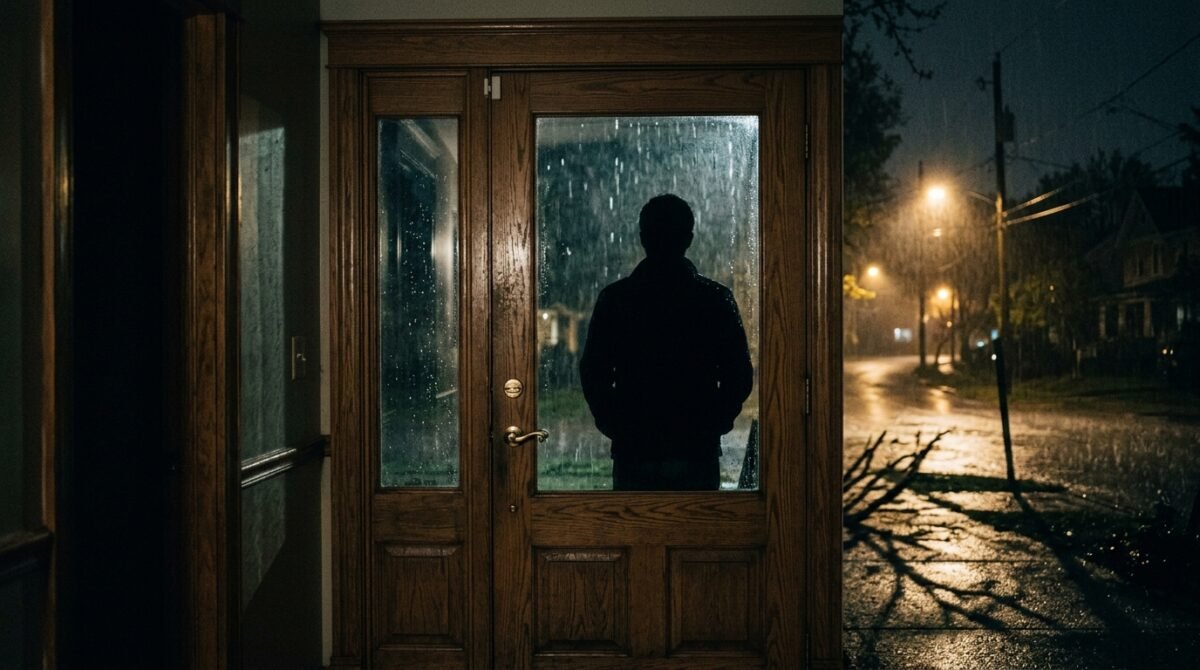
The situation escalated when she showed up at my front door. I hadn’t given her my address, but she had tracked it down through a family member who clearly didn’t respect my boundaries. It was a cold, rainy night, and I was in the middle of a particularly grueling physical therapy routine when the doorbell rang.
I looked through the peephole and saw her standing on the porch, looking more manic than I remembered. She was dressed in layers of flowy, bohemian clothing that looked entirely out of place for the weather. I didn’t open the door, but I spoke to her through the wood. The conversation was brief but devastating.
“Open the door, OP! Don’t you dare hide from your own blood. I know you got the money. Do you want to be cursed for the rest of your life? I am your mother, and I am telling you that you need this healing just as much as I do!”
— My mother shouting through the front door
I told her, clearly and loudly, that I was not giving her a cent and that she needed to leave immediately. I threatened to call the police if she didn’t walk away. She began to wail, a high-pitched, performative sound designed to alert the neighbors. I didn’t cave. I stood my ground, my heart pounding in my chest.
The neighbors eventually started looking out their windows, and she finally retreated to her car, but not before screaming that I was ‘dead to her’—a threat that had been used so many times it had lost its sting. I sat on my floor for an hour afterward, the adrenaline slowly leaving my system, wondering how she had become so detached from reality.
That night, I realized that I couldn’t just ignore her. I needed to document everything. I began saving every text, every email, and keeping a log of every encounter. I was done being the passive victim of her drama. I was going to protect my peace, even if it meant being the ‘villain’ in her twisted narrative.
The Reddit Trial: A Community Weighs In

I turned to the only place I knew where I could find some semblance of sanity: a popular subreddit for family conflicts. I drafted a post, laying out the timeline, the demands, and the gaslighting from my extended family. I felt a strange sense of shame as I typed it out, as if confessing to a crime, but the responses came in fast and fierce.
The community was overwhelmingly supportive. People shared their own stories of toxic parents and the importance of holding firm on financial boundaries. It was the first time I felt like I wasn’t the one being crazy. The validation was both a comfort and a sharp reminder of how far I had strayed from a healthy life.
“OP, you are not a bank. You are a human being who has been through a traumatic event. Do not let these people bleed you dry. The fact that she thinks she is entitled to your settlement money is insane. Go full no-contact and get a restraining order if you have to.”
— u/SupportiveSoul (Top Comment, 18.2k upvotes)
There were some dissenting voices, of course, mostly from people who believed that ‘blood is thicker than water’ and that I should just pay to make the harassment stop. But the majority of the comments were a clarion call for me to prioritize myself. It was the push I needed to take the next step.
I spent hours reading through the comments, often finding myself tearing up at the kindness of strangers. They weren’t just telling me I was right; they were telling me that my boundaries were valid and necessary. It was a turning point. I stopped viewing myself as a ‘difficult child’ and started seeing myself as a survivor.
The threads became a sort of journal for me. I updated the post as new developments occurred, and the community cheered me on. They helped me realize that the ‘guilt’ I was feeling wasn’t mine—it was a leftover program she had installed in me years ago. I was finally starting to delete it.
The Lawyer’s Cold Reality Check

I had a meeting with the attorney who handled my settlement the following week. I needed to ensure that there was no way my mother could get her hands on the funds. I laid out the situation, expecting him to be surprised, but his expression remained stoic throughout the entire briefing.
He explained that my mother had no legal claim, but that she could try to file a frivolous suit or harass me in ways that could become expensive to defend. He recommended a formal cease-and-desist letter, which I authorized immediately. It felt good to take a concrete, professional step toward closure.
“People like this often use the threat of litigation to exert control. By issuing a formal notice, we are establishing a paper trail that will be essential if she decides to escalate. Do not engage with her directly. Let us handle all communication from here on out.”
— My Attorney during our consultation
The lawyer’s tone was a stark contrast to my mother’s emotional manipulation. It was clinical, objective, and focused on facts. It was exactly what I needed. I left the office feeling like I had finally regained some level of autonomy over my own life.
He also helped me structure my accounts to ensure that I could access my funds for my medical care without any external interference. We set up safeguards that would prevent any unauthorized access. I felt a immense weight lift off my shoulders, the kind of weight you don’t realize you’re carrying until it’s gone.
This was the moment I realized that money isn’t just money—it’s safety. It’s the ability to say ‘no.’ It’s the power to move, to pay for care, to build a life that doesn’t involve the people who hurt you. I wasn’t just protecting a bank account; I was protecting my future.
The Group Chat Explosion
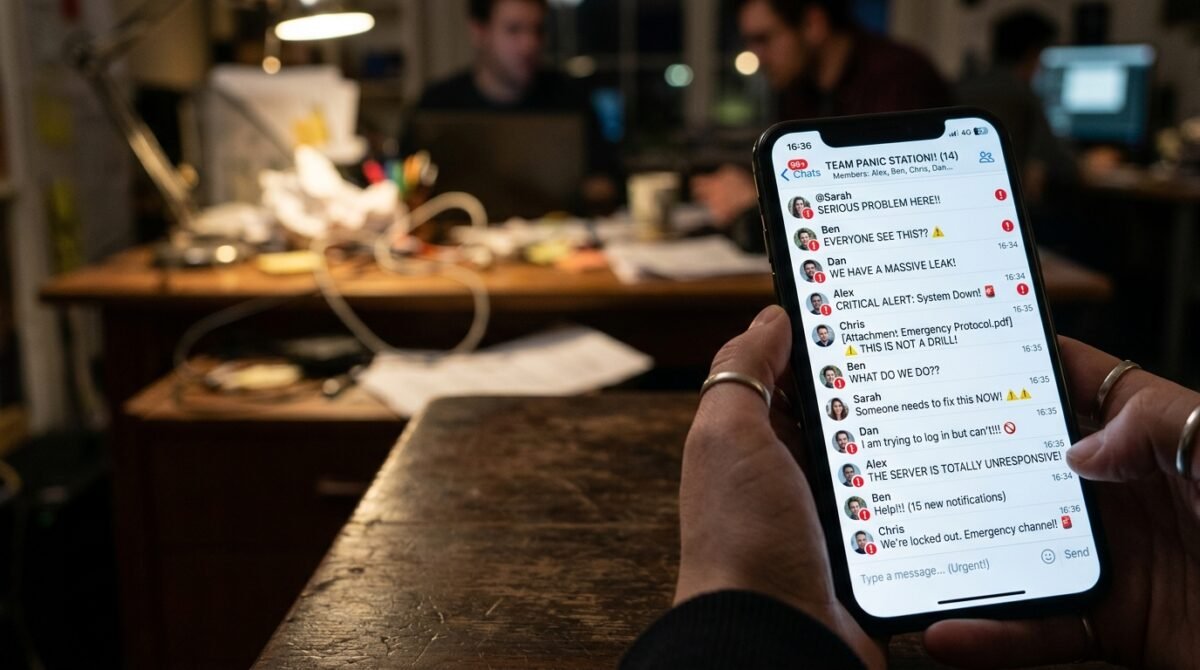
The family group chat, which I had ignored for months, suddenly became a battleground. My cousin, the one who had been the most vocal about my ‘selfishness,’ decided it was time to intervene. She added me back into the group, and the messages began to flood in, a relentless barrage of shaming and emotional abuse.
I watched as they debated my character, my finances, and my ‘spiritual failing.’ They were talking about me as if I weren’t even in the chat. It was a bizarre, detached experience, watching my own family tear me apart in real-time. I decided to send one final message before blocking everyone.
“You all are talking about my life and my money as if you have any say in it. You don’t. My mother’s request is for a ‘retreat,’ not an emergency. I have medical bills to pay. I am done being the family scapegoat. Any further attempts to reach out regarding this will be considered harassment.”
— My last message to the family group chat
The response was immediate and vitriolic. My mother entered the chat, calling me everything from a ‘heartless sociopath’ to a ‘disgrace to the family name.’ I didn’t read past the first few insults. I hit the ‘leave group’ button and blocked every single person involved. It was the most satisfying click of my life.
The silence that followed in my apartment was deafening, but it was a good kind of silence. It was the silence of boundaries, of peace, and of finality. I knew there would be consequences—people would talk, rumors would spread—but I no longer cared what they thought.
I realized then that I had been living in fear of their opinions for far too long. Their judgment had been the cage I lived in. By breaking the lock, I was finally free. The chaos of the group chat was the last gasp of a system that no longer had any power over me.
The Financial Ledger of Deception

I decided to keep a record of the actual ‘costs’ of the retreat she was demanding. I found the website for the organization she had chosen, and the prices were even more absurd than I had imagined. It wasn’t just a retreat; it was a luxury ‘wellness experience’ that included private consultations and gourmet meals.
| Expense | Cost Requested | Reality |
|---|---|---|
| Spiritual Retreat | $25,000 | Luxury Vacation |
| Energy Healing | $10,000 | Unregulated Quackery |
| Total Demand | $35,000 | Zero Justification |
The contrast between her claims of ‘spiritual necessity’ and the reality of a high-end vacation was staggering. She wasn’t just trying to get money; she was trying to get a lifestyle upgrade on the back of my physical trauma. Seeing it laid out in a table made the absurdity even more glaring.
I shared this data with my lawyer, who found it both amusing and useful for any potential defense. It confirmed that there was no medical or emergency basis for her demand. It was purely transactional, a calculated attempt to exploit a vulnerable person.
I felt a deep sense of pity for her. To be so disconnected from reality, so obsessed with status and ‘healing’ that you would betray your own child for a getaway—it’s a sad, hollow existence. I was glad that I was the one who could see it for what it was.
The Unexpected Ally

In the midst of the family’s condemnation, a surprise voice emerged. My uncle, who had always been the quiet one at family gatherings, reached out to me privately. He hadn’t been part of the group chat, and he had heard about the drama through the grapevine. He didn’t want the money; he wanted to know if I was okay.
He told me that he had seen this pattern before, that my mother had always used ‘spiritual’ or ’emotional’ crises to manipulate people. He offered to act as a buffer, to keep the rest of the family off my back if I needed him to. It was the first time in my life that a family member had actually looked out for me without asking for something in return.
“I know what she’s like, OP. I’ve been on the receiving end of it for years. You’re doing the right thing. Don’t listen to the others; they’re just afraid of her. If you need anything—a lawyer recommendation, or just someone to tell them to back off—you have my support.”
— A private message from my uncle
His support was a lifeline. It reminded me that not every bridge was burned, and that there were still people who valued my well-being over the family’s image. I didn’t ask for his help, but knowing he was there made me feel less isolated.
We had a long conversation about the history of the family, about the cycles of toxicity that had been passed down for generations. It was a sobering, yet clarifying, discussion. I realized that my mother’s behavior wasn’t just an anomaly; it was part of a larger, broken dynamic that I was finally stepping out of.
His validation gave me the strength to stay the course. He told me that my ‘selfishness’ was actually self-preservation, and that there was nothing wrong with putting myself first. It was the permission I hadn’t realized I needed.
The Price of Peace

Months later, the dust has finally settled. There have been no more emails, no more visits, and no more group chat dramas. I have used my settlement to pay for my medical care, to secure my apartment, and to invest in my future. I am still in pain, but I am in control.
I have learned that peace often comes with a price—in my case, the total loss of my immediate family. It is a steep price, one that I sometimes grieve, but it is a price I would pay again in a heartbeat. I have replaced the toxicity with a small, chosen family of friends who love me for who I am, not what I can provide.
My mother is still out there, probably still looking for someone to fund her next ‘spiritual’ obsession. I don’t follow her social media, and I don’t ask about her. I have let go of the need for her to understand or to apologize. I have realized that her apology would never change the past; only my boundaries can change my future.
I am healthier than I have been in years, both mentally and physically. I have learned to recognize the signs of manipulation early and to shut them down before they gain momentum. The accident was the worst thing that ever happened to me, but it also became the catalyst for the best thing: a life lived on my own terms.
I still occasionally see the ghost of my mother in the way I handle stress, or in the way I apologize too much, but I am learning to silence those voices, too. I am no longer a child who needs her validation. I am an adult who has learned how to protect the most precious thing I have: my peace.
The Final Verdict: Why Boundaries Matter

Looking back, the entire episode feels like a fever dream. The demands, the threats, the ‘spiritual’ gaslighting—it’s hard to believe it actually happened. But it did, and it taught me more about myself than I could have ever learned in a healthy, supportive family.
I learned that when you set a hard boundary, the people who benefit from your lack of boundaries will always try to tear it down. They will use shame, guilt, and anger to try to force you back into your ‘proper’ place. But if you hold firm, you will eventually find that they have no power over you.
The Reddit community was right: you are not a bank, you are not a tool for someone else’s ego, and you are not responsible for the ‘spiritual’ or emotional states of people who have neglected your well-being. Your resources—financial and emotional—belong to you.
If you find yourself in a similar situation, remember that you don’t owe anyone an explanation for your ‘no.’ You don’t have to justify why you are protecting your future. You only need to be clear, be firm, and be ready to walk away from anyone who refuses to respect your limits.
I am finally, truly, mine. And that is worth more than any amount of money in the world. I hope that sharing my story helps someone else realize that they, too, are worth protecting. You are not a disappointment; you are a survivor. And you deserve to thrive.
Conclusion
My journey from a child of trauma to a survivor of financial exploitation has been long and difficult, but it has brought me to a place of profound clarity. The lesson is simple but vital: your worth is not tied to your capacity to please others, especially those who have never prioritized your health or happiness.
I am no longer the person who feels guilty for saying ‘no.’ I am the person who knows that ‘no’ is a complete sentence. If you are currently struggling with a family member who sees you only as an asset, I urge you to look at your boundaries and ask yourself if they are truly protecting you, or if they are just keeping the door open for more pain.
Community debate is a powerful tool for self-reflection. I want to hear from you: Have you ever had to draw a financial line in the sand with a toxic relative? What was the hardest part about holding that boundary, and how did it change your relationship? Let’s talk in the comments below.
What's your verdict on this dilemma?
Vote below to contribute to the official community consensus.

Have a Dilemma Keeping You Up at Night?
Share your real-life feud, wedding chaos, or relationship crossroads anonymously with our editorial team.
What do you think ?
0 Comments🛡️ Comments are moderated to protect community integrity. Your comment will appear once approved by the editorial team.