

They say that becoming a mother changes your perspective on everything, but I didn’t expect my perspective to shift because of a pair of sewing shears. For months, I had been preparing for the arrival of my first child, carefully curating a nursery that felt like a sanctuary. The centerpiece was meant to be my great-grandmother’s handwoven baby blanket—a delicate, cream-colored wool piece that had swaddled four generations of women in my family. It was more than a textile; it was a physical manifestation of my ancestry, a tether to a past I was desperate to share with my daughter.
My mother-in-law, Linda, had always been a ‘fixer.’ She viewed my home as a blank canvas for her own aesthetic whims, often rearranging my spice rack or donating clothes she deemed ‘unflattering’ without asking. I had let these micro-aggressions slide, telling myself she was just eccentric or over-involved because she lacked a daughter of her own. I was wrong. Her obsession wasn’t with helping; it was with control. And when she decided my family heirloom didn’t fit her ‘modern farmhouse’ vision for the nursery, she didn’t just suggest a change—she took matters into her own hands.
The discovery didn’t come with an apology. It came with a smug, self-congratulatory smile and a pile of throw pillows that she had fashioned from the shredded remnants of my history. The room had been transformed while I was at my final prenatal check-up, and the weight of what she had done didn’t hit me until I saw the jagged, uneven edges of the fabric she had cut through. It was a violation so profound that it bypassed anger and went straight to a cold, clinical clarity.
I realized then that Linda would never respect a boundary that didn’t serve her narrative. If she could destroy something so irreplaceable, what would she do once my daughter was actually born? Would she decide my parenting style needed to be ‘edited’ too? The decision to ban her from the hospital wasn’t impulsive; it was a protective measure for my sanity and my child’s future. The fallout, however, was just beginning.
The Afternoon the Sanctuary Was Shredded
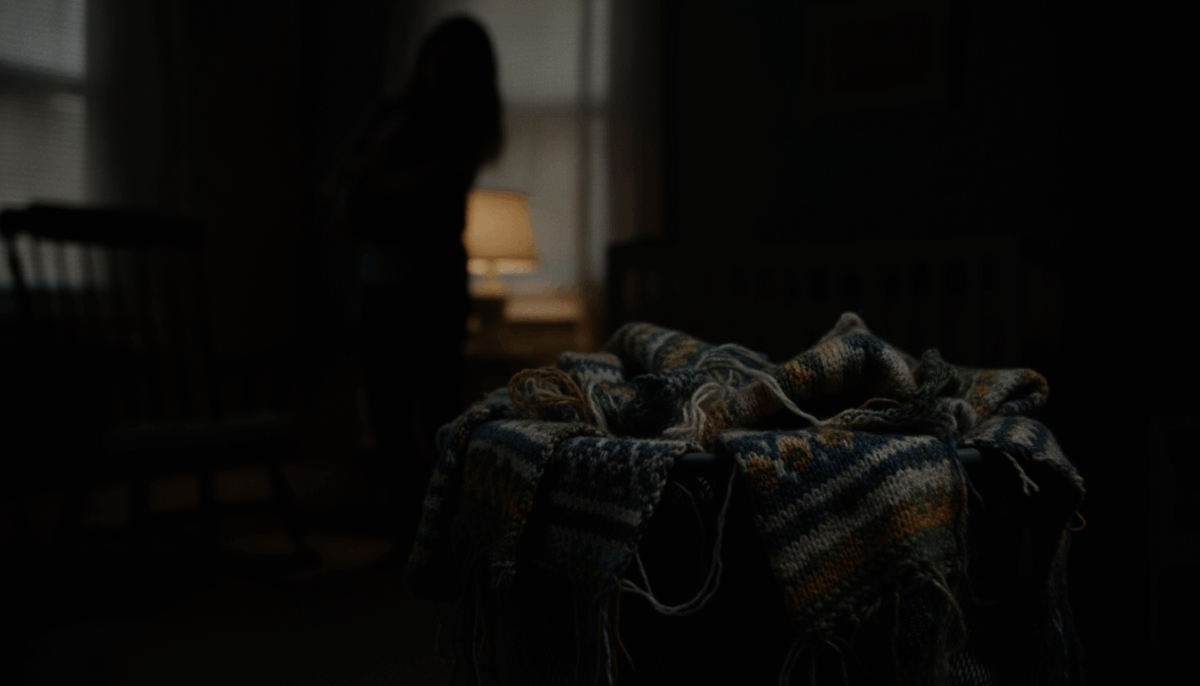
I returned home after a long, exhausting day of monitoring blood pressure and discussing labor plans with my OB-GYN. I walked into the nursery expecting the quiet peace of the space I’d been working on for months. Instead, I found a scene that felt like a crime against my own lineage. The rocking chair, once draped with my great-grandmother’s blanket, was now covered in three stiff, oddly-shaped pillows made of the same cream-colored wool. The rest of the blanket lay in a heap of scraps in the trash bin, as if it were nothing more than rags.
Linda was in the kitchen, sipping herbal tea with an air of immense accomplishment. She didn’t even look up when I walked in, though she surely heard my sharp intake of breath. When I confronted her, her reaction was dismissive, almost patronizing, as if she were correcting a child’s mistake. She talked about ‘freshening up’ the aesthetic and how the old wool was ‘scratchy and outdated’ for a modern baby. She had no concept of sentimentality; to her, items were either useful or in the way.
“I thought you’d be happy, darling. That old thing was practically disintegrating. I took the scraps and made these beautiful, durable accent pillows for the rocker. It’s much more cohesive now, don’t you think?”
— Linda
I felt a physical pain in my chest, a tightening that made it hard to breathe. I didn’t scream; I couldn’t. I just stood there, clutching the doorframe, looking at the remnants of my great-grandmother’s labor of love. The sheer arrogance required to take something that wasn’t hers and alter it permanently is something I still struggle to process. It wasn’t just a blanket; it was the only piece of my grandmother I had left after the house fire years ago.
When I finally spoke, my voice was quiet but shaking with a rage I hadn’t known I possessed. I told her that she had destroyed a family heirloom, something that wasn’t hers to touch, let alone mutilate. She laughed it off, suggesting I was being ‘hormonal’ and that I should thank her for the effort she put in. That was the moment the bridge burned. I didn’t need to yell. I just needed to remove the person who thought she had the right to rewrite my history.
I asked her to leave, and for the first time, she looked surprised. She stood her ground, arguing that she was the grandmother-to-be and that she had ‘rights’ to be involved in every aspect of the nursery preparation. She tried to gaslight me into thinking I was overreacting, claiming that the blanket was ‘just an old rug’ anyway. I told her that if she stayed, I would call the police. That was the only thing that finally got her to pick up her purse and head for the door.
The Midnight Text and the Illusion of Forgiveness
That night, my phone didn’t stop buzzing. My husband, Mark, was still at work, blissfully unaware of the transformation that had occurred in his nursery. I didn’t want to tell him over the phone; I wanted to be there to explain exactly what had been destroyed. Meanwhile, Linda was busy crafting a narrative that painted me as the villain, sending a flurry of messages to our shared family group chat and to Mark directly.
“I don’t know what got into her. I tried to do something sweet for the baby, and she threatened to call the police on me. She’s clearly having a breakdown. Maybe we should check on her?”
— Linda, in the Family Group Chat
The messages were calculated. She didn’t mention the blanket. She didn’t mention the scissors. She only mentioned my ‘hysterical’ reaction and my ‘irrational’ behavior. It was the classic move of a manipulator: frame the victim’s reaction as the problem, while completely ignoring the underlying transgression. I didn’t respond to any of them. I simply took photos of the shredded blanket and the pillows, documenting the damage for posterity.
When Mark finally walked through the door, he looked tired, his shoulders slumped from the weight of his shift. I didn’t say a word. I led him into the nursery and pointed at the chair. He looked at the pillows, then at me, then at the trash can. The confusion on his face slowly turned to a dull, heavy realization. He reached out to touch the fabric, his fingers brushing against the uneven, jagged edges of the cuts. He knew, as I did, that this was the final straw.
We sat on the floor, surrounded by the remnants of what should have been a joyful transition. He apologized for his mother’s behavior, not as an excuse, but as a recognition of the pattern. He admitted that he had been trying to minimize her intrusions for years, hoping that eventually, she would just stop. I looked at him and told him that she wasn’t going to stop—not unless we forced her to. I told him about the hospital floor. I told him she would not be there when our daughter was born.
He didn’t fight me on it. He was horrified, not just by the act, but by the fact that his mother felt comfortable enough in our home to do something so irreversible. We spent the rest of the night talking about boundaries, about what it meant to protect our new family unit, and about how we would handle the impending firestorm when we told his family the news. It was the hardest conversation we had ever had, but it was also the most necessary.
The Hospital Security Protocol
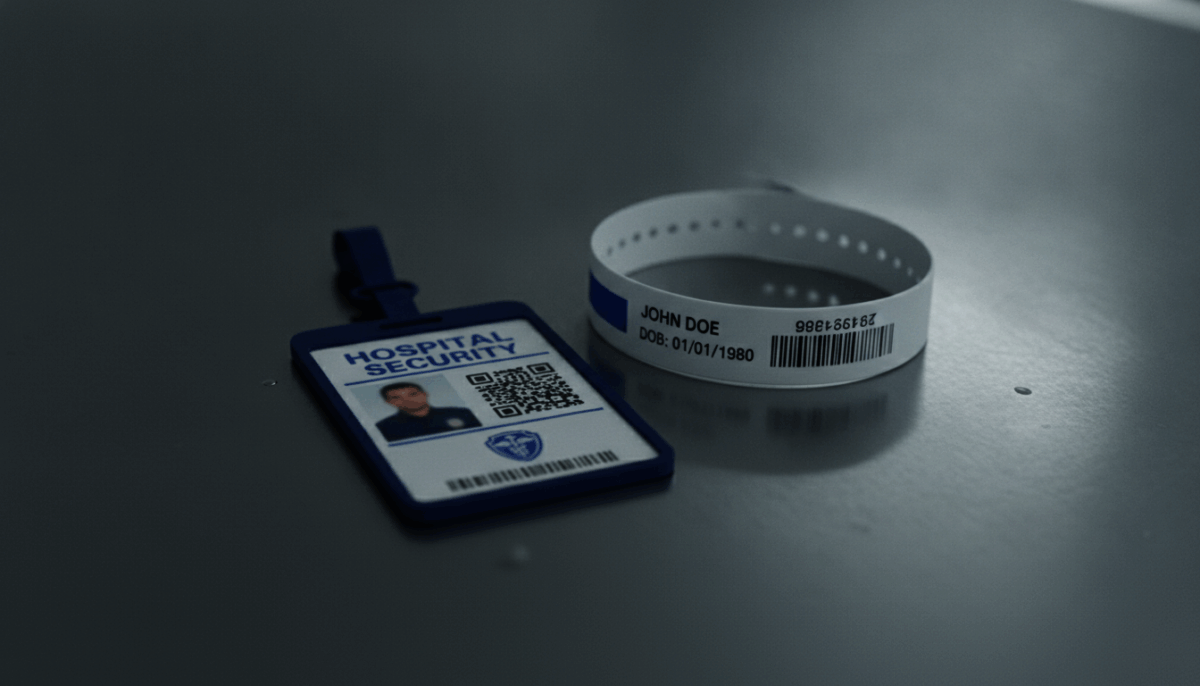
The week leading up to the due date was a blur of medical appointments and bureaucratic logistics. We had to prepare for the inevitable arrival of Linda at the hospital, whether she was invited or not. We sat down with our hospital social worker and explained the situation. I was worried they would dismiss it as ‘family drama,’ but when I showed them the pictures of the blanket and explained the history of her boundary-crossing, they took it seriously.
We put her on the ‘No Visitor’ list. We provided a photograph of her to the nursing staff and the security desk, with clear instructions that she was not to be allowed past the lobby under any circumstances. It felt surreal, giving a description of my mother-in-law to a security guard, but it was the only way I could focus on the actual labor. I needed to know that when I was at my most vulnerable, I wouldn’t have to worry about her barging into the room with more ‘helpful’ suggestions.
I kept wondering if she would try to force her way in, or if she would create a scene in the waiting area. I had nightmares about her appearing at the foot of my bed, demanding to hold the baby before I even had a chance to recover. The anxiety was a physical weight, but knowing there was a wall between us—a professional, enforced wall—gave me a tiny sliver of peace. It was the first time in my marriage that I felt truly in control of my own space.
Mark was stoic, handling the phone calls and the messages from his siblings who were confused about why Linda was so upset. He didn’t waver. He explained the destruction of the heirloom clearly and without emotion. Some of his family members understood; others called him a coward for ‘letting his wife’ dictate the situation. It didn’t matter. The only thing that mattered was the safety and security of the delivery room.
We practiced our responses. If she showed up, we weren’t going to argue. We weren’t going to explain. We were going to let security handle it. It was a cold, hard boundary, but it was one that had been earned through months of systematic violations. I was no longer interested in ‘keeping the peace’ if that peace required me to sacrifice my own sanity and the sanctity of my home.
The Confrontation in the Lobby
The day came, and it was as chaotic as expected. But in the middle of the contractions and the IV drips, the news filtered down: Linda had arrived. She had bypassed the waiting room and gone straight to the labor and delivery intake desk, demanding to know what room I was in. She was loud, she was frantic, and she was already crying to the nurses about her ‘poor, hormonal daughter-in-law’ who had cut her off.
I was in the middle of a transition phase, barely able to string words together, when the nurse came in. She was calm, professional, and firm. She told me that Linda was currently being escorted out of the building by security. I felt a wave of relief wash over me that was so intense it almost made me cry. It wasn’t about the drama; it was about the confirmation that I was safe. I was finally, truly safe.
I later found out that Linda had made quite a scene. She had tried to claim that she was a ‘support person’ and that the hospital had no right to deny her access to her granddaughter. She had threatened to sue, to cause a scene, to do anything to get past the glass doors. The hospital staff had stood their ground, citing my clear, pre-arranged instructions. She was eventually removed from the premises, not with a hug, but with a trespass warning.
Mark checked his phone once, saw a series of abusive texts, and blocked her number. He didn’t even read them aloud to me. He just tucked his phone away, grabbed my hand, and went back to coaching me through the next contraction. That was the moment I knew our marriage would survive this. He was choosing me, our daughter, and our boundaries over the codependency he had been raised in.
The rest of the labor was peaceful. We had the lights dimmed, some soft music playing, and the absolute certainty that no one was going to come through that door who didn’t belong there. It was the most empowering experience of my life. I had taken a stand, and for once, the consequences were handled by someone else. I wasn’t the bad guy; I was just a mother protecting her child.
The Aftermath: The Internet Weighs In
When I finally had the energy to check my phone a few days later, I saw that the drama had spilled onto social media. Linda had posted a lengthy, edited version of events on her Facebook, complete with a photo of the ‘beautiful pillows’ she had made, framing them as a gift I had cruelly rejected. She garnered a lot of sympathy from her circle, but the truth was leaking out through other family members who were tired of her antics.
I ended up posting my own side of the story on a popular forum, keeping names out of it but being very clear about the facts. The reaction was overwhelming. Thousands of people commented, most of them validating my decision to ban her from the hospital. It was a massive community of people who had dealt with their own ‘Linda’ and who were rooting for me to stay strong.
“You didn’t just ‘cut up a blanket.’ You destroyed an irreplaceable piece of her history and her grandmother’s memory. That is an act of deep, calculated cruelty disguised as ‘help.’ Stay the course. She has no right to your hospital room or your child.”
— u/GrandmaWasRight, 42.1k upvotes
Reading the comments was therapeutic. I realized that my reaction wasn’t ‘hormonal’ or ‘crazy.’ It was a logical response to a violation of trust. The Internet, for all its toxicity, was a mirror that showed me I wasn’t alone. It reminded me that boundaries are not punishments; they are instructions on how to treat us.
There were, of course, the dissenters—the people who claimed that ‘family is everything’ and that I was setting a bad example for my daughter by keeping her away from her grandmother. I ignored them. They didn’t understand the nuance of the destruction, nor the years of build-up that led to that moment. They saw a grandmother being kept away; I saw a woman protecting her lineage.
The validation from strangers helped me solidify my stance. I wasn’t just doing this for myself anymore; I was doing it because I wanted my daughter to grow up in a home where boundaries were respected, where things were treated with care, and where no one was allowed to trample on our dignity just because they were ‘family.’ The internet helped me see that I was on the right side of history.
The First Family Gathering Without Her
A month later, we hosted our first family dinner. It was the first time we’d seen most of the extended family since the incident. We made it clear that Linda was not invited to our home. If they wanted to see her, they could do it on their own time, but our house remained a neutral, safe zone. The tension was palpable when we announced the guest list, but to our surprise, most people accepted it.
My sister-in-law, who had always been the peacemaker, arrived with an apology. She admitted that she had seen the blanket before it was cut and knew exactly how much it meant to me. She told me she was sorry she hadn’t spoken up sooner. That small gesture of support was worth more than I could say. It showed me that the family wasn’t entirely under Linda’s spell; they were just afraid of her.
The dinner was lovely. For the first time, there were no passive-aggressive comments about my cooking, no rearranging of the furniture, no unsolicited advice on how to swaddle the baby. It was just a group of people enjoying each other’s company. It was quiet, peaceful, and entirely ours. I looked around the room and realized that the ‘drama’ had actually cleared the air.
I realized that Linda had been the source of most of the stress in our family gatherings for years. Without her presence, the dynamic had shifted. People were more relaxed, more honest, and more connected. It was a stark reminder that sometimes, removing the toxic element is the only way to heal the entire system.
We didn’t talk about the blanket. We didn’t talk about the hospital. We just talked about the baby and our plans for the future. It was a glimpse into what our life could be like if we continued to hold these boundaries. It was a future I was excited to live in, and for the first time, I felt confident that we could maintain it.
The Certified Letter of Demands
A few weeks after the dinner, we received a certified letter in the mail. It was from Linda. It was a formal demand for ‘grandparent visitation rights’ and a laundry list of grievances she felt we owed her for. She claimed that we were ‘alienating’ her from her granddaughter and that she had ‘earned’ a place in our daughter’s life. It was cold, legalistic, and frankly, hilarious in its absurdity.
We consulted a lawyer, who laughed as he read it. He told us that in our state, grandparents have almost no rights, especially when the parents are married and in agreement. He advised us to keep a record of everything—the blanket destruction, the hospital incident, the abusive texts—and to simply ignore the letter. He told us that responding would only give her the engagement she was craving.
Mark and I sat on the porch, reading the letter together. It was strange to see her voice in such a cold format. It was a reminder that she didn’t see us as people; she saw us as obstacles to her own desires. The letter mentioned ‘the beautiful pillows’ again, as if those were a bargaining chip for a relationship with our child. It was disconnected from reality.
We didn’t respond. We filed the letter away with our records and went on with our day. It felt powerful, having the law on our side and the confidence to know that she couldn’t force her way into our lives. We were done playing her game, and for the first time, she was the one who was powerless.
It was a turning point. We realized that no matter what she did—no matter how many letters she sent or how many people she tried to turn against us—she had no power over us unless we gave it to her. We had effectively neutralized her ability to hurt us.
Finding New Traditions
With Linda out of the picture, we had the space to create our own traditions. We spent the fall months taking long walks with the baby, visiting pumpkin patches, and establishing our own rhythm as a family of three. We took the remaining scraps of the blanket—the ones she hadn’t turned into pillows—and had a professional restorer turn them into a small, framed quilt for the nursery wall. It was a way to honor my great-grandmother without the constant reminder of the pillows.
The nursery began to feel like my own again. We repainted the walls, replaced the furniture she had insisted on, and made it a space that reflected our values, not her aesthetic. Every time I walked into that room, I felt a sense of pride. I had fought for this space, and I had won.
We started inviting friends over, people who respected our home and our boundaries. We had dinners where we laughed and shared stories, and where no one was afraid to be themselves. It was the life I had always wanted, and it was finally within reach. The absence of the chaos was the best gift we could have given ourselves.
I started knitting again, using the skills my grandmother had taught me. I wanted to create new heirlooms, ones that would have stories of love and patience, not the story of a destroyed blanket. It was a healing process, one stitch at a time, reclaiming my history and building a new one for my daughter.
We realized that we were stronger than we had ever been. The adversity had tested us, and we had come out the other side with a firmer grasp on our values and our priorities. We weren’t just parents; we were protectors, and that was the most important role we would ever play.
The Silent Unraveling of Her Influence
Months passed, and the silence from Linda’s end was deafening. We heard through the grapevine that she was struggling, that she had alienated other members of the family who were tired of the drama. It wasn’t a malicious feeling, but a sense of clarity. Her influence had been like a weed in our family garden, and by pulling it out, we had allowed everything else to bloom.
Mark’s siblings reached out more often. They started coming over for Sunday dinners, bringing their own partners and children. We built a new, healthier dynamic, one based on mutual respect and shared joy. It was exactly what we had hoped for, even if we hadn’t realized how much we were missing it.
We learned that the best way to deal with a toxic person is to live a happy, full life in spite of them. Every time we had a great day, every time we had a successful family gathering, it was a victory. It proved that we didn’t need her, and that our happiness wasn’t contingent on her approval.
The memory of the blanket still stung sometimes, but it was no longer a fresh wound. It was a scar—a reminder of a battle fought and won. It had taught me more about my own strength than anything else in my life. It had taught me that I had the capacity to be the villain in someone else’s story if it meant being the hero in my own.
We were finally at peace. The constant anxiety, the need to anticipate her next move, the fear of her breaking our boundaries—all of it had evaporated. In its place was a quiet, steady confidence that we were doing the right thing for our child and for our marriage.
The Lesson of the Broken Blanket
Looking back, I realize that the blanket was never really about the blanket. It was about the power dynamic. It was about her need to insert herself into our lives, to mark her territory, and to test our boundaries. And by destroying the blanket, she had finally shown her true colors. She had given us the evidence we needed to make a clean break.
I don’t regret the ban. I don’t regret the cold, hard lines I drew. If I had to do it all over again, I would do it exactly the same way. The protection of my daughter was worth more than any social nicety, any family obligation, or any ‘keeping the peace’ that required me to sacrifice my own dignity.
We are teaching our daughter that her voice matters, that her things deserve to be respected, and that she is allowed to set boundaries with anyone, even family. We are giving her a legacy of self-respect, and that is a much better heirloom than any piece of wool. That is the lesson I learned from the broken blanket.
We are moving forward, one day at a time, building a life filled with love and respect. We are stronger, more united, and more at peace than I ever thought possible. And the best part? We are doing it on our own terms. The drama is behind us, and the future is ours to define, completely and utterly.
If you are in a similar situation, know that you are not alone. You are allowed to say no. You are allowed to protect your home. You are allowed to be the villain if it means keeping your peace. Because at the end of the day, you are the only one who has to live with your decisions—make sure they are decisions you can be proud of.
Conclusion
My journey from a shattered heirloom to a fortified home has been the most transformative period of my life. It was a brutal initiation into motherhood, one that demanded I find my voice and use it, regardless of the social consequences. The destruction of that blanket wasn’t just a loss of property; it was the catalyst that allowed me to strip away the expectations of a toxic relationship and redefine what family means for us.
We learned that boundaries are not barriers to love; they are the foundation upon which healthy love is built. By enforcing them, we didn’t lose family—we clarified it. We kept the people who respect our autonomy and set aside those who would use our affection as a weapon. We have found a new, authentic happiness that is entirely our own, and that is a victory that no amount of interference can touch.
I hope my story serves as a reminder to anyone currently caught in a cycle of manipulation and boundary-crossing: your comfort, your history, and your family unit are worth protecting. You do not owe your sanity to anyone, no matter their title or their history. Stand your ground, trust your instincts, and don’t be afraid to lock the doors when necessary.
What about you? Have you ever had to draw a line in the sand with family that changed your life forever? Did you find that removing toxic influences actually brought you closer to the people who truly matter, or did you face unexpected backlash? Share your stories and your strategies in the comments below—let’s talk about the hard, necessary work of building boundaries.
What's your verdict on this dilemma?
Vote below to contribute to the official community consensus.

Have a Dilemma Keeping You Up at Night?
Share your real-life feud, wedding chaos, or relationship crossroads anonymously with our editorial team.
What do you think ?
0 Comments🛡️ Comments are moderated to protect community integrity. Your comment will appear once approved by the editorial team.