
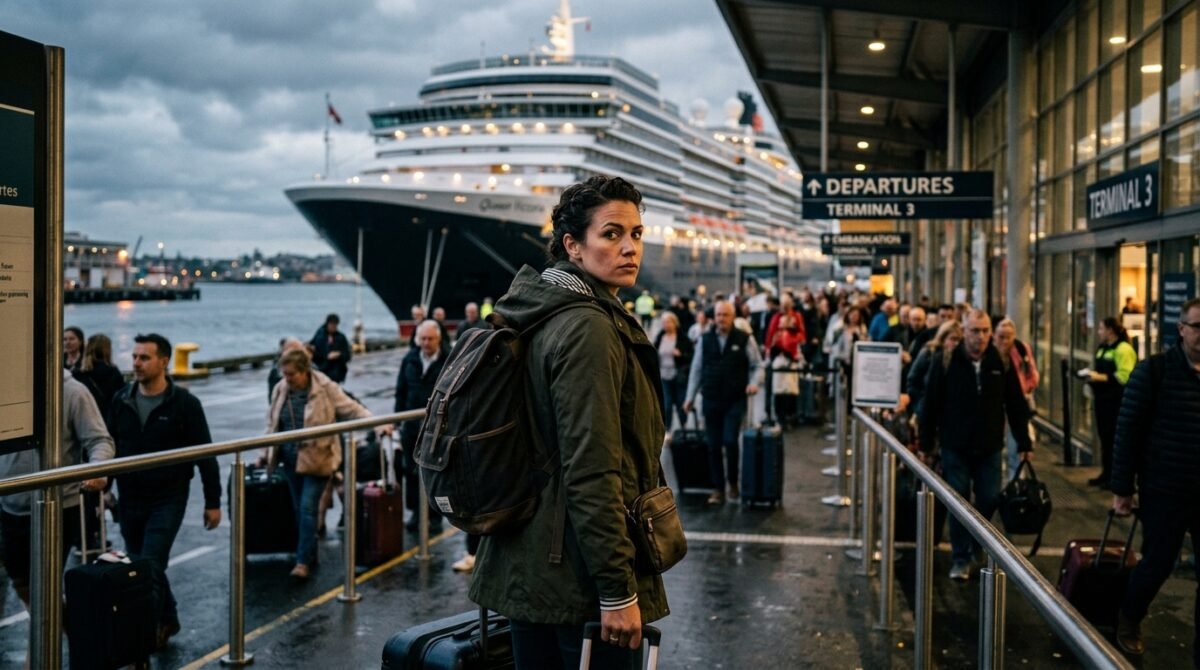
When people speak about “cold feet” before a wedding, they usually mean nervous jitters or last-minute doubts about the venue. Nobody tells you that your partner might resort to psychological warfare—and petty theft—to sabotage your independence. My fiancé, Mark, was always the “planner” in our relationship. I called it being organized; my therapist eventually called it coercive control. We had been saving for an Alaskan cruise for two years, a final celebratory trip before our wedding in the fall. It was supposed to be the highlight of our year, a romantic escape into the wilderness that would solidify our bond.
The trouble began with a subtle, gnawing sense of unease. Three days before we were scheduled to leave, my passport went missing. Then, my itinerary printouts were misplaced. I dismissed these as simple accidents, chalking them up to the frantic energy of pre-trip preparation. I was so blinded by my own excitement and trust that I didn’t see the pattern forming. I was a woman about to walk into a trap, and the person holding the door open was the man who claimed to love me most.
The morning of our departure started with a frantic search for my luggage. My carry-on and my main suitcase, which I had packed with meticulous care, were gone. Not misplaced, not moved—gone. Mark was eerily calm, pacing the living room with a cup of coffee while I tore the house apart, sobbing in desperation. He kept suggesting we just ‘postpone’ or stay home and ‘have a staycation.’ It was the kind of manipulation that felt like a thick, suffocating fog, and it wasn’t until I checked the hidden compartment of his trunk that the truth finally shattered my world.
I didn’t have much time. The cruise was boarding in four hours, and the drive to the terminal was long. I had a choice: play the victim and let him ‘comfort’ me into missing our trip, or do exactly what I did. I left him in the driveway, drove to the terminal with a single backpack I had managed to salvage, and left him behind. This is the story of how I realized that the person I was marrying was the one person I needed to escape from the most.
The Three Days of Vanishing Essentials
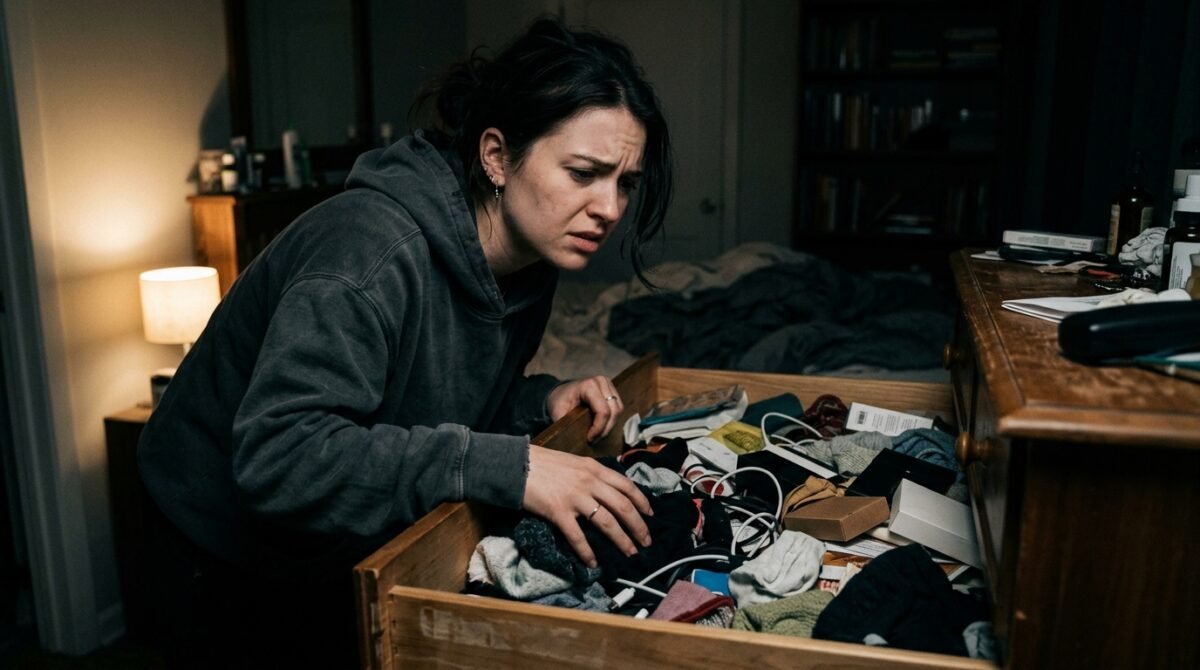
The unraveling of my sanity didn’t happen all at once. It was a slow, calculated erosion of my autonomy that began with my passport. I remember looking for it in my desk drawer, the specific place where it lived for the last four years. When it wasn’t there, I felt a sharp prickle of anxiety. Mark walked in, his expression perfectly blank, and asked what was wrong. I told him I couldn’t find my documents, and he offered a dismissive shrug.
“Maybe you left it in your winter coat pocket, babe? You know how scatterbrained you get when you’re stressed about the wedding,” he said, his voice dripping with that patronizing calm that I had learned to despise. I searched every pocket of every coat. Nothing. For the next forty-eight hours, the atmosphere in our apartment grew heavy with a strange, unspoken tension. I was frantic, checking the same drawers over and over, while Mark sat on the sofa, scrolling through his phone as if we weren’t about to lose a five-thousand-dollar vacation.
By the second day, I was convinced I was losing my mind. I was checking under the bed, inside the oven, and even in the trash cans. I felt small, helpless, and completely reliant on him. Every time I expressed concern, he would sigh, a long, dramatic sound that signaled I was being ‘difficult.’ It was as if he was waiting for me to break down and admit that we just shouldn’t go. The gaslighting was so precise that I actually began to apologize to him for being so ‘stressed out’ and ‘forgetful.’
“You’re really worked up over a piece of paper. Maybe the universe is telling us we need to spend this time at home instead? We have the wedding stress, the bills… it’s not the end of the world, Sarah.”
— Mark, two days before the trip
I didn’t realize then that he wasn’t just being dismissive; he was laying the groundwork for our ‘staycation.’ He wanted me isolated. He wanted me trapped in our apartment, fully dependent on his version of reality. I felt like a bird hitting an invisible glass wall, over and over, unable to figure out why I couldn’t reach the sky. It was only when I realized my medication was also ‘misplaced’ that the realization hit me: this wasn’t an accident. This was a siege.
The Morning the Luggage Disappeared
The morning of the cruise, I woke up at 5:00 AM, determined to find my things and get us to the terminal. I had already ordered a replacement passport the night before, which meant I had to scramble to the local office. I was a wreck. My luggage, which had been sitting by the front door, was gone. I walked into the hallway, expecting to see the two suitcases I had packed the night before, but there was only a bare floor.
I ran to the bedroom, screaming his name. Mark was already up, dressed in his casual travel clothes, standing by the window. When I asked him where the bags were, he turned around with a look of feigned confusion. He told me he hadn’t seen them, suggested maybe I had taken them to the car already—which I knew I hadn’t—and then offered to go check the garage. I didn’t wait. I started tearing the house apart again, my heart hammering against my ribs like a trapped bird.
I checked the garage, the basement, and even the attic. Nothing. I returned to the living room, tears streaming down my face, and saw Mark looking at his phone. He looked almost bored. That was the moment something snapped inside me. It wasn’t just frustration anymore; it was cold, sharp, crystal-clear realization. He was keeping us from leaving. He was making sure I stayed right where he could see me.
“I just checked the garage, Sarah. They aren’t there. Look, let’s just call the cruise line and tell them we had an emergency. It’s for the best. We’re both exhausted.”
— Mark, 6:00 AM
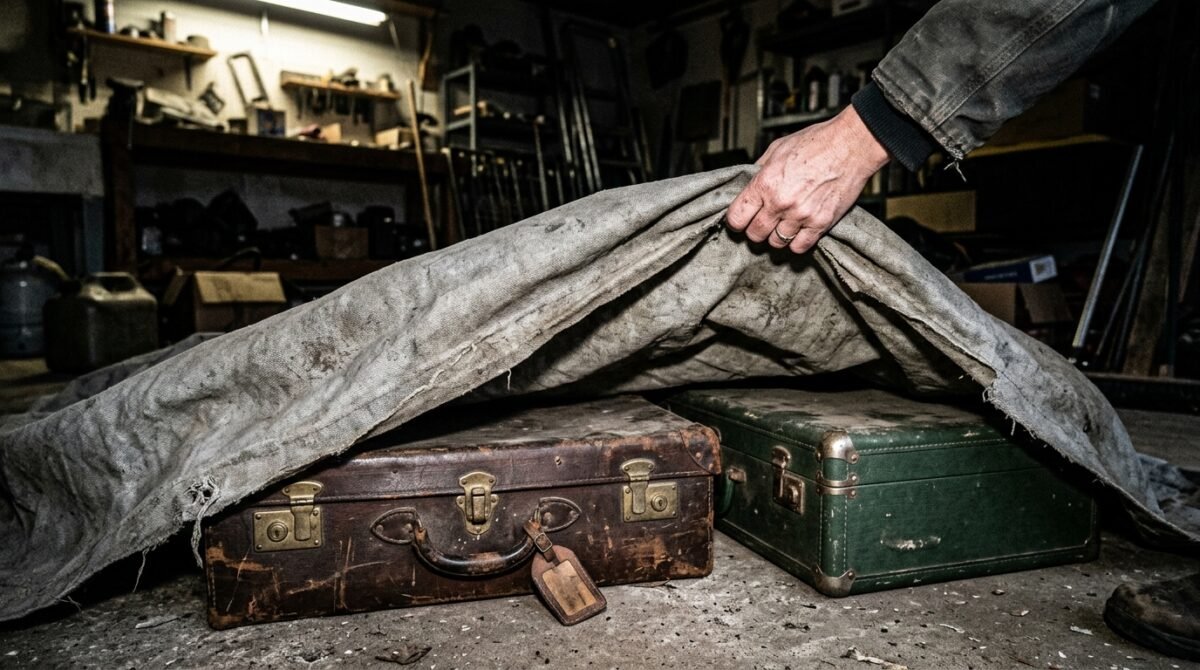
I didn’t answer him. I walked past him, my pulse thrumming in my ears. I went to the driveway and looked at his truck. I had a spare key that I had never really used. I opened the back hatch, and there, hidden under a tarp I didn’t recognize, were my suitcases. Both of them. My passport was tucked into the side pocket of my main bag. The betrayal was so visceral that I physically stumbled back. He hadn’t just ‘misplaced’ things; he had stolen them from me to keep me captive.
The Silent Drive to the Terminal

I didn’t confront him immediately. I felt a weird, icy calmness take over. I grabbed my bags, threw them into my own car, and walked back into the house. Mark was in the kitchen, making breakfast, still acting as if our vacation was a dead dream. He looked up, his smile faltering when he saw me standing there with my bags back in the house. I didn’t say a word. I just packed a small backpack with the essentials I had found, left the heavy luggage in my car, and grabbed my keys.
“What are you doing?” he asked, his voice losing that smooth, manipulative edge. I told him I was leaving for the terminal. He laughed, a short, sharp sound. “You’re crazy. We aren’t going. The car isn’t packed, we’re behind schedule, and I’m not driving you.” I looked at him, really looked at him, and realized I didn’t know who he was at all. I told him he didn’t need to drive me. I was going alone.
The drive was a blur of adrenaline and fury. I kept checking the rearview mirror, half-expecting him to be following me, but the road was clear. My phone buzzed incessantly. It was him, sending text after text, each one growing more desperate and then more aggressive. He tried to frame me as unstable, saying I was ‘having an episode’ and that he was worried about my mental health. He threatened to call my family, to tell everyone I was ‘losing it’ right before the wedding.
“You are acting like a lunatic. If you leave now, don’t expect me to be here when you get back. We are supposed to be a team. You are choosing a boat over your husband-to-be.”
— Text from Mark, 7:15 AM
I realized then that this was the dynamic: either I did what he wanted, or I was ‘crazy.’ If I fought for my autonomy, I was ‘unstable.’ The irony of his control being the actual cause of my panic was lost on him. I didn’t reply to a single message. I blocked his number, turned off the phone, and focused on the horizon. Every mile I put between us felt like a breath of fresh air filling lungs that had been starved of oxygen for months.
The Confrontation at the Cruise Gate
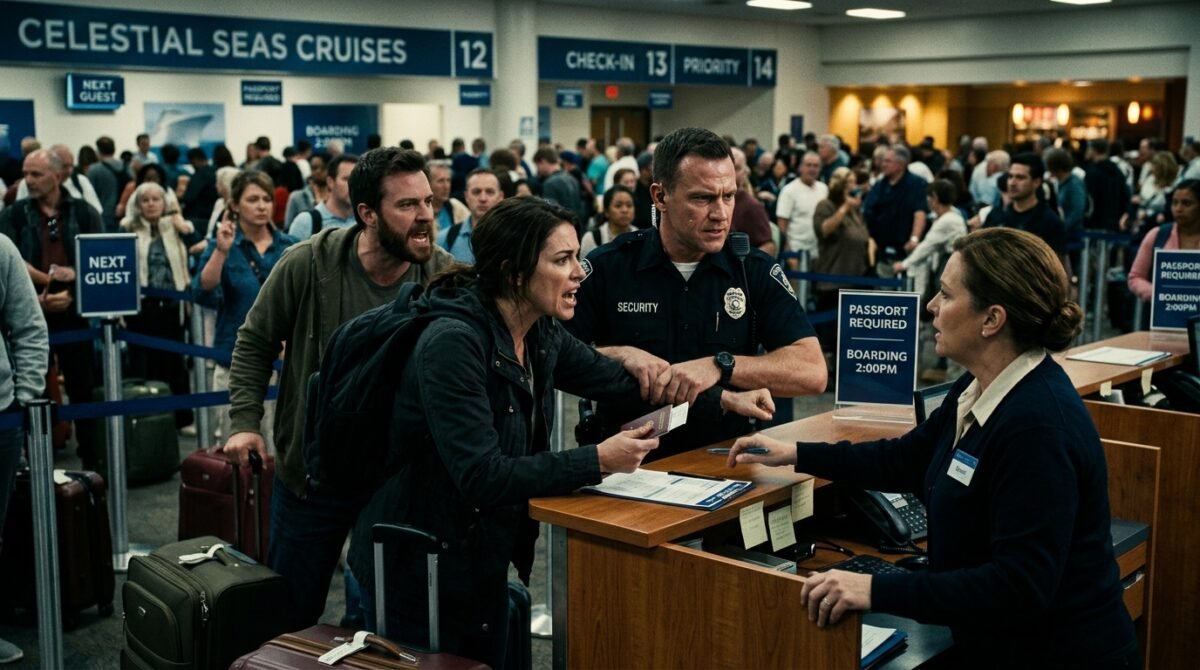
When I arrived at the terminal, I was twenty minutes from the final boarding call. The air smelled of salt and diesel, a scent that felt like freedom. I stood in the check-in line, my heart still racing, but the panic had been replaced by a grim, hard resolve. I had my passport, I had my ticket, and I had left the man who thought he could define my reality. I felt like a fugitive, but for the first time in years, I felt like a fugitive who was finally running toward something real.
Just as I reached the desk, I saw someone approaching from the crowd. It was Mark. He had tracked my phone’s location before I turned it off and had driven like a maniac to catch me. He looked disheveled, his face red with rage, and he didn’t care who was watching. He grabbed my arm as I was handing over my documents. The staff behind the counter looked alarmed, their eyes darting between us. I didn’t flinch. I pulled my arm away and told him to back off.
“You think this is funny?” he hissed, his voice trembling with a mix of fury and fear. “You’re going to walk away from everything we built? You’re going to embarrass yourself in front of these people? You have nothing. No luggage, no help. You’re going to look like a fool.” I looked at the security guard standing a few feet away, then back at Mark. I told him that the only fool was the man who thought he could hide a woman’s life in the back of a truck and expect her to thank him for it.
“I’m not going back with you, Mark. You stole my bags. You sabotaged this trip. And you’re never going to do that to me again. If you don’t leave right now, I’m calling security.”
— My final words to him at the gate
The look on his face shifted from rage to genuine confusion. He honestly didn’t see the theft as the problem; he saw my ‘rebellion’ as the problem. He stood there for a beat, waiting for me to break, for me to apologize and beg to go home. When I didn’t, he turned around and walked away, muttering something about how I was ‘ruining everything.’ I turned back to the agent, who was watching me with a mix of pity and professional detachment. I handed over my documents and, within ten minutes, I was walking onto the ship.
The Silence of the Open Sea

The first few hours on the ship were surreal. I sat on the deck, watching the coast of the city grow smaller and smaller until it was just a smudge on the horizon. I was alone, without my luggage, and officially engaged to a man I was never going to speak to again. I had a backpack with a change of clothes, my passport, and my phone, which remained powered off. I felt like a ghost, untethered from the life that had been carefully curated for me by someone else.
I ordered a drink and sat in the quiet lounge, just listening to the sound of the ocean. The silence was the most profound thing I had ever experienced. For so long, my life had been filled with Mark’s opinions, Mark’s plans, and Mark’s manufactured crises. Suddenly, there was just me. I didn’t have to apologize for my excitement. I didn’t have to manage his moods. I didn’t have to explain why I wanted to see the glaciers or why I liked reading in the afternoons.
I started to realize how much of myself I had pruned away to fit into his life. I had stopped wearing certain colors because he didn’t like them. I had stopped talking to certain friends because he found them ‘distracting.’ I had become a shell, a mirror reflection of what he needed a partner to be. And all of it—all that sacrifice—was thrown away the moment I decided to cross the terminal gate. It was a terrifying realization, but it was also the most liberating thing I had ever felt.
“I thought I was going on a vacation, but I was actually attending my own funeral as a person. Being here, on this boat, I’m finally starting to remember who I was before he touched me.”
— My journal entry on the first night
I spent the evening walking the decks, breathing in the cold, crisp air. I didn’t have a suitcase, which meant I had to buy a few clothes from the ship’s store, but I didn’t care. The money I spent felt like an investment in my own survival. I was done being a supporting character in someone else’s drama. I was going to be the protagonist of my own life, even if the ending was currently blank.
The Digital Fallout and Family Pressure
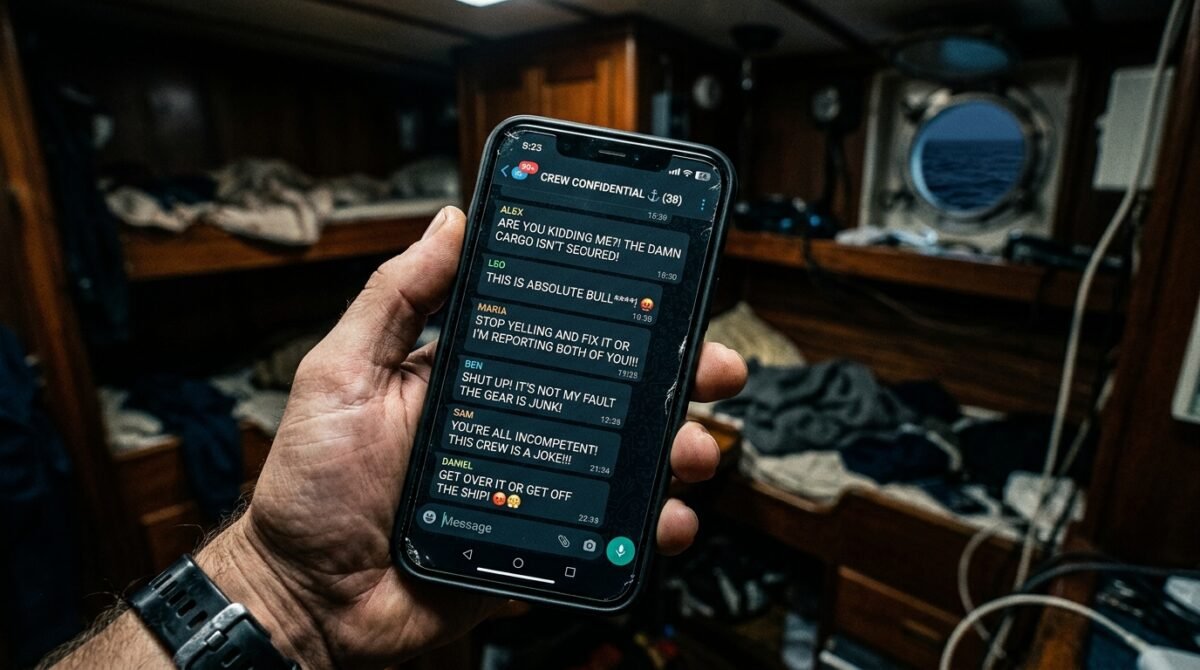
I turned my phone back on the next morning. My notifications were a war zone. There were sixty-four missed calls, dozens of texts from Mark, and a frantic group chat with his mother and sister. Mark had apparently gone home and told them that I had ‘suffered a mental breakdown’ and left him at the cruise terminal. He was playing the victim, the confused, abandoned fiancé who had done nothing but try to ‘help’ me manage my stress.
The texts from his mother were particularly venomous. She was demanding that I call her, that I explain myself, and that I come home immediately to ‘fix’ the damage I had done to her son. She called me selfish, unstable, and ungrateful. I read them all, one by one, feeling the old familiar guilt pricking at my skin, but then I remembered the sight of my bags under that tarp. The guilt dissolved into cold, hard logic. I was not responsible for his narrative.
I didn’t answer them individually. Instead, I sent one message to the group chat. I kept it brief, factual, and completely devoid of emotion. I didn’t want to argue; I wanted to close the door. I told them that Mark had hidden my luggage to prevent me from going on the trip and that I had chosen to leave because I could no longer trust him. I blocked them all immediately after hitting send. I didn’t need their validation, and I certainly didn’t need their permission to be free.
“Mark, you hid my bags in your truck to prevent me from traveling. I saw them. I’m not coming back. Do not contact me again. I am taking the time to reassess my life, and that life does not include you.”
— My final message to the group chat
The silence that followed was deafening. I knew they were probably losing their minds, calling my parents and creating a scene, but I was four thousand miles away. I was in the middle of the ocean, and for the first time in my life, nobody could reach me. I felt the physical weight of that control lift from my shoulders, and I finally, truly, began to sleep through the night.
Community Reaction: The Reddit Verdict
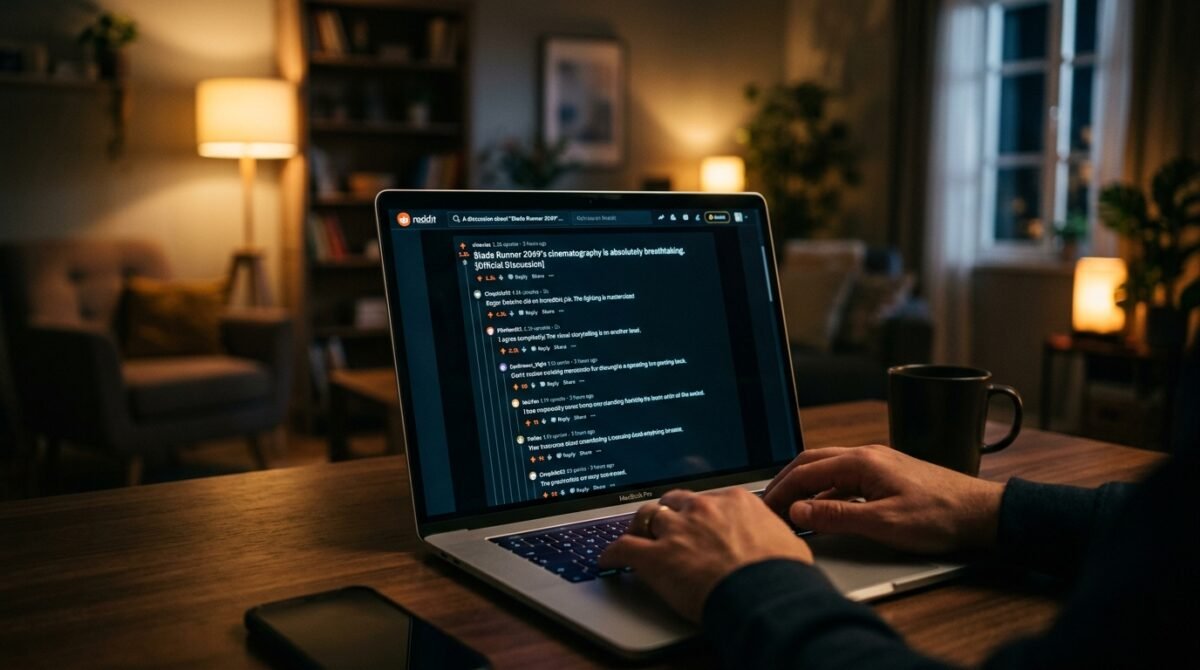
When I finally got back to reality, I posted my story on a popular forum. I needed to know if I was actually the ‘crazy’ one, as Mark had insisted. The response was overwhelming. Thousands of people commented, and the consensus was so loud that I couldn’t ignore it. The Reddit community didn’t see me as a villain; they saw me as a woman who had escaped a dangerous, manipulative situation. The validation was almost overwhelming.
The comments were varied. Some were from people who had been through similar ‘coercive control’ scenarios, sharing their own horror stories of partners who sabotaged their careers, hobbies, or friendships. Others were purely pragmatic, warning me about the legal implications of the ‘theft’ and advising me on how to secure my belongings and my identity once I returned home. It was a masterclass in collective wisdom, a safety net I hadn’t realized I needed until I had it.
“Honey, this isn’t just about a cruise. This is textbook isolation. He didn’t want you to have a good time without him, and he certainly didn’t want you to have a life where you could make decisions for yourself. NTA. You didn’t leave him at the gate; he left himself there the moment he stole your freedom.”
— u/HopeInTheDark (Top Comment, 32.1k upvotes)
“Please, please, please change your locks before you get home. If he was willing to go this far to control you, he won’t take kindly to you standing up for yourself. Document everything. Every text, every lie, every piece of evidence. You are not the crazy one.”
— u/LegalEagleEye (15.2k upvotes)
Reading these comments, I realized that I wasn’t alone. I had been living in a vacuum, convinced that my experience was unique and that I was the problem. Seeing these thousands of people support my choice was the final piece of the puzzle. I wasn’t ‘losing it’; I was finding myself. The labels Mark had pinned on me—’unstable,’ ‘dramatic,’ ‘forgetful’—were just tools he used to keep me in line. And those tools were now broken.
The Reality of Post-Breakup Logistics
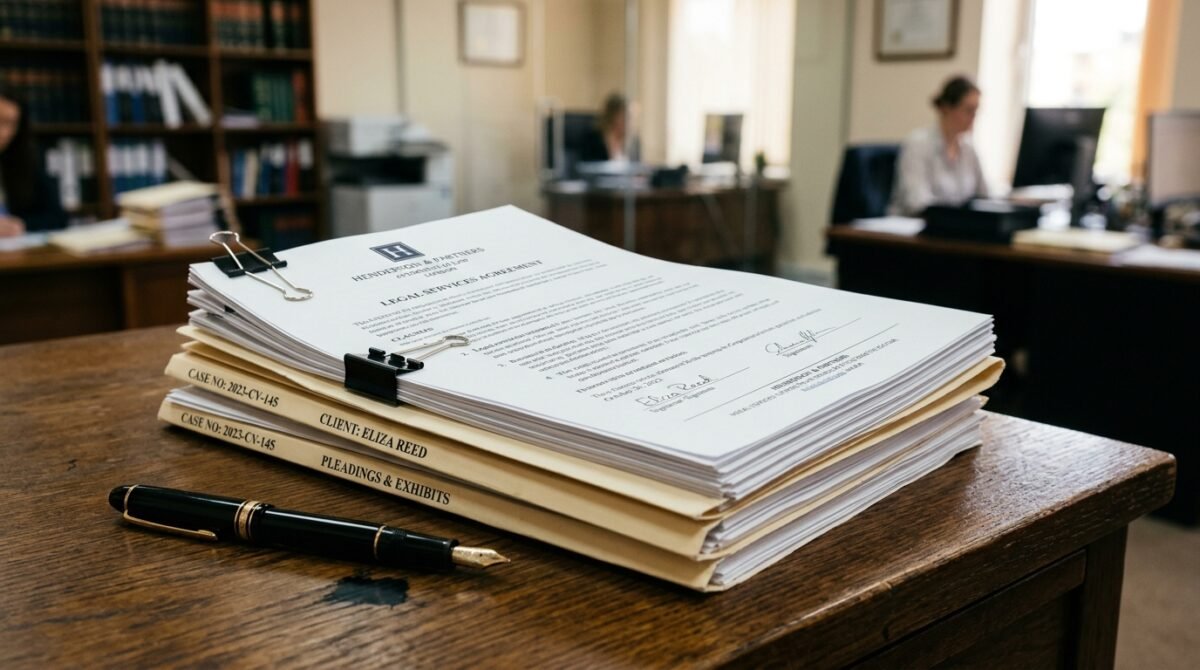
Returning home was the hardest part. I didn’t go back to our apartment. I stayed with a friend while I hired a lawyer to handle the dissolution of our joint finances and the move-out process. I knew Mark would be waiting for a confrontation, and I was not going to give it to him. The financial entanglement was a nightmare—the wedding deposits, the joint savings, the lease. Everything was tainted by the memory of his betrayal.
We had a spreadsheet that we had used for years to track our expenses. Looking at it now, I saw the patterns I had missed. The small ‘loans’ he would take, the ‘investments’ he suggested we make with our vacation fund, the subtle ways he had been draining my resources for years. It wasn’t just about the luggage; it was a long-term strategy of financial control. I had been funding my own imprisonment without even realizing it.
| Category | Mark’s Claim | The Reality |
|---|---|---|
| Vacation Fund | “Safe for our future” | Used to cover his debts |
| Wedding Deposits | “Locked in” | Mostly refundable |
| Passport/Travel | “Misplaced/Lost” | Hidden in his truck |
My lawyer was invaluable. She treated the theft of my bags as a significant red flag in our relationship, and she was the one who insisted that I file a police report for the theft. It felt extreme at the time, but she told me it was about establishing a paper trail. If he tried to claim that I abandoned the apartment or stole our joint property, I would have a record of his behavior. It was a cold, clinical way to end a relationship, but it was the only way to be safe.
I remember sitting in her office, feeling like I was signing away my past. Every form I filled out felt like I was shedding a layer of skin. I was tired, angry, and grieving for the person I thought I was going to marry, but I was also relieved. The uncertainty was gone. The games were over. I was finally in control of my own life, and that, I realized, was worth more than any cruise or any wedding I had ever dreamed of.
The Echoes of the Past
Months later, I still have moments where the reality of it hits me. I’ll be packing a bag for a weekend trip, and I’ll stop, my hands trembling as I check the locks on my suitcases. The trauma of that morning at the cruise terminal didn’t vanish just because I left him. It lingers in the small, quiet moments—the need to double-check my passport, the anxiety when I don’t see my phone for a few minutes, the fear that someone is watching me.
But the difference is that I now have the tools to manage it. I have therapy, I have my friends, and I have the knowledge that I am capable of standing up for myself. I see the world differently now. I am more cautious, yes, but I am also more aware. I don’t let people ‘help’ me to the point of exclusion anymore. I value my independence, and I protect it with a ferocity that would have shocked the person I used to be.
Mark tried to reach out a few times, sending ‘apology’ emails that were really just more attempts to frame me as the aggressor. He claimed he ‘just wanted to make sure I was okay’ and that he ‘loved me so much he couldn’t let me leave.’ I didn’t respond to any of them. I didn’t need his apology, and I certainly didn’t need his version of the truth. I had my own truth, and it was written in the distance I had put between us.
“I thought that love was about being a single unit, two halves of a whole. But I realize now that if one half is trying to swallow the other, that’s not love. That’s just survival of the fittest, and I’m done playing the victim.”
— My reflection in the mirror, six months post-breakup
I am dating again, slowly, and with much more scrutiny. I don’t give people the benefit of the doubt as easily as I once did. I look for the small, subtle red flags—the dismissiveness, the attempts to manage my time, the lack of respect for my boundaries. And if I see them, I leave. I don’t wait for the luggage to go missing. I leave the first time I feel my freedom being threatened.
The Final Lesson: Freedom is Not Free

Looking back, I realize that leaving him at the gate was the most important decision I ever made. It wasn’t just about a cruise; it was about the rest of my life. If I had stayed, if I had let him talk me out of that trip, I would still be in that apartment, still being ‘managed,’ still being the woman he needed me to be. The cruise was just the catalyst. The real journey was the one I took to reclaim my own existence.
I learned that the most dangerous traps aren’t the ones we see coming. They are the ones that are built by the people who hold our hearts. They are the ones that start with ‘I’m just trying to help’ and end with us trapped in a life we don’t recognize. And the only way out is to recognize the trap for what it is, even if it means leaving everything behind at the gate. Freedom is terrifying, and it is exhausting, but it is also the only way to be truly alive.
I am happy now. Not in the way I thought I would be—not with a perfect, Pinterest-worthy wedding or a partner who ‘plans everything’ for me. I am happy in the messy, complicated, and wonderful way that comes with being the author of my own story. I travel when I want, I wear what I want, and I am accountable only to myself. And that, I have discovered, is the ultimate luxury.
If you are in a situation where you feel like you’re losing yourself, where you’re constantly apologizing for your own existence, or where your partner is ‘managing’ your life into a corner, listen to the voice that is telling you to run. It doesn’t matter what people think. It doesn’t matter what the ‘plan’ was. What matters is that you belong to yourself, and you deserve a life that is as big and as bright as you want it to be. Don’t wait for the bags to go missing.
Conclusion
My journey from that cruise gate to where I am today has been a long, winding road of self-discovery, anger, healing, and finally, peace. It has forced me to redefine what I value in a partner and, more importantly, what I value in myself. The betrayal I experienced was not just about the theft of my belongings; it was about the theft of my trust and my agency. Reclaiming that has been the work of a lifetime, but it has been worth every second.
I often think about the other women out there who might be living in their own ‘traps,’ waiting for a sign that it is okay to leave. I want them to know that you don’t need permission to be free. You don’t need to justify your desire for independence. You are enough, exactly as you are, and you deserve a partner who celebrates your autonomy, not one who tries to steal it. Your life is not a script written by someone else.
As I move forward, I carry the lessons of that day with me. I value my boundaries, I trust my instincts, and I never, ever underestimate the power of saying ‘no.’ I hope my story serves as a reminder that sometimes, the most important thing you can do is walk away, even when it feels like the world is watching. Your life is yours to live, and no one has the right to hide it from you.
What about you? Have you ever had a moment where you realized that the person you trusted most was actually the one holding you back? Have you ever had to walk away from a life you thought you wanted to save your own sense of self? Share your stories below—let’s keep the conversation going and support one another in the pursuit of our own truths.
What's your verdict on this dilemma?
Vote below to contribute to the official community consensus.

Have a Dilemma Keeping You Up at Night?
Share your real-life feud, wedding chaos, or relationship crossroads anonymously with our editorial team.
What do you think ?
0 Comments🛡️ Comments are moderated to protect community integrity. Your comment will appear once approved by the editorial team.