

They say that wedding planning brings out the true colors of a partner, but I never expected my fiancé, Mark, to arrive at our civil ceremony with a literal legal contract tucked under his arm. We were standing on the steps of the municipal building, the morning sun hitting the polished stone, surrounded by the faint hum of city traffic. I was wearing a vintage lace dress that made me feel beautiful and, more importantly, like myself. Mark looked sharp, as always, but there was a tension in his jaw that I had come to associate with his ‘project management’ style of intimacy.
When he handed me the envelope, I assumed it was a card, or perhaps a revised itinerary for our honeymoon in the Amalfi Coast. Instead, I pulled out a stapled document titled ‘Marital Health and Maintenance Agreement.’ My heart plummeted into my stomach, a cold, sinking sensation that seemed to stop time entirely. As I flipped through the pages, my eyes locked onto a clause demanding mandatory, recorded weekly weigh-ins to ensure I remained within a ‘mutually agreed-upon BMI range’ to protect his ‘investment in our joint social standing.’
The air felt thin. The irony of the situation—that he was handing me a demand for control on the very day we were meant to promise each other freedom and partnership—was a cruel joke. I looked at Mark, waiting for the punchline, waiting for him to tell me it was a prank, a misguided attempt at some twisted humor. But he didn’t laugh. He adjusted his cufflink, looked at his watch, and asked if I had signed the document yet so we could be finished with the paperwork before our 10:00 AM slot.
In that moment, the vision of our life together—the dinners, the future children, the quiet Sundays—didn’t just blur; it shattered. I realized that my body had been a negotiated asset in his mind all along. I wasn’t his partner; I was a project he was afraid would depreciate. As I stood on those steps, the weight of his expectations finally lifted, replaced by a sudden, terrifying, and exhilarating clarity. I didn’t say yes. I didn’t even say goodbye. I just turned and walked away, leaving him standing there with his contract and his scale.
The Slow Creep of Calculated Criticism
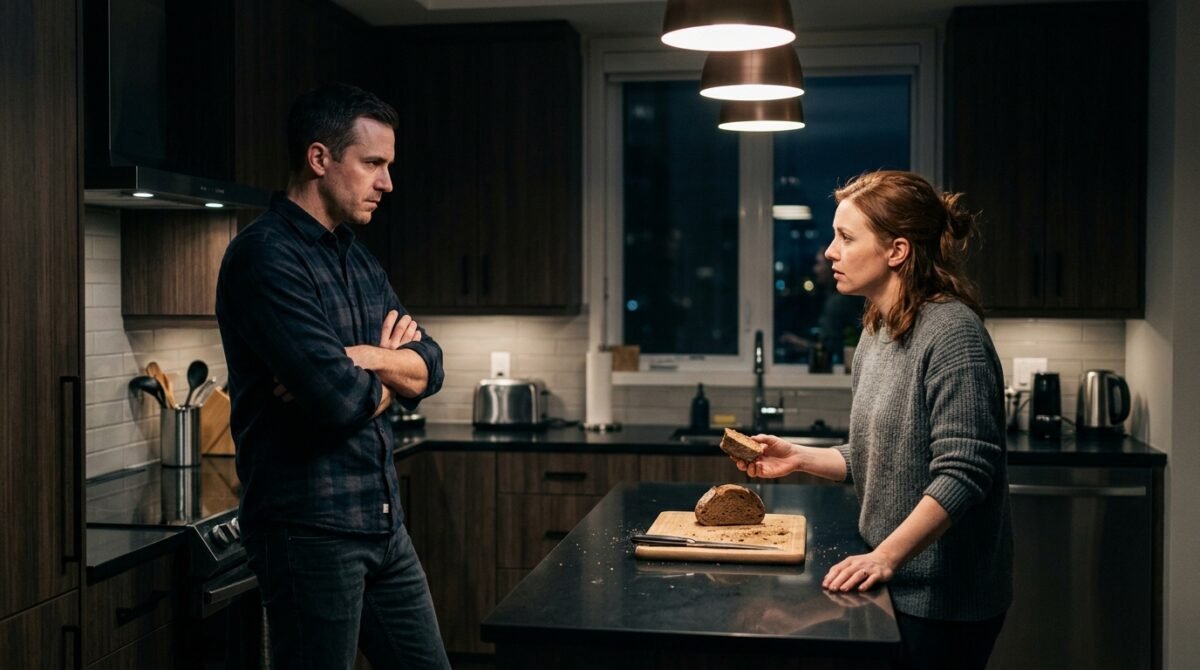
It didn’t happen overnight. Looking back, the signs were like a slow-moving tide, eroding the shore of my self-esteem without me ever hearing the waves. When we first met, Mark was a ‘health enthusiast,’ a term I interpreted as someone who enjoyed hiking and smoothies. It was only after we moved in together that the enthusiasm morphed into a obsessive, data-driven policing of my daily habits. He would track my caloric intake on a shared app, disguised as ‘mutual accountability,’ and offer ‘constructive’ feedback on my grocery choices.
I remember one specific Tuesday evening, three months into our engagement. I had come home exhausted from a twelve-hour shift, craving nothing but a slice of toast. I was standing in the kitchen, buttering the bread, when Mark walked in, glanced at the counter, and sighed. He didn’t say ‘hello.’ He said, ‘I thought we talked about the refined carb limit for weeknights, Sarah. It’s hard for me to stay motivated when you’re not mirroring the effort.’
I tried to brush it off, attributing his behavior to his high-pressure corporate job. I started hiding snacks in my car, eating junk food in the pantry before he got home, and feeling a deep, knotting shame whenever I sat down to a meal. The more he pushed, the more I withdrew. I was shrinking myself in every possible way to accommodate his vision of what a ‘trophy’ partner should look like. I convinced myself that this was just ‘support’ and that if I could just hit the goals he set, the tension would finally evaporate.
“I’m just trying to make sure we’re both at our peak, Sarah. If we let ourselves go now, what happens in ten years? I’m looking out for our longevity as a unit.”
— Mark, during a ‘state of the union’ talk in our living room.
I felt a deep, hollow ache in my chest every time he spoke about our bodies as a ‘unit.’ He spoke about us as if we were a hedge fund, and my physical appearance was a volatile stock he needed to hedge against. I should have spoken up then, but I was blinded by the sunk-cost fallacy of our two-year relationship. I thought we were building a future, failing to realize that the foundation was being built entirely on his terms, with his blueprints, and in his image.
The Sunday Morning Spreadsheet Ambush

The escalation happened on a lazy Sunday, the kind that usually felt safe. Mark had pulled up a laptop, his face illuminated by the harsh blue light of the screen. He beckoned me over, claiming he had ‘optimized our wedding prep logistics.’ I walked over, expecting spreadsheets about venue deposits and catering costs. What I saw instead was a detailed, color-coded chart of my weight, my gym attendance, and my ‘performance metrics’ over the last six months.
My jaw tightened as I scanned the columns. He had been tracking my gym fob swipes and comparing them to my weight fluctuations. He had even calculated the cost-per-pound of my personal training sessions, highlighting which ones were ‘underperforming.’ It was chilling, the clinical detachment with which he treated my existence. When I asked him why he had been recording this data, he looked at me with genuine confusion, as if I were the one behaving irrationally.
He explained that he had consulted with a ‘lifestyle coach’ friend of his who suggested that clear expectations prevent ‘marital drift.’ He had turned our relationship into a business merger where I was the junior partner failing to meet quarterly projections. The sheer audacity of it left me speechless, but he kept talking, his voice calm and patronizing, explaining how the agreement would ensure that our wedding photos met his ‘aesthetic standards.’
“Look at this data, Sarah. You plateaued in April because you skipped three sessions. If we formalize this, we won’t have to argue about it anymore. It’s a roadmap for success, not an attack.”
— Mark, presenting his ‘optimization’ chart.
I spent that night in the guest room, staring at the ceiling, wondering how I had allowed myself to be reduced to a collection of data points. The realization that he didn’t just want me to be healthy, he wanted me to be perfect for his public image, hit me with the force of a wrecking ball. I decided then that I would go along with the charade for a few more days, mostly because I was in a state of shock, but also because I wanted to see exactly how far he would take this.
The Midnight Draft of the ‘Marital Health Agreement’
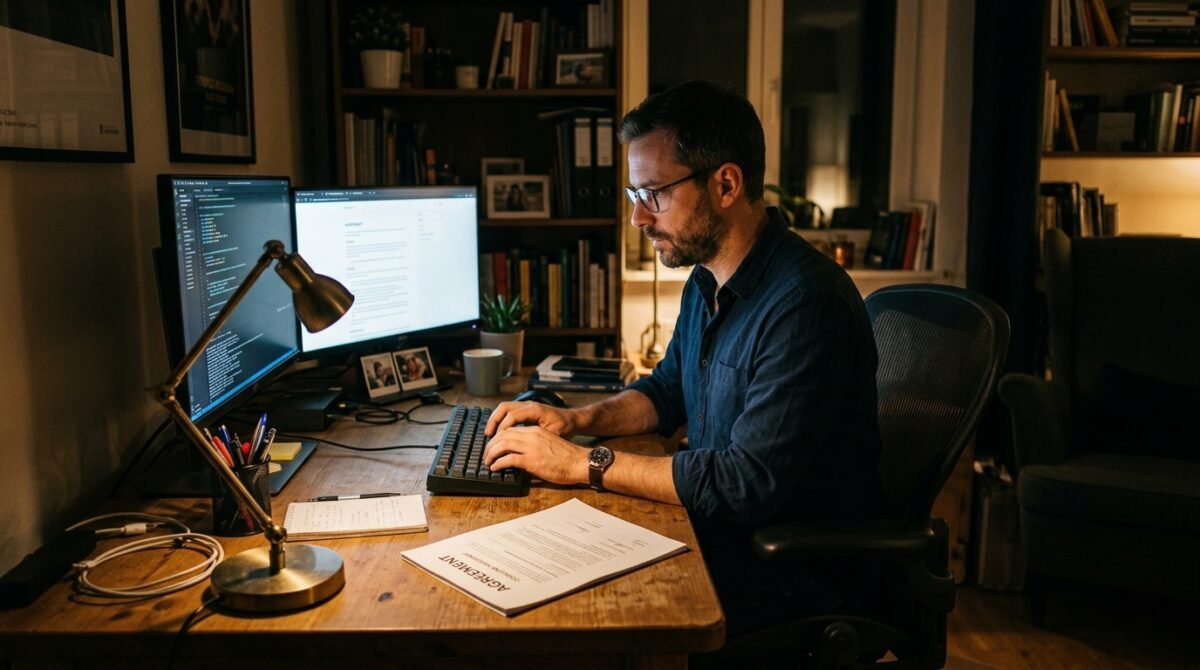
For the next week, the air in the apartment was thick with unspoken resentment. Mark went about his business as if everything were normal, even bringing home a high-end digital scale that synced directly to his phone. He placed it in the center of the bathroom as a ‘symbol of our commitment.’ I would step over it like it was a landmine, refusing to acknowledge its presence. Meanwhile, he began leaving printed drafts of the contract on the kitchen table, each version more restrictive than the last.
One night, I found him hunched over his desk, drafting a clause regarding ’emergency caloric adjustments.’ He was writing down penalties for missed weigh-ins—donations to a charity he disapproved of, or extra chores on his chore list. It was a power play designed to humiliate, a way to exert control over every facet of my life under the guise of ‘optimization.’ I stood in the doorway, watching him type, realizing that he was completely devoid of empathy for how this was affecting me.
I started documenting everything. I took pictures of the contract drafts, the scale, and the ‘metrics’ on his computer. I didn’t know why I was doing it at the time, perhaps just to prove to myself later that I wasn’t crazy. The absurdity of it became a shield; by treating his behavior as the insane, theatrical performance it was, I found it easier to distance myself emotionally. I was already halfway out the door, even if my feet were still planted on the living room rug.
“I need you to sign this by Friday. It’s just a formality to make sure we’re both on the same page before the city hall appointment. It’s for our future, Sarah. You’ll thank me later.”
— Mark, placing the final version of the contract on the kitchen island.
I didn’t answer him. I just nodded, a hollow gesture that he interpreted as compliance. That night, I made a list. Not of my weight, but of the things I had lost—my confidence, my love for food, my autonomy, and my sanity. The list was long, and it was a devastating indictment of our relationship. By the time I fell asleep, I knew exactly what I was going to do on the morning of our wedding.
The City Hall Steps: A Final Stand
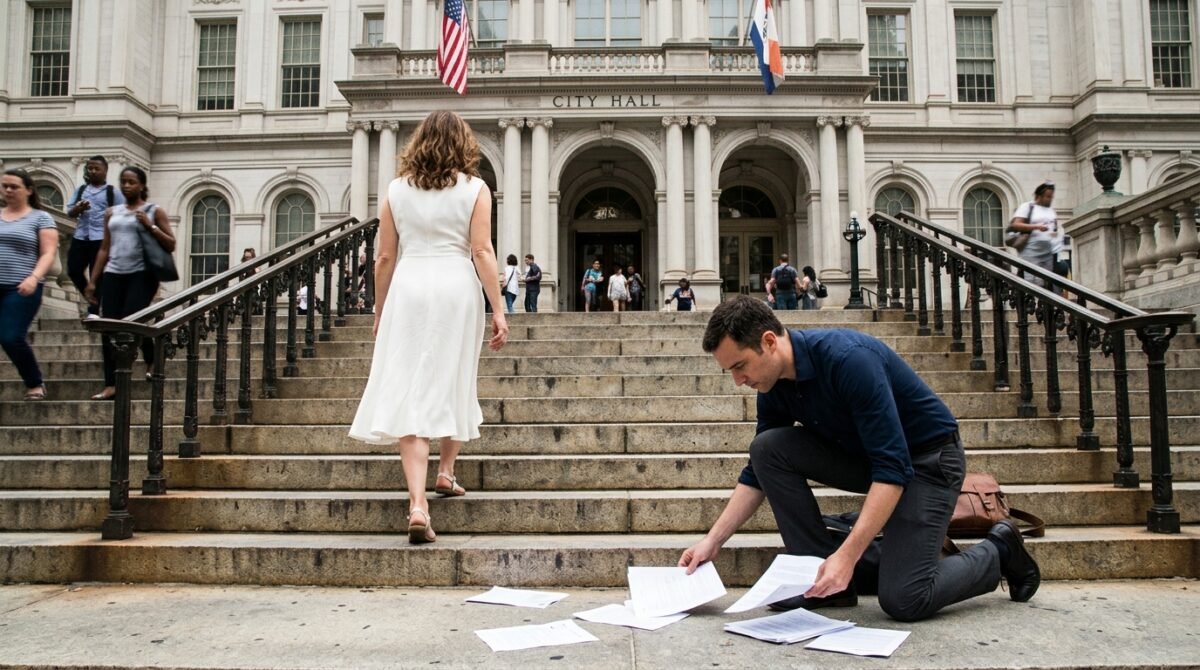
The morning of our civil ceremony was crisp and bright. We had chosen a small, intimate affair, just us and the witnesses we were required to bring. Mark was dressed in his finest suit, adjusting his tie in the reflection of the building’s glass entrance. He looked like a man about to close a major business deal, not a man about to marry his best friend. He handed me the envelope, his expression one of smug satisfaction, as if he had successfully managed a crisis.
I held the envelope, the paper heavy in my hands. I didn’t open it immediately. I watched him check his watch, his impatience palpable. He wanted this over with so we could start the ‘project’ of our marriage, complete with his surveillance system and his punitive clauses. The scene was surreal; people were walking past us, some smiling at the sight of a couple in wedding attire, completely unaware that I was holding a divorce before the marriage had even begun.
I opened the envelope, slowly, methodically. I read the clauses—the mandatory weekly weigh-ins, the ‘aesthetic penalties,’ the clauses about ‘joint social standing.’ It was even worse than I remembered. When I looked up, I didn’t see a husband. I saw a man who would never love me, only the version of me he thought he owned. I didn’t feel anger anymore; I felt a strange, liberating indifference. I was done.
“You really thought I would sign this, didn’t you? You thought you could own me like a piece of property in a portfolio.”
— Me, staring at Mark on the city hall steps.
I placed the document on the top step, the wind catching the edges of the pages. I didn’t throw it; I just set it down with finality. I looked him in the eye, saw the flicker of panic as he realized the dynamic had shifted, and then I simply turned around. I walked toward my car, my heart beating in a rhythm that felt like freedom. He didn’t even follow me; he was too busy trying to scoop up his papers, terrified that someone would see the absurdity of his demands.
The Aftermath: Silence and Scrutiny
The days following that morning were a blur of frantic phone calls and explosive texts. My phone didn’t stop buzzing for 48 hours. Mark’s family, who I had always tried to impress, were calling to demand an explanation, calling me ‘unstable’ and ‘impulsive’ for ‘throwing away a good man.’ They didn’t know about the contract. They thought I had just had a cold-feet panic attack. Mark had made sure to frame the narrative in his favor, portraying me as the unstable one.
I decided to go nuclear. I didn’t respond to their calls. Instead, I uploaded the photos of the contract and the spreadsheets to a private cloud and sent them to his mother and his sister. I didn’t write a long explanation; I just sent the files with a single message: ‘This is the man you wanted me to marry.’ The silence that followed was deafening. The messages stopped. The calls stopped. It was as if I had dropped a stone into a pond and watched the ripples clear the weeds.
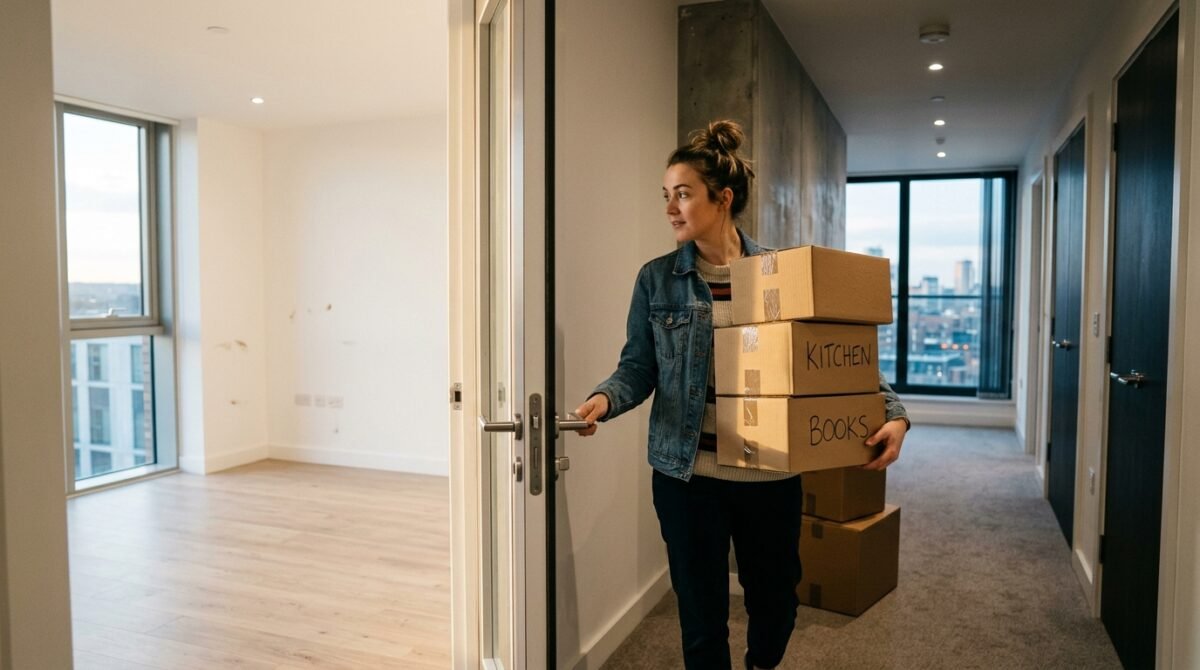
I moved out of the apartment within three days, with the help of my brother. Mark was at work when we arrived. The apartment felt like a tomb, stripped of the warmth I had tried so hard to inject into it. As I packed my belongings, I found the scale he had left in the bathroom. I didn’t take it. I left it there, a monument to a failed experiment. When I finally closed the door, I felt like I was exhaling for the first time in years.
“How could you do this to him? He’s devastated! He says you’re making everything up. You’ve ruined his reputation with the family!”
— Mark’s sister, via text message.
I didn’t reply. There was no point. The truth was documented, and the consequences of his actions were now his to live with. I was starting over, with nothing but my clothes, my books, and the sudden, overwhelming realization that I was finally, truly, mine again. The weight of his expectations had been the heaviest thing I’d ever carried, and now that it was gone, I felt light enough to float away.
Reddit Weighs In: The Community Reacts
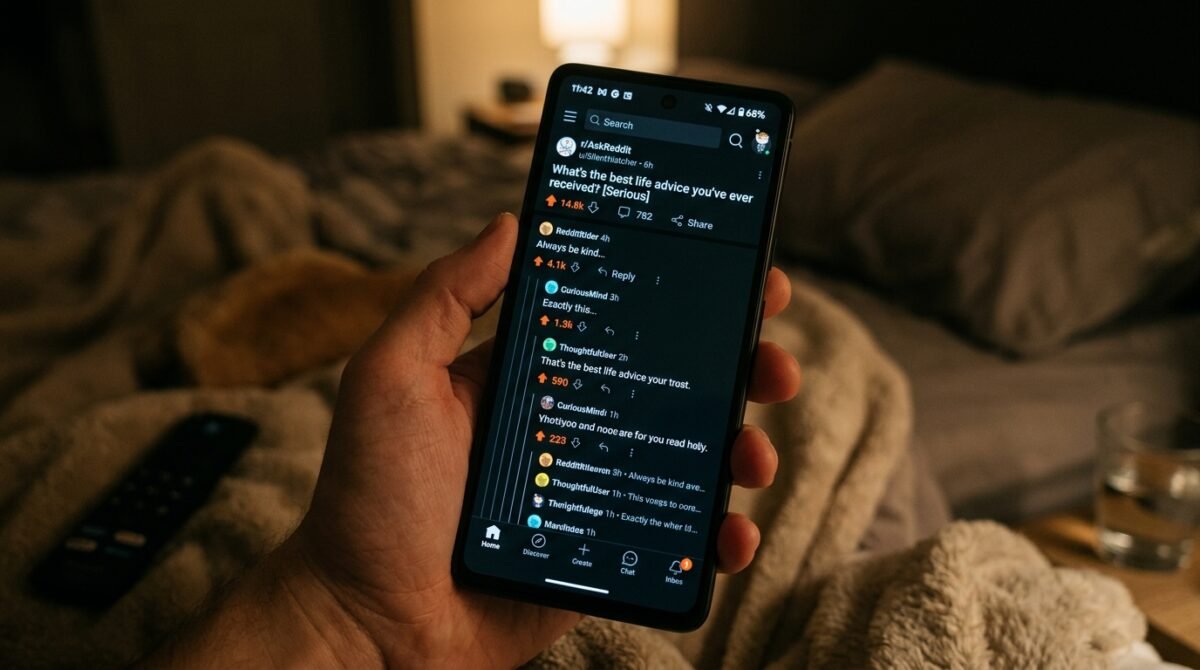
I posted my story on a popular subreddit, needing an outlet for the anger and the validation that I hadn’t lost my mind. The response was immediate and overwhelming. Thousands of people reached out, sharing their own stories of control, emotional abuse, and the subtle ways partners turn affection into a trap. It was the first time I felt part of a community, a group of people who understood that what had happened to me wasn’t a ‘misunderstanding’—it was a pattern of abuse.
Some comments were supportive, others were analytical, breaking down the psychological manipulation Mark had used. People pointed out the ‘sunk-cost’ traps, the ‘gaslighting’ tendencies, and the red flags I had ignored for far too long. It was a mirror held up to my own life, and seeing the reflections of others helped me process the trauma of the last few years. I realized I wasn’t just a victim of a bad partner; I was a survivor of a systematic attempt to erase my identity.
The most eye-opening comments came from people who pointed out that this wasn’t just about weight; it was about the power dynamic. Mark didn’t want a wife; he wanted an extension of his own ego. The way he had treated my body as a business asset was, as many noted, a hallmark of deep-seated narcissism. Reading those words helped me stop blaming myself for the ‘failure’ of our engagement and start seeing it as the most successful decision of my life.
“This isn’t about ‘health.’ This is about control. He wanted to own you, and he used the guise of ‘wellness’ to make you feel like you were the one who was failing. You dodged a bullet that would have destroyed your soul.”
— u/SelfLoveWarrior (Top Comment, 42.5k upvotes)
The community support was a beacon of sanity. It reminded me that there are people who value boundaries and self-respect, and that I wasn’t alone in the struggle to reclaim my life. The discourse gave me the language I needed to describe what happened—to label the ‘accountability’ for what it was: surveillance, harassment, and emotional coercion. I wasn’t just ‘leaving my fiancé’; I was escaping a cage.
The Anatomy of a ‘Project’ Relationship
As I reflect on the relationship, I can see the structure of it clearly now. It was never a partnership; it was a ‘project.’ Mark approached me with the same intensity he approached his Q3 reports. He viewed our life as a series of milestones to be achieved, optimized, and measured. If I wasn’t performing to his specifications, I wasn’t just a person having a bad week; I was a metric that needed to be corrected. This is the danger of the ‘optimization’ culture when it bleeds into personal life.
He would use words like ‘growth,’ ‘potential,’ and ‘betterment’ to mask his demands for conformity. Whenever I tried to express my feelings, he would pivot back to the data. ‘How can we solve the issue if we don’t look at the inputs?’ he would ask, effectively silencing any emotional vulnerability I had. It was a way to keep the conversation on his terms, in his language, and within his field of vision. I was a variable in his equation, and he was the one solving for X.
The toll this took on my mental health was catastrophic. I stopped trusting my own judgment. I started feeling like I was ‘flawed’ because I couldn’t keep up with his pace. I lost the ability to enjoy simple pleasures, because even a dessert was tainted by the knowledge that it was being ‘accounted for’ in his head. I was living in a constant state of performance anxiety, waiting for the next critique, the next spreadsheet, the next ‘improvement’ plan.
“You’re too emotional about this, Sarah. We’re just trying to streamline our trajectory. Everything you’re complaining about is for your own benefit, if you’d just look at it objectively.”
— Mark, during a heated argument about my decision to take a weekend trip with friends.
The objectivity he craved was a mask for his own insecurity. He needed me to be a certain way to feel secure in himself, to validate his own ‘perfect’ life. By placing me in a box, he was trying to contain the chaos of human existence. But I wasn’t a box to be filled, and I refused to be his project anymore. The realization that his desire for control was actually a symptom of his own fear was perhaps the most liberating thing I learned.
Reclaiming the Mirror

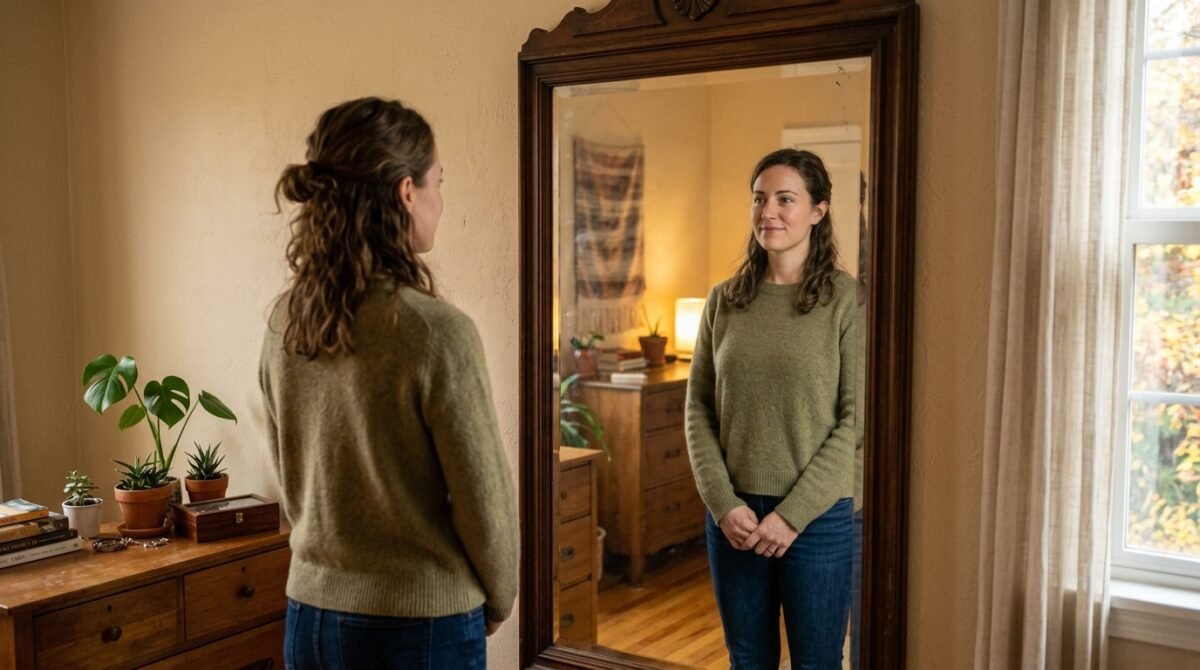
In the months after leaving, the most difficult part wasn’t the logistical nightmare or the fallout with his family—it was reclaiming my own reflection. I spent so much time looking at myself through his eyes, seeing the ‘flaws’ he had pointed out, that I had forgotten what I actually looked like, or what I actually liked about myself. Every time I stood in front of a mirror, I had to consciously push away his critical voice and replace it with my own.
I started small. I bought the clothes I wanted to wear, not the ones that fit his ‘aesthetic.’ I ate the foods I enjoyed without tracking them, without guilt, and without feeling like I was ‘failing.’ I started going to the gym because I enjoyed the feeling of movement, not because I was trying to hit a target. It was a process of unlearning, a slow shedding of the skin he had tried to force me into. It was painful at times, but it was mine.
I realized that beauty is not a number on a scale or a metric in a spreadsheet. It’s an expression of comfort in one’s own skin, a reflection of the joy we find in being alive. I had been trying to shrink myself to fit his life, when I should have been expanding my own. The liberation I felt wasn’t just about leaving a bad relationship; it was about reclaiming the right to exist without being judged, measured, or optimized.
“I don’t need your ‘improvement’ plan. I am not a project. I am a person, and I’m finally realizing that I am enough exactly as I am.”
— What I wish I had said to him, written in my journal.
I still have days where the insecurity bubbles up, where I hear his voice in my head, but they are becoming fewer and further between. I am learning to trust myself again, to listen to my own needs, and to set my own boundaries. I am building a life that is messy, authentic, and entirely my own, and for the first time, that feels like success.
The Legal Reality Check

It turned out that the contract wasn’t just a personal affront; it was a bizarre attempt at a prenuptial-adjacent agreement. I consulted with a lawyer, just to be sure, and they were stunned by the audacity of it. ‘Even if you had signed it,’ they told me, ‘it wouldn’t have been worth the paper it was printed on.’ It was an unenforceable, coercive document that would have been laughed out of any courtroom, but the fact that he thought he could use the law to control me was chilling.
The lawyer explained that these kinds of agreements are often used by narcissists to exert control, to create a sense of obligation, and to intimidate their partners into submission. It wasn’t about the law; it was about the psychological weight of a legal-sounding document. He wanted to make me feel like I was under an obligation, that I had ‘promised’ to be a certain way, and that breaking that promise would have ‘real’ consequences.
It was a form of gaslighting, using the authority of the law to validate his own petty insecurities. Learning this helped me see through the ‘professionalism’ he always prided himself on. He wasn’t a man of integrity; he was a man who used systems, be they spreadsheets or legal contracts, to bully those closest to him. The legal consultation was the final nail in the coffin of my guilt, confirming that I had done the right thing by walking away.
“This is clearly a pattern of coercive control. He wasn’t just asking you to be healthy; he was trying to create a framework where he could police your bodily autonomy. You’re lucky you didn’t sign anything.”
— My lawyer, during our final consultation.
I feel a sense of pity for the next woman he finds, but I know there’s nothing I can do about that. All I can do is live my life, set my boundaries, and be grateful that I’m no longer part of his system. The experience has made me much more cautious about people who talk about ‘optimization’ and ‘accountability’ in the context of relationships. I know now that those are often just code words for something much darker.
Finding My Own Voice

Sharing this story has been a journey of its own. It’s not just about the wedding that never happened; it’s about the voice I found in the aftermath. For years, I had been quiet, agreeable, and accommodating. I had let others set the pace of my life. But the moment I turned around on those city hall steps, I found the strength to say no, and I realized that my ‘no’ is just as powerful as my ‘yes.’ That realization has changed everything.
I’ve started writing, not for a project, but for myself. I’ve started speaking up in meetings, setting boundaries with family, and prioritizing my own happiness in a way I never did before. It’s a work in progress, but it’s a progress that I’m actually enjoying. I’m no longer looking for validation; I’m looking for truth. And the truth is, I’m stronger than I ever gave myself credit for.
The journey from the woman who almost signed a contract for her own body to the woman who is now speaking out about it has been transformative. It’s a testament to the fact that we can change, we can grow, and we can reclaim our own narratives. We are not just the roles we play in other people’s lives; we are the authors of our own.
“When you stop trying to please everyone else, you finally have the space to figure out who you are. And that is the most beautiful version of yourself you will ever find.”
— A note to myself in my daily journal.
I hope that by sharing this, someone else who is feeling the weight of someone else’s expectations will realize that they have the right to walk away. You don’t need a legal reason, a dramatic scene, or anyone’s permission. You just need to realize that you are worth more than any metric, any spreadsheet, and any contract. You are a person, and that is enough.
Conclusion
Looking back, the city hall steps were not just a place where I ended a relationship; they were the threshold of my new life. The contract was the final, desperate reach of a man who wanted to possess, not love. By leaving it behind, I didn’t just escape a bad marriage; I regained my autonomy, my self-worth, and my voice. The process was messy and painful, but it was entirely necessary.
This story serves as a reminder that we must always be the gatekeepers of our own boundaries. Love, at its core, is about freedom—the freedom to be seen, to be accepted, and to be challenged in ways that help us grow, not in ways that diminish who we are. If your partner is treating you like a project, if they are measuring your worth by metrics, and if they are demanding you change to suit their aesthetic, you are not in a partnership; you are in a trap.
I want to hear from you. Have you ever felt the pressure to change your core identity for someone else, only to realize that you were losing yourself in the process? How did you set your boundaries, and what was the outcome? Let’s talk about it in the comments below. Your stories might be the spark that helps someone else reclaim their own life.
What's your verdict on this dilemma?
Vote below to contribute to the official community consensus.

Have a Dilemma Keeping You Up at Night?
Share your real-life feud, wedding chaos, or relationship crossroads anonymously with our editorial team.
What do you think ?
0 Comments🛡️ Comments are moderated to protect community integrity. Your comment will appear once approved by the editorial team.