

We had been inseparable since kindergarten, sharing secrets, scraped knees, and the inevitable teenage heartbreaks that define a lifetime of friendship. Elena was always the charismatic one, the person who could walk into a room and command attention, while I was content to stay in the background, providing the steady foundation she often leaned on. I thought I knew her, but as we entered our late twenties, a new, unsettling version of Elena began to emerge—a version fueled by the curated, filtered vanity of the influencer industry.
It started subtly. A weekend trip to a local winery turned into a three-hour photoshoot that left us both hungry and irritable. A simple dinner out became a production, with food cold on the table while she spent ten minutes finding the perfect lighting for her aesthetic. I tolerated it, thinking it was just a phase, a hobby that would eventually lose its luster as reality set in. But then came the life-altering decision: she quit her stable corporate marketing job to pursue ‘full-time content creation’ without a safety net or a plan.
I expected her to struggle, to maybe pick up freelance work or pull back on her spending. Instead, she looked at her inner circle as a venture capital firm. The moral dilemma began when the requests for ‘loans’ turned into professionalized demands for a monthly stipend. When I finally reached my breaking point and laughed at the sheer audacity of her proposal, she didn’t just walk away—she launched a campaign to paint me as the villain in her carefully crafted narrative.
This isn’t just a story about money. It is a story about the corrosive nature of performative success and the painful realization that sometimes, the people who have known you the longest are the ones who understand you the least. As the walls of our friendship crumbled, I was forced to decide between maintaining a toxic status quo and standing my ground, even if it meant losing a piece of my past forever.
The Pitch Deck of Delusion

It was a Tuesday evening, the kind that feels unremarkable until your phone vibrates with a notification that changes everything. Elena had invited me over for ‘drinks and strategy,’ which I assumed meant she wanted to vent about her recent drop in engagement metrics. When I arrived, however, she had laid out a printed presentation on her coffee table—graphs, projections, and a detailed breakdown of her ‘operational costs’ for the coming year.
She gestured toward the document with the practiced grace of a TED Talk speaker. She explained that to truly ‘scale her brand,’ she needed a consistent influx of capital to cover studio rentals, professional editing software, and, most bizarrely, a personal assistant stipend. I sat there in stunned silence, flipping through the pages, half-expecting to see a punchline at the end.
“I’ve analyzed our friendship dynamic,” she said, her voice completely devoid of irony. “You’re in a senior role at your firm, you have disposable income, and you’ve always been my biggest cheerleader. This isn’t a loan; it’s a strategic investment in my potential. Once I hit that 100k follower mark, the sponsorships will flood in, and I’ll be able to pay everyone back with interest.”
I asked her point-blank if she was joking. I looked at the $2,500 line item under ‘Monthly Sponsorship Subsidy’ and felt my stomach turn. This wasn’t a friend asking for a helping hand during a difficult transition; this was an acquaintance viewing my hard-earned salary as a corporate sponsorship opportunity to fund her pipe dream.
“I’m not a venture capitalist, Elena. I’m your friend. Why are you treating our relationship like a business transaction you can outsource to my bank account?”
She sighed, rolling her eyes as if I were being willfully obtuse. She didn’t see the reality of her situation—she saw only the vision board she had constructed in her head. She was so detached from the financial reality of her choices that she genuinely believed I had a moral obligation to subsidize her lifestyle, simply because I had once promised to support her dreams in a middle school diary.
The Sound of Uncontrollable Laughter

When the laughter finally bubbled up, it wasn’t malicious, but it was certainly loud. It was a reflex, a desperate attempt to break the tension of a moment that felt entirely alien to me. I sat back on her couch, my head in my hands, trying to suppress the giggles that were rapidly turning into hysterical gasps. Elena’s face, however, did not reflect any humor. It hardened into a mask of pure, unadulterated fury.
“You think this is funny?” she hissed, her voice dropping into a register I had never heard before. The room, which moments ago felt like a brainstorming session, now felt like a courtroom where I had been found guilty of a capital offense. I tried to explain, to tell her that the absurdity of the situation had simply overwhelmed me, but she wasn’t interested in an explanation.
She stood up, pacing the small living room like a trapped animal. She began to list all the times she had ‘been there for me’—the breakups she listened to, the work projects she helped me edit, the emotional support she provided when my parents were sick. She was essentially presenting a bill for our entire history, quantifying our friendship into a debt that I was apparently failing to repay.
“I laughed because the alternative was screaming. You are asking for thousands of dollars to play house on Instagram, and you’re acting like I’m the one being selfish here. This is delusional, Elena.”
The silence that followed was heavy and suffocating. She grabbed the printed pitch deck, crumpled it into a ball, and threw it across the room. She accused me of being jealous of her potential, of trying to keep her small because I was afraid of her success. The irony was so thick I could have cut it with a knife, but I knew that pointing it out would only make things worse.
I realized then that this wasn’t about the money at all. It was about control. By framing the demand as a ‘sponsorship,’ she was trying to force me into a role where I was obligated to her success, making me a stakeholder in a project I never agreed to join. It was a power move, and I had just refused to play along.
The Group Chat Inquisition
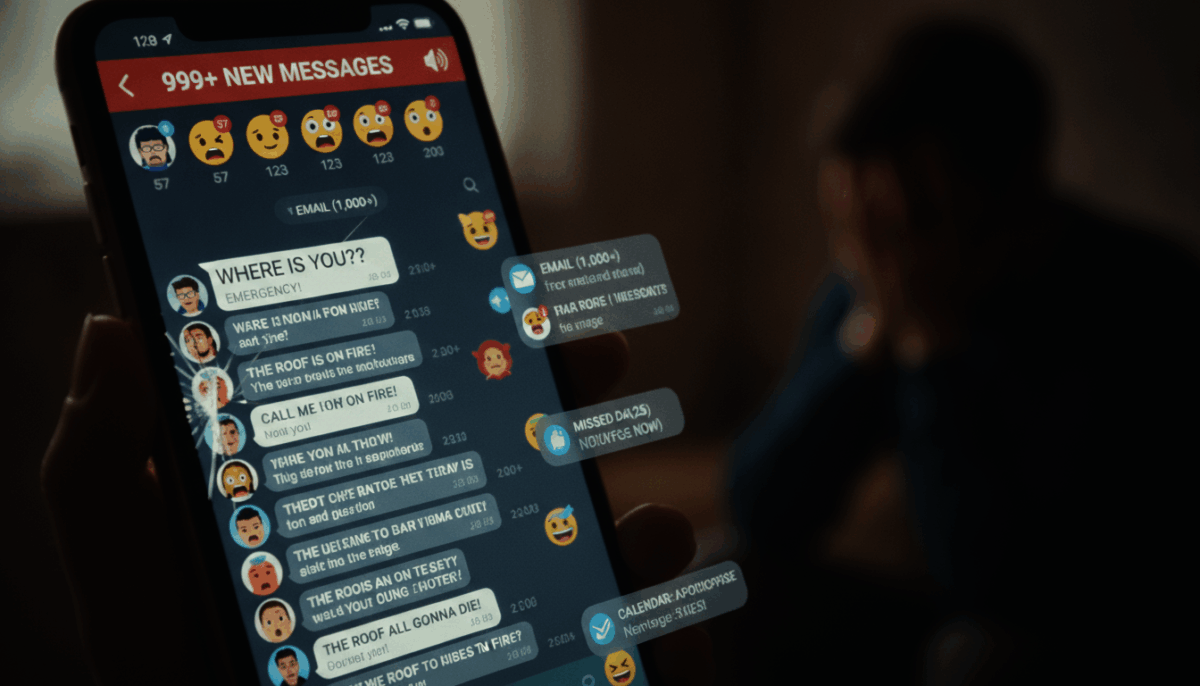
The fallout was swift and public. Within twelve hours of leaving her apartment, I received a barrage of notifications from our shared friend group. Elena hadn’t just moved on; she had framed the incident as a betrayal of her character. She had screenshots, edited for context, circulating in our private chat, showing my laughter as a sign of ‘condescension’ and ‘toxic elitism.’
Our friends, caught in the middle, were confused and hesitant. Some were clearly on my side, having watched Elena’s descent into influencer-mania with their own concerns, but others were playing the mediator, asking if I could just ‘hear her out’ to keep the peace. I didn’t want to play the victim, but I certainly didn’t want to be the villain in a narrative I didn’t write.
“Look, guys, I don’t care what she says. She asked for $2,500 a month to fund her Instagram career. If anyone wants to sponsor her, be my guest. I’m out.”
— Sent in the group chat by me
The responses were mixed. Some people sent private messages of support, confessing that she had approached them with similar, albeit smaller, requests. Others stayed silent, opting to avoid the drama altogether. Elena, however, continued to post updates about ‘cutting out toxic energy’ and ‘investing in people who believe in the vision,’ making it crystal clear that I was the target.
It was a masterclass in gaslighting. By using the language of self-care and personal growth, she was effectively shaming anyone who questioned her financial demands. I found myself in the position of needing to defend my sanity against a person who was rewriting history in real-time. It was exhausting, but I decided early on that I would not engage in the public spectacle. I kept my peace, but I knew the bridge was well and truly burned.
The Financial Reality Check

I decided to sit down and actually calculate what she was asking for. $2,500 a month is $30,000 a year. To pay that, I would have had to cut into my own savings, my retirement contributions, and my travel budget. For what? So she could buy better ring lights and pay for ‘consulting fees’ from other failed influencers? The sheer entitlement was staggering when viewed as an annual salary.
I started noticing the details on her social media pages. She was posting photos in high-end rental dresses, eating at expensive cafes, and pretending to be a jet-setter. It was all a facade, a carefully curated lie meant to attract brand deals that weren’t coming. She was spending money she didn’t have to look like she was already successful, banking on the idea that if she looked the part, the money would follow.
When I finally messaged her to tell her that I wouldn’t be contributing, I kept it professional. I didn’t use the emotional language she had used. I simply stated that my financial goals were my own and that I wasn’t in a position to act as a financial backer. Her response was immediate and vitriolic, accusing me of ‘stunting her growth’ and ‘betraying our childhood bond.’
“You’re choosing money over our twenty years of friendship. I hope it’s worth it when I’m successful and you’re still sitting in that cubicle, wishing you’d been a part of this journey.”
I didn’t reply. There was no point. She had become so entrenched in her fantasy that she couldn’t see the reality of her choices. She wasn’t an entrepreneur; she was someone playing a high-stakes game with other people’s money, and she was furious that I had decided to stop playing.
The Reddit Trial: How the Internet Reacted
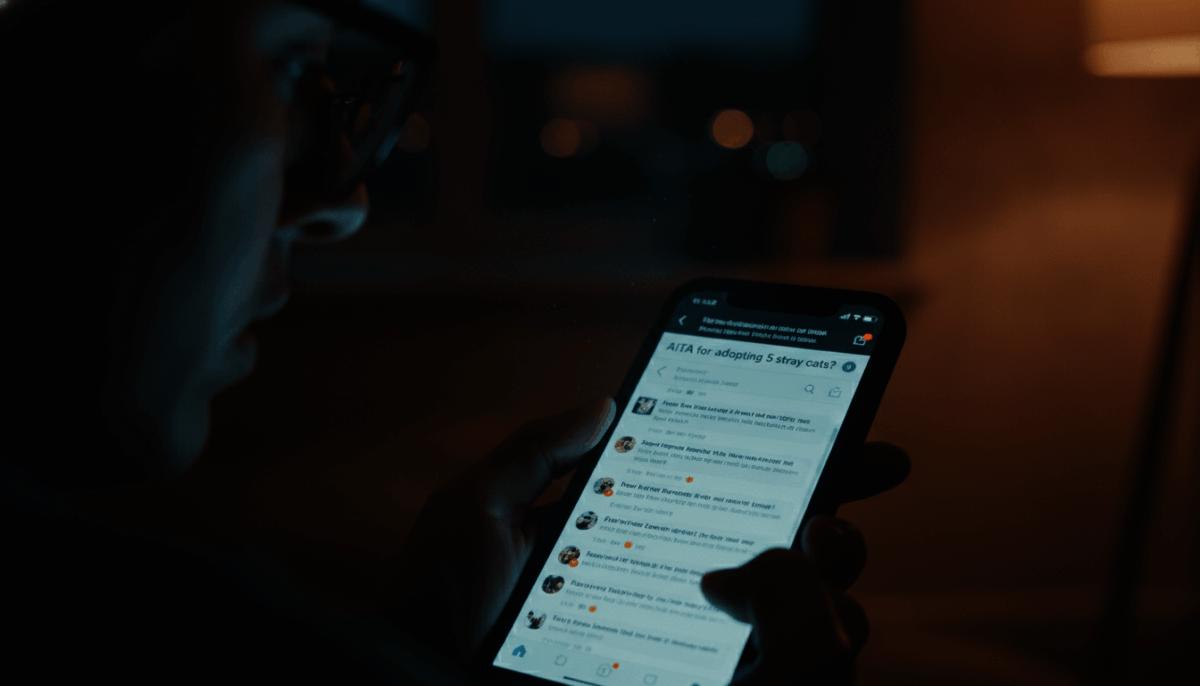
I knew I needed perspective, so I posted the story to a popular subreddit dedicated to relationship drama. I didn’t expect the flood of responses I received. Within hours, the post had thousands of upvotes and a comment section that was as divided as it was passionate. People were analyzing everything from the psychological motivations of ‘influencer brain’ to the legal implications of a sponsorship demand.
“NTA. This is textbook narcissistic behavior. She doesn’t want a friend; she wants an ATM. Run, don’t walk, away from this friendship. The fact that she’s using your shared history to guilt-trip you is a major red flag.”
— u/ReasonableObserver (Top Comment, 28.5k upvotes)
Another user offered a more nuanced take, noting that the ‘influencer’ lifestyle often creates a bubble where reality becomes distorted. People were sharing their own horror stories of friends who had tried to launch failed businesses using their friends’ credit cards or savings. It was validating to know that I wasn’t alone in this experience, even if it didn’t make the pain of the loss any less real.
There were a few contrarians, of course. Some argued that I should have been more supportive, that friendship requires sacrifice. But the overwhelming majority saw the demand for what it was—a manipulative, boundary-crossing attempt to capitalize on my kindness. The community consensus was clear: I had set a boundary, and Elena’s reaction was the proof that the boundary was necessary.
Reading the comments helped me realize that I wasn’t a ‘bad friend’ for saying no. I was a person who valued honesty and integrity, and those values were fundamentally incompatible with the parasitic relationship she was trying to construct. The validation didn’t heal the friendship, but it healed my sense of self-worth.
The $1,400 Restaurant Bill Incident

A month later, I ran into Elena at a restaurant. I was there for a quiet dinner with a colleague when I saw her at a large table with a group of people I didn’t recognize. She was holding court, dressed in an expensive designer outfit, laughing a little too loudly. She saw me, and the look on her face was a mix of triumph and spite. She clearly wanted me to see her ‘succeeding.’
I tried to ignore her, but she made a point of coming over to our table toward the end of the night. She started talking about her ‘new investors’ and how busy her schedule was. I offered a polite, non-committal smile and went back to my conversation. She lingered, waiting for me to ask about the sponsors, but I refused to give her the satisfaction.
The next day, I received a text from one of our mutual friends who had been at the dinner. Apparently, Elena had insisted on picking up the bill for the entire table of ten, totaling over $1,400. She then made a dramatic display of paying with her credit card, only for it to be declined twice. The embarrassment in the room was palpable, and the friends had to chip in to cover the bill while she made excuses about a ‘glitch with the bank.’
“She put on such a show, acting like she was the boss, but then she couldn’t cover the bill. It was honestly humiliating for everyone there. Why is she doing this?”
— Text from a mutual friend
The facade was cracking. She was so desperate to project success that she was willing to lie and humiliate herself to maintain the appearance. It was a pathetic display, one that made me feel more pity than anger. She was trapped in a cycle of her own making, and it was only a matter of time before the reality of her finances caught up with her.
The Final Correspondence

I knew I had to end this cleanly. I sent her one last, final message. I didn’t want to leave any room for misinterpretation or future drama. I kept it brief, professional, and firm. I told her that our friendship was over, not because I was jealous of her, but because I couldn’t support a dynamic that was based on financial exploitation rather than mutual respect.
I waited for the blowback, expecting an explosion of texts and phone calls. But instead, there was nothing. It was the most profound silence I had ever experienced in our twenty years of knowing each other. It was as if, once I stopped playing my role in her drama, I simply ceased to exist for her. It was a strange, hollow feeling, knowing that our entire shared history could be discarded so easily.
“Elena, I wish you the best. But I cannot be a part of your life when you view our friendship through the lens of a business transaction. Please do not contact me again.”
I blocked her number and her social media accounts. It was a small, clinical act, but it felt like a massive weight being lifted off my shoulders. I wasn’t just blocking a person; I was blocking the constant, low-level anxiety that had been plaguing me for months. I was reclaiming my peace.
The Aftermath: Finding New Ground

In the weeks that followed, I started to notice the changes in my own life. Without the constant, chaotic energy of our friendship, I felt a sense of calm I hadn’t realized I was missing. I spent more time focusing on my work, my health, and the friends who actually valued me for who I was, not for what I could provide them.
I still occasionally see her posts on mutual friends’ feeds. She’s still at it, still posting about ‘hustle culture’ and ‘manifesting success,’ though the quality of her content seems to be declining. It’s a sad, lonely road she’s chosen, but it’s hers to walk. I have no desire to interfere, no desire to ‘tell her so.’ I’ve moved on.
I started a new hobby, something that had nothing to do with social media or ‘branding.’ I started taking pottery classes on weekends, finding joy in the tactile, messy, and unscripted nature of creating something for myself. It was a reminder that life is best when it isn’t filtered, when it isn’t performed for an invisible audience.
I learned a lot about boundaries. I learned that saying no is not an act of betrayal; it is an act of self-preservation. I learned that the people who try to manipulate you using your past as a weapon don’t deserve a place in your future. It was a hard lesson, but it was worth it.
The Professional Rebound

My work life, interestingly, took a turn for the better. Without the constant distraction of Elena’s drama, I was able to focus on a major promotion I had been eyeing for years. I poured that energy into my projects, and it paid off in ways I hadn’t expected. I realized that my success was my own, and it was based on hard work and competence, not on the validation of others.
I started mentoring a younger colleague, someone who was genuinely interested in the career path I had taken. It was refreshing to share my knowledge without any expectations of a return. It was a healthy, balanced relationship, the antithesis of what I had experienced with Elena. It reminded me that true mentorship and support are about helping others grow, not using them as stepping stones.
There were moments of sadness, of course. I still missed the girl Elena used to be, the one who would laugh at my bad jokes and share a pizza with me on a Friday night. But I had to accept that that person was gone, replaced by someone who was driven by a need for external validation that I could never satisfy.
I felt a sense of peace that I hadn’t felt in a long time. I was no longer the villain in her story, and I no longer cared to be the hero. I was just myself, living my life, and for the first time in a long time, that was enough.
Reflecting on the Influencer Illusion

Looking back, I see the whole situation as a symptom of a larger cultural shift. We are obsessed with the idea of ‘making it,’ with the idea that if we can just get enough followers or enough engagement, we will finally be happy. It’s a lie that ruins lives and destroys relationships, and I was just one of the casualties.
I hope that, eventually, Elena will find her way back to reality. I hope that she realizes that the ‘sponsorships’ she was chasing are empty, that the digital applause is meaningless compared to the warmth of a real, authentic connection. But that is a journey she has to take on her own, and I am no longer a part of that journey.
I want to thank the Reddit community for their support and perspective. Without those thousands of voices, I might have faltered, I might have succumbed to the guilt. But you reminded me that my value is not dependent on the approval of others, especially those who seek to use me.
We are all prone to the lure of the illusion, the idea that our lives could be better if we just had a little more ‘influence’ or a little more ‘success.’ But the truth is, the most precious thing we have is our time, our energy, and our capacity for genuine connection. Don’t waste it on people who only see you as a means to an end.
Conclusion
The saga of the $2,500 ‘sponsorship’ ended not with a bang, but with the quiet, firm closing of a door. It was a painful reminder that even the deepest bonds can be severed when one party decides that their own ego and ambition are more important than the foundation of trust upon which a friendship is built. My decision to walk away was the most difficult thing I have ever done, but it was also the most liberating.
We live in an age where our lives are constantly curated, where the pressure to ‘succeed’ is always just one filter away. It’s easy to get lost in the noise, to forget that real life happens offline, in the messy, unscripted moments we share with the people we love. If you find yourself in a situation where someone is asking you to compromise your financial security or your personal boundaries for their ‘vision,’ remember that you are not a supporting character in someone else’s influencer fantasy.
Take a stand for yourself. Set your boundaries. And know that the right people—the ones who truly care about you—will respect them. Friendship should be a source of strength, not a business model to be exploited. I am moving forward, stronger and more aware of what I deserve. And I hope, if you are reading this and feeling the same pressures, that you will choose yourself, too.
What would you have done? If a best friend of twenty years asked you for a monthly stipend to pursue their ‘dream,’ would you have laughed, tried to support them, or cut them off immediately? Share your thoughts and personal stories in the comments below—let’s discuss the blurred lines of friendship and finances.
What's your verdict on this dilemma?
Vote below to contribute to the official community consensus.

Have a Dilemma Keeping You Up at Night?
Share your real-life feud, wedding chaos, or relationship crossroads anonymously with our editorial team.
What do you think ?
0 Comments🛡️ Comments are moderated to protect community integrity. Your comment will appear once approved by the editorial team.