
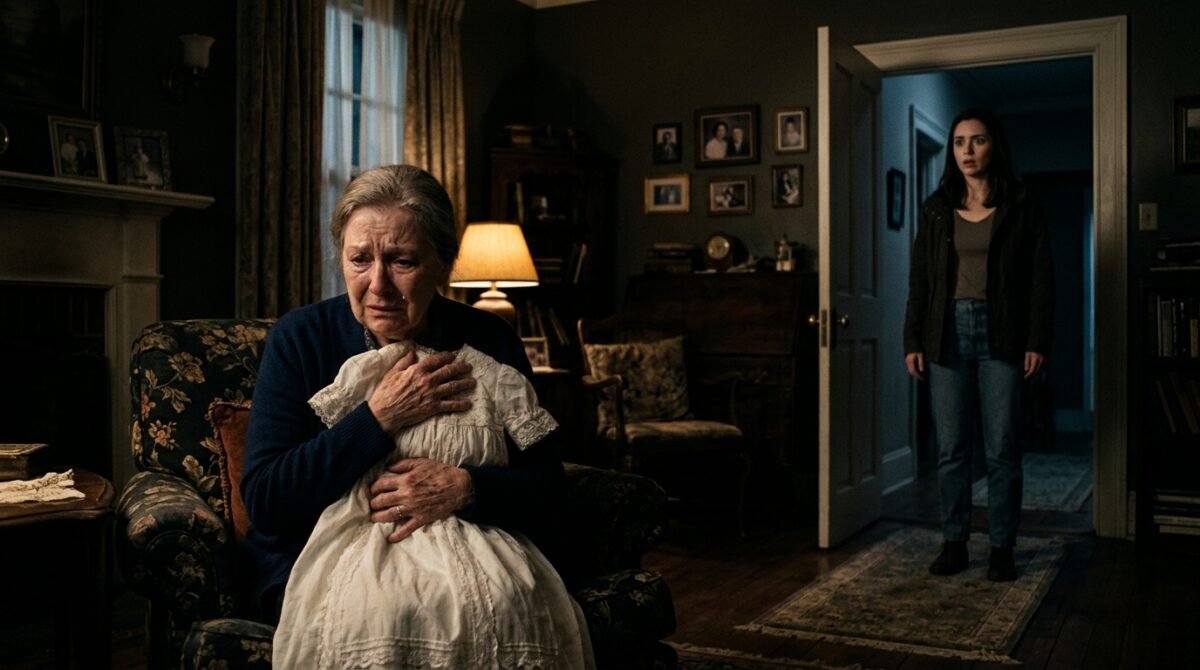
When we brought our daughter, Maya, into the world, my husband Mark and I were clear: we wanted to wait until she was old enough to understand and choose her own path. We aren’t anti-religious, but we are anti-imposition. My in-laws, however, operate on a different frequency. For them, faith isn’t a suggestion; it is a mandate, and they viewed our parenting boundaries as temporary obstacles to be overcome through persistence, or in this case, deception.
The tension had been simmering for months. Every visit felt like a quiet game of chess where the prize was our child’s identity. I knew they were disappointed, but I truly believed they respected the line I had drawn. I thought that ‘no’ meant ‘no,’ not ‘try harder when I’m not looking.’ I was horribly, devastatingly wrong.
This story isn’t just about a religious ceremony; it’s about the erosion of trust. It’s about the moment you realize that the people you were supposed to trust with your life—and your child’s life—are actively working against your explicit wishes. When the secret was finally unveiled, the fallout didn’t just break a holiday gathering; it fundamentally shattered our family dynamic.
As I look back on the events, I realize that the signs were always there. The subtle comments, the ‘accidentally’ purchased rosaries, the pointed prayers said over her head while I was in the other room. But I brushed them off as generational habits rather than a coordinated campaign. Today, I’m sharing this not just for validation, but because I know so many parents struggle with the crushing weight of in-law entitlement.
What happens when the people you love decide that their moral imperative supersedes your parental authority? What happens when the gaslighting starts, and they try to convince you that they were doing you a ‘favor’? Here is the story of the day I learned that some bridges aren’t just burned—they are systematically dismantled by the people who built them.
The Subtle Infiltration of Our Boundaries
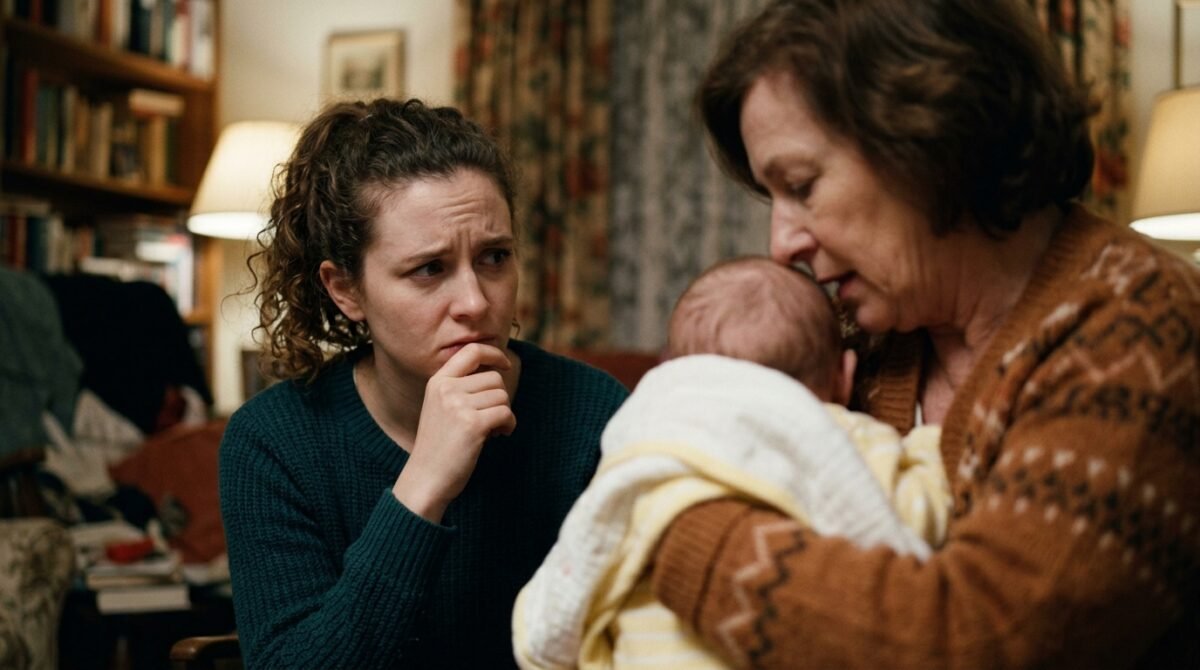
Long before the baptism incident, the air in our home grew heavy with the weight of unvoiced expectations. My mother-in-law, Susan, was never a woman to be subtle. She arrived on weekends with bags of religious trinkets and a look of disappointed longing whenever I insisted that Maya’s nursery remain a neutral space. She would murmur prayers that felt more like spells cast against my parenting choices.
Mark tried his best to buffer the situation, often playing the role of the peacemaker who believed his parents were just ‘old-fashioned.’ He would laugh off the comments, telling me, ‘They’re just trying to be involved, honey. It’s their way of loving her.’ But I felt the friction growing every single day. The, ‘Let’s take her to church for a special program’ requests became constant.
I sat them down on a Saturday in November, clear and calm. I told them that we were not baptizing Maya. I explained our reasoning—that we wanted her to have a choice later in life, and that we wanted to focus on our own family values for now. The silence in the room was surgical. Susan didn’t yell. She just nodded, her jaw tight, and said, ‘If that is your decision, we respect it.’ That was the first lie.
The next few months were a series of tests. If I left the room to get a bottle, I’d come back to find Susan whispering into Maya’s ear. I’d ask what she was saying, and she’d smile, ‘Just telling her she’s a blessing, dear.’ It was patronizing, dismissive, and entirely calculated. I started keeping a private log of these instances, a growing list of red flags that I naively thought would eventually lead to a productive conversation.
Mark eventually grew tired of my ‘paranoia,’ as he called it. He told me I needed to loosen up, that his parents were harmless. This added a new layer of strain to our marriage. I was fighting two battles: one against my in-laws’ encroaching influence and one against my husband’s refusal to see the threat. I felt isolated, trapped in a house where my authority felt like a suggestion rather than a rule.
The Unexpected Invitation to a ‘Simple Brunch’
The invitation for the ‘brunch’ came through a group chat, disguised as a casual celebration for Susan’s birthday. It seemed innocent enough. We were supposed to meet at a local café that Susan loved. I even bought a nice card and a thoughtful gift, hoping that maybe, just maybe, we could move past the awkwardness of the previous months and find some common ground.
When we arrived, something felt ‘off’ immediately. The restaurant was unusually quiet, and Susan was dressed in a way that felt more like a Sunday mass than a birthday brunch. She looked radiant, but there was a glint in her eye that made my stomach drop. Mark, usually oblivious, seemed to notice it too, but he stayed in his ‘happy family’ bubble, chatting away about work.
As we were seated, I noticed a man in a clerical collar sitting at a table nearby. He looked up, gave a slight nod to Susan, and went back to his coffee. My heart began to hammer against my ribs. I turned to Mark, whispering, ‘Why is there a priest here?’ He brushed it off, ‘Probably just having breakfast, don’t overthink it.’ I was already reaching for my bag, ready to make an excuse to leave.
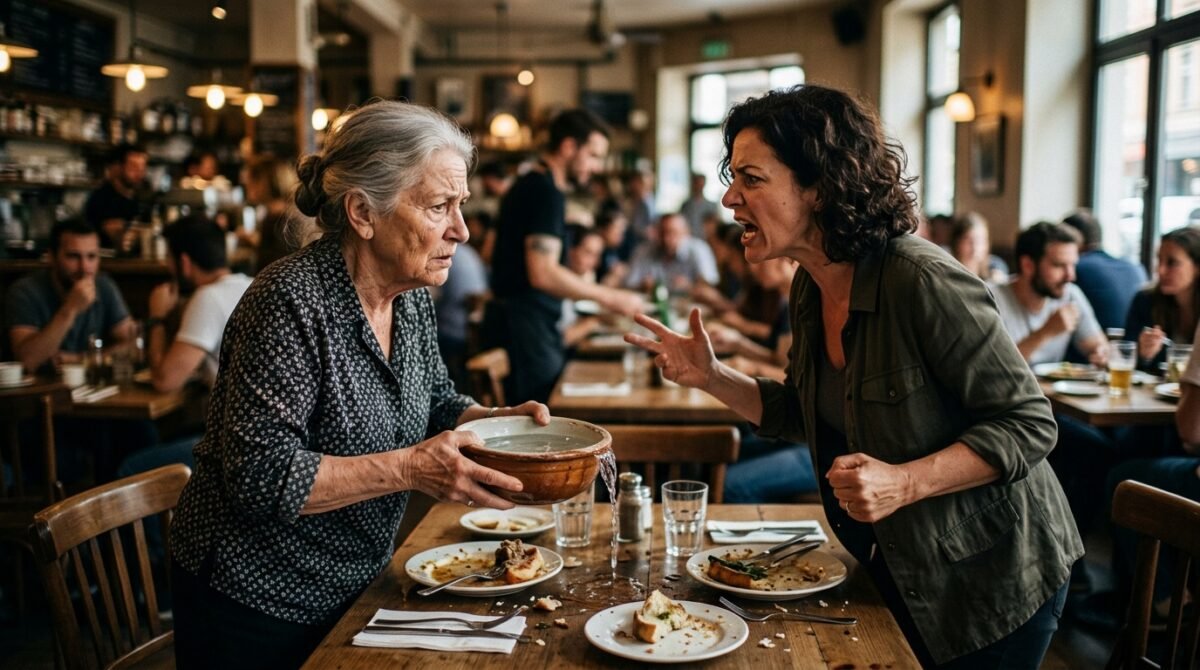
Before I could stand, Susan stood up. She wasn’t holding a gift; she was holding a small, silver bowl of water. She walked over to our table, her husband trailing behind her with a look of intense, nervous focus. ‘We couldn’t let another month go by without ensuring her soul was protected,’ she announced to the room. The atmosphere shifted from brunch to a theater of the absurd in seconds.
I stood up, my chair clattering against the hardwood floor. I didn’t care who was watching. ‘Susan, sit down. Do not do this.’ But she was in her own world, a trance of self-righteousness. She reached for Maya, who was strapped into her carrier. It felt like time slowed down, the world narrowing to that silver bowl and the terrified look on my daughter’s face.
The Confrontation in the Cafe

I grabbed Maya’s carrier and held it behind me, backing away. The entire restaurant had gone dead silent. I could feel the eyes of every patron on us. ‘We are leaving,’ I said to Mark, who was still frozen in his seat, his face a mask of utter confusion and panic. Susan was still standing there, the water in the bowl trembling slightly, looking at me with a mix of pity and defiance.
“You are not doing this. You do not get to dictate her spiritual life when we have explicitly forbidden it. This is a betrayal of everything we have asked for.”
— Me, in the middle of the cafe
Susan scoffed, a sound that cut through the silence like a knife. ‘I am saving her. You are so young and so lost, you don’t even understand the damage you are doing to her. God will thank me for this.’ It was the most arrogant thing I had ever heard. I looked at the priest, who had stood up and was now watching with a strange, detached expression, as if he were waiting for a signal.
I looked at my husband. ‘Mark, if you don’t stand up and walk out of this door with me right now, we are going to have a very serious problem.’ He finally snapped out of his trance, looking at his mother with a mixture of betrayal and disbelief. He didn’t say a word, just stood up and grabbed his coat, his eyes never leaving his mother’s face.
We walked out of that cafe with the eyes of thirty strangers following us. I was shaking so hard I could barely unlock the car. Susan followed us to the parking lot, still trying to plead her case, talking about the ‘grace’ she was bestowing upon us. I didn’t say a word to her. I just put Maya in her car seat, buckled her in, and closed the door with a finality that I hoped she felt in her bones.
The drive home was silent. Mark was staring out the window, his jaw clenched, while I fought back tears of rage. I knew that this wasn’t the end. This was the moment everything changed. I had spent so long trying to be polite, trying to be the ‘good’ daughter-in-law, and they had repaid that respect by trying to hijack my child’s future. The bridge wasn’t just damaged; it was burned to the ground.
The Aftermath and the Final Text
Once we were home, the reality of what had happened finally settled in. Mark was pacing the living room, running his hands through his hair. ‘I didn’t know,’ he kept saying. ‘I swear to you, I didn’t know she was planning this.’ I didn’t doubt him, but his ignorance was its own kind of failure. He had allowed his parents to think that their boundaries were negotiable, and now we were paying the price.
My phone started buzzing incessantly. It was the family group chat. Susan was already spinning the narrative, telling the rest of the family how ‘distraught’ she was that I had ‘prevented a holy blessing’ at the last minute. She was painting herself as the victim, the grandmother who was simply trying to do the right thing for her grandchild. I felt the bile rise in my throat.
“I am absolutely heartbroken that [OP] would be so disrespectful to a holy ceremony. All I wanted was to protect Maya’s soul, but apparently, my love is not enough for some people.”
— Susan, in the family group chat
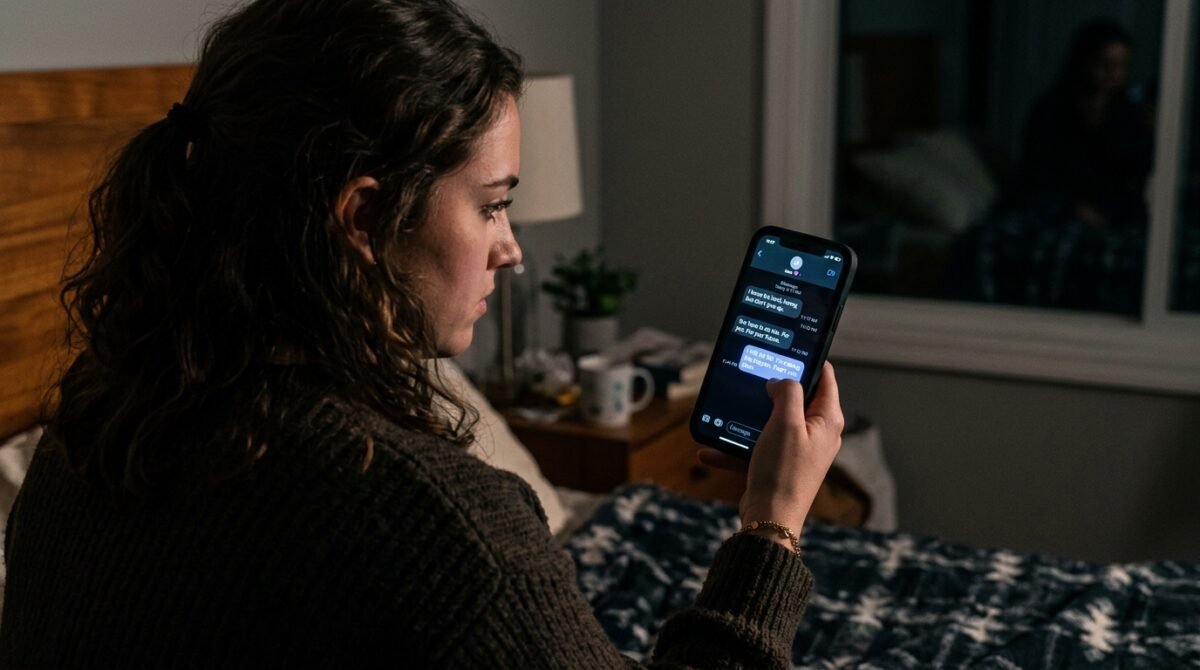
I didn’t respond to the group chat. Instead, I sent a direct text to Susan. I knew that if I didn’t lay down the law now, it would never happen. I had to be precise, cold, and final. There was no more room for negotiation. My daughter’s wellbeing was more important than their feelings, and I was done feeling guilty for protecting her.
I told her that any further attempts to interfere with our parenting would result in a total severance of contact. I told her that her actions today were a violation of our trust that could not be repaired with apologies or gifts. I demanded that she stay away from us until I said otherwise. It was the hardest thing I’ve ever had to write, but it felt like I was finally breathing again.
Mark watched as I typed, his expression guarded. He didn’t try to stop me. I think even he realized that if he did, he would be losing more than just his parents’ favor; he would be losing his family. The silence in the house felt heavy, but for the first time in years, it was a silence I owned. I wasn’t waiting for the next shoe to drop anymore.
The Reddit Verdict: Echoes of Approval and Warning

I turned to the internet for a sanity check, not because I doubted myself, but because the gaslighting from the family was starting to make me feel like I was the one who had gone crazy. I posted the story to a popular sub-forum for family drama, keeping the names anonymous but the details raw. Within an hour, the responses started flooding in. It was a deluge of support that left me sobbing at my desk.
“NTA. This isn’t just about religion; it’s about control. They tried to perform a ritual on your child against your explicit, repeated wishes. This is a massive boundary violation that warrants a total timeout. Do not apologize.”
— u/ReasonableMom (Top Comment, 18.2k upvotes)
The community was unanimous. It was shocking to see how many people had experienced similar ‘clandestine baptism’ attempts by overbearing in-laws. The stories were heartbreaking—grandparents sneaking children off to churches, baptizing them in secret, and then bragging about it later. I realized then that I wasn’t alone, and that my reaction wasn’t just ‘theatrical,’ as Susan had called it.
Other commenters offered practical advice on how to enforce the no-contact period. They suggested legal steps, how to handle the inevitable flying monkeys from the extended family, and how to protect Maya from further ‘surprises.’ It was an overwhelming sense of validation. I felt the armor I had been building for months finally clicking into place.
Some comments were harsher, suggesting that Mark needed to be held to a higher standard of accountability. ‘He chose to marry you, not his mother,’ one user wrote. ‘If he isn’t standing between you and them, he’s part of the problem.’ It was a difficult pill to swallow, but it was exactly what I needed to hear. The focus needed to shift from managing the in-laws to strengthening our own front.
By the end of the night, I had thousands of comments. I read them all, feeling the weight of the collective wisdom of thousands of strangers. I wasn’t the bad guy. I was a mother protecting her child from people who thought they knew better than her parents. The fear started to recede, replaced by a cold, hard resolve that I knew would carry me through the coming weeks of fallout.
The Fallout: Dealing with the ‘Flying Monkeys’

The next few days were a blur of defensive maneuvers. Susan didn’t just accept my text; she weaponized the family against me. My phone wouldn’t stop pinging with messages from aunts, cousins, and distant relatives who had only heard her side of the story. They called me ‘intolerant,’ ‘unreasonable,’ and ‘selfish.’ It was a coordinated smear campaign that felt like it was ripped from a soap opera.
I had to learn how to set boundaries with people I barely knew. I sent a standardized message to anyone who reached out, stating that the situation involved a major breach of trust and that we were taking time for our family. Most people didn’t like that answer. They wanted the drama, the gossip, and the juicy details of why I was ‘punishing’ my in-laws.
Mark had to deal with his own family members, and it was brutal for him. He had to tell his father, ‘If you continue to support her actions, you are also not welcome in our home.’ He lost some relationships in those few days, and I could see the pain in his eyes. He wasn’t just losing his parents; he was losing a version of his life that he had held onto for thirty years.
I watched him change. He stopped trying to justify his mother’s behavior to me. He started blocking the numbers of relatives who were being particularly toxic. We were no longer a couple dealing with a ‘difficult’ mother-in-law; we were a team dealing with an external threat. The shared struggle, while painful, began to bond us in a way that nothing else ever had.
We made the decision to block all of them on social media. It felt like a cleansing. No more updates for them to monitor, no more photos for them to take and share without permission. We were creating a safe, private space for Maya, and it felt like the most important thing we had ever done. The ‘flying monkeys’ eventually lost interest, as they realized they weren’t going to get the reaction they wanted from us.
The Meeting That Never Happened

A week later, Susan sent a formal letter. It was handwritten on heavy, cream-colored stationery, the kind of paper she reserved for important family announcements. I didn’t open it for two days. I knew exactly what it would say—a long-winded justification, a ‘non-apology’ apology, and a demand to ‘see reason’ and let her back in.
When I finally read it, my suspicions were confirmed. She talked about the ‘sanctity of the tradition,’ her ‘duty as a grandmother,’ and how she was ‘deeply wounded’ by our rejection. She didn’t mention the betrayal. She didn’t mention the fact that she had tried to do this behind our backs in a public place. It was all about her and her feelings.
Mark wanted to reply, but I told him no. ‘If you reply, you open the door,’ I said. ‘She needs to understand that her actions have consequences, and one of those consequences is a total loss of access to us.’ We left the letter sitting on the dining table for a week, a physical monument to the divide that now existed between us and them.
Eventually, we shredded it. It felt like a small, private act of defiance. We were moving forward. We had already begun to discuss what our life would look like without them involved, and for the first time, it didn’t feel like a loss—it felt like a relief. The constant anxiety about the next ‘incident’ had vanished, replaced by a quiet, steady peace.
We started planning our own traditions, ones that didn’t involve their input or their approval. We took Maya on walks, had quiet Sundays, and built a foundation for our family that was based on mutual respect and shared values. It was a beautiful, simple life, and it was entirely ours. We realized that we had been living in a state of hyper-vigilance for so long that we had forgotten what normal felt like.
The Shift in Mark’s Resolve

The biggest surprise in all of this was Mark. I had spent so long fearing that he would choose his parents over me. But when faced with the actual reality of who his parents were—not the people he hoped they were, but who they actually acted like—he shifted. He realized that the ‘tradition’ his mother held so dear was actually a tool for control, not a manifestation of love.
We spent hours talking about his childhood, about how he was raised to believe that his parents’ happiness was his responsibility. He started to see the patterns in his own upbringing, the subtle ways he had been manipulated to keep him within their sphere of influence. It was a profound, painful realization for him, but it was necessary.
He stopped apologizing for me to them. When a cousin tried to pry, Mark would say, ‘This is between us and my parents, and it’s not up for discussion.’ He was fierce, protective, and entirely on my side. It was the most attractive I had ever found him. We were no longer just parents; we were partners in the truest sense of the word.
He even took the lead on setting the rules for future interactions, if they were ever to happen. He was the one who drafted the list of conditions: an apology, a formal agreement to follow our rules, and a period of supervised visitation. He didn’t do it out of a desire to reconcile, but out of a desire to show that he was the head of his own household.
I watched him grow into a father who prioritized his child’s future over his parents’ past. It was a beautiful transformation to witness. We weren’t perfect, and we still had our moments of doubt, but we were united. And in that unity, we found a strength that I didn’t know we possessed. We were no longer just surviving the drama; we were defining our own future.
Learning to Trust Our Own Instincts

Looking back, I realize that the baptism attempt was the catalyst I needed to stop doubting my own gut. I had spent so much time trying to be ‘fair’ and ‘accommodating’ that I had lost sight of the fact that my primary job was to keep my child safe from people who didn’t respect me. The secret ceremony was just the final push I needed to step into my power.
We began to lean into our own way of doing things. We celebrated the small milestones, created our own holiday rituals, and stopped worrying about what anyone else thought. The freedom to parent without an audience was transformative. We felt lighter, happier, and more present with Maya than we ever had before.
We realized that family isn’t just about blood; it’s about respect and the safety you provide for each other. We built a circle of friends who acted as our chosen family, people who supported our boundaries and cheered us on. They were the ones who showed up for birthdays, who checked in on us, and who never once tried to impose their will on our daughter.
I started therapy to help process the guilt I felt about cutting off my in-laws. It was a journey, but it helped me realize that the guilt was just a remnant of the way I had been conditioned to think. I wasn’t the one who had broken the family; the people who felt entitled to ignore my boundaries were the ones who had done that. I was just the one who had the courage to acknowledge it.
Today, I am a better mother, a better wife, and a better person because I finally stood up for myself. I still have days where I wonder about the ‘what ifs,’ but they pass quickly. I know that I made the right choice, not just for me, but for my daughter. She will grow up knowing that her body, her soul, and her choices are her own, and that her mother will do whatever it takes to protect that truth.
The Current Status: Life Beyond the Breach

It has been a year since the incident. We have maintained no contact with Susan and her husband. There have been no more letters, no more surprise visits, and no more group chats. It’s been quiet, and that silence is the greatest gift we could have asked for. We aren’t waiting for the next bomb to drop. We are living our lives.
Mark’s parents have attempted a few half-hearted reach-outs, but we have held the line. They haven’t apologized; they haven’t acknowledged their wrongdoing. Until they do, and until they can show that they respect our boundaries, they remain on the outside. It’s a sad reality, but it’s one that we have accepted as the price of our own autonomy.
Maya is thriving. She is a happy, curious child who is growing up in a home filled with love and respect. She doesn’t know about the tension or the drama, and we are working hard to keep it that way. We are raising her to be her own person, and we feel confident in the path we have chosen for her.
We have learned that you don’t owe your time or your child to people who don’t respect you, no matter what your history is. We have learned that ‘no’ is a complete sentence. We have learned that the people who really love you will respect your boundaries, even when they don’t understand them. And most importantly, we have learned that we are enough.
If you are in a similar situation, know that you are not alone. You have the right to protect your family, even from those who call themselves family. You don’t have to sacrifice your peace or your child’s autonomy to keep the peace. Stand your ground, trust your gut, and don’t let anyone make you feel like you are the villain for simply asking for respect.
Conclusion
The journey from the chaotic scene at that cafe to the peaceful life we have now has been nothing short of transformative. It taught me that sometimes, the hardest decisions are the ones that lead to the most profound growth. By revoking access, I wasn’t punishing my in-laws; I was preserving our family’s integrity.
The debate around this topic is always heated, and I’ve learned that everyone has a different threshold for what they consider ‘acceptable’ in the name of family. But at the end of the day, you have to be the one who wakes up and looks in the mirror. You have to be the one who knows you protected your child.
I’m curious—have you ever had to draw a line in the sand with family that changed everything? Did it lead to a necessary estrangement, or did it eventually force a healthy reset? Share your stories below; I know that for many, hearing that they aren’t alone is the first step toward reclaiming their peace.
What's your verdict on this dilemma?
Vote below to contribute to the official community consensus.

Have a Dilemma Keeping You Up at Night?
Share your real-life feud, wedding chaos, or relationship crossroads anonymously with our editorial team.
What do you think ?
0 Comments🛡️ Comments are moderated to protect community integrity. Your comment will appear once approved by the editorial team.