
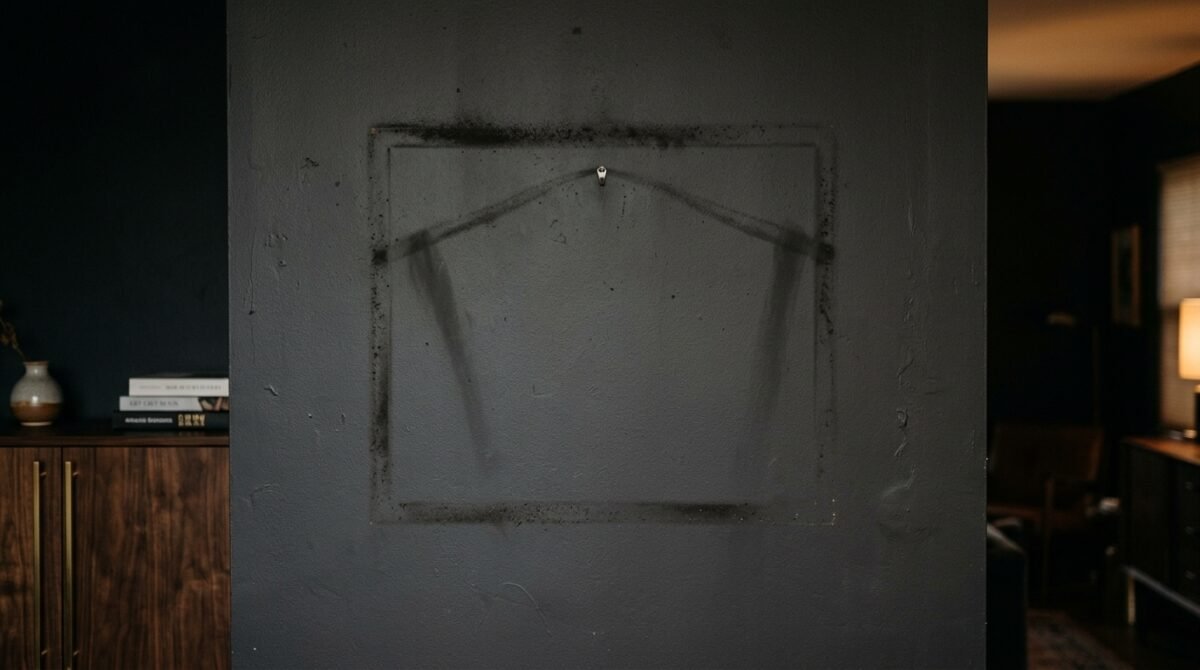
I never imagined that my marriage, built on seven years of shared dreams and mutual respect, would crumble over the sheer absurdity of a motorized watercraft. My husband, Mark, has always had a penchant for impulsive hobbies, but nothing prepared me for the day I walked into our living room to find the wall where my Great-Aunt Elena’s portrait hung—bare, save for a faint outline of dust.
Great-Aunt Elena was a woman of immense mystery and even greater taste. The painting, an original impressionist piece she acquired during her travels in the 1950s, had been appraised by the local museum at roughly $60,000. It wasn’t just canvas and oil; it was my inheritance, my safety net, and a piece of my family history that I intended to pass down to my own children one day. It was supposed to be untouchable.
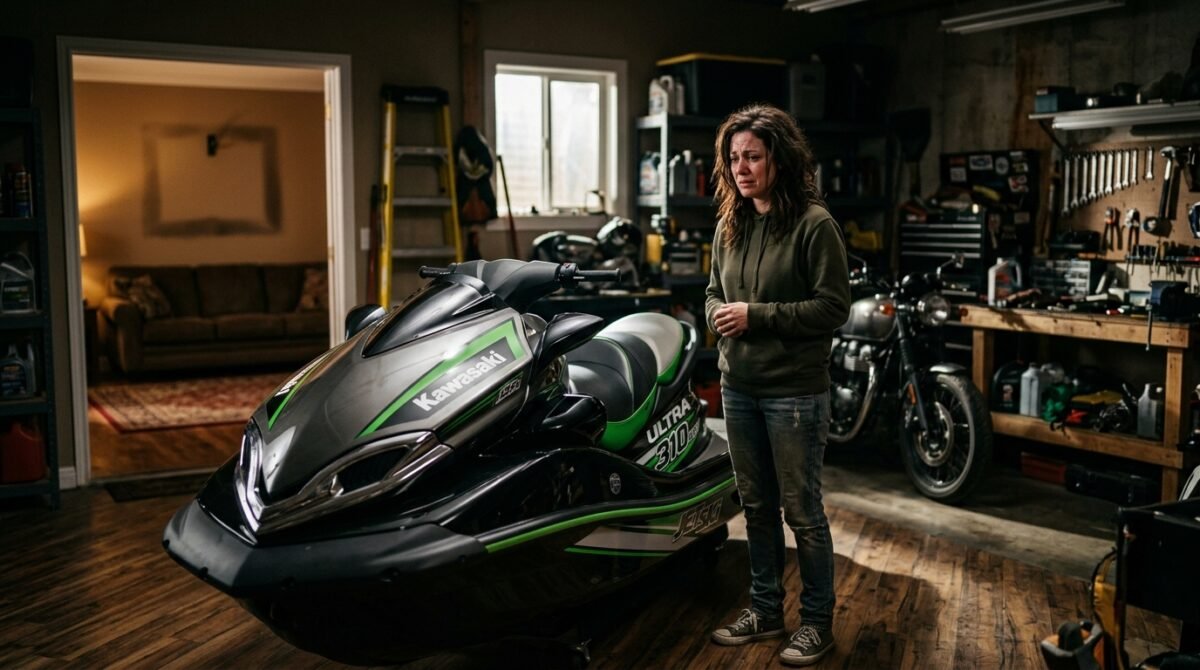
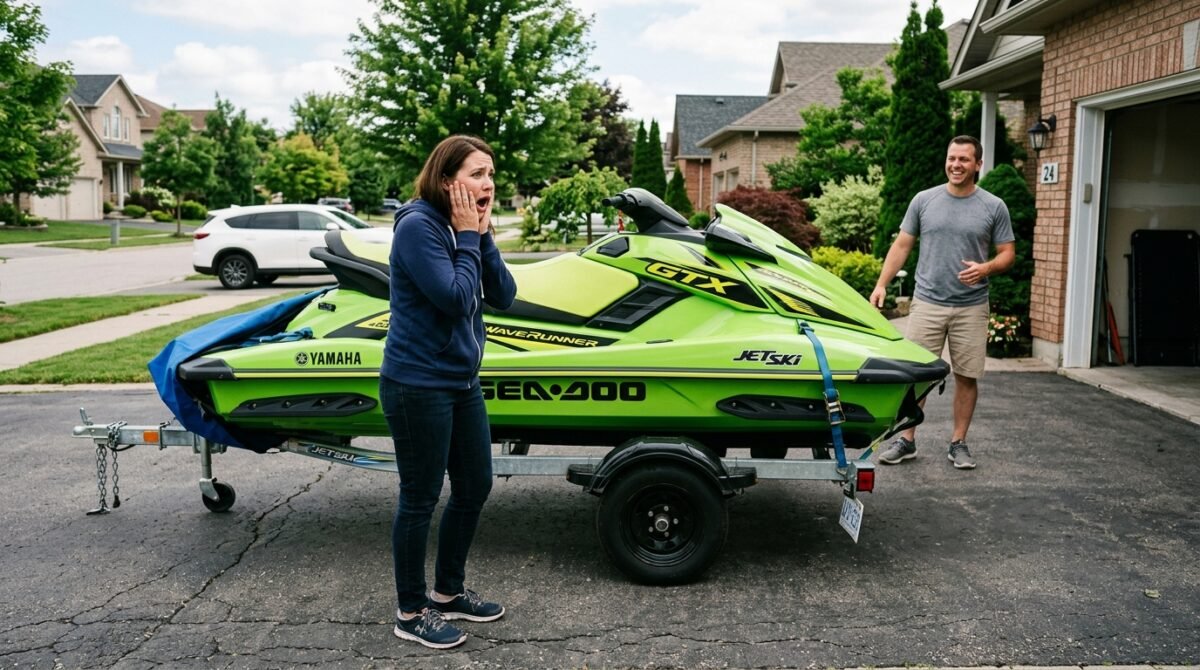
When I finally found Mark, he was in the driveway, grinning like a child who had just been gifted the world. Behind him, hitched to our SUV, sat a sleek, high-performance jet ski. He didn’t see the look of horror on my face; he only saw his new toy. He spoke with such casual arrogance, as if he had merely traded a stack of old magazines for a piece of sporting equipment, completely oblivious to the gravity of his theft.
The moral dilemma here isn’t just about the money, though that is significant enough to ruin us financially in the long run. It is about the fundamental violation of trust. How do you look at the person you’ve vowed to spend your life with when they treat your legacy as their personal currency? This isn’t just a story about a bad purchase; it’s a story about the moment I realized I didn’t actually know the man I was married to.
As I sit here writing this, the jet ski is still in the driveway, a glistening monument to my husband’s staggering selfishness. I am currently staying at my sister’s house, and the silence from Mark is deafening. I have spent the last forty-eight hours oscillating between paralyzing grief for my aunt’s memory and a cold, calculating rage that I didn’t know I possessed. The fallout has only just begun.
The Morning the Walls Went Silent
It started on a Tuesday, a day so mundane it feels like an insult in hindsight. I had come home from my shift at the clinic early, craving nothing more than a quiet afternoon with a book. The house was unusually still, which wasn’t inherently strange, but the feeling of emptiness hit me the moment I crossed the threshold. It wasn’t until I reached the foyer that I noticed the void.
I stopped dead in my tracks. The space above the fireplace, which had held Aunt Elena’s portrait for three years since I inherited it, was staring back at me like a hollow eye socket. My heart hammered against my ribs. I checked the other rooms, thinking perhaps we were having it cleaned or reframed, though the lack of any communication about such a decision made my stomach churn with a sick, premonition-filled dread.
I pulled out my phone, my fingers trembling as I typed a message to Mark. I wasn’t panicked yet, just confused. I assumed there was a logical explanation—perhaps a leak in the roof or a contractor I hadn’t been told about. Little did I know, the logical explanation was the most irrational thing I could have possibly imagined.
Me: Hey, why is the painting gone? Is someone cleaning it? I’m worried.
Mark: Hey babe! Surprise! I handled that trade we talked about. The guy was super eager, and I couldn’t pass it up. It’s in the driveway.
I stared at the screen, reading the words over and over. What trade? We had never talked about trading the painting. We had never talked about trading anything remotely resembling a museum-appraised heirloom. I felt the floor drop out from under me as I realized that the ‘trade’ he was referring to was a fantasy he had constructed entirely in his own mind.
I rushed outside, the humid summer air hitting me like a physical blow. There it was: a monstrous, neon-green jet ski. It was gaudy, loud, and utterly useless to us. My husband looked at me with a proud, expectant grin, waiting for me to praise his deal-making prowess. He looked so pleased, so incredibly disconnected from the reality of what he had just stolen from me.
“Where is the painting, Mark?” I asked, my voice barely a whisper. He laughed, a short, dismissive sound that made my skin crawl. “Oh, it’s gone, babe. The guy, Dave, he’s a collector or something. He was obsessed with it. I got this beauty plus ten grand in cash. I thought we could use the money for a vacation. Isn’t it great?”
The Anatomy of a Financial Betrayal
The realization of what he had actually done didn’t set in all at once; it came in waves of nausea. I sat on the curb, the heat radiating off the asphalt, and tried to process the math. My aunt’s portrait wasn’t just a painting; it was a signed work from a mid-century artist whose pieces were steadily rising in value. It was my financial backup, the money I had kept in reserve for an emergency, a house down payment, or my eventual retirement.
Mark, meanwhile, was explaining the benefits of the jet ski’s engine as if he were giving a lecture at an engineering seminar. He couldn’t grasp the concept of value outside of his own immediate dopamine hit. He didn’t see the theft; he saw a successful transaction. He genuinely believed that because the money was ‘for us,’ the ends justified the means, regardless of the fact that I had never consented to the sale.
I spent the next hour demanding the contact information for this ‘Dave’ character. Mark was defensive, claiming he didn’t want to bother the guy, that the deal was done. Every time I pressed him, he shifted the goalposts, moving from ‘it was a fair trade’ to ‘you were always too attached to that dusty old thing anyway.’ The gaslighting was immediate and incredibly suffocating.
I realized then that this wasn’t an isolated incident of stupidity; it was a pattern of entitlement that I had been blind to for years. He treated my assets as our assets, and our assets as his personal discretionary fund. He had bypassed my agency entirely, acting as a sovereign entity in a partnership that was supposed to be built on shared decision-making.
“You didn’t ask me. You didn’t even consult me. That painting wasn’t yours to sell. It belonged to my family.”
“It belonged to *us*, and I made sure we got a good deal. Stop being so dramatic about a piece of canvas.”
The argument escalated from the driveway into the house, my voice growing louder as the adrenaline replaced the shock. He kept bringing up the jet ski, as if the physical presence of the machine would somehow convince me of its value. I realized, with a clarity that was terrifying, that I was arguing with someone who lacked the basic capacity for empathy regarding my personal boundaries.
The Midnight Hunt for a Lost Legacy
That night, I didn’t sleep. I spent hours scouring the internet, trying to find any trace of ‘Dave.’ Mark had left the garage unlocked, but the folder containing the appraisal documents was gone. He had taken everything—the provenance, the certificate of authenticity, everything that gave the painting its value. He had essentially armed the buyer with the means to resell it for a massive profit.
I started calling local art dealers and auction houses. I was frantic, crying, trying to explain that a stolen painting had been traded for a jet ski. Most of them were sympathetic, but they told me the same thing: without a police report, there was very little they could do. And to file a police report meant officially accusing my husband of theft.
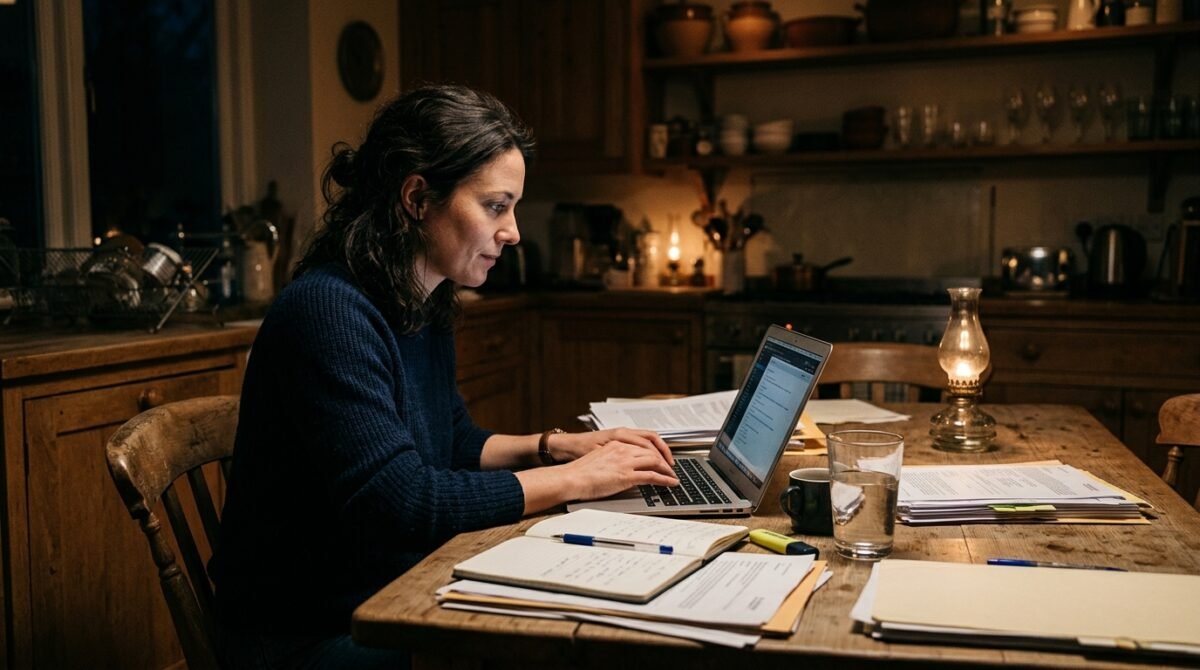
I looked at him sleeping in our bed, the same bed we had shared for years, and I felt a profound sense of mourning. He was sleeping peacefully, untroubled by his actions, dreaming of waves and weekend trips. I felt like a stranger in my own home. I grabbed my laptop and headed to the kitchen table, deciding that if the law couldn’t help me immediately, I needed to reach out to someone who would understand the absurdity of this situation.
I logged onto Reddit, onto the relationship advice subreddits where I had seen so many people find clarity in their darkest hours. I typed out my story, my fingers flying across the keys. I didn’t need validation; I needed to know if I was going crazy, or if this was as insane as it felt. The responses started trickling in within minutes, and they were, predictably, both horrifying and validating.
u/LegalEagleEyes (14.2k upvotes): You need to file a police report immediately. This is not just ‘marriage drama.’ This is grand larceny. He sold your separate property. He has stolen your inheritance.
The comment section became a source of both hope and despair. People were telling me to get a lawyer, to freeze our accounts, to protect whatever was left. It was a wake-up call that I was not just dealing with a ‘bad husband’ moment; I was dealing with a massive legal and financial crisis that would likely end with us in divorce court.
The Inevitable Confrontation
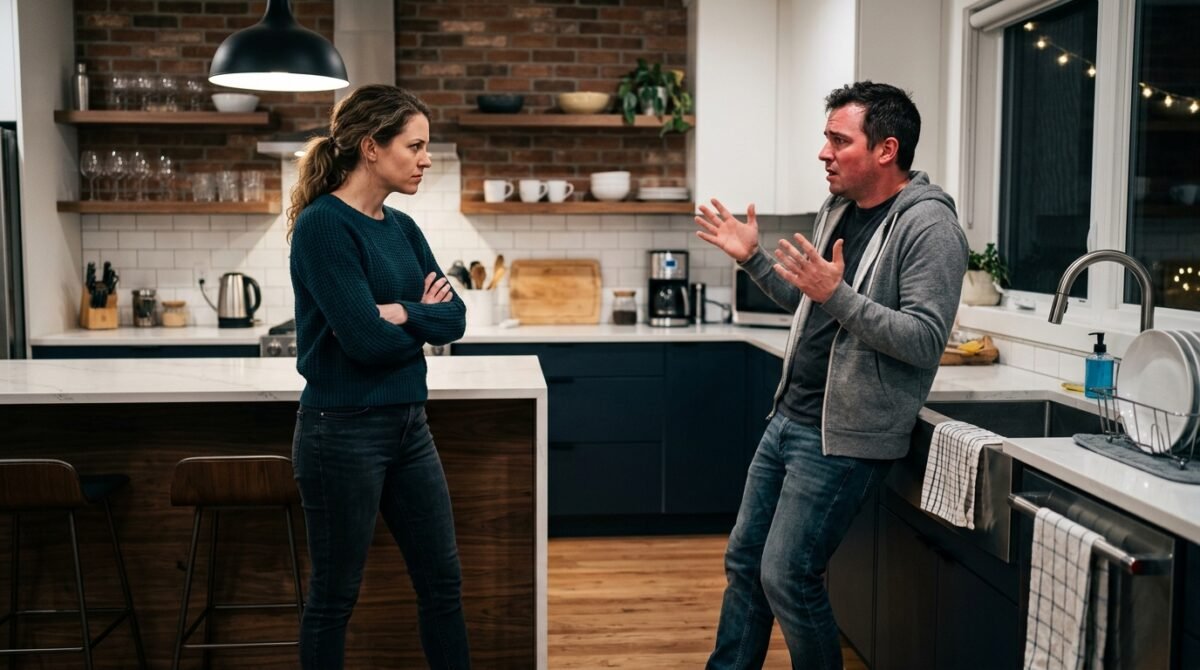
The next morning, Mark woke up with a smile, clearly hoping that the ‘drama’ of the previous night had passed. He walked into the kitchen, humming, and tried to kiss my forehead. I recoiled, physically unable to handle the intimacy. The look of confusion on his face was genuine, which was perhaps the most frustrating part of all. He really thought we were back to normal.
“We need to talk about the painting,” I said, my voice steady, cold, and final. He sighed, rolling his eyes as if I were a child pestering him for a toy. “Oh, come on, not this again. I thought we were over that. I got us the jet ski, I got us ten grand in cash—what more do you want?”
I laid out the reality for him, slowly, using small words as if he were a toddler. “The painting was worth sixty thousand dollars, Mark. You traded a retirement fund for a piece of plastic that depreciates the moment it hits the water. You didn’t do us a favor. You destroyed our future.”
His face went pale. He hadn’t realized the true value. He had been so caught up in the ‘deal’ that he hadn’t done the research, or perhaps he had chosen to ignore it. The ignorance was almost more insulting than the malice. He started stammering, trying to backtrack, trying to say he could ‘get it back.’ But we both knew he couldn’t.
“You didn’t check the value? You just sold my family’s history for a toy? You are a reckless, selfish child.”
“I thought it was just a nice picture! I didn’t know it was worth that much! I can call him, I can try to buy it back!”
The realization finally dawned on him, but it wasn’t a realization of empathy. It was a realization of his own stupidity. He was worried about the consequences for *him*. He was worried that I was going to leave him, not because he had hurt me, but because he had made a ‘mistake’ that would cost him his lifestyle.
The Unintended Consequences of a ‘Good Deal’

As the day progressed, the reality of the situation continued to unfold. I contacted my aunt’s lawyer, who had been the one to help me with the estate when she passed. When I explained what happened, there was a long, heavy silence on the other end of the line. He asked me if the painting was insured—it was, but the policy specifically stated that it had to be in my possession and properly cataloged.
Because I hadn’t filed a police report, the insurance claim was in jeopardy. And because I had ‘consented’ to living in the house where the item was stolen, there was a massive gray area regarding liability. I felt like I was drowning in paperwork and legal jargon, all while my husband was in the other room, frantically messaging ‘Dave’ on Facebook Marketplace, trying to reverse the deal.
I sat on the couch, listening to him argue with the buyer. It was pathetic. He was begging, promising to return the money, promising to buy the jet ski back. The buyer, of course, was having none of it. Why would he? He had acquired a museum-quality piece of art for the price of a used jet ski. It was the deal of a lifetime, and he wasn’t about to give it up.
I realized then that this was the end of my marriage. I couldn’t look at him and see a partner anymore. I saw a liability. I saw someone who was capable of ruining my life for a moment of thrill. The trust, once broken, couldn’t be glued back together. I packed a suitcase, not even knowing where I was going, just knowing I couldn’t stay in that house for another hour.
“I’m leaving, Mark. I don’t know if we’re getting divorced, but I can’t be here right now. Don’t try to call me.”
“You’re really going to throw away seven years over a painting? This is insane! You’re overreacting!”
He called it an overreaction. He truly believed that a piece of family history was comparable to a recreational vehicle. That dissonance was the final nail in the coffin. I walked out the door, and for the first time in seven years, I felt a strange sense of relief.
The Digital Jury of Peers
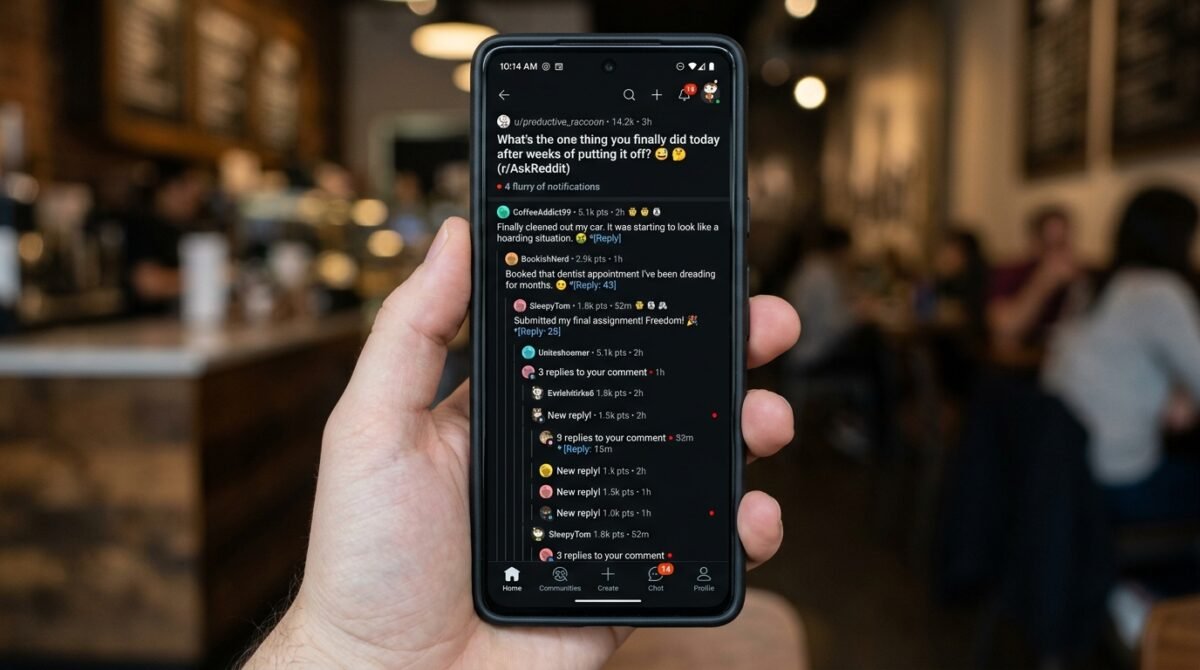
I checked my Reddit post again from my sister’s couch. The thread had exploded. There were thousands of comments, and while some were just chaos, others were incredibly insightful. People were analyzing the situation, breaking down the financial implications, and offering legal advice that I was already starting to act on. It felt like I was part of a collective consciousness that was shouting at me to save myself.
The community was largely on my side, which was the validation I didn’t know I needed. They were pointing out that this was financial abuse, a form of control that often goes unnoticed until something major happens. They were telling me that if he could do this with a painting, he would eventually do it with our house, our savings, or our retirement. It was a terrifying, accurate assessment.
There were, of course, the dissenters. There were people saying I was ‘the AH’ for being so attached to material things, or that we should have had a better system for our assets. But they were drowned out by the chorus of people who understood that this wasn’t about the *painting*; it was about the lack of respect for my boundaries. It was about the fact that he hadn’t even thought to ask.
u/FinancialAdvisor101 (8.9k upvotes): This is textbook financial infidelity. He didn’t just ‘make a mistake.’ He made a unilateral decision to liquidate your assets for his personal gain. You need a lawyer, not a marriage counselor.
Reading those comments made me feel less alone, but it also made me feel more determined. I wasn’t just a victim; I was a person who needed to take control of my life. I started making lists of assets, finding documents, and preparing for the inevitable legal battle that was coming. The jet ski was no longer just a jet ski; it was evidence.
A Phone Call to Nowhere

I finally got a call from Mark, three days later. He sounded different—less arrogant, more panicked. He had finally spoken to a lawyer, and he had finally realized that what he did could be classified as theft. He was calling to beg me not to go to the police. He was promising that he would ‘make it right,’ that he would work extra hours, that he would sell the jet ski and pay me back.
I listened to him, but for the first time, I felt nothing. No anger, no sadness, just a clinical detachment. I realized that his contrition wasn’t born out of a desire to make me whole; it was born out of a desire to avoid legal repercussions. He didn’t care about the painting. He didn’t care about my connection to Aunt Elena. He cared about his own comfort.
I told him that I was going to see a lawyer. I told him that I needed space, that I couldn’t be in the same room as him. I heard him start to cry, but it didn’t move me. I had shed all my tears, and there were none left for him. I felt like I was watching a stranger on television, a character in a drama I had already written the end to.
“I just want us to be okay again. Please, don’t do this. I’ll do anything.”
“It’s not about being okay, Mark. It’s about trust. You destroyed it, and you can’t buy it back with a jet ski.”
I ended the call, and for the first time in years, I turned my phone off. It was the most liberating feeling I had ever experienced. I didn’t need to hear his excuses. I didn’t need to hear his promises. I needed to move forward, and I needed to do it without the weight of his incompetence pulling me down.
The Legal Reality Check

When I finally sat down with my lawyer, the reality of the situation became even more stark. Because we were married, the legal lines regarding ‘his’ and ‘my’ property were complicated, but the fact that the painting was a specific inheritance from my aunt gave me a strong claim to it as separate property. My lawyer was confident that we could recover the value of the painting, either through the buyer or through a settlement from Mark.
But the process was going to be long, expensive, and emotionally draining. It wasn’t just about getting the money back; it was about the dissolution of our life together. We had bank accounts to separate, property to divide, and a lifetime of shared memories to untangle. It was a daunting prospect, but it was necessary.
The lawyer also walked me through the possibility of criminal charges. If I wanted to push it, I could force the issue of the theft. Mark would face serious consequences, which might include a criminal record. It was a heavy decision, and one I hadn’t made yet. But knowing I had that option felt empowering. I was no longer a victim waiting for permission; I was the one holding the cards.
We spent the afternoon going over financial records. Seeing the state of our finances, I was even more appalled. Mark had been reckless with our money in ways I hadn’t even begun to fathom. There were credit card debts I didn’t know existed, and a savings account that was significantly lower than it should have been. The jet ski was just the tip of the iceberg.
“Are you prepared to move forward with the divorce filing? It’s a significant step.”
“Yes. I’ve realized that this isn’t just about the painting. It’s about the fact that I’ve been living in a house of cards.”
I left the office feeling heavier, yet more grounded. The path forward was clear, even if it was going to be difficult. I was done with the excuses, the justifications, and the ‘oops’ moments. I was ready to take my life back, one piece at a time.
The Final Walk-Through
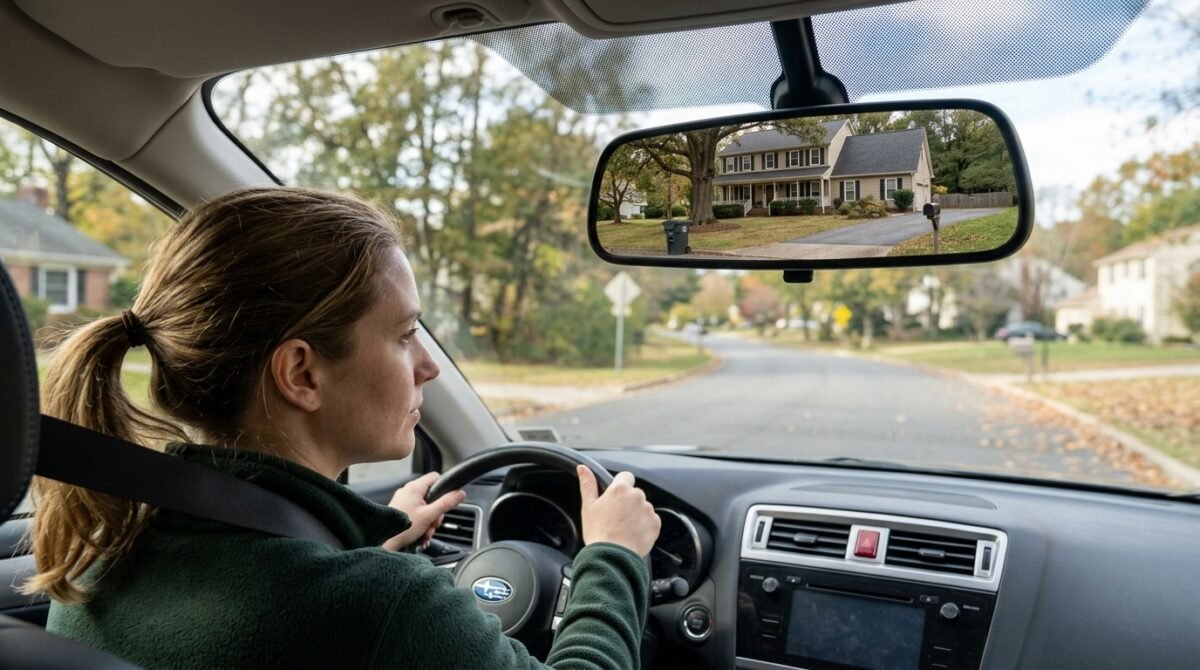
I went back to the house one last time to collect my personal belongings. It was a surreal experience. The house felt like a museum of a life that no longer belonged to me. The jet ski was still in the driveway, looking even more absurd in the bright afternoon light. It was a monument to a mistake, a symbol of everything that had gone wrong.
Mark was there, but he stayed in the bedroom, not wanting to face me. I walked through the house, packing the things that were truly mine. I took the photos, the books, the small mementos that meant something to me. I left behind the things we had bought together, the things that were tainted by our shared history.
When I reached the living room, I stopped for a moment and looked at the empty space on the wall. It didn’t hurt as much as I thought it would. The pain had been replaced by a quiet acceptance. The painting was gone, and I would likely never see it again, but I was also going, and I would be better for it.
I walked out to the car, carrying my boxes, and didn’t look back. I didn’t say goodbye to Mark. There was nothing left to say. The silence of the house, which had once felt like a sanctuary, now just felt empty, and I was ready to find a home that was truly mine.
“I’m taking the dog. You can keep the jet ski.”
“Wait, you’re just leaving? Without even talking to me?”
“We’ve talked enough, Mark. We’re done.”
As I pulled out of the driveway, I saw him standing in the doorway, a small, pathetic figure against the backdrop of our life. I didn’t feel pity, and I didn’t feel anger. I felt relief. I was free.
Lessons from the Wreckage

Looking back now, it’s easy to see the warning signs I chose to ignore. The small purchases, the secrecy, the way he would dismiss my concerns as ‘nagging’—they were all part of a larger pattern that I had been blind to for years. I had mistaken his impulsivity for spontaneity, and his lack of consideration for ‘being laid back.’
I’ve learned that trust isn’t just about honesty; it’s about transparency and respect. When someone treats your boundaries as suggestions, they are telling you exactly what they think of you. And when you ignore those messages, you are telling them that your boundaries don’t matter.
I am currently living in a small apartment, focusing on my career and my own well-being. It’s not the life I had planned, but it’s a life that is truly my own. I have found a new sense of purpose and a new appreciation for the things that really matter. I am no longer living in a house of cards; I am building a foundation that is solid and secure.
The painting is still gone, and that still stings from time to time. But I have realized that the painting was just a symbol of my past, and I am the architect of my future. The jet ski is a distant memory, a cautionary tale that I share with friends to remind them—and myself—that we deserve to be with people who respect us.
“You were so strong to walk away from that. Most people would have tried to save the marriage. You saved yourself.”
“It wasn’t about strength. It was about survival.”
I hope that my story helps others who might be in similar situations. Whether it’s a painting, a bank account, or your own self-worth, don’t let anyone trade your value for their own temporary thrill. You are worth more than any object, and you deserve a partner who recognizes that.
Conclusion
The dust has finally settled on what was undoubtedly the most surreal chapter of my life. My divorce is finalized, and while the legal battle to recover the value of the painting continues, the weight of the betrayal has lifted. I’ve found that healing is not linear; some days I still wake up feeling the phantom loss of my aunt’s legacy, but most days, I wake up feeling grateful for the clarity that the crisis provided.
This story has resonated with so many because it touches on the raw, uncomfortable nerve of financial infidelity. It forces us to ask: What do we actually know about the people we share our lives with? Are we partners, or are we merely roommates with shared assets? The community support on Reddit was a lifeline I never expected, and it reminded me that there is a profound, quiet strength in shared human experience.
As I move forward, I am learning to define my own worth independent of my possessions and my relationships. I am discovering who I am when the walls aren’t filled with ancestral heirlooms and the house isn’t filled with the noise of someone else’s ego. It is a quiet, peaceful, and honest life, and for the first time, it belongs entirely to me.
What about you? Have you ever had a partner violate your trust in a way that fundamentally changed how you viewed them? How did you handle the fallout? Let’s talk about it in the comments below.
What's your verdict on this dilemma?
Vote below to contribute to the official community consensus.

Have a Dilemma Keeping You Up at Night?
Share your real-life feud, wedding chaos, or relationship crossroads anonymously with our editorial team.
What do you think ?
0 Comments🛡️ Comments are moderated to protect community integrity. Your comment will appear once approved by the editorial team.