
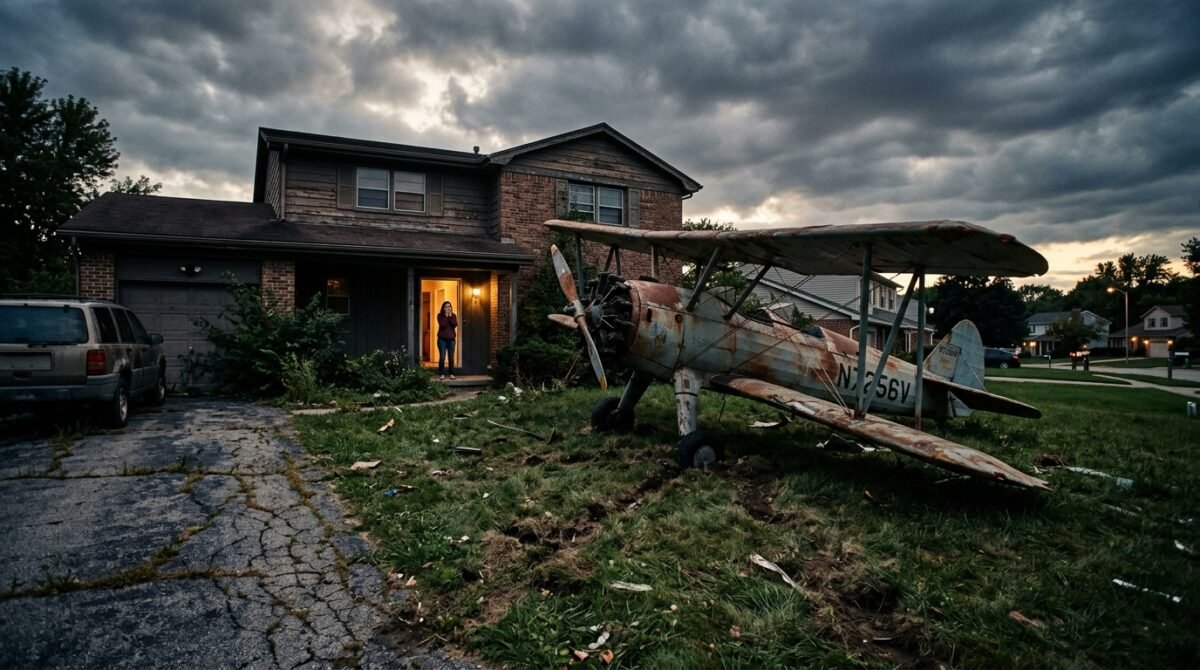
Marriage is built on foundations—both metaphorical and, in our case, literal. When the surveyor told us our 1920s craftsman bungalow was suffering from severe soil erosion and foundation settling, the news was a gut punch. It wasn’t just a repair; it was an emergency. The quote was sixty thousand dollars, a sum that we had scraped together through savings, a modest inheritance, and a low-interest home improvement loan that took months of financial planning and tight budgeting to secure.
My husband, Mark, has always been a dreamer. He calls it ‘having a vision,’ but after ten years of marriage, I have come to recognize it as a dangerous lack of impulse control. He is the man who buys high-end camping gear for trips we never take, and the one who invested in a crypto startup that folded within weeks. I thought the foundation loan was different. It was for our home, our safety, our future. We sat at the kitchen table for three hours the night the money hit our joint account, agreeing that the funds were untouchable.
I trusted him. That was my first mistake, or perhaps it was my last. The bank draft was issued, and the contractor was scheduled to begin work on Monday morning. I spent the weekend at my sister’s house, clearing out the basement to prepare for the heavy machinery that would need access to the crawlspace. Everything seemed to be progressing according to our meticulous, life-saving plan.
Returning home on Sunday evening, I expected to see the staging area cleared. Instead, I found a chaotic scene. A flatbed truck was just pulling away, and in the middle of our gravel driveway, sitting like a jagged piece of scrap metal against the backdrop of our sagging roof, was a 1952 biplane. It was disassembled, wings askew, engine cowling missing. It looked like a tombstone for our financial security.
I stood by the mailbox for ten minutes, unable to move, unable to breathe. My phone buzzed in my pocket—a text from Mark saying ‘Come home, babe! You’re not going to believe the investment opportunity of a lifetime.’ At that moment, the dream died. The house shifted, a subtle groan of timber against settling earth, and I realized that the plane wasn’t the only thing that was non-functional. Our marriage was, too.
The Engine Cowling of Deception

When I finally walked up the driveway, Mark was standing next to the fuselage, beaming with a wide, toothy grin that usually accompanied his grandest, most expensive mistakes. He had his hands wiped with grease and a look of pure, unadulterated triumph on his face, as if he had just discovered a hidden treasure rather than burying our family’s future in the dirt.
I didn’t even say hello. I walked straight up to the cockpit, which was missing its windshield, and touched the cold, rusted aluminum. ‘Mark,’ I whispered, my voice trembling with a rage so cold it felt like liquid nitrogen in my veins. ‘Where is the check? The sixty thousand dollars for the foundation. Where is it?’
He laughed, a dismissive, airy sound that made me want to scream. ‘Relax, babe. This is a vintage 1952 biplane. The owner was liquidating his estate. It’s worth triple what I paid once I restore it. I didn’t spend the whole loan, just enough to secure the asset. We can pay the contractors in installments later, right? They never really expect the full lump sum upfront.’
“You spent the foundation money on a plane that doesn’t fly? How are we supposed to live in a house that’s actively sinking into the earth, Mark?”
— Me, screaming in the middle of the driveway
His face fell, but only for a second. ‘You’re being dramatic. The house has been standing for a hundred years; it’s not going to collapse this week. This is an investment in our future. Once I flip this bird, we’ll have enough to build a custom wing on the house, not just fix the foundation.’
I looked at the plane, then at the cracks running up the brick facade of our home. I felt a snap in my brain, a definitive moment where the tether of my patience finally frayed and broke. I didn’t argue. I didn’t try to explain the physics of soil erosion to a man who thought he was a pilot without a license. I turned around, walked back to my car, and drove to a hotel.
The Emergency Withdrawal and the Bank’s Cold Truth

The following morning, I was at the bank branch before the doors even opened. I needed to know exactly how much damage had been done. I told the teller I was there for an emergency inquiry regarding our joint home improvement loan. When the manager pulled up the ledger, the color drained from her face.
The account was not just depleted; it was empty. Not only had Mark withdrawn the entire sixty thousand, but he had also leveraged the account’s existing balance to cover the ‘shipping and handling’ for the oversized cargo. He had drained our emergency savings, our vacation fund, and the specialized foundation loan in less than forty-eight hours.
I sat in the manager’s office for two hours, going over the signatures. He had forged my electronic signature on the wire transfer authorization. It was fraud. Plain and simple. The bank manager looked at me with genuine sympathy, which only made me feel more pathetic for staying with him as long as I had.
“I am legally required to inform you that because this was a joint account, your husband had the authority to authorize these transfers, even if the signature is questionable. This is a civil matter now.”
— Bank Manager
I walked out of that bank feeling like a ghost. I had spent years being the ‘responsible one,’ the one who kept the spreadsheets, who planned for the worst-case scenario, and yet, I was still standing in the ruins of a life I had meticulously built. Every dollar I had saved since my first job out of college was gone, invested in a pile of scrap metal currently sitting on my lawn.
I spent the afternoon at a law firm, not one that specialized in home repair, but one that specialized in divorce. The lawyer looked at the photos of the biplane on my phone and sighed, a long, weary sound of a man who had seen too many husbands trade their families for hobbies.
The Group Chat Explosion

By noon, my phone was blowing up. Mark had taken to our family group chat to announce his ‘big score.’ He didn’t see it as a betrayal; he saw it as a victory. He was looking for validation, for someone to tell him he was a genius who knew how to spot a market opportunity. Instead, he got the truth.
“Check out the new project! Going to get this bird in the air by spring. Best investment we’ve made yet. #aviation #vintage #hustle”
— Mark, in the family group chat
My mother was the first to respond. She didn’t hold back. My sister followed with a string of questions that Mark simply ignored. The chat turned into a battlefield, with Mark defending his ‘vision’ against a barrage of reality checks from people who had actually watched me struggle to keep our household afloat.
“Mark, you idiot. That money was for the foundation. The house is sinking! Are you living in the plane now? Because you certainly won’t have a roof over your head by winter.”
— My sister, Sarah
Mark kept typing back, his responses increasingly erratic and defensive. He claimed the house was ‘fine’ and that we were all just ‘jealous of his vision.’ He didn’t understand why I wasn’t responding, why I hadn’t liked his photo, or why I wasn’t celebrating this massive, destructive purchase.
I watched the messages stream in, feeling a strange sense of detachment. It was like reading about the problems of a stranger. I wasn’t the wife who had to fix his mistakes anymore. I was the observer, the one who had already checked out of the relationship. I didn’t type a single word in the chat.
The Legal Ultimatum and the Eviction of Dreams
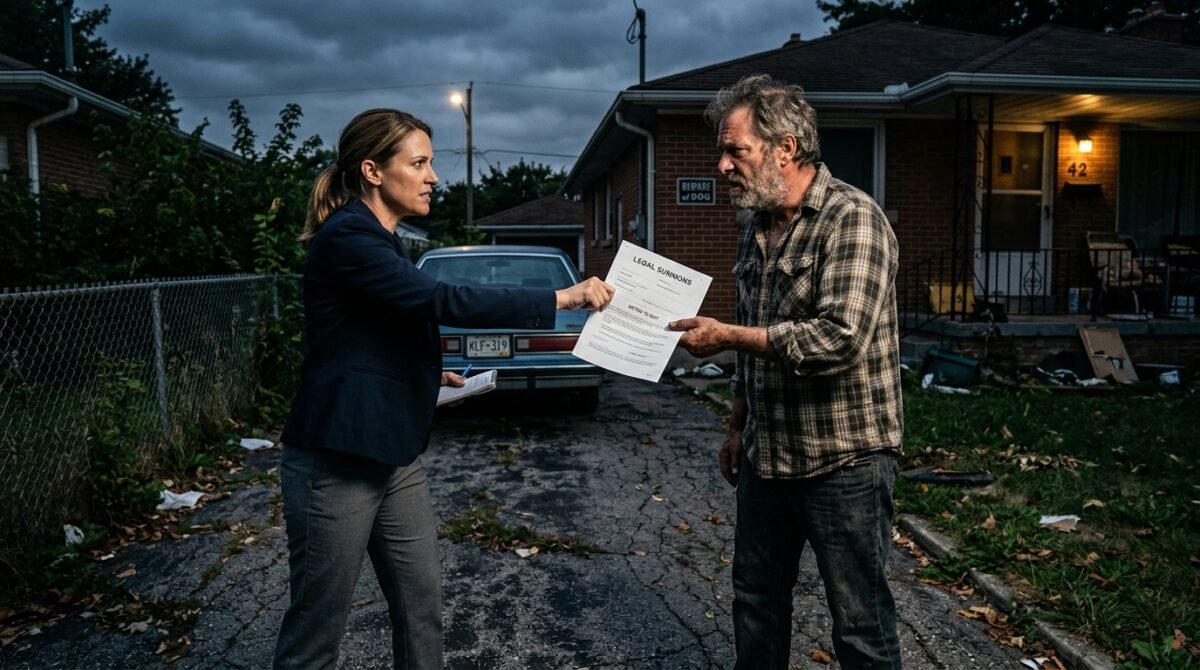
I had my lawyer draft the papers immediately. I wanted him out. I wanted the plane gone. I wanted my life back, or at least, the pieces of it that weren’t rusted and non-functional. I went back to the house to serve him the papers, accompanied by my brother to ensure things didn’t escalate.
Mark was in the driveway, covered in oil, trying to remove a rusted bolt from the landing gear. He looked up, his face lighting up when he saw me, as if he expected me to apologize for ‘overreacting.’ Then he saw my brother, and his smile faltered.
“I’m serving you with divorce papers, Mark. And I’m filing a police report for the fraudulent transfer of the loan funds. You have forty-eight hours to vacate the property or I will have the sheriff remove you.”
— Me, standing at the edge of the driveway
He laughed, but it sounded thin, shaky. ‘You can’t do that. It’s our house. We’re married. We own this together. You can’t just kick me out because I bought a plane.’
I didn’t answer. I handed him the envelope. His hands were shaking as he opened it. He read the first few lines, his face turning a shade of pale that I hadn’t seen before. The reality of the situation was finally setting in. This wasn’t a disagreement about groceries or a forgotten anniversary. This was the end of his world.
I walked into the house, gathered my essential documents, and left. I didn’t even look at the kitchen, the room where we had planned our future together. It was just a room now, in a house that was going to sink unless I could find a way to make him pay for what he’d stolen.
The Internet Weighs In: A Reddit Reckoning

I posted a summary of the situation on a popular subreddit, needing to know if I was crazy. Was I overreacting? Was a vintage biplane actually a good investment? The response was immediate and overwhelming. Thousands of people chimed in, and the verdict was unanimous. I wasn’t crazy; I was being financially abused.
“This is not just a ‘poor financial decision.’ This is financial abuse. He stole money meant for the structural integrity of your home to buy a toy. Please, for the love of god, leave and do not look back. He is a child in a man’s body.”
— u/FinanceExpert_88 (Top Comment, 32.4k upvotes)
The comments sections were filled with stories from others who had been in similar situations. People shared their experiences with partners who gambled away savings, hid debts, or sabotaged their financial stability for ‘get rich quick’ schemes. The support was validating, but it also made me realize how deep the rot actually went.
I read through hundreds of comments, feeling a strange mixture of relief and sorrow. I wasn’t alone, but that didn’t make the pain go away. It only highlighted how common this kind of betrayal was. People were telling me to secure my assets, to document everything, and to prepare for a long, ugly legal battle.
I realized then that my story wasn’t just about a plane. It was about a pattern of behavior that I had ignored for far too long. I had excused his ‘dreams’ as ‘quirks,’ and in doing so, I had allowed him to dismantle my entire life.
The Contractor’s Silent Assessment
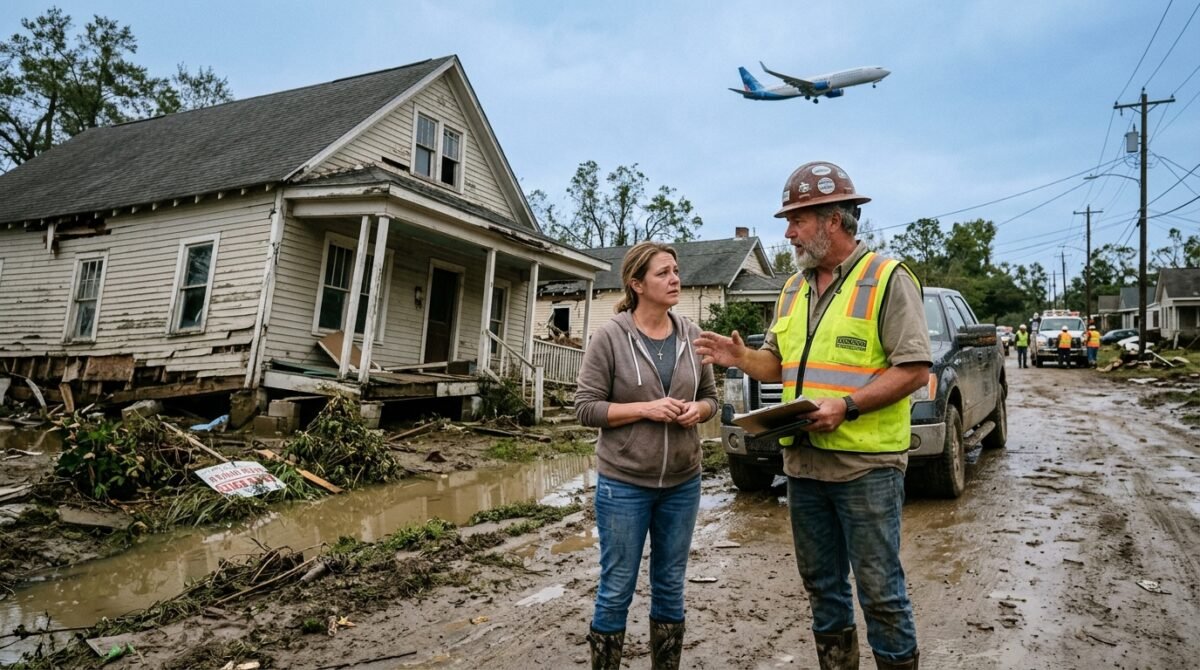
The foundation repair crew showed up on Monday morning, completely unaware of the drama. They walked around the house, looking at the cracks, the sinking porch, and then, inevitably, at the biplane in the driveway. Their foreman, a grizzled man who had seen every type of home disaster, looked at the plane and then back at the house.
I had to explain that we couldn’t proceed. I had to tell him that the money was gone. I could see the pity in his eyes. He didn’t ask questions; he just packed up his gear. But before he left, he gave me the most important piece of advice I would receive throughout this entire ordeal.
“Lady, that plane won’t save this house. You need to get that structure stabilized before the winter freeze, or you’re going to lose the whole lot. Forget the plane. That’s a liability, not an asset.”
— The Foundation Contractor
His words stung, but they were true. The plane was a liability. It was literally weighing down my property value and my life. I started calling scrap yards, trying to figure out how to get rid of it. But because it was technically a ‘jointly purchased asset,’ I couldn’t just have it towed away without risking legal repercussions.
I was trapped by the very laws that were supposed to protect me. I couldn’t fix the house, I couldn’t get rid of the plane, and I couldn’t fully close the bank account. I was in a state of legal and financial purgatory.
The $1,400 Restaurant Bill Left on the Table

A week later, Mark tried to ‘win me back’ by taking me to our favorite high-end restaurant. He acted as if nothing had happened, as if the divorce papers were just a misunderstanding, as if the biplane wasn’t still sitting in our driveway, mocking the very idea of a stable life.
He ordered the most expensive bottle of wine on the menu and the prime rib, talking about his ‘plans’ for the restoration. He was so delusional that it was almost impressive. He genuinely believed that if he just talked long enough, I would eventually see things his way.
“I checked the market, and if I get this engine running, the value jumps by forty percent. We’ll be set for life. I just need you to be on board with the vision.”
— Mark, over dinner
I didn’t eat a single bite of my food. I just watched him, wondering how I could have ever loved a man who was so fundamentally disconnected from reality. When the check came—fourteen hundred dollars for a meal he couldn’t afford—he tried to put it on the joint credit card. The card was declined.
The look on his face was one of pure, childish confusion. He tried again. Declined. He turned to me, his eyes wide with panic. I stood up, walked out of the restaurant, and left him there to explain to the waiter why his card didn’t work. I had canceled the secondary cards the day before. It was the most satisfying moment of my entire year.
The Certified Letter That Changed Everything
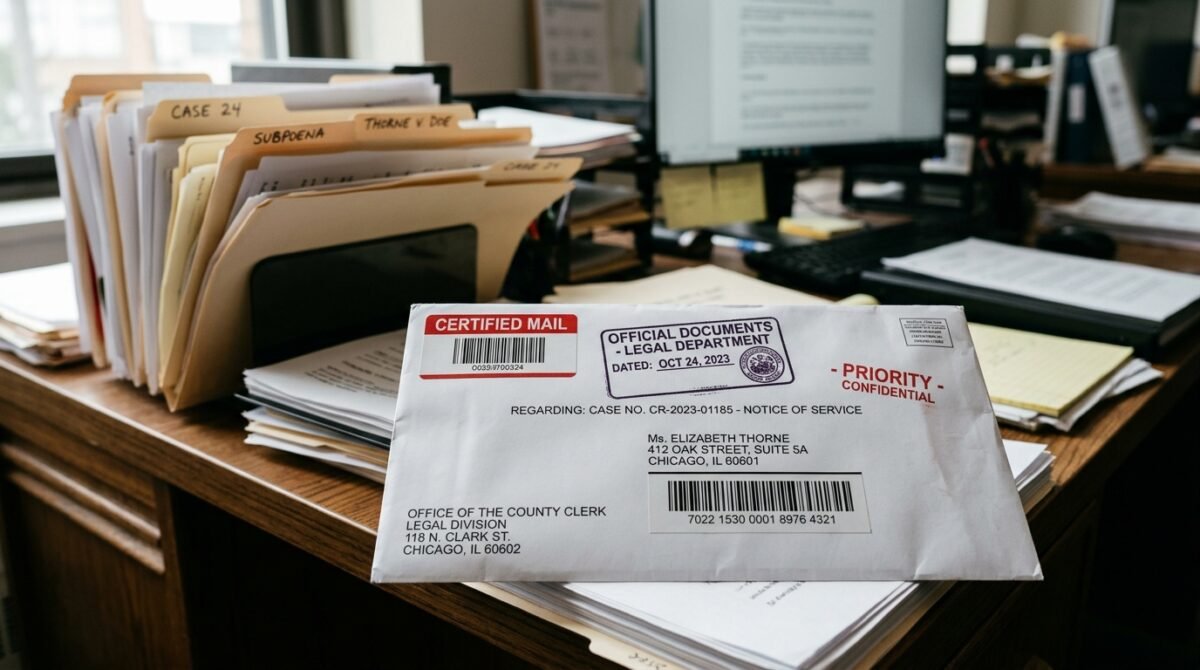
The next morning, I received a certified letter from the FAA. My heart stopped. I thought it was about the plane, some kind of regulation violation. But it was worse. It was a notice that the plane hadn’t been properly deregistered, and that the previous owner had significant liens against it. If I hadn’t been in the process of divorcing him, I would have been held liable for all of the back-taxes and storage fees associated with the aircraft.
Mark had bought a debt trap. He hadn’t just wasted our money; he had purchased a legal nightmare that would have bankrupted us even faster than the foundation repairs could have. I immediately forwarded the letter to my attorney, who was already building a case for financial mismanagement and fraud.
The irony was almost poetic. The ‘investment of a lifetime’ was actually a legal sinkhole. I realized that my decision to file for separation hadn’t just saved my sanity; it had saved me from being dragged down into the bankruptcy that Mark was now inevitably facing.
“You didn’t just buy a plane, Mark. You bought a six-figure debt. You tried to ruin us, but you actually just ruined yourself.”
— A message I sent to Mark after reading the FAA letter
Mark didn’t respond. For the first time, he was silent. He finally realized that the ‘vision’ he had been chasing was not a golden ticket, but a suicide mission. The reality of his failure was starting to weigh on him, and there was no way to spin this. The numbers were absolute, and they were devastating.
Why the Sunday Dinner Table Went Completely Silent

My family invited me over for Sunday dinner, the first one in weeks. Mark was not invited, obviously, but his presence was still felt. My father, who had always been a man of few words, sat me down at the table and asked me to be honest about the future of the house.
The room went completely silent. My mother, my sister, and my brother all stopped eating. They were waiting for me to tell them if I was going to fight for the house or walk away from the whole mess. I looked around at their faces, realizing they were all prepared to help me, no matter what I decided.
I told them I was selling the house ‘as is.’ The foundation was too far gone, and I didn’t want to spend another day in a place that reminded me of Mark’s betrayal. I wanted to start over, somewhere new, where the ground beneath my feet was solid and the people I loved were trustworthy.
“I’m selling it. I don’t want the house, and I don’t want the plane. I want a clean slate. I’m done with the projects and the dreams and the excuses.”
— Me, speaking to my family
There was a collective sigh of relief around the table. They had been worried that I would try to ‘make it work,’ that I would stay in the sinking house and continue to sacrifice my happiness for Mark’s ego. My father reached across the table and squeezed my hand, a gesture of support that made me cry for the first time since the plane arrived.
The Final Departure

Selling the house was a nightmare, but it was a necessary one. We had to disclose the foundation issues, which tanked the value, and the plane had to be removed by a salvage yard for a fraction of what Mark had paid for it. Mark fought every step of the way, trying to claim the plane was ‘his’ while simultaneously trying to claim the house ‘equity’ was ‘ours.’
The judge, however, wasn’t having any of it. After reviewing the financial records, the fraud, and the reckless endangerment of our assets, the divorce was finalized with a clear division of the remaining, meager debt. Mark was left with the bulk of the liabilities, including the remainder of the bank loan that he had personally authorized.
Walking out of the courthouse for the last time, I felt lighter than I had in a decade. The sun was shining, and I didn’t have a plan for the next five years, which was exactly how I wanted it. I had learned that my value wasn’t defined by my husband’s ‘vision,’ and that a foundation is something you build for yourself, not for someone else.
“You’re finally free. Not just from him, but from the weight of all those broken promises. Now go build something that actually flies.”
— My lawyer, as we left the courthouse
I left the town, moved to a different city, and started a job that didn’t involve managing someone else’s chaos. I still think about the plane sometimes—the absurdity of it, the sheer audacity of Mark’s selfishness. But it doesn’t make me angry anymore. It makes me realize how lucky I was to get out before the house literally collapsed on top of me.
Conclusion
Looking back, the destruction of my marriage wasn’t caused by a single purchase, but by a thousands of small compromises that paved the way for the ultimate betrayal. I spent years supporting a man who looked at the world as a series of opportunities for himself, never stopping to consider who would have to pick up the pieces when his gambles failed. My foundation wasn’t just ruined by soil erosion; it was eroded by the constant, grinding pressure of living with someone who didn’t respect our shared security.
If you find yourself in a situation where your partner is making financial decisions that threaten your stability, do not wait for the plane to land on your lawn. Speak up, secure your assets, and protect yourself. You are not a ‘support team’ for someone else’s delusion. You are a person with rights, needs, and a future that is worth saving.
Have you ever experienced a moment where a partner’s financial betrayal forced you to choose between your relationship and your own survival? What was the moment you realized that ‘for better or worse’ didn’t mean ‘supporting reckless abuse’? Share your stories in the comments below—let’s create a space where we can speak honestly about the reality of financial abuse.
What's your verdict on this dilemma?
Vote below to contribute to the official community consensus.

Have a Dilemma Keeping You Up at Night?
Share your real-life feud, wedding chaos, or relationship crossroads anonymously with our editorial team.
What do you think ?
0 Comments🛡️ Comments are moderated to protect community integrity. Your comment will appear once approved by the editorial team.