
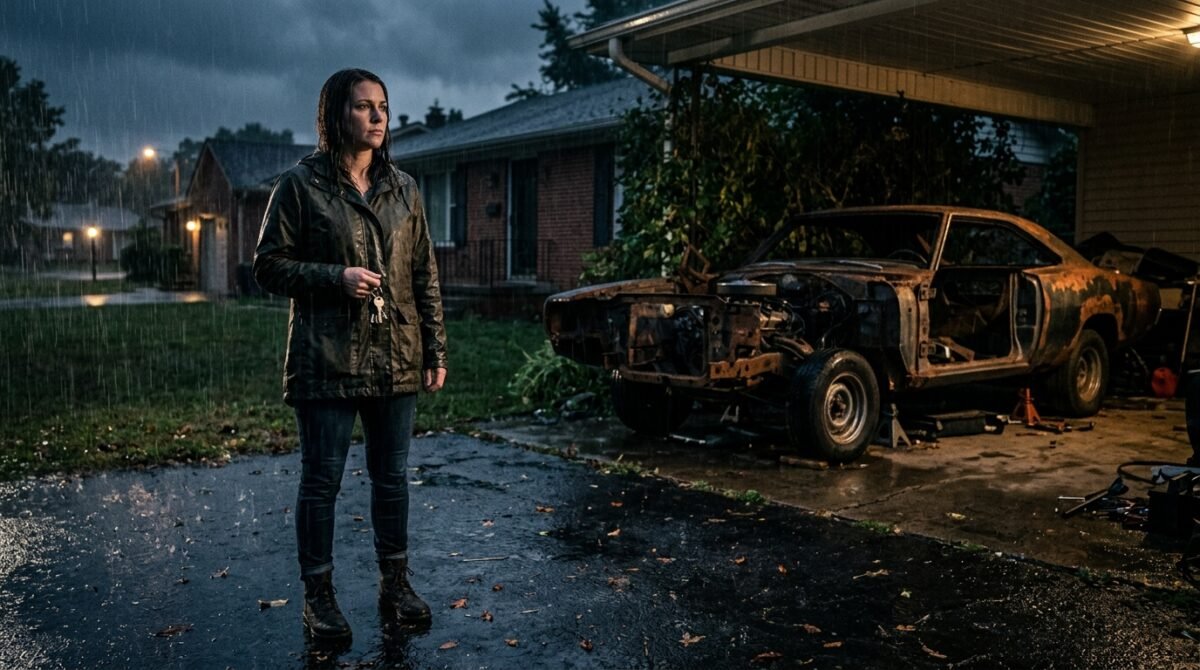
Marriage is built on trust, shared goals, and the occasional compromise. But there is a line—a thick, indelible boundary—between a hobby and financial sabotage. My husband, Mark, has always had a soft spot for ‘restoration projects.’ Over the years, I’ve tolerated his tinkering with lawnmowers and vintage radios. It was annoying, but it was harmless. That changed the Tuesday morning I walked out to the driveway to find my reliable 2018 Odyssey gone, replaced by a lawn littered with transmission parts and a hollowed-out 1969 shell that looked more like a tetanus hazard than a vehicle.
The betrayal wasn’t just about the car; it was about the absolute disregard for our family’s mobility. We have two children, school runs to manage, and a life that requires a functioning engine. Selling the family minivan without so much as a conversation, let alone permission, was an act of profound disrespect. He treated our household assets like his personal slush fund, assuming I would just smile, nod, and take the bus while he ‘lived his dream.’
When I confronted him, he didn’t apologize. He gave me a condescending lecture about ‘vision’ and ‘potential value,’ completely ignoring the reality that our kids were stranded. That was the moment something snapped inside me. The ‘good wife’ who supported his whims vanished. In her place was a woman who knew exactly how to protect her own interests. I didn’t yell. I didn’t throw a plate. I did something much more effective.
I waited until he left for work on Wednesday, then I did the only thing that made sense. I took the title to the rust bucket, which he had foolishly left on the kitchen counter, and I changed every lock in the house. This isn’t just a story about a car. It’s a story about the breaking point, the silence that follows an explosion, and the harsh lesson that some boundaries, once crossed, leave permanent scars.
This narrative explores the anatomy of a breakdown. We’ll look at the months leading up to the sale, the heated confrontations that defined our final days, and the absolute chaos that ensued when the ‘man of the house’ realized he’d been evicted from his own life. Sometimes, to save yourself, you have to be the villain in someone else’s story.
The Morning the Minivan Vanished
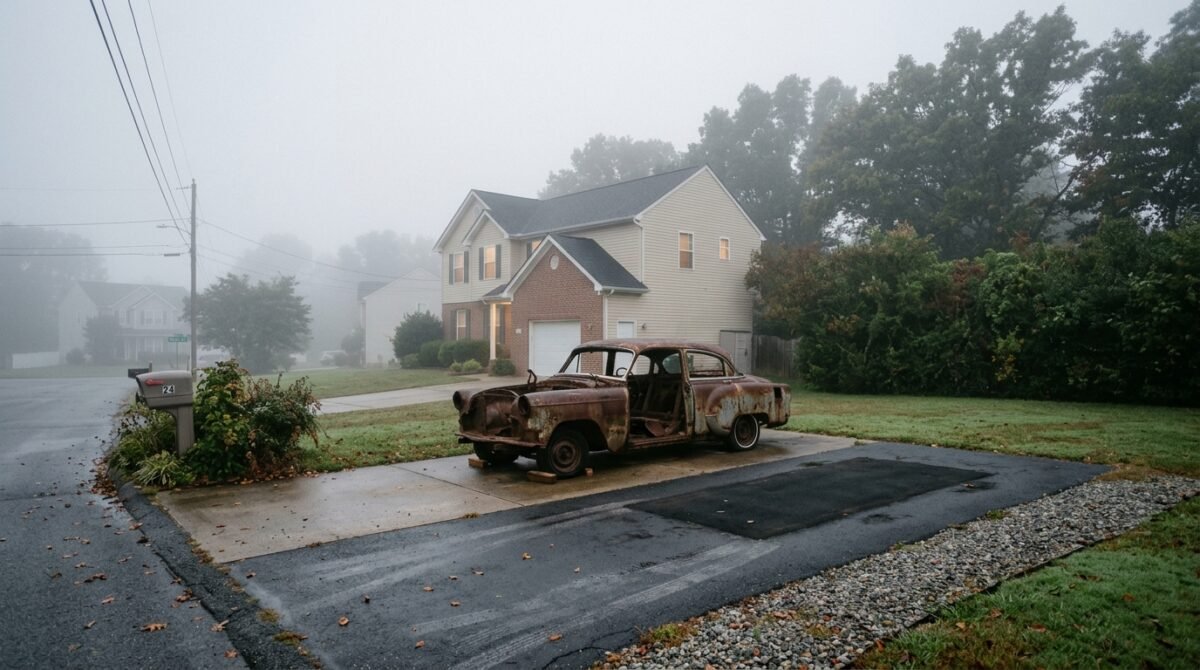
The silence in the driveway was deafening. I stood there, coffee in hand, staring at the empty patch of asphalt where our Odyssey should have been. In its place sat a mangled, olive-green hunk of metal that looked like it had been pulled from a swamp in 1994. My heart didn’t race; it plummeted. It was the sinking realization that my life had been altered without my consent.
I pulled out my phone, my fingers trembling slightly. I checked the bank account first. Nothing. No deposit. Then I checked the family tracker, but he had turned it off. I felt like an intruder in my own home. I walked back inside, the smell of damp pine needles clinging to my clothes, and realized that the life I had curated was being dismantled piece by piece while I was sleeping.
“Mark, where is the van? And why is there a literal wreck parked where my car belongs? Tell me you didn’t do something stupid.”
— Sent via iMessage, 7:14 AM
His response came ten minutes later, casual and infuriatingly detached. It was as if he had bought a carton of milk, not traded our family transport for a pile of scrap. The lack of gravity in his tone was the first trigger for my decision. He didn’t see a problem; he saw a win.
He told me he had sold the van to a friend who ‘needed a decent ride’ and that he had secured the shell for a ‘steal’ from an estate sale. He didn’t mention that the car wouldn’t start. He didn’t mention that he had used our emergency savings to bridge the gap. He just kept talking about ‘the restoration’ and ‘the investment.’ The arrogance was suffocating.
I spent the rest of the morning on the phone with the bank, verifying the transfer. He had cleaned out the savings account too. Everything was gone—the kids’ college fund, the rainy-day buffer, and our only reliable transportation. I wasn’t just stranded; I was being liquidated.
The Confrontation That Changed Everything
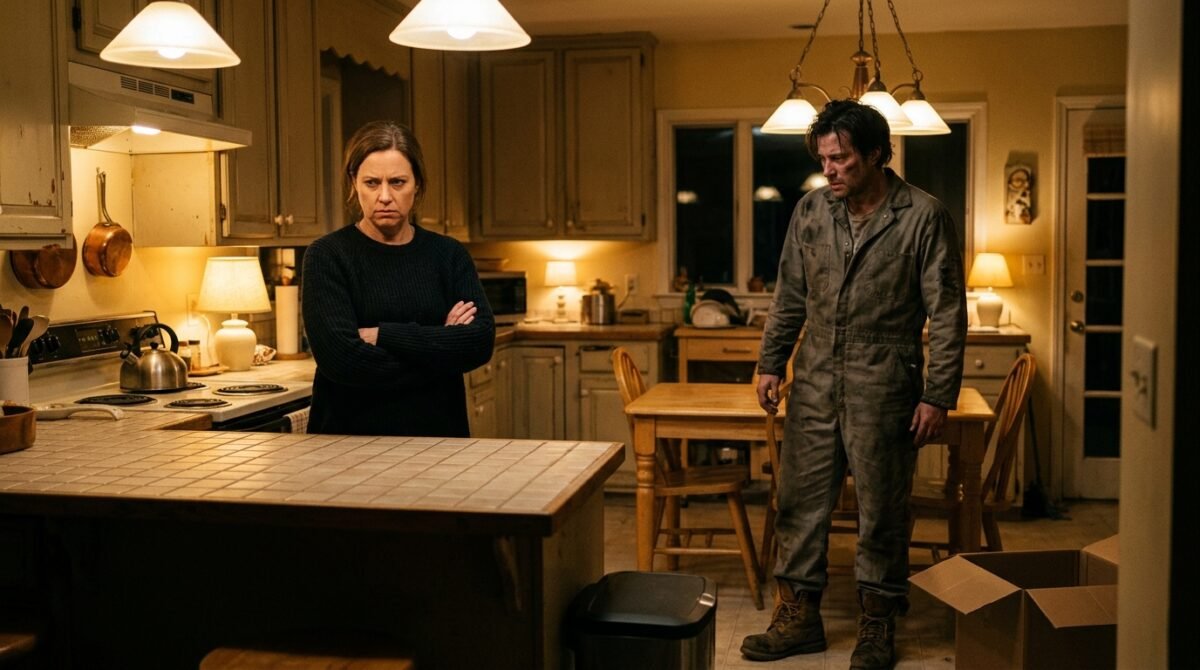
When Mark finally walked through the front door that evening, he was wearing a shit-eating grin, covered in grease and smelling of motor oil. He didn’t even acknowledge the tension in the room. He walked straight to the fridge, grabbed a beer, and started talking about parts, carburetors, and the ‘glory days’ of Detroit muscle. I stood in the doorway of the kitchen, watching him with a detachment that frightened me.
I didn’t scream. I didn’t throw anything. I simply asked, ‘Where is the title, Mark?’ He laughed, a short, dismissive sound that hit me like a physical blow. He told me it was ‘somewhere safe’ and that I shouldn’t worry my head about the paperwork. He honestly believed I was still the person he could manipulate with a smile and a shrug.
“You have no idea what this car is going to be worth in two years. It’s an asset, not a toy. Why are you acting like I sold our souls?”
— Mark, during the kitchen standoff
I looked at him, really looked at him, and realized I didn’t love the man in front of me. I saw a child who had never learned to consider the consequences of his actions. I saw someone who viewed me as a prop in his life, not a partner. I told him that the ‘investment’ wasn’t going to get the kids to school tomorrow morning.
He snapped back, telling me I was being hysterical and that I could just ‘figure it out.’ That was the turning point. In that moment, the power dynamic in our house shifted. I realized that if he wouldn’t respect my role in this family, he no longer had a place in the house. I had already looked up the local laws regarding the deed and the mortgage.
The argument escalated for two hours. He accused me of being unsupportive, of holding him back, of being the ‘fun killer’ in the relationship. Every word he said was a justification for his own selfishness. He kept calling the car ‘our’ car, as if the decision had been a collective one. The gaslighting was so routine for him that he didn’t even notice he was doing it.
The Silent Execution of the Plan
The next morning, the house felt colder. Mark left for work, blissfully unaware that I had spent the entire night in the garage, photographing the ‘investment’ and listing it on every local marketplace for the exact price he had supposedly paid for it. I was calm. I was precise. I was done.
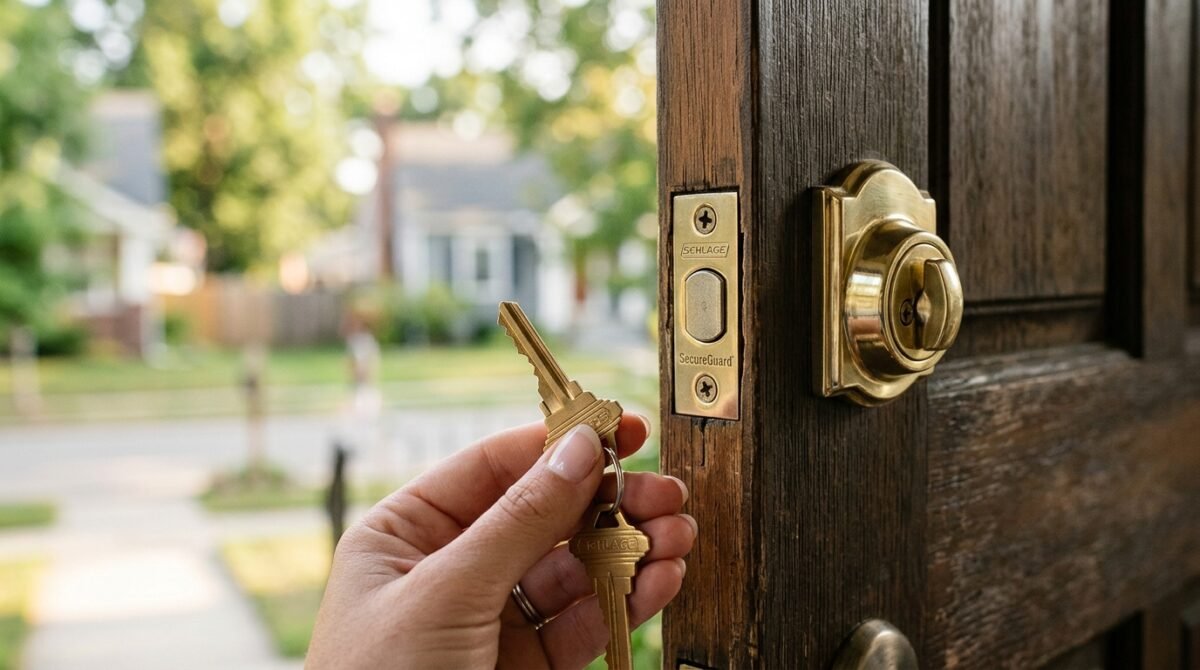
I had called a locksmith at 9:00 AM. While he was busy at his office, thinking about his next spark plug order, the locks were being upgraded to a grade-one deadbolt system. I also contacted my brother, who arrived with a trailer and a very quiet demeanor. We moved the ‘shell’ out of the driveway and into a storage unit I had rented under my own name. It was gone.
“I don’t know what you’re talking about. The driveway is empty. Maybe you should check if it was towed. Did you pay the property taxes on time this month?”
— My text to Mark, 2:00 PM
The panic in his eventual reply was delicious. He started calling. My phone buzzed incessantly, but I left it face down on the counter. I wasn’t going to provide him with the catharsis of an argument. I had taken his toy, I had taken his access, and I had taken his leverage. For the first time in ten years, I was the one holding all the cards.
I spent the afternoon at a local law office, finalizing the papers for a separation. I wasn’t just locking him out; I was closing the chapter. The financial advisor I spoke with confirmed that because the van was in both our names and the ‘shell’ was purchased with joint funds, I had every right to secure the assets until the settlement. He had made a tactical error by leaving the title on the counter.
By 5:00 PM, the house was silent. The kids were at their grandmother’s for the night, a decision I had made days ago, sensing that a storm was coming. I poured a glass of wine and sat on the porch, watching the driveway. I wasn’t waiting for him to come home. I was waiting for the realization to set in.
The Front Porch Meltdown
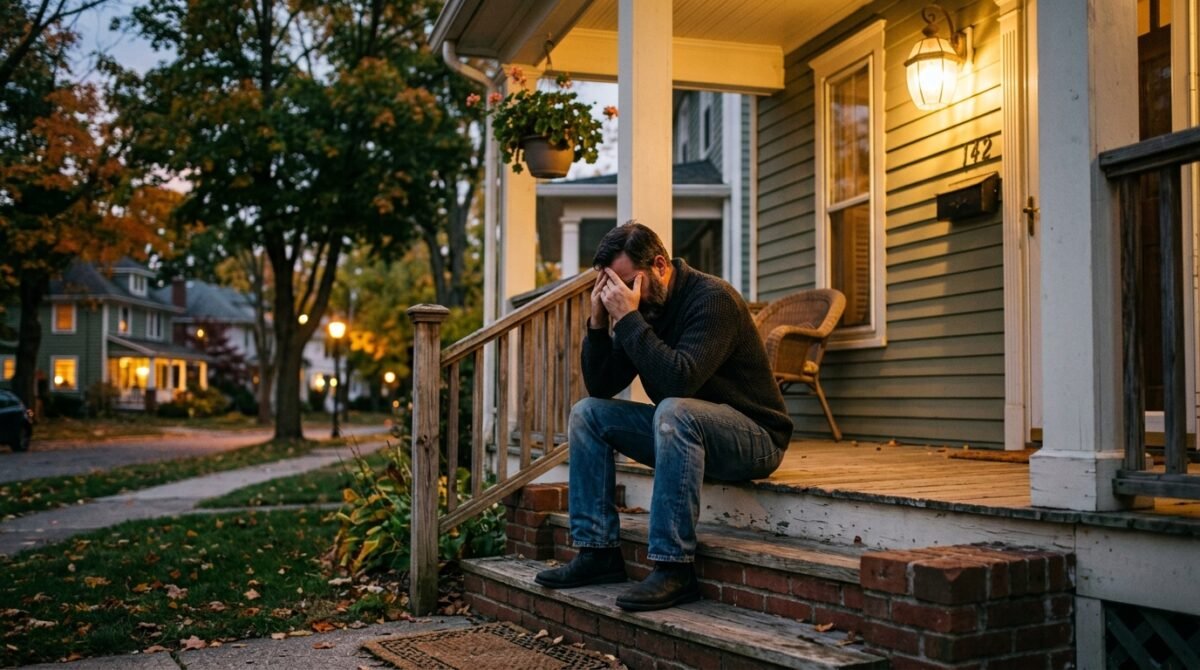
When Mark arrived, it wasn’t the heroic homecoming he expected. He pulled into the driveway, stopped, and stared at the empty, clean concrete. He sat in his truck for a long time. I watched him from the upstairs window, a spectator to his unraveling. When he finally walked to the door and found the key wouldn’t turn, his entire posture shifted from entitled to desperate.
He started pounding on the door. He shouted my name, his voice echoing through the quiet neighborhood. It was the sound of a man who had never faced a real consequence in his life. I didn’t come to the door. I waited until he stopped, then I opened the second-story window just enough to be heard. I told him he wasn’t coming in. I told him the locks had been changed and that his bags were on the porch.
“This is my house! You can’t just lock me out. Let me in right now, Sarah! What the hell is happening? Where is the car?!”
— Mark, screaming at the front door
I explained to him, in a voice that was eerily calm, that the minivan was gone, the house was off-limits, and he needed to call his mother if he needed a place to sleep. He looked up at me, his face a mixture of rage and confusion. He tried to threaten me with legal action, but I just laughed. I had everything documented. I had the bank statements, the texts, and the record of the car sale.
He eventually slumped onto the front steps. The neighbor across the street was clearly watching, curtains twitching. It was humiliating, yes, but it was necessary. The public nature of it was the only thing that kept him from trying to force his way in. He knew that if he did, the police would be called, and he had too much to lose to risk an arrest record.
He spent the next hour calling my phone, leaving voicemails where he went from pleading to threatening to bargaining. I listened to them all. It was a masterclass in manipulation. He tried to blame me, then tried to blame the economy, then tried to blame the ‘pressure’ he was under. He never once apologized for the core issue.
The Digital Paper Trail

I didn’t stop with the locks. I spent the night going through every shared digital account. I changed passwords, I removed his access to our investment portals, and I downloaded every single financial record from the last five years. I discovered, to my horror, that this wasn’t the first time he had ‘invested’ without telling me. There were dozens of small, hidden withdrawals over the years.
I found a group chat on his tablet—which he had left in the house—titled ‘The Garage Rats.’ It was him and three of his friends, bragging about how he had ‘tricked’ me into agreeing to the sale by lying about the repair costs. The level of premeditation was staggering. They were laughing about how much money he was going to make once the restoration was done, and how I was too ‘naïve’ to notice.
“She thinks I’m selling the van for an upgrade. Wait until she sees what I’m actually doing. Gonna have a classic and a fat stack of cash by summer. She doesn’t need to know the details.”
— A leaked text from ‘The Garage Rats’ group chat
Reading those messages was the final nail in the coffin for any lingering guilt I felt. He didn’t see me as a partner. He saw me as an obstacle to be circumvented. Every ‘sorry’ he had whispered over the years felt cheap and performative. I took screenshots of every single conversation. I saved them to a cloud drive and printed a hard copy for my lawyer.
He wasn’t just a reckless husband; he was a serial liar. The ‘minivan incident’ wasn’t a mistake—it was a pattern. The realization gave me a strange sense of clarity. I wasn’t just ending a marriage; I was extracting myself from a predatory relationship. I felt lighter, despite the absolute mess my life had become.
By the time the sun came up, I had organized a folder of evidence that would make a divorce attorney weep with joy. I had the timeline, the texts, the bank records, and the proof of his deceit. I was ready for the next phase. I wasn’t going to be the victim anymore.
Reddit Weighs In: The Verdict of the Internet
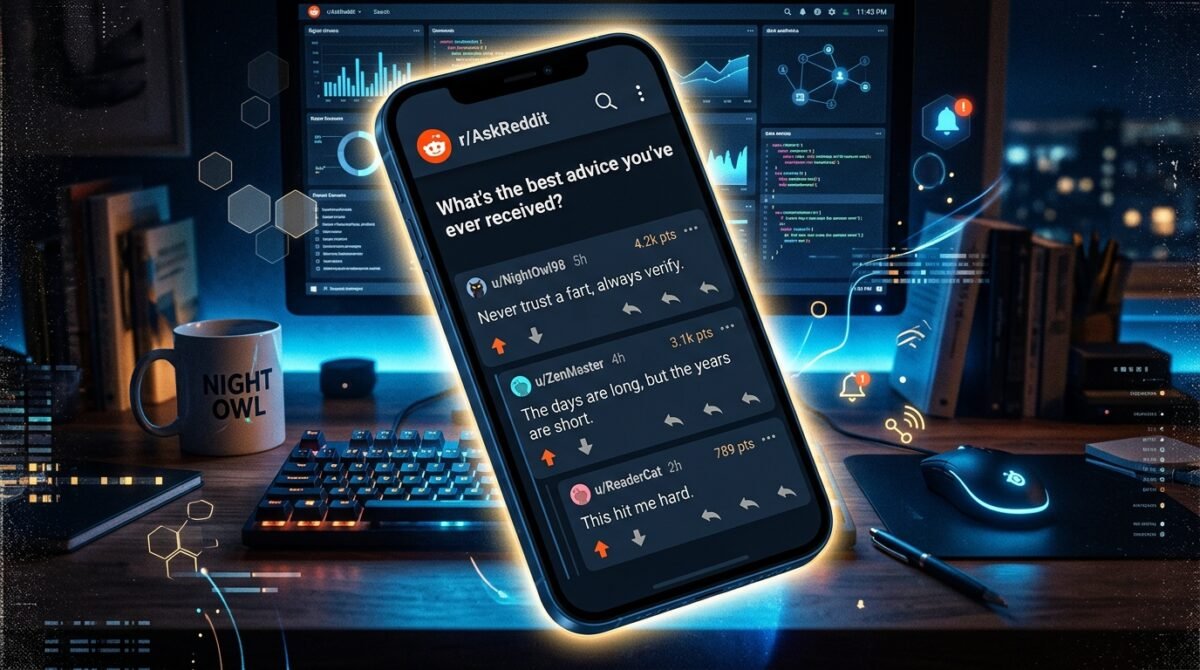
I posted a summary of the situation to a popular relationship subreddit, omitting only the most identifying details. Within an hour, the post had exploded. I watched the comments roll in, thousands of people validating the choice I had made. It was overwhelming, but in a way that made me feel less alone. The consensus was overwhelming: I was not the asshole.
“This isn’t just about a car. This is about financial abuse. Taking your only means of transport to fund a secret hobby is a massive red flag. Lock him out, keep the evidence, and file for divorce. Do not let him gaslight you into thinking this is ‘just a guy thing.’ It’s theft.”
— u/ReasonableObserver (Top Comment, 32.5k upvotes)
Other comments were just as supportive, though some pointed out the risks I had taken. A few people warned me about the legal implications of ‘locking him out’ of his own home, but most were in full support of my tactical approach. The validation was exactly what I needed to stay the course.
“My ex did the exact same thing with our savings. It never stops with the car. It goes to the credit cards, then the retirement, then the mortgage. You did the right thing. He’s showing you who he is—believe him.”
— u/SurvivorOfBrokenPromises (12.4k upvotes)
There were a few contrarian voices—people claiming I was ‘escalating’ too quickly—but they were drowned out by the sheer volume of support. People shared their own stories of financial betrayals, of secret bank accounts and hidden debts. It turns out, I was far from alone. The story resonated with so many people because it touched on the universal fear of being blindsided by someone you trust.
I read every comment. I looked for advice on how to handle the inevitable legal battle, how to protect my credit, and how to deal with the inevitable smear campaign he would launch. The community was an unexpected mentor. I took notes, I saved threads, and I felt empowered by the collective wisdom of thousands of strangers.
The thread became a sanctuary. I found people who had been through the same thing and had come out the other side. They warned me about the ‘apology tour’ that would eventually start—the flowers, the tears, the promises to change. They told me to hold the line. I promised them I would.
The Inevitable Apology Tour

True to the predictions, three days after the lock-out, the apology tour began. Mark started sending flowers. Not just one bouquet, but a massive, over-the-top arrangement that looked like a funeral service for a dignity I never had. He started showing up at my work, begging for ‘just ten minutes’ to explain. I didn’t give him ten seconds.
I kept my phone on ‘Do Not Disturb,’ only checking it once a day to scan for anything urgent. Every email he sent followed the same pattern: the blame, the excuse, the promise, and the inevitable pivot to ‘why are you being so mean?’ It was textbook. He wasn’t sorry for what he did; he was sorry that he was no longer in control.
“I just wanted to do something special for our future, Sarah. I’m so sorry I didn’t tell you. Please, just open the door. Let’s talk about this like adults. I love you, and I miss my kids.”
— Email from Mark, 9:00 AM
I didn’t reply to the emotional pleas. I only replied to the practical ones, and only through my lawyer. My attorney loved the ‘apology’ emails, pointing out that they were practically confessions of his unilateral financial decisions. He was doing my job for me, documenting his own bad behavior in real-time.
His family started reaching out, too. His mother called me, crying about how ‘Mark is just a dreamer’ and how I should ‘forgive and forget’ for the sake of the children. I told her that my priority was the children’s stability, which he had actively endangered. I told her that if she wanted to support him, she could give him a place to stay.
The pressure was immense. It’s hard to stand your ground when everyone around you is telling you to fold. I felt like the bad guy in my own life. But then I would look at the bank statement, see the empty savings, and remember the morning I had no car. That was my anchor. I stayed the course.
The Legal Reality Check

When we finally met in mediation, the atmosphere was thick with resentment. Mark arrived looking disheveled, clearly trying to play the part of the ‘wronged husband.’ He tried to present himself as the victim of my ‘sudden, irrational’ outburst. The mediator, a no-nonsense woman with years of experience, didn’t buy a second of it.
I laid out the timeline. I showed the bank transfers, the hidden messages, and the record of the car sale. When I revealed the existence of the ‘Garage Rats’ group chat, Mark went pale. He tried to claim it was ‘just locker room talk,’ but the mediator just raised an eyebrow. The evidence was damning.
“Mr. Miller, this isn’t about a hobby. This is about a pattern of financial deception that has clearly eroded the foundation of this marriage. We are here to discuss the division of assets, not your ‘vision’ for a rust bucket.”
— The Mediator, during the settlement meeting
He was forced to admit that the van had been sold without my knowledge and that the funds had been depleted. He was forced to account for the missing money. It was the most satisfying hour of my life. He had wanted to keep me in the dark, but he had ended up in the spotlight, exposed and humiliated.
The settlement was favorable to me, largely because he had no leg to stand on. The court recognized the ‘shell’ as a joint asset, and I insisted that it be sold to recoup the funds he had taken from the savings. He tried to fight for the car, but he didn’t have the resources to buy me out. He lost it all.
Walking out of that building, I felt a physical weight lift from my shoulders. The marriage wasn’t just over; it was legally dismantled. I had my finances, my kids’ security, and most importantly, my autonomy. The lesson was expensive, but it was worth every penny.
Life After the Rust Bucket

Six months later, I’m sitting in my new apartment, watching the kids play. The minivan is gone, replaced by a reliable, sensible vehicle that I bought with my own money. The ‘shell’ was sold at auction, and the proceeds were split, but I didn’t care about the money anymore. I cared about the peace of mind.
Mark is still struggling. He’s living in a tiny studio, still posting about his ‘big plans’ on social media, but no one is listening anymore. He’s a cautionary tale in our friend group, a guy who lost everything for a dream that never left the ground. I don’t harbor any ill will toward him, but I also have no desire to ever speak to him again.
“I learned more about myself in those three days of chaos than I did in ten years of marriage. I learned that I can handle the worst. I learned that I don’t need a partner to be a complete person.”
— A journal entry from my reflection on the divorce
My kids are adjusting well. They have a routine, they have a secure environment, and they’re happy. That’s all that matters. The experience was a crucible, but it forged something stronger in me. I no longer accept ‘I’m sorry’ as a substitute for change. I no longer allow others to manage my finances or make decisions for my family.
I look back on the day I changed the locks and I don’t see a villain. I see a survivor. I see a woman who realized that if she didn’t save herself, no one else would. The rust bucket was just the catalyst. The growth was the real outcome.
For those of you reading this who are in a similar situation—don’t wait for the car to be sold. Don’t wait for the bank account to be emptied. If you see the signs of financial disrespect, start protecting yourself now. You don’t need permission to secure your own future.
Community Reflection: Lessons Learned

Looking back at the feedback from the community, one theme stood out above all others: the importance of financial independence. So many people reached out to tell me that my story encouraged them to start their own savings, to open their own accounts, or to have the hard conversations they had been avoiding. It turned out my struggle was a mirror for thousands of others.
We had a massive follow-up discussion on the thread about how to spot the early warning signs of financial gaslighting. It’s not always about big purchases. It’s about the small, dismissive comments. It’s about the ‘jokes’ about how ‘you’re just bad with money.’ It’s about the secrecy. It’s about the erosion of your agency.
“Thank you for being brave enough to share this. I started my own ’emergency escape fund’ after reading your story. I hope you know how many lives you’ve touched by standing your ground.”
— u/HopefulReader (15.2k upvotes)
The community support helped me process the end of the marriage. It wasn’t just about the ‘bad guy’ losing; it was about the ‘good guy’ winning. It was about the power of setting boundaries and the reality that life continues after the collapse. We shared tips on everything from credit repair to building a support network after a high-conflict divorce.
I’ve moved on, but I still keep in touch with some of the people I met in that thread. We share updates, offer advice, and hold each other accountable. It’s a strange, digital friendship, but it’s real. It’s a reminder that even in our darkest moments, we aren’t alone.
The takeaway is simple: protect yourself. Not because you don’t trust, but because you deserve to be safe. Your life, your assets, and your happiness are not negotiable. Never let anyone convince you otherwise, no matter how ‘classic’ their dreams might seem.
Conclusion
The story of the rust bucket and the locked door is more than just a viral anecdote; it’s a manifesto on personal agency. When the foundation of your marriage is built on secrets, it’s not a matter of ‘if’ it will collapse, but ‘when.’ My decision to lock Mark out was the final act of a long-overdue reclamation of my own life.
If you find yourself in a position where your partner’s hobbies or ‘investments’ are coming at the cost of your basic security, stop and listen to your intuition. It’s telling you something. You are not a spectator in your own life. You are the architect of your own future, and you have every right to protect what you have built.
I want to hear from you. Have you ever had to draw a hard line with a partner over their spending or their disregard for your family’s needs? What was the moment you realized things had to change? Share your experiences in the comments below—let’s talk about the hard lessons and the strength it takes to move forward. And if you enjoyed this journey, be sure to subscribe for more deep dives into the realities of modern relationships.
What's your verdict on this dilemma?
Vote below to contribute to the official community consensus.

Have a Dilemma Keeping You Up at Night?
Share your real-life feud, wedding chaos, or relationship crossroads anonymously with our editorial team.
What do you think ?
0 Comments🛡️ Comments are moderated to protect community integrity. Your comment will appear once approved by the editorial team.