
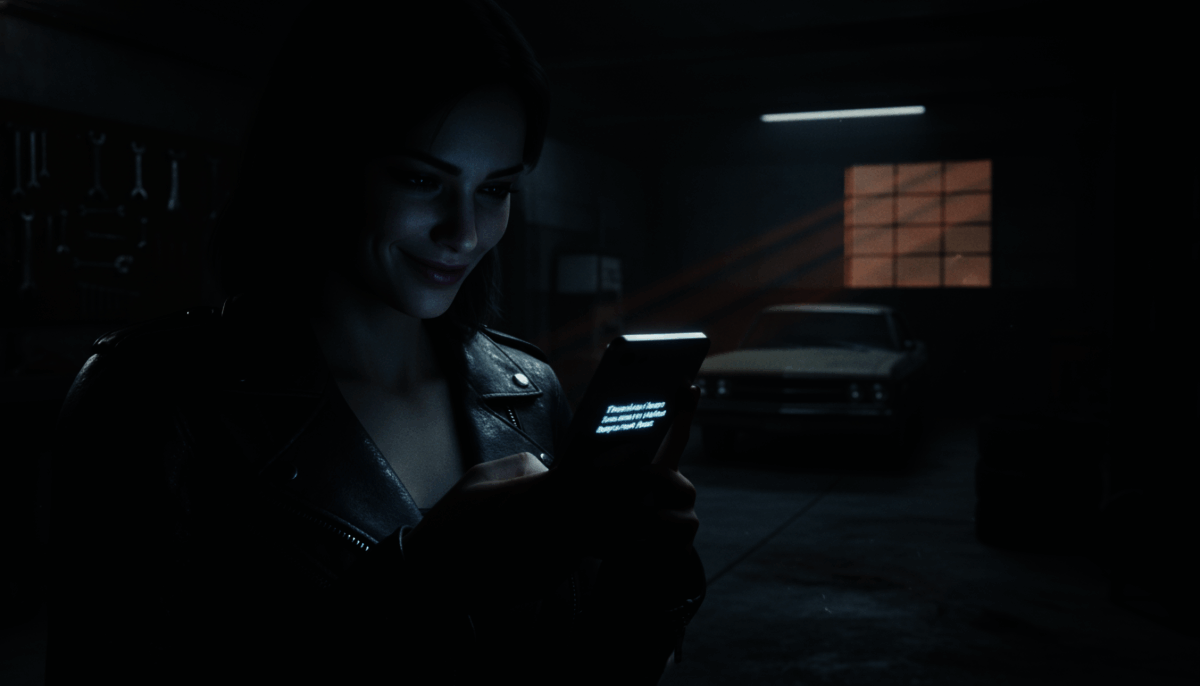
Marriage is built on trust, or so they tell us in the vows. But for three years, Mark and I had navigated the choppy waters of a relationship that was slowly turning into a surveillance state. It started with ‘find my friends’ location sharing, which I agreed to for safety reasons when walking home late from work. It spiraled into questioning why I spent an extra ten minutes at a coffee shop or why my route home changed due to construction.
The breaking point wasn’t an explosive argument. It was a faint, metallic ‘ping’ sound that my phone made while I was cleaning out the glove box of my sedan. I found it—a pristine, white Apple AirTag tucked behind the owner’s manual. My heart didn’t race; it went cold. This wasn’t just a safety feature; it was a leash. The realization that my husband, the man I shared a bed with, had felt the need to clandestinely track my whereabouts was a violation that cut deeper than any infidelity.
I could have confronted him right then. I could have thrown it at his head, screamed, and demanded a divorce. But instead, a different, darker impulse took over. I wanted him to feel the absurdity of his own paranoia. I wanted to see how far his obsession would take him. I needed a distraction, something that would keep him busy, confused, and questioning his own sanity while I packed my bags in peace.
That’s when I noticed the freight yard near the industrial park, a massive hub where trains headed across the continent gathered before departure. The irony was almost poetic. If he wanted to track me, I would make sure he was tracking me to the middle of nowhere. I didn’t just want to hide the tag; I wanted to weaponize his own surveillance against him.
The moral dilemma is simple to some, but complex to those of us who have lived under the thumb of a controlling partner. Was I wrong? Perhaps. But in that moment, when the trust was already shattered, all I felt was the intoxicating rush of reclaiming my own autonomy. This is the story of the day I sent my marriage on a one-way trip to the Pacific Northwest, one train car at a time.
The Discovery in the Glovebox
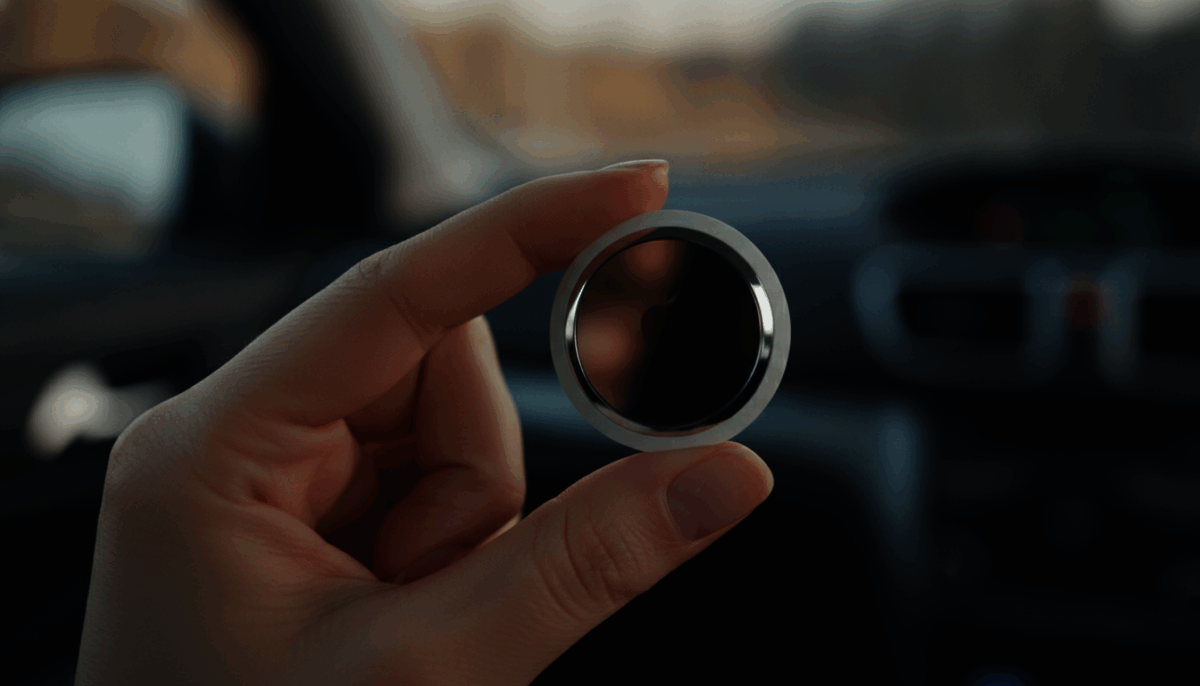
It was a rainy Tuesday, the kind of day where the grey sky matches the mood of a failing marriage. I was organizing the car, a mundane task meant to stave off the feeling of stagnation that had settled over our house. As I pulled out the registration and insurance documents, I noticed a small, hard object rattling in the corner of the compartment.
I pulled it out, and the stark white plastic of the Apple AirTag stared back at me. I stood there, frozen in the garage, the sound of rain hitting the metal roof amplified by my own racing heartbeat. This wasn’t something he had told me about. This was a secret, a digital ghost he had placed in my personal space to shadow my every move.
“How long has this been here? Was he watching me at the grocery store? Was he watching me while I was with my sister?”
The paranoia washed over me, replaced quickly by a cold, calculating anger. I realized that the ‘coincidental’ meetups he had staged over the past few months weren’t coincidences at all. He had been monitoring my location, likely checking the app every time I sat still for more than five minutes. The violation felt physical, like an intrusion into my own skin.
I didn’t panic. I didn’t cry. I sat in the driver’s seat and stared at the dashboard, realizing that the man I married was a stranger. The trust wasn’t just broken; it was nonexistent. I had to get out, but I couldn’t do it while he was constantly watching. I needed a window, a moment of total misdirection to get my affairs in order.
I turned the engine on, but I didn’t pull out of the garage. I just sat there, listening to the hum of the machine, wondering how he would react if the location on his screen started moving at 60 miles per hour toward the coast. The idea formed almost instantly, born from the frustration of being constantly hunted by my own partner.
The Decision to Misdirect
I knew Mark had a meeting that afternoon, a three-hour window where he would be glued to his laptop and unable to do anything more than glance at his tracking app. It was the perfect time to execute the plan. I drove to the industrial district, where the rail lines snaked through the city like iron veins. My heart was pounding, not with guilt, but with the thrill of the hunt.
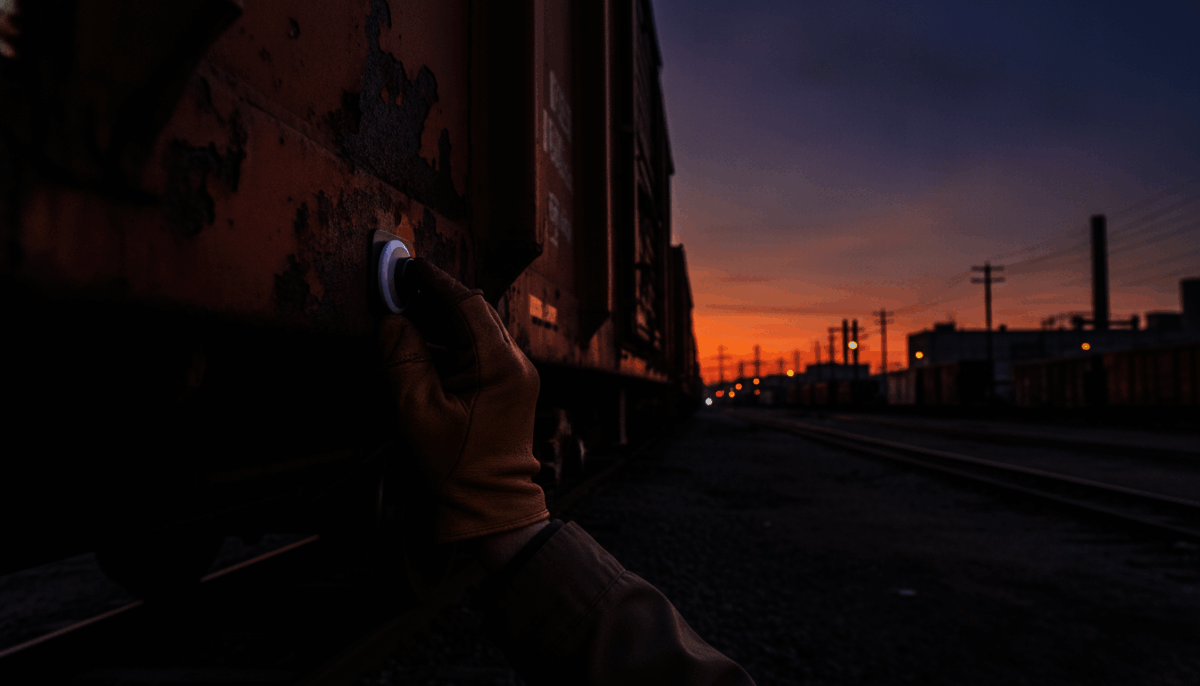
I didn’t care about the legalities of trespassing. I found a slow-moving freight train, its heavy cars groaning as they prepared for a long haul to the Pacific Northwest. I parked my car just out of sight and walked toward the tracks, the AirTag gripped tightly in my hand. I felt like a spy, a person with a secret agenda that was far more important than the mundane life I was leaving behind.
I waited for the train to slow to a crawl, its rhythm hypnotic and steady. As the flatbed passed, I saw my chance. I taped the AirTag securely to the underside of a container, hidden away from prying eyes. It was a secure, permanent attachment that would survive the wind, the rain, and the thousands of miles of travel. My husband would be chasing a phantom across the country.
“Enjoy the trip, Mark. I hope you like the scenery in Idaho because that’s exactly where I’m not going.”
As the train picked up speed, the ping on his phone would suggest I was on a high-speed journey. He would likely assume I was running away, or perhaps meeting someone. The confusion would be the cover I needed to pack my things, change my locks, and disappear before he realized the game I was playing.
I drove home with a sense of liberation I hadn’t felt in years. The car felt empty, clean, and finally my own again. I wasn’t just driving home; I was driving toward a future where I wasn’t being watched, where I could be myself without the constant, suffocating shadow of his suspicion.
The First Ping and the Growing Panic
By the time I reached the driveway, my phone was already buzzing. Mark was calling. I let it go to voicemail. Then came the texts. They were short, sharp, and increasingly frantic. He couldn’t understand why his app was showing me moving at 70 miles per hour away from the city. He thought I was leaving him, and the irony was, he was right—just not in the way he thought.
“Where the hell are you? Why are you on the interstate heading north? Answer me right now!”
— Mark (Text Message)
I watched the messages roll in. He tried to call five more times within ten minutes. His tone changed from angry to desperate. He was calling my friends, he was calling my mother, and he was checking my location every thirty seconds. I sat on my couch with a glass of wine, watching the map update as the train crossed the state line.
He was going to spend his entire night tracking a ghost. He would call the police, he would drive in circles, and he would eventually realize that something was wrong. But by then, I would be halfway through packing my bags. I wasn’t going to North Dakota; I was going to my sister’s house, and I wasn’t looking back.
The sense of power was intoxicating. For three years, I had been the one on edge, the one checking my phone to see if he was watching. Now, the tables were turned. He was the one experiencing the anxiety of the unknown, the fear of losing control. I felt a pang of pity, but it was quickly eclipsed by the relief of knowing the truth about who he really was.
He didn’t trust me. He never did. He wanted to own me, to keep me within the radius of his smartphone. And now, he was getting exactly what he deserved: a long, expensive, and completely meaningless chase. He was chasing a train, and I was finally free.
The Silence of the Empty House
I spent the next six hours doing the work of leaving. I didn’t pack everything, just the essentials: my passport, my clothes, my computer, and the things that were mine before we met. It was a strange experience, deconstructing a life that I had spent so long building. Every item I picked up had a memory, but now, they just felt like anchors.
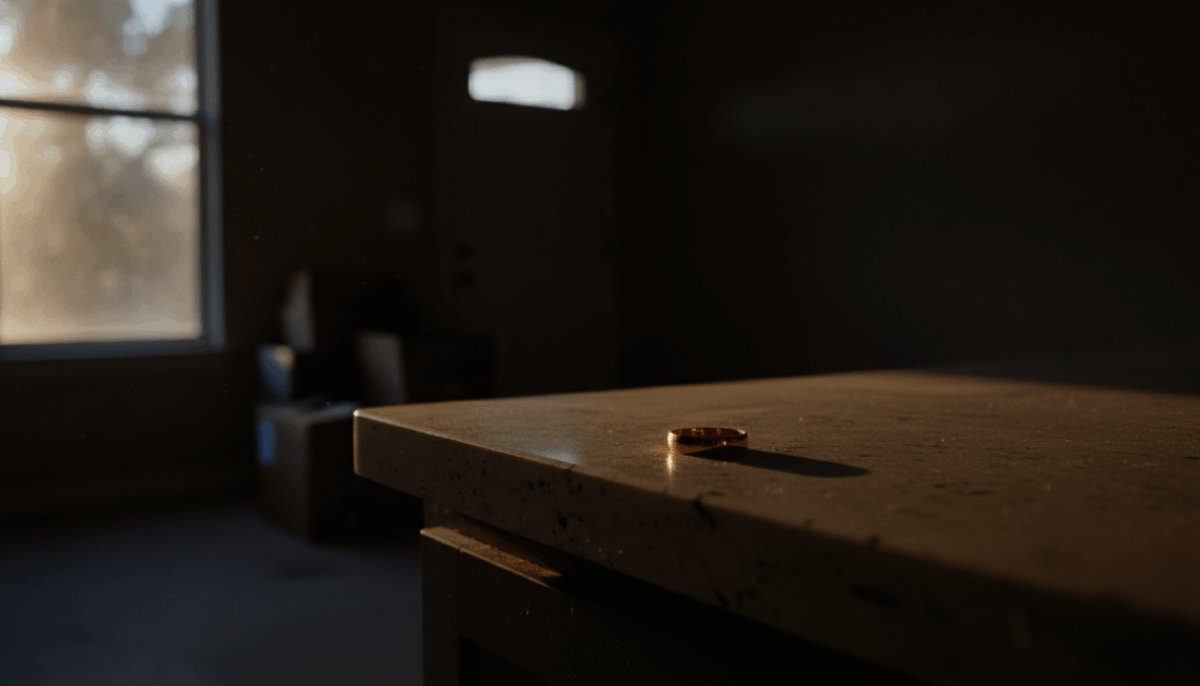
The house felt different when you knew you were never coming back. It was quiet, the air thick with the history of arguments and reconciliations. I left my wedding ring on the kitchen table, a final, silent declaration. I didn’t leave a note. There was nothing left to say that hadn’t already been communicated through the silence of the last few years.
I checked my phone again. The AirTag had traveled another fifty miles. Mark had stopped texting me, which likely meant he was either driving toward the train’s path or calling the authorities. I decided to turn my phone off. I didn’t want him to be able to reach me, and I didn’t want to see the fallout of his frantic search.
“I’m sorry, Mark. But you forced my hand. You wanted to watch me, so I gave you a show.”
As I walked out the door for the final time, I felt a weight lift from my shoulders. The air outside was crisp, and the world seemed brighter, more open. I wasn’t running away; I was moving toward something better, something real. I had finally taken back the one thing that had been stolen from me: my own agency.
I got in my car, drove to my sister’s, and didn’t look back at the life that had been so carefully curated to be a prison. I knew there would be trouble, lawyers, and difficult conversations ahead. But for that night, for that moment, I was simply, beautifully, free.
The Internet Weighs In

When I finally posted about it on Reddit a few days later, I didn’t know what to expect. I thought I might be judged, called crazy, or told that I was overreacting. But the response was overwhelming. People were shocked, angry on my behalf, and supportive of the petty revenge I had orchestrated. The thread blew up within hours, with thousands of people sharing their own stories of privacy violations.
“This is the most satisfying thing I’ve read all year. He thought he was playing 4D chess with your life, and you checkmated him with a freight train. NTA, queen.”
— u/DigitalKnight (Top Comment, 32.5k upvotes)
Others were more cautious, warning me about the potential legal ramifications of what I had done. But the consensus was clear: stalking is wrong, and the breach of trust was irreparable. The story went viral, appearing on news sites and TikTok videos, turning my personal crisis into a public debate about privacy in the age of digital tracking.
It was strange to see my life discussed by strangers, but it was also validating. It confirmed that what I had endured wasn’t normal, that it wasn’t just ‘part of marriage.’ It was a form of abuse, and I had every right to leave it behind. The comments section became a space for people to share their own experiences of being tracked, gaslighted, and controlled.
One comment in particular stood out, from a lawyer who offered some sound advice on how to handle the inevitable divorce proceedings. It wasn’t just about the revenge; it was about the aftermath, the reality of untangling a life from someone who had shown such a blatant lack of respect for my autonomy. I took the advice to heart, knowing that the real fight was just beginning.
The internet community became my temporary support system. They provided the perspective I needed to see that I wasn’t the bad guy in this situation. I was a person who had been pushed to the edge, and I had simply chosen to walk away in the most dramatic, effective way possible.
The Aftermath and the Lawyer’s Call
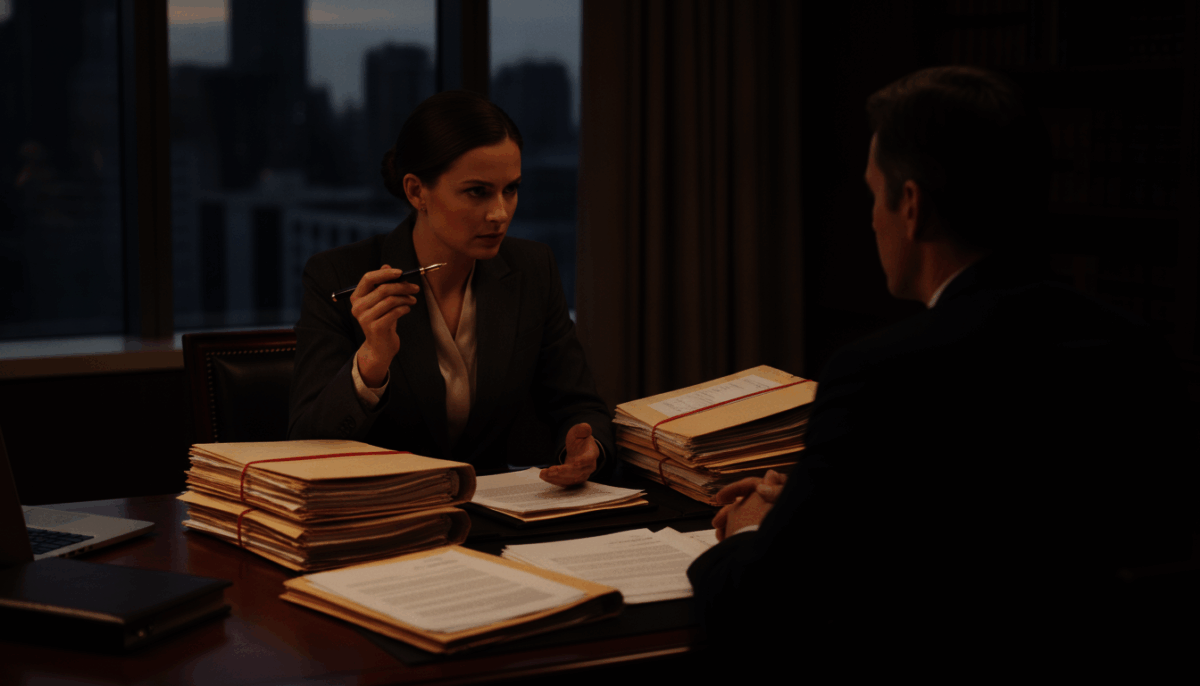
The next morning, the reality of my situation hit me. I wasn’t just a rebel on the run; I was a person in the middle of a divorce. My lawyer told me that my ‘freight train’ stunt was hilarious but potentially problematic if it ever reached a judge. She advised me to keep my head down and let her handle the communication with Mark.
Mark was furious. He had driven three states over, following the location of the AirTag, only to realize he had been chasing a piece of metal on a train. When he finally found the train yard, he had been detained for trespassing. The humiliation of it all was, in his mind, entirely my fault. He didn’t see the irony; he only saw his own victimhood.
“You think this is funny? You made me look like a fool! I’m going to make sure you pay for every second of this.”
— Mark (Email to Lawyer)
His anger confirmed my decision. He didn’t care that he had violated my privacy; he only cared that he had been outplayed. The emails were filled with accusations, threats, and a complete lack of remorse. It was clear that he had no intention of taking responsibility for his actions, and that made the divorce much easier to justify.
I focused on my own recovery, working with a therapist to process the years of gaslighting and control. It was a slow, difficult process, but every session reminded me that I had been right to leave. I wasn’t the broken one; I was the one who had finally woken up to the reality of a toxic situation.
The legal battle was long, but it was worth it. I didn’t ask for much, just my independence and the freedom to start over. I walked away with my dignity, which was more than I could have hoped for at the beginning of the ordeal. I didn’t need his money or his apologies; I just needed the space to be myself again.
Finding My Own Path

A year later, my life is completely different. I live in a new city, in an apartment that is filled with light and plants and the memories I choose to create. I don’t track anyone, and no one tracks me. The peace I’ve found is, in many ways, the ultimate victory. I’ve learned to trust my own instincts again, to listen to the voice that tells me when something isn’t right.
I occasionally think about the AirTag. I wonder where it is now, if it’s still somewhere in the Pacific Northwest, or if it’s been discarded in a landfill. It served its purpose, acting as a catalyst for a change that I desperately needed but was too afraid to make. It was a small, plastic piece of technology that ended up being the instrument of my liberation.
My friends and I laugh about it now, over drinks and dinner. The story has become a legend, the time I sent my husband on a wild goose chase that changed everything. It’s a reminder that even in our darkest moments, we have the power to change our narrative, to take control of our own lives, and to move on to something better.
“You know, I’d do it all again. It wasn’t about the train. It was about showing him that he didn’t own me, and that I was capable of doing the unthinkable.”
I’m not angry anymore. I’ve reached a place of indifference, which is far more powerful than hate. I don’t wish him ill, but I also don’t look back. I’m too focused on the future, on the possibilities that lie ahead, and on the woman I’ve become through this experience.
If you ever find yourself in a situation where you feel like you’re being watched, or where your privacy is being violated, remember this: you have options. You don’t have to accept the abuse. You can find a way to take back your power, and sometimes, the most unexpected paths are the ones that lead to true freedom.
The Lessons of Digital Autonomy

The experience taught me a profound lesson about the intersection of technology and relationships. We live in a world where everything is tracked, shared, and monitored. It’s easy to get lost in the digital noise, to let others define our reality, and to forget that we have a fundamental right to our own privacy.
I learned that trust isn’t something you can force or monitor with an app. It’s a choice you make, day after day, to believe in someone even when you don’t have all the information. And when that trust is broken, you have to be able to walk away. You can’t fix a broken foundation, especially when the other person is still trying to tear it down.
I also learned the value of community, of speaking out about the things that are hard to talk about. The support I received was a testament to the fact that we’re all struggling with the same issues, that we’re all trying to navigate the complexities of modern relationships in a world that’s constantly changing.
“Your privacy is not a luxury. It is a fundamental right. Don’t ever let anyone tell you otherwise.”
I hope my story serves as a reminder to anyone who needs it: you are more than your relationship, and you are more than your location. You are a person with rights, desires, and the capacity to change your own life. Don’t be afraid to take that first step, no matter how small or seemingly insignificant it might be.
I’m proud of who I am today. I’m proud of the woman who didn’t let the surveillance define her, but who used it to find her way out. I’m ready for whatever comes next, and for the first time in a long time, I’m the one in the driver’s seat.
Moving Forward without the Shadow

The shadows of the past still occasionally appear, but they no longer have the power to stop me. I’ve realized that the trauma of being tracked was something I had to work through, but it didn’t have to be my identity. I am more than the person who was tracked; I am the person who chose to leave, to fight, and to reclaim my freedom.
I spend my weekends doing things I never could have done before. I go for long drives without a destination, I visit friends in different states, and I spend time in places where my location isn’t being recorded for someone else’s benefit. Every moment is a reminder that the world is huge and that I’m finally a part of it again.
I’ve started a new career, one that challenges me and allows me to grow. I’m surrounded by people who respect my boundaries and who understand the importance of trust. I’m learning to be vulnerable again, but this time, it’s on my own terms. I’m not rushing anything, and I’m enjoying the process of rebuilding my life.
“The best revenge is living well, and I’m living better than I ever imagined.”
I’m grateful for the experience, even the painful parts. They were the catalysts for my transformation, the moments that forced me to look at my life and realize that I deserved more. I’m stronger for it, more resilient, and more in touch with the woman I was always meant to be.
The journey isn’t over, but the direction is clear. I’m moving forward, one step at a time, toward a future that is entirely mine. And for that, I’ll always be grateful for the day I found that AirTag in the glovebox and decided to take back my life.
Reflecting on the Community Impact

The discourse surrounding my story has been nothing short of fascinating. It highlighted a universal truth that many people are afraid to admit: the ‘innocent’ tracking of spouses has become an epidemic, often disguised as ‘caring’ or ‘safety.’ My experience opened a dialogue that I hope helps others see the red flags in their own lives before they become a full-blown crisis.
I’ve received thousands of messages from people who thanked me for sharing my story because it gave them the courage to check their own devices or confront their partners about their privacy-invading habits. Knowing that I’ve helped someone else avoid the years of manipulation I went through makes the entire ordeal feel worth it.
Reddit, for all its chaos, proved to be a powerful tool for connection. The collective wisdom of the community, ranging from legal advice to emotional validation, shows that we are collectively aware of the dangers of modern surveillance. The debates, while sometimes heated, served to illuminate the boundaries of what is acceptable in a healthy relationship.
“Every time you share your location, ask yourself why. If you’re doing it because you fear the consequences of not doing it, that’s not love. That’s control.”
I hope that as we continue to evolve in how we use technology, we also evolve in how we treat each other. Technology should enhance our lives, not restrict our freedom or erode the trust that is essential to any human connection. We need to be vigilant about our privacy, and we need to be courageous enough to defend it.
Thank you to everyone who shared their thoughts, supported me, and helped me see that I wasn’t alone. Your voices, your stories, and your insights have been a crucial part of my healing process. Together, we are creating a conversation that needs to be heard, one that prioritizes the dignity and agency of every individual.
Conclusion
My journey from a trapped, surveilled wife to a woman who reclaimed her autonomy through a cross-country train ride was never about the train itself. It was about the moment I realized that my value wasn’t determined by his suspicion, and my freedom wasn’t something he could ever revoke. By turning his own tracking tool against him, I broke the silence that had muffled my life for years.
The moral of this story isn’t just about revenge—it’s about the necessity of boundaries. Whether it’s digital tracking, emotional manipulation, or the subtle erosion of trust, we must be the guardians of our own well-being. If you find your life being measured by a screen rather than by your own choices, take it as a sign. It is time to reclaim your narrative.
What about you? Have you ever had to draw a line in the sand regarding your privacy in a relationship? Or perhaps you’ve encountered a situation where digital tools were used to gaslight or control? Join the debate below and share your thoughts. Let’s discuss how we can navigate these modern dilemmas without losing ourselves in the process.
What's your verdict on this dilemma?
Vote below to contribute to the official community consensus.

Have a Dilemma Keeping You Up at Night?
Share your real-life feud, wedding chaos, or relationship crossroads anonymously with our editorial team.
What do you think ?
0 Comments🛡️ Comments are moderated to protect community integrity. Your comment will appear once approved by the editorial team.