

It didn’t start with the invoice. It started with a spreadsheet titled ‘Household Infrastructure Monetization Strategy.’ I remember finding it open on his laptop while looking for the Wi-Fi password. At first, I laughed. I thought it was a joke—a dry, sarcastic comment on the cost of living that Mark, my husband of six years, had whipped up to make a point about our recent energy bill.
But the joke didn’t end. Within forty-eight hours, the ‘Monetization Strategy’ had become a binding policy. Mark, an actuary by trade and a micromanager by nature, decided that our joint-owned home was no longer a sanctuary, but a micro-economy. He wanted to optimize our ‘assets.’ His target? My 2018 hatchback, the car I use to commute forty miles each way to my job as a pediatric nurse.
He claimed that because his Tesla was parked in the ‘prime’ spot—the one closest to the kitchen door—and my car sat in the ‘exposure-heavy’ spot, I was essentially utilizing his portion of the driveway’s utility. The audacity was so staggering it felt like a fever dream. When I told him to stop, he simply handed me a printed invoice, complete with a QR code for a payment portal he’d set up on a freelance site.
The moral dilemma here wasn’t just about the fifty dollars. It was about the slow, methodical erosion of partnership. When you start charging your spouse for existing in the home you share, you aren’t just being petty; you are signaling the end of ‘us’ and the beginning of ‘mine.’ This is the story of how a house divided by a driveway became a home divided by a lawyer’s office, and why I chose the lawn over the marriage.
The Morning the Spreadsheet Landed
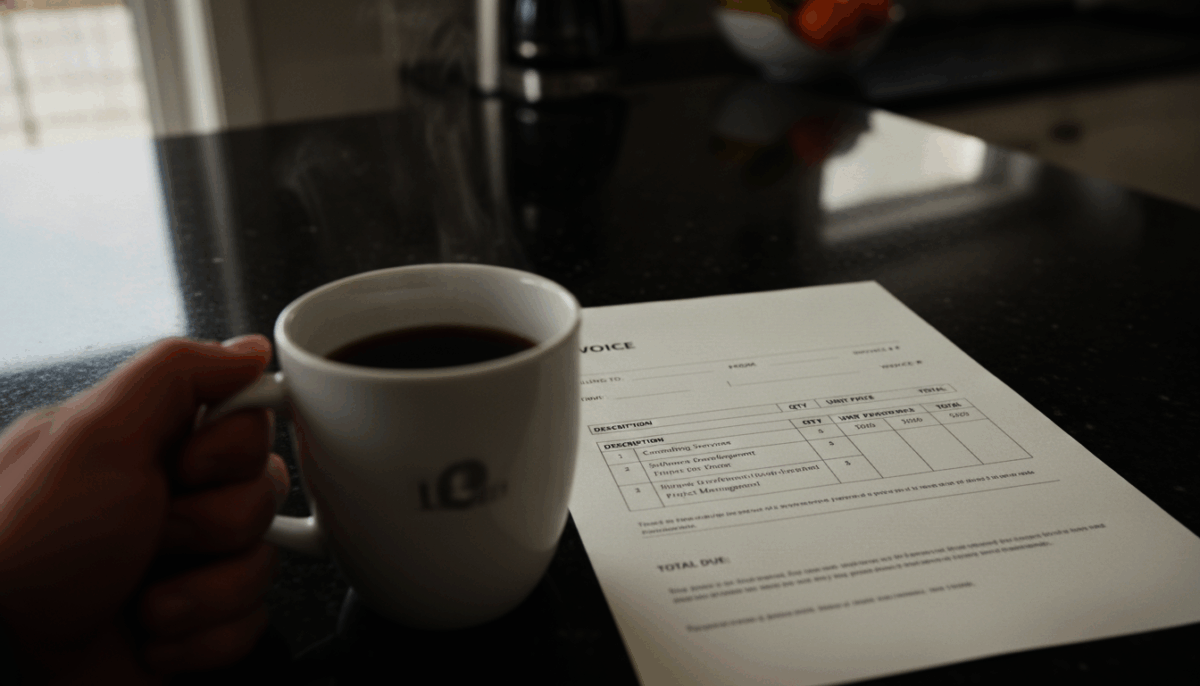
The morning of the first invoice, the air in our kitchen was thick with the scent of burnt toast and lingering silence. Mark sat at the head of the island, his laptop glowing with that familiar, aggressive blue light. He didn’t look up as I poured my coffee. He just slid a piece of heavy-stock paper across the granite.
I picked it up, expecting a grocery list or perhaps a reminder for a dentist appointment. Instead, I saw a header that read ‘Parking Facility Utilization Fee: Invoice #001.’ Below it, my name, the date, and a line item for ‘Driveway Surface Wear and Tear: $50.00.’
“Mark, are you serious? Is this some kind of weird prank because I forgot to take the recycling out last Tuesday?” I asked, my voice wavering between laughter and rising irritation.
He didn’t blink. “It’s not a prank, Sarah. I’ve calculated the depreciation of the concrete and the opportunity cost of the space. My car is electric; it doesn’t leak oil or cause damage. Your car is older. It’s only fair that you contribute to the maintenance of the shared surface.”
I stared at him, watching his eyes dart back to his spreadsheet. He wasn’t even looking at me. He was looking at his profit margin. I realized then that he wasn’t joking. He was testing the boundaries of my tolerance, trying to see if he could quantify our love into a series of billable hours.
I felt a cold sensation in the pit of my stomach. This wasn’t about money—we both made a comfortable living. This was about power. This was about him deciding that he was the landlord and I was the tenant, despite my name being on the deed just as prominently as his.
I left the invoice on the counter and walked out the door without saying another word. I didn’t pay it. I didn’t acknowledge it. I just drove to work, the hum of the tires on the asphalt suddenly sounding like the grinding of gears in a machine that was about to break down permanently.
The Escalation of the Fee Structure

By Wednesday, the ‘Parking Facility Utilization Fee’ had expanded. I arrived home after a twelve-hour shift at the hospital, exhausted and looking forward to a glass of wine, only to find a ‘Notice of Delinquency’ taped to the front door. He had even added a late fee of five dollars.
I walked into the kitchen, my scrubs still clinging to me, and found him preparing a salad. He didn’t offer a hug or ask how my day was. He immediately gestured toward the door. ‘You’re forty-eight hours past due, Sarah. If you don’t pay, I’ll have to report the non-payment to our shared household budget ledger. It affects our internal credit rating.’
“Internal credit rating? What are you talking about? We are married, Mark. We are not a corporation. We are not a holding company. I am your wife, not a sub-contractor!” I shouted, the exhaustion finally boiling over into genuine fury.
He sighed, a look of patronizing disappointment on his face. “You’re being emotional. This is about financial accountability. If we don’t have clear rules for assets, resentment builds up. I’m actually doing this to save our marriage from future friction.”
His logic was circular, twisted, and profoundly gaslighting. He framed his financial abuse as ‘protecting the relationship.’ It was the kind of manipulation that made me question my own sanity for a split second. Was I the one being unreasonable? Was he actually trying to be ‘fair’ in some twisted, actuarial way?
I sat down at the table and stared at him. I wanted to see if there was a trace of the man I’d married three years ago—the man who used to drive me to work when my car broke down, the man who laughed at my bad jokes. There was nothing there but cold, hard efficiency.
I didn’t argue further. There was no point in arguing with someone who viewed human interaction as a series of transactions. I just nodded, stood up, and went to bed, knowing exactly what I needed to do next. The spreadsheets were going to end, one way or another.
The Lawn Liberation Strategy

The next morning, I didn’t park in the driveway. I didn’t park on the street, where the neighborhood association had strict rules about overnight parking. I pulled my car straight onto the front lawn. It was a beautiful, lush patch of grass that we had spent all spring tending to. The sound of the tires crunching through the sod was one of the most satisfying noises I have ever heard.
I climbed out, grabbed my purse, and walked to the front door, leaving the car parked dead center on the grass, right in front of his precious Tesla. He was watching through the window, his jaw hanging open. He burst out the front door before I even made it to the porch.
“Are you insane? You’re destroying the grass! Do you have any idea how much it costs to re-sod this area? Move the car immediately!” he screamed, his face turning a shade of purple I hadn’t seen before.
I just smiled, pulled out my phone, and started recording. “Oh, I’m not parking in the driveway, Mark. I don’t want to incur your fee. I’m exercising my right to use the property I own in a way that doesn’t trigger your, uh, ‘infrastructure usage costs.’”
He lunged for my phone, but I sidestepped him, my nursing instincts kicking in. I wasn’t afraid of him. I was simply done. Every time he yelled, I felt more detached, like I was watching a movie about two strangers, not a couple who shared a bed.
He threatened to call the police, to which I told him to go ahead. ‘Tell them your wife is parking her car on her own property,’ I said. ‘I’m sure they’ll find it fascinating.’ The look of pure, unadulterated shock on his face was worth every blade of ruined grass.
He went back inside to sulk, and I walked into the house, feeling a strange, hollow sense of freedom. The lawn was a mess, but my conscience was finally clear. I had stopped playing the game by his rules, and the results were immediate.
The Digital Paper Trail
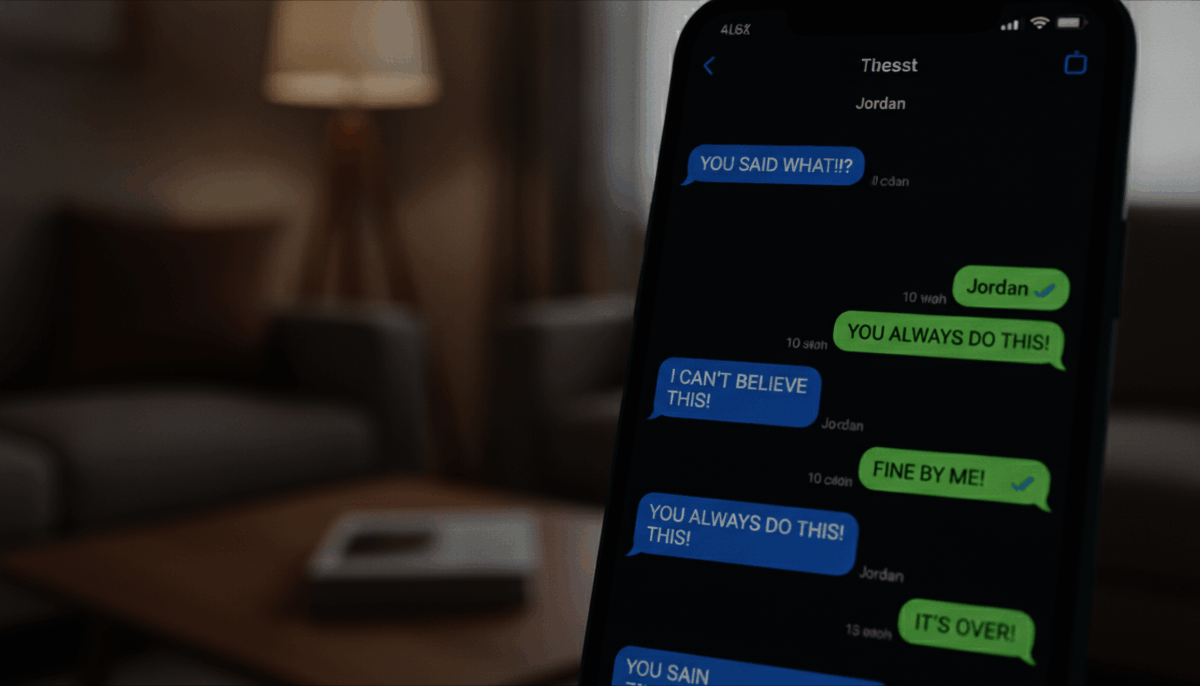
While I was at the hospital that day, my phone wouldn’t stop buzzing. It was a group thread he’d created: ‘Household Logistics and Asset Management.’ He had invited his brother, his mother, and two of our mutual friends. He was trying to humiliate me, trying to paint me as the ‘irrational’ spouse.
“I don’t know what’s gotten into her. She’s destroyed our lawn because she refuses to pay a modest $50 maintenance fee for the driveway. Can someone talk some sense into her?”
— Mark (Family Group Chat)
“Mark, you are actually charging your wife for parking? Is this a joke? Because if it isn’t, you need a therapist, not a spreadsheet.”
— Sarah’s sister, via the group chat
The responses were not what he expected. Most of our friends were horrified. Even his own brother chimed in, saying he thought the ‘invoicing’ idea was a sign of a mental breakdown. Mark, however, doubled down. He started posting screenshots of his ‘calculations’ to prove that he was being ‘mathematically fair.’
It was fascinating to watch. He was so blinded by his need to be ‘right’ that he couldn’t see how insane he looked to the rest of the world. He was literally crowdsourcing his own social demise. I didn’t even have to defend myself; the community did it for me.
I kept every single screenshot. I knew that when the time came to explain this to a judge, his own words would be his greatest liability. He thought he was building a case for his fiscal responsibility; he was actually building a case for domestic emotional manipulation.
By the time I got home, he had deleted the thread, but the damage was done. The embarrassment had clearly set in, but instead of apologizing, he became even more frigid. He was now operating under the assumption that I had ‘betrayed’ him by showing our friends his ‘private business’ strategy.
The Consultation That Changed Everything

I didn’t wait for him to initiate anything. I knew the moment I saw him calculating the ‘opportunity cost’ of our shared closet space that this marriage was a corpse walking. I had an appointment with a local divorce attorney at 4:00 PM on Thursday. I didn’t tell him where I was going.
The lawyer, a woman named Elena with a sharp gaze and an even sharper desk, didn’t even blink when I told her about the invoices. She opened a thick file and started taking notes. ‘This is a clear pattern of financial control, Sarah. It might seem like petty absurdity to you, but in a courtroom, this is evidence of an unhealthy power dynamic.’
She explained that because we were in a community property state, his attempts to ‘monetize’ our shared assets were not only legally unenforceable but also highly problematic for his character standing. She told me to keep the invoices, the text messages, and even photos of the lawn.
“Do you want to try to save the marriage, or do you want to secure your future?” she asked. When I didn’t hesitate with the answer, she nodded. “Then let’s start by documenting everything. And stop paying him a single cent for anything beyond the agreed-upon mortgage split.”
Walking out of that office, the weight of the last six months seemed to lift off my shoulders. For the first time, I wasn’t just reacting to his madness; I was taking charge of the outcome. The fear of being alone was replaced by the excitement of being free.
I drove back to the house, parked the car right back on the grass, and went inside. I walked past him in the hallway without acknowledging his presence. I had a path forward, and it didn’t include his spreadsheets or his invoices.
He tried to stop me, his hand hovering over his phone as if to call me out again. ‘We need to discuss the lawn damage, Sarah. The landscaper is coming on Saturday.’ I just looked at him and said, ‘Talk to my attorney.’ It was the best sentence I’d ever spoken.
The Sunday Dinner Silent Treatment

We had already committed to hosting a small Sunday dinner for a few of his colleagues. I considered canceling, but then I realized: why should I hide? I wanted to see if he would try to pull this ‘invoicing’ stunt in front of his coworkers. He was arrogant enough to think they would support him.
The dinner was an excruciating affair. The wine was flowing, the food was excellent, and the tension was palpable. Every time Mark spoke, he steered the conversation toward ‘efficiency’ and ‘optimization.’ He was clearly trying to impress his colleagues with his ‘logical’ approach to life.
He didn’t mention the parking fee, but he did make a comment about ‘shared resource management’ while gesturing toward the table. One of his colleagues, a sharp woman named Diane, caught the drift immediately. ‘Are you saying you charge your wife for the groceries?’ she asked, her voice dripping with skepticism.
“Not for the groceries. Just for the high-wear items, like the driveway and the kitchen appliance usage. It’s about maintaining the equity of the home,” Mark explained, looking around for validation.
The room went silent. I could hear the hum of the refrigerator. Diane slowly put her fork down. “Mark, that isn’t equity. That’s a hostage situation. I’m an economist, and I’m telling you: you’re not managing a house. You’re managing your way into a divorce.”
The look on his face was pure gold. He had expected to be seen as the visionary of the group; instead, he was the laughingstock. He tried to laugh it off, claiming we had a ‘unique sense of humor,’ but the damage to his professional ego was total.
I didn’t say a word. I just sat there, eating my meal, occasionally smiling. The power shift was complete. I wasn’t the one being interrogated anymore; he was. He spent the rest of the night trying to recover, but the conversation had already soured.
After everyone left, he didn’t even clean up. He just sat on the couch, staring at the wall. I did the dishes, left the house exactly as I wanted, and went to bed. I didn’t care about the ‘shared ledger’ anymore. I was already living in my own world.
The Reddit Verdict

I took the advice of my lawyer and posted a sanitized version of the story on a popular relationship subreddit. I wanted to see if I was truly the crazy one. I left out the identifying details, of course, but the ‘parking fee’ was the centerpiece.
Within two hours, the post had five thousand upvotes. By the morning, it was on the front page. The sheer volume of support was overwhelming. Thousands of people shared stories of their own experiences with financial abuse, confirming that what Mark was doing was a textbook case of control masked as logic.
“This is not about the money. This is about power. He wants to know that he can extract payment from you for your very existence in his space. Get out now. It only gets worse.”
— u/LegalEagle99 (Top Comment, 32.4k upvotes)
“I had an ex like this. He charged me for ‘rent’ on the bed because he paid the mortgage. One day I just packed my bags and left. The look on his face when he realized he had to pay the *entire* mortgage alone was the best day of my life.”
— u/FreedomSeeker (15.2k upvotes)
Reading these comments, I felt a deep sense of validation. I wasn’t just some nagging wife; I was a person being subjected to a slow-motion abuse tactic. The community support gave me the final push I needed. I wasn’t just going to file for divorce; I was going to do it with my head held high.
I showed some of the comments to Mark. I thought maybe, just maybe, seeing thousands of strangers call him out would trigger some self-reflection. Instead, he just scoffed. ‘These people are idiots, Sarah. They don’t understand the nuance of our fiscal arrangement. They’re leeches.’
That was the last time I tried to communicate with him on a human level. From that moment on, all communication went through the attorney. The Reddit thread had done its job: it had shown me that I wasn’t alone, and it had shown him that he couldn’t hide his behavior behind a screen.
The Final Invoice

The day before I left, he tried one last time. He left an invoice on my pillow for ’emotional labor and domestic consulting.’ It was for $5,000. He claimed that because he had to ‘manage’ my outbursts, he was owed compensation for his time.
I laughed. I actually laughed out loud. I picked up the piece of paper, took a photo of it, and sent it directly to my lawyer. Then, I walked into the living room where he was sitting, looking smugly at his laptop.
“Mark, I’m leaving. The papers are being filed tomorrow. Keep the invoice. Maybe you can use it as evidence of your insanity in front of the judge.”
He looked up, his smug smile faltering. “You can’t just walk away. We have assets! We have the house! We have the retirement accounts!”
“Yes,” I said, “and we have a court that is going to take a very, very hard look at your ‘monetization strategies.’ Good luck explaining to a mediator why your wife owed you for using the driveway.”
I didn’t pack everything. I left a lot of it. I just wanted my clothes, my computer, and my dignity. I packed my car—which, ironically, was still parked on the lawn—and drove away without looking back.
The feeling of driving down the driveway, knowing I would never have to pay another cent to exist in my own home, was indescribable. I felt light. I felt like I could breathe for the first time in years. The lawn would grow back, but my life was just starting.
As I pulled onto the main road, I realized I hadn’t felt this happy in ages. The nightmare was over. The spreadsheets were behind me, and the future was a clean, un-monetized slate. I was finally, truly, mine again.
The Settlement Aftermath

The divorce process was brutal, but it was also incredibly swift. When Mark’s lawyer saw the evidence—the spreadsheets, the text messages, the invoices—he practically threw in the towel. They knew that presenting those documents to a judge would paint Mark as a delusional, controlling narcissist.
We settled out of court. I kept the equity in the house, he kept his precious Tesla, and he agreed to pay for the professional re-sodding of the lawn. It was a small victory, but it was incredibly satisfying to see him forced to pay for the ‘damage’ he caused by trying to monetize my existence.
I moved into a small, quiet apartment near the hospital. It’s not fancy. It doesn’t have a driveway. It has a small street parking spot that is free for residents. I never have to worry about a ‘utilization fee’ ever again. I decorate it exactly how I want, and no one complains about the ‘cost’ of the throw pillows.
“I still get letters from him sometimes. They’re not invoices anymore, though. They’re apologies, or excuses, or attempts to ‘re-negotiate.’ I don’t open them. I don’t even recycle them; I just put them straight into the shredder.”
I’ve started dating again, but the bar is incredibly high. If a man even mentions the word ‘spreadsheet’ in a romantic context, I run for the hills. I’ve learned to value my own worth in a way that no actuary could ever quantify.
The lawn is green again, I’m told. A new family lives there now. I hope they just park in the driveway and enjoy the sunshine, without worrying about the cost of the concrete. I certainly am.
Reflecting on the Financial Trap

Looking back, the warning signs were there long before the driveway incident. It was the way he controlled the joint bank account, the way he audited the grocery receipts, the way he treated our relationship like a startup that needed to be scaled. I ignored it because I thought that was just ‘who he was.’
Financial abuse is one of the most insidious forms of control because it’s often hidden behind the guise of ‘responsibility’ or ‘planning.’ It’s easy to dismiss as just being ‘cheap’ or ‘organized,’ but it’s actually a way to strip a partner of their autonomy and their ability to leave.
If you find yourself in a situation where your partner is trying to bill you for your daily life, take it as a massive, flashing red light. Don’t try to negotiate. Don’t try to explain why it’s unfair. Just get your ducks in a row and prepare to exit. You are not a commodity.
The most important thing I learned was that you cannot reason someone out of a position they didn’t reason themselves into. Mark wanted to control me, and he used math as his weapon. Once I realized that, the ‘fairness’ of his demands became irrelevant. It wasn’t about math; it was about power.
Today, I am debt-free, stress-free, and most importantly, free from the burden of proving my worth to someone who only valued me as an asset. My life is my own, and that is a value that can’t be calculated on any spreadsheet.
Conclusion
The story of my marriage ended not with a bang, but with a series of invoices that finally forced me to see the truth. Sometimes, the most ridiculous, petty actions are the wake-up call you desperately need. When your partner treats your home like a parking garage, it’s time to find a new place to park your life.
What about you? Have you ever had a partner try to ‘monetize’ your relationship in a way that made you question everything? Or perhaps you’ve seen a friend lose their way in a relationship built on control rather than love? Let’s talk about it in the comments. Is there ever a scenario where ‘shared costs’ become ‘shared control’? Let’s keep the discussion going.
What's your verdict on this dilemma?
Vote below to contribute to the official community consensus.

Have a Dilemma Keeping You Up at Night?
Share your real-life feud, wedding chaos, or relationship crossroads anonymously with our editorial team.
What do you think ?
0 Comments🛡️ Comments are moderated to protect community integrity. Your comment will appear once approved by the editorial team.