
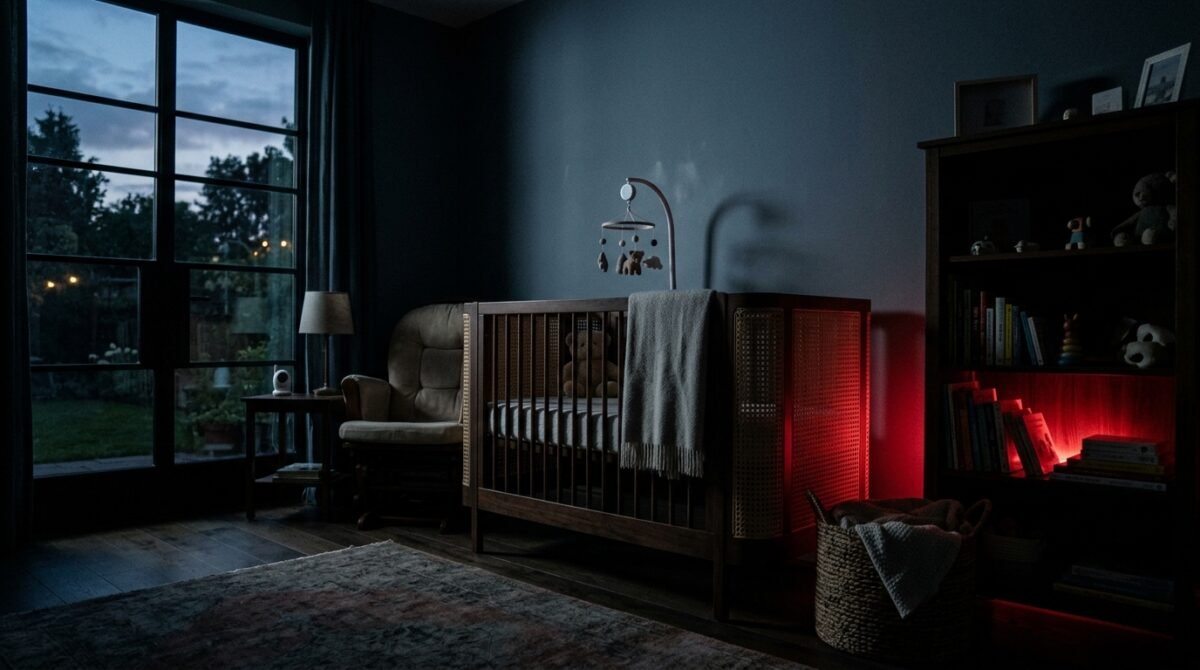
Motherhood is supposed to be the most vulnerable, tender chapter of a woman’s life. When I brought my daughter home, I expected sleepless nights, diaper rashes, and the occasional argument about who was due for the 3:00 AM feed. I did not expect to be living in a state-sponsored surveillance facility—except the state was my husband, and the surveillance was happening inside the four walls where I sang my daughter to sleep.
For months, the gaslighting was subtle. My husband, Mark, would drop comments about conversations I’d had while he was at work. He would mention my tone of voice, or how I ‘seemed frustrated’ when I was alone with the baby. I brushed it off as him being over-involved or perhaps a bit anxious. I told myself it was love, even when it felt like a cold, wet blanket of scrutiny settling over my daily routine.
The epiphany didn’t arrive with a bang, but with a strange, metallic glint in the corner of a ventilation duct. Curiosity led to discovery, and discovery led to the shattering of every illusion I had built around my life. When I pulled the tiny, black device from the vent, my blood turned to ice. It wasn’t just a monitor for the baby; it was a portal for him to judge every single breath I took while he was miles away.
This isn’t a story about a misunderstanding or a simple invasion of privacy. It is a story about the absolute erosion of trust and the desperate, calculated steps I had to take to regain my autonomy. I didn’t just pack a suitcase; I packed my life, my dignity, and my daughter’s future, leaving behind a man who treated his wife like a subject in an experiment rather than a partner.
The following pages detail the unraveling of my marriage, the cold, calculated manipulation I endured, and the quiet, tactical exit that finally granted me the freedom I didn’t realize I had lost. If you are reading this and feeling that same tightening in your chest, know that you are not paranoid, and you are not alone.
The Subtle Erosion of My Autonomy

It started with ‘helpful’ suggestions. Mark would come home from his corporate law job, loosen his tie, and immediately launch into a critique of how I spent my afternoon. He wasn’t just asking about the baby; he was questioning the ‘efficiency’ of my workflow. If I mentioned a phone call to my mother, he would know the duration of the call before I even finished the sentence. I initially chalked it up to his keen memory, but the frequency became unsettling.
Then came the comments about my mood. I’d be in the kitchen, exhausted, humming a lullaby to settle the baby, and he’d walk through the door with a frown. ‘You sound stressed,’ he would say. ‘I could hear you sighing from the driveway.’ I never thought twice about it until the day I realized he wasn’t even home during those moments. The narrative he was building was one where I was constantly failing, constantly struggling, and constantly in need of his oversight.
I began to feel like a performance artist. I would catch myself checking the baby monitor, wondering if it had two-way audio, but I checked the manual and it seemed like a standard system. Yet, the way he would bring up specific, non-critical conversations I had with my friends—things I thought were private—began to gnaw at me. I felt as though I were walking through a house made of glass.
“I don’t know why you’re so defensive. I just want to make sure you’re handling the baby correctly. It’s a high-stress time, and I need to know you’re not spiraling.”
— Mark, during a Tuesday night dinner
I tried to set boundaries. I told him that I needed space to be a mom on my own terms. He would immediately pivot, turning the conversation into a lecture about ‘teamwork’ and ‘transparency.’ He framed his intrusion as a form of care. He made me feel ungrateful for questioning a man who was allegedly ‘looking out for his family’s best interests.’ It was the classic trap of the benevolent dictator.
The physical toll was immediate. I stopped singing. I stopped talking to the baby as much as I wanted to. I became quiet, reserved, and incredibly self-conscious. My home, the one place where I was supposed to feel safe, became a theater of performance anxiety. I was being watched, I just didn’t know how or by whom.
The Discovery Behind the Nursery Vent
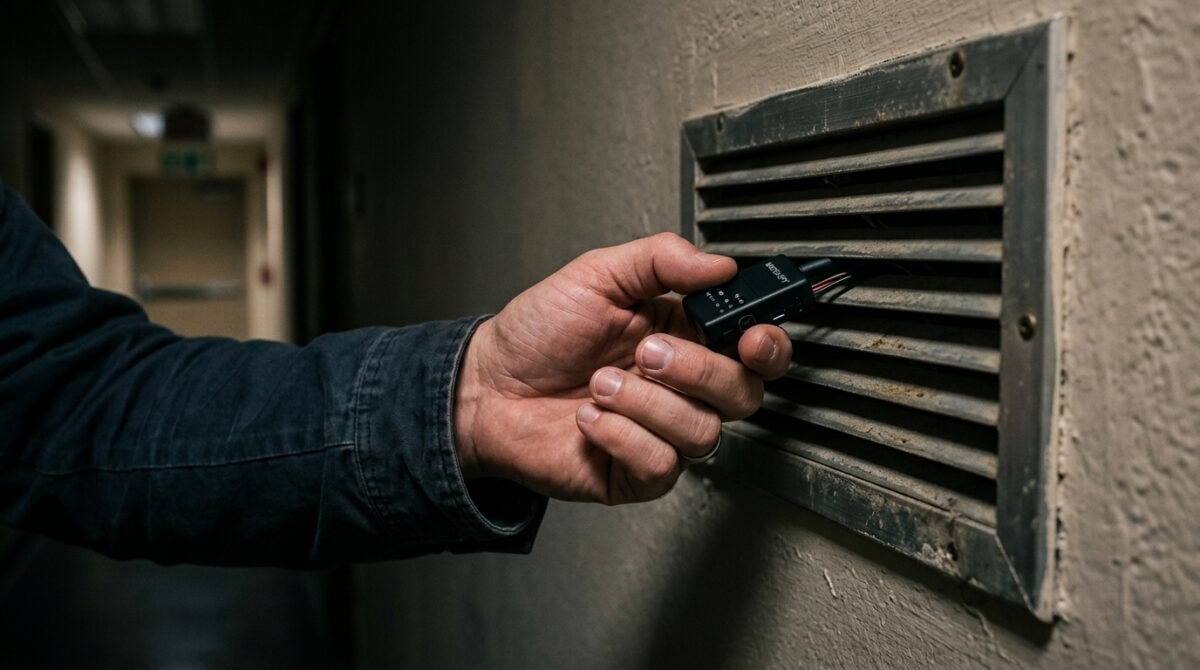
The discovery happened on a Thursday. I was cleaning the nursery, wiping down the baseboards, when a piece of dust caught my eye—not on the board, but vibrating near the ventilation grate. I reached out to touch the grate, thinking it was loose, and felt a sharp, jagged piece of metal. When I pulled the grate away, I expected to see a spiderweb. Instead, I saw a black wire snaking into the darkness of the duct.
My heart hammered against my ribs like a trapped bird. I pulled, and out slid a small, high-fidelity microphone taped to a transmitter. It was disguised with a piece of dark tape that blended perfectly with the shadow of the vent. My knees gave out, and I sat on the nursery floor, staring at this tiny, plastic instrument of my husband’s obsession. It wasn’t just a microphone; it was a bridge to his phone, to his ears, to his judgment.
I didn’t scream. I didn’t cry. I sat there in a state of absolute, icy clarity. Every comment, every critique, every ‘I heard you’ moment suddenly made sense. The paranoia I had been suppressing for months wasn’t paranoia at all—it was a rational reaction to an irrational violation of my basic human rights. He had been listening to me while I nursed our daughter, while I cried alone, while I talked to my sister about my fears of postpartum depression.
“You’ve been playing a game this whole time, haven’t you? You didn’t trust me, so you turned my home into a prison.”
— My internal monologue, holding the device
I realized then that I couldn’t just confront him. If he was capable of this, he was capable of anything to maintain his control. I had to be smart. I had to play the role of the oblivious wife while I quietly dismantled the life he thought he owned. My hands shook as I carefully placed the device back into the vent, covering it just enough so he wouldn’t notice it had been disturbed.
I stood up, walked out of the nursery, and forced a smile when I looked at my reflection in the hallway mirror. The woman looking back at me was gone. In her place was someone who understood exactly who she was married to. I had the upper hand for the first time in three years, and I was going to use it to get out.
The Art of the Silent Exit
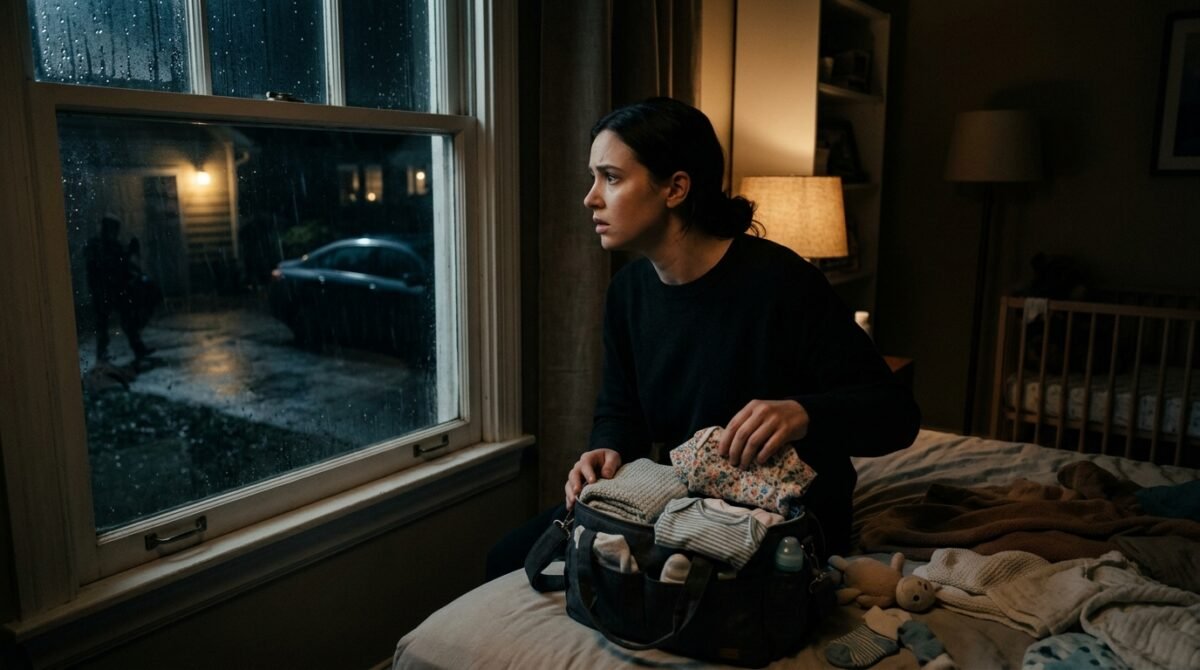
The next two weeks were the most grueling of my life. I had to act like everything was normal. When Mark came home, I would greet him with the same tired smile. I would listen to his critiques about the household budget and ‘nod’ in agreement. Behind the scenes, I was a blur of efficiency. I opened a separate bank account at a different credit union, one he didn’t have access to, and started slowly siphoning small amounts of ‘grocery’ money into it.
I reached out to my sister, who lived four hours away. I didn’t tell her everything over the phone, knowing Mark might have installed more listening devices in other rooms. Instead, I used a burner phone I bought at a gas station. ‘I need to come visit,’ I told her, my voice steady. ‘Something is wrong, and I need a place to stay for a while. Don’t ask questions yet.’
I began moving important documents—passports, birth certificates, my marriage license, copies of tax returns—into a go-bag that I stashed in my trunk under a layer of winter blankets. I didn’t take any jewelry, and I didn’t take anything that would alert him to my departure. I needed him to think that I was just going about my daily life until the very last possible second.
The hardest part was the baby. I had to pack for her in a way that wouldn’t look suspicious. I started keeping a second set of diapers and clothes in the car, pretending I was ‘restocking’ the diaper bag. I kept our emotional needs in check by focusing on the goal: freedom. Every time I heard a floorboard creak, I worried it was him checking on his ‘investment’ in the nursery, but I kept my composure.
“I’m going to my sister’s this weekend, Mark. The baby is fussy, and I think a change of scenery would do us good. You have your golf tournament anyway, right?”
— Me, executing the final phase
He didn’t suspect a thing. He was too busy looking for flaws in my character to realize I was building an escape route. He even kissed me goodbye on Friday morning, completely unaware that the woman he was kissing was a stranger to him. I watched him drive away, checked the nursery one last time, and then picked up the baby. I didn’t look back at the house.
The Discovery of the Digital Trail
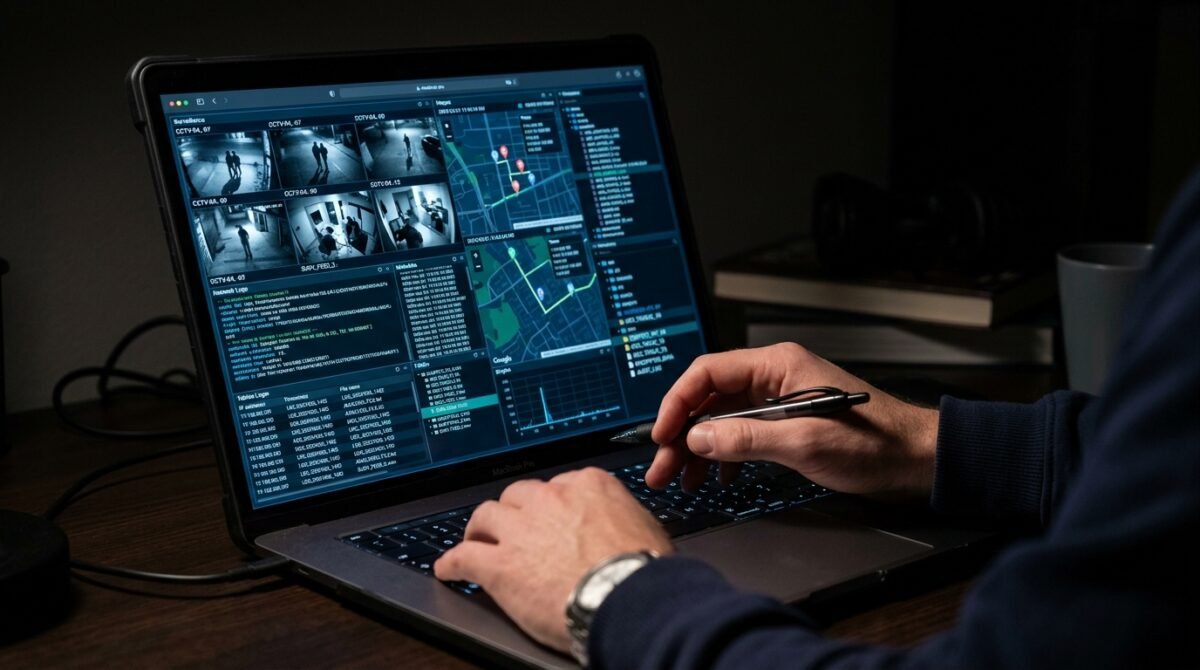
Once I reached my sister’s house, the relief hit me so hard I collapsed on her sofa. But I couldn’t rest. I needed to know exactly how deep the rabbit hole went. I spent the first night going through my cloud storage and the metadata on our shared family devices. I found it: an app I hadn’t installed, hidden deep in a system folder on my laptop, connected to his private server.
It wasn’t just the nursery. He had been tracking my location, reading my texts, and even accessing my camera. The amount of data he had compiled was staggering. It was a digital dossier of my entire existence. I felt a wave of nausea wash over me as I scrolled through dates and times, seeing exactly where I was when I thought I was alone. He knew everything.
I took screenshots of everything. I had to have proof. I knew that when the legal battle started, he would play the victim. He would frame me as the hysterical wife, the woman who ‘ran away’ without cause. I needed the world—or at least a judge—to see the cold, calculated nature of his behavior. The evidence was overwhelming, and it gave me the ammunition I needed to file for an emergency protective order.
“You have to go to a lawyer immediately. This isn’t just controlling behavior; this is criminal stalking. He has been violating your privacy in ways that will destroy his career if this goes public.”
— My sister, reviewing the evidence
The next day, I met with a family law attorney who specialized in high-conflict divorces. When I showed him the device and the digital trail, he didn’t blink. He had seen it before, but the scale of Mark’s obsession was ‘impressive’ in the worst possible way. He told me to cut all contact and let him handle the communication. My life was finally in the hands of professionals.
The weight of the secret was gone. I was no longer a subject in his experiment; I was a claimant in a legal process. I finally felt a sense of power returning to my voice. I wasn’t just the victim anymore; I was the one who had successfully navigated the impossible task of outsmarting a narcissist.
The Confrontation Nobody Expected
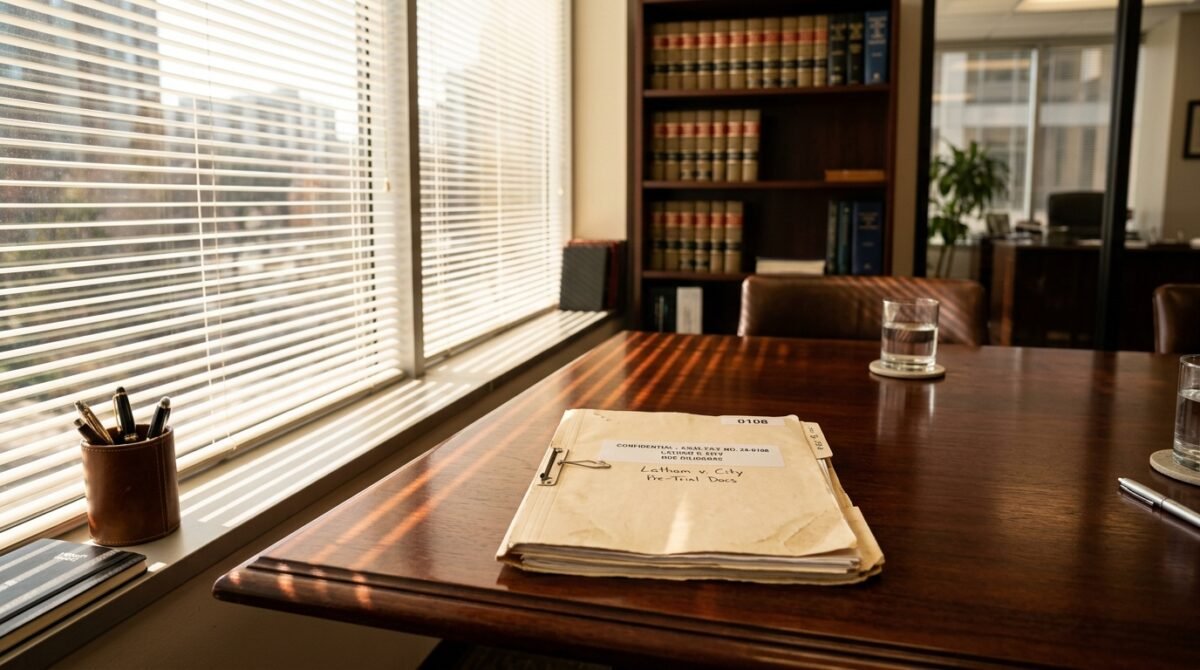
The confrontation didn’t happen in person. It happened via a formal, sterile letter from my attorney delivered to his office. I had instructed my lawyer to include the photos of the microphone and the screenshots of the hidden app. The response was immediate and frantic. Mark tried to call me a dozen times, but my phone was set to block unknown numbers, and my attorney took over everything.
When he finally realized I wasn’t coming back, the mask slipped. He sent a series of emails—which my lawyer advised me not to read—that were filled with vitriol and threats. He claimed I was ‘stealing’ his child and ‘destroying’ our family for no reason. He even tried to play the ‘worried husband’ card, suggesting I was having a mental health crisis. It was pathetic.
I kept my head down. I stayed with my sister, focused on the baby, and went to therapy. I had to learn how to exist without being watched. The trauma of the surveillance had left me jumpy; I found myself checking vents and corners in my sister’s house, too. It took weeks for my nervous system to regulate, to stop expecting a ‘correction’ from an invisible overseer.
“Your wife has left, and she has documented every instance of your surveillance. Any attempt to contact her will be met with immediate legal consequences. We are prepared to go to court with evidence of your illegal recording activities.”
— A snippet from my lawyer’s letter to Mark
The news of our split rippled through our social circle. His family tried to intervene, begging me to ‘reconcile’ for the sake of the baby. They didn’t know the truth, and I didn’t owe them an explanation. I learned quickly that protecting myself meant keeping my story to the people who mattered, and shutting out the noise from the ones who wanted me to suffer in silence.
I realized then that his need for control was his weakness. He couldn’t handle a situation he couldn’t monitor. By taking myself out of his sight, I essentially deleted myself from his world. He was left with nothing but his own empty, monitored house and the cold realization that he had chased away the only person who actually cared for him.
The Online Verdict: A Reddit Storm
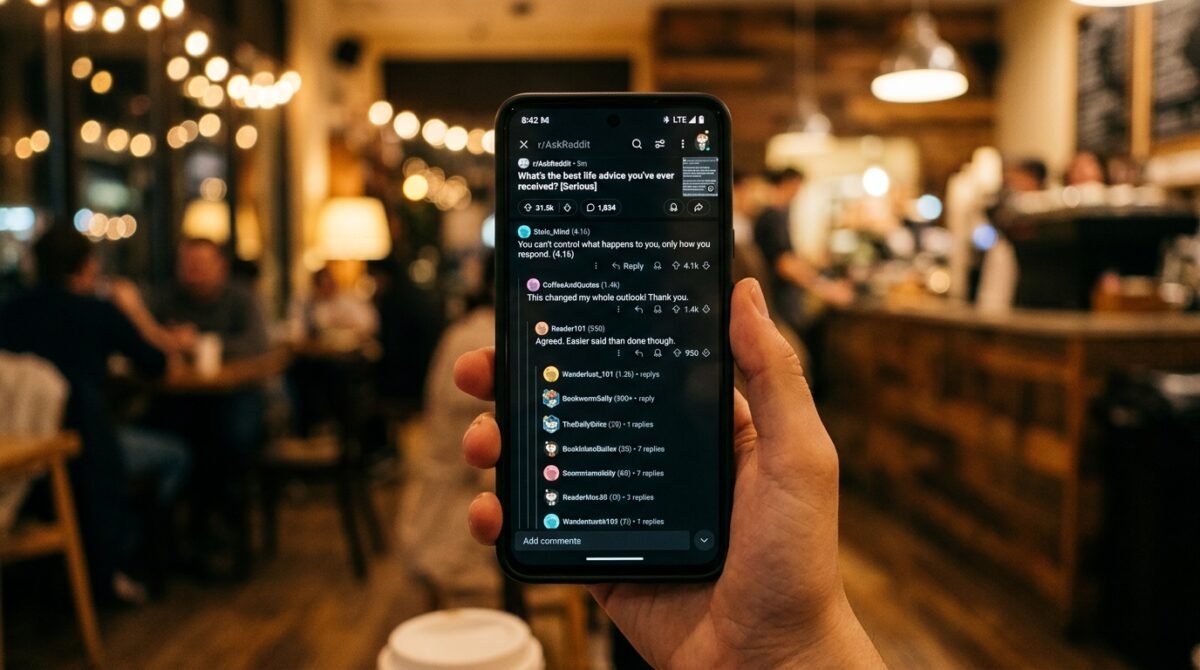
I finally felt ready to share my story on a throwaway account on a popular subreddit. I didn’t use names, but I laid out the facts. I wanted to see if I was crazy. I wanted to see if the world agreed that what he did was beyond the pale. The response was instantaneous. Within hours, the post had thousands of upvotes and a deluge of support that left me sobbing in the kitchen.
People from all over the world reached out, sharing their own stories of domestic surveillance and gaslighting. The validation was overwhelming. I wasn’t ‘sensitive.’ I wasn’t ‘overreacting.’ I was a woman who had survived a toxic situation, and the internet was standing in my corner. It reminded me that there is a global community of people who recognize the signs of control when they see them.
“NTA. This is a massive violation of your privacy and, in many jurisdictions, illegal. You are not a ‘partner’ to this man; you are a target. Get a lawyer, change your locks, and never look back. He is a predator in your own home.”
— u/LegalEagleEye (Top Comment, 32.5k upvotes)
There were, of course, the contrarians—the people who suggested I should have ‘communicated’ more. But they were drowned out by the sheer volume of voices telling me to run. I realized that my story was resonating because it was a universal fear: the fear that the person we love most is the one keeping the closest watch on us.
The comment section became a support group. I found myself replying to women who were currently living in their own ‘nursery prisons.’ I told them how I did it, how I kept my cool, and how I finally found the courage to leave. It was the most rewarding part of the entire process—turning my pain into a roadmap for someone else’s freedom.
I stopped reading the post after the first few days, but the impact stayed with me. I had transitioned from a victim to a survivor, and then to a resource. I realized that my life was no longer defined by Mark’s surveillance, but by the community of support I had built for myself in his absence.
Living Without the Invisible Lens

Life away from the house has been a slow process of reclaiming my own personality. Without the constant threat of judgment, I’ve found that my hobbies are returning. I’m painting again, I’m reading books that he wouldn’t approve of, and I’m dressing in a way that makes me feel confident rather than ‘appropriate.’ The baby is thriving, and she doesn’t know what it means to be watched.
I still have days where I wake up in a panic, expecting to hear his voice coming through a vent. But those days are becoming less frequent. I’ve started a new job, one that gives me financial independence and a sense of purpose. I’m not just a mother or a wife anymore; I’m an individual. And that realization is the best gift I could have given myself.
Mark has tried to make contact, of course. He’s sent flowers, letters, and even attempted to show up at my new place. Each time, my lawyer has been there to shut it down. He doesn’t know where I live, and he isn’t going to find out. I’ve gone through the process of changing my phone number and tightening my digital footprint. I am a ghost in his machine now.
“I thought we had a future. I thought you loved me enough to let me help you. You’re making a huge mistake, and you’ll regret leaving when you’re out on your own.”
— One of the few voicemails I accidentally heard before blocking him
The regret he talks about never came. The only thing I regret is not leaving sooner. I regret the months I spent trying to change him, trying to be the perfect wife for a man who didn’t want a partner, but a subject. I’m done with that. I’m building a future that is entirely mine, one day at a time.
My daughter is growing up in a home filled with music and laughter—actual music, not the forced, quiet sounds I felt I had to make. She is safe. And that, more than anything, is the victory. I protected her, and I protected myself. I won.
The Legal Tangle and the Final Settlement

The divorce proceedings were grueling, but they were also the final nail in the coffin of my former life. Because I had the physical evidence of the microphone and the digital trail of his surveillance, Mark was on the defensive from day one. His lawyers tried to argue that it was a ‘safety measure’ for the baby, but the judge wasn’t buying it. A microphone in a vent isn’t a safety measure; it’s a tool of control.
We negotiated the terms of custody and the division of assets. I wasn’t looking for a payday; I was looking for a clean break. I wanted full autonomy over my child’s life and enough financial security to start over without looking back. I got it. He had to agree to therapy as a condition of visitation, and he had to acknowledge—in writing—that his actions were a violation of my privacy.
I kept every document, every email, and every court order. They are my evidence that what I went through was real. They are the proof that I was right to walk out that door. The settlement wasn’t just about money; it was about the validation that my rights as a person had been trampled and needed to be protected by the court.
“The behavior described by the plaintiff is, frankly, alarming. Mr. X, you have compromised the sanctity of your home and the trust essential to a marriage. This settlement reflects the severity of those actions.”
— The judge during our final hearing
After the final decree was signed, I felt a sense of finality I hadn’t expected. It was over. The man who had been the architect of my misery had no more power over me. I walked out of the courthouse, took a deep breath of the city air, and felt like a person for the first time in years. It was a cold, crisp day, but it felt like spring.
The legal process was a nightmare, but it was a necessary one. It forced me to face the reality of my situation and to demand the dignity I deserved. It wasn’t an easy road, but it led me exactly where I needed to be. I am free, and that is the only outcome that matters.
Healing: The Invisible Scars

Healing isn’t a linear path. It’s a series of steps forward and a few steps back. I still have the occasional flashback, especially when I see a camera or hear a strange noise in my apartment. But I have tools now. I have a therapist who specializes in narcissistic abuse, and I have a network of friends who know exactly what I went through and check in on me regularly.
I learned that I have a tendency to want to ‘fix’ things, a trait Mark exploited. I’ve had to retrain my brain to accept that some people cannot be fixed, and that trying to do so is a waste of my limited energy. My energy is for my daughter, for my career, and for my own peace of mind. I’ve become much more protective of my boundaries, and I’m not afraid to say no anymore.
The most profound change is in how I view myself. I used to think I was weak for staying as long as I did. Now, I see that I was strong for surviving it and even stronger for leaving. I didn’t fail my marriage; I succeeded in saving myself from a person who would have eventually destroyed me. That shift in perspective changed everything.
“You’re not the woman you were a year ago. You’re more resilient, more aware, and you know exactly who you are. Don’t ever let someone else define your reality again.”
— My therapist during our final session
I’ve started volunteering at a local women’s shelter, offering support to those who are currently where I was. I don’t give legal advice, but I provide a listening ear—one that isn’t being recorded. I show them that there is life after, that the world doesn’t end when you leave a toxic situation. It begins.
I’m finally at a point where I can look back at the photos of my old house without feeling a knot in my stomach. It’s just a house. And I am a human being with a future. The scars are there, but they’ve faded. I’ve reclaimed my voice, and I’m using it to tell my truth, loud and clear.
Moving Forward: My Life Today

Today, my life is quiet, and that quiet is beautiful. I don’t check the vents. I don’t worry about what Mark thinks of my parenting. I parent the way I want, with love and patience and without the shadow of an observer. My daughter is growing, and she is happy. That is the only measure of success I care about now.
I’ve realized that the greatest freedom isn’t just about leaving a toxic partner—it’s about leaving behind the version of yourself that thought you deserved that treatment. I’ve forgiven myself for not seeing the signs earlier, and I’ve forgiven myself for the time I lost. I am moving forward, one day at a time, with my head held high.
If you are reading this and you are trapped, know that there is a way out. It might be scary, it might be difficult, and it might require a level of planning you haven’t had to use before, but it is possible. You are not alone, and your life is worth fighting for. Take the first step, whatever that looks like for you, and don’t stop until you are free.
“Freedom is not just the absence of chains; it is the presence of your own voice. Speak it, live it, and never let anyone silence it again.”
— My own mantra for the future
I hope my story serves as a warning to those who think they can control others and a beacon of hope to those who are currently looking for a way out. My husband may have bugged my house, but he couldn’t bug my spirit. I am still here, I am stronger than ever, and I am finally, truly, free.
Thank you for reading my story. If you’ve ever felt watched or controlled, I hope this encourages you to listen to your intuition. It’s the one thing they can’t take away from you.
Conclusion
My journey from a controlled life to genuine autonomy was the hardest thing I have ever done, but it was worth every second of the struggle. The moment I chose my freedom over my marriage, I chose a life where I was finally the primary author of my own story. The surveillance, the gaslighting, and the fear are now just chapters in a book that I have finished reading—and it is a book I am no longer living in.
I invite you to consider the boundaries in your own life. Are you being treated with the respect you deserve? Is your home a place of sanctuary, or a place where you are constantly looking over your shoulder? If this story has resonated with you, I would love to hear your thoughts. Have you ever had to reclaim your life from someone who didn’t respect your privacy? Let’s talk about it in the comments below.
Community Debate: Is there ever a justification for monitoring a partner’s activities, or is the mere act of surveillance a fundamental breach of trust that marks the end of a relationship? Vote in the poll below and share your personal take.
What's your verdict on this dilemma?
Vote below to contribute to the official community consensus.

Have a Dilemma Keeping You Up at Night?
Share your real-life feud, wedding chaos, or relationship crossroads anonymously with our editorial team.
What do you think ?
0 Comments🛡️ Comments are moderated to protect community integrity. Your comment will appear once approved by the editorial team.