
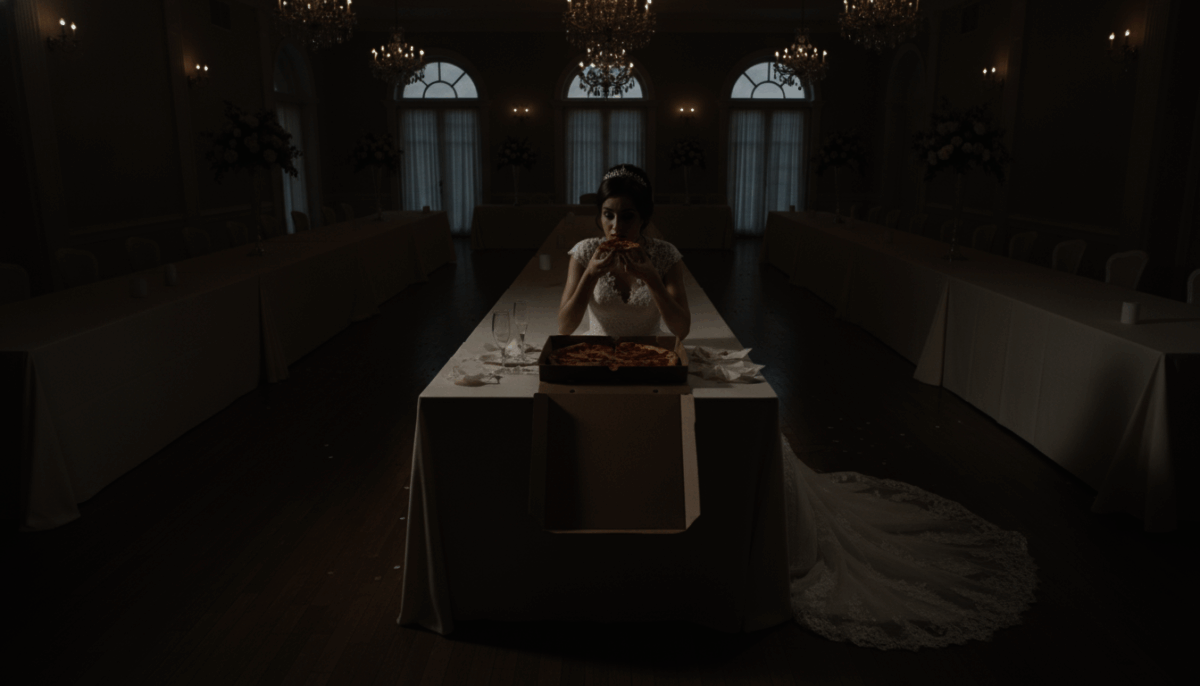
We had spent eighteen months meticulously planning our wedding. It was supposed to be the day we celebrated our union, surrounded by friends and family who had supported us through the early years of our relationship. My partner, Mark, and I had agreed on a budget that balanced our modest savings with contributions from both our families. We were clear on the priorities: great food, an open bar, and a band that would keep people dancing until the early hours. I felt secure, confident, and, for the most part, loved.
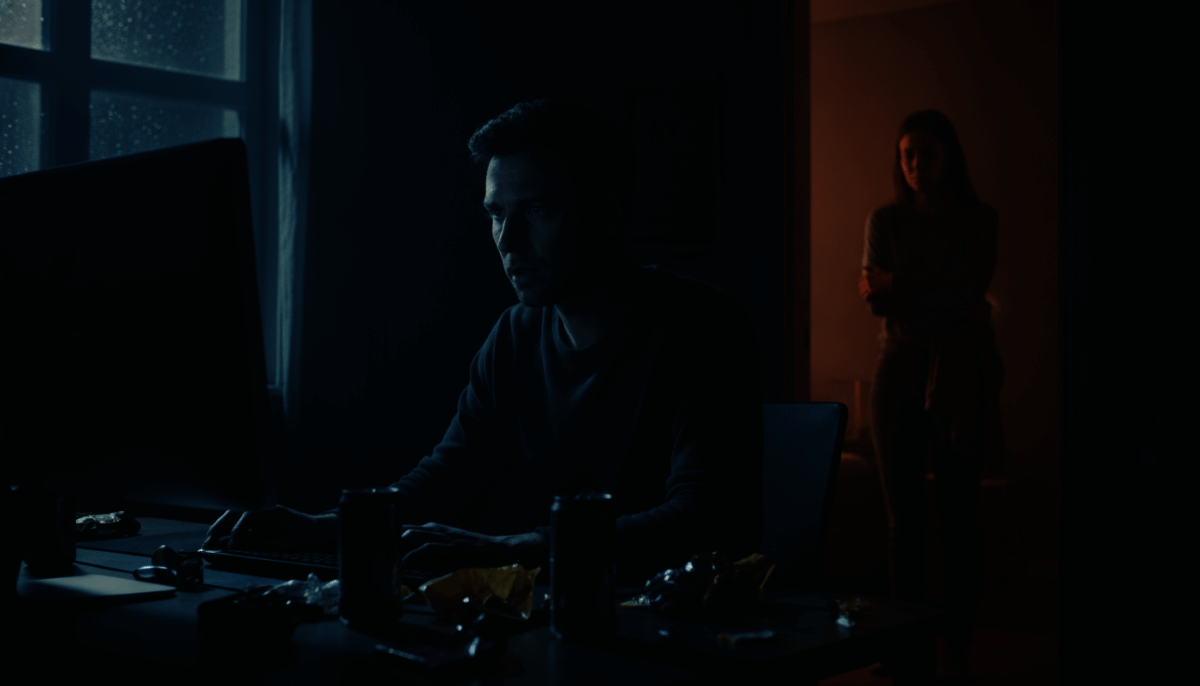
Then, the shift began. It didn’t happen all at once; it was a slow, creeping erosion of our shared financial goals. Mark, a software engineer who had always harbored a secret obsession with high-end gaming, suddenly decided that our wedding funds were the perfect piggy bank for a ‘professional-grade’ battlestation. He started rationalizing it as a workspace upgrade, but the specs—the liquid cooling, the custom-built case, the triple-monitor setup—told a very different story. It was an indulgence that required money he simply didn’t have sitting in his personal account.
When I discovered that the catering deposit—the money meant to feed two hundred guests—had been halved to cover a $4,000 graphics card and a custom-built CPU, I was shell-shocked. It wasn’t just about the money; it was about the fundamental disrespect for our shared vision. The betrayal stung more than the loss of the food budget. I realized then that my partner wasn’t just planning for a wedding; he was planning for his own solitary enjoyment, leaving me to deal with the logistical fallout of his selfishness.
The dilemma of the wedding night wasn’t just about hunger; it was a moral crossroad. I had two choices: grin and bear the embarrassment of a skeleton-crew catering staff while everyone wondered why the food was so sparse, or take a stand. I chose the latter. I decided that if he was going to prioritize his virtual world, I would prioritize my own reality. What happened that night was the final act of a long, tragic play of entitlement and neglect, and it is a lesson in knowing exactly when to walk away.
The Disappearing Deposit
It started on a Tuesday, the day the catering company emailed me regarding the final balance due. I had pulled up our shared spreadsheet, a document we had been maintaining since the day we got engaged, to ensure we were on track. The numbers didn’t add up. There was a discrepancy of exactly $4,200—the exact amount we had earmarked for the premium hors d’oeuvres and the late-night taco bar.
I confronted Mark over dinner. He was unusually defensive, his eyes darting toward his phone every time it pinged with a notification from a specialized PC parts retailer. He claimed it was a clerical error by the bank, or perhaps a delay in the wedding planner’s processing. He looked me in the eye and lied, his voice steady even as his pulse visibly quickened.
“I don’t know what you’re looking at, babe. The bank probably just put a hold on the funds for security reasons. It happens. Don’t stress, the caterers will get their money.”
— Mark, two weeks before the wedding
I didn’t believe him. I called our bank, and the representative confirmed there was no hold. They did, however, point out a transfer to a boutique tech storefront. The pieces fell into place with a sickening thud. I felt a cold wave of realization wash over me. The trust that formed the foundation of our upcoming marriage was effectively being liquidated to render high-resolution textures in a game he hadn’t even installed yet.
I checked his recent search history on our shared tablet. It was a digital map of his betrayal: ‘Best liquid cooling loops 2024,’ ‘Fastest NVMe SSD,’ and ‘How to hide large purchases from shared accounts.’ He hadn’t just made a mistake; he had executed a calculated maneuver to bypass my oversight. The audacity was breathtaking. He had planned to surprise me with this ‘upgrade’ as his post-wedding gift to himself, never considering that he was literally stealing the food from our guests’ mouths.
I spent the next three hours in the bathroom, shaking. I didn’t want to cause a scene, but the anger was bubbling over into a physical sensation—a tightness in my chest that made it hard to breathe. I realized that my partner viewed our wedding not as a partnership, but as a resource to be managed for his own benefit. The illusion of the perfect day shattered right then and there.
The Silent Compromise
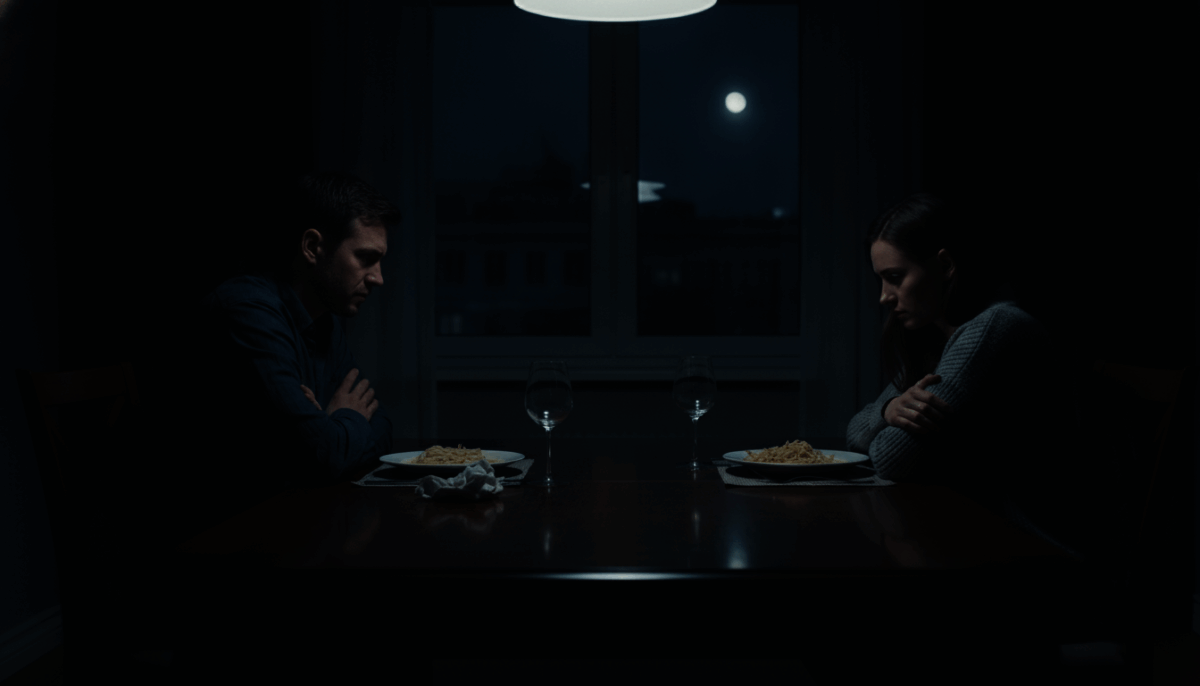
When I finally emerged from the bathroom, I didn’t scream. I didn’t throw things. I had moved past the stage of shock and into a cold, clinical detachment. I asked him, once more, about the catering deposit. This time, I kept the bank statement open on my laptop, right where he couldn’t miss it. His face went pale. The facade of the ‘clerical error’ crumbled in an instant.
“I thought you wouldn’t notice. It’s just a loan, I’ll have it back in the account before the wedding day. It’s an investment in my productivity, and honestly, the caterer was way overpriced anyway. People come for the party, not the crab cakes.”
— Mark, attempting to justify his actions
I felt a deep sense of pity for him. He actually believed his own narrative. He thought that because he was the one ‘earning’ more, he had the right to unilaterally decide how our joint future funds were spent. He didn’t see the guests as people to be hosted; he saw them as an annoyance that was standing in the way of his new rig. The conversation that followed was the most lopsided argument I have ever participated in.
He spent an hour explaining how this new setup would help him land a freelance gig to ‘pay for the wedding twice over.’ It was the classic gambler’s fallacy. He was doubling down on a lie to cover up the original sin. I sat there and watched him, realizing that I was looking at a stranger. The man I had fallen in love with would never have treated our wedding as a secondary concern. This version of Mark was a stranger defined by his gadgets and his ego.
I made a decision right then. I told him that since he had decided to manage the budget in such a ‘creative’ way, he would also be responsible for managing the consequences. I didn’t threaten him. I didn’t cry. I simply informed him that if the catering wasn’t resolved by Friday, I would handle the wedding day in my own way. He laughed, thinking I was bluffing. He thought I was too invested in the ‘perfect day’ to actually follow through with anything drastic.
The Unannounced Kitchen Intrusion

The days leading up to the ceremony were a blur of forced politeness and underlying toxicity. I moved into the guest room, claiming I needed ‘space to focus’ on my vows. In reality, I was finalizing my escape plan. I had already contacted my lawyer regarding our prenuptial agreement, which was largely focused on assets acquired before the marriage. I realized that my exit would not just be an emotional one; it would be a legal and financial disentanglement.
On the morning of the wedding, the catering situation hadn’t improved. In fact, it had worsened. The company had canceled our contract due to the failed deposit. Mark had spent his ‘repayment’ money on a high-end mechanical keyboard and a set of custom artisan keycaps. The sheer audacity of it felt like a slap in the face. He was literally typing away on our wedding money while I tried to figure out how to explain the lack of food to my parents.
He came into the room at 6:00 AM, smelling like stale coffee and nervous energy. He was already dressed in his tuxedo, looking every bit the part of the groom, but his eyes were vacant. He didn’t ask how I was. He didn’t apologize. He asked if I had seen his mousepad. He was genuinely concerned about his desk aesthetic while the entire structure of our wedding day was falling apart. That was the moment the last of my love evaporated.
“Are you even ready? The guests arrive in four hours. And seriously, did you see my mousepad? It was supposed to be here by now. I can’t play with this cheap one.”
— Mark, hours before the ceremony
I looked at him, truly looked at him, and realized I didn’t care about the wedding anymore. I didn’t care about the guests, the venue, or the money spent on flowers. I cared about my own dignity. I told him that the mousepad was the least of his worries. I walked out of the room, leaving him standing there, confused and irritated, still tethered to his virtual world.
The Pizza Delivery Incident
The reception was a disaster, as expected. The guests were milling around, hungry and confused, as the catering company had completely bailed. Mark was busy trying to smooth things over with the venue manager, but his heart wasn’t in it. He was checking his phone every thirty seconds, likely watching the tracking status of his new hardware components. I found a corner table, sat down, and pulled out my phone.
I opened a food delivery app. I spent a solid twenty minutes browsing, eventually settling on a local pizza place that could deliver to the venue. I ordered four large pizzas—enough for myself, and maybe a few of my friends who had been the only ones to truly support me through this ordeal. I paid for it with my own card. I didn’t want a single cent of the ‘gaming budget’ to touch my food.
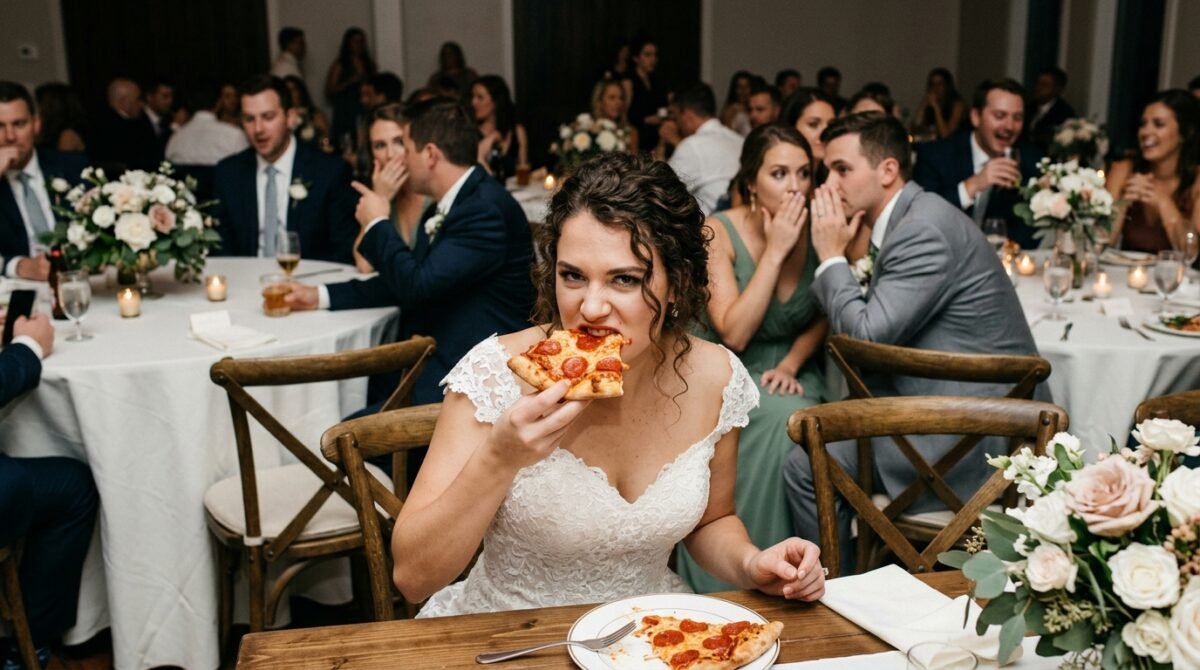
When the delivery driver arrived at the venue entrance, I walked out to meet him. I was in my full wedding dress, carrying a stack of greasy, warm cardboard boxes. The looks on the faces of the caterers, the venue staff, and my own guests were priceless. A hush fell over the room as I walked back in, holding the pizza like it was a royal treasure. I sat down at my table, opened the first box, and took a bite.
“I hope you’re hungry, Mark. I realized we didn’t have any dinner plans, so I improvised. I hope the pizza doesn’t interfere with your gaming performance tonight.”
— Me, presenting the pizza at the reception
The room exploded into whispers. Mark turned beet red. He rushed over, trying to snatch the box, but I stood up, looked him dead in the eye, and told him that if he touched my food, he would regret it. I then proceeded to eat, slowly and deliberately, while he sputtered and tried to save face. It was the most liberating moment of my life. I wasn’t the victim anymore; I was the one setting the tone.
The Unraveling of the Reception
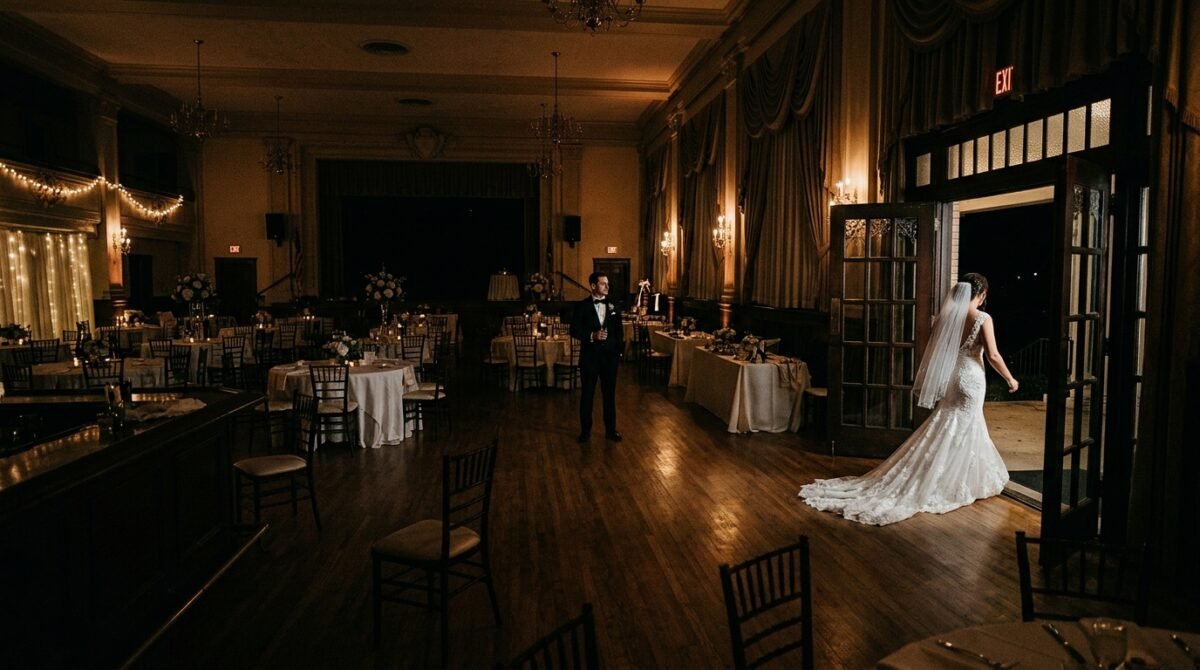
The rest of the night was a blur of awkward conversations and silent judging. My parents were horrified, but when I pulled them aside and showed them the bank statements—the proof of the transferred funds for the gaming equipment—their horror shifted from me to him. They didn’t even try to defend him. They just looked at me with a mix of shock and sadness, realizing that my life with this man would have been a series of similar betrayals.
Mark tried to force a ‘happy’ narrative, dancing with his friends and pretending everything was fine, but the atmosphere was toxic. People knew something was wrong. You can’t have a bride eating pizza in a corner while the groom is acting like a child. The band played, the music was loud, but it felt like a funeral for our relationship. I spent the time talking to my sister, who had already booked me a hotel room for the night.
The guests eventually started to leave, one by one. There was no grand exit, no sparkler send-off, no romantic final dance. Just the smell of lukewarm pepperoni and the sound of silence. Mark tried to corner me again near the exit, his face contorted with anger. He wasn’t upset about the marriage; he was upset about the embarrassment. He was terrified of what people would think of him.
“You’ve ruined everything. Everyone is looking at us like we’re a joke. You couldn’t just play along for one night? You had to make it a spectacle?”
— Mark, confronting me at the end of the night
I looked at him and said, ‘The only joke here is you, Mark.’ I walked out of the venue, got into an Uber, and didn’t look back. I didn’t go home. I didn’t go to the honeymoon suite. I went to the hotel, took off the dress, and felt, for the first time in months, like I could finally breathe.
The Digital Fallout
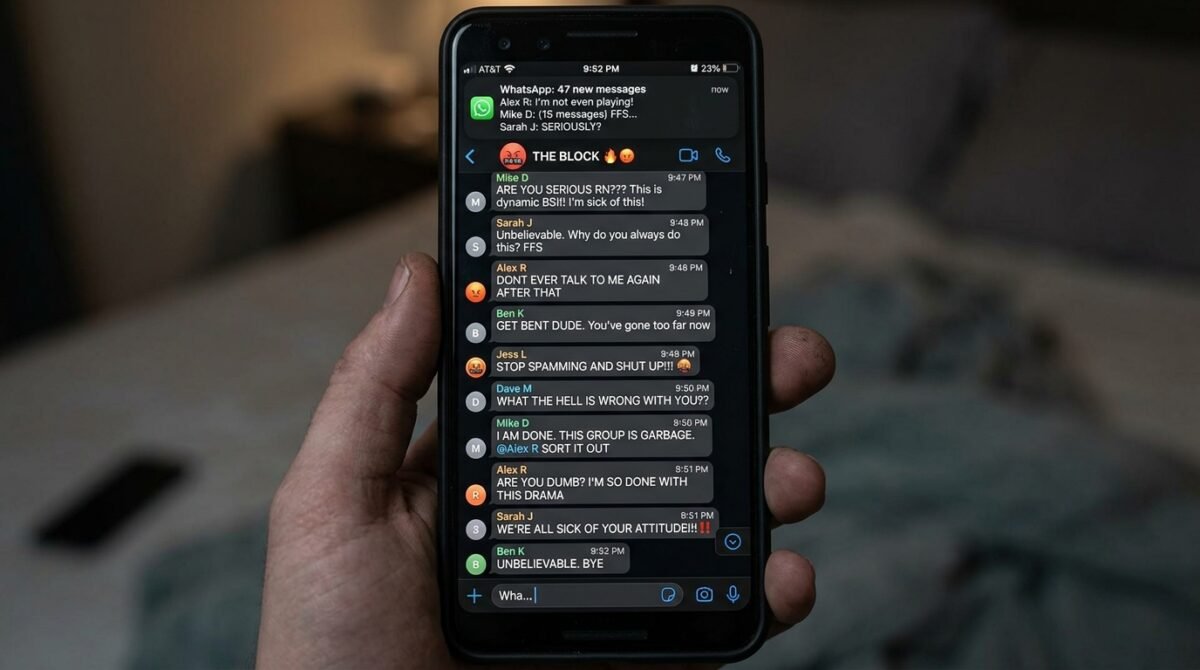
By the next morning, the story was already circulating. Our friends had taken to the group chat, and the messages were brutal. Mark’s friends were defending his ‘hobby,’ calling me petty and ‘dramatic’ for the pizza stunt. My friends, however, were holding no punches. They had seen the bank statements, and they were ready for war. The chat was a battlefield of screenshots and insults.
“Seriously? It’s just a PC. You guys are overreacting. She ruined the reception over a few thousand dollars when she knows he’s a gamer. That’s just who he is.”
— A friend of Mark’s, defending him in the group chat
“He literally stole the catering money! How can you defend that? She had every right to eat. He prioritized his rig over his own guests.”
— My best friend, firing back
The group chat eventually became so toxic that the administrator had to mute it. Mark tried to message me directly, sending paragraph after paragraph of excuses. He claimed he was ‘stressed’ and ‘didn’t mean for it to go this far.’ He promised he would sell the rig and return the money. But the damage was done. The trust wasn’t just broken; it was obliterated. I didn’t respond to a single message.
I started receiving calls from his family. His mother was particularly disappointed, telling me that I should have been more ‘forgiving’ and that ‘men have their phases.’ I realized then that his behavior wasn’t a phase; it was a product of an environment where his selfishness was constantly excused and enabled. I blocked them all. I didn’t need their advice; I needed space to process the end of a life I had built for years.
The irony of the situation wasn’t lost on me. He had spent his money to build a ‘high-performance’ machine that he would now be using to play games by himself, in an empty house. He had achieved his dream, but at the cost of his marriage. I wondered if the graphics were worth it. I wondered if the frame rates brought him the comfort he clearly lacked in his personal life.
The Legal Disentanglement
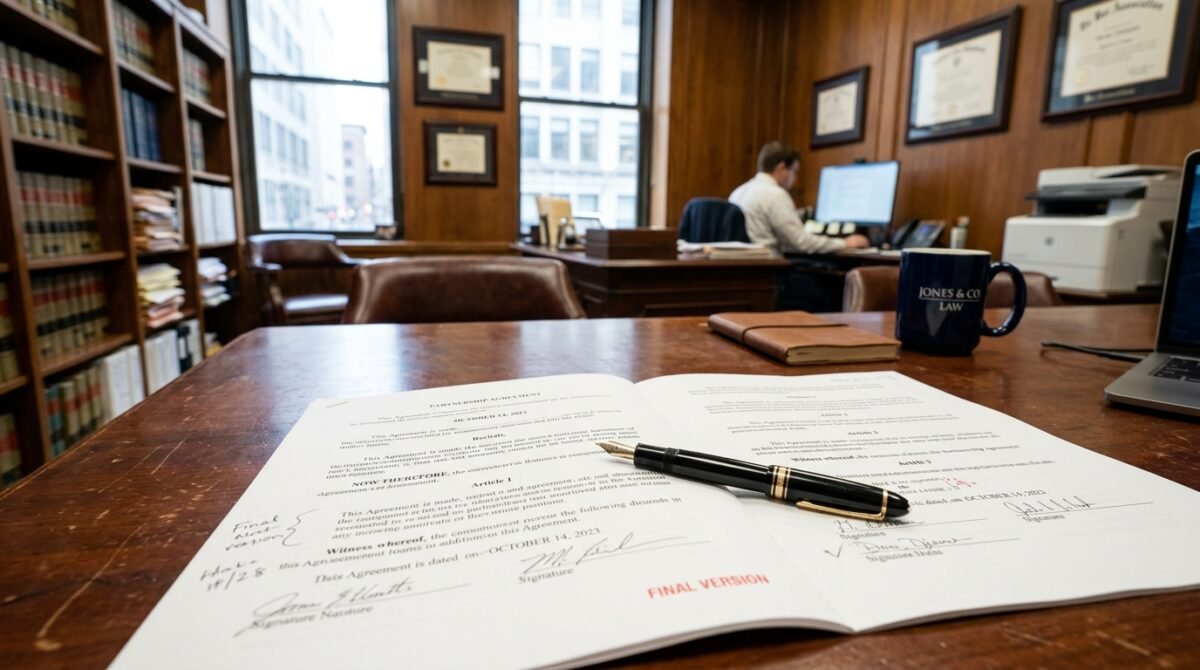
The following weeks were a nightmare of logistics. We had to divide our shared accounts, settle the venue fees, and deal with the fallout of the canceled honeymoon. I had a lawyer handle everything. I refused to speak to him directly. Every communication went through legal channels. It was cold, it was expensive, and it was absolutely necessary. Mark was furious that I wouldn’t engage in ‘reconciliation,’ but I had nothing left to reconcile.
He tried to argue that the PC was ‘his property’ and should be exempt from the asset division. My lawyer laughed. Since it was funded by money from our joint wedding fund—money that was technically shared—it was considered a marital asset. He had to either buy me out of my half of the rig or sell it and split the proceeds. He was livid. He tried to claim it was a ‘gift’ from himself to himself, but the receipts told a different story.
Seeing him squirm was oddly satisfying. He had spent his time trying to outsmart me, thinking he could manipulate the financial landscape of our life without consequences. He learned, quite quickly, that the law doesn’t care about his gaming goals. It cares about equity. He eventually sold the parts to pay me back, and I watched, with a grim sense of satisfaction, as he posted the ‘for sale’ ad on a local tech forum.
“I don’t want your money, Mark. I want the money you took from the wedding guests. That money is gone, and the memories are gone. This is just the final tally.”
— A message sent through my lawyer to Mark
We finalized the separation papers in record time. There were no children, no shared home property, just the mess of an engagement that imploded on its launch day. I felt lighter every day. The stress that had been sitting in my shoulders for months began to dissipate. I was starting over, and while it was difficult, it was also profoundly freeing.
Reddit Weighs In

I decided to share my story on a popular forum, just to see if I was actually the villain everyone in his circle claimed I was. The response was overwhelming. Within hours, the post had reached the front page, with thousands of people chiming in with their own perspectives. The consensus was, surprisingly, in my favor. Most people were horrified by his audacity and applauded my decision to walk away.
“NTA. He literally spent your wedding money on a toy. This isn’t just about the money; it’s about his total lack of respect for you as a partner. You didn’t just order pizza; you ordered your self-respect back.”
— u/RelationshipGuru (Top Comment, 45.2k upvotes)
“I’m a gamer, and even I think he’s a total scumbag. A $4,000 rig? That’s a luxury. Your wedding dinner is a necessity for your guests. He’s not a gamer; he’s an entitled child who shouldn’t be allowed to play with adults.”
— u/TechSavvy (12.4k upvotes)
There were, of course, the contrarians. Some argued that I should have ‘communicated’ better, or that I was being ‘petty’ by ordering the pizza. But those comments were quickly buried by the sheer weight of people who recognized the toxic pattern in Mark’s behavior. It was validation that I didn’t know I needed. It confirmed that I wasn’t the one who was crazy; I was the one who had been pushed too far.
Reading the comments allowed me to see the situation from a distance. It wasn’t just my life; it was a story about boundaries, about the importance of financial transparency, and about the courage to leave a situation that was clearly headed toward misery. It gave me the strength to stop mourning the relationship and start looking forward to my life as an independent woman.
The community support was a beacon in a very dark time. It wasn’t just about the drama; it was about the shared experience of people who had been through similar betrayals. Knowing that I wasn’t alone, and that my reaction was justified, was the final piece of the puzzle. I was ready to move on.
Lessons in Self-Worth

Looking back at the entire experience, I see it as a brutal but necessary initiation. I learned that I am capable of making hard decisions under immense pressure. I learned that my self-worth is not tied to the success of a wedding day, or the approval of a partner who doesn’t respect me. I learned that the red flags I ignored—the little things, the hidden expenses, the defensive attitude—were not just quirks; they were warnings.
I’ve started therapy, which has been incredibly helpful in unpacking why I allowed this to go on for so long. I’ve realized that I had a tendency to ‘fix’ things, to smooth over conflicts in the hopes that he would eventually grow up. But people don’t grow up because you want them to; they grow up because they choose to. And Mark chose his gaming rig over me, every single time.
I am currently living on my own, and it is the best life I have ever had. I’ve reconnected with old friends, I’ve started a new hobby that doesn’t involve screens, and I am finally, truly happy. I don’t miss the wedding. I don’t miss the stress. I don’t even miss him. I miss the time I wasted, but that’s a lesson I’m choosing to learn from, not dwell on.
“You learn more from the people you lose than the ones you keep. Losing him was the best thing that ever happened to me, because it forced me to find myself.”
— My therapist, during our last session
If there is one thing I would say to anyone else in this situation, it is this: do not wait for the breaking point to act. If the trust is gone, if the respect is missing, you are already living in the aftermath. You deserve a partner who views your happiness as a shared priority, not a secondary concern to their own selfish desires. Walk away. It’s better to be alone than to be with someone who makes you feel like you don’t matter.
Moving Forward

What is my life like now? It’s quiet. It’s calm. It’s mine. I have no one to check in with, no one to hide finances from, and no one to apologize to for eating dinner. I’ve realized that the ‘perfect life’ I thought I was building was just a prison I had constructed for myself. I am now free, and I am thriving in a way I never thought possible.
I occasionally hear things about Mark through mutual acquaintances. He apparently moved back in with his parents, and he’s still obsessed with his PC. He’s tried to reach out a few times, but I’ve kept the boundaries firm. I don’t have space for him in my life, not even as a distant memory. He is a closed chapter, a lesson that I have integrated into my growth.
I hope that he eventually realizes the error of his ways, but I also know that it’s not my concern. His life, his gaming, his failures—they are his. I am no longer a player in his game. I am the author of my own life, and I am writing a much better story for myself now. One that doesn’t involve pizza boxes and broken hearts.
“The most important relationship you will ever have is the one you have with yourself. Everything else is a reflection of that.”
— A favorite quote I keep on my mirror now
Thank you for listening to my story. If you’re ever in a position where you feel like you have to sacrifice your dignity just to keep a relationship together, remember the pizza. Remember that you have the power to walk away, to choose yourself, and to find your way to a better, more fulfilling life. You are worth more than a gaming rig. You are worth everything.
Conclusion
The story of the wedding pizza has become something of a local legend, a cautionary tale for those who think that marriage is just a formality. It served as a stark reminder that when the foundation of trust is compromised for a transient, selfish desire, the entire structure eventually collapses under its own weight. I didn’t lose a husband; I gained a life of authenticity.
We all have boundaries. We all have that one line that, once crossed, renders a relationship untenable. For some, it’s infidelity; for others, it’s the quiet, persistent erosion of respect. My line was the catering deposit, but the reality was that the line had been moving for years. It took a single, greasy cardboard box to show me exactly where I stood.
What about you? Have you ever had a moment where you realized your relationship was fundamentally broken, and you had to make an impossible choice? What was your ‘pizza moment’—the point where you knew you had to leave, no matter the cost to your social standing or your plans? Let’s talk about it in the comments below.
[POLL: What would you have done in her position?]
- A) Left immediately when the money was first stolen.
- B) Tried to force him to pay it back before the wedding.
- C) Stayed, but never looked at him the same way again.
- D) Done exactly what she did—take a stand, no matter the drama.
What's your verdict on this dilemma?
Vote below to contribute to the official community consensus.

Have a Dilemma Keeping You Up at Night?
Share your real-life feud, wedding chaos, or relationship crossroads anonymously with our editorial team.
What do you think ?
0 Comments🛡️ Comments are moderated to protect community integrity. Your comment will appear once approved by the editorial team.