
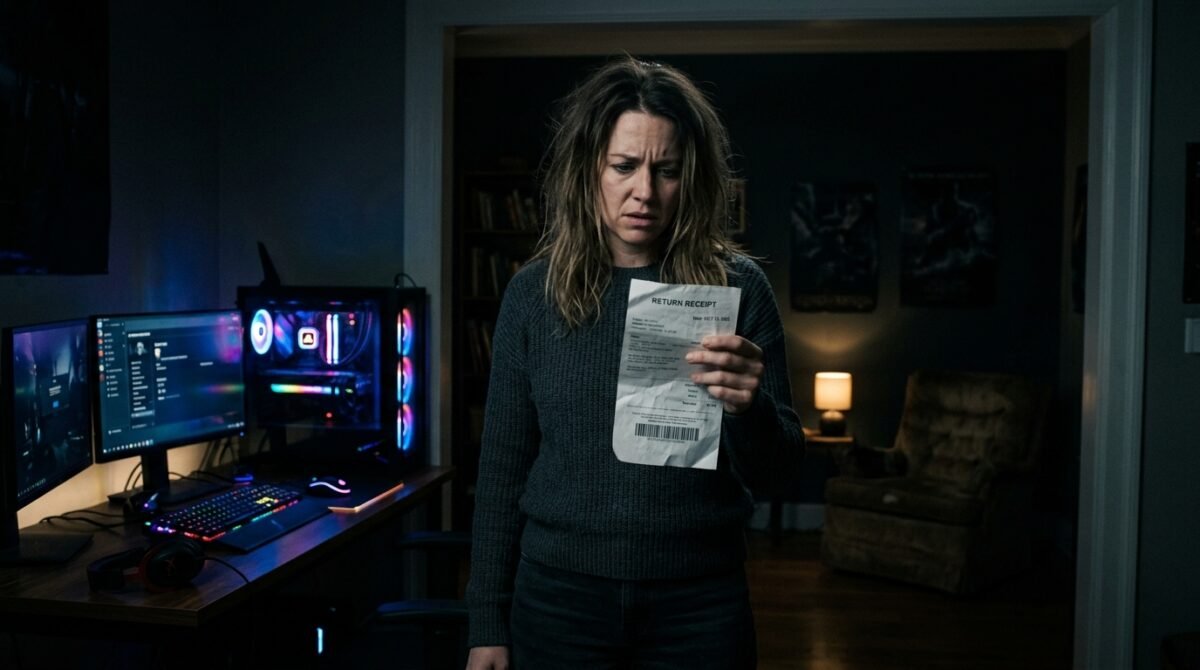
Marriage is supposed to be a partnership, a shared foundation built on trust, communication, and mutual goals. For years, Mark and I operated with that understanding. We shared a joint account, we discussed major purchases, and we navigated the highs and lows of adulthood as a team. But somewhere along the line, the dynamic shifted from ‘we’ to ‘mine’ and ‘ours’. It started with small things—subscriptions he forgot to cancel, a ‘surprise’ gadget here or there—but it eventually culminated in a betrayal that left me staring at a final notice from the electric company while he was busy optimizing his frame rates.
This isn’t just a story about a computer. It is a story about the erosion of respect and the terrifying moment when you realize the person you share your life with is living in a completely different reality than you are. When I found that receipt for an $8,000 custom-built gaming machine, I wasn’t just angry; I was heartbroken. We were months behind on rent, our credit scores were plummeting, and I had been working overtime just to keep the lights from being cut off. He didn’t just spend our savings; he spent my security.
The moral dilemma here isn’t whether it was right to return the item—that part is simple enough for most. The real struggle lies in the aftermath: how do you rebuild trust when one person views the household budget as a bottomless pit for their own dopamine hits? As I stood in the store parking lot, holding the return confirmation, I knew I was burning a bridge. But sometimes, you have to burn a bridge to stop the floodwaters from drowning you.
In the following sections, I will break down the slow decay of our financial stability, the confrontation that finally pushed me to my limit, and the explosive aftermath of my decision. This isn’t just about an 8K PC; it’s about the breaking point of a marriage that had been running on fumes for far too long. I hope that by sharing this, others who find themselves in similar, suffocating situations will realize that they don’t have to stay silent while their stability is dismantled by someone else’s entitlement.
The Silent Creep of Financial Neglect
It didn’t happen overnight. It was a slow, agonizing slide. At first, Mark was the provider he had always promised to be. We had a plan for our future: a house down payment, a retirement fund, and a small emergency stash. But then came the ‘upgrades’. It started with a mechanical keyboard, then a curved monitor, then a custom chair. I justified it as his hobby, a way for him to decompress after his engineering job, but I failed to see the pattern of escalation until the damage was already done.
I started noticing the discrepancies in our bank statements months ago. Small withdrawals that didn’t match our grocery or gas spending. When I brought it up, Mark would deflect with a casual, ‘Oh, that was just for some components for the build.’ He always made it sound like a small, one-time investment. I trusted him. I stopped checking the accounts as frequently because the anxiety of seeing the shrinking balance became too much to handle.
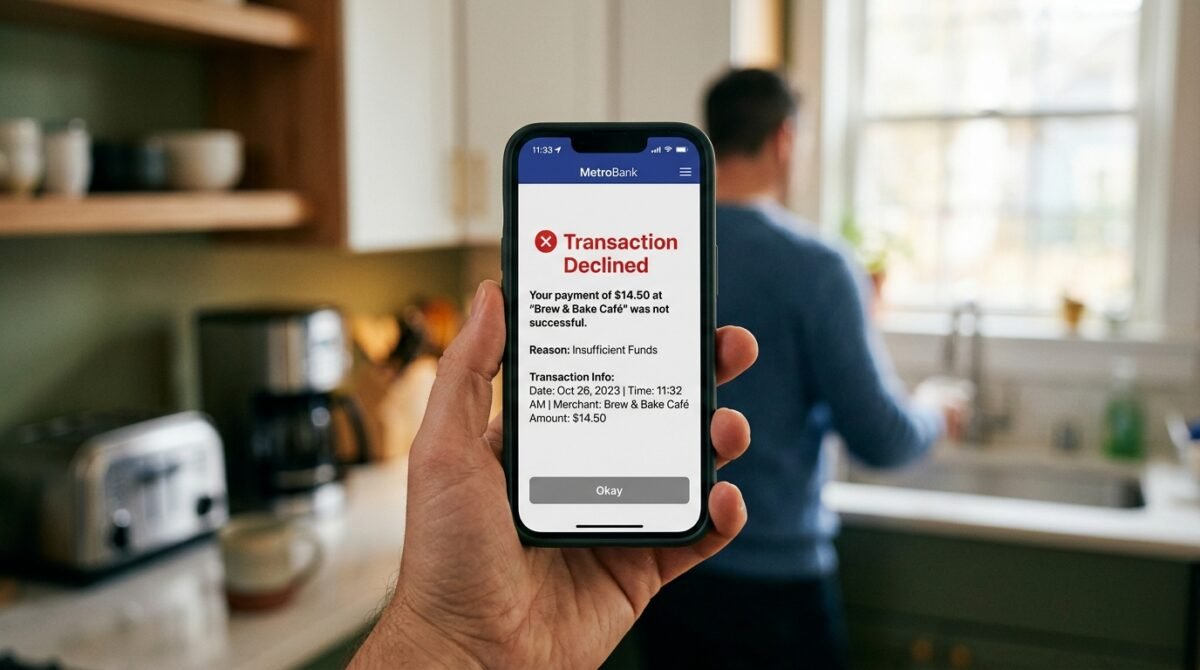
The reality hit me on a Tuesday morning. I went to pay our electricity bill, and the bank app flashed a ‘Transaction Declined’ error. My heart sank into my stomach. I checked the balance. It was nearly empty. I hadn’t spent that money. I was eating ramen for lunch and walking to work to save on gas, while our savings were vanishing into an invisible void of digital components and high-end cooling systems.
“I don’t understand, Mark. We had three thousand dollars in the buffer account just last week. Where did it go? The electricity bill bounced.”
— Me, confronting Mark in the kitchen
Mark looked at me, completely unbothered, while scrolling on his phone. ‘I thought we had more. Maybe the auto-pay for the internet took more than I thought. Don’t stress, I get paid next week. It’s fine.’ He didn’t even look up from his screen. That dismissiveness was the first crack in the foundation that would eventually shatter completely. He treated our survival like a minor inconvenience rather than a failure of responsibility.
The Discovery of the Eight-Thousand-Dollar Secret

A week later, the package arrived. It was massive, heavy, and shielded by layers of high-density foam. When Mark dragged it into the office, he didn’t even try to hide the excitement in his eyes. He spent hours building it, ignoring the mounting pile of unopened mail on the counter—including the ‘Final Notice’ from the power company. I walked into the office while he was testing the lighting. The machine hummed with a quiet, expensive efficiency, bathed in a neon blue glow.
I saw the invoice resting on the desk. My eyes scanned the numbers, and I had to hold onto the doorframe to keep from fainting. Eight thousand dollars. Eight. Thousand. For a machine designed to play games. That was more than our combined rent for four months. It was the money I had been saving to pay off my student loans, the money we were supposed to use to fix the leaking roof. I felt a cold, sharp anger replace the fear I had been carrying for months.
I didn’t scream. I didn’t throw anything. I just stared at the receipt, then at his back as he clicked away at the mouse. The sheer audacity of it left me speechless. He hadn’t just bought a computer; he had effectively decided that his gaming experience was worth more than our ability to keep the house running. I walked out of the room, feeling like a stranger in my own home, and drove to the store where he had purchased it.
“I need to return this. It was purchased under my name on our joint credit card, and I was not aware of this transaction. It is a fraudulent purchase by my spouse.”
— Me, at the customer service desk
The manager was helpful, surprisingly. Perhaps they had seen spouses like me before. They verified the card, saw my name on the account, and processed the return. As the funds began to process back to the account, I felt a strange sense of relief, followed by the terrifying realization of what I had just done. I wasn’t just returning a computer; I was declaring war.
The Silence Before the Storm
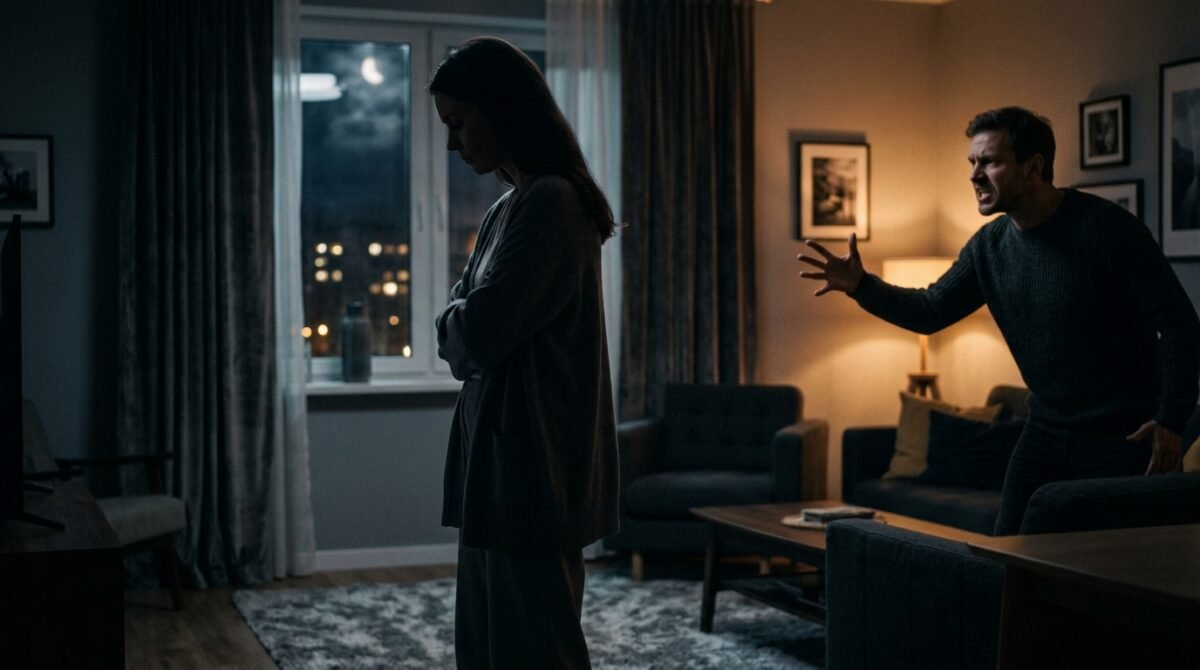
When I got home, the house was dark. Mark hadn’t paid the bill, and the power had been cut at noon. I sat in the living room in the pitch black, illuminated only by the faint light of my smartphone, waiting for him to come home. I knew he would be furious. I knew he would try to gaslight me, to tell me that I had no right to touch his things, that I was being ‘controlling’ and ‘unsupportive’. But for the first time in years, I didn’t care about his opinion.
He walked in, stumbling in the dark, and muttered about the power. ‘Seriously? They actually cut it?’ He sounded annoyed, like it was the utility company’s fault for not waiting for his next paycheck. He didn’t ask if I was okay. He didn’t mention the missing computer. He went straight to the office, probably thinking he could use the computer’s internal battery or just sit in the dark and wait for the power to come back on. Then, the silence broke.
He came out of the office, his voice trembling with rage. ‘Where is it? Where is my rig? Did you steal it? Did you sell it?’ He was frantic, his priorities completely skewed toward the missing hardware. He didn’t care about the darkness, or the food spoiling in the fridge. He cared about his toys. I stood up, my voice steady, and told him exactly what I had done.
“It’s returned, Mark. I returned it. Because we don’t have money for electricity, and I’m not letting you play games while we live in the dark.”
— Me, standing my ground in the darkness
He started screaming. It was a terrifying, high-pitched wail of entitlement. He called me every name in the book. He accused me of destroying his passion, of being a ‘dull, boring wife’ who wanted to kill his joy. He didn’t hear a single word I said about our financial reality. In his mind, he was the victim of a heist, not the perpetrator of a financial crime against our marriage.
The Fallout: Texts from the Other Side
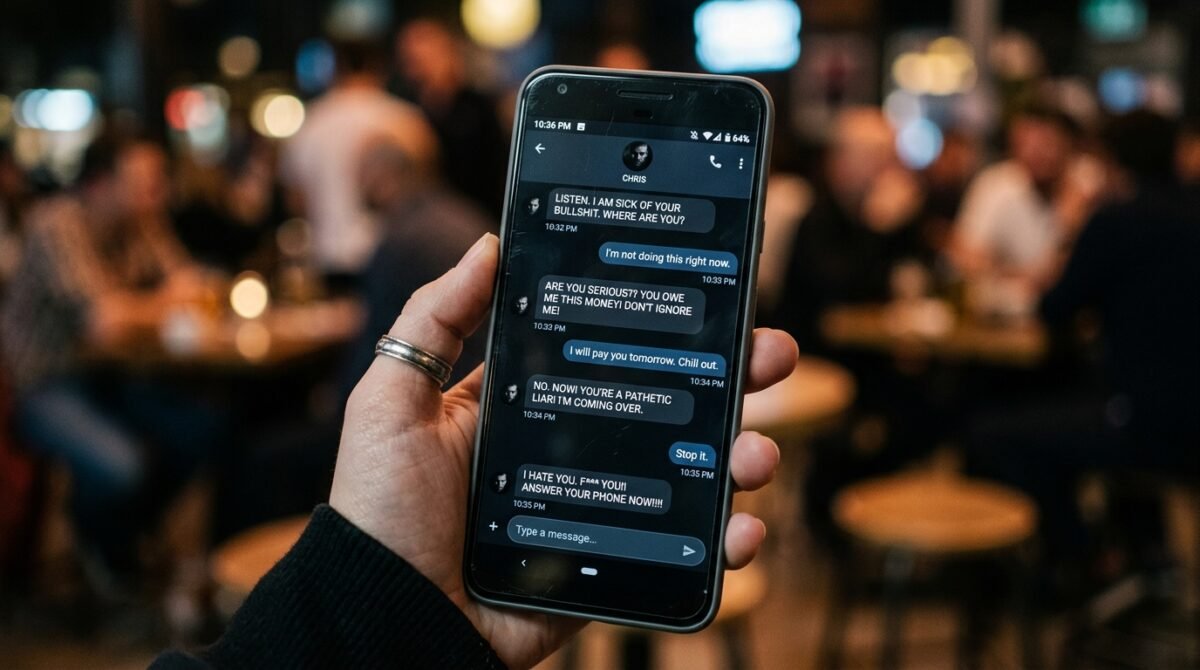
The next few days were a blur of screaming matches and cold, calculated silence. He moved out to a friend’s place, claiming he needed ‘space’ to deal with my ‘toxic behavior’. He took his phone with him, and the texts started coming in almost immediately. They were a bizarre mix of projection, denial, and threats to file a police report. He really believed that he had the legal standing to sue me for returning a product purchased with our joint funds.
“You have no idea what you’ve done. That machine was my life. I’m talking to a lawyer. You committed theft, and I’m going to make sure everyone knows you’re an unstable, controlling person who ruins everything.”
— Mark, via text message
I didn’t respond to the threats. I sent a simple, factual reply detailing our account balances, the late fees, and the disconnection notice. He didn’t acknowledge a single fact. He just continued to spout vitriol, trying to frame the narrative in a way that made him the victim. It was exhausting to watch him perform this level of mental gymnastics. He truly believed that his happiness was an absolute requirement that I was obligated to fund, regardless of the consequences.
I started reaching out to our family. It was humiliating, but I had to clear the air before he started spreading his lies. His parents were shocked. They had no idea he was struggling with spending, let alone the fact that we were on the verge of eviction. They had always seen him as the ‘successful’ one, the one with the high-paying job, and they couldn’t wrap their heads around the fact that he was blowing our savings on digital fantasies.
The community reaction online was just as divided as I expected. I posted a summary of the situation on a throwaway account, looking for validation that I wasn’t the crazy one. The responses were eye-opening. While most people supported my decision, there was a vocal contingent that believed ‘privacy’ meant I should never have checked the bank account, and that returning the PC was a ‘violation’ of his autonomy. It was fascinating to see how many people prioritize the ‘right’ to buy things over the ‘right’ to have basic utilities.
The Reddit Verdict

I didn’t expect the post to go viral. Thousands of comments poured in, most of them dissecting the financial abuse inherent in his behavior. It was validation that I desperately needed. People who had been through similar situations shared their stories, confirming that the gaslighting I was experiencing was a textbook tactic. I spent hours reading through the comments, feeling a mix of sadness for all of us and relief that I wasn’t alone.
“NTA. This isn’t about a computer; it’s about financial control. He spent money you needed for survival on a luxury item without your consent. That is a massive red flag. Please, take this as a sign to get out before you lose more than just your savings.”
— u/FinancialFreedomSeeker (Top Comment, 45.2k upvotes)
“I’ve seen this before. He will promise to change, he will apologize, he might even go to therapy, but the moment things get better, he will do it again. These people don’t see their partners as equals; they see them as bank accounts.”
— u/RealityChecker (12.4k upvotes)
Reading these comments helped me gain the perspective I had been missing. I had been internalizing his insults, feeling like I was the one who had failed to be a supportive spouse. But the community saw it for what it was: a one-sided relationship where one person was actively sabotaging the other’s stability. It gave me the courage to stop waiting for his apology and start preparing for the end of the relationship.
Of course, there were the contrarians. The ones who blamed me for ‘letting it happen’. But even those comments served a purpose—they showed me that no matter what I did, some people would always find a way to blame the victim. I realized I didn’t need to convince everyone; I only needed to convince myself that I deserved better. And I did deserve better.
I started documenting everything. Every receipt, every bill, every threatening text message. I wasn’t just planning to move on; I was planning to protect my future. I realized that if I didn’t take this seriously, he would continue to drag me down with him. The internet had given me a community, but it also gave me a map of how to navigate the legal mess that was surely coming next.
Facing the Financial Reality

Once the dust settled, the real work began. I sat down with a financial advisor, someone who specialized in divorce and separation. The numbers were worse than I thought. Between the high-interest credit card debt he had accumulated and the lack of savings, we were essentially starting from zero. He had been living a double life, taking out small loans and using credit cards I didn’t even know existed.
The realization of just how deep the rabbit hole went was sickening. I found accounts I didn’t know he had, subscriptions that had been auto-renewing for years, and a trail of ‘micro-transactions’ in games that added up to thousands of dollars. It wasn’t just one gaming PC; it was an entire ecosystem of waste that had been cannibalizing our income for the better part of a decade. I had been so busy working that I hadn’t looked at the ledger, and he had been counting on my distraction.
I took the return money and immediately put it toward the utility bills and the most predatory of the debts. It wasn’t enough to clear everything, but it was a start. It felt like I was cleaning up after a natural disaster. Every dollar I spent felt like a victory, a reclaiming of my own resources. I stopped feeling guilty about the ‘stolen’ computer and started feeling angry about the stolen years.
We had a meeting with a mediator to discuss the split. Mark arrived looking disheveled, still trying to play the part of the aggrieved husband. He brought up the computer again, demanding that the money be returned to the account so it could be ‘fairly’ divided. The mediator, a woman with a no-nonsense attitude, shut him down immediately. She looked at our financial history and asked the question that made Mark go silent for the first time.
“Mr. [Name], you claim the money was yours. But the records show a consistent pattern of high-value purchases while the household was in default on essential services. How do you explain the choice to prioritize luxury over housing?”
— The Mediator, during the separation meeting
He stammered, tried to blame me for ‘nagging’ him about budgets, and then gave up. It was the first time he had to face the reality of his choices in front of a third party, and he had no defense. It was clear that he had no intention of changing, and that our lives were moving in two completely different directions.
The Final Severance

The process of splitting our assets was grueling. He fought over every piece of furniture, every kitchen appliance, every digital subscription. It was petty, vindictive, and completely exhausting. But I refused to budge. I had the documentation of his spending, and I used it to ensure that the debt he accumulated was assigned to him. It was a long fight, but I eventually walked away with my credit score intact and my dignity reclaimed.
I moved into a small apartment on the other side of town. It wasn’t much—just a studio, really—but it was mine. I didn’t have a high-end gaming PC. I didn’t have a fancy chair. I had a laptop, a decent internet connection, and the most beautiful thing of all: peace. I could turn on the lights whenever I wanted. I could buy groceries without checking the bank balance five times first. The silence in my apartment wasn’t the heavy, suffocating silence of our old home; it was the quiet of freedom.
Looking back, I realize that I had been carrying a weight that I didn’t even know existed. I had been so used to the stress, the fear, and the constant vigilance that I had forgotten what it felt like to just breathe. The return of that PC wasn’t an act of spite; it was an act of self-preservation. It was the moment I finally decided that my life was worth more than his hobby.
I saw him once, months later, at a coffee shop. He looked different—tired, disheveled, and still clutching that same phone, scrolling through his games. He didn’t see me. He was too busy living in his digital world to notice the real one passing him by. I felt a surge of pity, not for myself, but for him. He was stuck in a loop of his own making, forever chasing the next dopamine hit, forever ignoring the light that was slowly fading from his life.
I didn’t say hello. I just finished my coffee, paid my bill, and walked out into the sun. I wasn’t just moving on; I was moving forward. The 8K PC had been the catalyst for my liberation, a strange, expensive piece of hardware that had forced me to confront the reality of my life. And for that, in a weird, twisted way, I was almost grateful.
Lessons in Financial Independence

If there is one thing I have learned from this entire ordeal, it’s that financial transparency is the bedrock of any successful relationship. Never, ever let someone else control your financial future. If you find yourself having to ask permission for basic necessities, or if you find yourself constantly stressed about money while your partner spends recklessly, you are in a situation that is fundamentally broken. You don’t have to be a financial expert to see when you are being taken advantage of; you just need to trust your gut.
I also learned the importance of having an ‘exit plan’. Not because you want to leave your partner, but because you need to know that if things go south, you will be okay. I keep a separate emergency fund now—one that no one else has access to. I keep my credit reports locked. I review our finances regularly, even if it is uncomfortable. I refuse to be the ‘distracted partner’ again. I am the guardian of my own security, and I will never delegate that responsibility again.
There is a lot of talk about ‘sacrificing for the relationship’, but there is a clear line between sacrifice and martyrdom. If you are the only one sacrificing, you aren’t in a partnership; you are in a service role. I learned that my self-worth is not tied to how much I can endure for the sake of someone else’s happiness. I am worthy of stability, I am worthy of respect, and I am worthy of a partner who values our collective future as much as their own personal fun.
I’ve started mentoring a few younger women who are dealing with similar issues. It’s heart-wrenching to see the same patterns repeating—the hidden credit cards, the secret purchases, the gaslighting. I tell them the same thing I tell myself: you are not crazy, you are not being ‘unsupportive’, and you have the right to protect your own life. It’s hard to hear, and it’s even harder to act on, but the freedom on the other side is worth every bit of the struggle.
I don’t regret the return. If I could go back in time, I would have done it sooner. I would have saved myself the stress, the late fees, and the months of anxiety. But we learn when we learn, and I am just thankful that I got out when I did. I am still rebuilding, but for the first time in years, I am building on a foundation that I control, and that is a feeling I will never take for granted again.
The Aftermath and My New Life

Today, my life looks very different. I have a job that I love, a home that is entirely mine, and a community of friends who support and uplift me. I’m not rich, but I’m secure, and that is a type of wealth I never truly understood until now. I don’t need the latest tech or the trendiest gadgets. I find joy in simple things—a walk in the park, a good book, a quiet evening without the threat of a looming bill. I am finding myself again, piece by piece.
I still get the occasional message from Mark, usually when he’s broke or in trouble with someone else. I keep him blocked. I have no interest in hearing about his next ‘great investment’ or his latest gaming rig. I’ve heard through the grapevine that he’s still struggling, still jumping from one financial crisis to the next. It’s a sad cycle, but it’s no longer my cycle. I have stepped off the ride, and I’m never getting back on.
I’ve also started dating again, very carefully. I am upfront about my boundaries from the very first date. I talk about finances, about goals, about the importance of mutual respect. It filters out the people who aren’t ready for a real partnership, and that’s exactly what I want. I’m looking for someone who builds up, not someone who tears down. It might take longer, but I’m not in a rush. I have the rest of my life to get it right.
Reflecting on everything, I realize that the 8K PC was just a symbol. It could have been anything—a car, a trip, a piece of art. The object didn’t matter. What mattered was the disrespect, the lack of consideration, and the absolute refusal to care about our shared reality. That was the real poison. Once I recognized it for what it was, the decision became simple. You cannot build a future with someone who is actively burning down your present.
I hope that if you are reading this and you recognize yourself in my story, you take this as a sign. Don’t wait for the lights to go out. Don’t wait until you are drowning. Take control of your life. Ask the hard questions. Set the firm boundaries. You deserve to be in a relationship that feels like a home, not a battleground. And if you have to return the PC to get there, don’t hesitate. Do it.
Community Discussion: Have You Ever Had To Make A Drastic Financial Stand?

The story I’ve shared is just one perspective, and I know that financial dilemmas are some of the most complex challenges we face in relationships. It’s not always about gaming PCs; sometimes it’s about secret debts, hidden spending habits, or vastly different values regarding money. I am curious to hear from you. Have you ever been in a position where you had to make a drastic, unpopular decision to save your financial future? How did it change your relationship, and what did you learn from the experience?
Maybe you’ve been the one who had to set a boundary with a spouse, or perhaps you’ve had to make a difficult call regarding a shared account. Whatever your story, I invite you to share it in the comments. We are a community, and sometimes hearing that we aren’t the only ones going through these struggles is the most healing thing we can do. Let’s create a space where we can be honest about the messy, complicated, and often painful reality of finances in a relationship.
I am particularly interested in the ‘financial abuse’ aspect of these stories. If you have any resources or advice for those who are currently living in this reality, please share them. There is strength in numbers, and the more we talk about these issues, the less power they have to keep us trapped. Let’s support each other in reclaiming our security and our autonomy, one conversation at a time.
I will be reading the comments and participating in the discussion. I want to hear your thoughts, your experiences, and your advice. Whether you agree with my decision or think I went too far, your voice matters. Let’s have a civil, constructive, and eye-opening conversation about what it really takes to build a life with someone else. We are all learning as we go, and there is no better way to learn than by listening to each other.
Conclusion
My journey from the darkness of a disconnected house to the clarity of my own apartment has been nothing short of transformative. I learned that the strongest walls are not the ones we build around our assets, but the ones we build around our self-respect. When I returned that computer, I wasn’t just fixing a budget; I was reclaiming my life from someone who viewed my security as an optional expense. If you take anything away from this, let it be this: you are the primary investor in your own life. Do not let anyone else bankrupt your potential.
Thank you for walking through this story with me. It has been a difficult, painful, and ultimately liberating process to document these events. If you are in a situation where you feel your voice is being silenced or your stability is being undermined, please know that you are not alone. Reach out for help, speak your truth, and do not be afraid to make the tough decisions that will lead you to a better place. You are worth the effort.
Now, I turn it over to you. Do you think I was too harsh, or was this the necessary wake-up call our marriage needed? Would you have stayed, or was the return the only logical conclusion? Drop your thoughts below—the community is listening.
What's your verdict on this dilemma?
Vote below to contribute to the official community consensus.

Have a Dilemma Keeping You Up at Night?
Share your real-life feud, wedding chaos, or relationship crossroads anonymously with our editorial team.
What do you think ?
0 Comments🛡️ Comments are moderated to protect community integrity. Your comment will appear once approved by the editorial team.