

It was supposed to be the trip of a lifetime—a week-long coastal retreat for four lifelong friends, planned meticulously over six months. We had the villa booked, the itinerary mapped out, and, most importantly, the rental car secured under my name. I was the responsible one, the one with the credit card to burn and the foresight to add the extra collision damage waiver. I never imagined that my decision to be the organizer would eventually lead to a total fracture in a decade-long friendship.
Everything was perfect until the third night. We were heading back from a local vineyard, laughter echoing through the car, when a patch of slick road turned our celebratory mood into a scene of chaotic destruction. The car didn’t just slide; it hydroplaned, spun, and ultimately kissed a concrete barrier with enough force to deploy every airbag. The silence that followed the crash was deafening, broken only by the hiss of a punctured radiator and the frantic, shallow breathing of my friend, Sarah, who had been behind the wheel.
We were all miraculously uninjured, but the car was a mangled wreck. It was towed that night, and the reality of the situation began to settle in as the police completed their report. I assumed that Sarah, who had been driving, would take responsibility for the insurance deductible. After all, she was the one who insisted on taking the wheel after having that extra glass of wine at dinner. It seemed like a straightforward, if unfortunate, conclusion to an expensive mistake.
Little did I know, the real disaster wasn’t the car—it was the conversation that took place in the lobby of the rental agency the following morning. What started as a request for accountability quickly devolved into an assertion of entitlement. Sarah, bolstered by the support of our other two friends who didn’t want to rock the boat, looked me dead in the eye and told me that because the car was in my name, the financial burden was my problem alone. This is the story of how a rental agreement became the catalyst for the end of a long-term friendship and the hard lessons I learned about trust, money, and boundaries.
The Decision to Hand Over the Keys

Looking back, the warning signs were there, but I chose to ignore them in the spirit of camaraderie. We were three days into the trip, and the atmosphere was electric. We had been drinking moderately, but Sarah, who had been the most vocal about driving the ‘luxury’ SUV I rented, insisted she was fine to handle the drive back to the villa. I hesitated, looking at the dark, winding coastal roads ahead, but the group pressure was immense. They wanted to keep the fun going; I didn’t want to be the ‘fun-killer’ who refused to let anyone else drive.
The car was a beautiful, high-end model, something I had splurged on to make the trip feel special. I handed over the keys with a casual warning to take it slow. I knew the rental agreement was strictly in my name—a condition of the rental agency that I had accepted without a second thought, assuming my friends were as responsible as I was. That trust, it turns out, was a massive oversight on my part.
“Are you sure you want to drive, Sarah? It’s dark, and these roads are notoriously slippery even when they’re dry. Maybe I should just take the wheel?”
— Me, expressing my pre-crash concerns.
Sarah laughed, dismissing my concern with a wave of her hand. She was feeling empowered, confident in her driving ability, and eager to show off. The others chimed in, telling me to relax and enjoy the passenger seat for once. I allowed myself to be swayed, setting the stage for an accident that would cost thousands of dollars. The irony, of course, is that I had specifically purchased the premium insurance package, but even that carried a steep deductible that I had no intention of eating alone.
By the time we hit the rain-slicked curves near the coastline, the mood in the car had shifted from playful to panicked. The SUV felt sluggish, and the tires struggled for grip. I remember the sensation of the car losing traction, the sickening slide toward the barrier, and the sudden, violent impact that jolted our bodies against the restraints. The world stopped for a moment, leaving us in a cloud of dust and the pungent smell of burnt rubber.
I emerged from the wreckage in a state of shock, checking to make sure everyone was physically okay. Sarah was sobbing, her hands shaking as she gripped the steering wheel she had refused to surrender. At that moment, I was just grateful we were alive. I didn’t even think about the money. I didn’t even think about the deductible. I just wanted to get everyone back to the villa safely, unaware that the financial argument of a lifetime was waiting for me at sunrise.
The Morning After the Wreck
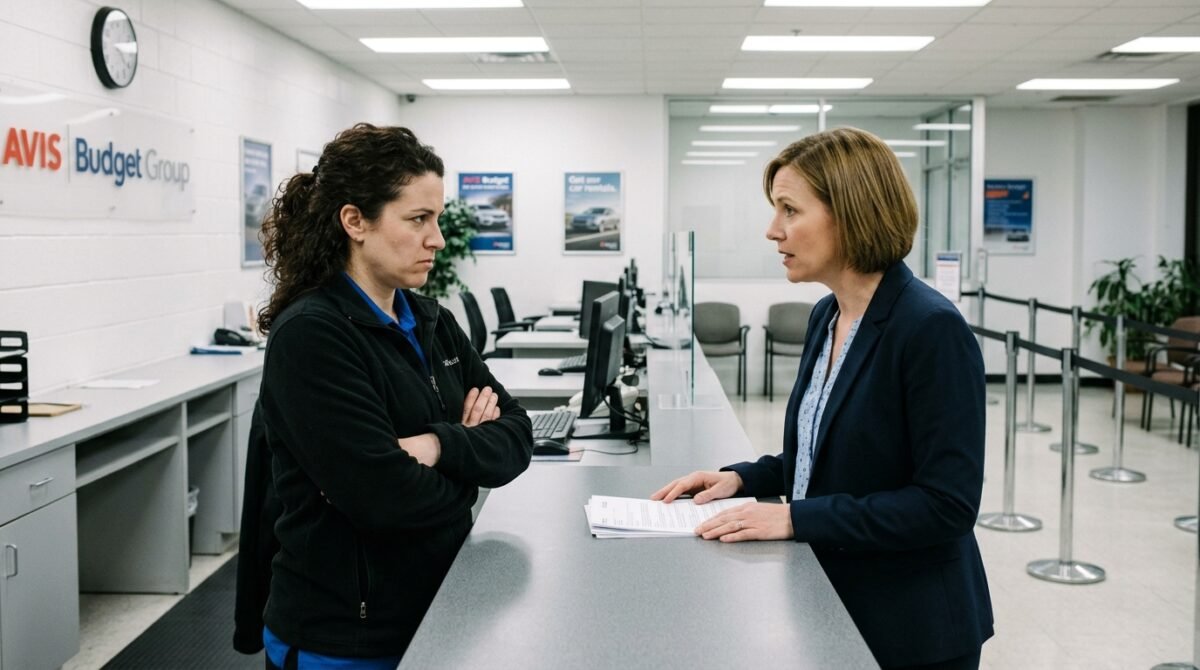
The next morning, the reality of the situation hit like a freight train. We were stranded, the car was totaled, and the rental company was demanding a meeting at their regional office to settle the paperwork. Sarah looked pale and withdrawn, and the other two friends were doing everything in their power to avoid looking at me. They spent the morning whispering in the corner of the villa, their voices low and urgent. It was clear that they were already picking sides, and it wasn’t the side of the person who paid for the rental.
When we finally arrived at the rental office, the agent was professional but cold. He explained that due to the nature of the accident—which involved a curb-strike and significant chassis damage—the insurance claim was straightforward, but the $2,500 deductible was due immediately. My heart sank. That was a significant amount of money to lose, and it certainly wasn’t money I had earmarked for a vacation expense.
I pulled Sarah aside, expecting a humble apology and an offer to help. Instead, she crossed her arms and looked away, her posture defensive. I asked her point-blank how she wanted to handle the deductible. I didn’t even ask her to pay for the whole thing—I was willing to split it four ways, as we were all benefiting from the rental. Her response was a masterclass in deflection.
“Look, Sarah, I think it’s fair that we split the $2,500 deductible among the four of us. It was a group trip, and I shouldn’t be the only one out of pocket for an accident that happened while we were all traveling together.”
— My attempt to initiate a mature conversation.
“You’re the one who signed the contract, not me. Why should I pay for something that is legally your responsibility? You’re the one who chose the car and the insurance policy. This is on you.”
— Sarah’s shocking, cold reply.
The audacity of her statement left me speechless. She had been the driver, she had been the one who made the mistake, and yet she was trying to weaponize the rental contract against me. The other two friends, who had been silent up until this point, chimed in to support her. They argued that because they weren’t the ‘primary driver’ on the paperwork, they had no financial obligation to the rental company—and by extension, no obligation to me. It was a calculated, cold-hearted betrayal that changed my entire perspective on the friendship.
I stood there in the rental office, feeling the weight of their combined entitlement. They weren’t just refusing to pay; they were actively gaslighting me into believing that my request for help was unreasonable. I realized in that moment that these people didn’t value our friendship; they valued their own comfort and bank accounts above all else. I paid the deductible, signed the papers, and walked out, knowing that the trip was over, and so was our relationship.
The Digital Fallout in the Group Chat
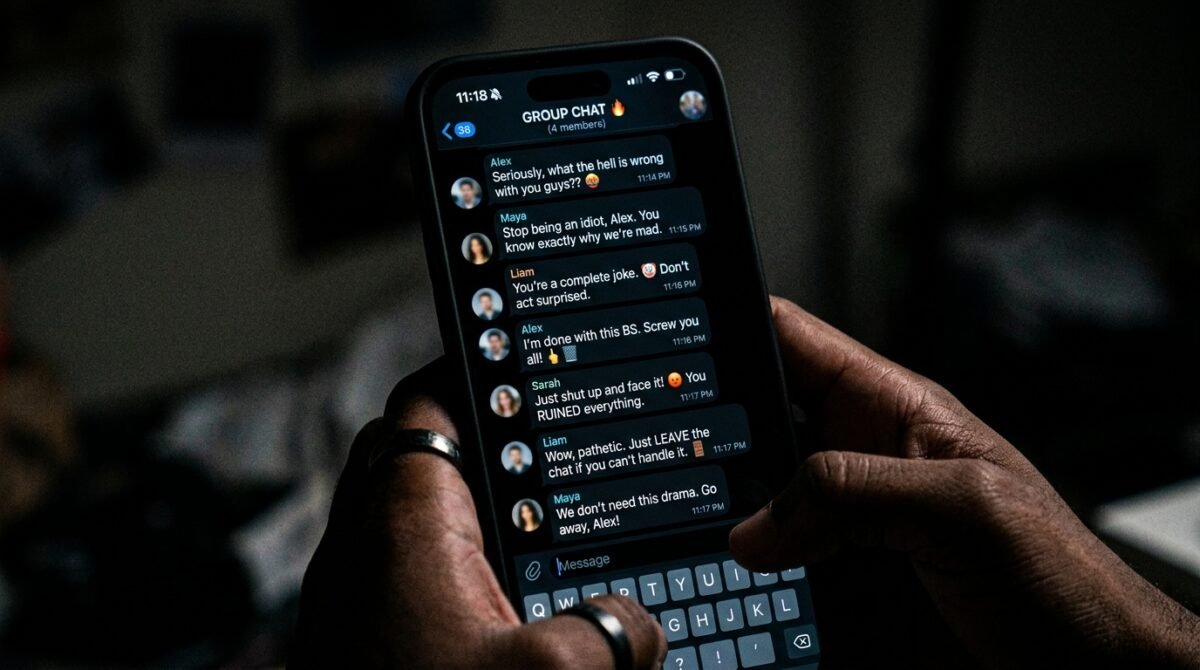
The flight home was a silent, suffocating affair. We sat in different rows, barely acknowledging each other’s existence. The moment I touched down, I saw the notifications piling up on my phone. The group chat, which had been filled with photos and excitement just two days ago, had become a battleground. Sarah and the others were already spinning the narrative, framing me as the ‘stingy, litigious friend’ who was trying to extort money from them for an ‘unavoidable accident.’
I didn’t engage immediately. I let them dig their own graves, watching as they messaged about how I was ‘overreacting’ and ‘ruining the vibe of the group.’ It was surreal to read their texts. They were talking about me as if I weren’t even in the group, projecting their own guilt onto me to maintain their self-image as the victims. Their cognitive dissonance was staggering.
“I honestly can’t believe they’re trying to make us pay for the deductible. It’s not our fault the road was slippery. Why is everything always about money with them?”
— Sarah in the group chat, unaware I was reading.
“Exactly. It’s like they’re waiting for an excuse to shake us down. Let’s just ignore the messages and hope they get over it. It’s not like they can take us to court over it.”
— Another ‘friend’ joining in the gaslighting.
I took screenshots of everything. I knew this wasn’t just a petty disagreement anymore; this was a fundamental breach of trust that required a permanent boundary. I decided to respond with a single, clear message, not to beg for the money, but to set the record straight and end the dynamic once and for all. I didn’t care about the $2,500 anymore; I cared about the principle. These people had shown me exactly who they were when things got difficult, and I was done being the person who covered their mistakes.
The silence that followed my message was immediate. They didn’t have a rebuttal because there wasn’t one. The facts were clear: Sarah drove, the car crashed, and I paid the bill. Any attempt to obfuscate that reality was just a pathetic display of immaturity. I blocked all three of them immediately after sending my final, pointed response. It was the most satisfying thing I had done in years.
The aftermath wasn’t easy. I lost a friend group, and the drama bled into our mutual social circles for weeks. People took sides, whispers circulated, and I was forced to defend my position to acquaintances who didn’t know the full story. But every time I had to explain why I cut them off, I felt stronger. The money was gone, but the clarity I gained was worth every penny of that deductible.
The Reddit Verdict: A Community Divided
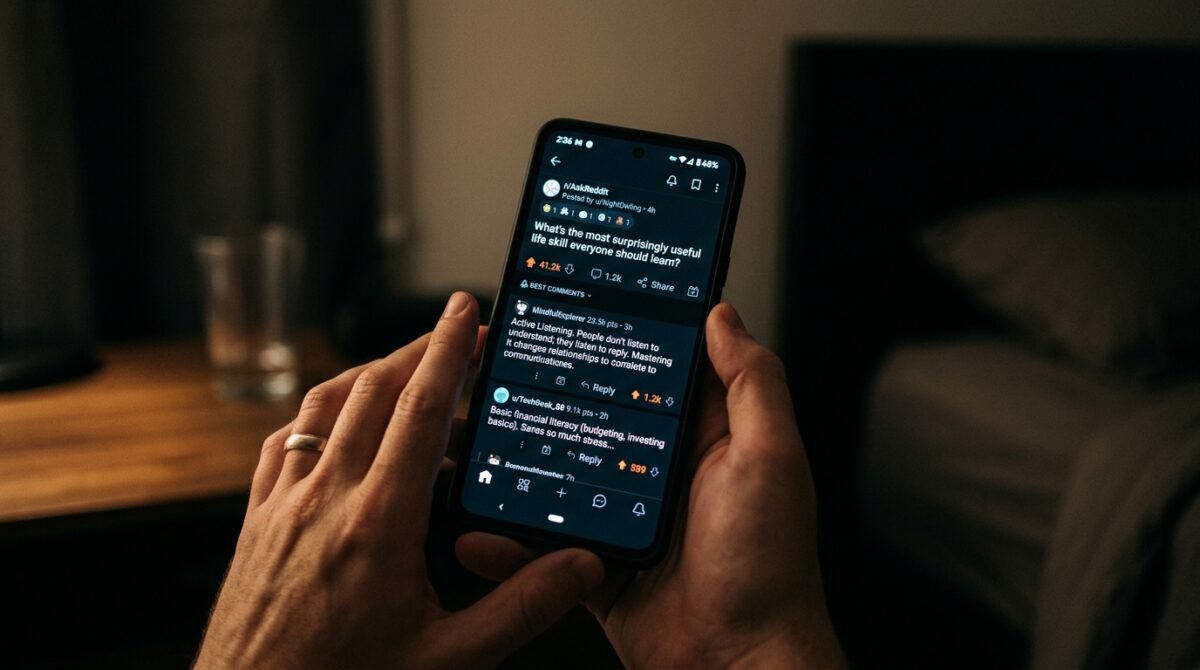
I posted my story to the AITA subreddit, expecting a bit of support but bracing for the typical internet contrarians. What I got was a landslide of validation. The Reddit community, for all its faults, has a very low tolerance for people who weaponize technicalities to avoid personal responsibility. Within an hour, my post had thousands of upvotes and a comment section filled with people who had dealt with similar, parasitic friends.
The consensus was clear: Sarah was the one in the wrong. Not only was she responsible for the accident, but her refusal to acknowledge the group’s shared liability—even if they weren’t legally bound—was a massive red flag. The comments were brutal, picking apart her logic and highlighting the psychological manipulation at play in our friendship. It was a cathartic experience to read the perspectives of strangers who saw the situation for exactly what it was.
“NTA. You were the driver? You pay for the damage. It doesn’t matter whose name is on the rental contract. If I borrow a friend’s car and wreck it, I am covering the deductible, period. Your friends are not your friends; they are freeloaders.”
— u/ReasonableHuman (Top Comment, 18.5k upvotes)
“The fact that they ganged up on you in the rental office is the real kicker. This was a coordinated effort to avoid paying. Cut them off immediately. You’re better off without people who treat you like a walking ATM.”
— u/FinancialTruth (8.2k upvotes)
Reading these comments helped me realize that I hadn’t lost anything of value. If these people were capable of turning on me so quickly over a few hundred dollars, what would they have done if I had a real crisis? The experience taught me that boundaries are not negotiable, and that when people show you their true colors, you shouldn’t try to repaint them. I felt a sense of peace knowing that I had stood my ground, even if it cost me the ‘friendships’ I once held dear.
Some users even offered legal advice, suggesting that in some jurisdictions, I could take Sarah to small claims court. While I decided against it—the stress of a lawsuit wasn’t worth the money—it was empowering to know I had options. The validation from the community gave me the confidence to move forward and stop questioning whether I was the ‘bad guy’ for wanting accountability. I wasn’t being stingy; I was being an adult, and they were the ones who refused to grow up.
The discourse on the thread lasted for days, with people debating the ethics of rental car policies and the responsibilities of friends on road trips. It was a fascinating look into human behavior, and it solidified my decision to walk away from the group. I wasn’t just losing friends; I was gaining an education in what real, healthy relationships should look like—and more importantly, what they should never look like.
The Financial Breakdown of the Betrayal

When the dust settled, I decided to lay out the numbers for myself. It wasn’t just about the $2,500 deductible. It was about the cost of the flight, the lost time, the stress of dealing with the rental agency, and the emotional toll of the confrontation. I created a spreadsheet, not to show them—since I had already blocked them—but to visualize the reality of the expense. Seeing the numbers in black and white was the final nail in the coffin for any lingering ‘what-ifs.’
The rental itself was $800. The deductible was $2,500. Then there were the hidden costs: the Uber rides we had to take to get to our next location, the time spent on the phone with insurance adjusters, and the emotional energy spent dealing with the fallout. If we had split the cost, it would have been a manageable $825 per person. Instead, I bore the brunt of a $3,300 total loss. That is a significant hit to anyone’s bank account, especially someone who was just trying to be a good friend.
| Expense | Cost | Responsibility |
|---|---|---|
| Rental Car Fee | $800 | Shared |
| Insurance Deductible | $2,500 | Sarah (Driver) |
| Transportation/Ubers | $450 | Shared |
| Total | $3,750 | My Loss |
The table above serves as a cold reminder of why we shouldn’t mix finances with friends without clear agreements. Looking at these figures, the disparity is stark. Sarah, by refusing to contribute, effectively gained a free vacation at my expense. It’s an infuriating realization, but it’s one that has made me much more cautious about how I handle money in my social life. I will never again be the primary account holder for a group expense without a prepaid split or a signed agreement.
The experience has fundamentally changed my approach to travel. I no longer organize group trips that require me to front the money. If we go somewhere, everyone pays their own way, or we use apps that make splitting expenses automatic and transparent. If someone isn’t comfortable with that, they don’t go. It’s a simple, effective boundary that saves me from the stress and resentment of being the ‘responsible one’ who ends up paying for everyone else.
Looking back, I realize that the money was the least of the costs. The real loss was the decade of memories and the time I spent investing in people who didn’t respect me. But as I look at these numbers now, I don’t feel anger anymore. I feel relief. I paid $3,750 to learn exactly who these people were. If you look at it that way, maybe it was a bargain. It’s a expensive way to curate your social circle, but it’s one that ensures you’re surrounded by people who value your integrity as much as you value theirs.
The Anatomy of a Toxic Friendship

Reflecting on the months following the incident, I began to see patterns I had previously ignored. The rental car debacle wasn’t an isolated event; it was the culmination of years of small, subtle boundary-pushing that I had rationalized away as ‘just how they are.’ Sarah had always been the one who ‘forgot’ her wallet, the one who expected me to pay for tickets, the one who constantly pushed for me to do things that made me uncomfortable.
I was the enabler. I was the person who always said yes, who always picked up the tab, who always took the blame for the sake of group harmony. By constantly smoothing over the rough edges of our friendship, I had inadvertently trained them to view me as a resource rather than a peer. The car accident was the moment the mask slipped, but the rot had been setting in for a long time. I had built a friendship on a foundation of my own self-sacrifice, and that is never a sustainable structure.
I started to journal about the ‘friendship,’ trying to identify where the balance shifted. I realized that throughout our decade together, I could count on one hand the number of times Sarah had offered to pay for something or taken initiative in a way that benefited me. It was always about what I could provide: my car, my apartment, my credit card, my time. It was a one-way street, and I had been driving on it for way too long.
This realization was painful. It meant admitting that I had been complicit in my own exploitation. I had valued their ‘fun’ personality over their character, ignoring the red flags because I didn’t want to be alone or because I felt a sense of loyalty to a history that no longer served me. It’s a hard lesson, but it’s one that everyone needs to learn: you cannot change people, and you cannot expect people to value you if you don’t value yourself first.
The toxicity wasn’t just in their actions, but in the environment they created. They made me feel like I was the problem for having boundaries. They used gaslighting and group pressure to make me feel small. Once I removed myself from that environment, the difference in my mental health was immediate. I stopped walking on eggshells. I started saying no to things I didn’t want to do. I realized that my self-worth wasn’t tied to being the ‘fun, rich friend’ who fixed everyone’s problems.
The most important part of this journey was forgiving myself for being so blind for so long. It’s easy to look back and call myself foolish, but I was acting out of kindness and a desire to be a good friend. The fact that they weaponized that kindness is on them, not me. I’m moving forward with a new set of values, prioritizing people who show me the same level of respect and accountability that I offer them. And honestly? My life has never been better.
Rebuilding Trust and Setting New Boundaries

After the dust settled, I found myself hesitant to trust new people. The experience had left me guarded, and I found myself vetting friends in a way that would have seemed paranoid a year ago. But I realized that this caution wasn’t a flaw; it was a protective mechanism. It was a sign that I was finally prioritizing my own well-being over the hollow promise of a ‘good time’ with the wrong crowd.
I started setting clear, non-negotiable boundaries. I no longer offer to be the primary for any shared expenses. I don’t apologize for my financial decisions, and I certainly don’t let others dictate my comfort level. If someone pushes back or tries to make me feel bad, I don’t engage. I just walk away. It’s a liberating feeling to know that I have the power to curate the people I spend my time with.
I’ve also started to cultivate relationships with people who are independent, responsible, and appreciative. It’s a different kind of friendship, one built on mutual respect rather than convenience. We don’t spend our time complaining about money or pushing each other’s limits; we spend our time supporting each other’s goals and enjoying each other’s company without the drama. It’s refreshing, and it’s a constant reminder of what I had been missing all those years.
One of the biggest lessons I learned is that true friends don’t ask you to sacrifice your peace or your finances for their mistakes. True friends are the ones who are the first to say, ‘How can I help?’ not ‘Why is this your fault?’ I’ve found people who would never dream of leaving me in a situation like that, and knowing that makes all the pain of the past year worth it.
I’ve also learned to stop apologizing for saying no. For years, I felt like I had to justify my decisions, as if my ‘no’ wasn’t enough on its own. Now, I understand that ‘no’ is a complete sentence. I don’t owe anyone an explanation for why I don’t want to do something, especially when it involves my money or my boundaries. It’s a small change, but it’s had a massive impact on my self-esteem.
If you’re in a situation where you feel used or disrespected, know that it’s okay to walk away. You don’t owe anyone a lifetime of friendship if they don’t offer you the same respect. Sometimes, the most important thing you can do for yourself is to cut the cord and start fresh. It’s not easy, and it’s not always pretty, but it’s the only way to ensure that your future isn’t defined by the mistakes of your past.
The Long-Term Impact on Mutual Social Circles

The fallout didn’t just end with the four of us. We had a large, interconnected social circle, and the breakup of our friendship caused ripples that lasted for months. It was a bizarre experience to have people I hardly knew taking sides, or hearing third-hand accounts of what ‘really happened’ from people who weren’t even on the trip. It was a crash course in how fast gossip can warp the truth.
I had to learn to ignore the whispers. I knew the truth, and I had the receipts—literally. If anyone asked, I gave them the facts: Sarah drove, the car crashed, I paid. I didn’t get into the emotional details, and I didn’t try to smear her character. I let the facts speak for themselves. The people who were truly my friends understood, and the people who weren’t didn’t matter.
It was revealing to see how people reacted to the truth. Some were shocked at Sarah’s entitlement; others tried to downplay it, saying things like, ‘Well, maybe you could have been more flexible.’ Those people, I realized, were enablers who held the same entitled mindset as the friend group I had left behind. It was a useful filter. The people who stood by me were the ones who truly cared, and the others were just spectators in a drama they didn’t understand.
The whole experience made me realize how important it is to have your own identity outside of your friend group. Because I had spent so much time being ‘part of the group,’ I felt like I was losing myself when the group fractured. I had to learn how to exist as an individual, how to enjoy my own company, and how to find new communities that were aligned with my values. It was a lonely process at first, but it was incredibly rewarding in the end.
I’ve reached a place where I don’t care what they say anymore. If they want to paint me as the villain to feel better about their own shitty behavior, let them. I know who I am, I know what I did, and I have no regrets about standing up for myself. I’ve found a new, more authentic life, and it’s a life where I’m no longer the one paying for everyone else’s poor choices.
This experience, as painful as it was, was the catalyst for the most growth I’ve ever had in such a short amount of time. I’ve become more confident, more discerning, and more protective of my energy. If there’s one takeaway from this entire ordeal, it’s that you should never, ever feel guilty for protecting your own peace. The cost of admission for being your friend should never be your own self-respect.
Why We Need to Stop Enabling Entitlement

We live in a culture that often glorifies the ‘easy-going’ friend who never makes waves. We’re taught that being ‘nice’ means absorbing the cost, both emotional and financial, to keep the peace. But where does that end? Does it end when someone totals your car? Does it end when they destroy your reputation? We need to have a serious conversation about the culture of enabling entitlement in our friendships.
When we allow people to walk all over us, we aren’t being ‘nice.’ We’re actually doing them a disservice. We’re confirming their worst behaviors and reinforcing the idea that they don’t have to be accountable for their actions. By not holding them to a standard, we’re essentially telling them that their convenience is more important than our boundaries. That’s not a friendship; that’s a power dynamic that is fundamentally unhealthy for both parties.
I look back at how I used to handle these situations, and I cringe. I was so afraid of conflict that I was willing to let people take advantage of me over and over again. It’s a common trap, especially for people who pride themselves on being ‘the supportive friend.’ But support should be a two-way street. If you find yourself constantly giving and never receiving, you need to ask yourself why you’re in that relationship.
I’ve started to talk about this with others, and I’m surprised by how many people have experienced the same thing. So many of us have that one friend who ‘forgets’ to pay, or that group that expects you to do the work, or that person who makes you feel guilty for saying no. We need to normalize setting boundaries. We need to normalize expecting accountability. We need to normalize ending relationships that are no longer serving us.
If this story has taught me anything, it’s that you are the architect of your own experience. You define what is acceptable, and you define what you will tolerate. If you don’t set the rules, other people will set them for you—and they will almost always be designed to favor them, not you. Don’t be afraid to be the ‘difficult’ one. Don’t be afraid to be the one who demands fairness. It’s the only way to ensure you’re surrounded by people who truly respect you.
It’s time to stop apologizing for existing on our own terms. It’s time to stop the cycle of enabling and start the process of choosing better. I’ve learned my lesson, and I’m never going back. I hope that by sharing my story, I can inspire others to do the same. You deserve better than a ‘friend’ who totals your car and then tells you it’s your problem. You deserve better than a life defined by other people’s expectations.
Final Reflections on Accountability

Accountability is the bedrock of any successful relationship, be it a friendship, a romantic partner, or a professional connection. Without it, trust is impossible. When Sarah and my other friends refused to acknowledge their part in the situation, they weren’t just avoiding a bill; they were actively destroying the possibility of a future relationship. They chose the short-term comfort of keeping their money over the long-term value of our friendship.
It’s important to acknowledge that everyone makes mistakes. I’ve made mistakes, and I’m sure I’ll make them again. But the difference between a healthy friend and a toxic one is what happens after the mistake. A healthy friend owns it. They apologize. They try to make it right. They show that they value the relationship enough to take responsibility. A toxic friend blames, deflects, and tries to make you feel like the bad guy for even asking for accountability.
I’ve spent a lot of time reflecting on what I could have done differently. Could I have been more assertive at the beginning? Could I have set the boundary earlier? Maybe. But I can’t change the past. All I can do is take the lessons I’ve learned and apply them to my future. I’ve learned that I need to be more vocal about my expectations, even if it feels uncomfortable. I’ve learned that I need to be more selective about who I trust with my resources.
I’ve also learned that losing friends isn’t always a bad thing. Sometimes, it’s a necessary part of growth. When you start to change and grow, the people around you have to adapt. If they can’t or won’t, then the relationship is naturally going to end. That’s not a failure; it’s a redirection. It’s making space for new, better relationships that are more aligned with the person you’re becoming.
If you’re going through something similar, know that you’re not alone. There are so many people who have been exactly where you are, feeling exactly what you’re feeling. It gets better. You will find people who value you, who respect your boundaries, and who would never dream of putting you in a situation like this. Keep your head up, stay true to your values, and never, ever compromise your self-respect for the sake of an ‘easy’ friendship.
The $2,500 was a steep price to pay, but it was an investment in my own future. It taught me that I am capable, I am resilient, and I am worthy of better. I’ve come out on the other side as a stronger, more self-assured person. And that, in the end, is worth more than any rental car or any friendship that wasn’t built on a foundation of mutual respect. I’m moving on, I’m moving forward, and I’m never looking back.
Conclusion
The journey from that wrecked rental car to the clarity I have today has been long and, at times, incredibly painful. It’s easy to look back and feel a mix of anger and disappointment, but I’ve come to realize that the end of this friendship was a necessary evolution. I had been carrying a weight that wasn’t mine to bear, and by finally putting it down, I freed myself to build a life that truly honors my values and my self-worth.
Accountability is not just a concept; it is the currency of trust. When people show you they aren’t willing to pay that price, believe them. Don’t waste your energy trying to convince them of your value or your reasonableness. Instead, invest that energy into yourself and the people who actually deserve your loyalty. You are the architect of your own peace, and you don’t need anyone’s permission to walk away from a deal—or a person—that doesn’t serve you.
I’m curious to hear what you think. Have you ever had a friend who treated you with this kind of blatant disregard? How did you handle it, and what did you learn? Did you ever manage to resolve the situation, or was cutting ties the only option? Share your experiences in the comments below, and let’s keep the conversation going about setting healthy boundaries and demanding the respect we all deserve. Your stories matter, and your perspectives might be exactly what someone else needs to hear right now.
What's your verdict on this dilemma?
Vote below to contribute to the official community consensus.

Have a Dilemma Keeping You Up at Night?
Share your real-life feud, wedding chaos, or relationship crossroads anonymously with our editorial team.
What do you think ?
0 Comments🛡️ Comments are moderated to protect community integrity. Your comment will appear once approved by the editorial team.