
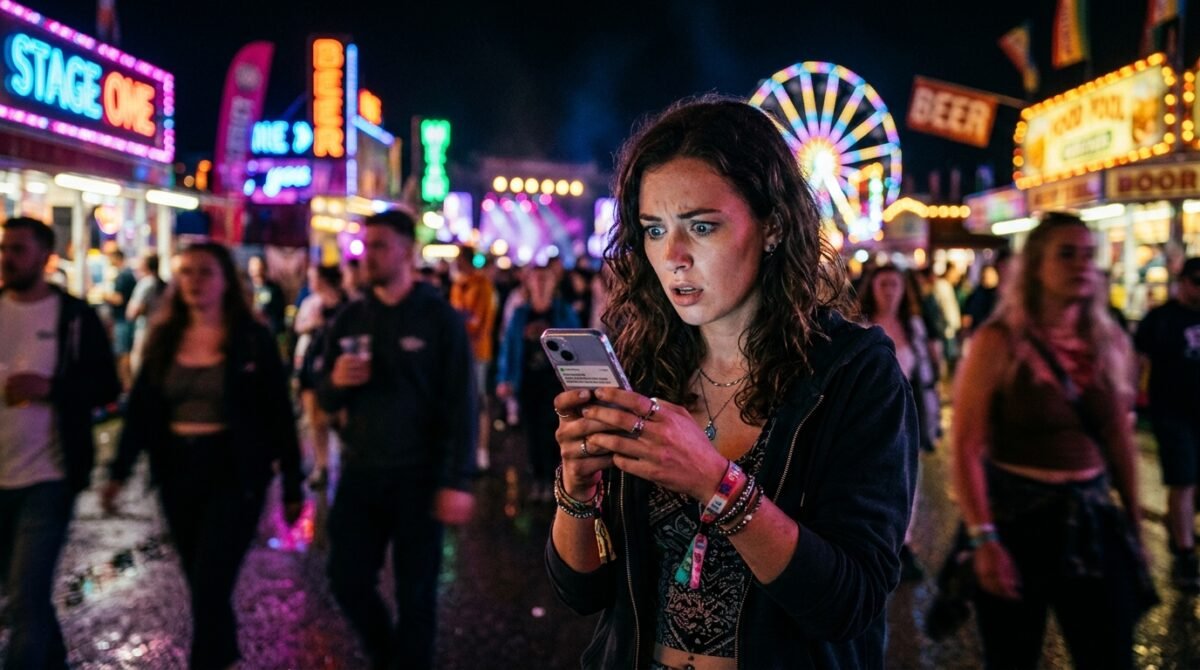
We have all had that one friend who believes the rules of the world exist purely as suggestions, but for Sarah, social etiquette was something that happened to other people. Our friendship spanned a decade, built on shared college memories and the occasional weekend getaway. I had spent months planning for the ‘Solstice Sound’ festival, a boutique, high-end event where tickets are invitation-only and strictly non-transferable. I had worked directly with the organizers to secure a VIP package that included a backstage meet-and-greet with my favorite artist.
The trouble began exactly three weeks before the event. Sarah, who had never expressed an interest in this particular genre of music or the festival itself, suddenly decided she needed to attend. Why? Because the guy she had been talking to on Tinder for exactly four days had mentioned he would be in the city, and she wanted to ‘impress him with an exclusive experience.’ When she asked to borrow my passes, I assumed it was a misunderstanding of how the event worked. I was wrong.
What followed was an escalating campaign of emotional manipulation, gaslighting, and eventually, a total collapse of our friendship that left my phone buzzing with vitriol for seventy-two hours straight. The demand wasn’t just for a ticket; it was a demand for my reputation, my financial investment, and my personal safety. This is the story of how a casual Tinder date turned into a bridge-burning catastrophe that ended with me hitting ‘block’ across every platform I own.
Looking back, the signs were always there—the way she would borrow clothes and return them stained, the way she expected me to pick up the tab at dinners, and her general lack of respect for my time. But this? This felt like a crossing of a line that could never be uncrossed. The sheer audacity of expecting me to hand over a multi-thousand-dollar experience to someone she had met through a swipe, all while I was left standing on the curb, was a level of selfishness I wasn’t prepared for.
As I sit here now, weeks later, the silence in my life is palpable, but it is a peaceful silence. Yet, the fallout persists in the form of mutual friends choosing sides and the constant shadow of ‘what if.’ This isn’t just about a concert ticket; it’s about the realization that some people view their friends as assets to be liquidated for their own convenience. Let’s dive into the messy, complicated, and utterly ridiculous timeline of how this friendship went up in flames.
The Initial Request Dressed as a Favor
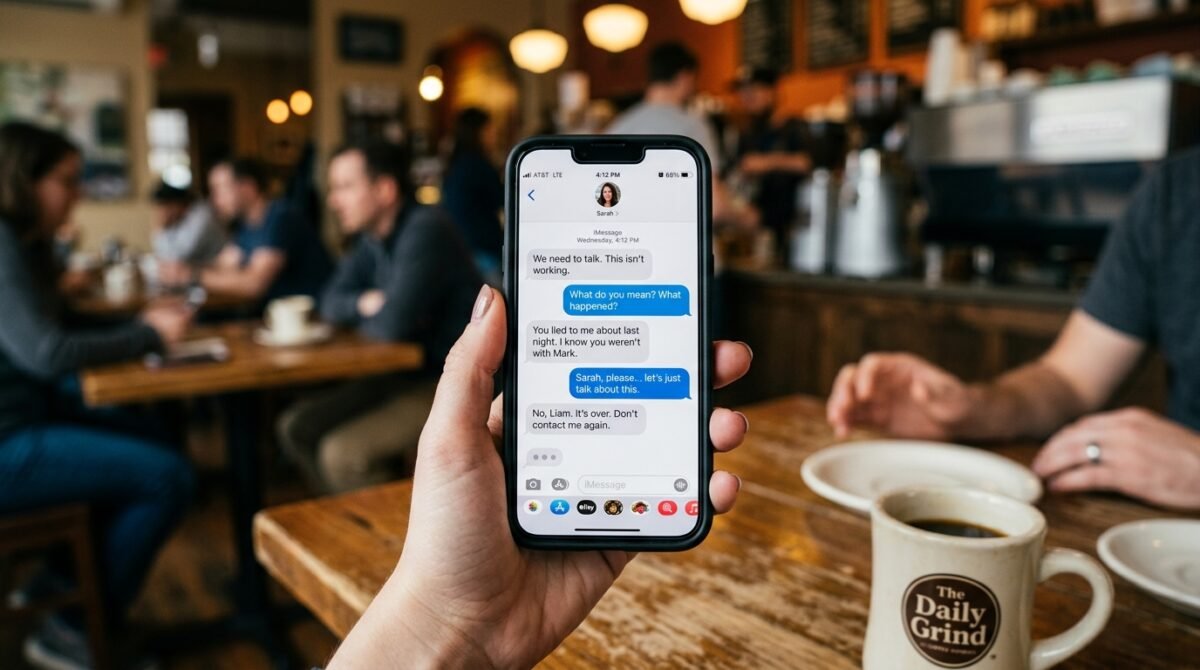
It started as a casual text on a Tuesday afternoon. Sarah sent a link to the guy’s Tinder profile—a generic photo of him hiking in Colorado—and asked if I could ‘swap’ my VIP pass for her to take him to the festival. I laughed out loud, thinking she was trolling me. I replied that the passes were digital, locked to my biometric ID, and non-transferable.
Her response was immediate: ‘Just tell them you’re sick and get a name change. You’re friends with the organizers, right? It’s just one night, and you can go to the next show. I really need to lock this guy down, he’s an investment banker.’ The coldness of her phrasing was jarring. She didn’t see a friend; she saw a resource to be exploited for a potential upgrade in her own dating life.
I explained, as calmly as I could, that I had paid four thousand dollars for this package and that the backstage access was tied to my specific security clearance. There was no ‘name change’ option. I was going to be meeting the artist, a dream I had held for years. Her response was a single thumbs-up emoji, which I should have recognized as the calm before the storm.
“I’m not asking you to give up your life, just the pass. If you’re a real friend, you’d want me to have this opportunity. He thinks I’m a VIP. Don’t make me look like a liar.”
— Sarah (Text Message, 4:12 PM)
I realized then that Sarah wasn’t asking; she was demanding. She was already framing our friendship around her ability to use me. The entitlement was thick, palpable, and frankly, sickening. I spent the next hour drafting a polite but firm ‘no,’ hoping that would be the end of it, but Sarah had other plans. She began sending me links to articles about ‘how to transfer event tickets,’ none of which applied to my specific situation, as if she were trying to convince me of my own reality.
The conversation quickly turned from a request into a lecture about how I ‘never do anything for her.’ It was a classic projection. I had been the one to help her move three times, the one to listen to her post-breakup meltdowns for hours, and the one who had literally lent her money for rent during her unemployment spell. To hear her claim I was a bad friend because I wouldn’t hand over a VIP pass for a man she barely knew was the ultimate insult.
The Escalation at the Brunch Table
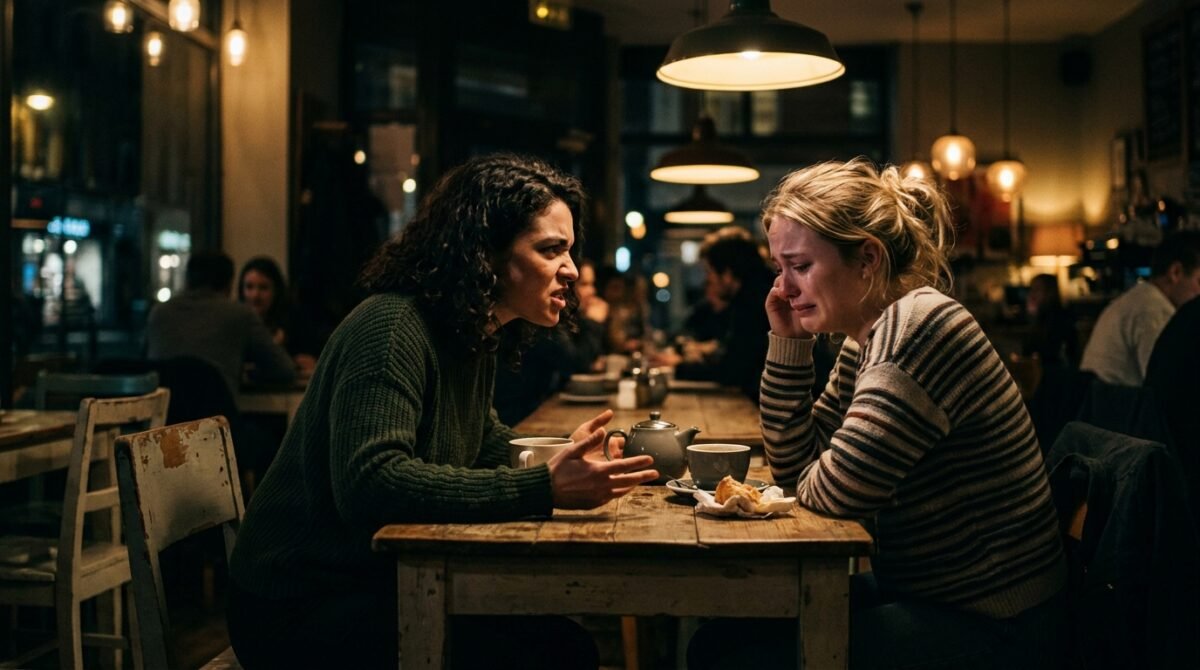
Things escalated to an in-person confrontation during our scheduled Saturday brunch. I had hoped to move past the topic, but Sarah arrived with a printed itinerary for her ‘date night.’ She had actually mapped out the festival schedule, marking the exact times she wanted to be backstage. It was bizarre, bordering on delusional.
When I sat down, she didn’t even order coffee. She went straight for the jugular. She told me she had already told the guy, ‘Mark,’ that everything was confirmed and that he was coming along as her guest. She had essentially committed social fraud using my identity, hoping I would be forced to comply to save her face.
“I already told Mark you’d be happy to let us take your spot. He’s going to be so impressed by your generosity. Don’t ruin this for me, I finally have a guy who has his act together.”
— Sarah, at the local cafe
I felt my pulse quicken. The audacity of her lying to a stranger using my credentials was beyond comprehension. I looked her dead in the eye and told her that she needed to call him immediately and retract the promise. I told her that if she tried to show up at the gate with my passes, she would be turned away by security and potentially blacklisted from the event grounds.
She started to cry—a calculated move she had mastered over the years. Other people in the café started looking over. It was a classic tactic: weaponized vulnerability to force me into submission. I didn’t budge. I paid for my own brunch, stood up, and told her that if she didn’t fix the lie, I would contact Mark myself to clear the air.
Her face dropped the act instantly, replaced by a sneer. She called me selfish, a ‘gatekeeper,’ and someone who didn’t want to see her happy. I walked out of the cafe leaving her with the bill, which was the first time I had ever stood up to her in a decade of friendship. The walk to my car felt like the first breath of air I’d had in a long time.
The Digital Stalking Campaign
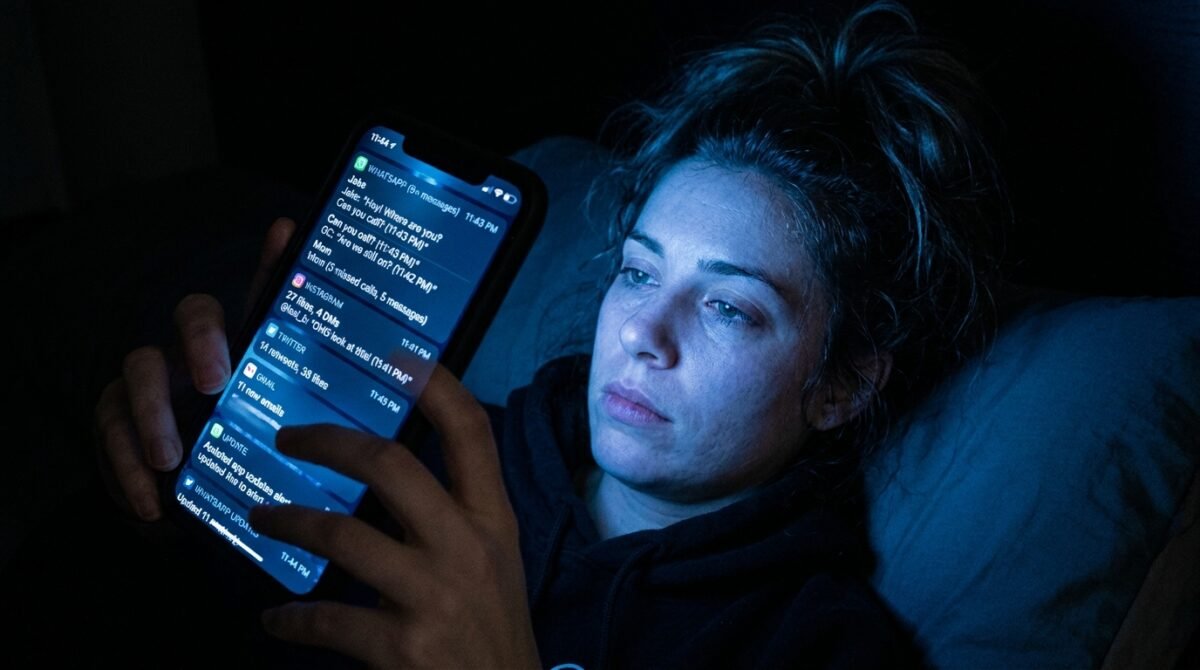
By Saturday night, the harassment began in earnest. My phone started vibrating every two minutes. Sarah was sending me voice notes, full of slurred words and insults. She had gone to a bar and was clearly trying to drown her ‘betrayal’ in gin. She threatened to show up at my apartment to ‘take’ the physical pass—which she knew didn’t exist in that form—and to tell all of our mutual friends what a ‘horrible, elitist person’ I was.
I took screenshots of everything. I knew this was going to get ugly, and I needed documentation. She even messaged my sister, trying to get her to intervene, claiming I was having a mental breakdown and refusing to share my resources. My sister, thankfully, knows Sarah’s games and simply told her to go to therapy.
“You have no idea what you’ve done. I’m going to make sure everyone knows you’re the kind of person who leaves their best friend out in the cold. Watch your back at the festival.”
— Sarah (Text Message, 11:45 PM)
This wasn’t just about a ticket anymore; it was an attempt to control my narrative. She wanted to isolate me from our social circle, to make me the villain so she wouldn’t have to face the consequences of her own lies. I didn’t respond to any of it. Silence is the most powerful tool when dealing with a narcissist, but the psychological toll was heavy.
I spent that night checking my locks and considering whether I should even go to the festival. Was it worth the drama? That was exactly what she wanted—for me to surrender my joy because she couldn’t have it. I decided then and there that I was going, and if she tried anything, security would be the one to deal with her. The shift in my mindset was profound; I stopped being a victim and started being a protector of my own boundaries.
The next day, she started commenting on my old social media posts, tagging people I knew and asking them to ‘help talk some sense’ into me. It was a desperate, public spectacle. I started blocking her on every platform, one by one, feeling a sense of relief with every tap of the screen.
The Mutual Friends Intervention
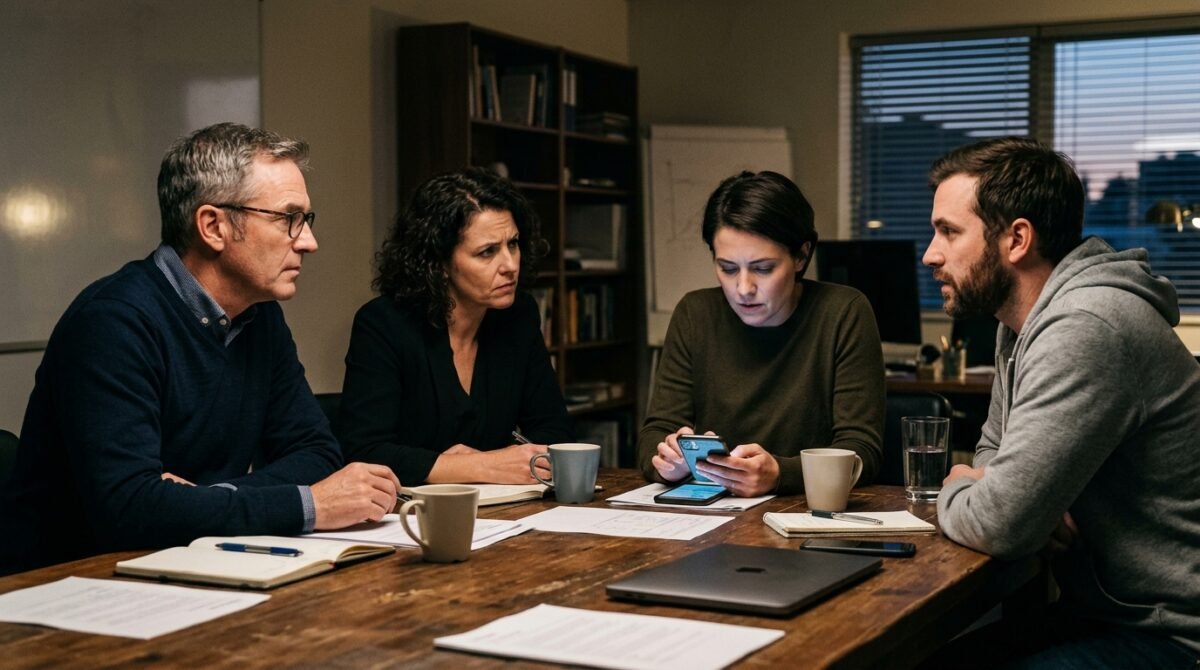
The fallout spread like wildfire. By Monday, two of our mutual friends had reached out, clearly sent by Sarah to act as mediators. They asked if I could just ‘give in’ to keep the peace. It was clear she had spun a masterfully manipulated version of the story: I was the one who promised her the pass and then reneged at the last minute.
I held a conference call with the two friends. I didn’t shout; I simply showed them the screenshots. The silence on the other end of the line was deafening. They had no idea she had been lying to her Tinder date, nor did they realize the pass was non-transferable. Once they saw the truth, their tone shifted entirely.
“I honestly thought she was hurt because you broke a promise. I had no idea she was trying to use your VIP status to scam a Tinder date. This is… well, this is honestly unhinged.”
— Mark (Mutual Friend, over the phone)
It was validating to be heard. It became clear that Sarah relied on the fact that people wouldn’t question her version of events. She banked on my passivity. By being transparent and showing the receipts, I had dismantled her campaign before it could really take hold. One friend, however, insisted that I should ‘just forgive her’ because she was ‘going through a hard time with her love life.’
I told that friend that a hard time in one’s love life does not grant license to harass, lie, and attempt to steal. The boundaries were set. I told them that as long as Sarah was part of the group plans, I would not be attending. It was a firm line, and it forced people to make a choice. It was the hardest part of the entire ordeal—seeing who would stand by the truth and who would choose the path of least resistance.
By the end of the day, three people had distanced themselves from Sarah. She had successfully burned her own bridges while trying to light mine on fire. It was a grim realization, but it confirmed that I had made the right decision. Friendship is a mutual contract of respect, not a hostage situation.
The Unannounced ‘Visit’ at My Office
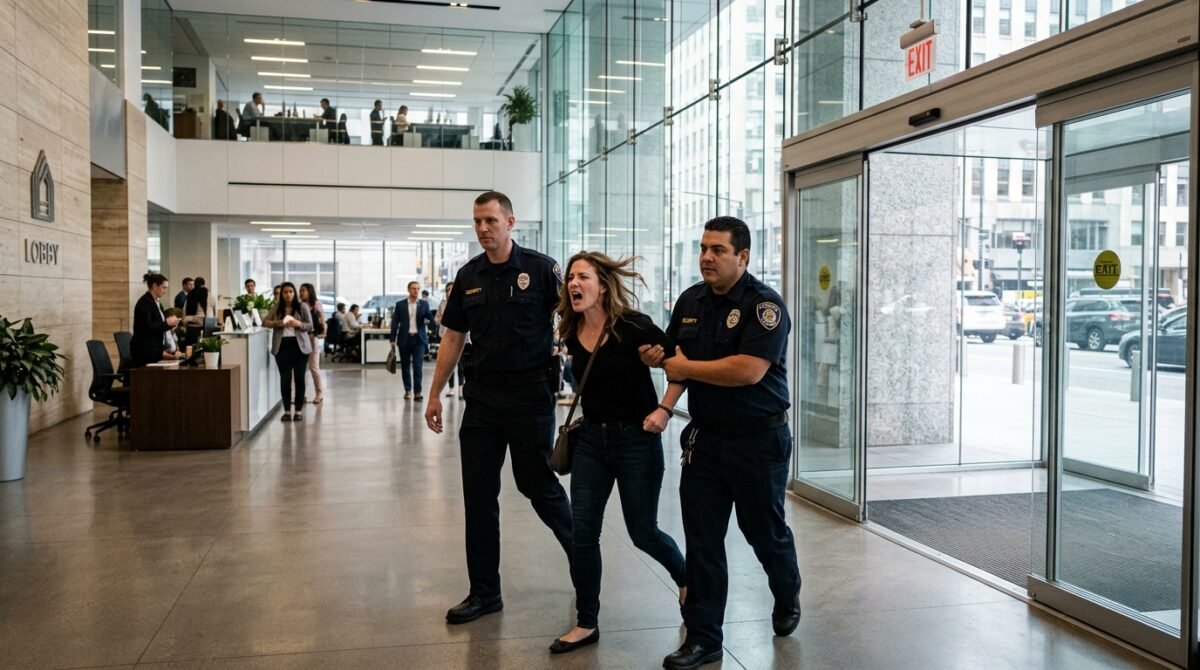
I thought the worst was over, but Sarah showed up at my workplace on Wednesday. She walked right past the receptionist, claiming she was a ‘close friend dropping off something important.’ She marched into the common area where I was working and stood there, creating a scene. She wasn’t holding anything.
She started talking loudly, saying, ‘I just want to talk about the concert!’ My coworkers were staring. I stood up and told her that this was a private office and she needed to leave immediately. She refused, saying she wouldn’t go until I agreed to ‘at least let her talk to the organizers’ for me. It was delusional. She truly believed that if she could just talk to the right people, they would bend the rules for her.
“I’m not leaving until you admit that you’re just being petty. Just call them for me. One phone call is all it takes to make me look like a star on this date. You owe me.”
— Sarah, inside the lobby
I called security. It was the most humiliating moment for me, having to have my friend escorted out of my workplace. She was shouting as they led her away, telling everyone I was a ‘controlling monster’ who didn’t want her to have a nice life. I apologized to my boss, who was surprisingly understanding, noting that they had seen people like Sarah before.
The incident was a turning point. It was no longer a disagreement; it was a security threat. I filed a formal report with my building management to ensure she couldn’t enter the lobby again. The sense of violation was intense. She had tried to reach into my professional world, the one space I kept entirely separate from my personal life.
That night, I received a barrage of emails from her, each one more unhinged than the last. She tried to frame her actions as ‘passionate’ and ‘determined.’ She really believed that her entitlement was a virtue. I didn’t read them all; I filtered them to a folder I never planned to open. I was done.
The Tinder Date Finds Out

The irony of the situation reached its peak on Thursday. I received a message on Instagram from a stranger—Mark, the Tinder guy. He had seen my story, which I had posted as a generic ‘don’t trust scammers’ update, and had somehow pieced it together. He was confused, having been told by Sarah that I was ‘the best friend who was so excited to meet him.’
I didn’t hold back. I sent him a detailed, calm explanation of the situation, including the fact that no VIP pass existed for him, and that Sarah had been using my name to manufacture a status she didn’t have. He was horrified. He told me that she had been bragging about her ‘connections’ to the festival for days.
“I thought she was a high-flyer. She’s been talking about this backstage access for a week. I’m canceling the date. Thank you for telling me the truth before I spent money on outfits and travel.”
— Mark (DM, via Instagram)
The date was canceled, and the fallout for Sarah was immediate. She had put all her eggs in the basket of this guy, and now that it was gone, she had no one to blame but herself. She sent me a final string of messages accusing me of ‘ruining her future’ by telling the truth. The irony was lost on her; she had ruined her own future by building it on a foundation of lies.
It was a strange feeling, being the one to pull the rug out from under her. Usually, I was the one trying to help her stand up. But there is a point where you realize that helping someone who refuses to help themselves is just enabling a downward spiral. I felt a sense of clarity. The drama was clearing, and for the first time in a decade, I didn’t feel responsible for her outcomes.
She tried to reach out through a burner account on Friday, but I had already set up filters. I didn’t need to see what she had to say. The story had reached its conclusion, not with a bang, but with a quiet, firm closure. I was going to the festival, I was meeting the artist, and I was doing it without the shadow of her entitlement looming over me.
Reflecting on the ‘Friendship’ Dynamics

In the quiet days leading up to the festival, I had time to look back at the last ten years. Sarah had always been the ‘main character’ in our friendship. I was the supporting actor, the one who provided the resources, the emotional labor, and the validation. This VIP pass incident was just the logical conclusion of a dynamic that had been skewed from the start.
I realized I had spent years justifying her behavior, thinking that ‘this is just how she is.’ We tend to hold onto toxic relationships because of the sunk cost fallacy—we’ve invested so much time and energy that we feel we can’t walk away. But the cost of staying was becoming higher than the cost of leaving. Every time I said ‘yes’ to her ridiculous demands, I was saying ‘no’ to my own needs.
The festival became a metaphor for this. It was an experience I had earned through hard work, planning, and genuine passion. Sarah wanted to bypass all of that and jump straight to the reward, simply because she felt she deserved it. That is a dangerous mindset, both for the person holding it and for those around them. My ‘no’ was the first time I had set a boundary that she couldn’t steamroll over.
“Boundaries aren’t about keeping people out; they’re about keeping your own integrity safe. You don’t owe anyone access to your hard-earned rewards just because you have a history together.”
— Wisdom from a therapist friend
It was painful, yes. Losing a friend of a decade is a form of grief. But it was a grief mixed with relief. I wasn’t just losing a person; I was losing the weight of her expectations. I was losing the constant need to police my own happiness so she wouldn’t feel ‘less than.’ It was the beginning of a lighter, freer chapter in my life.
I started noticing other friendships in my life and how much more balanced they were. There was no ‘taking’—only mutual support. I realized that I had been training people to treat me like a resource, and that had to change. The Sarah episode was the harsh wake-up call I needed to stop being the ‘easy’ friend and start being the ‘respected’ friend.
The Reddit Verdict: Community Weighs In
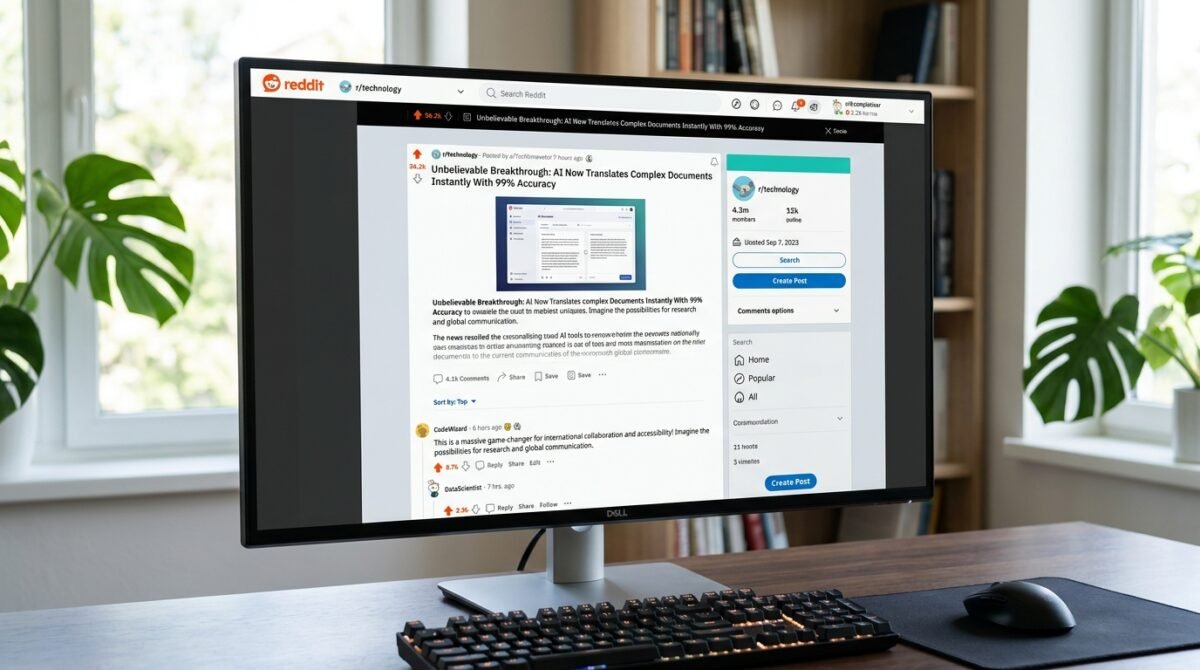
I posted the basic version of this story on a popular subreddit, wanting to know if I had been too harsh. The response was overwhelming. Within a few hours, the post hit the front page. Thousands of people weighed in, and the consensus was not what I expected. I thought I might be called a ‘gatekeeper,’ but instead, the community was entirely on my side.
The Reddit hivemind is often brutal, but it is also remarkably perceptive. They saw through Sarah’s ‘main character syndrome’ immediately. Comments poured in about the nature of toxic friends and the importance of saying ‘no.’ It was a community validation that helped me realize I wasn’t the monster she had painted me to be.
“She isn’t a friend, she’s a parasite. She saw you as an object to be used for social climbing. You didn’t lose a friend; you lost a heavy anchor that was holding you back. Congratulations on the promotion to a life without her.”
— u/User_JusticeSeeker (Top Comment, 32.5k upvotes)
“The fact that she involved your workplace proves she has no respect for your boundaries or your livelihood. Block her and never look back. Don’t worry about the ‘mutual friends’—the ones who don’t support your right to your own property are just more people you should cut out.”
— u/BoundaryWarrior (15.2k upvotes)
Reading these comments, I felt a weight lift. It was like seeing the situation through the eyes of a disinterested third party. The logic was clear: she was in the wrong, and I was simply protecting myself. The community highlighted that her attempt to use my identity to lie to a stranger was not just ‘being a bit much’—it was a form of fraud.
There were a few dissenters, of course, suggesting I could have ‘handled it better,’ but they were quickly corrected by others. The consensus was firm: when someone crosses the line of respect, you don’t owe them a gentle exit. You owe them the truth, and then you owe yourself the safety of distance. The experience of sharing the story online turned my private pain into a public lesson, and that felt like a win.
The Festival Without The Drama

When the weekend of the festival finally arrived, I felt a strange nervousness. Would she show up? Would she cause a scene at the gate? I had alerted the event organizers, and they were ready to handle any disruption. But as I walked through the VIP entrance, showing my ID and receiving my wristband, the air felt light. Sarah was nowhere to be found.
I spent the evening in the backstage area, watching the artists I loved, feeling the bass in my chest, and enjoying the fruits of my own labor. I met people who were there for the music, not for the status. It was exactly the experience I had paid for and worked for. I didn’t think about Sarah once, until I looked at my phone and saw a final, blocked notification from her.
“I hope you enjoyed your night of selfishness. You’re a horrible friend.”
— Sarah (Blocked Notification, seen later)
I deleted it without a second thought. The words no longer had power. They were just echoes of someone who was trapped in her own cycle of victimhood. The night ended with a beautiful performance, and I walked out of the festival grounds feeling entirely, unapologetically happy. I had reclaimed my joy, my space, and my agency.
The following week, I officially changed my phone number. It felt like the final step in closing the door. I reached out to the mutual friends who had stood by me and organized a small dinner, just us. It was a celebration of new beginnings, not a mourning of the past. The dynamic felt different—honest, light, and mutually supportive.
Life has a way of showing you exactly who people are if you pay attention. You don’t have to be the one to break the friendship; you just have to hold your ground. Eventually, the people who only value you for what you can give them will walk away on their own. It’s a harsh realization, but it’s the only way to make room for those who truly belong in your life.
Moving Forward: The Final Lesson

If there is one thing I learned from this entire ordeal, it’s that your boundaries are only as strong as your willingness to enforce them. For years, I had been ‘nice,’ which I now realize was just a code word for ‘pushover.’ I thought being a good friend meant sacrificing, but true friendship is about shared growth, not personal depletion.
Sarah is out of my life, and while the early days were filled with the residue of our history, that residue is fading. I’ve started focusing on my own projects, my own hobbies, and my own goals. I’ve realized that I have a capacity for joy that isn’t dependent on anyone else’s approval. The ‘VIP’ status of my life isn’t about exclusive passes; it’s about the exclusive company I choose to keep.
I often wonder what she is doing now. Is she still chasing guys on Tinder with fake stories? Is she still looking for the next ‘friend’ to exploit? It doesn’t matter. Her journey is no longer my business. I’ve stopped checking her social media, stopped asking after her, and stopped feeling guilty about it. The silence is my reward.
“You cannot heal in the same environment that made you sick. Sometimes, the most loving thing you can do for yourself—and even for them—is to walk away and close the door completely.”
— Reflection
To anyone reading this who is currently dealing with a ‘Sarah’—someone who thinks your resources are theirs for the taking—hear this: you are allowed to say no. You don’t need a justification, a reason, or a ‘nice’ way to say it. Your boundaries are not up for negotiation. Your life is your own, and you are the only one who gets to decide who has access to your time, your money, and your heart.
As I move forward, I am building a circle of people who respect the ‘no’ as much as they celebrate the ‘yes.’ That is the real VIP experience. It’s a life defined by mutual respect, clear communication, and the freedom to be exactly who you are without fear of being used. It’s taken a decade of drama to get here, but I wouldn’t trade this clarity for all the festival passes in the world.
Conclusion
Looking back at the whirlwind of the last few months, it is clear that the conflict over the VIP passes was never really about the music or the backstage access. It was a collision between two different worlds: one defined by the expectation of entitlement, and the other by the pursuit of personal integrity. The destruction of this friendship was a painful necessity, a clearing of the brush to allow for a healthier, more intentional life.
The lessons learned here are universal. We often feel obligated to preserve relationships that no longer serve us, simply because of the history we share. But history is not a down payment on future abuse. When we stop being ‘the easy friend’ and start being ‘the person who protects their own peace,’ we inevitably lose the people who relied on our weakness. That isn’t a failure; it is a fundamental correction of the trajectory of our lives.
I have emerged on the other side with a clearer understanding of what a real friend looks like. They are the people who respect your ‘no,’ who don’t treat your resources as their own, and who support your growth even when it means they aren’t the center of the show. I am grateful for the experience, as difficult as it was, because it forced me to finally stand up for myself. I am no longer waiting for permission to be happy, and I am certainly no longer accepting demands from people who don’t have my best interests at heart.
We want to hear from you. Have you ever had a ‘friend’ whose entitlement finally pushed you over the edge? How did you set the boundary, and what was the aftermath? Share your stories in the comments below—the community is here to listen and offer support.
What's your verdict on this dilemma?
Vote below to contribute to the official community consensus.

Have a Dilemma Keeping You Up at Night?
Share your real-life feud, wedding chaos, or relationship crossroads anonymously with our editorial team.
What do you think ?
0 Comments🛡️ Comments are moderated to protect community integrity. Your comment will appear once approved by the editorial team.