
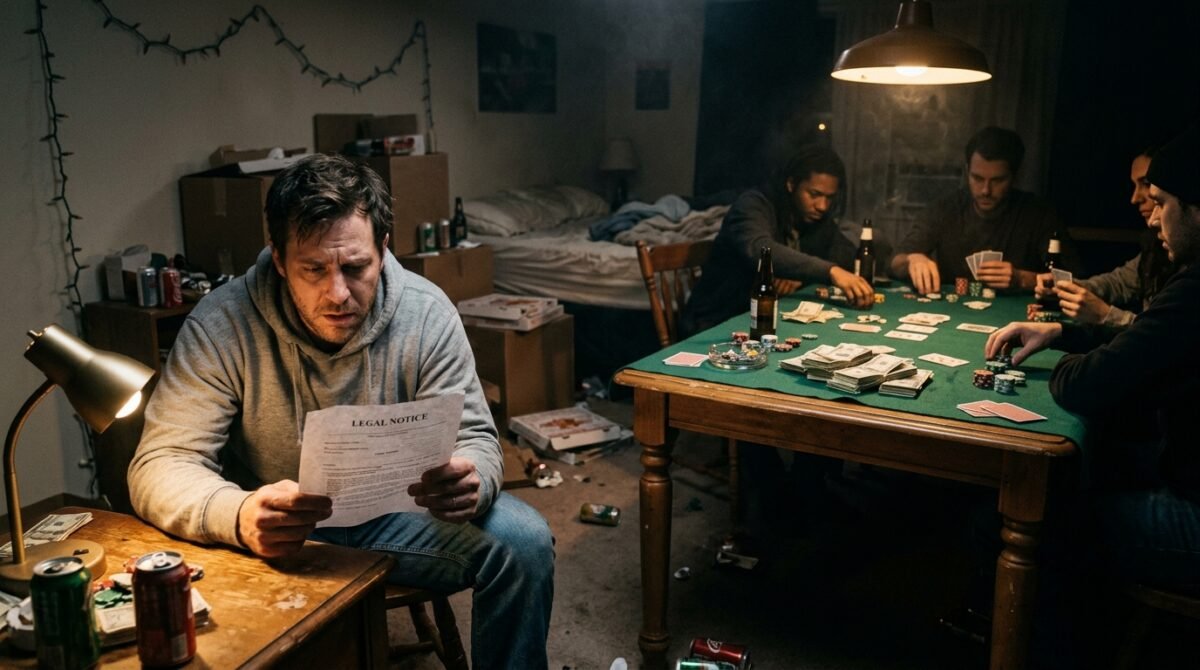
We all have boundaries, but for most of us, those boundaries include the unspoken rule that our private bedroom remains a sanctuary of sleep and solitude. I moved into this apartment with Marcus under the assumption that we were both busy professionals trying to keep our heads above water in a competitive city. For six months, the arrangement was seamless; we were like ships passing in the night, exchanging polite nods over the coffee machine and splitting the utility bills without a single argument. It felt like the ideal roommate situation, until the day I returned from a three-day business trip to find my door lock jimmied and my room smelling like stale tobacco and expensive bourbon.
The betrayal wasn’t just in the violation of my space; it was the sheer audacity of what had been happening behind that locked door. Upon further inspection, I found velvet table covers stuffed under my bed, a ledger filled with four-figure debt tallies, and the distinct, unmistakable feeling that my life had been put at risk for someone else’s greed. Marcus hadn’t just used my room; he had turned it into a hub for an underground, high-stakes poker circuit while I was away, hosting strangers I had never met.
When I finally confronted him, the casual indifference with which he treated the situation was the first sign that this was going to turn into a nightmare. He didn’t offer an apology; he offered a flimsy excuse about ‘maximizing the utility of the square footage’ and suggested I was being dramatic about the whole thing. He truly believed that as long as I didn’t see the mess, it didn’t count as a violation of my trust or my physical property.
Then came the knock at the door, two days later. It wasn’t Marcus, and it wasn’t the landlord. It was a process server handing me a stack of papers that made my blood run cold. I was being named as a co-defendant in a lawsuit regarding a gambling debt gone south, involving injuries sustained on the premises. The walls of my quiet, professional life were crumbling, and I was being dragged into the chaos of a secret criminal enterprise I didn’t even know existed.
This is the story of how my roommate, a man I barely knew, weaponized my personal space and left me to fight a legal battle that threatened to destroy my financial future. It is a cautionary tale about the illusion of privacy and the devastating cost of being too trusting of those with whom you share a roof.
The Three-Day Business Trip and the Broken Lock
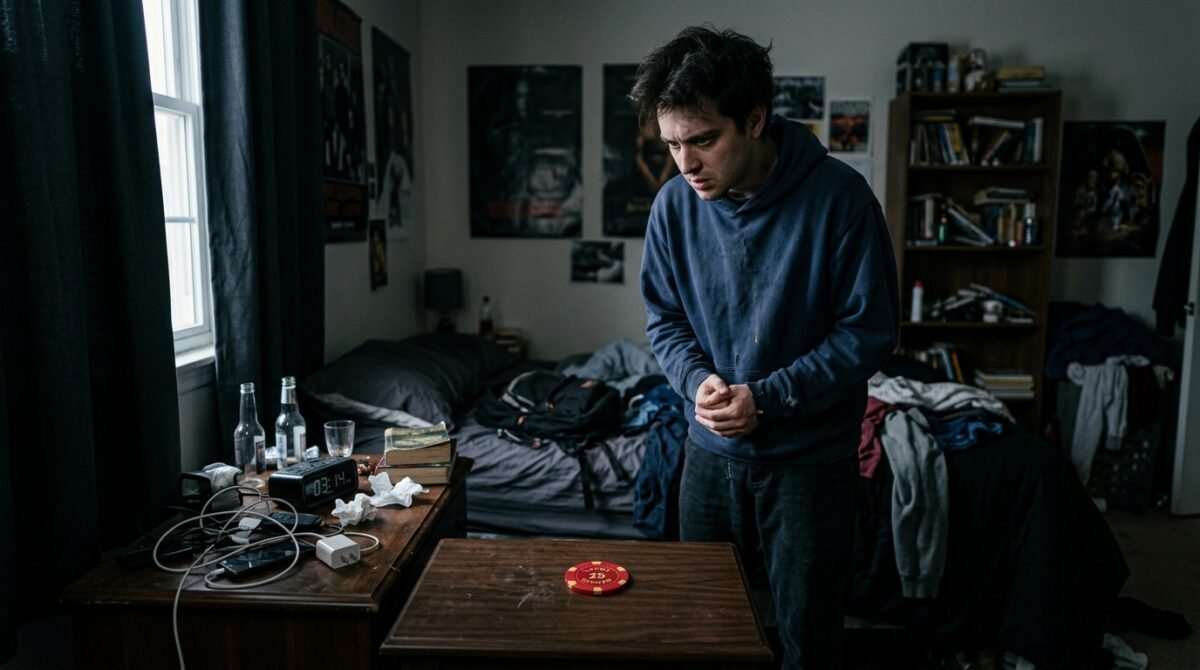
The realization began with a simple, jarring sound: the metallic click of a deadbolt that didn’t sound right. When I pushed my bedroom door open, the air hit me like a physical wall. It was thick with the scent of cheap cigars and a metallic, sweet perfume I didn’t recognize. The room, which I had left meticulously organized, was in a state of disarray that felt intentional.
My gaming chair was pushed to the corner, its leather scarred by what looked like cigarette burns. On my nightstand, a pile of poker chips sat in a neat stack, accompanied by a glass of amber liquid that had left a permanent ring on the wood surface. I felt a cold knot form in my stomach, a primal sense of intrusion that bypassed logic and went straight to my fight-or-flight response.
I immediately checked my hidden floor safe—the one where I kept my passport and emergency cash. The safe was still there, but the digital keypad was smudged with fingerprints, and the casing had been pried at, though luckily it held. The violation felt total. I wasn’t just a tenant anymore; I was a victim of a crime committed by the person I trusted to watch over the apartment while I traveled.
“I just needed the space for a few nights, man. It’s not like you were using it. You were out of town, and the guys needed a quiet spot away from the casino surveillance.”
— Marcus, during the initial confrontation
When Marcus finally walked through the front door, he didn’t look guilty. He looked annoyed that I had returned a day early. He leaned against the doorframe, sipping a smoothie as if we were discussing whose turn it was to buy dish soap, rather than the fact that he had run a gambling den in my private sanctuary.
“You have no idea what you’ve done,” I said, my voice trembling with suppressed rage. “You brought complete strangers into my bedroom. My personal property is damaged, my room is trashed, and you have the nerve to act like this is a normal roommate disagreement?” Marcus just shrugged, pulling out his phone to check a message, completely checking out of the conversation. The detachment was chilling.
The Ledger of Secrets and the $12,000 Debt
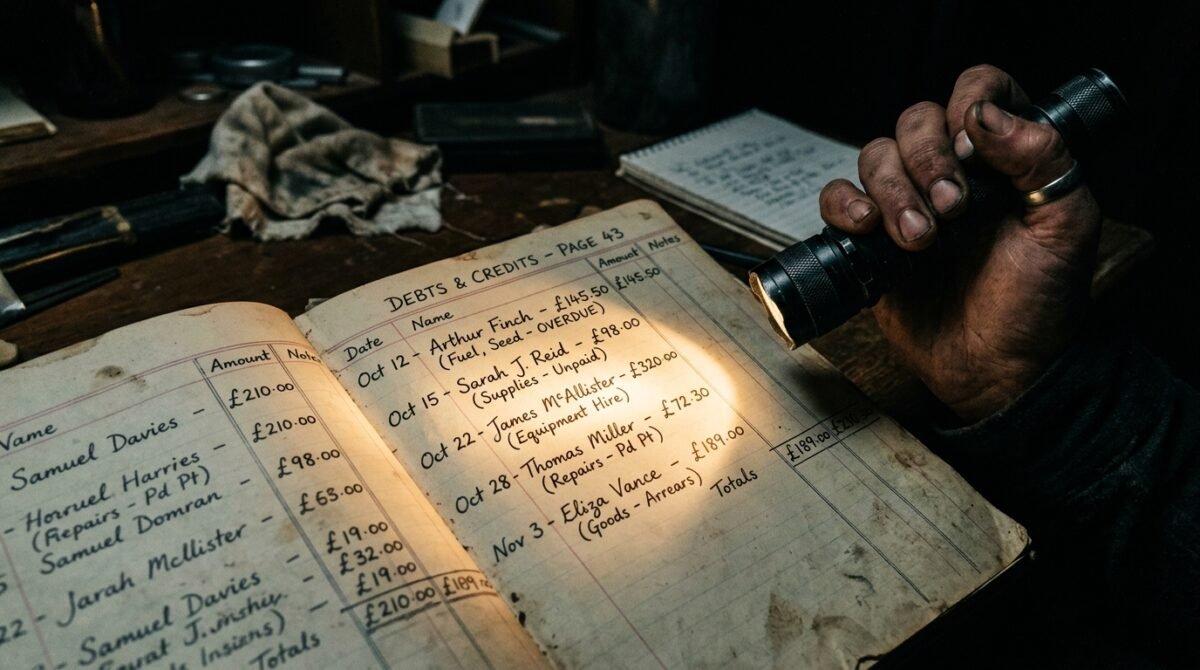
Once the initial shock subsided, the cleanup revealed the true scale of his hubris. Taped to the underside of my desk, I found a leather-bound notebook. It wasn’t a journal; it was a transaction ledger. Names I didn’t recognize were listed alongside amounts that made my eyes water. Some rows showed ‘Paid’ in bold marker, but others were marked with ominous question marks and dates that went back months.
The total sum of ‘outstanding markers’ listed in the book exceeded twelve thousand dollars. This wasn’t a friendly game of cards between buddies; this was a professional-grade operation. Marcus had been using our apartment as a neutral ground to avoid the prying eyes of local authorities and rival gamblers. Every time I had been ‘at work’ or ‘at the gym,’ he had been hosting these high-stakes sessions in my room.
I started cataloging the items missing or damaged. My custom-made desk, my ergonomic chair, and even my duvet cover had been subjected to the chaotic environment of a late-night gambling circle. Every piece of fabric smelled like a casino floor, and the emotional toll of knowing that strangers had been sitting on my bed, handling my belongings, and discussing illegal financial transactions was overwhelming.
“You think this is just a poker game? These guys are heavy hitters. One of them is a known enforcer for a local bookie. If we don’t settle the book, they aren’t coming for me, they’re coming for the apartment.”
— A text message from Marcus sent shortly after I confronted him about the notebook.
The realization that I was now linked to these people—these ‘heavy hitters’—terrified me. I spent that night with my bedroom door locked and a heavy dresser pushed against the frame. I didn’t sleep. Every creak of the floorboards in the living room sounded like an intruder returning, and I found myself googling local tenant laws, trying to find a way to evict him before the situation escalated further.
I tried to call the landlord, but my hands were shaking so badly I couldn’t dial the number. How could I explain that my roommate had turned our living situation into a criminal enterprise? If the landlord found out, we would both be evicted, and I would lose my security deposit and my reputation. The trap was closing, and Marcus was the one who had set it.
The Process Server at 8:00 AM
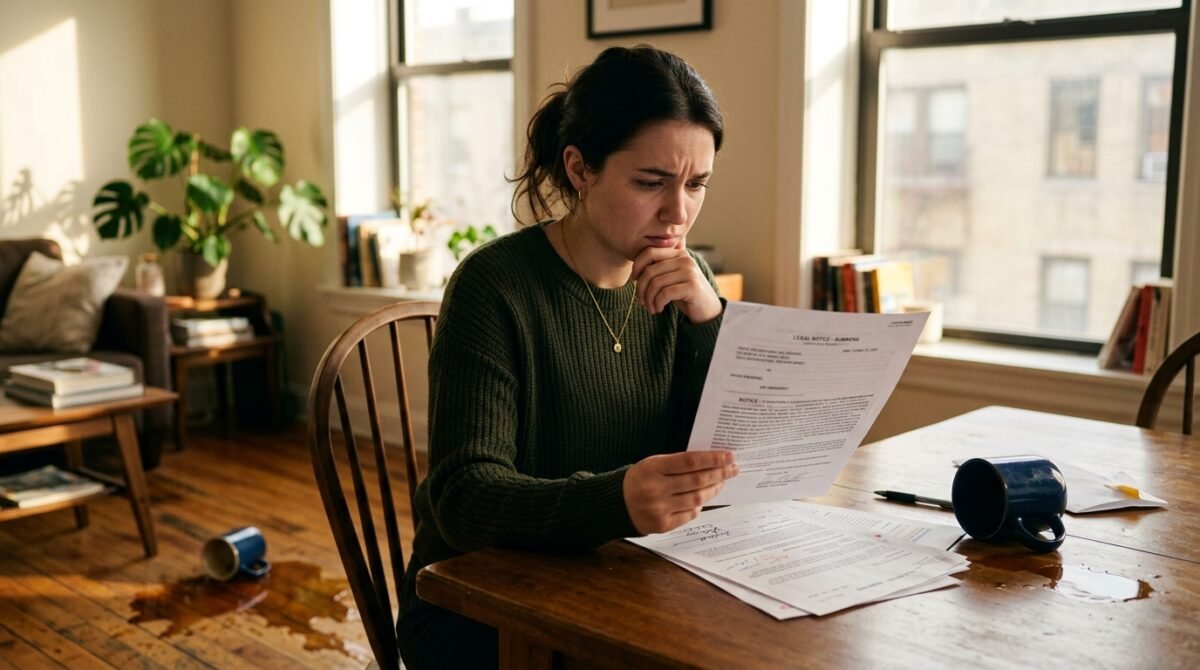
It was a Tuesday morning, the kind of quiet, routine-filled start to the day that I desperately craved. I was pouring coffee when the doorbell rang. I expected a package, perhaps a grocery delivery. Instead, I opened the door to see a man in a rumpled suit holding a thick manila envelope. He didn’t say a word; he just handed it to me and asked, ‘Are you the primary leaseholder for this unit?’
My stomach dropped. I confirmed my identity, and as he walked away, I opened the envelope. The header on the document read: ‘Civil Complaint: Negligence and Damages.’ The plaintiff was a man named Arthur Vance, a name I recognized from the ledger as one of the ‘high-stakes’ players. The claim alleged that during a game hosted at my address, an altercation had occurred resulting in severe injuries to Vance, and because the activity was sanctioned by the leaseholders, I was being held liable for the medical bills and damages.
I stood there in the hallway, the papers slipping from my fingers. It was preposterous, yet the legal weight of the document was undeniable. The lawsuit claimed that my roommate, acting as an agent of the household, had allowed an unsafe environment to fester, and therefore, I was complicit in the assault that had taken place during the game. The damages sought were astronomical—well into the five-figure range.
“I don’t know who this Vance guy is, but he’s a shark. He probably got into a fight somewhere else and is trying to pin it on me to collect insurance money. We just need to ignore it.”
— Marcus, attempting to play it cool while I was on the verge of a panic attack.
I called a lawyer immediately. The look on the attorney’s face when I explained the situation was one of pity mixed with professional alarm. He told me that while the case was likely frivolous in the long run, the cost of defending myself against these allegations would be significant. I was being sued for crimes I didn’t commit, in a place I didn’t want to be, all because I had picked the wrong person to live with.
The legal fees were already piling up before the first hearing had even been scheduled. I was looking at a future where my savings, my credit score, and my sanity were all being drained by a man who treated my life like a side hustle. The anger wasn’t just directed at Marcus anymore; it was directed at the system that allowed this to happen so easily.
The Virtual Town Hall of Internet Judgment

Desperate for a sanity check, I turned to the only place where anonymity allowed me to tell the truth: a popular subreddit dedicated to roommate nightmares. I typed out the story, my fingers moving faster than my brain could process. I needed to know if I was crazy. Was I actually liable for this? Could a roommate really destroy my life this thoroughly?
The response was immediate and overwhelming. Within an hour, I had hundreds of comments. Some were supportive, while others were brutally honest about the risks of being the ‘primary leaseholder.’ The internet, in its typical fashion, was a mix of legal advice, mockery of my choices, and genuine horror at the audacity of the situation.
“This is why you never, ever let someone else take over the primary lease. You are legally responsible for everything that happens on that property. Get a lawyer, document everything, and burn that bridge until it’s nothing but ashes.”
— u/LegalEagle88 (Top Comment, 18.2k upvotes)
Another user chimed in with, ‘I’ve seen this before. It’s not just about the poker game; it’s about the fact that they’re using your address for illegal activity. If the police raid that place, you’re the one who goes down for it, not him. Move out yesterday.’ Reading these comments was both validating and terrifying. I realized that my situation wasn’t just a ‘bad roommate’ story; it was a ticking time bomb.
I started printing out the comments, not because they were legal advice, but because they helped me organize the absolute absurdity of the narrative. Each comment was a reflection of the reality I was living in: the fact that I had been far too trusting, and that the modern world of shared housing had left me completely vulnerable to someone else’s sociopathy.
The thread became a repository of my own realization. People asked about the ‘legal loophole’ or the ‘poker mechanics,’ but the real focus was on the betrayal of trust. The community didn’t just see a roommate issue; they saw a violation of the fundamental sanctity of home. It made me feel less alone, but it also made the reality of the lawsuit feel even more crushing.
The Confrontation That Changed Everything
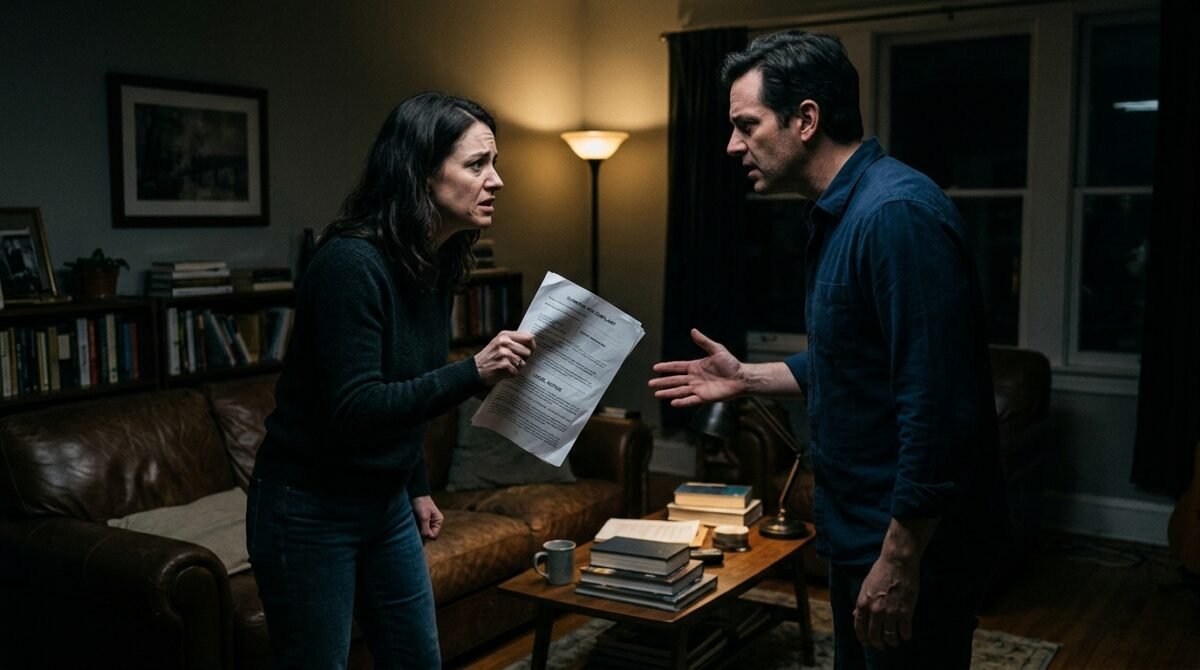
I knew I had to get him out, but the legal advice was clear: do not force him out until the lease situation was sorted, or I would be the one violating the contract. It was a catch-22 that felt designed to keep me in misery. I set a timer on my phone and walked into the living room, where Marcus was watching TV. I told him we needed to have a conversation, not as roommates, but as two people whose lives were currently tethered by a legal catastrophe.
I held up the lawsuit papers. ‘This is happening because of you,’ I said, my voice steady for the first time in weeks. ‘The plaintiff is suing me because of your poker game. If I lose this, I lose everything. I’m not asking you to leave anymore; I’m telling you that I’m working with a lawyer to have you removed for illegal activities on the premises.’
Marcus tried to laugh it off, but his eyes darted to the door. He knew that if I went to the landlord with proof of the illegal gambling, he wouldn’t just be evicted; he would be facing criminal charges. The power dynamic shifted in that moment. For the first time, he looked genuinely afraid. He realized that I wasn’t the pushover he had assumed I was for the past six months.
“You wouldn’t dare. If you go to the landlord, you’re just as guilty as I am. You signed the lease, you’re the one who paid the bills for the internet we used to host the games. We’re in this together.”
— Marcus, trying to use the ‘we’re in this together’ guilt trip to manipulate me.
I realized then that he had planned this dynamic from the start. He had purposely tied our finances and our lease together so that I would be afraid to report him. It was a classic abuser’s tactic—ensure the victim is as complicit as the perpetrator so that they have nowhere to turn. But my lawyer had already told me that as long as I could prove I had no knowledge and no participation, I would be safe from criminal charges.
I told him I didn’t care about the risk anymore. I would rather face the fallout of the truth than live another day in fear of what he was doing behind my bedroom door. I handed him a notice to vacate, drafted by my lawyer. The look of defeat on his face was the most satisfying thing I had seen in my entire life.
The Sunday Dinner That Never Happened

The week leading up to his departure was silent, heavy, and filled with the kind of tension that makes your jaw ache. We didn’t talk. We didn’t even acknowledge each other’s presence. I spent my time in my room, now equipped with a new, reinforced lock, and I spent my evenings documenting every piece of evidence I could find: the poker chips, the ledger, the cigarette burns on the carpet, the timestamps of the people entering and leaving.
I realized that in my attempt to be ‘low maintenance,’ I had been completely blind to the obvious signs. I looked back at the times he had mentioned ‘friends coming over for a movie night,’ and I realized how many times I had just walked past those people without a second thought. My desire for a ‘peaceful living situation’ had blinded me to the fact that peace is sometimes just a mask for chaos.
I felt a deep, profound sense of mourning for the apartment I thought I had. It was a space I had curated, a place where I felt safe to be myself. Now, it felt like a crime scene. I found myself scrubbing the floors, not just to clean them, but to erase the memory of the people who had been there. The smell of the tobacco lingered for weeks, a persistent reminder of the invasion.
“I just wanted a place to call my own. I didn’t think one person could ruin that for me in such a short amount of time. I really thought we were just two professionals living our lives.”
— My internal monologue recorded in my journal during the final week.
The Sunday before he left, I sat at the kitchen table, the very table where we had once shared a polite morning coffee, and I realized I hadn’t eaten a full meal in days. I was surviving on coffee and anxiety. The silence in the apartment was deafening, but it was a better silence than the one filled with the sounds of shuffling cards and hushed, aggressive voices.
I started looking for a new place, but the stigma of the lawsuit followed me. Every landlord asked why I was moving, and I had to decide whether to tell the truth or make up a lie. I realized that the truth was the only way to protect myself, even if it made me look ‘risky.’ It was a difficult lesson in the power of transparency in a world that often demands we hide our problems.
The Legal Discovery and the Truth Revealed

As the legal process dragged on, the discovery phase revealed even more than I expected. My lawyer was able to subpoena Marcus’s phone records and his bank statements. What we found was a network of gambling that extended far beyond our living room. Marcus wasn’t just a host; he was a ‘bookie’s apprentice,’ managing the accounts for a much larger, more dangerous criminal organization.
The plaintiff, Arthur Vance, wasn’t just a player; he was a disgruntled customer who had been cheated in a game and was trying to claw back his losses by suing anyone associated with the apartment. The lawsuit was a shakedown, pure and simple. Knowing this changed the entire strategy of our defense. We weren’t just fighting a claim of negligence; we were fighting an extortion attempt.
I felt a mix of relief and renewed anger. Relief that the legal system was finally seeing the truth, and anger that I had been used as a pawn in this game. The financial cost was still mounting, but the path forward was becoming clearer. My lawyer was confident that we could get the case dismissed if we could prove that Vance knew the nature of the illegal activity.
“The entire case is built on the premise that you were a silent partner in this enterprise. We can prove that you were explicitly excluded from the games and that you were the victim of a residential trespass. The lawsuit will fold once we present the evidence.”
— My lawyer during our strategy session.
The stress of it all began to manifest physically. I had migraines, I couldn’t sleep, and my work performance started to suffer. I realized that this wasn’t just a legal battle; it was a battle for my own mental health. I had to learn how to compartmentalize the stress, to separate the reality of the court case from the reality of my daily life.
The most important thing I learned during this time was to stop apologizing for things that weren’t my fault. I stopped saying ‘I’m sorry’ to the landlord, to my employer, and to my friends. I started saying, ‘This is what happened, and I am dealing with it.’ It was a small shift, but it changed how I perceived myself. I wasn’t a victim; I was a person handling a difficult situation with integrity.
The Final Departure and the Aftermath

The day Marcus finally moved out was the most anticlimactic event of the entire ordeal. There was no big blowout, no final confrontation. He just packed his bags, took his poker chips, and left. He didn’t even look back. The apartment felt instantly lighter, the air cleaner, the silence finally peaceful instead of heavy.
I immediately changed the locks, the key code, and even the layout of the living room. I wanted to reclaim every inch of the space. It took me a week to repaint the bedroom walls and deep-clean the carpets. I wanted the past to be physically removed from the environment. I realized that my home was a reflection of my inner state, and I needed to cultivate a sense of security that was unshakable.
The lawsuit eventually reached a settlement phase. Because we were able to prove that the plaintiff had knowingly engaged in illegal activity on the premises, the court dismissed the case against me with prejudice. It was a victory, but it felt hollow. I had spent thousands of dollars and months of my life fighting a battle I never should have been involved in.
“You won, but at what cost? You’re broke, you’re exhausted, and you’re still living in the same apartment where it all happened. Is it really a victory if you can’t look at your own bedroom without remembering the smell of those cigars?”
— A thought from my diary on the day the lawsuit was dismissed.
I realized then that the ‘victory’ wasn’t in the legal outcome; it was in the resilience I had developed. I had survived a betrayal that could have easily destroyed me, and I had come out the other side with a stronger sense of self-worth and a much better understanding of boundaries. I wasn’t the same person I was six months ago, and that was a good thing.
I eventually moved out of that apartment, too. I needed a fresh start, a place that didn’t have any associations with Marcus or the poker games. I found a small, quiet place where I live alone now, and I’ve never been happier. It’s expensive, but the peace of mind is worth every single penny.
Reflecting on the Trust We Extend to Others

Looking back, the biggest lesson I learned was about the nature of trust. We are conditioned to be trusting, to give people the benefit of the doubt, and to believe the best in those we live with. But trust is not a default setting; it is something that should be earned, especially when it comes to the safety and privacy of our home.
I also learned that being the ‘easygoing’ roommate is a liability. It’s okay to have rules, it’s okay to have boundaries, and it’s okay to enforce them. If you’re living with someone, you are in a partnership, and that partnership requires communication and mutual respect. If those things are missing, you have every right to protect yourself.
The internet community, once so helpful during the crisis, became a place where I could share my experience and hopefully prevent someone else from going through the same thing. I saw so many comments from people who had similar stories, people who had been taken advantage of because they were ‘too nice.’ It made me realize that we are all part of a larger conversation about personal space and accountability.
“Never assume that someone else has the same moral compass as you. It’s not cynical; it’s a form of self-preservation. When you share your space, you’re sharing your life, and you need to be damn sure that the person you’re sharing it with is worthy of that trust.”
— A post I wrote for a community forum after the whole ordeal.
I still think about that ledger sometimes. I wonder where Marcus is now, and if he’s still running his games in someone else’s room. It’s a unsettling thought, but it’s no longer my problem. I’ve learned to let go of the anger and focus on the present, on the life I’ve built for myself, and on the people I trust to be a part of it.
Life is too short to live in fear, and it’s definitely too short to share your space with people who don’t respect it. I’m grateful for the experience, as painful as it was, because it forced me to grow. It taught me that I am capable of handling the unexpected, that I have a voice, and that I deserve a home that feels like a sanctuary.
Lessons for the Shared Living Economy

In an age where the ‘shared economy’ is the norm, we have to be more diligent than ever. From Airbnb to flat-sharing, the lines between our personal lives and our public obligations are blurring. We need to be aware of the legal and financial risks that come with sharing our space, and we need to take proactive steps to protect ourselves.
This means clear, written agreements that specify what is and isn’t allowed. It means regular check-ins about the state of the apartment, and it means being willing to have the difficult conversations, even if they make us feel uncomfortable. It’s not about being a ‘helicopter roommate’; it’s about being an responsible steward of your own life.
If you’re ever in a situation where you feel your boundaries are being crossed, don’t wait. Don’t hope it gets better on its own. Speak up, document everything, and if necessary, get out. Your safety and your peace of mind are worth more than any rent payment or any ‘easy’ living situation.
“The most expensive thing you can ever pay for is the price of silence when your boundaries are being violated. Don’t pay it. Your life is worth more than the comfort of avoiding a conflict.”
— A piece of advice I would give to anyone in a similar situation.
The story of the poker den is a part of my past now, a chapter that I’ve closed. It was a difficult journey, but it led me to a place of greater self-awareness and strength. And if there’s one thing I’ve learned, it’s that the most important thing you can own isn’t a house or an apartment; it’s the sense of security you carry within yourself.
I encourage anyone reading this to take a look at their own living situation. Are you happy? Do you feel safe? Do you trust the people you live with? If the answer is no, take action. Don’t wait for a crisis to define your boundaries. You are the only one who can protect your life, and you deserve a home that is truly your own.
Conclusion
My experience with the underground poker ring serves as a stark reminder that we must remain vigilant about the people we allow into our inner sanctums. While I initially felt ashamed for being so ‘naive,’ I have come to realize that I was simply a person trying to live with integrity in an environment that didn’t share my values. The legal battle, while draining, ultimately gave me the tools to reclaim my autonomy.
The aftermath of this ordeal has taught me that boundaries are not meant to keep people out, but to ensure that the people who *are* in your life treat you with the respect you deserve. Moving forward, I have embraced a much more cautious approach to my personal space, and I have found a profound sense of peace in living alone. The lessons learned here were costly in time and money, but the peace of mind I have today is truly priceless.
What about you? Have you ever had a roommate situation spiral into something completely absurd, or have you ever had to draw a hard line that changed your living situation forever? Let’s talk about it in the comments. Does the responsibility for the illegal activities in an apartment lie solely with the perpetrator, or does the leaseholder bear some of the blame for not knowing? Share your thoughts below.
What's your verdict on this dilemma?
Vote below to contribute to the official community consensus.

Have a Dilemma Keeping You Up at Night?
Share your real-life feud, wedding chaos, or relationship crossroads anonymously with our editorial team.
What do you think ?
0 Comments🛡️ Comments are moderated to protect community integrity. Your comment will appear once approved by the editorial team.