

They say that marriage is a leap of faith, but they never tell you that sometimes, that leap lands you directly onto a bed of broken glass. Mark and I had been together for four years. We were the ‘perfect’ couple—the ones who hosted the best dinner parties, the ones whose Instagram feeds were curated with effortless grace and high-end vacations. To everyone watching from the outside, we were the gold standard of modern millennial romance.
We had booked the venue, finalized the guest list for a destination wedding in Tuscany, and put down non-refundable deposits on a life that looked solid on paper. Premarital counseling was supposed to be the final formality, a series of boxes to check off before we stood at the altar. We viewed it as a nuisance, a hurdle created by my cautious mother, rather than a necessary excavation of our foundation.
Dr. Aris, our counselor, was known for his blunt, no-nonsense approach to financial and emotional transparency. He didn’t care about our aesthetic; he cared about our ledgers. From the very first session, he pressed us on the ‘unsexy’ parts of marriage: debt, savings, and long-term risk tolerance. Mark always smiled, cracked a joke about his ‘conservative’ portfolio, and steered the conversation toward our shared dreams of a brownstone in the city.
But by the third session, the mask didn’t just slip—it shattered. Dr. Aris pulled out a document that Mark had been forced to sign during an intake process he thought was merely procedural. It wasn’t a bank statement; it was a credit report that revealed a cavernous, six-figure wound in our collective future. The room went cold, and for the first time in four years, the silence wasn’t peaceful; it was deafening.
I looked at Mark, expecting the man I thought I knew. Instead, I saw a stranger, a man who had been gambling away our future while I was busy picking out invitations. I didn’t scream. I didn’t cry. I simply did what felt like the only logical thing left to do in that sterile, quiet room. I left the ring, took my coat, and exited the building, leaving the life we’d built behind.
The Illusion of the Perfect Portfolio

Mark was a financial consultant by trade. He spoke the language of compound interest, tax shelters, and diversified investments with the fluency of a native speaker. Throughout our relationship, I never worried about money because Mark managed it with an almost obsessive level of control. He handled our joint savings, moved money into high-yield accounts, and constantly preached the gospel of fiscal responsibility.
I trusted him implicitly. Why wouldn’t I? He was the man who kept a spreadsheet of our grocery budget. When we bought a car together, he handled the negotiation and the financing. He convinced me that my money was better served in ‘his’ managed accounts, claiming that his professional connections allowed for better returns than I could achieve on my own.
Looking back, the signs were there, masked by his performative perfectionism. He would become agitated whenever I asked for a login to our joint accounts, claiming the bank’s interface was ‘glitchy’ or ‘under maintenance.’ He would deflect, insisting that I focus on my career while he took care of the ‘boring’ logistical side of our lives. It was an arrangement that felt equal in theory, but in practice, it was a one-sided monopoly of information.
I remember a dinner party where a friend asked about our investment strategy. Mark laughed it off with a charming quip about ‘aggressive growth.’ I felt proud then, thinking he was the mastermind of our secure future. Now, the memory makes me physically ill. He wasn’t building a future; he was funding a slow-motion catastrophe at a blackjack table while I was planning the color scheme for our bridesmaids’ dresses.
The irony of our premarital counseling was that Mark was the one who suggested Dr. Aris. He thought he could outsmart the process, perhaps hoping that by choosing a counselor who focused on ‘communication styles,’ he could avoid any deep-dive into our actual assets. He underestimated the professional curiosity of a man who makes his living digging for the truth.
The Three-Session Trap
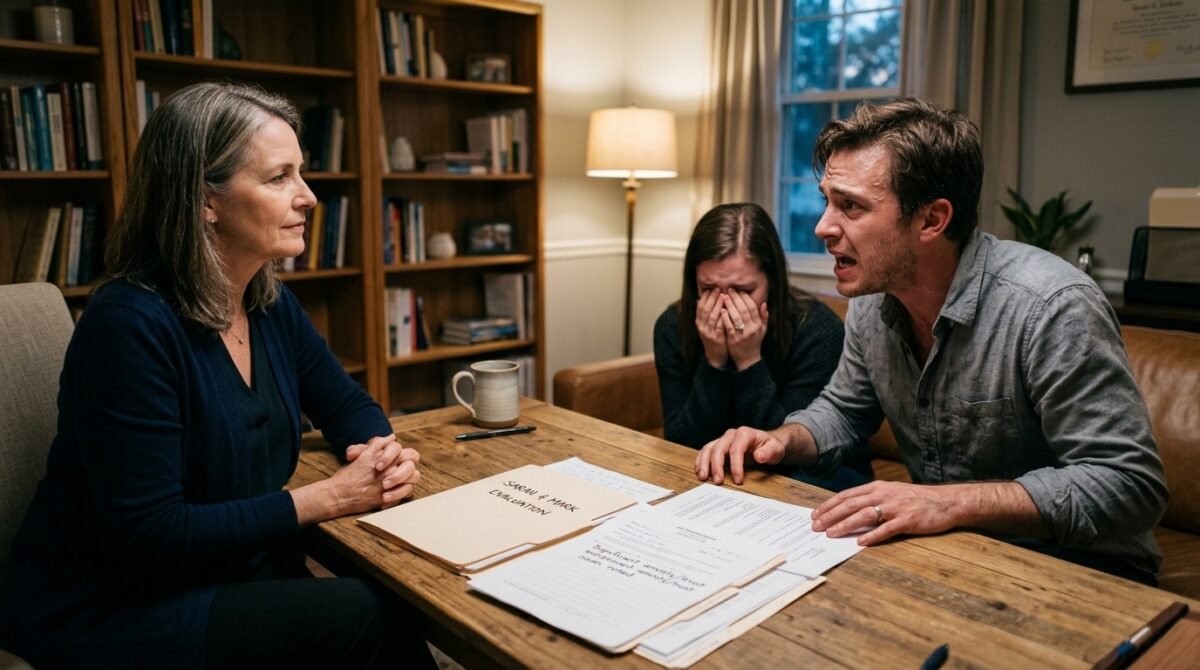
Our third session began with the usual pleasantries. Dr. Aris sat in his leather chair, a man who clearly had seen a thousand ‘perfect’ couples walk through his door and reveal their rot. He didn’t waste time on the surface-level stuff. He slid a folder across the mahogany desk that contained our combined financial snapshot, a document he had compiled from the records we were legally required to disclose for the marriage preparation curriculum.
Mark was already sweating, though I didn’t notice it until the very end. He kept shifting in his seat, his leg bouncing in a rhythmic, anxious tick. He made a comment about how the ‘figures looked a bit off,’ clearly trying to cast doubt on the data. Dr. Aris just smiled, a thin, tight expression that didn’t reach his eyes.
“Mark, I’ve reviewed these accounts. I see a recurring series of transfers to an offshore brokerage account, followed by substantial withdrawals at a casino-affiliated credit line. Can you explain the discrepancy of two hundred and forty thousand dollars?” The room felt like it had been vacuumed of all oxygen. I stared at him, my heart slamming against my ribs.
Mark tried to pivot. He started to explain it as a ‘high-risk venture’ that had gone sideways, using jargon to bury the reality of his gambling. He spoke about market volatility and liquidity issues, but his voice was trembling. I looked down at the paper and saw the truth—the withdrawals happened every single weekend for the last eighteen months, usually at 3 AM.
“You said we were saving for a home, Mark. You said you were moving money into a down payment fund. Where is that money? Please, look at me and tell me the truth.”
He couldn’t look at me. He looked at the floor, then at the doctor, then at his own hands. The silence stretched for an agonizing minute, broken only by the hum of the air conditioner. It was the moment the relationship died. It didn’t end with a bang, but with the cold, hard realization that every promise he’d ever made to me was a lie built on a foundation of debt and addiction.
The Sound of a Ring Hitting Wood

The realization washed over me in waves of nausea. I thought about the wedding venue deposits, the non-refundable dress, the flight tickets for family. I thought about the times I had apologized to him for not having enough ‘liquid cash’ to cover an expense, even though I worked full-time. He had gaslit me into believing I was the financial burden, all while he was hemorrhaging our future.
I stood up. My legs felt heavy, as if I were moving through water. I didn’t say a word. I reached up, my fingers trembling as I pulled the platinum ring from my finger. It had cost him a fortune, or so he told me. Now, it just looked like a piece of metal, a heavy token of a debt-ridden lie. I placed it gently on the center of the desk, right on top of the damning bank statements.
“I think we’re done here,” I said, my voice sounding hollow and detached. Mark started to reach for my arm, a look of pathetic desperation on his face. He tried to speak, to offer some excuse about ‘getting it back’ or ‘making a killing’ in the next market cycle. I didn’t want to hear it. I didn’t want to hear anything ever again from him.
Dr. Aris stayed seated, his professional composure absolute. He didn’t intervene, but he also didn’t look away. He was witnessing the end of a lie, and perhaps, in his own way, he was proud of the outcome. I walked out of that office without looking back. The sound of the door clicking shut behind me was the most liberating noise I have ever heard in my life.
As I stepped into the hallway, I felt a strange sense of clarity. The grief would come later, I knew, but in that moment, there was only the pure, cold fire of righteous indignation. I was alone, I was potentially facing some financial fallout, but I was free. I was no longer an enabler, no longer a victim, and no longer a woman about to marry a ghost.
The Fallout: Texts from the Void
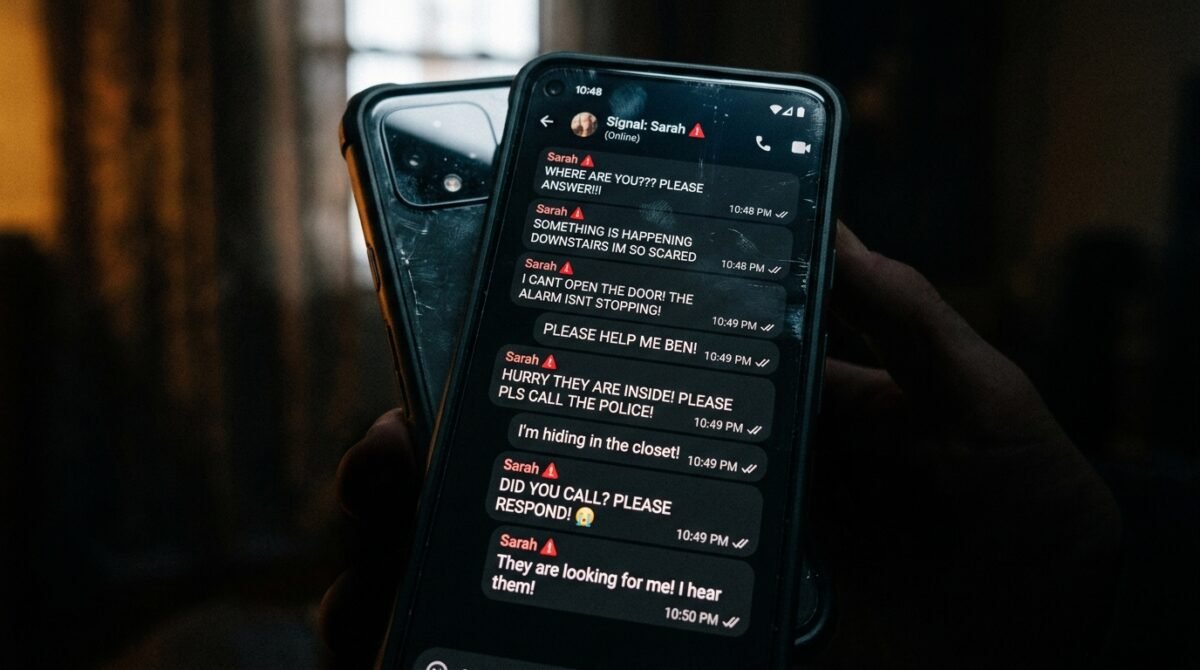
By the time I reached my car, my phone was vibrating incessantly. Mark was blowing up my notifications, alternating between frantic apologies, aggressive justifications, and outright denial. It was a masterclass in manipulation, condensed into a series of text messages that I would eventually screenshot and forward to my lawyer.
“Please, baby, just listen. I can fix this. I have a plan to double the remaining balance by Friday. Don’t throw us away because of a temporary setback. It’s not gambling, it’s investment. Please, just talk to me.”
— Mark (Text Message, 4:12 PM)
I didn’t respond. I knew that if I gave him an inch, he would try to claw his way back into my life, using every emotional lever he had. He would talk about our history, our ‘soulmate’ connection, and the shame of canceling the wedding. I had to remain a fortress of silence. I blocked his number, his email, and his social media accounts before I even put the car in drive.
Then came the messages from his family. His mother, who had always been a bit too involved in our affairs, started texting me about how ‘all men make mistakes’ and how I should ‘be the bigger person’ for the sake of the family reputation. It was sickening. They had clearly been told a sanitized version of the truth—or perhaps they were just enabling him as they always had.
I realized then that the gambling wasn’t just Mark’s addiction; it was a family culture. They valued the appearance of wealth and success over the reality of integrity. I sent a single, final text to his mother: ‘Mark has a two-hundred-thousand-dollar gambling debt he hid from me. If you want to support him, you can pay it. I am no longer involved.’ Then I blocked her, too.
The silence that followed was heavy, but it was mine. I went to a coffee shop, ordered a double espresso, and started the long, arduous process of untangling my life from his. It was time to find out exactly how much damage he had done to my individual credit score. I braced myself for the worst, knowing that in the world of financial betrayal, the truth is rarely as bad as the fear, but it’s always worse than you hope.
The Reddit Verdict: Echoes of the Collective

I posted about the event on a popular support subreddit, needing to vent the sheer absurdity of the situation. I expected maybe a few comments of sympathy, but I wasn’t prepared for the tidal wave of support—and the cautionary tales—that followed. Thousands of people shared their own experiences with financial gaslighting and secret debts.
“You saved your entire future in one afternoon. Don’t look back. The man you thought you knew never existed—he was just a mirror reflecting what you wanted to see. You left the ring, but you also left a lifetime of bankruptcy and misery. You won.”
— u/FinanceExpert99 (Top Comment, 32.4k upvotes)
Many commenters were surprised that the counselor was the one who uncovered it, rather than the couple during a ‘heart-to-heart.’ It sparked a massive debate on the role of premarital counseling and whether or not mandatory financial disclosure should be a legal requirement for marriage licenses. The conversation became a microcosm of the modern dating struggle—the fear of hidden traps in an age where everything is digital and easily masked.
Others were more cynical, focusing on the legal ramifications. They warned me about ‘joint liability’ and the potential for Mark to try and pin his debts on me. I took their advice to heart, immediately scheduling an appointment with a family law attorney to ensure that our ‘joint’ accounts were actually as partitioned as I thought they were. I was lucky; I had kept my own separate retirement account, but the damage to our shared assets was substantial.
There were also the trolls, of course, who claimed I was ‘overreacting’ and that ‘for better or worse’ meant I should have stood by him through his recovery. I ignored them. I knew the difference between a partner who hits a rough patch and a partner who sustains a years-long campaign of deception and financial abuse. This wasn’t a struggle; this was a heist, and I was the one being robbed.
The community support provided me with the strength to handle the inevitable phone calls from vendors. Canceling the wedding was a logistical nightmare, but every time I felt overwhelmed, I thought of the ring sitting on that desk. It was my anchor, the moment I decided that I was worth more than his secrets. I wasn’t just a jilted bride; I was a survivor of a very specific, very modern kind of betrayal.
The Financial Autopsy

The following weeks were a blur of bank statements, credit reports, and long, grueling meetings with accountants. I discovered that Mark had been taking out lines of credit in my name, a discovery that sent me into a state of pure, unadulterated rage. He hadn’t just gambled away ‘our’ money; he had stolen my identity to fund his fix.
I filed a police report for identity theft, a step I had hoped to avoid but realized was necessary for my own protection. The detective in charge of my case was sympathetic but grim. ‘This happens more often than you think,’ he told me. ‘The ones you trust are the ones who know exactly how to bypass your safeguards.’ It was a sobering, ugly truth.
I had to freeze my credit, dispute dozens of fraudulent transactions, and contact creditors to explain the situation. The process was humiliating, forcing me to expose my private affairs to strangers. But with every dispute I filed, I felt a layer of my old life sloughing off. I was reclaiming my autonomy, one transaction at a time.
Mark tried one last time to reach out via a mutual friend, begging me to drop the identity theft charges in exchange for a ‘repayment plan.’ He was still thinking in terms of deals, in terms of leverage. I told the mutual friend to tell Mark that the only deal I was interested in was his silence and his absence. If he didn’t stop, I would provide the full documentation of his fraud to the authorities.
The total amount he had siphoned from me and our joint accounts was staggering—a six-figure sum that took me years to accumulate. It was a devastating loss, but compared to the prospect of spending the rest of my life as a hostage to his gambling addiction, it was a price I was willing to pay for my freedom. I was broke, but I was clean.
The Wedding That Never Was
Tuscany was supposed to be the highlight of my life. Instead, it became a symbol of my naivety. I spent three days calling vendors, explaining that the wedding was off. Most were surprisingly understanding, having dealt with cancellations before, but the financial loss was unavoidable. I lost thousands in deposits, a reality that stung every time I saw a charge on my bank statement.
Friends reached out, some shocked, others supportive. I found out that some of his friends knew—or at least suspected—that he had a ‘problem.’ They had been covering for him, laughing off his ‘bad luck’ at the tables, never realizing the severity of the damage he was doing to the people who cared about him. It was a lesson in how easily a man can hide in plain sight.
I threw a ‘Not-A-Wedding’ party, a small gathering with my closest friends. We didn’t wear white; we wore whatever we wanted and drank cheap wine. It was cathartic. We didn’t talk about Mark. We talked about the future, about the things we were going to achieve now that I wasn’t carrying the dead weight of a crumbling relationship. I laughed until my sides hurt, realizing that I was capable of joy without his approval.
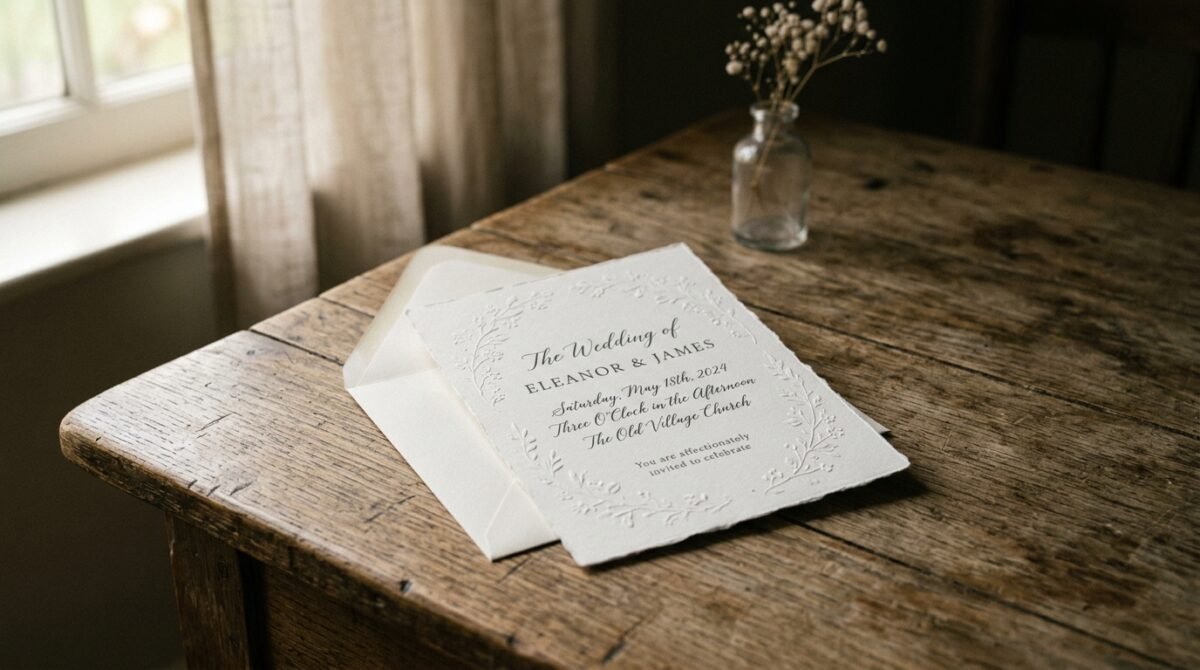
I kept the invitation I had kept for myself—a small, elegant piece of cardstock. Sometimes I look at it and marvel at how close I came to a life of perpetual anxiety. If I hadn’t pushed for that counseling, if I hadn’t chosen a professional who knew how to dig, I would have walked down that aisle and into a disaster. The card serves as a reminder: trust your gut, and always, always keep your finances separate.
The void he left in my life was quickly filled by my own ambitions. I applied for a new job, one that required more travel and more focus, and I got it. I started exercising, reconnecting with hobbies I had neglected for his sake, and rediscovered the woman who existed before Mark. She was a bit bruised, but she was stronger and far more cautious than the one who had bought into the ‘perfect’ life.
The Silence of the Aftermath

Months later, the silence is my favorite part of the day. I live in a small, cozy apartment that I pay for entirely on my own. I have no shared accounts, no joint debt, and no surprises. I wake up without checking his phone or worrying about the state of our credit. It is a quiet, simple, and honest existence.
I heard through the grapevine that Mark had moved back in with his parents. The story goes that he’s in some sort of recovery program, but the rumors about his ongoing gambling continue to circulate. It doesn’t affect me anymore. I don’t check his social media, I don’t ask about him, and I don’t care. He is a closed chapter in a book I’ve already finished reading.
I still see Dr. Aris sometimes, but for my own personal development. He told me during our last session that in his thirty years of practice, he had only seen a handful of people react the way I did. ‘Most people panic, they bargain, they stay,’ he said. ‘You chose yourself. That’s a rare and powerful thing.’
I’ve learned that the ‘perfect’ relationship is a myth. Every relationship has cracks, but some are structural, and some are just the nature of human connection. The key is knowing which is which. I’m no longer looking for perfection; I’m looking for transparency, integrity, and a partner who treats our shared future as a project, not a gamble.
The ring is still sitting on a shelf, somewhere deep in a closet. I haven’t sold it yet. Maybe I will, and donate the money to a charity for people dealing with gambling addiction. It feels like the right way to end the cycle—to turn the symbol of his betrayal into a tool for someone else’s healing.
The Lessons in the Ledger

If there is a takeaway from my journey, it is that financial intimacy is the most important part of any committed relationship. We talk about love, about compatibility, about shared goals, but we rarely talk about the brutal, boring, and essential reality of money. If you can’t be honest about your debts, your spending habits, and your fears, you aren’t ready to be married.
I want to tell every young person who thinks they have the ‘perfect’ partner: check the books. It’s not unromantic; it’s an act of love. It’s an act of respect for the future you’re planning to build together. If your partner gets defensive, if they hide information, if they treat you like a child when it comes to money—run. Don’t wait for a counselor to find the disaster; walk away before the disaster happens.
I am also incredibly grateful for the anonymous strangers who supported me during the hardest months of my life. Their stories helped me realize I wasn’t alone, and their encouragement gave me the courage to stand my ground when I wanted to crawl back into the comfort of my old, comfortable lie. We are all connected by our experiences, and there is power in being honest about our failures.
My advice to anyone currently in my shoes? Don’t be afraid to blow up your life if the life you’re in is already a lie. It’s better to have a messy, painful, and authentic end than a clean, quiet, and fraudulent existence. You are worth more than any commitment that requires you to silence your intuition.
I am moving forward now. I have a new life, new goals, and a new perspective on what it means to be happy. I don’t need a destination wedding or a curated life to feel whole. I just need my truth, and for the first time in years, I have exactly that.
A Final Reflection for the Community

I often look back at that final session and wonder what would have happened if I had stayed. If I had tried to ‘work through it,’ I would have been paying for his mistakes for the next twenty years. I would have been a co-signer on his ruin, a partner in his addiction. The thought makes me shiver, even now.
I chose the hard path—the path of starting over at thirty-something, of rebuilding my finances, of explaining to my family why the wedding was canceled. But it was the only path that led to me. Everyone told me I was ‘brave’ for walking out. I don’t think I was brave; I think I was just finished with being lied to.
The community support reminded me that we live in a world where everyone has a secret. Some are small, some are life-altering. The difference between a happy life and a tragedy is often just the honesty we bring to our closest relationships. I hope my story serves as a reminder that it is never too late to walk away, to leave the ring on the desk, and to reclaim your future.
I’m finally at a place where I can talk about it without the sharp, stabbing pain of betrayal. I can look back at the woman I was with empathy, and at the man I almost married with indifference. That is the greatest gift of all—the indifference. It means I’ve finally let go.
What about you? Have you ever had a moment where you realized your entire reality was based on a lie? How did you walk away, and what did you learn about yourself in the process? I would love to hear your stories in the comments below. Let’s keep the conversation honest.
Conclusion
My journey from the ‘perfect’ couple to a liberated individual was paved with difficult truths, but it was the most important transformation of my life. I hope my story empowers anyone reading this to trust their instincts and demand the transparency they deserve.
Join the discussion: Have you ever discovered a secret that completely changed the trajectory of your relationship? Did you walk away, or did you try to salvage the situation? Share your experiences in the comments below—let’s talk about the hard truths we’ve faced.
What's your verdict on this dilemma?
Vote below to contribute to the official community consensus.

Have a Dilemma Keeping You Up at Night?
Share your real-life feud, wedding chaos, or relationship crossroads anonymously with our editorial team.
What do you think ?
0 Comments🛡️ Comments are moderated to protect community integrity. Your comment will appear once approved by the editorial team.