

We had spent eighteen months meticulously scouting the city for the perfect starter home. It was supposed to be our sanctuary, a place where Marcus and I would build a life, host holidays, and eventually raise children. We crunched numbers until our eyes blurred, saved every spare penny, and navigated the grueling, soul-crushing bureaucracy of mortgage applications together. Or so I believed.
The dream of homeownership, however, was quietly being hijacked behind my back. Marcus always described himself as a ‘family-first’ man. I admired his devotion to his mother, Elena, until that devotion morphed into a boundary-shattering entitlement that threatened to dismantle our entire future. He didn’t just want to support her; he wanted her to be a silent, permanent partner in my financial life without ever uttering a single word about it to me.
The revelation didn’t come in a dramatic screaming match at first. It came in a quiet, sterile office on a Tuesday afternoon, delivered by a notary public who was just doing her job. The ink was wet, the expectations were high, and the betrayal was cold enough to freeze the room. Standing there, facing a life-altering document, I realized that the man I was about to marry wasn’t my partner—he was an extension of his mother’s control.
This is the story of how I walked away from the closing table, the fallout of that decision, and the grueling, necessary process of reclaiming my life from a family unit that never intended to make room for me. It’s a lesson in financial autonomy and the heartbreaking reality that sometimes, love just isn’t enough to cover up the cracks in a foundation built on deceit.
The Silent Partner in the Fine Print
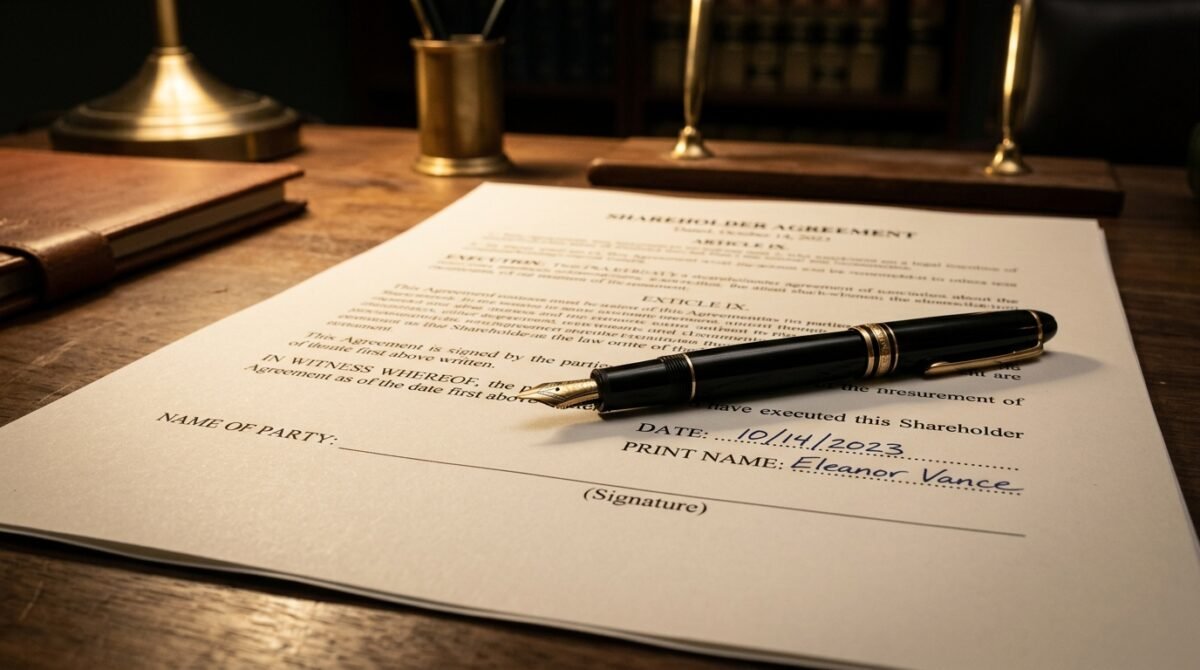
The morning of the closing felt like the culmination of every sacrifice we had made for the past two years. I had worked double shifts, skipped vacations, and tightened our monthly budget to ensure our down payment was pristine. Marcus had been ‘handling’ the final paperwork with the loan officer, a family friend of his mother’s, which in hindsight was the first red flag I chose to ignore because I trusted him implicitly.
As we sat in the conference room, the air felt thick with anticipation. My realtor was buzzing with excitement, and Marcus was uncharacteristically quiet, his leg bouncing nervously under the mahogany table. The loan officer slid a dense stack of papers toward us. I reached for the pen, ready to make our dream a reality, when my eyes caught a section titled ‘Co-Borrowers and Stakeholders.’
There, listed in clear, black ink right below ours, was Elena’s name. My heart hammered against my ribs. I looked at Marcus, my pulse quickening, but he was staring intently at his own hands. I flipped back to the title insurance page, and there it was again: a joint tenancy agreement that included his mother as a 33% owner of a property she hadn’t contributed a single cent toward.
“Marcus, why is your mother’s name on this document? Explain to me, right now, why she is listed as a co-borrower on a home she didn’t help pay for and won’t be living in.”
— Me, the moment the world stopped spinning
He finally looked up, his expression one of annoyed convenience rather than guilt. He sighed, as if explaining something to a slow child, and told me that because he had taken a loan from her for the ‘closing costs’—a loan I knew nothing about—she had insisted on being on the deed to ‘protect her investment.’ The audacity of the statement was suffocating.
I realized then that this wasn’t just a mistake or a misunderstanding. It was a calculated, deliberate act of financial manipulation. He hadn’t just asked his mother for money; he had sold a portion of our future autonomy to her, and he hadn’t thought my consent was worth requesting. The silence in the room became deafening as the legal professionals realized they were witnessing the end of a relationship.
The Three-Way Call That Ended Everything

I refused to sign. When I told the loan officer I needed a moment, Marcus tried to pull me into the hallway, his voice hushed and urgent. He told me I was being ‘dramatic’ and that it was just a ‘formality’ for the bank. I knew better. I took my phone out, dialed Elena, and put her on speakerphone in front of him. I needed to hear the truth from the source.
When she answered, she sounded perfectly pleasant, completely unaware of the bombshell I was about to drop. I asked her point-blank if she knew she was on the mortgage, and she didn’t hesitate. She launched into a prepared speech about how it was ‘common practice’ for families to look after one another and how she needed to ensure her son’s ‘future’ remained secure even if I were to ever leave him.
“Honey, it’s just security. Marcus is a young man, and he needs someone with experience to hold the reins on such a large purchase. You should be happy I’m involved, not suspicious.”
— Elena, over the speakerphone
I looked at Marcus, watching his face crumble as he realized I wasn’t going to play along with their little fantasy. He looked terrified—not of losing me, but of losing his mother’s approval and the financial safety net she provided. The realization that he was a puppet in a game I hadn’t agreed to play was the final nail in the coffin.
I told her, in no uncertain terms, that her name was coming off the document or I was leaving. She laughed, a cold, brittle sound that echoed through the speaker. She told me that if her name wasn’t on the house, the money for the closing costs—the money that was supposed to be a gift—would be withdrawn immediately. She was holding our home hostage.
Marcus stood there, trapped between his mother’s threats and my ultimatum. He didn’t defend me. He didn’t even try to find a compromise. He just stood there, waiting for me to cave. I didn’t. I stood up, left my copy of the un-signed papers on the table, and walked out of that office before the ink could even think about drying.
The Fallout in the Family Group Chat
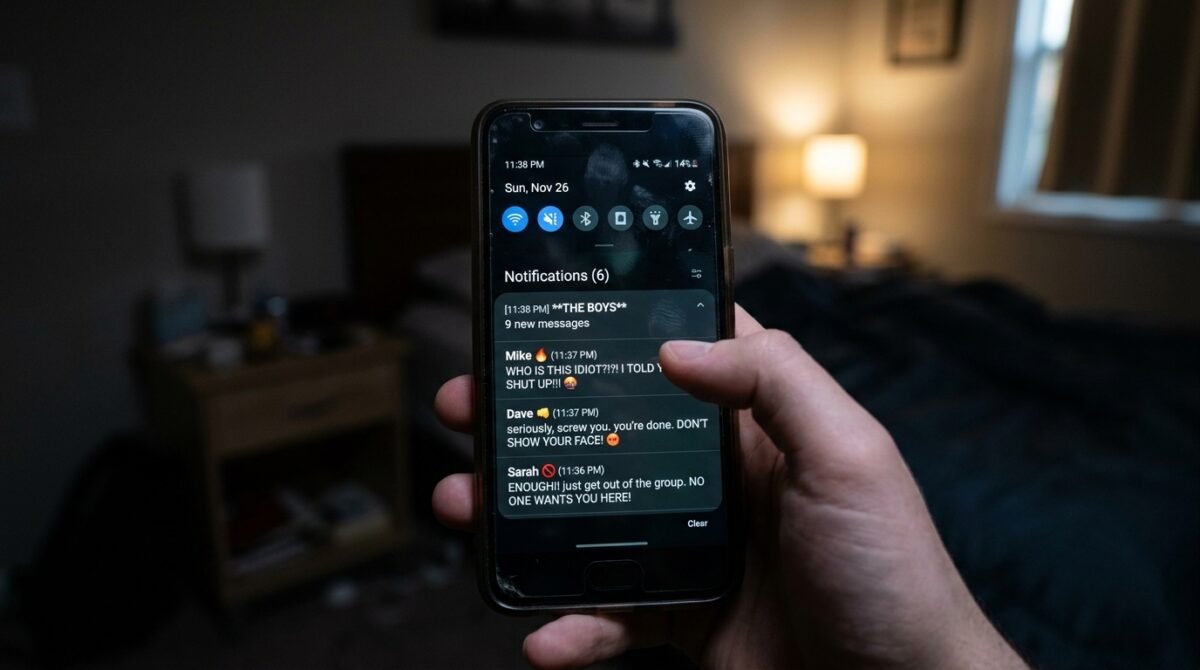
By the time I reached my car, my phone was vibrating incessantly. It was the family group chat—the one I had been reluctantly added to months ago, filled with memes about Sunday dinners and passive-aggressive comments about my career choices. It was blowing up. Elena had clearly been busy painting me as the villain of the century.
“Some people just don’t understand how family works. Truly ungrateful for all the help we offered. Sad day for Marcus.”
— Elena, in the family group chat
Then came the messages from his siblings, echoing her sentiment. They were accusing me of being selfish, of trying to ‘alienate’ Marcus from his mother, and of being a ‘gold digger’ who didn’t want to pay her fair share. It was a masterclass in gaslighting, orchestrated by a woman who couldn’t stand the idea of her son having a life that didn’t include her shadow.
I didn’t argue. I didn’t defend myself. I took screenshots of every single message, documenting the vitriol. I knew that one day, I would need this proof to show that my departure wasn’t a whim—it was an escape. The level of entitlement was staggering, and seeing it written out in text confirmed every suspicion I had harbored over the last few months.
Marcus sent me a private text shortly after. It wasn’t an apology. It was a demand for me to ‘come back and finish what we started.’ He said if I just ‘played along’ for a year, he would find a way to refinance her off the loan. He was still bargaining with the devil, and he expected me to be the collateral damage in that negotiation.
I blocked the group chat first, then the siblings, and finally, I looked at his name on my screen. I hesitated for a fraction of a second, remembering the man I had fallen in love with, before hitting ‘Block’ on him as well. The silence that followed was the most beautiful thing I had experienced in years.
The Reddit Trial: My Side of the Story

That night, sitting on the floor of my apartment with a glass of cheap wine, I posted my story to a popular sub-reddit. I needed to know if I was crazy. Was I really the villain for refusing to share a mortgage with my future mother-in-law? I typed out every detail, from the secret loan to the closing table ultimatum, leaving nothing out.
Within an hour, the post had thousands of views. The community reaction was swift, visceral, and almost entirely on my side. The validation I received wasn’t just about being ‘right’; it was about being seen, about having my boundaries validated by thousands of strangers who saw the toxic dynamic for exactly what it was.
“This is not just financial infidelity; this is a total lack of respect for your future together. You didn’t just walk away from a house; you walked away from a lifetime of being treated like a tenant in your own marriage. Run and don’t look back.”
— u/RealTalkAttorney, 32.5k upvotes
There were hundreds of comments like that. People sharing their own horror stories about overbearing in-laws and the financial traps they had been lured into. Some pointed out the legal nightmare I had narrowly avoided—the implications of a co-signed mortgage with a third party who had no obligation to the house but full rights to the equity. It was a terrifying perspective.
One comment in particular stood out, dissecting the ‘gift’ that was never a gift. They explained that by keeping his mother on the deed, Marcus was essentially ensuring he could never fully sever ties with her. It was a tether, and he had been more than happy to tie it around both our necks. The ‘community’ had become my therapy, my defense team, and my reality check all in one.
The thread became a repository for every doubt I had ever had. Every time I felt a twinge of guilt, I would go back and read the comments. They reminded me that I wasn’t the one who broke the engagement; the integrity of the relationship had been broken long before I reached the closing table. My decision to leave was the only rational response to a situation that had become fundamentally unsafe.
The Financial Breakdown: What Was Really at Stake

To truly understand the depth of the betrayal, I started mapping out the financial reality of what we were looking at. I created a spreadsheet, not to obsess over the numbers, but to clarify the extent of the deception. The ‘gift’ of the down payment wasn’t just money; it was a Trojan Horse designed to bypass my control over my own home.
| Category | The Agreed Plan | The Secret Reality |
|---|---|---|
| Down Payment | Savings from joint account | Borrowed from MIL with conditions |
| Title | Marcus and OP | Marcus, OP, and MIL (Joint Tenancy) |
| Mortgage | Two signatures | Three signatures (including MIL) |
| Control | Equal decision making | MIL as tie-breaker |
The table revealed the stark truth: I would have been the one paying for the mortgage, while Elena would have held the power to force a sale or claim equity if things went south. It was a setup that was rigged from the start. By including her on the mortgage, Marcus had given her a seat at the table of our most intimate life decisions, without me ever having a say.
When I looked at the columns, I realized I hadn’t lost a house; I had saved myself from a lifetime of financial servitude. The money I had saved would now go toward my own security, my own independence, and a future where I wouldn’t have to check with a mother-in-law before renovating a kitchen or choosing a paint color for the nursery.
I also realized the extent of the lie Marcus had been maintaining for months. He had lied about our budget, lied about the source of the funds, and lied about the legal structure of our ownership. Every single conversation we had about our future had been built on a foundation of omission. How could I have ever trusted him with my life when he couldn’t even be honest about a bank statement?
The financial breakdown wasn’t just about money; it was about the power dynamic. By refusing to include me in the ‘deal,’ he had effectively told me that my contribution was secondary, that my voice was optional, and that his mother’s comfort was the priority. I saw the numbers for what they were: a valuation of how little he actually respected our partnership.
The Confrontation That Finally Broke the Spell

A week after the failed closing, Marcus showed up at my apartment. He didn’t call first. He just pounded on my door, his face flushed, looking like a man who had lost his favorite toy. He was demanding to know why I had ‘ruined’ everything, why I couldn’t just ‘take one for the team’ and sign the papers to get the house closed. He was still in the mindset that this was all a misunderstanding I had blown out of proportion.
I opened the door, but I didn’t let him in. I stood in the threshold, a barrier between the life I was building and the toxicity he represented. I told him, calmly and clearly, that I was done. I told him that I wasn’t just walking away from the house; I was walking away from him. The look of genuine confusion on his face was almost comical if it weren’t so sad.
“You’re really throwing us away over a signature? You’re going to let a piece of paper destroy everything we’ve built because you’re too stubborn to share a little equity with my mom?”
— Marcus, at my front door
I laughed, a sharp, bitter sound. I told him it wasn’t about the equity; it was about the dishonesty. It was about the fact that he thought he could trick me into a situation that would give his mother power over our relationship. I told him that if he couldn’t see why that was a problem, he would never be the husband I needed.
He tried to argue, to minimize, to gaslight. He said his mother was ‘getting old’ and just wanted to feel ‘secure.’ I told him if she wanted security, she could buy her own house, but she wasn’t going to live in mine—metaphorically or literally. The shift in his demeanor, from pleading to aggressive, was the final confirmation I needed that I had made the right choice.
When I finally closed the door on him, I didn’t feel the crushing weight of heartbreak I expected. I felt a surge of adrenaline, a profound sense of relief. The man standing on the other side of that door was a stranger. He was someone who prioritized the whims of his mother over the trust of the woman he claimed to love. And that was a man I could no longer be with.
Reflecting on the Red Flags I Missed

Looking back, the warning signs were everywhere, scattered like breadcrumbs leading to this disaster. I remembered the way Marcus would always defer to his mother’s opinion on everything from the color of our couch to the city we should live in. I had dismissed it as him being a ‘good son.’ Now, I saw it as a symptom of a stunted emotional maturity that he never bothered to outgrow.
There were the times he would ‘accidentally’ mention his mother was coming over for dinner without checking with me, or the subtle ways he would compare me to her cooking or her cleaning habits. I had thought he was just venting, but he was setting a standard that I was expected to meet. The mortgage was just the climax of a long, slow erosion of my own agency within our relationship.
I had been so focused on being the ‘supportive partner’ that I hadn’t realized I was being groomed for a role that didn’t include my own voice. I was supposed to be the accessory, the one who worked and paid the bills but deferred the decision-making to the ‘real’ head of the household: Elena. It was a trap, and I had walked right into it with my eyes wide open.
The introspection was painful but necessary. I had to forgive myself for not seeing it sooner. I was young, I was in love, and I wanted to believe in the best version of the man I was with. I didn’t want to see the cracks because I wanted the house, the life, and the future so badly that I was willing to ignore the red flags waving in my face.
Now, I see those red flags as markers of my own growth. They weren’t just signs of his toxicity; they were signs of where my boundaries needed to be. I learned that trust isn’t an infinite resource; it has to be earned, and it has to be maintained through radical honesty. If I ever find myself in a situation where I feel ‘lucky’ to be with someone again, I’ll remember this moment and ask myself what price I’m actually paying.
The Legal Cleanup: Untangling the Mess

After the breakup, the legal cleanup was its own kind of hell. I had to consult with a lawyer to ensure that I had no liability for the ‘pre-closing’ costs that Marcus had incurred with his mother. I had to prove that I hadn’t signed any documents, that I hadn’t agreed to the loan, and that I had absolutely no claim to the property or the debt.
The relief when the lawyer told me I was ‘clean’ was immense. I was legally and financially insulated from the disaster that was currently unfolding for Marcus and his mother. I heard through mutual friends that the deal had fallen through entirely once the bank found out about the illicit arrangement, and that Marcus had lost his earnest money deposit. It was a steep price to pay, but it was his price, not mine.
There was a fleeting moment of sadness for him—for the loss of the dream, for the financial hit, for the fact that he was still trapped in the same loop with his mother. But that sadness was quickly replaced by a fierce sense of self-preservation. I had dodged a bullet that could have left me in financial ruins for years. I had protected my own future.
The process of untangling my life from his was more than just legal; it was emotional. I had to reclaim my sense of worth, to realize that I wasn’t ‘difficult’ or ‘stubborn’—I was a person with standards. I learned that saying ‘no’ is the most powerful tool a person can have in a relationship. If saying ‘no’ ends the relationship, then the relationship was never strong enough to begin with.
I’m finally at a place where I can look at the whole ordeal as a turning point. It was a crucible, a moment that burned away the illusions and left me with something more solid: a clear understanding of what I will never accept again. I am no longer the person who waits for permission to be heard. I am the architect of my own life, and the foundation is now built solely by me.
Rebuilding My Life, Piece by Piece

Life after the ‘Closing Table Incident’ has been a process of radical rediscovery. I moved into a studio apartment that I chose entirely for myself—not for its potential as a ‘family home,’ but for its light, its location, and the fact that I don’t have to share a single square inch of it with anyone unless I want to. Every piece of furniture I bought, every plant I placed on the windowsill, was a statement of independence.
I started focusing on my career, which had taken a backseat during the ‘house hunting’ frenzy. I realized I had been holding back, subconsciously avoiding promotions or travel that might upset the ‘home life’ Marcus and his mother had envisioned for me. Without that anchor dragging me down, I’ve felt a surge of energy and ambition that I hadn’t tapped into in years.
I also reconnected with friends I had neglected. They welcomed me back with open arms, and the shared horror at my story served as a bonding experience. I’ve realized that the most important relationships aren’t the ones you enter into with a partner, but the ones you cultivate with yourself and your community. The ‘family-first’ mentality Marcus touted was a lie; it was just ‘mother-first,’ and I’m much better off without it.
I still occasionally hear news of Marcus. He’s still living in his mother’s guest house, struggling to save for another property, and still dealing with the fallout of the failed closing. It’s not a life I envy. If anything, it’s a constant reminder of how close I came to a life of stifling obligation, and how lucky I am to have walked away when I did.
I’m finally dating again, but the criteria are drastically different. I’m not looking for a partner who wants to build a dynasty; I’m looking for a partner who has their own life, their own boundaries, and who respects mine. I’m looking for someone who doesn’t need his mother to be a silent shareholder in our future. And if I don’t find it? That’s perfectly fine. I’m much happier being the sole owner of my own life.
Lessons from the Edge of a Cliff

If there’s one thing I’ve learned, it’s that we often train people on how to treat us by the boundaries we fail to enforce. I had been training Marcus for years to believe that my needs were secondary, that I would eventually cave to his family’s demands. It was a hard lesson to learn, but it was one I had to learn in the most public and painful way possible.
Financial independence is the bedrock of autonomy. Never, under any circumstances, should you tie your major life assets to someone whose values aren’t in total alignment with yours. Never let someone else manage your financial future without your full, informed, and enthusiastic consent. And if you have any doubts, listen to them. They are your subconscious mind telling you that something is fundamentally wrong.
I’ve also learned that the opinion of your partner’s family should never hold more weight than your own partnership. If your partner isn’t willing to stand up for you—to you, and to them—then you aren’t in a partnership. You’re in a hierarchy, and you’re at the bottom. It’s a bitter pill, but swallowing it early saves you a lifetime of indigestion.
Finally, I’ve learned that walking away is a sign of strength, not failure. We are socialized to believe that we must ‘make it work,’ that we have to sacrifice our own needs for the sake of the ‘greater good’ of the family. That is a dangerous myth. The greatest good you can serve is your own integrity. If a situation requires you to abandon your own principles, then it’s not a situation worth being in.
I don’t regret the time I spent with Marcus, because it taught me exactly who I am and what I will never tolerate again. It was a crash course in self-love and self-respect. I walked away from a closing table, but I walked into a life that is entirely mine. And for the first time in a long time, I can honestly say that I wouldn’t trade that for anything.
Conclusion
Walking away from that closing table was the hardest thing I’ve ever had to do, but it was also the most liberating. It wasn’t just about the money or the house; it was about the realization that I was living a life that wasn’t mine. I had been playing a part in someone else’s drama, and it was time to step off the stage.
Looking back, I see a woman who was trying to be ‘good’ and ‘accommodating,’ and I see the inevitable result of that approach when it’s paired with someone who doesn’t value those qualities in a partner. I am proud of the woman I am today—a woman who knows her worth, who demands honesty, and who is no longer afraid to walk away from anything that threatens her peace of mind.
I hope my story serves as a reminder that your future belongs to you, and you should never let anyone—no matter how much you love them—compromise that. Boundaries aren’t just for others; they are for your own protection, and they are the clearest markers of self-respect. You are the only one who can truly look out for your own interests, and that is a responsibility you should never delegate.
I’d love to hear from you. Have you ever been in a position where your boundaries were tested in a major way, and you had to choose between your relationship and your own integrity? What did you learn from the experience, and would you make the same choice again? Let’s talk about it in the comments below.
What's your verdict on this dilemma?
Vote below to contribute to the official community consensus.

Have a Dilemma Keeping You Up at Night?
Share your real-life feud, wedding chaos, or relationship crossroads anonymously with our editorial team.
What do you think ?
0 Comments🛡️ Comments are moderated to protect community integrity. Your comment will appear once approved by the editorial team.