
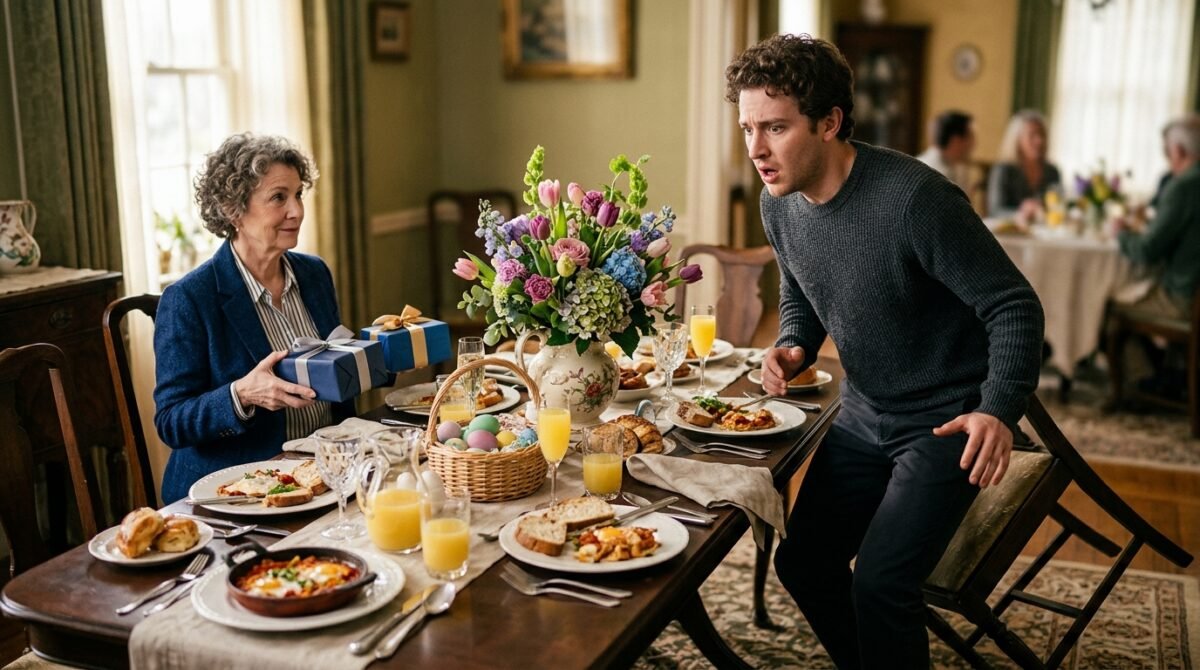
Easter is meant to be a time of renewal, spring, and the quiet comfort of family traditions. My family, however, has never been one for quiet comfort. We are a loud, opinionated, and occasionally volatile group that thrives on proximity. This year, my mother insisted on hosting brunch at her home, a sprawling suburban estate that felt more like a stage for her performative hospitality than a place of genuine warmth. I brought my two beautiful children, Leo and Maya, and my wife, Sarah. We were looking forward to a simple afternoon of eggs and conversation, completely unaware that the foundation of our lives was about to be challenged in the most public, degrading way possible.
My mother, Eleanor, has always had a penchant for control, masked as ‘concern.’ Over the years, she’s critiqued everything from my career choices to the way we raise our kids. But nothing could have prepared me for the orchestrated humiliation she had planned for this specific holiday. It wasn’t just a slight or a passive-aggressive comment; it was a calculated assault on the legitimacy of my children and the integrity of my marriage.
As the brunch progressed, the atmosphere was deceptively light. There was the smell of roasted lamb and the clinking of champagne glasses, the kind of scene that looks perfect in a photo but feels brittle to the touch. I remember looking at my kids, laughing as they hunted for eggs in the garden, and feeling a sense of pride. I had no idea that while I was watching them, my mother was watching me with a cold, analytical intensity that would soon tear our family apart.
The moment began under the guise of ‘gift-giving.’ It is a tradition in our family to exchange small tokens on Easter, though it usually involves chocolates or books. When Eleanor pulled out two sleek, dark blue boxes from under the sideboard, I assumed they were for the children. She smiled that practiced, tight-lipped smile of hers, beckoning me over as if we were about to participate in some grand reveal. Little did I know, the boxes contained an accusation that would change the trajectory of my life forever.
I am writing this now in the wake of the fallout, weeks later, sitting in a quiet house while the dust settles. People keep telling me I overreacted, or that I ‘misunderstood’ her intentions. But when you are handed a paternity test kit as a gift for your toddlers, there is no room for misunderstanding. There is only the realization that the person who raised you does not view your life as sacred—they view it as a puzzle they have the right to solve, regardless of the wreckage it leaves behind.
The Deceptive Calm Before the Storm
The morning started with a strange, high-strung energy. My mother was pacing the kitchen, adjusting flowers that were already perfect, her eyes darting toward the window every time a car pulled into the driveway. She was wearing her finest linen suit, the one she saves for board meetings or formal events that she wants to dominate. I should have taken that as a warning, but I was focused on keeping my two-year-old, Leo, from knocking over a vase.
Sarah tried to engage her in conversation about her upcoming vacation, but Eleanor was distracted. She kept checking her watch, her fingers drumming against the granite countertop. It was a rhythmic, impatient sound that grated on my nerves. Looking back, she wasn’t waiting for the brunch to start; she was waiting for the audience to arrive. My aunt, my two cousins, and my grandmother were all present, filling the room with the usual chatter about work and local gossip.
“You’ve been so quiet lately, David. It’s almost as if you’re hiding something. Or perhaps you’re just tired of keeping up appearances?”
— Eleanor, mid-brunch conversation
I laughed it off, thinking she was referring to the stress of my new promotion. I was wrong. She wasn’t talking about my job. She was baiting me, trying to see if I was in a frame of mind to be ‘corrected.’ She kept hovering near Sarah, offering her drinks and snacks with a level of attentiveness that felt predatory rather than nurturing. I felt a knot of anxiety tighten in my stomach, an intuition that something was fundamentally wrong with the texture of the day.
By the time we moved to the dining room, the air was thick with unspoken tension. The conversation felt like a performance, a scripted play where everyone knew their lines except for me. My sister, who usually avoids these gatherings, was conspicuously absent, which I later learned was because she had been warned about what was coming. The betrayal wasn’t just the act; it was the fact that I was the only one in the dark.
I looked at Sarah, who was trying to navigate the conversation with grace, and felt a surge of love and protective rage. She didn’t deserve to be a prop in my mother’s drama. I decided that as soon as the dessert was served, we were going to pack up and leave. I didn’t want to be there. I didn’t want the spectacle. I wanted to be anywhere else, far away from the carefully curated coldness of my mother’s home.
The Presentation of the Blue Boxes
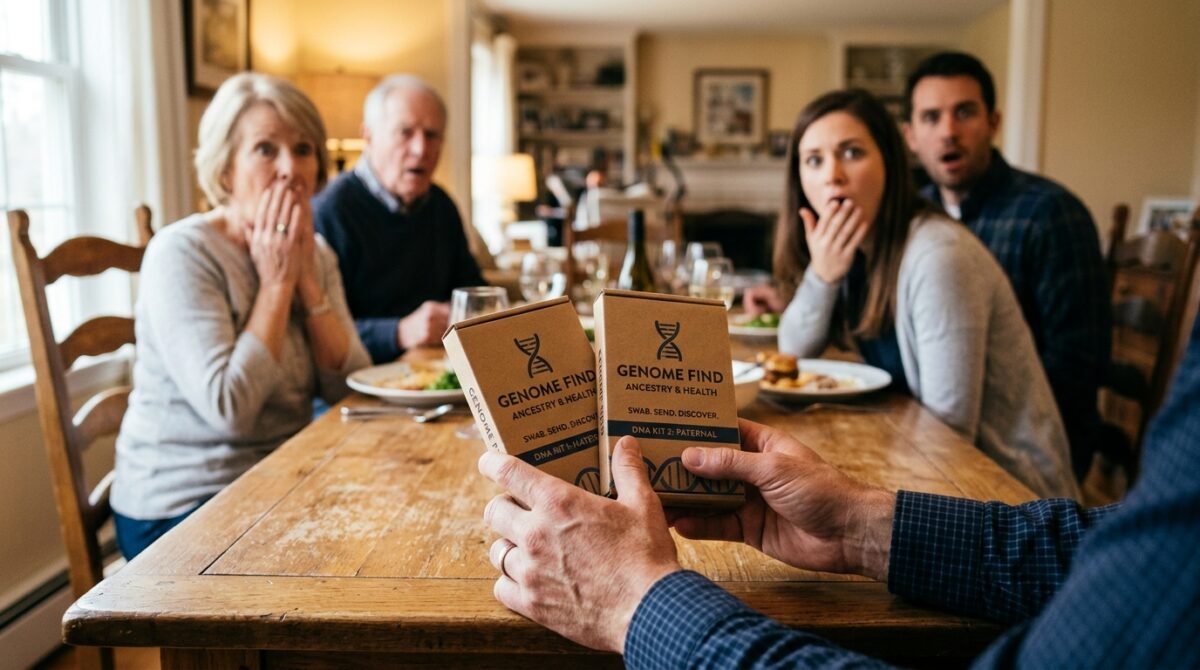
When the gift-giving time arrived, the room went uncharacteristically quiet. Usually, this part of the afternoon is chaotic, with paper flying and children shouting. But Eleanor held the floor. She stood up, clearing her throat with a sharp, decisive sound that silenced even the children. She reached beneath the buffet table and pulled out two matching navy blue boxes, set elegantly upon a silver tray.
“I thought,” she began, her voice steady and chillingly calm, “that in light of the questions that have been circulating in the family, we should put them to rest once and for all. It’s important to know the truth, David. Especially for the legacy of this family.” She walked toward me, the tray held out like a peace offering that was actually a weapon. The room felt like it had been vacuumed of all oxygen.
I took the boxes, my hands trembling slightly. I opened the first one, expecting some kind of jewelry or a sentimental gift. Instead, I pulled out a standard home DNA paternity testing kit. My heart stopped. I opened the second box—another identical kit. I looked up, and the sight of my mother’s face, expectant and disturbingly proud, nearly brought me to my knees. The implication hit me like a physical blow: she was accusing Sarah of infidelity, and accusing me of raising children that weren’t mine.
“Mom, what is this? Are you joking? Tell me this is some kind of sick, twisted joke.”
— My voice, shaking with rage
The silence that followed was absolute. My aunt gasped, and my grandmother looked away, suddenly intensely interested in her napkin. Sarah had gone deathly pale, her eyes darting between the kits and my mother’s face. She didn’t say a word, and in that moment, I realized the full extent of the humiliation. She wasn’t just questioning the kids; she was creating a permanent, indelible record of her distrust, meant to be signed, sealed, and verified in a laboratory.
“It’s not a joke, David,” Eleanor replied, her voice unwavering. “There have been… rumors. People notice things. The children don’t look like you. I’m simply doing what any mother would do to protect her son’s heritage. If they are yours, you have nothing to fear. If they aren’t… well, you’ll be glad you finally know.” The cruelty was so dense, so heavy, that I could physically feel the weight of it pressing down on my chest.
The Snap of the Breaking Point
I didn’t yell. I didn’t scream. There is a specific type of rage that is so cold it turns into clarity, and I felt that snap inside my mind. I set the boxes down on the table, right on top of the china plates. The sound of the plastic hitting the porcelain was sharp, like a gunshot in a library. I stood up, and for the first time in my life, I looked at my mother not as a parent, but as a stranger who had violated the most sacred boundary of my existence.
“You have lost the right to be a grandmother,” I said, my voice low and dangerous. “You have lost the right to know these children, to talk to them, or to even breathe the same air as us. This isn’t about my legacy. This is about your need to control and destroy everything that makes me happy. You think you’re protecting me? You’ve just murdered your relationship with your son.”
“How dare you? I am trying to help you! You’re being manipulated, and I’m the only one brave enough to say it!”
— Eleanor, lashing out as I started to pack our things
The room erupted in chaos. My cousins tried to intervene, telling me to ‘calm down’ and ‘hear her out.’ I looked at them with total contempt. I grabbed Sarah’s hand, pulled her from the table, and started gathering the kids. They were confused, crying because of the sudden tension, and that just fueled my fire. I would never forgive her for scaring them.
We walked out of that house without looking back. I didn’t say goodbye to anyone. I didn’t explain myself to the rest of the family, because there was no explanation needed. The sight of those boxes on the table told the entire story. As we drove away, I could see my mother standing in the doorway, her arms crossed, still looking like she expected me to turn around and apologize to her for my ’emotional outburst.’
The car ride home was spent in a stunned, suffocating silence. Sarah was sobbing quietly, not because she was guilty, but because of the sheer violation of the moment. We spent the rest of the day in a haze, trying to process the fact that the person who was supposed to be our biggest supporter had effectively declared war on our family unit. I didn’t sleep that night. I just sat in the living room, watching the sun come up, realizing that my life had fundamentally shifted.
The Digital Fallout Begins
By the next morning, the messages started pouring in. My phone was a constant, vibrating mess of notifications. It wasn’t just my mother; it was the rest of the family, acting as flying monkeys, trying to convince me that I was the one who needed to apologize. They wanted me to ‘just take the tests’ to prove her wrong. They didn’t understand—or didn’t care—that the act of testing was the insult, not the result.
“David, please. Your mother is just worried. She’s old-fashioned. Just do the test to get her off your back. It’s a small price to pay for family peace.”
— Aunt Martha, family group chat
I didn’t respond to any of them individually. Instead, I sent a single message to the entire family group, a message that I knew would burn the bridge to the ground. I told them that anyone who expected me to entertain my mother’s delusions was as dead to me as she was. I blocked every single one of them, one by one, watching their names disappear from my digital life. It felt like shedding a layer of toxic skin.
Sarah and I spent hours talking about how we would handle the kids if they asked. We decided to be honest, but simple. Mommy and Daddy are sad because Grandma was very unkind, and we need to take some space away from people who are unkind. It was a difficult conversation, but it was necessary. We needed to protect them from the toxicity of that woman’s legacy.
The isolation was immediate. Within 24 hours, I was cut off from the majority of my extended family. People were choosing sides, and surprisingly, most of them were choosing hers. They found it ‘unreasonable’ that I wouldn’t just verify the paternity to ‘clear the air.’ The gaslighting was intense. They were suggesting that because I was angry, I must be hiding something. It was a perfect trap, and I was proud that I had walked right out of it instead of falling in.
I started documenting everything. I kept the boxes, the messages, the emails. I knew that at some point, my mother would try to spin this into a narrative where I was the erratic, irrational son who had lost his mind. I wanted to be ready. I wasn’t just walking away; I was preparing for the inevitable smear campaign that always follows someone like Eleanor when they lose control of their narrative.
The Anatomy of a Narcissist’s Strategy
It became clear very quickly that my mother’s goal was never to find the ‘truth.’ It was to create an unresolvable conflict. By handing me the kits, she created a win-win scenario for her ego: either the kids were mine and she ‘proved’ she was right to suspect Sarah (or she would claim we tampered with the results), or I would refuse and look ‘guilty.’ It was a classic trap, designed to make me look like the aggressor regardless of what I chose.
I spoke with a family therapist, and she confirmed my suspicion. Eleanor wasn’t acting out of a desire for truth; she was acting out of a need for dominance. When a child starts to form their own independent family, the narcissist feels their control slipping. Challenging the legitimacy of the children is the ultimate way to reassert power, because it strikes at the most vulnerable part of the relationship: the core of the family unit.
Understanding this didn’t make the pain go away, but it made it manageable. It stopped being about me and Sarah and started being about her sickness. I realized that if I had stayed, if I had argued, if I had even humored her for a second, I would have been feeding the monster. The only way to stop the game was to walk off the board entirely. And that’s exactly what I did.
“You’re not fighting a person anymore, David. You’re fighting a dynamic. She doesn’t want the truth; she wants to see you break. Don’t give her the satisfaction.”
— My therapist, during our emergency session
The realization hit me that my mother had been laying the groundwork for this for years. The subtle comments about Sarah, the ‘jokes’ about the kids not looking like me, the suspicious questions about my wife’s past—it was all leading to this moment. She had been building a case against my marriage since the day we got married. I had just been too blind to see the evidence mounting until it was laid out on a silver tray at Easter.
I felt a deep, profound grief for the mother I thought I had, and the relationship I thought we shared. It was a mourning process. I was grieving the loss of my family, the loss of the holiday traditions, and the loss of the childhood illusions I had carried into adulthood. But as the grief faded, it was replaced by a sharp, cold resolve to protect my own children from ever experiencing that kind of cruelty.
Reddit Weighs In: The Verdict of the Internet
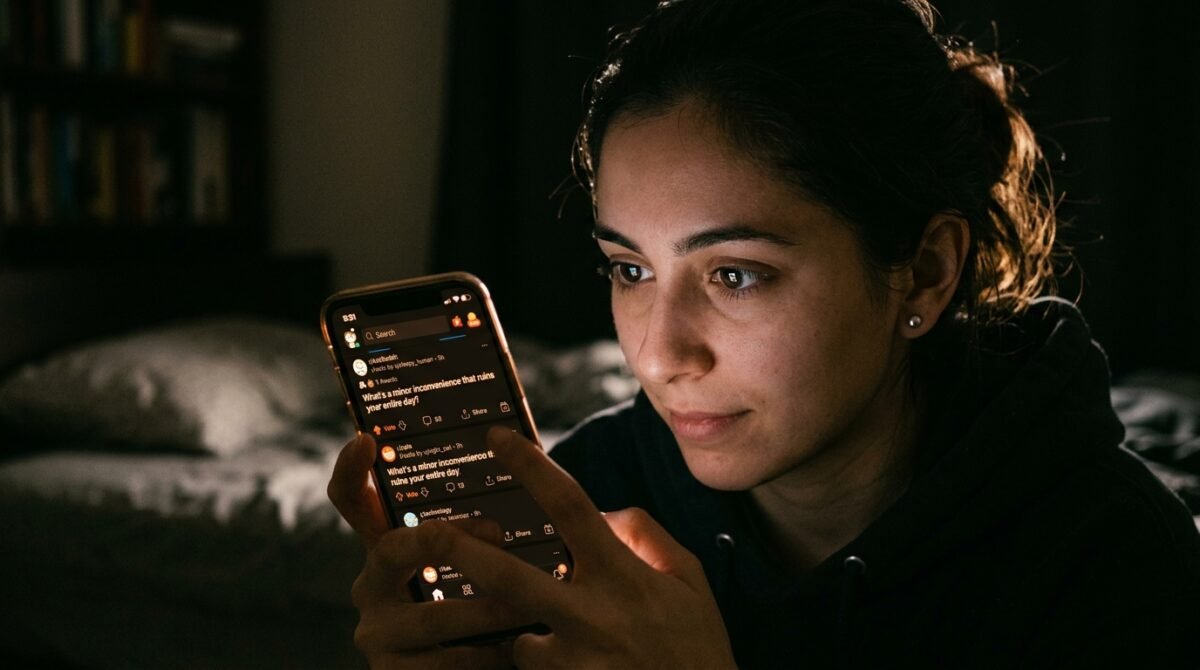
I posted my story on a throwaway account, desperate for some kind of validation that I wasn’t the insane one in this scenario. The response was overwhelming, thousands of comments pouring in, most of them fiercely defending my decision to walk out. It was a strange comfort to know that total strangers could see the toxicity of the situation so clearly, even when my own family could not.
“NTA. This is the nuclear option of insults. She basically called your wife a cheater and your children bastards in front of the entire family. Blocking her was the only logical step. Do not ever look back.”
— u/FamilyDramaExpert (Top Comment, 32.1k upvotes)
There were, of course, the dissenters. Some people argued that ‘truth is truth’ and that I should just do the test to be safe. But the majority of the community understood the point: it’s not about the DNA. It’s about the trust. It’s about the fact that my mother used a holiday as an ambush. The support was a lifeline. It reminded me that there are healthy ways to relate to people, and that what I had experienced was far from the norm.
I read through comments for hours. People shared their own stories of toxic parents, of boundary-setting, of the liberation that comes with cutting off contact. It made me feel less alone. It made me feel like I was part of a larger community of people who were all fighting the same fight—the fight for autonomy in the face of suffocating, entitled parents. The validation was exactly what I needed to firm up my resolve.
“The kits are irrelevant. The insult is the message. If my mother ever questioned my kids, she’d be out of my life before the package even hit the table. Stay strong, OP.”
— u/BoundaryWarrior (15.2k upvotes)
I even saw people analyzing my mother’s behavior, calling out the classic signs of narcissistic injury. It was a crash course in psychology that I never wanted to take but was now an expert in. The internet, for all its faults, provided a mirror that reflected the reality I was trying to suppress. It told me that my anger was not only justified, but healthy. It was the sound of my own boundaries finally being reinforced after years of being trampled.
The Aftermath of No-Contact
Life without my mother has been… quiet. That’s the best word for it. There is no more walking on eggshells, no more bracing for the next subtle jab, no more fear of what she’s going to say or do next. My home feels like my own again. My wife and I have grown closer than ever, forged in the fire of this trauma. We are a team, and we have proven to each other that we have the backbone to protect our family.
My children are thriving. They don’t miss the drama. They don’t know that their grandmother tried to paint them as illegitimate. They just know that Grandma isn’t around right now, and that’s perfectly fine for them. We’ve replaced the chaos of the holidays with our own traditions, quiet moments that belong only to us. We go to the park, we bake cookies, we celebrate in a way that feels safe and authentic.
Every once in a while, I still get a pang of sadness. I miss the idea of a mother. I miss the version of her that I invented in my head as a child. But then I remember the boxes. I remember the look on her face. And the sadness vanishes, replaced by the hardening of my resolve. I am not going to break no-contact. I am not going to give her another chance to hurt us. The door is closed, and I have the only key.
“You have to realize that you didn’t lose your mother that day. You just stopped pretending she was the person you wanted her to be.”
— A friend’s advice during the transition
The extended family has started to reach out, some wanting to ‘mediate,’ some just curious for gossip. I have a standard script for them: ‘I am not discussing my mother or my private life. If you want to talk about anything else, we can. If you want to talk about her, this conversation is over.’ Most of them have stopped calling. And that’s fine, too. I’m finding out who my real friends are, and who was just an observer of my life.
I feel lighter. It’s strange to describe, but the absence of that toxicity has opened up so much room for joy. I’m more present for my kids, more attentive to Sarah, and more honest with myself. I’m not living for anyone else’s approval anymore. I’m living for the people who are in my house, every day, loving me for exactly who I am, not for the legacy I might or might not represent.
Reflecting on the DNA of a Family
When I look back at the photos of that day, the ones we took before the brunch, I see a man who was still trying to please a ghost. I see a man who was still holding onto the hope that his mother might finally be proud of him. It’s a painful image, but it’s also a necessary one. It reminds me of how far I’ve come and how much I’ve had to shed to reach this place of peace.
We are taught that blood is thicker than water, that family is everything, that we must endure and forgive because ‘that’s what family does.’ But I’ve learned that family is what you build, not what you are born into. My family is Sarah, Leo, and Maya. My family is the trust we have in one another, the love that doesn’t need to be tested or verified. That is the only legacy I care about now.
I wonder if my mother ever thinks about what she lost. I wonder if she looks at those empty, unused testing kits and feels a shred of regret. Probably not. She’s likely busy playing the victim to anyone who will listen, telling them how her ‘ungrateful’ son turned his back on her for no reason. She’ll never understand the damage she did because she can’t see past her own needs. And that’s the tragedy, isn’t it?
“True lineage isn’t found in a laboratory. It’s found in the way you show up, the way you care, and the way you protect those you love.”
— My closing thoughts
I’m finally free of the expectation that I have to be perfect for her. I don’t have to be the son she wants. I don’t have to be the man she imagines. I can just be me. And for the first time in my life, that is enough. I’m not waiting for her approval. I’m not waiting for her to understand. I’m just living, and that is the greatest revenge of all.
As for the future, I don’t know what it holds. I don’t know if I’ll ever speak to her again. Maybe in ten years, maybe never. But I know that whatever happens, I won’t be walking back into that house. I won’t be sitting at that table. The table is empty, and I’m just fine with that.
Lessons Learned in the Fire
If there is any lesson to take away from this, it’s that boundaries are not just suggestions; they are the walls that keep your life safe. You have to be willing to hold them, even when it’s painful, even when the rest of the world tells you you’re being too sensitive. If someone in your life is constantly testing you, constantly questioning your reality, or constantly trying to diminish your happiness, you have to be ready to walk away.
I’ve learned that the people who really love you will respect your boundaries. They won’t ask you to ‘just get over it.’ They won’t demand you sacrifice your dignity for the sake of ‘peace.’ They will stand by you, even when things get messy. And if they don’t, then maybe they aren’t the people you thought they were. It’s a harsh truth, but it’s a liberating one.
I’m grateful for the experience, as much as I hate it. It forced me to grow up in a way that I never would have if I had stayed in her shadow. It forced me to define what I value, who I am, and what I will and will not tolerate. I am a better man, a better husband, and a better father because of this, and I wouldn’t trade that for anything.
“Your peace is worth more than a family connection that costs you your soul. Never apologize for protecting your own sanity.”
— A reader comment that stuck with me
So, to anyone else out there dealing with a toxic parent: you aren’t alone. You aren’t crazy. Your feelings are valid, and your boundaries are worth defending. Don’t wait for them to change. They won’t. Change yourself, change your environment, and change your future. You have the power to write your own story, regardless of the ‘DNA’ you came from.
It’s been a long, hard journey, but I’m finally home. And by home, I don’t mean a house. I mean a state of mind where I am safe, where I am loved, and where I am free. That is the only legacy I will ever need.
The Final Stand

I am writing this as a final note to anyone still stuck in a cycle of abuse. You don’t owe anyone your presence, especially not at the cost of your children’s well-being. When we walked out that day, I was terrified. I was afraid of the judgment, the fallout, the isolation. But looking back, I realize that the fear was just a shadow. The reality on the other side of that fear is beautiful.
I have reclaimed my life. I have reclaimed my children’s future. And most importantly, I have reclaimed my own sense of worth. I no longer look at my mother’s actions with anger; I look at them with a kind of pity. She is a woman who has spent her life building a fortress, and now she is trapped inside of it, alone with her suspicions and her pride. She has the truth she was looking for—the truth that she is entirely responsible for the emptiness in her life.
I hope that one day, she finds a way to be happy. But I know that I won’t be there to see it. Our story ended at that brunch table, and I’m perfectly okay with that. The book is closed, the pages are turned, and I’m starting a new chapter, one that is entirely my own to write, without the red pen of my mother’s judgment crossing it out.
“The most radical act of love you can commit is to keep your family safe from those who would tear it down, even if those people share your blood.”
— My own realization
To my wife, Sarah: thank you for being the rock that I leaned on. To my children: I will always be here to protect you, to love you, and to never, ever let anyone question your place in my heart. We are a family, and that is enough. That is everything.
I’m done with the drama. I’m done with the explanations. I’m done with the fight. It’s time to live.
Conclusion
The betrayal I experienced at that Easter brunch was not just a violation of my trust; it was an invitation to finally wake up. By standing up and walking away, I didn’t just escape a bad day—I escaped a lifetime of conditioned submission. The support from the community has been overwhelming and serves as a reminder that family should be a harbor, not a battlefield.
I am now fully no-contact, and for the first time in years, the silence in my life is not lonely; it is peaceful. I have learned that protecting your mental health and the stability of your own nuclear family is the highest priority, and no holiday or tradition is worth the price of your integrity.
How about you? Have you ever had to walk out on a family tradition because the environment became toxic? How did you handle the pressure from other family members? Let’s talk about it in the comments below. Do you think I was right to go no-contact immediately, or should I have tried to ‘clear the air’ as my family suggested?
What's your verdict on this dilemma?
Vote below to contribute to the official community consensus.

Have a Dilemma Keeping You Up at Night?
Share your real-life feud, wedding chaos, or relationship crossroads anonymously with our editorial team.
What do you think ?
0 Comments🛡️ Comments are moderated to protect community integrity. Your comment will appear once approved by the editorial team.