
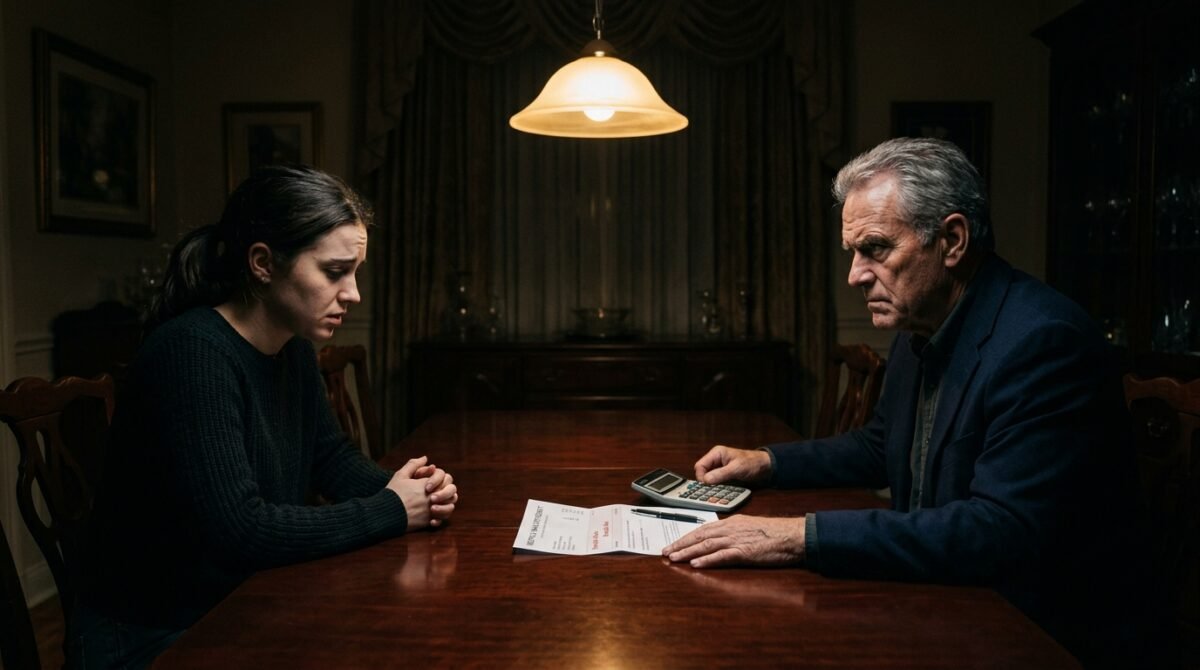
We often hear that family comes first, but what happens when that ‘family’ becomes a parasitic drain on your personal stability? My name is Sarah, and for the last five years, I have worked sixty-hour weeks as a junior architect, scraping every spare cent together to pay off my student loans and eventually save for a down payment on a modest apartment. My father, who remarried when I was eighteen, has always operated under the assumption that because I am ‘successful’—or at least financially independent—I am obligated to subsidize his second family’s whims.
The tension had been simmering for years, bubbling beneath the surface of awkward holiday dinners and strained phone calls. My stepbrother, Tyler, is a twenty-two-year-old ‘aspiring influencer’ who has never held a job for more than three months. My father, in his infinite wisdom, views Tyler’s lack of ambition as a ‘creative phase’ that just needs the right investment to flourish. I thought I was simply there for roast chicken and small talk, but last Sunday, the goalposts moved significantly.
It wasn’t just a request; it was a demand presented with the cold, bureaucratic finality of a court order. My father didn’t ask if I had the money; he told me when I would be transferring it. The sheer audacity of the sum—twelve thousand dollars—left me reeling. It wasn’t just about the money; it was about the fundamental disrespect for my labor, my boundaries, and the years of sacrifice I had poured into my own future.
This is the story of how a single dinner destroyed years of built-up, hollow loyalty. It is a story about the moment you realize that ‘blood is thicker than water’ is a weapon used by those who have nothing else to offer. By the time I left that house, I hadn’t just left behind a dinner; I had left behind the ghost of the father I once thought I knew. This is the chronicle of the aftermath, the digital warfare that followed, and the radical act of blocking an entire side of my family to save my own soul.
The Sunday Ambush at the Dining Table

The evening started with an unsettling sense of normalcy. My stepmother, Linda, had prepared a elaborate meal that felt more like a performance than a celebration of family. Throughout the appetizer, my father kept glancing at his watch, his leg bouncing with a nervous energy that usually preceded some sort of lecture about my ‘lack of support’ for the family unit. I should have known better than to accept the invitation, but I am an optimist who constantly hopes for a version of my father that doesn’t exist.
Tyler arrived late, looking disheveled and smelling faintly of expensive cologne. He didn’t offer a greeting, just a dismissive nod as he slid into his seat. The air was thick, the silence punctuated only by the clinking of silverware against fine china. It wasn’t until the wine was poured that my father finally cleared his throat, signaling that the ‘business’ portion of the evening was about to commence.
“Sarah, I know you’ve been doing well at the firm. We’re all very proud. And since Tyler has been working so hard on his photography project, he needs a proper portfolio trip to Europe. Twelve thousand covers the flights, the hostels, and the gear. It’s an investment in his future, and you’re the only one in a position to help.”
— My Father
I froze. The fork in my hand suddenly felt heavy, like lead. I looked at my stepmother, who wouldn’t meet my eyes, and then at Tyler, who was already scrolling through his phone, looking utterly disinterested in the logistics of his own handouts. My heart rate spiked, a rhythmic thumping in my ears that drowned out the soft music playing in the background.
I took a slow breath, trying to keep my voice steady despite the adrenaline coursing through my veins. I looked my father in the eye, prepared to deliver the most difficult ‘no’ of my life. The room felt smaller, the walls closing in as the weight of their entitlement pressed against me. This wasn’t a request for help; it was an expectation of servitude.
“Dad, I have told you repeatedly that my savings are earmarked for my student debt and my eventual home purchase. I don’t have twelve thousand dollars to throw away on a vacation, even if you call it a project. This isn’t an investment; it’s a shopping spree. I am not paying for Tyler to wander through Rome and Paris while I struggle to keep my head above water.”
The reaction was immediate. My father slammed his hand on the table, the wine glasses rattling. The facade of the happy family dinner shattered, revealing the jagged, ugly resentment that had been festering for years. He started lecturing me on the meaning of family, on how I was being selfish, and how it was my ‘duty’ to lift up those who haven’t had my advantages. It was a script I had heard a dozen times, but tonight, it felt like a declaration of war.
The Late-Night Digital Siege

I drove home in a state of absolute shock, my hands gripping the steering wheel so tightly my knuckles turned white. By the time I pulled into my driveway, my phone had already begun to light up with a barrage of notifications. The family group chat, which had been silent for months, was suddenly the epicenter of a volcanic eruption of insults, guilt trips, and outright fabrications.
The messages were relentless, coming in rapid-fire succession. It wasn’t just my father; my stepmother had chimed in, and even my aunt, who I hadn’t spoken to in weeks, sent a text about how ‘disappointed’ my late mother would have been in my behavior. It was a coordinated strike, a classic manipulation tactic designed to make me feel isolated and small. I watched the notifications pile up on my lock screen like a digital flood.
“I thought I raised you better than this. You’re being incredibly selfish. Tyler is family. If you won’t help him, don’t expect us to be there when you need a favor.”
— My Father, via WhatsApp
“How can you be so cold? It’s only money. You have a career. He has dreams. You’re crushing him.”
— Stepmother Linda
I spent hours staring at the screen, my thumb hovering over the ‘block’ button. I felt a strange, cold clarity washing over me. For years, I had been the one to bend, the one to apologize, the one to pay for dinners or pick up the tab for birthday gifts because they ‘forgot’ their wallets. The realization hit me: they didn’t view me as a daughter; they viewed me as an ATM with a pulse.
I began to screenshot everything. Not to use against them, but as a record for myself—a reminder of exactly why I needed to cut the cord. I didn’t respond to a single message. I didn’t offer a defense or an explanation. I knew that anything I said would be twisted, weaponized, and used to justify their behavior. Silence, I realized, was my only real weapon.
The psychological toll was immense, but as I finally hit ‘block’ on every single one of them, a massive weight lifted off my chest. The notifications stopped. The incessant vibration of the phone ceased. For the first time in years, the room felt quiet. I went to bed knowing that tomorrow would be a different life, one where I didn’t have to account for their greed.
The Aftermath: When Silence Becomes a Statement

The next morning was surreal. I woke up with a knot in my stomach, expecting a barrage of missed calls or emails, but there was nothing. The silence I had cultivated was holding. I went to work as if nothing had happened, though my coworkers noticed my distracted state. I told them I was dealing with a ‘family matter,’ which was the polite shorthand for ‘my family is currently imploding.’
By noon, I had a voicemail from my father’s work line. He was trying to be professional, but the tremor of rage in his voice was unmistakable. He didn’t mention the money directly, but he talked about ‘family values’ and ‘the importance of respect.’ It was a masterclass in gaslighting. He wanted me to call him back, to start the negotiation, to eventually cave just to stop the pressure.
I chose not to call back. Instead, I sent a single, concise email to my father’s personal account. I didn’t want to get into a debate; I wanted to set a hard boundary. I needed them to understand that the dynamic had fundamentally shifted, and there was no going back to the old way of doing things. I felt empowered, a feeling I hadn’t experienced in years.
“Dad, the request for twelve thousand dollars is inappropriate and offensive. I will not be funding Tyler’s trip. I have blocked you and the rest of the family on my phone. Please do not contact me at work or attempt to visit my home. This isn’t a negotiation. It is a boundary.”
— My Email to Father
The rest of the day was filled with a strange, hollow anxiety. I kept checking my phone, not for their messages, but to make sure they hadn’t found another way to get to me. I had to face the reality that my decision meant losing access to a part of my life I had always known, however dysfunctional it was. It was a grieving process, but one that felt necessary.
I started thinking about the future. For the first time, I could plan my finances without wondering if I would be hit with an emergency ‘family crisis’ that required a check. I felt a sense of freedom that was both terrifying and exhilarating. I was no longer an extension of their desires; I was my own person, with my own goals and my own autonomy.
Reddit’s Verdict: The Internet Weighs In

I knew I needed a sounding board, but I didn’t trust my friends in real life to understand the complexity of the dynamic. I turned to a popular subreddit dedicated to family conflicts. I posted a shortened version of the story, leaving out the names but keeping the details of the financial demand clear. I hit ‘post’ and went for a long walk, terrified of the judgment I might receive.
When I returned, the post had exploded. There were thousands of comments, and the overwhelming majority were in my corner. People were sharing their own stories of financial abuse and parental entitlement. It was incredibly validating to see that I wasn’t the crazy one, that my reaction wasn’t just ‘petty,’ as my father had claimed. The sheer volume of support was overwhelming.
“OP, you aren’t an ATM. This is financial abuse, plain and simple. The moment you give them a cent, they’ll want more. Hold that block button like your life depends on it because, in a way, your peace of mind does.”
— u/FinanceTruthSeeker (Top Comment, 32.5k upvotes)
“The audacity to demand $12,000 for a trip is staggering. That’s not a favor; that’s a lifestyle subsidy. Stay strong. Your family will try to guilt you, but you owe them nothing.”
— u/BoundariesMatter (18.2k upvotes)
Reading the comments, I felt a sense of camaraderie I hadn’t expected. There were people from all walks of life who had dealt with similar situations—parents who demanded money for weddings, siblings who ‘borrowed’ tuition funds, and relatives who thought their needs superseded anyone else’s independence. It was a stark reminder that entitlement is a universal language, but so is the act of setting boundaries.
Of course, there were a few ‘you should just talk it out’ comments, but they were quickly downvoted into oblivion. It was refreshing to see the community recognize the pattern of manipulation. It wasn’t just about the money; it was about the total lack of respect for my boundaries. And the internet, in all its chaotic wisdom, saw that clearly.
I spent the entire night reading, learning, and absorbing the perspectives of others. It helped me realize that the guilt I was feeling was a learned response, not a moral failure. I had been conditioned to believe that my success belonged to the family, but that was a lie. My success was mine, and the only people I owed anything to were the ones who supported me, not the ones who drained me.
The Uninvited Guest at My Office

I thought the conflict would stay digital, but three days after the email, I walked out of my office building to find my father waiting by his car. He didn’t look angry anymore; he looked desperate. He approached me with a practiced, sad expression, the kind he used to get his way when I was a child. Seeing him there, in my professional space, felt like a massive violation of my safety.
He started talking before I could even reach my car, his voice a low, urgent murmur. He spoke about how Tyler was ‘in a bad place’ and how this trip was the only thing that could save his mental health. He didn’t even mention the money, as if by ignoring the subject, he could somehow make it disappear. He was treating me like a child who could be swayed by emotional manipulation.
“Sarah, please. You don’t understand the pressure Tyler is under. He’s struggling. You and I, we can figure this out. Just come over for dinner on Sunday, and we’ll talk about a payment plan that works for you. You don’t have to pay it all at once.”
— My Father
I stopped walking and looked at him, feeling a wave of disgust. He was still trying to negotiate. He was still trying to find a way to get into my wallet, using my brother’s supposed mental health as a bargaining chip. It was the lowest thing he had ever done. I didn’t raise my voice, but my tone was icy and final.
“You are at my workplace, Dad. This is harassment. I told you no, and I told you I wanted no contact. If you are still here in one minute, I am going to call security. Do not ever show up here again. You have no right to my time, my money, or my life. We are done.”
He looked shocked, as if he couldn’t believe I would actually call his bluff. For a second, I thought he might argue, but the look in my eyes must have convinced him that I wasn’t playing. He turned around, got into his car, and drove off without another word. I stood there for a moment, my heart pounding, but I felt a sense of triumph. I had stood my ground in the real world, not just behind a screen.
The Financial Ledger of Resentment

That night, I sat down and did something I had been avoiding for years: I made a list. I wanted to see exactly how much this ‘family’ had cost me over the last few years. I pulled out my bank statements, my credit card bills, and my memory. The numbers were staggering. It wasn’t just the occasional ‘loan’; it was years of small, incremental drains that had prevented me from hitting my own financial milestones.
| Occasion | My ‘Contribution’ | The Reality |
|---|---|---|
| Tyler’s Tech Course | $2,500 | He dropped out after two weeks. |
| Stepmother’s Vacation | $1,800 | I was told it was a ‘family surprise’. |
| Father’s ‘Emergency’ Car Repair | $3,200 | He bought a new stereo instead. |
| Family Holiday Dinners | $4,000+ | I paid for almost every major meal. |
| Total | $11,500 | Lost potential for my home savings. |
The total was sickening. Over $11,000 of my own hard-earned money had been funneled into their lifestyle. That money could have been a down payment, an emergency fund, or a safety net for my own future. Seeing it laid out on paper in a table made the reality impossible to ignore. I had been paying for their lives while neglecting my own.
This wasn’t just a one-time request; it was part of a larger, systemic pattern of financial exploitation. My father had effectively been using me as a credit union for his own poor financial management. Every time I said yes, I had been enabling the very behavior that was keeping them from ever becoming self-sufficient. I wasn’t helping them; I was facilitating their stagnation.
I felt a deep sense of shame, not for saying no, but for taking so long to wake up. I had been so desperate for approval, so eager to be the ‘successful’ daughter who could do it all, that I had allowed them to treat me like a resource rather than a person. That realization was the most painful part of the entire experience, but it was also the most liberating.
Now that I knew exactly what I was dealing with, I could move forward. The spreadsheet wasn’t just a record of loss; it was a map of how I would protect my future. I decided right then and there that I would never again pay a penny for someone else’s convenience. My money was for my goals, and my goals were the only priority that mattered.
The Letter That Changed Nothing
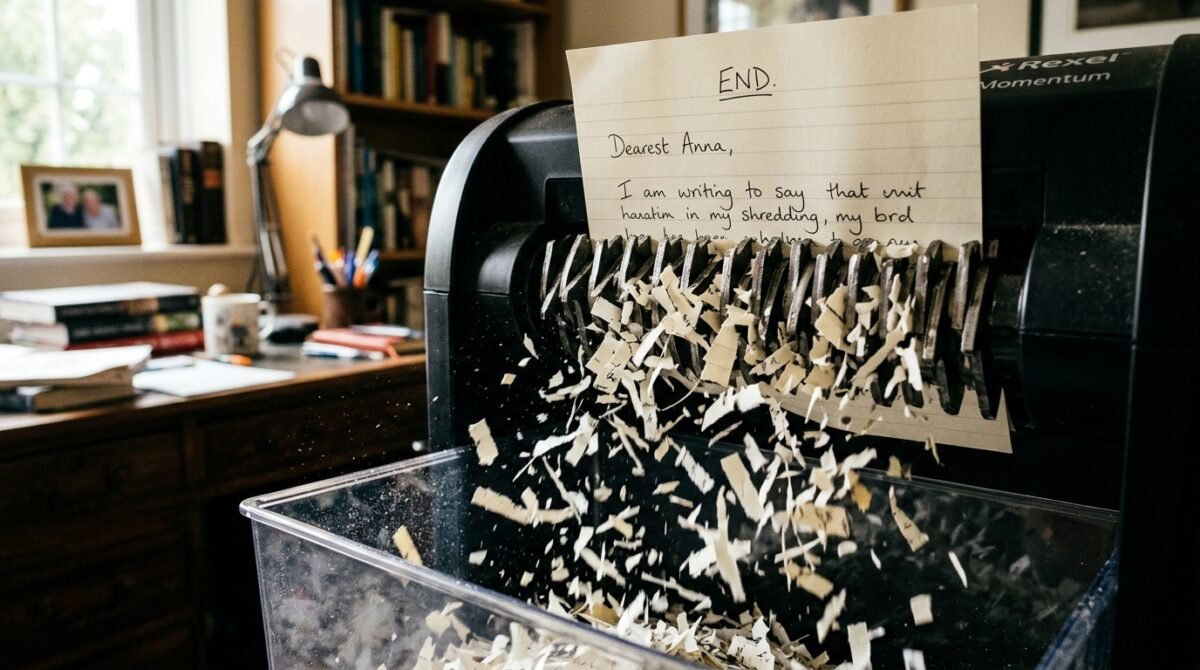
A week later, I received a certified letter. I almost didn’t open it, half-expecting it to be a legal threat or some kind of formal demand. Instead, it was a long, rambling letter from my father, full of ‘apologies’ that were actually just accusations wrapped in flowery language. He talked about how much he loved me, how hard his life had been, and how he just wanted the family to be whole again.
He didn’t address the money, but he implied that if I ‘did the right thing’ by Tyler, we could go back to being a happy family. It was another attempt at manipulation, another way to make me feel responsible for his happiness. He was trying to use nostalgia as a weapon, hoping that the memory of good times would override the reality of the present conflict.
I read the whole thing, but it didn’t stir any emotion in me. The anger was gone, replaced by a profound sense of indifference. I realized that my father didn’t actually love me; he loved what I could provide for him. He loved the status of having a successful daughter, the convenience of a bank account he could tap into, and the feeling of control he could exert over my life.
“I miss my daughter. The family is not the same without you. I hope you can find it in your heart to let go of this foolishness and remember that blood is the most important thing. We have a place at the table for you, whenever you’re ready to do what’s right.”
— Letter from Father
I took the letter and put it in a shredder. I didn’t need to respond. I didn’t need to argue. I just needed to move on. The letter was just another piece of evidence that he would never change, that he would never truly understand why what he had done was wrong. He was committed to his version of reality, and I was committed to mine.
It was a strange, quiet moment of closure. I felt no guilt, no desire to reconnect, and no longing for the family ‘table’ he mentioned. The table was toxic, the food was poisoned, and I was finally full enough to walk away. I went back to my work, focused on my own projects, and left the past where it belonged: in the shredder.
Finding Strength in Independence

The weeks turned into months. I spent the time focusing on my own health, both mental and financial. I started a new, strict budget that included a dedicated savings account for my future home, and I felt a sense of pride every time I transferred money into it. I started seeing a therapist to talk through the years of manipulation, which helped me recognize the signs of emotional abuse in my other relationships.
My social life improved, too. Without the constant drain of ‘family emergencies,’ I had more energy for my real friends. I started doing things I had always wanted to do—traveling on my own terms, taking classes for fun, and investing in my own hobbies. I wasn’t just surviving anymore; I was thriving. The absence of my father’s family wasn’t a void; it was a clearing where I could finally grow.
I realized that the ‘family’ I had been mourning didn’t really exist. It was a projection, a fantasy of what a supportive parent-child relationship should look like. Once I accepted that I wouldn’t get that from them, I was free to create it for myself. I started surrounding myself with people who respected my boundaries and celebrated my success, people who didn’t view me as a resource to be tapped.
“You’ve changed so much, Sarah. You seem lighter, somehow. Like you’re finally breathing on your own.”
— My Best Friend
That observation felt like the ultimate compliment. I was finally breathing on my own. I wasn’t tethered to their expectations, their drama, or their financial needs. I was living a life that was entirely mine, and the relief was indescribable. I had lost a family, but I had gained myself.
The journey had been long and painful, but it was the most important thing I had ever done. It taught me that my worth isn’t tied to how much I can give, but to how well I can care for myself. I am no longer the daughter who pays for things she can’t afford. I am the woman who builds her own future, one decision at a time.
The Final Verdict: Why No Contact Was Necessary

Looking back, I know some people might think I was too harsh. They might say that I should have tried to work it out, or that twelve thousand dollars isn’t worth losing a family over. But those people haven’t been in my position. They haven’t had to choose between their own survival and someone else’s greed. They haven’t had to endure the slow, grinding erosion of their self-respect.
No contact wasn’t a punishment; it was a necessity. It was the only way to stop the bleeding. When you’re dealing with people who have no respect for your boundaries, you can’t reason with them. You can’t negotiate with them. You can only remove yourself from their sphere of influence. I had tried to talk, I had tried to be ‘reasonable,’ and all I got was more manipulation.
The decision to block them was the most difficult thing I’ve ever done, but it was also the most effective. It gave me the space to heal, the time to think, and the strength to stand tall. I don’t regret it. I don’t look back. I know that if I had given them that money, they would have just come back for more, and more, and more. The cycle would never have ended.
I hope that by sharing my story, I can help others who are going through the same thing. I want them to know that it’s okay to say no. It’s okay to set boundaries, even with family. It’s okay to prioritize your own well-being. You are not an ATM, and your value is not defined by how much you can give to people who don’t appreciate you.
I am finally at peace. The drama, the guilt, and the pressure are gone. I have a life that is my own, and for the first time, I am excited about what the future holds. I’ve learned that the most important relationship you will ever have is the one you have with yourself. And as long as you keep that one healthy, you can overcome anything.
Community Reflection: The Lessons We Learned

The response to my story has been truly humbling. Thousands of people reached out to share their own experiences, their own ‘no’ moments, and their own journeys toward independence. It’s clear that this is a much larger issue than just me and my father. It’s about the societal pressure to maintain family ties at any cost, even when those ties are destructive.
We need to talk more about financial abuse within families. We need to normalize the idea that parents shouldn’t expect their children to fund their lifestyle or their other children’s mistakes. We need to empower young adults to set boundaries and to stand up for their own financial health. It’s not selfish; it’s a form of self-preservation that is absolutely vital.
“Thank you for sharing this. I’ve been struggling with my own parents for years, and reading your story gave me the strength to finally say no to their next ‘emergency’ demand. You’ve changed my life.”
— Anonymous Reader
The lessons I’ve learned are simple but profound: never compromise your future for someone else’s present. Always maintain your own financial independence, and never be afraid to set a firm boundary when someone crosses the line. Your time, your money, and your energy are your own. Don’t let anyone take them from you.
I am grateful for the journey, for the struggle, and for the strength I found along the way. I am a different person now than I was at that dinner table, and I am a better, stronger version of myself. I hope this story serves as a reminder that no matter how deep the entanglement, you have the power to break free.
Thank you to everyone who supported me. Your encouragement meant more than you could know. I am officially moving forward, and I am not looking back. The future is bright, and for the first time, I am the one holding the keys to it.
Conclusion
My life today is unrecognizable from the one I led just a few months ago. The constant, gnawing anxiety that I might be asked for ‘just a little bit more’ has vanished, replaced by a quiet, steady confidence in my own autonomy. I have reached my savings goal for my apartment, and I’m looking at properties this weekend—not as a financial drain, but as a sanctuary. I am no longer the daughter who gives until she hurts; I am the architect of my own destiny.
This journey has taught me that the hardest thing you will ever do is stand up to the people who raised you. But it is also the most necessary act of self-love you can perform. By breaking the cycle of financial exploitation, I haven’t just saved my bank account; I have saved my sense of self. I am no longer a tool for someone else’s convenience; I am a person with agency, boundaries, and a future that is entirely mine to define.
The debate in the comments has shown me that my experience is far from unique. It has started a conversation that many families are afraid to have: the conversation about money, entitlement, and the true meaning of support. I encourage all of you to look at your own relationships. Are you being supported, or are you being drained? Are you in a partnership, or are you in a position of involuntary servitude? And more importantly, what will you do about it?
I am curious to hear from you. Have you ever had to draw a hard line with your family? What was the breaking point that finally pushed you to set a boundary, and how did you find the strength to hold it? Let’s keep this conversation going in the comments below. We are all learning, growing, and finding our voices, one story at a time.
What's your verdict on this dilemma?
Vote below to contribute to the official community consensus.

Have a Dilemma Keeping You Up at Night?
Share your real-life feud, wedding chaos, or relationship crossroads anonymously with our editorial team.
What do you think ?
0 Comments🛡️ Comments are moderated to protect community integrity. Your comment will appear once approved by the editorial team.