
Growing up, my relationship with my mother was always defined by a silent, crushing expectation. She was the picture-perfect matriarch, a woman who measured the value of human beings in dress sizes and societal prestige. I spent my teenage years existing in her shadow, constantly adjusting my posture to appear smaller, thinner, and more palatable to her judging gaze. As an adult, I thought I had broken free. I built a successful career, cultivated a healthy self-image, and maintained a relationship with her that felt—at the very least—civilized.
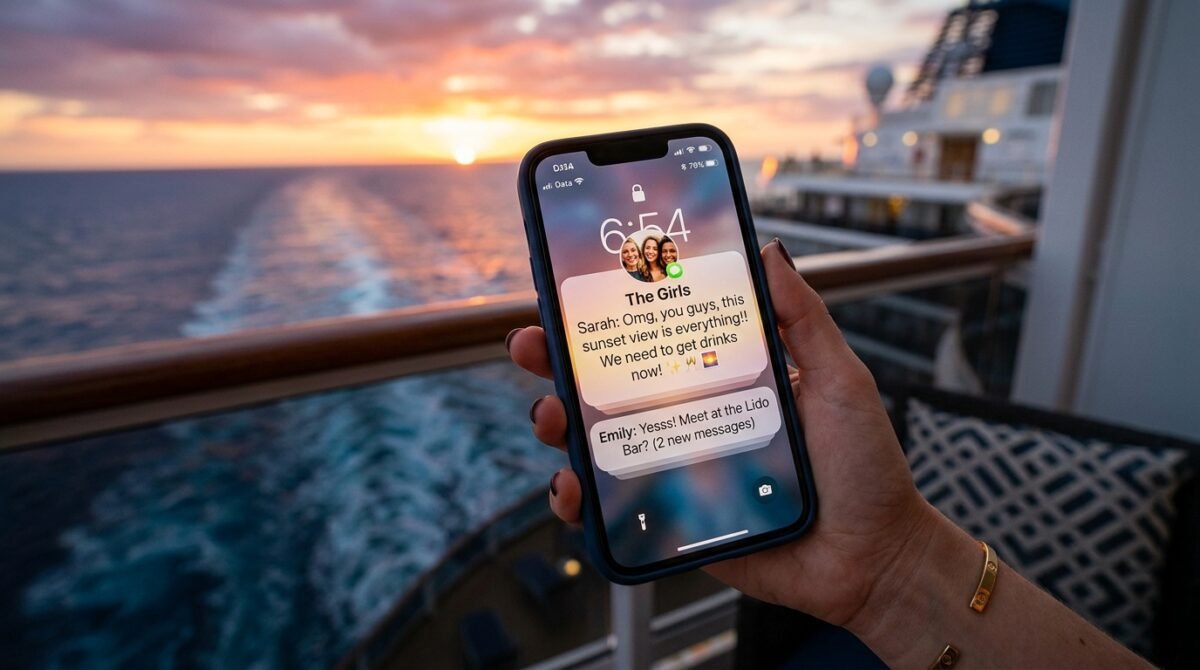
To celebrate her 60th birthday, I decided to go above and beyond. I spent months saving to gift her a luxury Alaskan cruise, a trip she had dreamed of for a decade. It was a $4,000 token of love, a way to signal that despite the friction of the past, I wanted to honor her. I saw it as a bridge, a way to move forward into a new chapter of mutual respect. I never expected that my act of generosity would be the very thing that revealed the rot at the core of our relationship.
It happened on a Tuesday. She had left her iPad on my kitchen counter while I was helping her prepare for a minor medical procedure. A notification popped up. It wasn’t a bank alert or a news headline; it was a message from a group chat titled ‘The Inner Circle.’ My name was explicitly mentioned in the notification preview, paired with a comment so cruel, so visceral, that my heart literally skipped a beat. My finger hovered over the screen, trembling, before I made the decision that would irrevocably alter the course of my family dynamic.
I opened the chat. I scrolled. I read things that no child should ever see written by their parent. I saw photos of me I didn’t even know she had, annotated with scathing commentary about my weight, my choice of clothing, and my perceived lack of discipline. It wasn’t just a one-time slip-up; it was a years-long chronicle of mockery involving her friends, my aunt, and even my own sister. I realized then that my $4,000 gift hadn’t bought me love; it had merely provided them with more fodder for their cruel, private comedy.
In that moment, the cruise tickets sitting in my email inbox felt like a stain. I didn’t cry. I didn’t shout. I simply felt a cold, sharp clarity wash over me. The woman I had been trying to impress my entire life didn’t exist, and the woman who did exist had been laughing at me while holding my hand. I stood in my kitchen, the silence of the room deafening, and began the process of undoing the gift that was meant to be a gesture of peace.
The iPad Notification That Changed Everything

The notification was simple: ‘She’s wearing that dress again, does she not own a mirror?’ It appeared in the top right corner of the iPad screen, glowing against the dark glass like a neon sign of betrayal. I felt a surge of nausea. I had been planning to help my mother with her paperwork, but suddenly, the room felt like it was closing in. I had never touched her devices before, but the context of the message—and the specific mention of a dress I had worn to dinner with her just last week—demanded an answer.
I swiped. The group chat, titled ‘The Inner Circle,’ stretched back months. I saw messages dating back to my last birthday, my promotion celebration, and even the holiday season. It was a constant stream of vitriol. Every time I had felt like we were finally connecting, she had been typing these things into this chat. My throat tightened as I realized the scale of the deception. It wasn’t just my mother; it was a collective of women I had called family for my entire life.
“The guest of honor is looking particularly bloated today. I give it another month before she pops out of those seams. Should I offer her a salad? Haha!”
— Sent by Mother, 3 weeks ago
I read through the history, my eyes scanning past comments about my professional life, my partner, and my personal habits. It was a systematic dismantling of my character. I looked at the photos they had shared—candid shots of me laughing, eating, or walking—and realized they were all taken under the guise of family documentation. They weren’t preserving memories; they were archiving targets. The realization that my mother had been the ringleader of this circle was the most painful part of the experience.
I looked over at my mother, who was currently in the other room humming to herself, oblivious to the fact that her daughter had just discovered the truth. She looked so poised, so put together. It was a masterclass in performative affection. I sat on the kitchen stool, my phone in one hand and her iPad in the other, feeling the weight of the $4,000 cruise deposit I had paid on her behalf just three days prior. I wondered how many more snide comments this trip would generate.
The impulse to confront her right then and there was overwhelming, but I stopped myself. If I confronted her now, she would gaslight me. She would claim it was a joke, that I was ‘too sensitive,’ or that I had violated her privacy. I needed a strategy. I needed to act in a way that wouldn’t leave room for her to manipulate the narrative. I took a deep breath, closed the iPad, and walked into the living room to tell her I was going to run an errand.
The Financial Anatomy of a Broken Gesture

Once I was in my car, the reality of the finances hit me. The $4,000 for the Alaskan cruise was non-refundable in the traditional sense, but because I had purchased it through a high-end travel agency that I frequented for work, there were loopholes. I spent the next hour sitting in the parking lot, my pulse racing, navigating the cancellation process. It felt like I was cauterizing a wound. Every dollar I clawed back felt like a small piece of my dignity being restored.
The agency was sympathetic. I told them there was a family emergency—which, in a way, was the truth. I didn’t need to explain the emotional betrayal. As the agent confirmed the cancellation and the refund process began, a strange sense of relief washed over me. I wasn’t just canceling a trip; I was canceling the access I had granted my mother to my time, my energy, and my resources.
I looked at my bank account statement, which showed the pending refund. I thought about the hours of overtime I had worked to afford this trip. I thought about the time I spent researching excursions, picking the best cabin, and even buying her a new wardrobe for the trip. All of that effort, all of that love, had been fueled by a desire to be ‘enough’ in her eyes. The irony was that the more I did for her, the more she seemed to resent my existence.
“I just canceled the cruise. It wasn’t worth the cost, and I have better things to spend my money on this year.”
— A draft text I decided not to send just yet
I realized that for years, I had been trying to ‘buy’ her approval. Whether it was expensive gifts, hosting holidays, or helping with her home renovations, I was constantly paying an emotional toll for a relationship that was built on a foundation of contempt. The money wasn’t the point, but the cancellation of the trip was a physical manifestation of my new boundary. It was the first time I had ever done something for myself that directly conflicted with her desires.
I drove home with the windows down, feeling the cold air against my face. For the first time in a long time, I wasn’t thinking about how I looked or how I should carry myself. I was thinking about the future. I was thinking about how much I could accomplish if I stopped pouring my resources into a black hole of criticism. I was going to need a plan, because I knew that once she found out about the cruise, the masks would finally come off.
The Day the Truth Came to Light
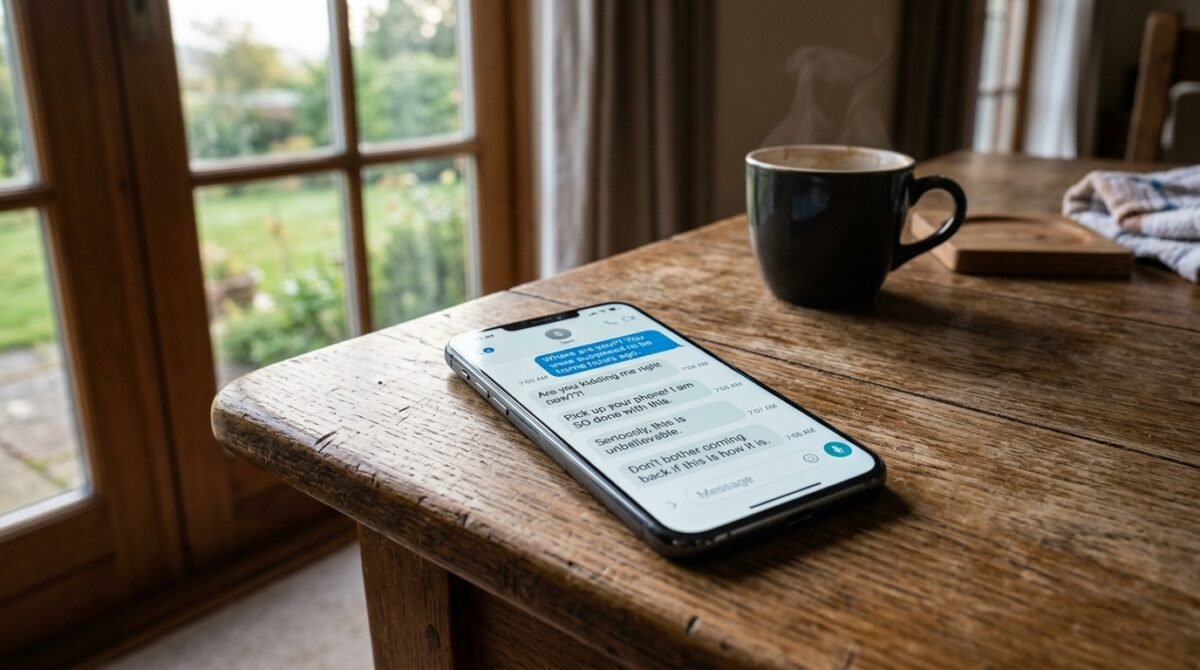
Three days later, the travel agency sent a confirmation email to my mother’s personal account, which I had accidentally used during the booking process because it was saved on my computer. I hadn’t even thought about the automated system. My phone rang at 7:00 AM. I knew exactly who it was. I let it ring. I watched the screen, seeing ‘Mom’ flash, and felt an incredible sense of calm. I didn’t answer. I knew that if I did, I would be subjected to a barrage of insults and questions.
She texted me shortly after, her tone shifting from ‘concerned parent’ to ‘outraged victim’ within the span of three messages. She demanded to know why the cruise had been canceled. She asked what kind of game I was playing. She even had the audacity to ask if I was ‘having another breakdown’ regarding my weight. That was the trigger. She still thought this was about me being sensitive, not about her being cruel.
“Why on earth did I get an email saying the cruise is canceled? I’ve already told my friends we’re going. This is so embarrassing for me. Fix it immediately.”
— Text message from Mother
I sat down at my laptop and drafted a response. I didn’t want to get into a shouting match over the phone. I wanted a record of exactly why this was happening. I told her that I had seen the ‘Inner Circle’ group chat. I told her I knew exactly what she and her friends thought of me. I didn’t use flowery language; I kept it cold, factual, and direct. I told her that I was no longer interested in funding trips for someone who spent their time mocking me behind my back.
I waited for the reply. It didn’t take long. She went from denial to rage in record time. She claimed I had invaded her privacy, that I had no right to look at her messages, and that I was ‘misinterpreting’ her words. She tried to frame her comments as ‘tough love’ or ‘concern for my health.’ It was the same script she had used for years. But this time, I wasn’t playing the part.
I turned my phone off. I knew the next few hours would be a storm of calls, texts, and messages from other family members who would inevitably be dragged into the fray. My sister, who was also in the chat, was likely already preparing a rebuttal. I made a cup of tea, sat down in my favorite chair, and for the first time, I didn’t care what they were saying about me. I had finally stopped listening.
The Family Intervention That Failed

By noon, my sister had arrived at my front door. She had a key, a relic of a time when I trusted her to have access to my home. She didn’t knock; she just walked in, her face twisted in a mixture of anger and self-righteousness. She started the conversation with the classic, ‘I don’t know what’s gotten into you, but Mom is devastated.’ She didn’t even ask how I was doing. She didn’t ask why I felt the need to cancel the trip.
I stood in the center of my living room, watching her pace back and forth. It was like watching a performance I had seen a thousand times before. She argued that the chat was just ‘venting,’ that everyone needs a place to let off steam, and that I shouldn’t be so fragile. She tried to minimize the impact of the words, claiming that ‘Mother doesn’t actually mean those things.’ It was the classic enabler’s defense.
“You’re being incredibly selfish. Mom worked so hard to give us a good life, and you’re punishing her over a few harmless comments in a private chat? Grow up.”
— My sister, during the intervention
I looked at my sister, really looked at her, and saw the same cycle of insecurity that my mother had cultivated. She was terrified of being the target, so she joined the ranks of the tormentors to keep herself safe. I told her that if the comments were harmless, she wouldn’t have been so worried about me seeing them. I told her that my home was no longer a place where she could come to lecture me about how to handle being abused.
I asked her to leave. When she refused, I picked up my phone and told her I would call the police if she didn’t vacate the property. She looked at me like I was a stranger. She couldn’t comprehend that I was willing to enforce a boundary that included her. She finally left, but not before telling me that I was ‘dead to the family’ if I continued down this path. I watched her go, and I felt nothing but a profound sense of peace.
The silence that followed was the loudest thing I had ever experienced. I realized that for my entire life, I had been surrounded by noise—the noise of expectations, the noise of judgment, the noise of people trying to control me. With the door locked and the house finally mine again, I realized that I didn’t just want to cancel a cruise. I wanted to cancel the entire performance. I sat down and started writing a list of every boundary I needed to set for the next year.
Why the Internet Took My Side
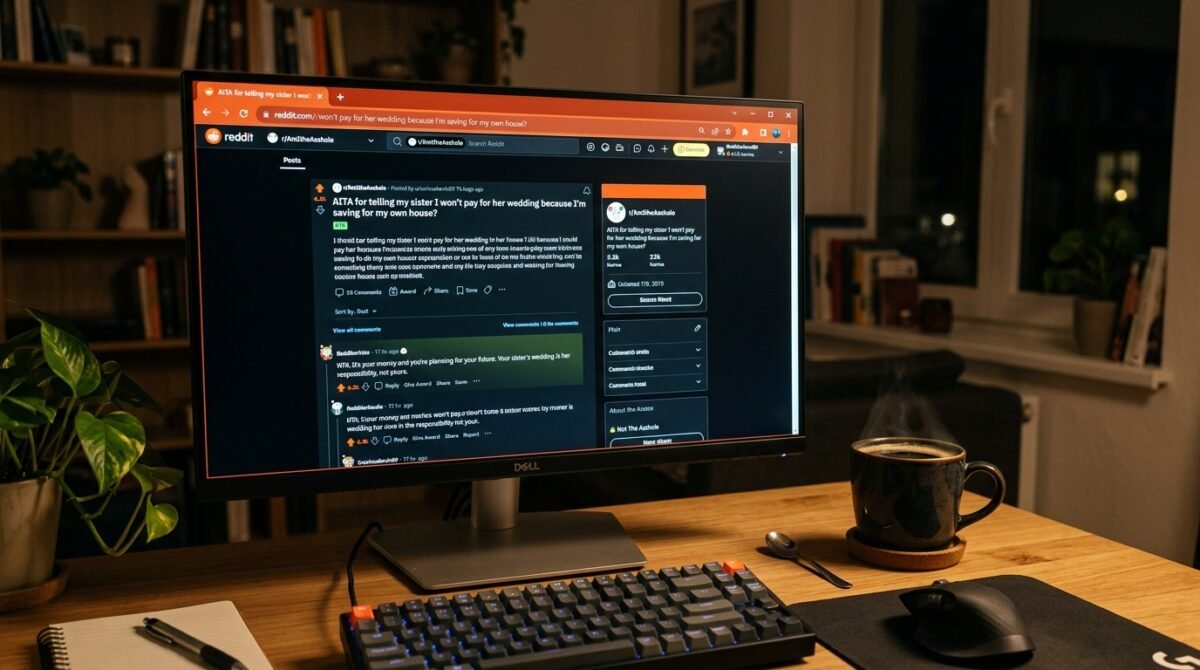
I posted my story on Reddit a few days later, expecting a mix of criticism and support. I wanted to know if I was crazy. I wanted to see if I was actually being the ‘selfish’ one in this scenario. The response was overwhelming. Within hours, the post had gained thousands of upvotes, and the comments were pouring in from all corners of the world. It wasn’t just ‘NTA’ (Not The Asshole); it was a chorus of people who had been exactly where I was.
People shared their own stories of mothers who used ‘health concern’ as a mask for bullying. They talked about the ‘family group chat’ phenomenon, where secret alliances are formed to mock and alienate the ‘outcast’ of the group. The consensus was clear: what I had experienced was not a misunderstanding, but a long-term pattern of emotional abuse. The relief I felt from reading those comments was immense. I wasn’t alone, and I wasn’t being ‘too sensitive.’
“OP, you did the right thing. You didn’t just cancel a trip; you cut the strings. The fact that they are so angry is proof that they know they were wrong. They just hate that they lost their toy. Stay strong.”
— u/SupportiveStranger (Top Comment, 32.5k upvotes)
Some users pointed out that the $4,000 was a small price to pay for the freedom I had just bought myself. Others warned me to expect an escalation. They told me that narcissists hate losing control, and that my mother would likely try to use guilt, public shaming, or even financial threats to get me back in line. I read every comment, taking notes on the advice about ‘Gray Rocking’—the technique of becoming as uninteresting as possible to a manipulator.
One comment in particular stood out. It was from someone who had spent ten years in no-contact with their family. They talked about the ‘grief phase’—the period where you mourn the mother you *wanted* to have, rather than the one you actually have. It resonated deeply. I realized I had been mourning that phantom mother for a long time. The chat had finally killed that illusion, and while it hurt, it was necessary for my own growth.
I spent the entire weekend reading those stories. It turned my anger into resolve. I wasn’t just a victim of a cruel group chat; I was a person who had stood up for themselves. The Reddit community had provided me with the validation I had been seeking from my mother for three decades. It wasn’t the same, but it was enough. I was ready to move forward, regardless of what the ‘Inner Circle’ decided to do next.
The Aftermath: A House of Cards

The fallout was swift. My mother tried to contact me through my employer, calling my office repeatedly to ‘check on me.’ When HR blocked her, she started sending letters to my apartment. I didn’t open them. I had a shredder, and I used it with a sense of grim satisfaction. I knew the contents would be more of the same—gaslighting, guilt-tripping, and demands for me to ‘be an adult’ and ‘forgive and forget.’ I had no interest in playing that game anymore.
I also changed my locks. It was a symbolic gesture, but an important one. My sister tried to show up again, but this time she was met with a note on the door stating that she was not welcome and that any further attempts to trespass would be met with legal action. She didn’t try the handle again. She sent a barrage of texts instead, calling me ‘cruel’ and ‘cold-hearted.’ I blocked her without reading them. I didn’t need to know what she thought of me anymore.
The financial side of things also settled. The cruise line refunded the money after I provided evidence that the booking was unauthorized by the actual payer (I had technically booked it, but my mother had ‘coerced’ the initial payment, so I played the ‘disputed’ card with my credit card company). It was a bit of a mess, but I cleared it up. I used the money to pay for a personal trainer—not to lose weight for them, but to gain strength for myself. It was the best investment I ever made.
“You’ve changed. You don’t even care that we’re hurting, do you? You’re just like them, but worse.”
— Text from Sister, blocked immediately after
I started going to therapy, specifically focusing on family trauma and boundary setting. My therapist was the first person to tell me that it was okay to ‘divorce’ my family. It was a heavy concept, but it made sense. I wasn’t choosing to be alone; I was choosing to protect my peace. The ‘Inner Circle’ was still out there, likely gossiping about my sudden disappearance, but their words no longer had the power to sting. They were just people I used to know.
I felt lighter than I had in years. I realized that my self-worth was no longer tethered to their opinions. I was the one who had canceled the trip, and in doing so, I had canceled the dynamic that had been holding me back. I was finally free to be exactly who I was, without the constant background noise of their judgment. I wasn’t perfect, I wasn’t small, and I wasn’t ashamed. I was me.
Why I Am No Longer ‘Small’

The irony of the mockery in the group chat was that it had nothing to do with my weight and everything to do with their own insecurities. I saw that clearly now. My mother and her friends were aging, and they were terrified of losing their grip on their own lives. By mocking me, they were reinforcing their own sense of superiority, creating a hierarchy where they were the ‘fit’ and ‘proper’ ones and I was the ‘failure’ who needed to be managed.
I started focusing on my health, not to conform, but to feel capable. I began hiking, swimming, and lifting weights. I found joy in what my body could do, rather than how it looked in a dress. I posted pictures of my progress—not for them, but for me. I wanted to show myself that I could be strong, that I could conquer mountains, and that I didn’t need their approval to feel like I had achieved something meaningful.
I met a group of friends who were the polar opposite of the ‘Inner Circle.’ We shared hobbies, we supported each other’s career goals, and we never, ever commented on each other’s physical appearance. It was a revelation. I realized that true friendship—and true family—was about lifting each other up, not using each other as a punching bag. I felt a sense of belonging that I had never experienced in my own home.
“When you stop trying to please people who are incapable of being pleased, you start to see the world for what it really is: a place of infinite possibility, not judgment.”
— My therapist, during our session last week
I look back at the $4,000 I spent on that cruise and I don’t regret it. It was the price of my awakening. It was the catalyst that pushed me to see the truth. If I hadn’t spent that money, if I hadn’t made that gesture, I might still be there, trying to earn love from people who were incapable of giving it. I would still be shrinking myself, still being ‘small’ so that they could feel ‘big.’
I am not small anymore. I am not the woman who sits in the kitchen crying over a notification. I am a woman who knows her worth, who demands respect, and who isn’t afraid to walk away from people who try to take that away. My mother still reaches out occasionally, but I don’t respond. I have my own life, my own friends, and my own peace. And for the first time in my life, that is more than enough.
The Unspoken Rules of Narcissistic Families

One of the most difficult things to accept was the realization that my family had a set of unspoken rules that I had been unknowingly following for years. Rule one: Don’t challenge the status quo. Rule two: Always prioritize the mother’s comfort over your own. Rule three: Your achievements are only valid if they can be used to boost the family’s image. I had spent my life as a cog in their machine, and breaking that machine was the most radical thing I could have done.
I realized that my sister and mother had a symbiotic relationship. My mother provided the judgment, and my sister provided the enforcement. Whenever I tried to assert myself, my sister was there to pull me back in line, to tell me that I was ‘being ridiculous.’ It was a classic ‘crab bucket’ scenario. They didn’t want me to escape the bucket, so they were constantly pulling me back down every time I tried to climb out.
“The most dangerous thing you can do in a toxic family is to start acting like a healthy individual. That’s when the real war begins.”
— Anonymous user on a mental health forum
I started reading books on narcissistic families and realized that my experience was textbook. The ‘Inner Circle’ wasn’t just a chat; it was a way for them to maintain their control by isolating me and framing me as the problem. If they could all agree that I was the ‘messy’ or ‘unhealthy’ one, they didn’t have to look at their own issues. I was their scapegoat, and removing myself from the dynamic made the entire structure collapse.
I learned to spot the red flags in other relationships too. I became much more guarded with my trust. I didn’t want to repeat the cycle. I learned that it was okay to have boundaries, to say ‘no,’ and to walk away from people who didn’t value me. It wasn’t about being mean; it was about being protective of my own mental health. It took time, but I eventually learned to trust my gut again.
I realized that the only person who can define my worth is me. Not my mother, not my sister, not some random group of women in a chat. Me. I am the final authority on who I am and what I am capable of. And that power is something that no one can ever take away from me again. I am no longer looking for validation; I am looking for experiences, for connection, and for joy. And I am finding it, one day at a time.
Why I Don’t Need Their Apology

People often ask me if I want an apology. They ask if I’m waiting for my mother to realize what she did and beg for forgiveness. The truth is, I don’t. An apology from her would be meaningless because it wouldn’t come from a place of genuine remorse; it would come from a place of losing her target. She wouldn’t be sorry for the pain she caused; she would be sorry that she can no longer control me.
I realized that waiting for an apology is just another way of staying tethered to them. It’s like waiting for a train that is never going to arrive. I decided to stop waiting. I gave myself the apology I needed. I told myself that I was sorry for all the years I spent feeling less than. I told myself that I was proud of the woman I had become, and that I didn’t need anyone else’s approval to be whole.
“Forgiveness isn’t about letting the other person off the hook. It’s about taking yourself off the hook so you can finally move forward.”
— A quote from a personal growth journal
I stopped caring about their narrative. They can say whatever they want about me in their secret chats. They can call me ‘selfish’ or ‘unhinged.’ It doesn’t matter. The truth is mine, and I know it. I have the evidence of their cruelty, and I have the evidence of my own strength. That’s all I need. I am living my life, and that is the best revenge. I don’t need to ‘win’ the argument; I just need to be happy.
I’ve reached a point where I don’t even feel angry anymore. I feel a sort of detached pity. It must be exhausting to be them, to live a life so focused on judgment and superficiality. I feel sorry that they are incapable of genuine love, that they are trapped in their own cycle of insecurity. But that’s not my burden to carry. I’ve laid it down, and I’m walking away.
The journey to this place wasn’t easy. It involved a lot of tears, a lot of self-doubt, and a lot of hard choices. But it was worth it. Every bit of it was worth it. I am free. I am whole. And I am finally, truly, happy. That is the outcome I wanted from the very beginning, even if I didn’t know it at the time. I have the life I was always meant to have, one that is entirely and unapologetically my own.
Building My Chosen Family

After distancing myself from my biological family, I had to build a support system from scratch. It wasn’t as hard as I thought it would be. Once I started being authentic and setting boundaries, I attracted people who were also looking for genuine, healthy connections. I found that I was no longer interested in superficial interactions; I wanted depth, honesty, and mutual respect. I started attending local community events, joined a hiking group, and even started a book club.
I realized that family isn’t just about blood. It’s about the people who show up for you, the people who support your growth, and the people who love you for exactly who you are. My chosen family is a mix of friends, mentors, and even some people I met through the Reddit threads where I first shared my story. We are a support network, a group of people who choose to be in each other’s lives because we want to be, not because we’re obligated.
“We are all just walking each other home. Choose the people who make the walk a little easier, not the ones who make it harder.”
— A reflection shared by a friend during a dinner party
We celebrate each other’s wins, we support each other through losses, and we never, ever mock each other. It’s a breath of fresh air. I finally know what it feels like to be part of a community, and it’s nothing like the toxic, judgmental group I grew up in. I feel safe, I feel seen, and I feel supported. It’s everything I ever wanted, and it’s finally mine.
I don’t think about my old family much anymore. When I do, it’s like remembering a dream—a bad dream that I’ve finally woken up from. I see them for who they are, not who I wanted them to be. And that makes all the difference. I am grateful for the lessons I learned, even the painful ones. They shaped me into the person I am today—strong, resilient, and unapologetically myself.
I am looking forward to the future. I have plans, I have dreams, and I have the support system to help me achieve them. I am no longer held back by the weight of expectations or the fear of judgment. I am free to soar, to grow, and to be exactly who I was meant to be. And that, I’ve realized, is the greatest gift of all.
Conclusion
Looking back, the cancellation of that Alaskan cruise was the single most important decision of my adult life. It was a line in the sand, a moment where I decided that my peace was more valuable than their performance. I lost a family, but I found myself. I discovered that I am capable of standing on my own, of setting boundaries that protect my dignity, and of building a life that is entirely my own.
The story of the ‘Inner Circle’ is a reminder that we are not obligated to subject ourselves to the cruelty of others, even if those people are our parents. We have the power to define our own worth and to choose the company we keep. I am not a dress size; I am a person with a story, a person with a future, and a person who is finally, truly free.
What about you? Have you ever had to walk away from a toxic family dynamic to save yourself? What was the ‘final straw’ for you, and how did you manage the transition to a healthier life? Join the discussion below and share your own experiences. Your story might be the one that gives someone else the courage to break free.
What's your verdict on this dilemma?
Vote below to contribute to the official community consensus.

Have a Dilemma Keeping You Up at Night?
Share your real-life feud, wedding chaos, or relationship crossroads anonymously with our editorial team.
What do you think ?
0 Comments🛡️ Comments are moderated to protect community integrity. Your comment will appear once approved by the editorial team.