
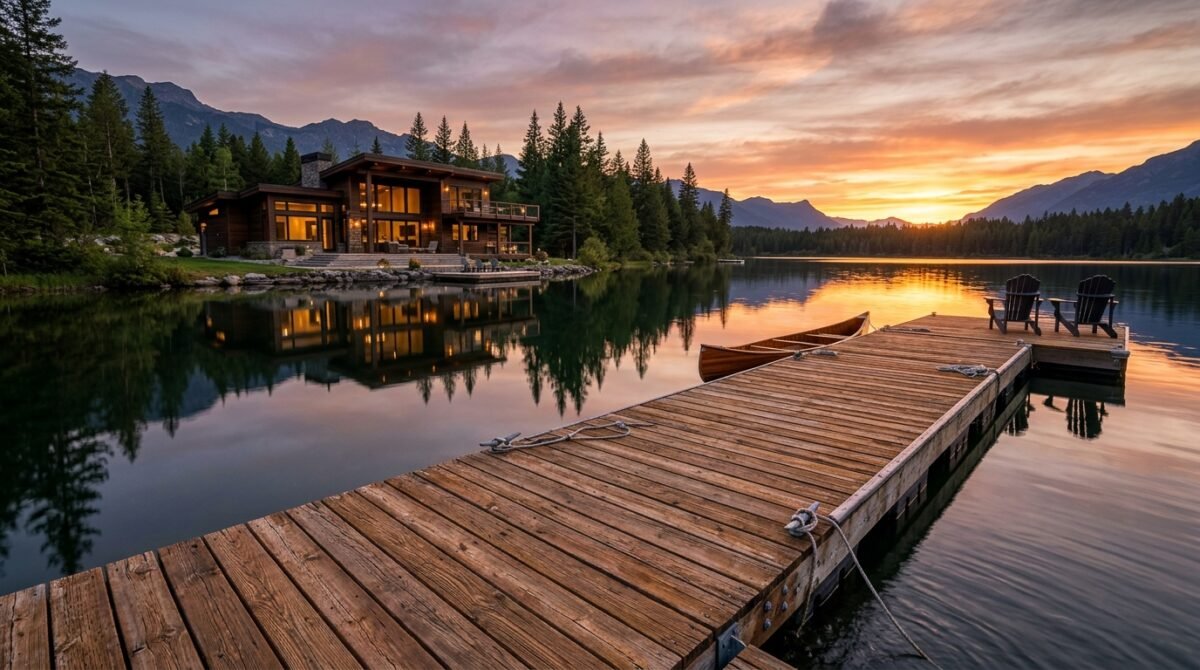
We all have that one family member who treats our hard-earned assets like a public utility. For me, it is my older brother, Greg. Growing up, Greg was the charismatic golden child; I was the one who played by the rules, worked the extra shifts, and eventually saved enough to purchase a small, modest cabin on the edge of Lake Arrowhead. It was my sanctuary, a place where I could escape the noise of the corporate world and find a bit of peace. However, what started as a few polite requests for ‘weekend getaways’ has metastasized into a full-blown hostile takeover.
Last spring, the dynamic shifted from casual requests to a rigid set of demands. Greg didn’t just want a weekend; he wanted the entire summer. He wanted exclusive access, the keys, and the right to host his friends, all while expecting me to keep the insurance policy, property taxes, and maintenance fees in my name. The sheer audacity of the request left me stunned, but the real shock came when he tried to frame it as a ‘family duty’ that I was failing to uphold.
This isn’t just about a house. It is about the fundamental erosion of boundaries. When you set a boundary with someone who has thrived on your lack of them, the reaction is rarely calm. It is usually explosive. I found myself at a crossroads where I had to choose between being the ‘nice, cooperative sibling’ and being a person who owns their own life and property.
The situation escalated into a digital battlefield, with family group chats buzzing with passive-aggressive comments and direct demands that I ‘do the right thing.’ It is a story of gaslighting, financial manipulation, and the painful process of learning that saying ‘no’ to family is often the most important word in your vocabulary. Here is how the summer of entitlement nearly destroyed my peace of mind.
The Casual Request That Wasn’t So Casual

It began on a Tuesday evening with a text message that seemed harmless enough on the surface. Greg, who had been struggling with his business, reached out to ask if he could bring his family up for ‘a few weeks’ during the upcoming summer season. I had always been generous with the cabin, allowing my siblings to use it during off-peak times, but this felt different. There was a tone of expectation that hadn’t been there before, as if he were asking for a favor he was already owed.
I replied that I would check my own schedule, as I had planned to spend some time there myself. That was the moment the mask slipped. Greg didn’t want to check my schedule; he wanted me to vacate the property entirely for the months of July and August. He argued that since his children were out of school, they deserved the ‘full lake experience,’ and that my occasional visits were ‘trivial’ compared to the needs of a growing family.
“Listen, I’m not asking for a favor, I’m suggesting a logical solution. You have no kids, and the place is just sitting there. Why would you deny my children a summer at the lake? It’s greedy, honestly.”
— Greg, via private text
His ability to twist my own ownership into an act of selfishness was masterful. I sat on my couch, reading the message over and over, feeling the familiar tightening in my chest. This was the same rhetoric my mother used to use when she wanted me to share my toys with him—a guilt-tripping mechanism that he had clearly perfected into his adult life.
I tried to explain that the costs were significant. Between the property taxes, the skyrocketing insurance premiums for lakefront property, and the regular maintenance of the dock and landscaping, I was already stretching my budget. Greg’s response was to suggest that I simply ‘cut back’ on other expenses so that his family could vacation for free. He genuinely didn’t see the contradiction in his request.
The audacity was breathtaking. I realized then that I wasn’t dealing with a brother asking for a favor; I was dealing with a relative who viewed my life as an extension of his own. I didn’t respond immediately. I needed time to process the sheer scale of the entitlement, realizing that if I gave in now, the cabin would essentially cease to be mine in anything but name.
The Spreadsheet of Ridiculous Demands

Three days later, I received an email from Greg that contained a detailed, color-coded spreadsheet. I opened it, expecting some sort of compromise, but instead, I found a ‘Summer Usage Agreement’ that he had drafted. It detailed everything from the dates of their occupancy to a list of ‘minor improvements’ he planned to make, which were clearly just upgrades for his own comfort, like a new grill and patio furniture that he expected me to reimburse him for later.
The document even included a section titled ‘Financial Responsibilities.’ He proposed that he pay for his own groceries, while I continue to cover every single fixed cost. He argued that since I was the owner, these were my ‘duties’ anyway. The lack of self-awareness was staggering. He had essentially treated my cabin like a corporate asset he was taking over in a hostile acquisition, complete with a legalistic tone that made my blood boil.
“I’ve outlined the summer schedule below. It’s fair for everyone involved. I’ll handle the cleaning after we leave, so you won’t even have to lift a finger. Just make sure the insurance is paid up before we arrive on the 1st of June.”
— Email from Greg
I looked at the dates. He had blocked out the entire summer, leaving me exactly one week in September, after the lake water would have already started to chill and the tourist season would be over. The arrogance of the plan was almost impressive if it wasn’t so insulting. He hadn’t even asked for my input; he had simply presented a fait accompli.
I replied with a firm refusal. I told him that the cabin was not available for the summer and that I would be using it myself for the majority of the season. I kept the email short and professional, refusing to get drawn into a debate about ‘fairness’ or his children’s needs. I knew that any explanation would just be treated as an opening for negotiation.
The silence that followed lasted for exactly four hours. Then, my phone started buzzing. Not just from Greg, but from the family group chat that I had foolishly stayed in for years. It was time for the collective pressure to begin, and I knew exactly who would be leading the charge.
The Group Chat Inquisition
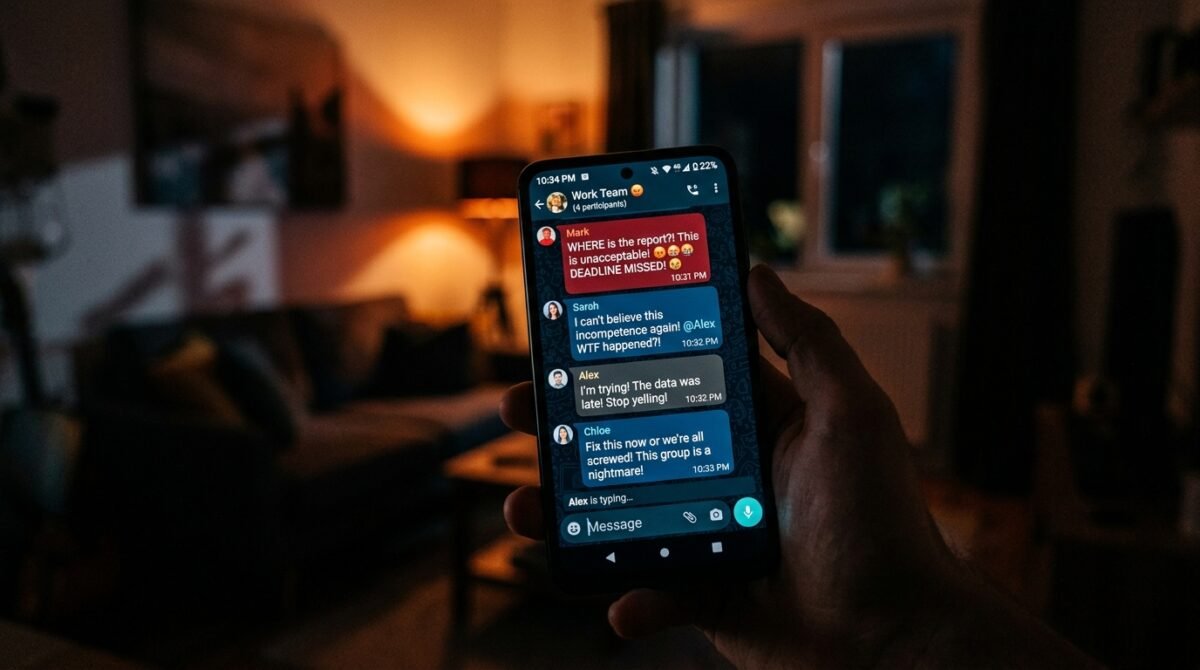
The notification sound on my phone became a constant, rhythmic annoyance. My sister, Sarah, had joined the fray, asking me why I was being so ‘difficult’ and ‘hostile’ toward our own brother. It was the classic triangulation tactic: get the rest of the family to pile on until the target caves under the pressure. I watched as the messages scrolled by, each one more accusatory than the last.
They were framing my boundaries as a personal attack on the family’s unity. My aunt, who usually stayed out of these things, chimed in with a comment about how ‘family is supposed to support family.’ It was the usual script—the one where I am the villain for holding onto what I worked for, and they are the victims for not getting a free ride.
“Are you seriously going to let the cabin sit empty while your nieces and nephews are stuck in the city? This isn’t like you. We thought you were a team player, but this is honestly selfish. Don’t be surprised if people stop inviting you to things.”
— Sarah, Family Group Chat
I didn’t lose my cool. I simply replied that the cabin wasn’t going to be empty, as I had personal plans for the summer. I also pointed out that if they felt the kids needed a vacation, they were more than welcome to rent a place like everyone else does. That set them off. The tone shifted from ‘disappointed’ to ‘outraged.’
They accused me of ‘flaunting’ my success and hoarding a resource that ‘belonged to the family’ because it was a family legacy—which it wasn’t. I had bought the place with my own savings, long after my parents had passed away. There was no inheritance involved, no shared family funds, nothing. It was entirely mine.
I realized then that I had to exit the conversation. There was no point in arguing with a wall. I muted the group chat and set my phone to ‘Do Not Disturb.’ The immediate relief was palpable, but I knew this was just the calm before the storm. They weren’t going to let this go so easily.
The Unannounced 6:00 AM Kitchen Intrusion
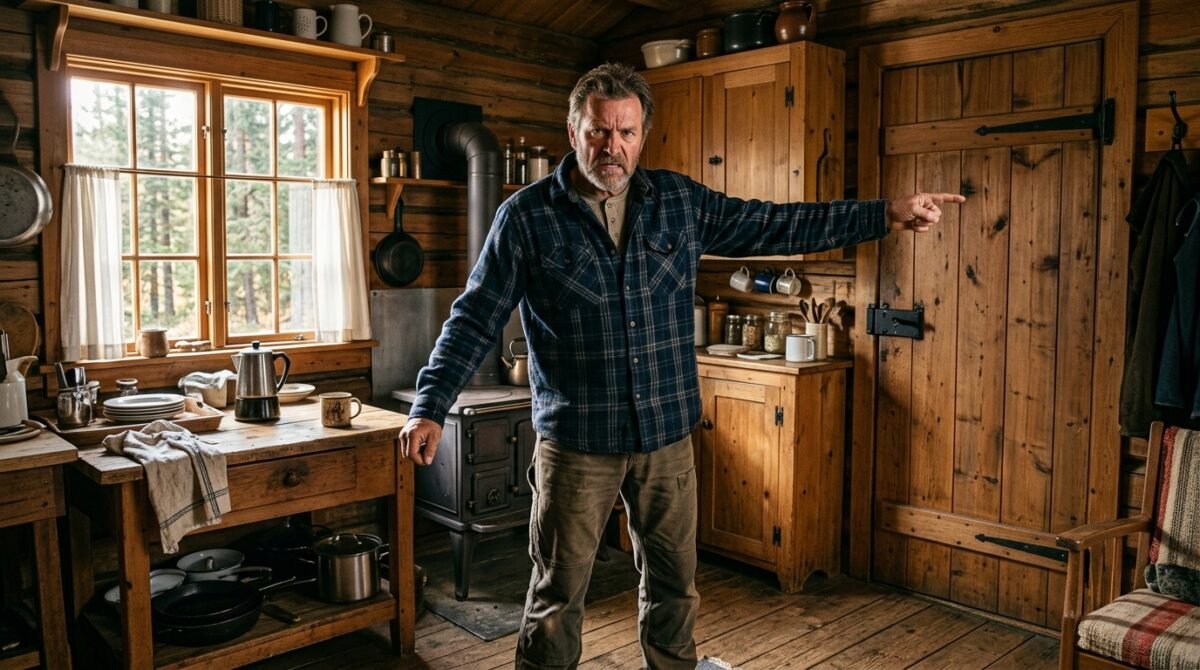
Two weeks later, the situation hit a new low. I was staying at the cabin for a long weekend, enjoying the early morning mist over the lake with a cup of coffee, when I heard the distinct sound of a car engine in the driveway. I wasn’t expecting anyone. I walked to the window and saw Greg’s SUV parked right up against the porch. He had clearly driven up early, thinking he could catch me off guard or just force his way in.
He walked right through the door—he still had an old copy of the key from years ago, a mistake I had forgotten to rectify. He wasn’t alone; he had his wife and two kids in tow, all of them looking like they were ready to move in for the season. He looked at me, saw my pajamas and my look of absolute fury, and didn’t even blink. He just started unloading bags.
“I thought we could just get a head start on the weekend. The kids are excited. Don’t worry, we brought our own breakfast. You can go back to sleep if you want. We’ll take the guest room.”
— Greg, as he entered the cabin uninvited
I felt a cold rage settle over me. This was a complete violation of my home, my privacy, and my boundaries. I stood my ground in the kitchen. I told him he had to leave immediately, or I would call the police for trespassing. The look on his wife’s face was one of genuine confusion—he had clearly told her that I had agreed to this. He had lied to his own family to make me the bad guy.
He laughed, thinking I was bluffing. He started unpacking a box of cereal into my pantry. I walked over to the door, opened it wide, and pointed to his car. I told him that if he didn’t leave right that second, I would be changing the locks and reporting the incident to the sheriff. It wasn’t an idle threat; I was done.
He turned to me, his face turning bright red. He started shouting, calling me every name in the book. His children were standing behind him, looking terrified. I felt terrible for the kids, but I knew I couldn’t let him stay. If he stayed for one hour, he would stay for the summer. I stood firm until he finally gathered his family and stormed out, leaving a trail of slamming doors and angry accusations.
The Fallout and the Digital Shaming

By the time I drove back home the next day, the internet—or at least my family’s corner of it—had erupted. Greg had posted a long, distorted version of the story on social media, framing me as an elitist, cold-hearted person who cared more about property than family. He left out the fact that I bought the place, and he left out the fact that he had tried to break into my house at 6:00 AM.
People I hadn’t spoken to in years were chiming in with ‘I can’t believe you’d do that’ messages. It was a classic smear campaign. I had to decide whether to fight back publicly or take the high road. I chose the high road, but I made sure to document everything. I took pictures of the forced entry, kept the texts, and saved the emails. You never know when you’ll need evidence.
“My brother just kicked his own family out of a house he’s not even using. Some people value money more than blood. Sad to see the ego take over like this.”
— Greg’s public Facebook post
The community support, however, was not what he expected. While some of the extended family fell for his narrative, a few cousins who knew better reached out to me privately to offer their support. They told me they were sick of his entitlement and had been waiting for someone to finally stand up to him. It was a wake-up call; I realized that by staying silent for so long, I had been enabling his behavior.
I decided to write a calm, factual post on my own page, not attacking him, but simply stating that I value my boundaries and expect respect for my property. I didn’t get into the dirty details; I just kept it about the importance of mutual respect. It was enough to stop the bleeding, and it signaled to everyone that I wouldn’t be bullied into submission.
The fallout was uncomfortable, but it was necessary. I lost some ‘friends’ who were only interested in being around for the fun, but I gained a newfound sense of self-respect. I realized that my value as a person was not tied to how much I could give to people who didn’t respect me.
The Legal Reality Check

Realizing that Greg might actually try something more drastic, I consulted with a real estate attorney. I wanted to make sure that his previous ‘usage’ didn’t grant him any sort of squatter’s rights or implied access. My attorney was incredibly helpful, explaining that without a written agreement, he had absolutely no claim to my property, and that his attempted forced entry was, indeed, a criminal act.
We drafted a formal cease and desist letter. It was a cold, legal document that effectively shut down any future ‘requests.’ It stated clearly that he was no longer welcome on the property and that any future attempts to enter would be treated as trespassing. Sending that letter was one of the hardest things I’ve ever had to do—it felt like the final nail in the coffin of our relationship.
“This is a formal notice that you are prohibited from entering the property located at [Address]. Any future attempts to access the premises without explicit, written permission will result in immediate legal action, including potential criminal charges for trespassing.”
— Excerpt from the formal letter sent to Greg
I sent it via certified mail. Watching the tracking status update on my phone was a surreal experience. When it was delivered and signed for by his wife, I felt a strange sense of finality. There was no going back from here. The family dynamic had irrevocably changed, and I had to prepare for the inevitable explosion at the next family gathering.
The lawyer also advised me to install a security system. I opted for a high-end setup with cameras that I could monitor from my phone. It gave me peace of mind, knowing that if anyone ever tried to pull that 6:00 AM stunt again, I would have video proof to hand directly to the police. It felt extreme, but in this situation, extreme felt like the only appropriate response.
I started to see the cabin as a place of refuge again. With the security in place and the boundaries established, I was finally able to enjoy the space without looking over my shoulder. It was a hard lesson, but it was a lesson in sovereignty. I owned my life, and I was finally starting to act like it.
The Reddit Verdict
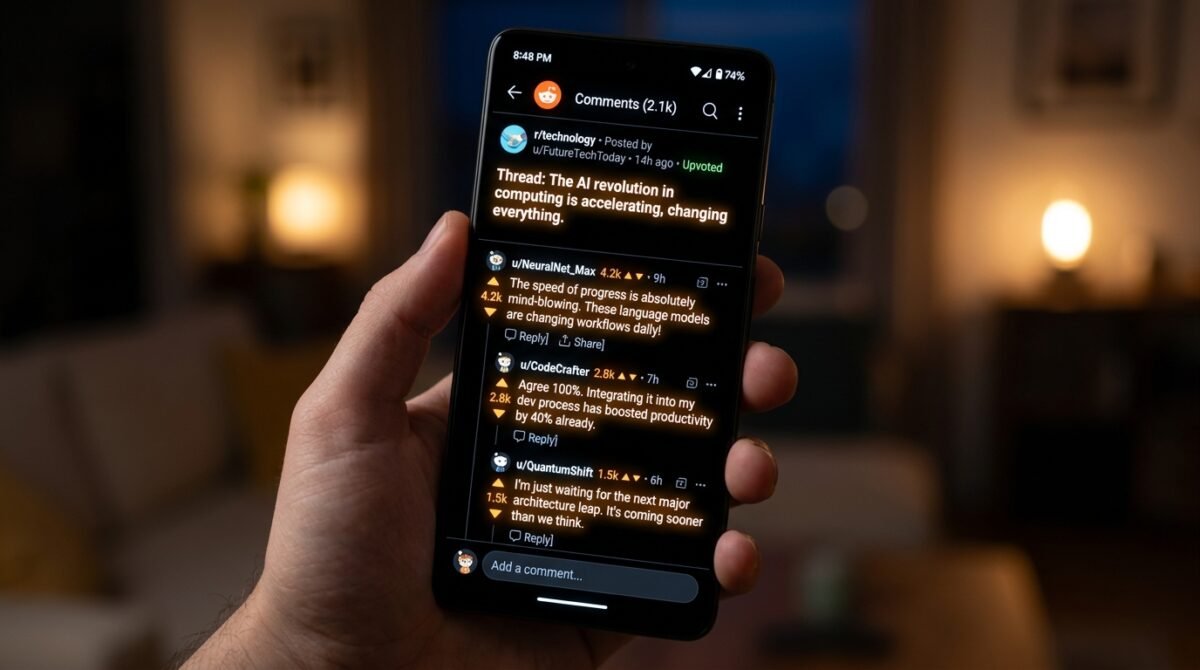
I decided to post my situation on a popular sub-reddit dedicated to family conflicts to get some outside perspective. I needed to know if I was truly the villain they made me out to be. The response was overwhelming. Within hours, the post had thousands of upvotes, and the comment section was filled with people who had dealt with similar, entitled family members.
The consensus was clear: I was not in the wrong. In fact, most people were shocked that I had tolerated his behavior for as long as I had. It was validation that I desperately needed. Hearing from strangers who didn’t have a stake in the family drama made me realize that my decision was objectively correct.
“NTA (Not The Asshole). Your brother is a classic narcissist who views your assets as his own. You are the one paying the insurance and taxes; you are the owner. He has no right to demand anything. Good on you for the legal action. Stay firm.”
— u/ReasonPrevails (Top Comment, 28.5k upvotes)
Reading through the comments, I saw so many stories that mirrored my own. People shared how they had lost houses, cars, and inheritances because they didn’t want to be the ‘mean’ sibling. It was a community of people who had been through the fire and come out the other side. It made me feel less alone in my struggle.
There were some dissenting voices, of course, mostly people who argued that family is ‘more important than money.’ But even they couldn’t explain why it was my responsibility to sacrifice my sanity for his entitlement. The arguments for ‘family loyalty’ started to sound hollow when they were applied to a situation where I was the only one doing the giving.
The Reddit experience was cathartic. It helped me process the guilt I had been carrying. I realized that my brother’s manipulation was not a reflection of my worth, but a reflection of his own inadequacies. The community support gave me the backbone I needed to continue holding the line, no matter what the rest of the family said.
The Sunday Dinner Silence

The inevitable happened at the annual Labor Day barbecue. I hadn’t seen most of the family since the incident, and the tension was thick enough to cut with a knife. As soon as I walked in, the room went quiet. Greg was in the corner, holding court with a beer, but he stopped talking the moment I stepped through the front door.
I walked to the buffet table, said hello to my aunts and uncles, and made an effort to be polite, but distant. I wasn’t there to fight; I was there to show them that I wasn’t intimidated. Greg eventually made his way over to me, looking like he was ready to start another round of ‘the talk.’
“I hope you’re happy. You really ruined the kids’ summer. Was the legal letter really necessary? Did you have to go that far over a misunderstanding?”
— Greg, at the family barbecue
I looked him in the eye and kept my voice calm. I told him the letter was necessary because he had broken into my home. I didn’t shout, and I didn’t apologize. I just stated the fact. He tried to argue that it was ‘just an accident,’ but I cut him off. I told him that if he wanted a relationship with me, it had to be based on respect, not entitlement.
The whole room was watching. It was the moment of truth. Either he would back down, or he would continue to play the victim. He looked around, realized he didn’t have the support he thought he had, and muttered something about me being ‘too sensitive’ before walking away. It wasn’t an apology, but it was a retreat.
I spent the rest of the afternoon talking to family members who had stayed out of the drama. It was a pleasant evening, despite the underlying awkwardness. I realized that the sky hadn’t fallen. The world didn’t stop turning because I set a boundary. I felt a sense of liberation that I hadn’t felt in years.
Lessons in Hard Boundaries

Looking back, the entire experience was a crash course in setting boundaries. I learned that saying ‘no’ is not an act of aggression; it is an act of preservation. For years, I had been taught that being a good person meant being an accommodating one. I realized that in reality, being a good person means being a person who respects themselves enough to not let others walk over them.
I also learned that family is not a free pass for bad behavior. Just because we share a bloodline doesn’t mean I owe him my labor, my property, or my silence. The distance I’ve created has allowed me to grow in ways I didn’t think were possible. I’m no longer the person who waits for approval; I’m the person who defines my own standards.
I have since sold that cabin, not because I was forced to, but because I decided I wanted a fresh start somewhere else. The memory of the conflict had tainted the space for me, and I wanted a place that was truly my own, without the ghosts of the past. It was a bittersweet decision, but it was the right one.
I still see Greg at weddings and funerals, but our relationship is strictly superficial. We talk about the weather and the sports scores, but we never go deep. I don’t trust him with my life, and I don’t give him access to my home. It’s a sad reality, but it’s a healthy one. I prefer this cold, distant peace over the chaotic, manipulative closeness we had before.
The most important lesson I’ve learned is that you are the only one who can protect your life. If you don’t stand up for yourself, no one will. And the people who get angry when you set boundaries are usually the ones who benefited the most from you having none. Remember that, and you’ll never be a pawn in someone else’s game again.
Conclusion
This saga of the cabin, the keys, and the entitlement is not unique; it is a tale as old as time. Family dynamics are often the most complex and difficult relationships we navigate, precisely because they carry the weight of expectations and history. When those expectations turn into demands for your personal assets, you are forced to make a difficult choice: do you sacrifice your peace for the sake of ‘keeping the peace,’ or do you stand your ground and risk the fallout?
My journey taught me that boundaries are the ultimate act of self-love. It wasn’t about the cabin, and it wasn’t about the summer heat; it was about reclaiming the agency of my own life. While the path was painful and the family fallout was real, the clarity I gained was worth every bit of the struggle. I am no longer a puppet in a family play I didn’t write, and for that, I am eternally grateful.
What about you? Have you ever had a family member view your hard-earned assets as their own entitlement? How did you handle the pressure, and what did you learn about the importance of boundaries? Let’s talk about it in the comments below—I’d love to hear your stories of standing up for yourself.
What's your verdict on this dilemma?
Vote below to contribute to the official community consensus.

Have a Dilemma Keeping You Up at Night?
Share your real-life feud, wedding chaos, or relationship crossroads anonymously with our editorial team.
What do you think ?
0 Comments🛡️ Comments are moderated to protect community integrity. Your comment will appear once approved by the editorial team.