
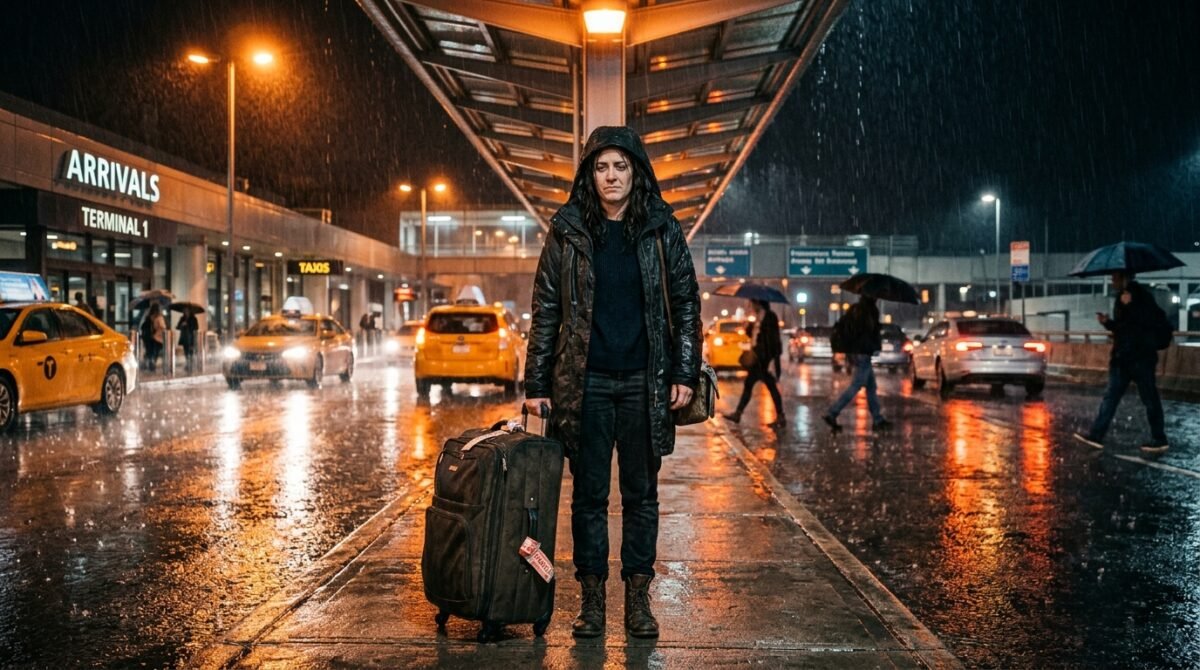
We all have our limits. In the modern dating landscape, we talk endlessly about ‘red flags’ and ’emotional availability,’ but sometimes the true nature of a partner reveals itself in the most mundane, logistical moments. For two years, I believed I was in a partnership of equals. We navigated grocery runs, double dates, and the occasional minor conflict with a degree of grace that made me feel secure. I thought we were a team.
That illusion shattered on a Tuesday night. A business trip that should have ended with a familiar face at the gate turned into a test of character that I never anticipated. My flight was delayed by four hours, pushing my arrival well past midnight into the early hours of Wednesday. It wasn’t just late; it was pouring rain—the kind of sideways, blinding downpour that makes highways treacherous and rideshare surge pricing astronomical.
I had touched base with Mark, my boyfriend of two years, throughout the delay. He knew exactly what time the plane landed. He knew the weather conditions. He knew that I was exhausted after a grueling week of presentations. Yet, as I stepped off the jet bridge, my phone buzzed with a message that shifted my entire reality. It wasn’t a sympathetic note or a ‘see you soon.’ It was a boundary—or, more accurately, an ultimatum.
The dilemma here isn’t just about the act of driving. It’s about the underlying philosophy of our relationship: the silent contract that states my comfort, safety, and needs are secondary to his ‘sleep hygiene.’ As I sat in the back of an Uber heading toward a hotel instead of our shared apartment, the silence in the car became deafening, forcing me to confront a question I had been avoiding for far too long: am I with a partner, or a roommate who treats me like an inconvenience?
The Late-Night Ping That Changed Everything
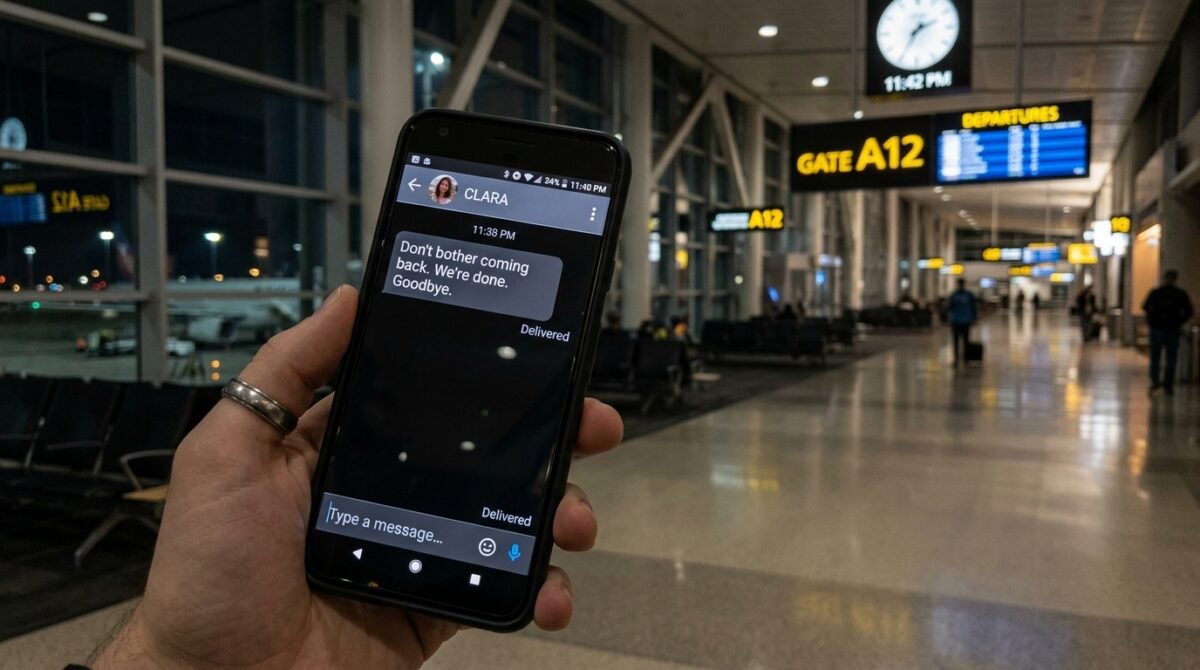
I remember standing at the luggage carousel, watching the bags circle in a hypnotic, rhythmic pattern. The terminal was mostly empty, save for a few weary travelers and the hum of the airport floor waxer in the distance. My phone, which I had been checking intermittently for updates, finally vibrated in my palm. I expected a ‘Heading your way now’ message. Instead, I saw a paragraph of text that felt cold and detached.
Mark had sent a message at 12:45 AM, despite knowing my plane had just touched down. He wasn’t in the car. He wasn’t on his way. He was in bed, and he was quite adamant about staying there.
“Hey, I know you just landed, but the weather is honestly terrible and the roads are flooded. I really need to prioritize my sleep schedule for my presentation tomorrow morning. I’m going to stay put. Just grab an Uber, I’ll cover the cost on Venmo later. Don’t wake me up when you get in.”
— Mark, via iMessage
I read the message three times, hoping my exhaustion was playing tricks on my eyes. I looked out the floor-to-ceiling windows of the terminal. He was right about one thing: it was a monsoon out there. The airport parking garage lights were reflecting off the slick, black asphalt, creating a chaotic, blurry landscape. I felt a hollow pit open in my stomach.
This wasn’t about the rain. This wasn’t about the presentation. This was about the blatant lack of concern for my safety. I was a woman alone at 1:00 AM, in a city where I had lived for years but still felt vulnerable at night, being told that his REM cycle was more important than my logistics or my emotional state after a long journey.
I felt a strange, detached calm wash over me. It was the calm of someone who has finally stopped making excuses for a partner’s behavior. I didn’t reply to the text. I didn’t call him to argue. I simply walked toward the taxi stand, but then, a thought occurred to me: why go home to someone who clearly didn’t want to be inconvenienced by my existence?
The Choice to Check into the Airport Hotel

I looked at the Uber app on my phone. The surge pricing was astronomical, easily triple the standard rate. It didn’t matter. I looked at the location of the hotel inside the airport complex. It was a short, dry walk from the terminal doors, unlike the cold, miserable ride home in a stranger’s car through flooded streets. For the first time, I decided to choose myself.
I booked the room. I wasn’t just avoiding a fight; I was avoiding the emotional labor of having to be ‘okay’ with his selfishness when I finally walked through our front door. If he wanted to guard his sleep schedule, he could guard his solitude too. I checked in, took a hot shower, and turned off my phone completely.
The silence of the hotel room was blissful. There was no tension, no ‘we need to talk’ looming in the air, and no need to explain why I was upset. I realized that for the last two years, I had been the one constantly accommodating. I was the one who drove him when his car was in the shop, the one who picked up his dry cleaning when he was ‘stressed,’ and the one who quieted the house when he had early meetings.
When I woke up the next morning, my phone was flooded with notifications. He hadn’t just sent one or two; he had sent dozens. They ranged from annoyed to panicked, though the panic was entirely self-centered. He hadn’t asked if I was safe; he had asked where his breakfast was and why the apartment felt so empty.
“Where are you? I woke up and you weren’t here. Did you get an Uber home? Why aren’t you answering? I have to leave for work in twenty minutes and I can’t find my iron.”
— Mark, via iMessage
I stared at the screen, feeling a wave of clarity. The irony of him complaining about an iron while I had spent the night navigating the aftermath of his negligence was not lost on me. I didn’t feel angry anymore. I felt done.
The Confrontation at the Breakfast Table
I didn’t head straight home. I went to a coffee shop, caught up on emails, and finally messaged him back at noon. I told him I had checked into a hotel because I didn’t want to wake him and the weather was too dangerous to bother him. It was a passive-aggressive lie, but it served as a mirror for his own behavior. He replied immediately, demanding I come home to ‘explain’ why I was being so dramatic.
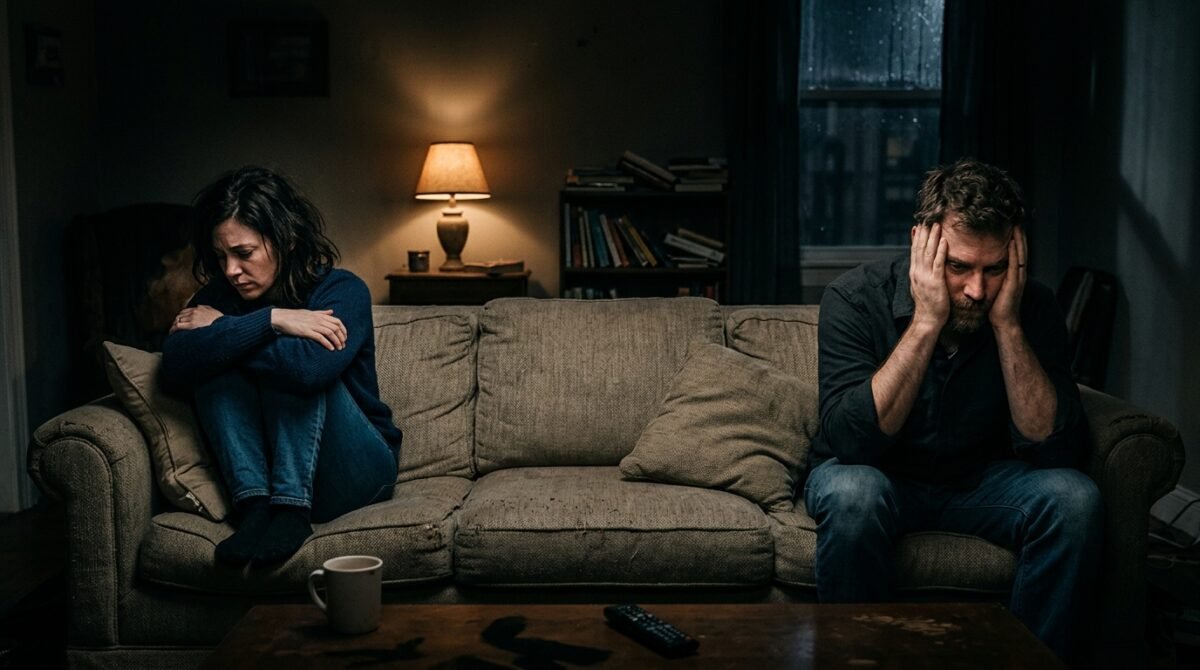
When I finally walked into our apartment, he was sitting on the couch, looking disheveled and clearly agitated. He didn’t stand up to greet me. He didn’t ask how my trip was. He went straight for the accusation. He argued that he had ‘set a boundary’ and that I had overreacted by spending money on a hotel.
“I just think it’s incredibly immature to go get a hotel room because you’re mad. I told you I needed to sleep. You could have just taken an Uber to our house. Why make this a bigger deal than it is? You’re acting like I abandoned you in the middle of a desert.”
— Mark, during the argument
I looked at him, really looked at him. I saw a man who had never once had to consider the impact of his actions on anyone other than himself. I sat down across from him and, for the first time, I didn’t apologize. I didn’t soften my tone to accommodate his fragile ego. I told him exactly how it felt to see that message after a flight delay.
He continued to talk over me, bringing up his ‘work stress’ and his ‘need for boundaries’ as if he were a victim in a situation where he was the only one with the power to act. He kept using corporate buzzwords to describe his lack of empathy, a tactic I suddenly realized he used to invalidate my feelings in every past argument. It was gaslighting wrapped in the language of self-care.
I realized then that this wasn’t an isolated incident. This was the symptom of a larger, systemic failure in our relationship. He wasn’t a bad person; he was just a person who believed his time and comfort were fundamentally more valuable than mine. I told him that I needed space, and that I was going to stay at my sister’s for a few days to figure things out.
The Reddit Verdict: Echoes of Validation

I turned to the internet, not for attention, but for a sanity check. I posted the story on a popular relationship subreddit, keeping the names and locations private. I expected some nuance, maybe even some people telling me I was being too sensitive, as Mark had suggested. Instead, the response was overwhelming. Within hours, the post had thousands of upvotes and hundreds of comments.
The consensus was immediate and harsh. People pointed out that a partnership is not a transactional business contract where you ‘bill’ each other for favors. They highlighted the safety aspect, noting that in a storm, a partner should be the first line of defense, not the first person to offer an excuse.
“This isn’t about the airport ride. It’s about the fact that he views your relationship as a set of inconveniences to be managed. If he acts like this when you’re just tired from a flight, imagine how he’ll react when there is a real, life-altering crisis. Run.”
— u/RelationshipGuru22 (Top Comment, 32.1k upvotes)
Reading through the comments was like reading a map of my own relationship. People shared similar stories of ‘selfish partners’ who eventually showed their true colors during health scares or financial downturns. The term ‘weaponized boundaries’ kept coming up. I realized I wasn’t the only one who had been gaslit into believing that prioritizing one’s own comfort over a partner’s basic needs was a form of ‘self-care.’
Another user noted the specific phrasing of his text message—how he tried to control my response by offering to pay for the Uber. It was a classic ‘bribe to silence.’ He wanted to alleviate his own guilt by paying for the ride, rather than actually showing up for me. It was a way of buying his way out of being a decent human being.
The community support provided the objective lens I had been missing. When you are inside a toxic dynamic, you lose the ability to distinguish between normal disagreements and chronic neglect. Seeing thousands of strangers confirm my internal alarm bells made me realize that my decision to go to the hotel wasn’t an overreaction—it was the first step toward self-preservation.
The Slow Unraveling of the Daily Routine
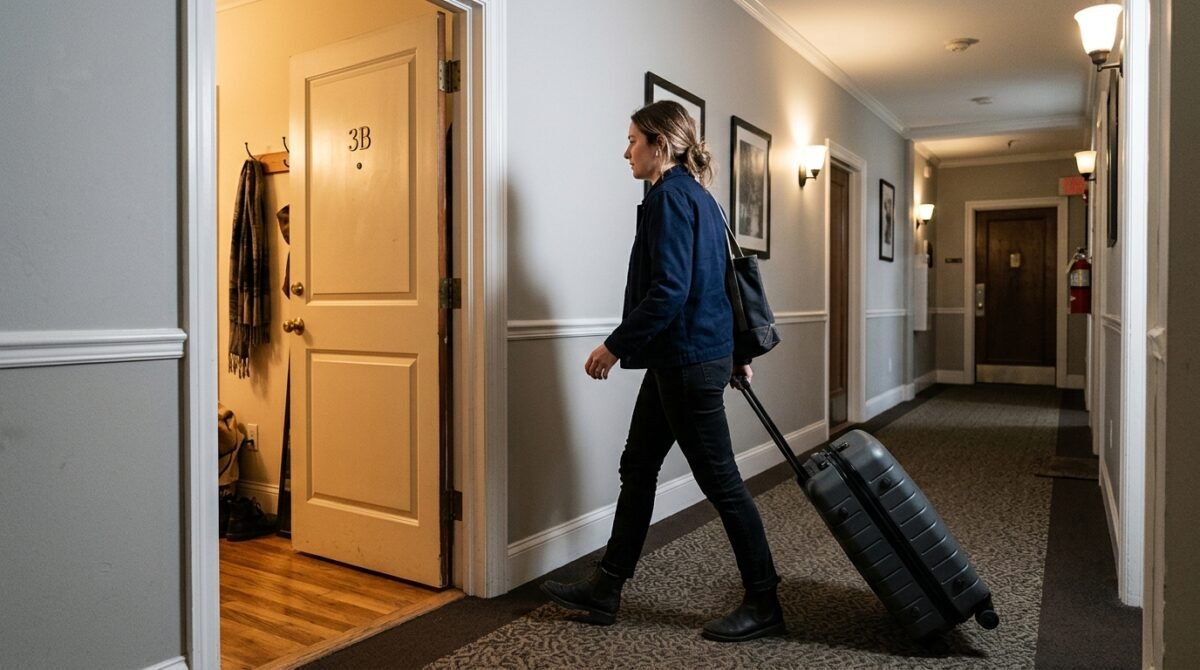
When I returned to the apartment a week later to collect some of my things, the silence was heavy. Mark had made zero effort to understand my perspective. Instead, he had spent the week complaining to our mutual friends about how I was ‘holding a grudge’ over a ‘minor logistical disagreement.’ He had framed it as me being overly emotional and irrational.
He didn’t even look up from his computer when I started packing my bags. He just kept typing, as if my leaving was a minor inconvenience he was choosing to ignore. It was the same energy he had used to send that text message—total, chilling indifference. I walked through the apartment, room by room, seeing all the little ways I had been shrinking myself to fit his life.
I saw the chore chart he had insisted on, which somehow always ended up with me doing the ‘deep cleaning’ while he focused on ‘project management.’ I saw the grocery list where he had vetoed all my favorite snacks because they ‘didn’t fit his diet.’ Every corner of that apartment was a testament to his ego and my complicity. I had been a guest in my own home.
I packed my clothes, my books, and the few mementos that were truly mine. I didn’t take the things we had bought together, even the expensive ones. I didn’t want them. They felt like bribes. Every item felt tainted by the memory of me being the one to compromise. I looked at him one last time, expecting him to say something—a question, an apology, anything.
“Are you really doing this? You’re going to walk out over an Uber? This is exactly why I didn’t pick you up. You make everything a scene. You are so difficult to live with when you don’t get your way.”
— Mark, as I packed my final suitcase
His words were the final nail in the coffin. He still didn’t see me. He didn’t see the woman who had supported him through his career shifts or the woman who had nurtured his happiness for years. He saw an object that had stopped performing its function. I walked out the door without another word, and for the first time in two years, I felt like I could finally breathe.
The Aftermath: Redefining My Value

The weeks that followed were a whirlwind of emotions. There was grief, certainly. I was mourning the version of the relationship I thought I had, and the man I thought I loved. But beneath the grief was a sharp, clear sense of liberation. I moved into a small studio apartment, and for the first time, I didn’t have to check in with anyone about my schedule, my meals, or my plans.
I started noticing how much mental energy I had been spending on ‘managing’ Mark. I had been constantly predicting his moods, prepping for his needs, and apologizing for my own existence. Without that burden, I felt like a lightbulb had been switched on. I reconnected with friends I had neglected and threw myself into the hobbies I had dropped during the relationship.
My friends were supportive, though many were shocked by the ‘airport story.’ When I told them the details, they couldn’t believe I had stayed as long as I did. They pointed out things I hadn’t even noticed, like the way Mark would subtly put me down in front of others or how he rarely asked me questions about my day. I had been so busy being the ‘supportive partner’ that I had missed the reality of being alone while sitting right next to him.
I learned that ‘boundaries’ are not just for the other person to respect—they are for me to enforce. I had let him walk all over my boundaries because I wanted to be the ‘easygoing girlfriend.’ But being easygoing is just another word for being a doormat. I realized I was worth more than a convenient accessory in his life.
I still occasionally wonder what he thinks of it all. Does he tell people I was crazy? Does he ever think about the rain that night and realize he was wrong? It doesn’t matter. The only validation that matters is the one I give myself. I am no longer waiting for someone to show up for me; I am showing up for myself, every single day.
The Toxic Myth of ‘Low-Maintenance’ Partners

I think the most dangerous trap in modern dating is the push to be ‘low-maintenance.’ We are told that if we ask for support, we are ‘needy’ or ‘drama-prone.’ We are told that if we have expectations for how a partner should treat us, we are ‘demanding.’ This narrative is designed to benefit the person who has no intention of doing the work required for a real relationship.
Mark was a master of this rhetoric. He used ‘independence’ and ‘boundaries’ as a shield against any accountability. Whenever I asked for his time or his presence, he framed it as me failing to be an independent adult. It was a brilliant, albeit cruel, psychological maneuver. He made me feel like I was the one with the problem for wanting a partner who was actually present.
The reality is that a relationship requires work. It requires showing up when it’s inconvenient. It requires driving in the rain, listening when you’re tired, and prioritizing the other person’s safety and well-being even when your own sleep schedule is at stake. That is not ‘codependency’ or ‘lack of boundaries.’ That is love.
If you find yourself in a situation where you are afraid to ask for help because you know you’ll be told you’re being ‘too much,’ please listen to me: you are not too much. You are simply with someone who is too little. Do not settle for someone who treats you like an option when you need support.
I look back at that airport night and I don’t see a tragedy. I see a turning point. It was the moment I stopped asking for permission to be cared for and started demanding the kind of life I deserve. I hope that by sharing this, someone else might find the courage to walk away from a relationship that treats them as an inconvenience.
Why We Stay: The Psychology of Sunk Costs
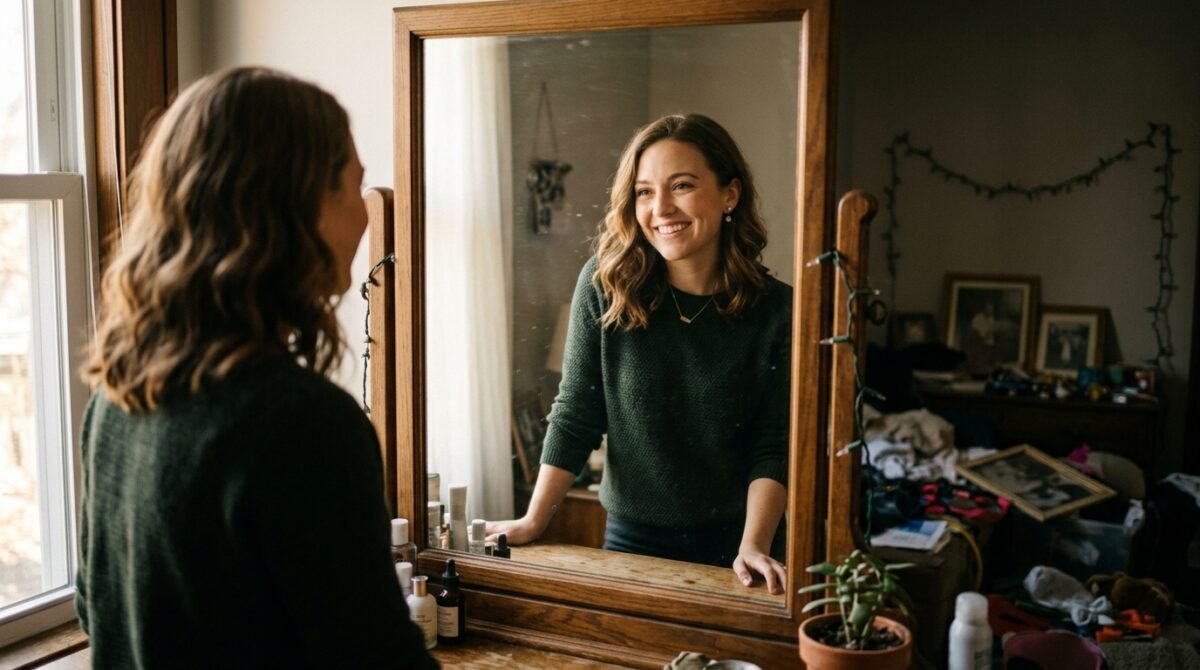
Why did I stay for two years? That’s the question everyone asks, and the answer is complex. It’s the sunk cost fallacy. I had invested so much time, so much emotional energy, and so many compromises into the relationship that I felt like leaving would mean admitting I had wasted two years of my life. I kept hoping that if I just did enough, if I was just supportive enough, he would finally ‘get it’ and start reciprocating.
I kept thinking, ‘He’s just stressed with work,’ or ‘He’s just going through a phase.’ I normalized his neglect because it was easier than facing the truth: that he just didn’t care as much as I did. I was in love with a potential version of him, a version that existed only in my head, and I ignored the reality of the man standing in front of me.
We often stay because we are afraid of being alone. We are afraid that if we walk away, we won’t find someone better, or that we’ll be judged for ‘giving up’ on a relationship. But being alone is infinitely better than being with someone who makes you feel lonely. My time in that studio apartment has taught me that the peace of solitude is far more valuable than the company of someone who doesn’t respect me.
Breaking the cycle of ‘sunk cost’ requires radical honesty with yourself. It requires looking at your partner and asking: ‘If I met this person today, knowing what I know now, would I date them?’ If the answer is no, then why are you still there? The time you spend fixing a broken situation is time you could spend building a new, healthy one.
I don’t regret the two years. I regret the time I spent trying to change someone who didn’t want to change. But I learned a lesson that has shaped my current life: I am the primary guardian of my own happiness. No one else is coming to save me, and that’s okay, because I am perfectly capable of saving myself.
The Crucial Difference Between Boundaries and Barriers

There is a massive, often misunderstood difference between healthy boundaries and defensive barriers. Mark used his ‘sleep schedule’ as a barrier—a way to keep me out, to prevent me from entering his space, both literal and metaphorical. A boundary is meant to protect your well-being, not to punish your partner for existing.
When he said he ‘needed his sleep,’ he wasn’t setting a boundary. He was effectively saying, ‘Your needs are a threat to my comfort, and I am choosing to eliminate that threat by ignoring you.’ That is not healthy. It is cold, calculated, and deeply selfish. A healthy partner would have said, ‘I’m really exhausted, but I want you to be safe. Let’s figure out a way to get you home, maybe I can pick you up or help you book a car.’
I’ve realized that people who are obsessed with ‘boundaries’ in a relationship often use them as a tool to avoid being vulnerable. They don’t want to be inconvenienced; they don’t want to share the emotional load. They want a partner who can be switched on and off like a light, providing validation when it suits them and disappearing when it doesn’t.
I’m much more cautious now. I look for how people respond when things get messy. Do they step up? Do they try to solve the problem with me? Or do they retreat to their ‘boundaries’? The way someone acts during a rainstorm—or any crisis, really—is a litmus test for the kind of person they are. It’s the ultimate reveal of their character.
If you’re reading this and you’re in a relationship where you feel like you’re constantly ‘walking on eggshells’ to avoid hitting your partner’s ‘boundaries,’ please consider that those boundaries might actually be walls. You deserve someone who wants to break down those walls, not hide behind them.
Moving Forward: Lessons in Self-Respect

Life is different now. I don’t rush to reply to texts. I don’t apologize for my schedule. I have learned to appreciate the people who show up, the friends who check in on me, and the family who loves me unconditionally. I’ve realized that the most important relationship I will ever have is the one with myself.
I still travel for work, and yes, I still get delayed. But now, when I land at 1:00 AM, I don’t feel that sinking feeling of dread. I know I have the resources to take care of myself. I have a community that supports me, and I have the inner strength to handle whatever happens. I’m not waiting for a knight in shining armor anymore; I’m the knight.
To anyone out there struggling with a similar dynamic: you are not crazy. Your feelings are valid. You are allowed to ask for help, and you are allowed to expect your partner to be there for you when the world feels like it’s raining down on you. Don’t let someone else’s definition of ‘low-maintenance’ ruin your sense of worth.
I hope that my story, as painful as it was at the time, serves as a reminder that we all have the power to change our circumstances. We are not trapped in the roles our partners assign us. We can leave. We can start over. We can choose ourselves, and in doing so, we can find a much better version of life.
Thank you for letting me share this. It’s been a long journey, but I’m finally in a place where I can see the light, and I hope you can too. Remember, the next time the storm hits, make sure you’re with someone who is willing to get wet with you.
Conclusion
The story of that rainy Tuesday night has become a part of my past, but the lessons I learned there are a part of my future. It was a brutal wake-up call, but it forced me to confront the reality that I was settling for far less than I deserved. I left not because I was ‘too emotional,’ but because I finally realized that my needs were not an inconvenience—they were a priority.
I am now in a place of peace, and my standards for partnership have never been higher. I don’t need someone to ‘manage’ my life; I need someone to walk beside me through the storms. We all deserve that kind of support, that kind of loyalty. If you are currently feeling like an afterthought in your own relationship, take this as your sign to re-evaluate.
What about you? Have you ever had a moment where a minor situation revealed a major flaw in your partner’s character? What would you have done if you were standing in that airport in the middle of a storm? I’d love to hear your thoughts and experiences in the comments below. Let’s keep the conversation going.
Poll: If your partner refused to pick you up in a storm for ‘sleep,’ would you:
A) Take an Uber and have a serious talk later.
B) Take an Uber and immediately re-evaluate the relationship.
C) Try to accommodate them and hope for the best.
D) Something else entirely (tell us in the comments!)
What's your verdict on this dilemma?
Vote below to contribute to the official community consensus.

Have a Dilemma Keeping You Up at Night?
Share your real-life feud, wedding chaos, or relationship crossroads anonymously with our editorial team.
What do you think ?
0 Comments🛡️ Comments are moderated to protect community integrity. Your comment will appear once approved by the editorial team.