
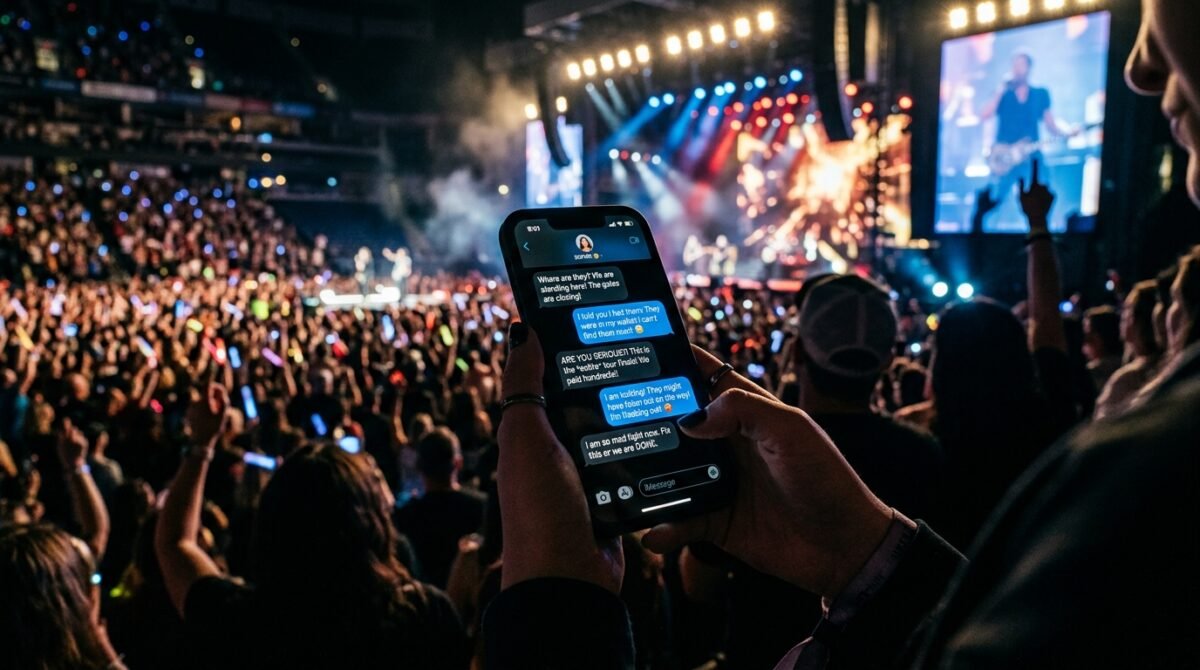
We all have that one friend—the one who has been there through the awkward middle school phases, the heartbreak of first breakups, and the relentless grind of our twenties. For Sarah and I, that bond felt ironclad. We had a pact: whatever life threw at us, we navigated it as a team. But nothing could have prepared me for the moment that, quite literally, turned a decade of sister-like loyalty into a battleground over a few pieces of digital paper.
It started with the announcement of the decade. The artist we had both obsessed over since we were twelve was finally going on a world tour. I spent hours, fueled by caffeine and sheer anxiety, waiting in a digital queue that seemed to move at the pace of a tectonic plate. When I finally clicked ‘purchase’ on two front-row, VIP-experience passes, the rush of adrenaline was intoxicating. I wasn’t just buying seats; I was buying a core memory, a reward for years of hard work.
Then came the phone call. It wasn’t the celebratory ‘can you believe we actually got them?’ excitement I expected. It was a cold, calculated demand. My best friend, let’s call her Jessica, wasn’t calling to celebrate. She was calling to inform me that her younger sister—a girl I barely knew and who had never shown an interest in this artist—suddenly ‘needed’ those tickets more than I did. The justification? It was her sister’s birthday, and according to Jessica, my privilege of having a stable career meant I should ‘sacrifice’ for the ‘less fortunate’ dreamer.
The moral dilemma felt sharp and immediate. How does one respond when a friend weaponizes your own success against you? The audacity was staggering, yet the history we shared made it impossible to simply hang up and block. This wasn’t just about a concert; it was about the shifting power dynamics of a friendship that had suddenly hit a wall of entitlement. Little did I know, this was only the opening skirmish in a war that would eventually involve family intervention, social media stalking, and a complete collapse of my social circle.
The Three-Hour Digital Siege

The process of obtaining these tickets was nothing short of a psychological thriller. I had two laptops open, a tablet synced to the Wi-Fi, and a heart rate that would have concerned any medical professional. The artist’s tour had been sold out in markets across Europe, and this was the last leg of the North American run. I had promised myself that if I managed to score these, I would treat myself to an experience I’d never forget.
When the screen finally refreshed and confirmed the purchase, I let out a scream that surely startled my neighbors. I immediately screenshotted the confirmation and sent it to Jessica. I knew she was at work, but I was so ecstatic that I couldn’t contain the news. I thought we were going to spend the next three months planning our outfits, scouting the venue, and listening to the discography on repeat.
The reply didn’t come for six hours. When it finally arrived, it wasn’t a congratulatory text. It was a request for a phone call. I assumed it was to discuss hotel arrangements or travel logistics. I couldn’t have been more wrong. The tension in the air when I picked up the phone was heavy, like the static before a massive summer thunderstorm.
“Listen, I’m so happy you got those, but I need you to transfer them to me. Chloe is turning eighteen next month, and she is obsessed with this artist. You’ve been to concerts before. She hasn’t. It would mean the world to her, and I told her I’d handle it.”
— Jessica, in a tone that sounded more like a demand than a request.
I was so stunned I didn’t even know how to process the words. She had promised my tickets to her sister before even consulting me? The entitlement was so casual, so ingrained, that she didn’t even stop to ask if I had planned on going myself. I was merely a placeholder in her grand plan to look like the ‘cool big sister’ at my expense.
The Logic of the ‘Deserving’ Sister
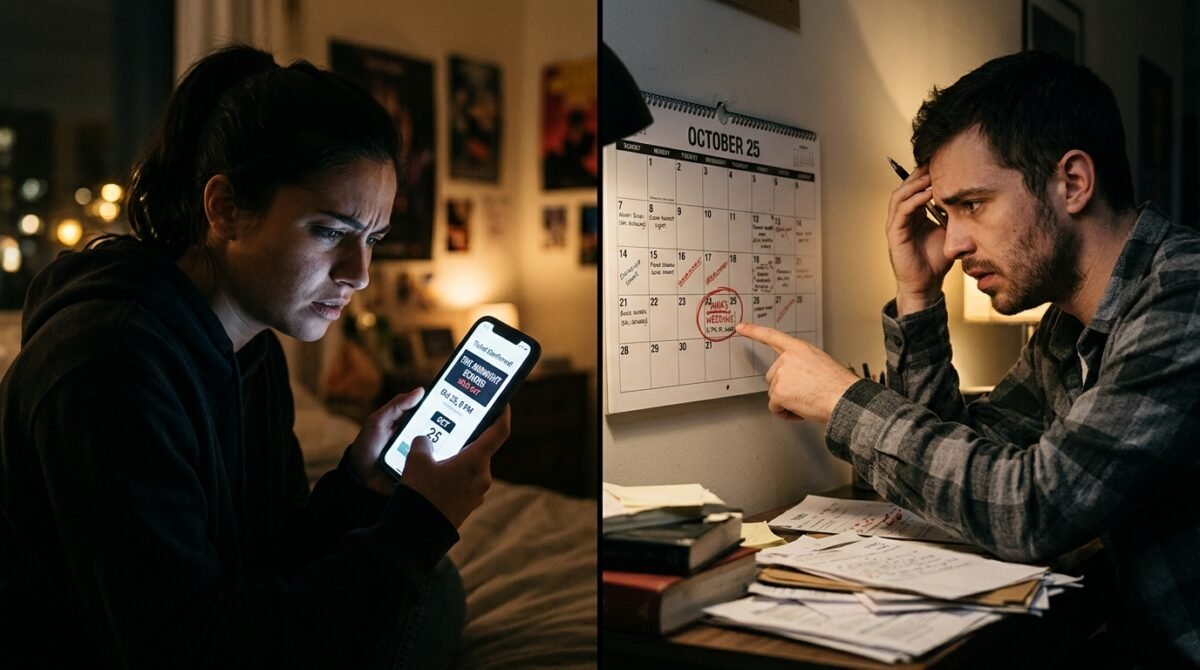
When I finally found my voice, the conversation devolved into a lecture on social mobility. Jessica argued that because I was currently earning a ‘decent’ salary as a junior associate, I could easily afford to ‘try again’ or find resale tickets, whereas her sister was a struggling student who couldn’t possibly manage the cost. It was a bizarre inversion of reality where my hard work was suddenly a reason to punish me.
I tried to explain that these weren’t just standard seats; they were VIP front-row passes that had cost me nearly two months of ‘fun money’ savings. They weren’t just available at a click of a button on a resale site. They were rare, expensive, and bought with a specific intent. Jessica brushed it off as if I were being petty about a pack of gum.
“You’re really going to hold onto these just because you want to see them? You’re acting so selfish. Chloe has had such a hard year with her exams. This would be the only highlight of her entire summer. I thought you cared about people, but I guess I was wrong.”
— Jessica’s response to my refusal to hand over the tickets.
I felt a knot in my stomach. She was gaslighting me, turning my boundaries into a character flaw. She framed my refusal as an act of cruelty against a teenager, completely ignoring the fact that she was the one who had made a promise she couldn’t keep. It was a classic manipulation tactic, and for a moment, I actually felt guilty.
I sat in my apartment, staring at the digital tickets in my app. They felt heavy, no longer a source of joy but a symbol of the friction in my longest friendship. I realized then that Jessica didn’t see me as a peer; she saw me as a resource she could exploit when she needed to fulfill her social obligations to her family.
The Escalation to the Family Group Chat
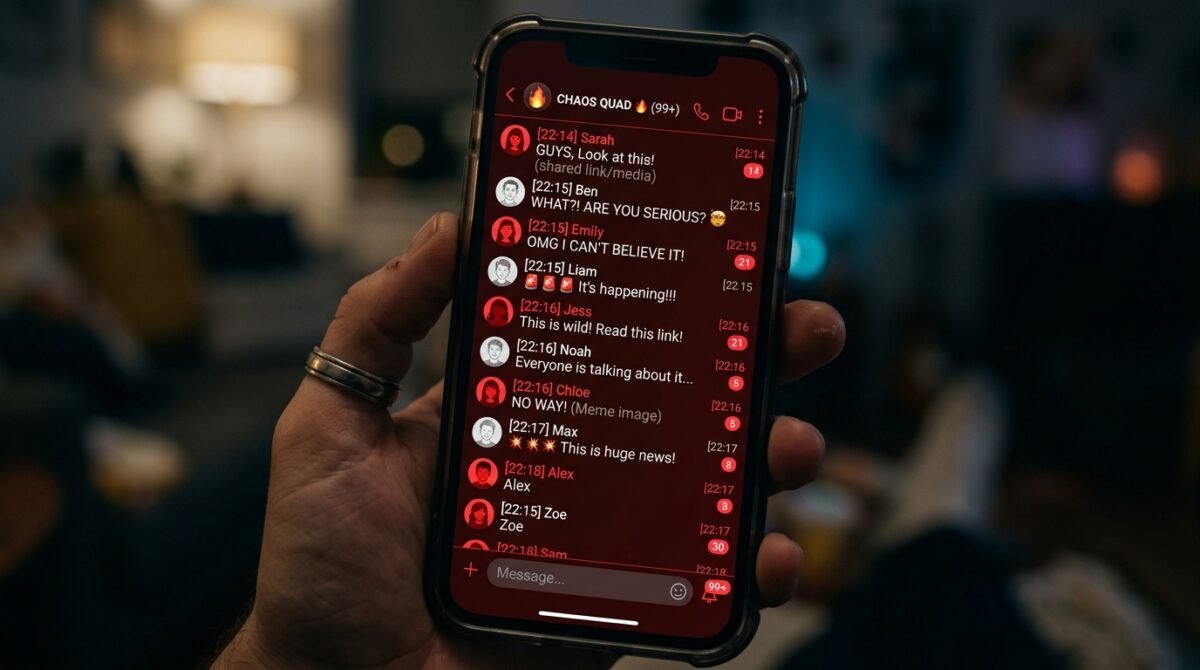
The next morning, my phone wouldn’t stop buzzing. I had been added to a group chat I didn’t recognize. It was titled ‘Chloe’s 18th Birthday Surprise.’ Before I could even read the messages, there were fifty notifications. Jessica had looped in her mother, her aunt, and a few of our mutual friends, framing me as the villain of the story.
I scrolled through the messages, my blood boiling. Jessica had painted a picture where I had ‘stolen’ the tickets from her sister, claiming I had known all along that Chloe wanted them. It was a total fabrication. I felt like I was watching a reality show where I was the main character being edited into a monster.
“I don’t understand why she’s being so difficult. She has so much, and she knows how much Chloe loves this music. It’s just so disappointing to see someone change like this over money.”
— Jessica’s mother, entering the chat to shame me.
I took a deep breath and drafted a response. I kept it professional but firm. I laid out the facts: I bought the tickets with my own money, I had been a fan of the artist for fifteen years, and I had never spoken to Chloe about her interest in this artist. I included the receipts to show the exact time of purchase.
The chat went silent for about ten minutes. Then, the messages started pouring in again, but this time, they weren’t about the tickets. They were about my ‘attitude.’ They claimed I was being ‘cold’ and ‘unaccommodating.’ It was clear that no matter what evidence I provided, the narrative was already set in stone.
The Sunday Dinner Sabotage
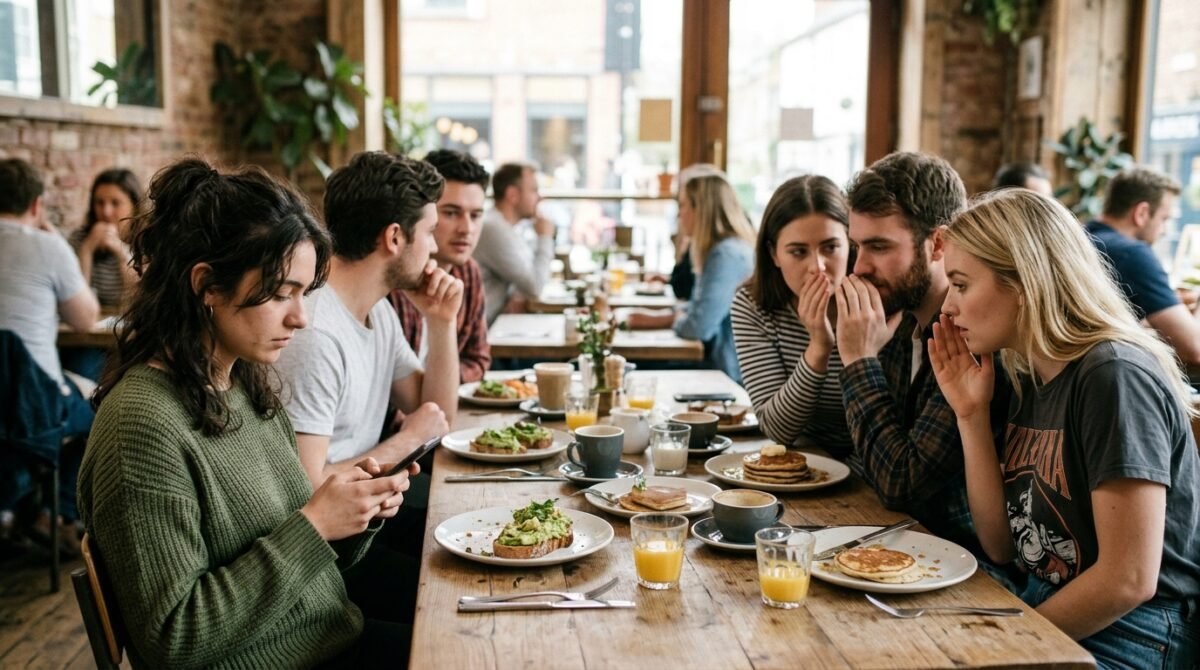
The following weekend, I had made the mistake of attending a pre-planned brunch with our mutual friend group. I assumed we would be able to move past the ‘ticket incident’ or at least avoid the topic. I was wrong. Jessica arrived with her sister in tow—a girl who looked at me with open disdain, clearly coached by her older sibling.
The entire brunch was an exercise in passive-aggression. Every time I tried to speak, Jessica would pivot the conversation back to how expensive and exclusive the concert was, making pointed comments about people who ‘hoard’ experiences. It was exhausting. I felt like a pariah in my own friend group.
“I just think it’s so sad when friends stop supporting each other’s dreams. It really shows who your true friends are when things get a little bit tight, doesn’t it?”
— Jessica, speaking loudly enough for the entire table to hear.
I looked around the table. Two of our friends were clearly uncomfortable, avoiding eye contact, while the others were whispering amongst themselves. I realized that my refusal to be a doormat was costing me my social standing. But looking at Jessica, I saw something else: a desperate need to control the narrative.
I didn’t argue. I didn’t defend myself again. I simply ate my meal in silence, enjoying the taste of my coffee and the fact that, despite the pressure, I still held the tickets. I had reached a point of detachment where their opinions mattered less than the principle of the thing. I was learning that standing your ground is a lonely business.
The Digital Breadcrumbs of Entitlement

Later that evening, I decided to do some digging. If Jessica was going to turn my life into a drama, I wanted to see what else she was saying behind my back. I logged onto her public social media profiles. It wasn’t hard to find the proof I needed. She had posted a status update about ‘greedy people’ who ‘don’t understand the value of family.’
But the real kicker was the screenshot she had posted on her story. She had taken my original, excited message about the tickets and cropped it to make it look like I was bragging about how much money I had. She was actively trying to ruin my reputation in our wider circles. The betrayal stung more than the demand for the tickets.
“Just a reminder to check who you call a friend. Some people are just looking for ways to flaunt their wealth while others are just trying to make their little sisters happy.”
— Jessica’s public Instagram story.
I felt a wave of relief. This wasn’t about the tickets anymore. It was about seeing the reality of who Jessica was. For years, I had made excuses for her—the ‘main character’ energy, the casual insults, the constant need for attention. I saw it all now. The tickets were just the catalyst that broke the illusion.
I took screenshots of her post. Not to use them, but just to have them. I realized that I didn’t need to engage with her or defend myself to her followers. If they believed her without hearing my side, they weren’t really my friends either. It was a painful realization, but a necessary one.
The Unannounced 6:00 AM Intrusion
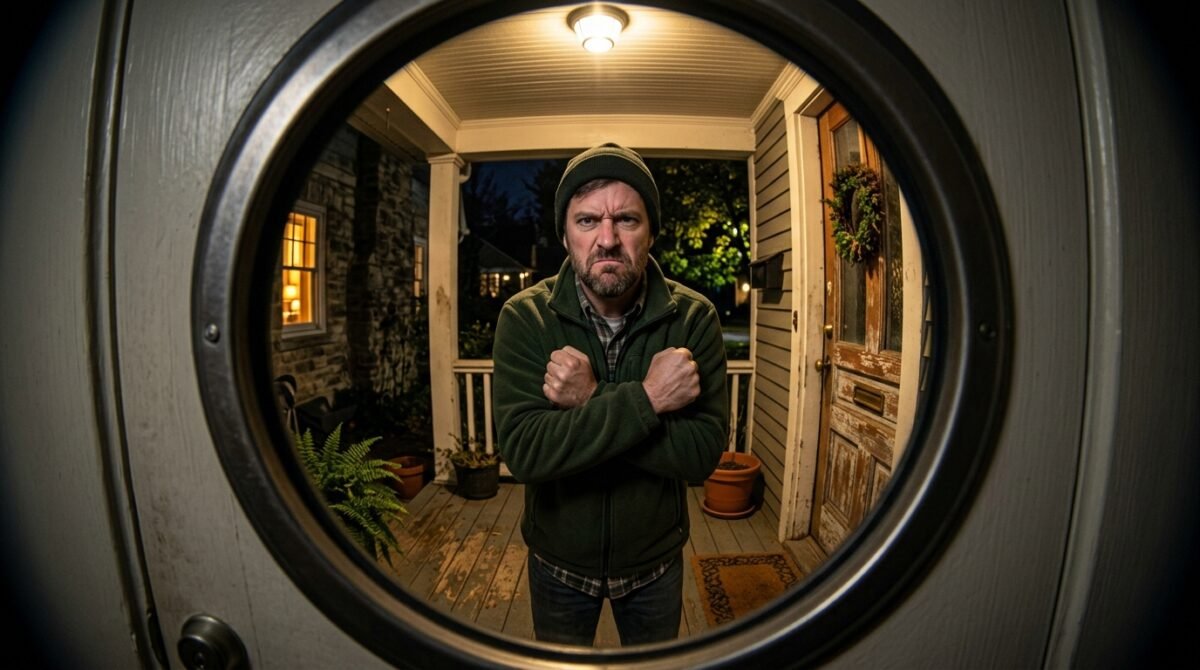
I woke up to a pounding on my front door. It was 6:00 AM on a Tuesday. I checked my security camera and saw Jessica standing on my porch, looking disheveled and frantic. My heart skipped a beat. I didn’t open the door. I spoke through the intercom, my voice shaking but firm.
She demanded that I give her the ‘transfer code’ for the tickets right now. She claimed she had already told her sister the tickets were coming and that if I didn’t ‘come through,’ she would be the one to look like a liar. The irony was so thick it was suffocating. She was blaming me for the lie she had told her own family.
“Open the door, Sarah! This is insane! You are ruining Chloe’s life over a stupid concert. I’m not leaving until you send that code. You’re being a monster!”
— Jessica, screaming through my front door at 6 AM.
I told her to leave or I would call the police. That stopped her. She went silent for a moment, then let out a scoff that sounded like something out of a movie. She accused me of being ‘privileged’ for being able to afford a security system and living in a place where I could ‘hide.’ It was the most unhinged thing she had ever said to me.
I watched her walk back to her car. I didn’t feel angry anymore; I just felt tired. This was a person I had once considered a sister. The lack of self-awareness was staggering. I locked the door, turned on my favorite playlist, and decided that this was the absolute end of the road for us.
The Reddit Trial: Trial by Public Opinion

I knew I was in the right, but the gaslighting made me doubt myself. I decided to post the story on a popular forum, keeping the identities anonymous, just to get a sanity check. The response was immediate and overwhelming. Thousands of people read the story, and the support was cathartic.
People broke down the logic of the situation. They pointed out that Jessica was using her sister as a prop to get what she wanted. They validated my feelings of anger and, most importantly, they confirmed that I was not obligated to sacrifice my personal joy for someone else’s entitlement.
“NTA. You didn’t buy those tickets to be a ticket broker for your friend’s sister. The fact that she made a promise without consulting you shows she never respected you. Cut her off and enjoy the concert.”
— u/ConcertGoer88 (Top Comment, 15.2k upvotes)
Reading the comments helped me realize that this was a classic example of boundary-stomping. The stories people shared in the comments—of weddings, concert tickets, and even inheritance—were heartbreakingly similar. It wasn’t about the object; it was about the lack of respect. I wasn’t alone in this experience.
The internet, for all its flaws, had given me the perspective I needed. I realized that my ‘friend’ had been testing my boundaries for years, and this was simply the final straw. I was going to the concert, and I was going to have the best time of my life, regardless of how much it upset Jessica.
The Final Severance of Ties

I didn’t send a grand, dramatic text. I didn’t write an essay. I simply sent a short, final message to Jessica after she left. I told her that our friendship was over and that I would be blocking her on all platforms. I didn’t mention the tickets, the sister, or the brunch. I just ended it.
The silence that followed was peaceful. I blocked her phone number, her social media, and any mutual friends who had messaged me to ‘try and see her side.’ I realized that by defending myself, I was only feeding the drama. By cutting off the source, I was reclaiming my peace.
“I hope you find whatever it is you’re looking for, Jessica. But you won’t find it in me. Please don’t contact me again.”
— The final text message I sent to Jessica.
The first few days were hard. I had a habit of checking for her messages or wondering what she was posting. But as the concert date approached, the feeling of freedom began to outweigh the habit of the friendship. I started focusing on myself again—my hobbies, my work, and my own goals.
I realized that for years, I had been shrinking myself to fit into Jessica’s life. I was always the ‘supportive friend,’ the one who listened, the one who gave. Now, I was finally the protagonist of my own story. It felt terrifying and exhilarating at the same time.
The Night of the Concert: A New Beginning

The night of the concert finally arrived. I went with a new friend, someone I’d met through my hobby group. We didn’t talk about drama or entitlements or family. We talked about the music, the artist, and how lucky we were to be there. When the lights went down and the crowd erupted, I felt a weight lift off my shoulders.
As the first chords played, I looked around the front row. There were people there who had worked just as hard as I had to be there. I felt a sense of camaraderie, not of elitism. I realized that I hadn’t stolen anything from anyone. I had simply earned my place.
“This is the best night of my life. I’m so glad we didn’t miss this.”
— My new friend, shouting over the music.
I didn’t think about Jessica. I didn’t think about the drama. I just lived in the moment. The music was loud, the energy was electric, and for the first time in a long time, I felt truly happy. It was a clean break, a fresh start, and a beautiful memory that was entirely, 100% my own.
I left the stadium feeling like a different person. The experience hadn’t just been a concert; it had been a rite of passage. I had survived the worst of my friendship, and I had come out the other side stronger, more assertive, and completely at peace with my choices.
Reflections on the Cost of Boundaries

Looking back, the financial cost of the tickets was negligible compared to the emotional cost of the friendship. I learned that boundaries aren’t just about saying ‘no’; they’re about recognizing when a relationship has become a drain rather than a support. I had been carrying the weight of someone else’s expectations for years.
I also learned that people who truly care about you will never ask you to sacrifice your happiness for their own convenience. If they do, they aren’t looking for a friend; they’re looking for a platform. And I was done being anyone’s platform.
“Boundaries are the gatekeepers of your sanity. If someone tries to kick down the gate, you have every right to lock it forever.”
— A piece of advice I read online that stuck with me.
I’m still in touch with the mutual friends who didn’t take sides. It turns out, they were just as tired of the drama as I was. We’ve grown closer, and our friendships feel more balanced now. We support each other, we celebrate each other, and most importantly, we respect each other’s boundaries.
If you find yourself in a position where you’re being asked to give up something you earned for someone who feels entitled to it, remember: you are not responsible for their disappointment. You are responsible for your own happiness. Don’t let anyone make you feel guilty for standing your ground.
Conclusion
This experience taught me that the hardest part of setting boundaries isn’t the act of saying no—it’s the fallout that follows when those who benefited from your lack of boundaries realize the party is over. It’s painful to lose a long-term friend, but it’s a necessary sacrifice when that friendship no longer serves your growth.
I am now more protective of my energy and my joy. I’ve realized that the ‘selfishness’ I was accused of was actually just self-respect. It’s a lesson I hope to carry forward in all my future relationships. Life is too short to spend it accommodating the entitlement of others.
What about you? Have you ever had a friend demand something from you that you felt you had rightfully earned? How did you handle the pressure, and what was the outcome of that boundary-setting? Let’s talk about it in the comments below—I’d love to hear your stories of standing tall in the face of unreasonable expectations.
What's your verdict on this dilemma?
Vote below to contribute to the official community consensus.

Have a Dilemma Keeping You Up at Night?
Share your real-life feud, wedding chaos, or relationship crossroads anonymously with our editorial team.
What do you think ?
0 Comments🛡️ Comments are moderated to protect community integrity. Your comment will appear once approved by the editorial team.