

We have been inseparable since our freshman year of college. Elena and I have navigated the treacherous waters of entry-level jobs, bad breakups, and the crushing anxiety of our twenties. When I finally landed a Senior role at a major tech firm, it was supposed to be a win for both of us—a shared dream of success that we had talked about over cheap wine in cramped studio apartments for over a decade.
However, everything shifted the moment my stock options vested. The reality of my new financial status hit my bank account like a lightning bolt, and suddenly, the dynamic of our friendship didn’t just change; it warped. The quiet, supportive friend I once knew was replaced by someone who viewed my bank balance as a communal resource for her own lifestyle aspirations.
It started with subtle hints, but soon escalated into a demand that felt like a punch to the gut. Elena’s thirtieth birthday was approaching, and she had decided that a standard weekend trip to Vegas wouldn’t suffice. She wanted a private jet, and she wanted me to bankroll the entire experience for her and five of her closest friends, claiming that my ‘newfound wealth’ made the cost a drop in the bucket.
The moral dilemma here isn’t just about money; it’s about the erosion of a boundary that I thought was impenetrable. Is friendship defined by what you can provide, or by the history you share? As I stood at this crossroads, I realized that my success had become a target, and the woman I trusted most was pulling the trigger.
The Champagne Dreams and the Six-Figure Reality

The news of my stock vesting came on a Tuesday. It was a life-altering amount of money, the kind that allows you to stop worrying about rent, pay off debt, and finally breathe. Naturally, I told Elena first. We went out for drinks to celebrate, and the atmosphere was electric with joy. Or at least, that is what I thought it was.
As the night progressed, Elena’s questions shifted from ‘How does it feel?’ to ‘What are you going to buy first?’ It wasn’t just curiosity; it was an inventory check. She started listing luxury items, high-end travel destinations, and lifestyle upgrades that she felt I was now ‘required’ to pursue. I brushed it off as her being excited for me, not realizing she was already drafting a budget that didn’t include her own income.
By the time we hit the third round of cocktails, the conversation turned to her upcoming birthday. She had been talking about a trip to a boutique resort in the desert, but suddenly, the scope of the trip expanded. She mentioned that commercial airlines were ‘draining’ and that she deserved a ‘transformative’ experience for this milestone.
“You know, with your bonus, we could do something truly legendary. Think about it—a private jet from Teterboro. No lines, no TSA, just us and the sky. It would be the perfect way to kick off the new chapter of our lives together.”
— Elena
I laughed, thinking it was a joke. I sipped my drink, fully expecting her to break into a grin and suggest a more reasonable alternative. She didn’t laugh. She stared at me with an intensity that made the hair on the back of my neck stand up, and in that silence, I realized she was dead serious.
The Group Chat Notification That Changed Everything
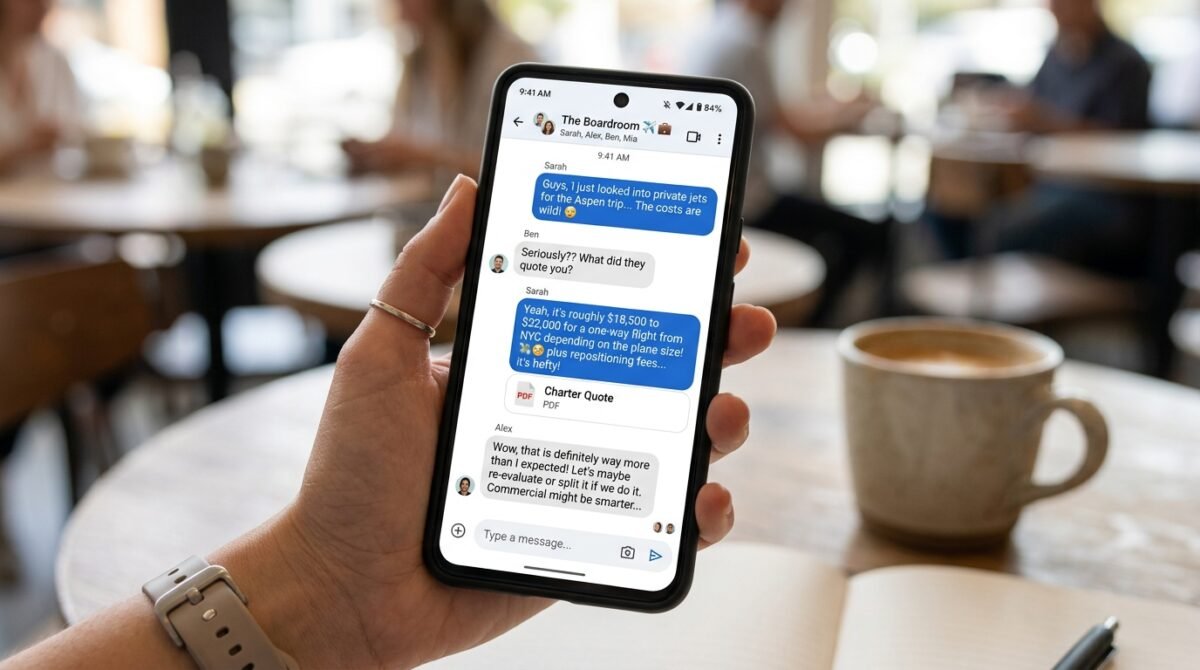
The morning after our dinner, I woke up to a flurry of notifications from a group chat I hadn’t been part of until five minutes prior. It was titled ‘Elena’s 30th – The Sky Is The Limit.’ I opened it, expecting a list of hotel room options or dinner reservations. Instead, I saw a breakdown of travel logistics that made my stomach churn.
The message was from Elena, tagging everyone and outlining a travel itinerary that involved a private charter service she had already ‘shopped around’ for. The cost was astronomical. Worse, she had added a note at the bottom that specifically called out the payment structure for the trip, essentially outing my financial status to a group of friends I barely knew.
“Hey everyone! So, thanks to our girl Sarah, we’ve decided to upgrade the travel experience! We’re going private. Sarah has graciously offered to handle the charter costs as a birthday gift to the group, so the rest of you just need to cover your own drinks and incidentals. Isn’t she the best?”
— Elena, in the group chat
I stared at the screen, my thumb hovering over the ‘Leave Group’ button. I felt a surge of hot anger. She hadn’t asked me; she had announced it as a fait accompli. It was a calculated move to trap me into paying, using social pressure to ensure I couldn’t back out without looking like a stingy, ungrateful millionaire.
My phone buzzed again. It was a private message from Elena: ‘I know you saw the chat. Don’t embarrass me in front of them, Sarah. You have the money, and this is once in a lifetime. We’ve been friends forever, don’t be that person.’
The Confrontation in the Coffee Shop

I didn’t reply to the text. Instead, I called her and insisted we meet at a local coffee shop. I wanted to look her in the eye and make it clear that my financial success was not a public utility. When I arrived, Elena was already there, looking remarkably composed, as if she were waiting for a business partner to sign a contract.
I skipped the pleasantries. I told her flat out that I would not be funding the jet. The look on her face wasn’t one of disappointment; it was one of pure, unadulterated shock, followed by a cold, calculating anger. She couldn’t understand why I would hold back ‘petty cash’ from my best friend.
“You’re being selfish, Sarah. You have more money than you know what to do with. I’m asking for a flight, not a kidney. Do you know how hard it is to watch you hoard wealth while your best friend suffers through her daily grind?”
— Elena
I felt a deep sense of betrayal. The ‘daily grind’ she was referring to was a comfortable job in marketing that she enjoyed. She wasn’t suffering; she was just envious. I explained that my money was for my future—for a house, for investment, for the security I had worked sixty-hour weeks to earn. She didn’t want to hear it.
She stood up, gathered her bag, and looked down at me. ‘If you aren’t willing to support the people who supported you when you had nothing, then you’re not the person I thought you were.’ She walked out, leaving me with a bill for two lattes and a broken heart.
The Fallout Among Mutual Friends

The days following our argument were a blur of social media silence and passive-aggressive messages from mutual friends. Elena had clearly told her side of the story, painting me as the cold, detached tech bro who had forgotten her roots. I started getting messages from people I hadn’t spoken to in years, ‘checking in’ on me, which was code for trying to gauge if the rumors about my wealth were true.
It was isolating. I realized that money acted as a filter. The people who were truly my friends reached out to ask how I was doing, while those who were attached to the ‘idea’ of me or my potential benefits were nowhere to be found. The group chat I had been added to was still active, and I could see them making plans to ‘figure out’ the birthday logistics without me.
I eventually left the group chat. It felt like a weight being lifted, but the emotional cost was heavy. I kept replaying our past arguments, wondering if I had ever given her a reason to believe I was a bottomless ATM. I hadn’t. We had always split the tab, always traded turns paying for dinner, and always operated on a level playing field.
My sister told me to just pay it and move on, arguing that the peace of mind was worth the price of a jet. But I knew better. If I paid, the expectations wouldn’t stop. They would only grow, morphing into larger, more expensive demands until I was nothing more than a bank account with a heartbeat.
The Reddit Trial: Seeking External Validation

I turned to the internet. I posted my dilemma on a popular relationship advice sub, anonymizing the names and stripping away the identifying details. I needed to know if I was the villain, as Elena had so forcefully insisted. I poured my heart into the post, detailing the history of our friendship and the specific moment the demands began.
Within an hour, the response was overwhelming. Hundreds of comments flooded the thread. It wasn’t just a simple ‘NTA’ (Not The Asshole) or ‘YTA’ (You’re The Asshole); it was a deep dive into the psychology of financial entitlement and the reality of ‘friendship taxes’ that successful people are expected to pay.
“OP, you need to listen closely: Money is a friendship repellent for people who aren’t actually your friends. A real friend would be proud of you, not looking for a handout. The fact that she outed your salary to a group of strangers is a massive breach of trust and a red flag the size of a billboard. Don’t pay, block her, and move on.”
— u/FinanceExpertRealist (Top Comment, 42.1k upvotes)
Other commenters shared similar stories of winning the lottery or landing a high-paying role, only to watch their social circles disintegrate. It was comforting, in a way, to know I wasn’t alone. The consensus was clear: do not set yourself on fire to keep others warm, especially when those people are holding the matches.
The Final Ultimatum Delivered via Email

Just as I thought the situation was cooling down, I received a long, vitriolic email from Elena. It wasn’t a request for reconciliation; it was a list of grievances. She cited every time I had ever let her pay for a movie ticket when we were broke, framing it as a debt that I had failed to repay. She was literally trying to calculate the compound interest on a slice of pizza from 2015.
She ended the email with a final, desperate ultimatum. Either I pay for the jet, or our friendship is officially over. She gave me 24 hours to respond. My heart hammered in my chest. The idea of losing ten years of memories over a birthday trip felt insane, but the idea of paying to keep a toxic person in my life felt worse.
“I’ve given you everything. I’ve been the one holding your hand through the hard times, and this is how you repay me? You have the resources to change my life, to make my birthday a moment I’ll never forget, and you’re choosing to be stingy. This is your last chance, Sarah. Either you’re in, or you’re out of my life forever.”
— Elena, via Email
I read the email five times. I didn’t cry. I felt a strange sense of clarity. The friendship had been over the moment she decided that my value was tied to my bank account. I didn’t reply to the email. I hit ‘Block’ and felt the last tether snap.
The Birthday Weekend Without Me

I learned through the grapevine that the trip happened. Elena and her friends apparently pooled their money and went on a standard commercial flight to a resort in a nearby state. She posted photos constantly, each one tagged with a caption about ‘finding out who your true friends are’ and ‘living life without dead weight.’
It was a clear jab at me, intended to make me feel small. Instead, it just confirmed everything I had suspected. She hadn’t been able to afford the private jet, and she had expected me to bridge the gap. When I didn’t, she had to settle, and she was miserable about it. Seeing the photos didn’t make me regret my decision; it made me pity her.
I spent that weekend doing things I actually enjoyed. I went to a bookstore, visited a local park, and had dinner with a colleague who had never once asked me about my paychecks. It was quiet, peaceful, and honest. I realized that my wealth hadn’t changed who I was; it had only changed who I needed to watch out for.
The resentment started to fade. I stopped checking her profile, stopped wondering if she missed me, and started focusing on the life I was building. The void left by her absence was significant, but it was also a space that I could now fill with people who cared about me for the right reasons.
Reflecting on the True Meaning of Wealth

After the smoke cleared, I spent a lot of time reflecting on what it means to be wealthy. It isn’t just about the numbers in your investment portfolio. True wealth is the ability to walk away from situations that compromise your integrity. It’s the freedom to choose your company based on character, not proximity or obligation.
I realized that the biggest gift the tech stock payout gave me wasn’t the ability to buy a private jet; it was the ability to see people for exactly who they were. Before the money, people were more guarded, more likely to show their ‘nice’ side. The money acted as a litmus test, exposing the underlying insecurities and entitlement that had been lurking beneath the surface all along.
I started investing in a new hobby—mentorship for younger women trying to enter the tech industry. I wanted to use my success to help others build their own, without the strings and the expectations that I had been subjected to. It was a healing process, turning the bitterness of a lost friendship into something productive and positive.
I also realized that I had been a part of the problem. I hadn’t established boundaries earlier. I had let the ‘best friend’ label supersede the need for healthy communication. I had allowed the imbalance to fester until it became an explosion. I vowed to never let that happen again, with anyone.
Moving Forward and Setting New Boundaries

Months later, I’m in a much better place. I’ve established a rule for myself: I don’t discuss my finances with anyone outside of my financial advisor and my immediate family. I’ve learned that money is a private matter, and keeping it that way protects my relationships from the toxicity of comparison.
I still miss the version of Elena I knew in our twenties. I miss the inside jokes and the shared history. But I’ve come to accept that people change, and sometimes, those changes aren’t compatible. The friendship had run its course, and the money just accelerated the inevitable.
I’ve met new people, people who celebrate my wins without wanting a slice of the pie. It’s a different kind of friendship—one built on mutual respect and genuine interest. I’m no longer the ‘rich friend’; I’m just Sarah, a person who happens to have a stable career. And that is exactly how it should be.
The experience taught me that boundaries aren’t just for others; they’re for me, too. They’re the fence that keeps my peace of mind safe from the demands and expectations of those who don’t have my best interests at heart. I’m grateful for the lesson, even if the price was a ten-year bond.
The Community Weighs In: Lasting Lessons
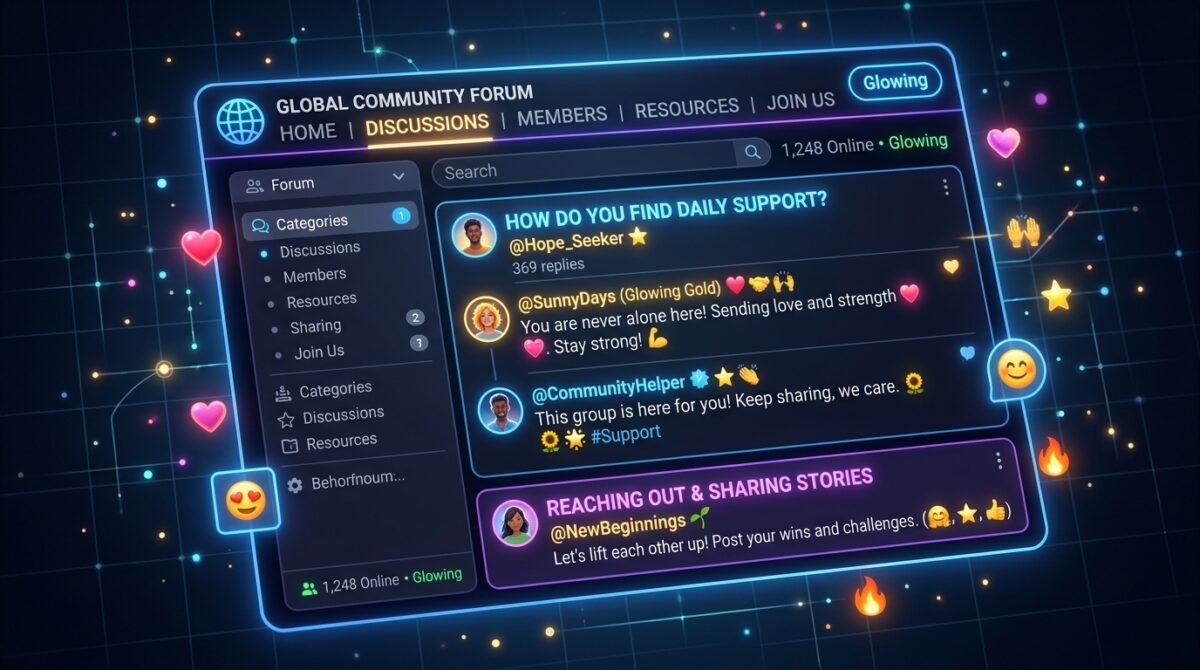
Looking back at the Reddit thread, I see that the comments continue to grow. People are still sharing their own experiences with financial entitlement, and the community has become a space for real, honest discussion about the intersection of wealth and relationships. It’s heartening to see so many people standing up for their right to say ‘no.’
“It is truly wild how many people think your paycheck belongs to them once you reach a certain level of success. You didn’t lose a friend, OP; you lost an anchor that was trying to drag you down to their level of unhappiness. Stay strong and keep your boundaries.”
— u/PerspectiveSeeker (Top Comment, 18.2k upvotes)
The community support reminded me that my experience wasn’t an isolated incident. It’s a common human struggle in the era of social media, where everyone’s lives look perfect and everyone feels entitled to the successes of others. It’s a culture of comparison that we all need to move past if we want to build genuine connections.
I hope that by sharing my story, I can help someone else who is feeling the pressure to conform to someone else’s financial demands. It’s okay to say no. It’s okay to protect your peace. And most importantly, it’s okay to outgrow people who aren’t interested in your growth, only your bank balance.
Conclusion
The journey from a close, decade-long friendship to the harsh reality of estrangement has been the most difficult chapter of my adult life. Yet, as I sit here today, I realize that the most important outcome wasn’t about the money at all—it was about reclaiming my autonomy and learning that true friendship does not come with a price tag attached.
We often talk about the joy of success, but we rarely talk about the isolation that can accompany it when those around you view your progress through a lens of envy. I have learned to protect my boundaries fiercely, and in doing so, I have found a profound sense of peace that no amount of money could ever buy. The lesson was expensive, but the clarity it provided is priceless.
What about you? Have you ever had a friendship sour due to shifting financial dynamics, or felt the pressure to fund someone else’s lifestyle? Share your stories and your thoughts in the comments below—let’s keep the conversation about healthy boundaries going.
What's your verdict on this dilemma?
Vote below to contribute to the official community consensus.

Have a Dilemma Keeping You Up at Night?
Share your real-life feud, wedding chaos, or relationship crossroads anonymously with our editorial team.
What do you think ?
0 Comments🛡️ Comments are moderated to protect community integrity. Your comment will appear once approved by the editorial team.