

Friendship is often described as a sacred contract, built on mutual respect and shared history. But what happens when that contract is unilaterally renegotiated by one party based solely on the size of your paycheck? For ten years, Sarah and I were inseparable. We navigated college debt, entry-level job hunting, and the messy terrain of our early twenties together. But as my career trajectory shifted and my income increased, I noticed a subtle, chilling shift in our dynamic.
It wasn’t an overt robbery; it was a slow bleed of boundaries. It started with ‘forgetting’ her wallet at happy hour and graduated to expecting me to cover her share of destination bachelorette trips. I ignored the red flags because, after all, we were ‘sisters.’ That was until her birthday this year, when she decided she wanted to host an exclusive tasting menu for twelve people—and informed me, quite matter-of-factly, that since I made ‘so much more,’ I should be the one to pick up the tab for the entire group.
The audacity of the request was staggering, but the gaslighting that followed when I refused was what truly shattered the illusion of our friendship. This wasn’t just about money; it was about the fundamental belief that my success was a communal resource, one she felt entitled to exploit without a second thought. This is the story of how a single dinner party turned into a battleground for my self-respect.
The fallout didn’t stay between us. It bled into our friend group, turned into a digital smear campaign, and ultimately forced me to realize that some people don’t want a friend—they want a benefactor. The following chapters detail the unraveling of a decade-long bond, the explosive confrontations, and the surprising, bitter reality of what happens when you finally say ‘no’ to the people who think your hard work belongs to them.
The Invitation That Felt Like a Subpoena

It arrived in the form of a calendar invite on a Tuesday morning. The subject line was simply ‘Birthday Extravaganza,’ and the location was set at L’Etoile, the city’s most pretentious, astronomically priced tasting-menu restaurant. I opened the invite expecting a fun night out, but my stomach dropped when I saw the guest list: twelve people. I did some quick mental math. The tasting menu alone was $250 a head, plus wine pairing, tax, and the mandatory 25% service charge for large groups.
Before I could even reply, a private message popped up on my phone. It was Sarah, sounding uncharacteristically upbeat. She didn’t ask if I was free; she assumed I was already booked for the night of her life. She proceeded to explain that she wanted the ‘full experience’—the private room, the sommelier, the whole nine yards. Then, she dropped the hammer with the casual ease of someone discussing the weather.
“Since you got that promotion last month, you’re obviously the one who should handle the bill for the whole group. It’s only fair, right? Everyone else is struggling with rent right now, and you’re basically a CEO compared to the rest of us. It’s your gift to me!”
— Sarah (via iMessage)
I stared at the screen, my pulse quickening. I worked in tech, yes, but I also had significant student loans and a mortgage that required every bit of my salary to maintain. The idea that I would subsidize an extravagant, twelve-person luxury dinner just because of a job title was not just insulting; it was financially irresponsible. My heart sank as I realized she hadn’t just asked; she had already told the group that it was covered.
I took a moment to breathe, fighting the urge to type a blistering response. I knew that if I challenged her, it would be framed as me being ‘stingy’ or ‘changed by money.’ I needed to remain calm, but the sheer entitlement was suffocating. I had spent years working 60-hour weeks to get where I was, and she was treating my bank account like a public utility.
The reality set in that this wasn’t an isolated incident of delusion. It was the culmination of months of small, pointed comments about my spending, my clothes, and my ‘easy’ life. She had been building up to this moment for a long time, assuming that I would simply fold, as I always had. The power imbalance had reached its breaking point.
The First Confrontation at the Coffee Shop

I met Sarah at our usual coffee shop two days later. I wanted to handle this in person, hoping she would realize the absurdity of the request once she saw my face. I arrived early, nursing a black coffee and preparing my talking points. When she arrived, she was already glowing with excitement about the menu she had pre-selected with the chef. She didn’t even notice the tension in my posture.
I waited for a lull in her monologue about truffle oil and wagyu beef before I spoke. I told her, as gently as I could, that I couldn’t afford to pay for twelve people. I explained my budget, my savings goals, and the fact that I was already planning to treat her to a private dinner for two—which I felt was a generous gesture for a best friend. Her reaction was instantaneous.
“I can’t believe you’re being this way. We’ve been friends for ten years, and you’re going to let a few hundred dollars come between us? You literally make six figures. Just put it on your credit card and pay it off over time. You’re being so selfish right now, it’s honestly gross.”
— Sarah during our coffee shop confrontation
I felt a cold flash of anger. Her willingness to treat my financial security as an infinite resource was staggering. I realized then that she didn’t view me as an equal; she viewed me as a resource. The tone of her voice wasn’t hurt—it was accusatory. She acted as if I were committing a moral failing by not enabling her lifestyle.
“Sarah, it’s not about me being selfish. It’s about you being entitled. I am not your bank, and I am not responsible for funding your birthday bash for twelve people. If you can’t afford it, don’t plan it,” I said, my voice shaking slightly. She stood up abruptly, drawing stares from the other patrons, and gathered her things without another word. The silence that followed was heavy and final.
I left the coffee shop feeling like I had just broken up with a partner rather than a friend. The relief was there, yes, but it was overshadowed by the looming dread of how she would spin this to our mutual friends. I knew she wasn’t the type to take a loss gracefully. She was the type to turn the narrative, and I was clearly going to be the villain in her story.
The Group Chat Explosion
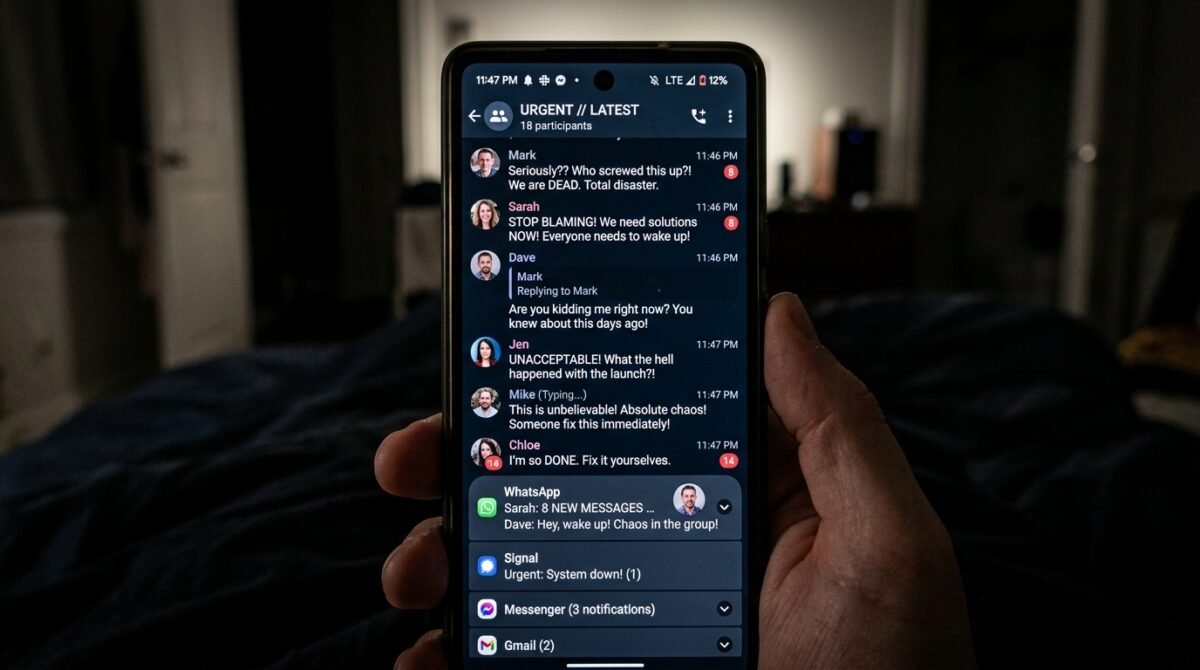
Three hours after our meeting, my phone started buzzing incessantly. A new group chat had been created, titled ‘Sarah’s Birthday Planning.’ I was added to it, and my stomach turned. The messages were coming in fast, a stream of passive-aggressive barbs aimed directly at me. It was clear that Sarah had told everyone I was the reason the dinner was now ‘in jeopardy.’
“Hey everyone! Just a heads up, OP has decided that my birthday isn’t worth the investment, so we might need to change plans. Apparently, the ‘corporate life’ has made her forget who her real friends are. Really disappointed.”
— Sarah in the group chat
My phone screen lit up with replies from people I considered friends. Some were confused, others were openly hostile. “Seriously, OP? It’s just one dinner,” one wrote. “I thought we were all going to celebrate, not talk about budgets,” added another. The peer pressure was designed to isolate me, to make me feel like the irrational one for having boundaries. It was a classic smear tactic, and it was working perfectly.
I didn’t defend myself immediately. I let them vent, watching as the vitriol piled up. I took screenshots of every single message, knowing that at some point, I would need a record of how this went down. The speed at which people were willing to pile on, without even knowing my side of the story, was a painful revelation about the quality of the people I had surrounded myself with.
Finally, I typed a short, concise response. I wasn’t going to get into the weeds of my salary or my bank account. I focused on the principle. I stated clearly that I was happy to celebrate Sarah, but I would not be funding the group dinner. I made it clear that my decision was final and that I was disappointed by the way she chose to handle a private disagreement.
The group chat went dead silent for a long moment, before the notifications started blowing up again. Some people realized they had been played, while others doubled down. The divide was immediate. I realized that this wasn’t just a conflict with Sarah; it was a test of my own values and my willingness to stand up for them in the face of public shaming.
The Unveiling of the Secret Ledger
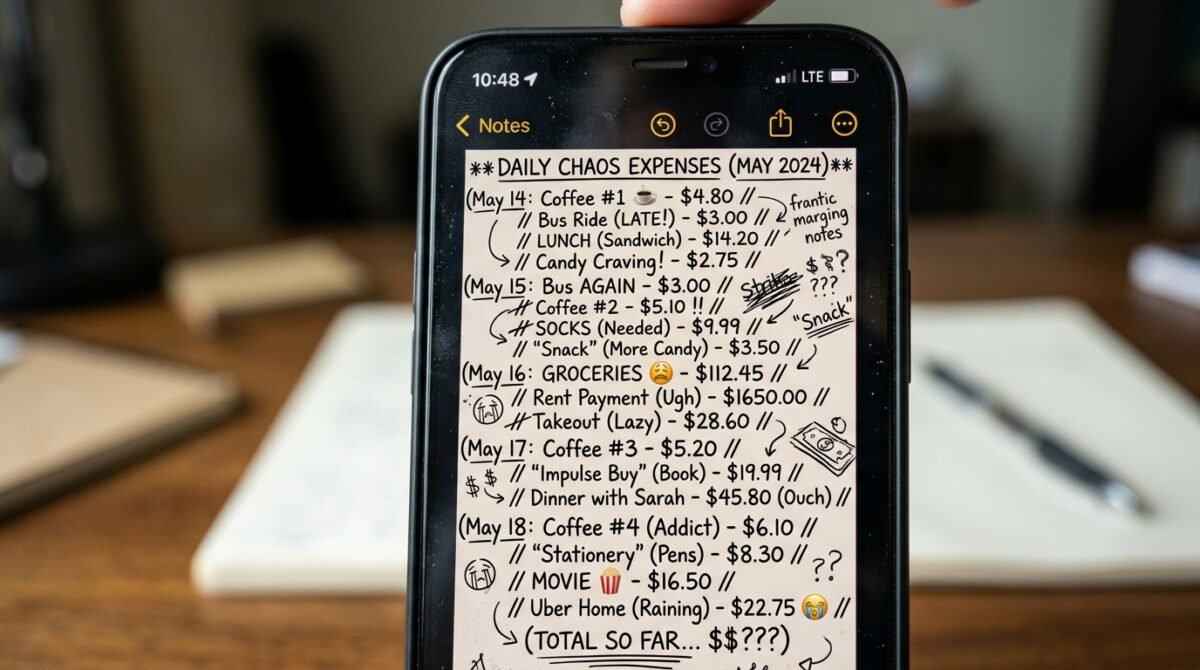
By the next morning, things had escalated. One of the friends in the group, someone I trusted, reached out to me privately. She told me that Sarah had been keeping a ‘ledger’ of sorts—a list of things I owed her for, going back years. Apparently, every time I had paid for a drink or a cab, she had logged it as a ‘debt’ that I was now failing to repay by not funding her dinner.
She sent me a screenshot of the notes app on Sarah’s phone. It was a meticulous, bizarre list of every interaction we’d had over the last five years. ‘Dinner 2021: $45 (OP owed me)’, ‘Gas money 2022: $20 (OP never paid)’. It was a delusional revision of history. I felt a mix of pity and absolute revulsion. How could someone track their friendship like a business transaction, waiting for the right moment to collect?
I looked at the entries. Many of them were flat-out lies. The ‘gas money’ incident was a road trip where I had paid for all the food and the hotel. The ‘dinner’ entry was a meal I had paid for in full. She wasn’t just entitled; she was pathologically rewriting our shared history to justify her current demand. The depth of her resentment was deeper than I could have imagined.
I called my friend back, my voice steady for the first time in days. I asked her if she actually believed any of this. She admitted she didn’t, but that she didn’t want to be the target of Sarah’s anger. It was the most honest thing anyone had said to me in weeks. People were enabling her because they were afraid of her, not because they agreed with her.
This revelation changed everything. It wasn’t just a birthday dinner; it was the culmination of years of Sarah keeping a ‘tab’ on me. The friendship hadn’t been a relationship; it had been a long-con, and I was the mark. The realization was liberating. I didn’t owe her anything—not an explanation, not a dinner, and certainly not an apology for my success.
Why the Sunday Dinner Table Went Silent

We had a tradition of Sunday dinners with a larger circle of friends, and despite the drama, I decided to go. I needed to stand my ground. Sarah was there, surrounded by a few loyalists, and the atmosphere was thick with resentment. When I walked in, the room went deathly quiet. I sat at the far end of the table, making it clear I wasn’t there to beg for forgiveness.
The conversation was forced and shallow, until Sarah decided to make a public scene. She started talking loudly about how ‘some people’ let money change them, and how ‘real friends’ support each other through anything. She looked directly at me, waiting for me to react, to snap, to give her the spectacle she craved. I stayed silent, eating my meal and engaging with the people who were actually being polite.
“I just think it’s sad when people think they’re too good for the people who helped them get started. Some of us haven’t forgotten where we came from, even if others have moved on to bigger, more expensive plates.”
— Sarah, addressing the table
The tension was palpable. Someone asked if I wanted to address it, and I looked at Sarah, then around the table. I said, “If you want to talk about money and the past, we can do that. But I don’t think you’re going to like the conversation, Sarah.” I stayed calm, not raising my voice, not falling into the trap of an emotional outburst. The maturity of my response only seemed to infuriate her more.
She sputtered, trying to find a way to pivot, but the moment was lost. The rest of the table looked uncomfortable, realizing that I wasn’t the monster she had painted me to be. I wasn’t the arrogant, wealthy socialite; I was just a person who had set a boundary. The shift in the room was subtle but undeniable.
I left early that night, not because I was afraid, but because I was done. I had seen the landscape of the group, and I knew who was worth keeping and who was just an observer. I walked out into the cool night air, feeling a weight lift off my shoulders. I had survived the public shaming, and in doing so, I had taken back my own narrative.
The Reddit Verdict: Community Weighs In

I finally broke down and posted the situation to a popular subreddit dedicated to relationship and friendship dilemmas. I needed an outside perspective. I laid it all out—the salary difference, the dinner demand, the group chat, and the ‘secret ledger’ of debts. I didn’t expect the response I got. Within three hours, the post had exploded, with thousands of people weighing in.
“OP, you are NTA (Not The Asshole). This isn’t a friendship; it’s a parasitic relationship. The ‘ledger’ thing is straight-up psychological manipulation. Run. Block her and everyone who is enabling this behavior. You owe her nothing.”
— u/FinanceExpert_Real (Top Comment, 32.1k upvotes)
The support was overwhelming. People shared similar stories of ‘moocher friends’ who used salary differences as a cudgel to force them into paying for everything. It was a recurring theme—the idea that the person who makes more is somehow morally obligated to sacrifice their own goals to pay for the lifestyle of their friends. The consensus was clear: the friendship was fundamentally toxic and needed to be terminated.
There were some dissenting voices, of course. Some people argued that in a long-term friendship, you *do* help each other out. But even they agreed that a 12-person, multi-course tasting menu was a bridge too far. The sheer cost and the lack of consultation made it an unreasonable request by any standard. It wasn’t about help; it was about exploitation.
Reading the comments gave me the perspective I needed. I wasn’t being ‘stingy’ or ‘changed by money.’ I was being a responsible adult who was finally learning to value my own hard work. The Reddit community, for all its cynicism, had provided the validation I was looking for. I realized that the guilt I had been feeling was a product of gaslighting, not reality.
I spent the next two days reading through the thread, finding solace in the shared experiences of others. It was a reminder that I wasn’t alone in this struggle and that setting boundaries was not an act of malice—it was an act of self-preservation. I was ready to close the chapter on this friendship, once and for all.
The Final Severance

The next step was the most difficult. I sent Sarah one final message. I didn’t want a back-and-forth; I wanted to state my piece and move on. I told her that I was no longer comfortable with the way she treated me or our friendship. I mentioned the ledger, the public shaming, and the constant expectation that I should pay for her life. I wished her well, but I told her that I would be taking a step back from our friendship indefinitely.
I waited for the explosion. I expected a flurry of insults, a threat to expose more of my ‘secrets,’ or a desperate plea to keep me in her life. Instead, there was nothing. No response. The silence was almost more jarring than an argument. It made me realize that she didn’t care about the *friendship*—she cared about the *utility* of the friendship. Once I was no longer useful, I was discardable.
I spent that evening blocking her on every platform—social media, phone, email. It was a strange, cathartic feeling. With every click, the sense of anxiety that had been plaguing me for months started to fade. I was taking my life back. I wasn’t going to spend another cent, or another moment of stress, on a person who didn’t respect me.
The next few weeks were quiet. I had to navigate the fallout with our mutual friends, which was messy. Some stayed loyal to Sarah, while others reached out to apologize for their part in the group chat drama. It wasn’t easy, but it was necessary. I realized that the people who were truly my friends didn’t care about my money—they cared about me.
I had lost a friend, but I had gained a sense of self-respect that I hadn’t realized I was missing. The financial sting of the dinner was gone, replaced by the peace of mind that came with knowing I had stood my ground. I had finally learned that you cannot buy loyalty, and you certainly shouldn’t try to.
The Aftermath: Rebuilding My Boundaries

In the months that followed, I focused on myself. I started a new hobby, invested more time in my work, and sought out new friends who didn’t see me as a walking ATM. The healing process wasn’t linear; there were days when I missed the old days, the laughter, and the shared history. But I reminded myself that the ‘old days’ were built on a foundation that had been rotting for a long time.
I also took a hard look at my financial habits. I realized that I had been overcompensating in many areas of my life, trying to ‘buy’ affection or social standing. I started being more open about my budget and my limits with everyone in my life, not just the people who might be trying to take advantage of me. It was liberating to be honest about where I stood.
I even started a small support group for people who had gone through similar ‘financial breakups.’ We met once a month to discuss the complexities of money in relationships—a topic that is often treated as taboo. It was amazing how much we all had in common, and how much we could learn from each other’s mistakes and triumphs.
My career continued to thrive, and my bank account grew, but it no longer felt like a target. I had built a wall around my personal life, one that was sturdy and respected. I wasn’t closed off, but I was discerning. I had learned that the most expensive thing you can ever do is keep someone in your life who doesn’t value you.
Looking back, the ’12-person tasting menu’ was the best thing that ever happened to me. It forced the issue. It brought the hidden toxicity to the surface and gave me the excuse I needed to walk away. I am healthier, happier, and more secure than I have ever been, and I have Sarah to thank for that—even if it wasn’t her intention.
A Lesson in Financial Self-Respect

The story of the tasting menu is a cautionary tale, but it’s also a story about self-worth. Too many of us are afraid to set boundaries because we don’t want to be the ‘bad guy’ or the ‘stingy friend.’ We let ourselves be pushed, manipulated, and drained because we are afraid of the judgment of others. But at the end of the day, your financial and emotional resources are your own.
You don’t owe anyone a lifestyle they can’t afford. You don’t owe anyone access to your hard-earned income just because they are in your life. Friendship should be a source of support, not a drain on your finances or your mental health. If you find yourself constantly justifying your success or feeling guilty for having boundaries, it’s time to take a step back and evaluate who you are surrounding yourself with.
I learned the hard way that when someone tells you who they are, believe them. Sarah showed me over and over again that she didn’t value me as a person, but I chose not to see it until the bill was too high. Don’t make the same mistake I did. Pay attention to the red flags, trust your gut, and don’t be afraid to walk away from anyone who doesn’t respect your limits.
And most importantly, remember that you are worthy of friendships that are based on mutual respect, not convenience or utility. You deserve people who celebrate your success, not those who look at it as a way to enrich themselves. The right people will be there, and they will value you for who you are, not for what you can provide.
So, the next time someone demands something from you that doesn’t align with your values or your budget, take a breath, say ‘no,’ and don’t look back. You might lose some people along the way, but you will save yourself—and that is a price worth paying.
The Final Word: Reader Perspectives

I wanted to end by sharing a few final thoughts from the community that helped me through this. The sheer volume of stories that came flooding in after my post was a testament to how common this issue is. We are all dealing with the pressure to perform, to be the ‘successful’ one, and to pay for the privilege of our own lives. It’s a collective struggle that needs more light shed upon it.
Some of the stories were heartbreaking. People who had been drained of their savings by ‘friends’ who promised to pay them back, only to never do so. People who had been shunned by their families for not being the ‘generous’ sibling. It was a harsh reminder that financial manipulation is a form of abuse, and it needs to be treated with the seriousness it deserves.
But there were also stories of triumph. People who had stood their ground, cut the ties, and rebuilt their lives in a way that was true to them. People who had learned to say ‘no’ and discovered that their lives were better for it. It was a powerful reminder that we are not victims of our circumstances—we are architects of our own boundaries.
The discussion continues to grow. If you have been through something similar, I encourage you to share your story. You never know who might be in the same position, looking for a sign that they are doing the right thing. We are all in this together, and we are stronger when we support each other in setting the boundaries that allow us to live our best lives.
Thank you for reading my story, and for being part of this journey. It’s been a long, difficult, and ultimately rewarding path, and I am grateful for every lesson I’ve learned along the way. Stay strong, stay true to yourself, and never let anyone make you feel guilty for being the person you have worked so hard to become.
Conclusion
My journey from a ‘benefactor’ to an independent, boundary-setting adult has been the most transformative experience of my life. It wasn’t easy to lose a decade-long friendship, but it was necessary for my own growth and self-respect. I have learned that true friendship isn’t transactional—it’s built on equality, mutual support, and, most importantly, boundaries. I am no longer the person who feels obligated to say ‘yes’ to every demand, and I am all the better for it.
If this story resonated with you, I invite you to join the conversation. Have you ever had a friend try to use your salary against you? How did you set your boundaries, and what was the outcome? Let’s share our experiences and support one another in creating healthier, more fulfilling relationships. Leave your thoughts in the comments below—I read every single one.
What's your verdict on this dilemma?
Vote below to contribute to the official community consensus.

Have a Dilemma Keeping You Up at Night?
Share your real-life feud, wedding chaos, or relationship crossroads anonymously with our editorial team.
What do you think ?
0 Comments🛡️ Comments are moderated to protect community integrity. Your comment will appear once approved by the editorial team.