
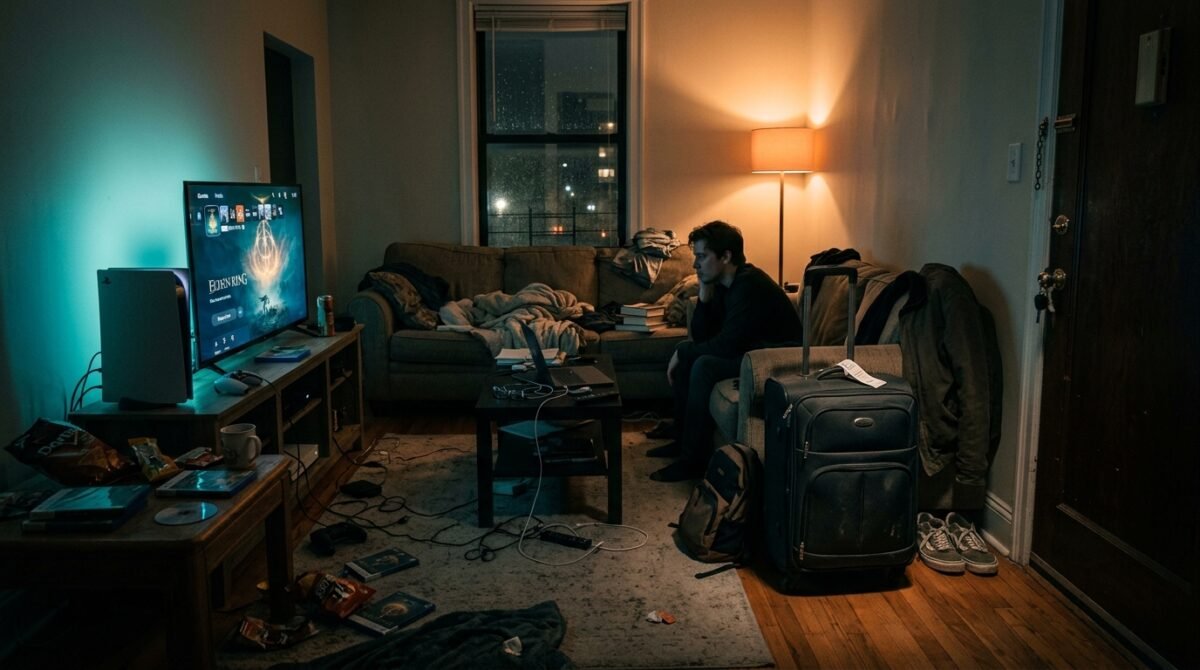
They say that parenthood changes everything, but I never expected the change to manifest as a choice between a crying newborn and a level-up notification. My husband, Mark, has always been a gamer. It was a hobby that brought him joy, a way to unwind after a long day at his architecture firm. But when we found out we were expecting, I assumed the priorities would shift. I assumed that the arrival of our child would be the ultimate event, far eclipsing any virtual world.
We had planned for months. We had the nursery painted in soft sage greens, the crib assembled with meticulous care, and the hospital bag packed with enough snacks to survive a week-long labor. Mark had even told his employer that he would be taking his full four weeks of paid paternity leave. It was supposed to be our time, a cocoon of sleepless nights and newborn snuggles that would bind us as a family of three.
Then came the announcement. A massive, industry-shifting expansion for his favorite MMORPG was scheduled to drop exactly three days after my induced due date. At first, it was just excitement—a bit of talk about how he’d try to squeeze in a couple of hours here and there while the baby slept. But as the date drew closer, the tone shifted. The excitement morphed into an obsessive, frantic need to be present for the ‘world-first’ race. He started talking about ‘maximizing efficiency’ and ‘progression windows.’
The moral dilemma hit me like a physical blow during our final prenatal check-up. As I sat in the doctor’s office, nervous about the impending procedure, Mark was on his phone, scrolling through patch notes, completely oblivious to the fact that his wife was terrified and our life was about to fundamentally fracture. I realized then that I wasn’t just losing his attention; I was losing his partnership. This wasn’t just about a game—it was about his refusal to acknowledge the gravity of what we were about to experience together.
I chose not to scream. I chose to observe. I watched the man I loved prioritize digital pixels over the tangible, breathing miracle we had created. When he finally looked up and told me, with a straight face, that he was ‘reconsidering’ the leave because he couldn’t afford to fall behind, I didn’t argue. I went home, I opened my laptop, and I made a reservation that would change the trajectory of our lives forever. This is the story of how I left him to his console, and why I never looked back.
The Tuesday Night Negotiation
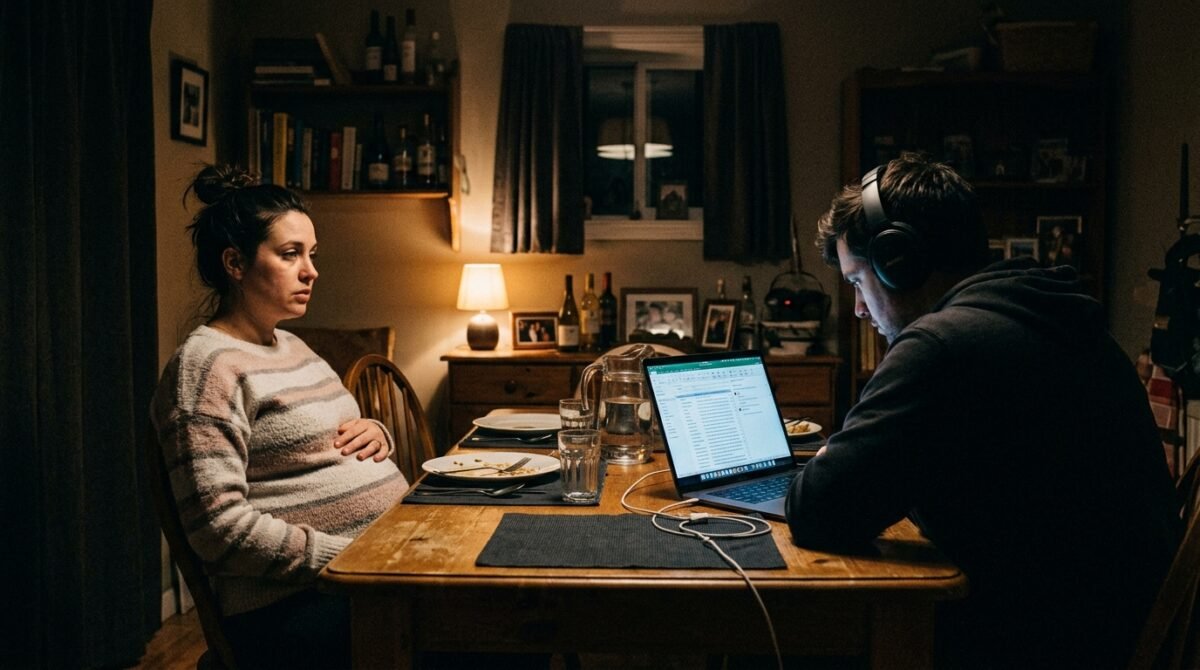
It started over a lukewarm dinner of roasted chicken and vegetables. I was thirty-eight weeks pregnant, my ankles swollen and my patience wearing thin. Mark was already wearing his noise-canceling headset, scrolling through forums on his iPad while he chewed. When he finally took the headset off, the first thing he said wasn’t about my contractions or the baby’s movement—it was about the server capacity for the upcoming expansion.
I tried to voice my concerns gently. I reminded him that we had discussed his leave months ago. I reminded him that his HR department had already approved the paperwork. He sighed, a sound of profound annoyance, as if I were asking him to do something unreasonable, like surrender his passport. He looked at me with those eyes I used to love, now clouded by the artificial glow of his screen, and laid out his case with terrifying logic.
“Look, it’s not like you’ll need me for everything. You’ll be resting. The baby sleeps sixteen hours a day, right? If I take the leave now, I’m just sitting around doing nothing. If I push the leave back to next month, I can play the launch week and then be fully present for you later. It’s actually more efficient for everyone involved.”
I felt the room tilt. I asked him if he realized that a newborn didn’t follow a schedule, or that my recovery was a physical process that might require, you know, his help? He laughed, a dismissive, patronizing sound. He truly believed he had figured out a ‘hack’ for fatherhood, as if he were optimizing a character build rather than welcoming a human life into the world. I felt a cold, hard knot of resentment settle in my chest, a sensation that would become my constant companion over the next few days.
He then went on a rant about his guild, about how he had responsibilities to his ‘team.’ He explained that if he didn’t log in at 3 AM on the day of the launch, he would be ‘benched’ for the rest of the season. I looked at the baby bump, at the life inside me, and realized that to Mark, the guild was his family, and our actual family was just an inconvenience that needed to be managed. The disconnect was so vast it felt like a canyon.
I didn’t yell. I didn’t cry. I simply stood up, my body heavy and awkward, and told him I was going to bed. He didn’t even notice I was hurt; he was already back to his screen, his fingers twitching in anticipation of a life that didn’t exist. That night, I didn’t sleep. I spent the hours mapping out a plan, a quiet rebellion that felt more like survival than spite. I realized that if he wanted to live in a digital world, I would give him exactly that: all the digital space, and none of the support.
The Silence of the Nursery
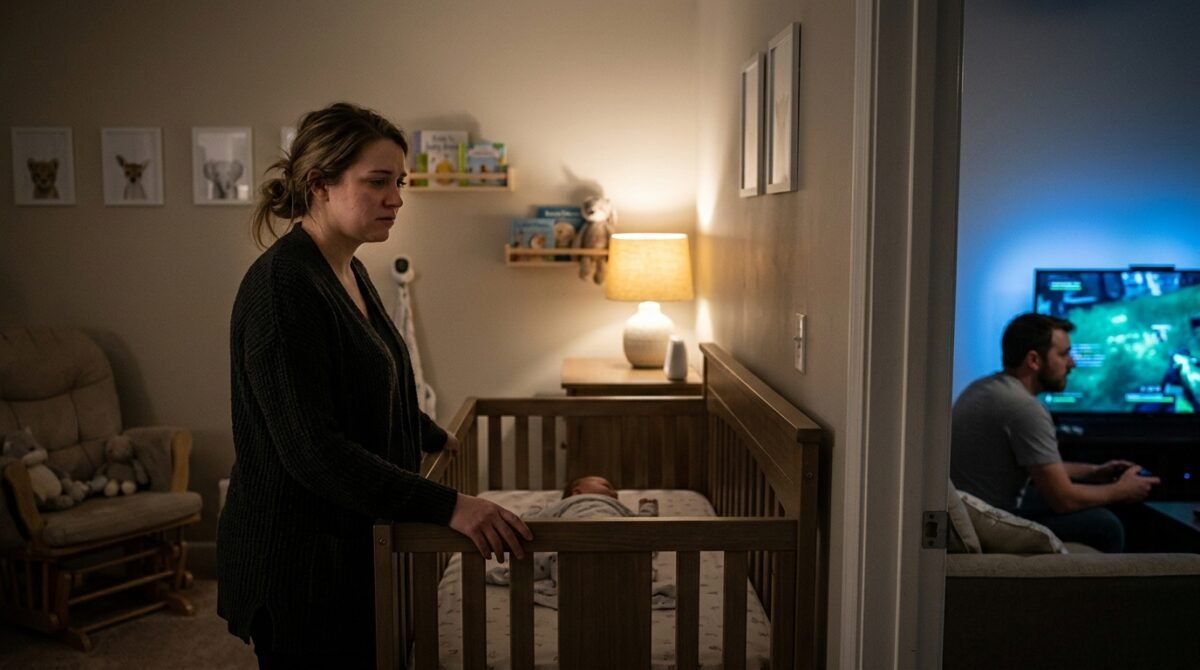
The next morning was the calm before the storm. I woke up to the sound of Mark tapping away at his keyboard in the living room. The nursery, which I had spent so much time curating, felt like a silent witness to the tragedy unfolding. I walked into the room, touched the crib rails, and felt a strange sense of detachment. I wasn’t just preparing for a baby; I was preparing to be a single mother in a house with a roommate who happened to be my husband.
I started moving. I called my mother and told her I might need her to come out sooner than expected. I didn’t give her all the details—I didn’t want to turn this into a family drama just yet—but I think she heard the edge in my voice. She told me she would clear her calendar. That was the first piece of the puzzle. I was building a support system that didn’t include the man who was supposed to be my primary partner.
I checked our bank accounts. We had a joint savings for the baby’s first year. I moved half of it into an account that only I could access. It wasn’t theft; it was insurance. I knew that if things went south, if he really did abandon his responsibilities, I would need capital to survive. I felt like a spy in my own home, a woman plotting her escape while sitting on a pile of baby clothes.
I also called the postpartum retreat. It was a luxury, a place that focused on recovery and infant care, where professionals helped you transition into motherhood. It was expensive, but I didn’t care. The cost was trivial compared to the peace of mind I knew I would need. I booked a two-week stay, starting three days after my due date. If Mark wanted to be in his virtual world, I would be in a sanctuary where I was actually cared for.
When I walked back into the living room, Mark was still there. He didn’t ask how I was feeling. He didn’t ask about the doctor’s appointment I had coming up. He was talking to his headset microphone, his voice animated and excited. I stood behind him for a moment, invisible, just listening to him talk about loot drops and raid mechanics. It was then that I truly understood: he wasn’t just addicted to a game; he was addicted to escaping his life.
The Hospital Corridor Confrontation
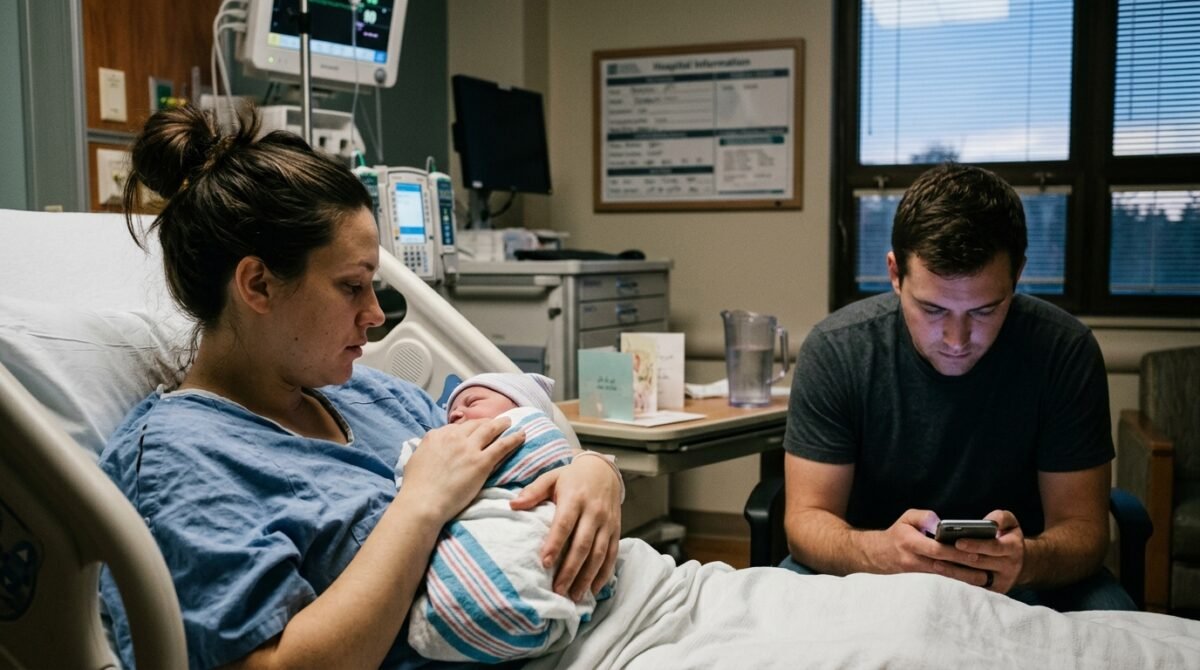
The day of the induction, the reality finally hit. We were at the hospital, and the nurses were prepping me. Mark was there, but he was barely present. He had his laptop open on the tray table, and every time the machine beeped, he looked at his screen with more intensity than he looked at me. It was surreal. The most profound moment of our lives was happening, and he was trying to figure out how to maintain his connection to the server.
When the contractions started to ramp up, the pain became a focal point. I needed support. I needed him to hold my hand, to breathe with me, to be the rock he had promised to be. Instead, he was fumbling with his phone, trying to set up a ‘hotspot’ because the hospital Wi-Fi was spotty. I grabbed his hand, not for comfort, but to stop him from typing.
“Mark, put the phone down. Look at me. We are having a baby. Can you please, for the love of God, just be here for me? I am scared, and I am in pain, and you are literally checking your latency ping.”
He looked at me, genuinely annoyed. He sighed, put the phone down, and gave me a perfunctory squeeze of my hand. ‘I’m here, aren’t I?’ he said. ‘I’m just trying to make sure I don’t get booted from the session. If I get booted, I lose my spot in the raid group for the whole week.’ He didn’t hear the hurt in my voice. He didn’t see the tears that had started to well up in my eyes.
I stopped crying. The anger took over, a cold, sharp blade of clarity. I realized that no amount of begging would make him the man I needed him to be in that moment. He was incapable of empathy because he was too busy managing a digital existence. I let go of his hand and turned toward the wall. For the next several hours, I didn’t speak to him. I focused on the pain, on the baby, on the future I was going to build without this anchor.
The delivery was fast, and the baby was perfect. When the nurse handed me our daughter, for a split second, I saw Mark’s face soften. But then his phone buzzed in his pocket—a notification from his guild’s Discord. He reached for it before he even reached for the baby. I turned my head away, holding my daughter close to my chest, and for the first time in my life, I felt completely, utterly alone.
The Departure Plan

We got home two days later. The house felt smaller, colder. Mark was in his element. He had set up a secondary monitor at the dining room table, and he was fully immersed in the new expansion. He didn’t even stand up when I walked in with the baby in the carrier. He just gestured toward the kitchen. ‘There’s leftovers in the fridge,’ he said, his eyes never leaving the screen.
I put the baby in the bassinet and went to the bedroom. I had already packed my bags. I wasn’t leaving forever—at least not yet—but I was leaving for the retreat. I had printed out the confirmation email and left it on the kitchen counter, right next to his energy drink. I grabbed my bags, walked past him, and didn’t say a word. He didn’t even notice I was leaving the house.
As I reached the door, I paused. I looked back at him, hunched over his keyboard, the sound of explosions and epic music filling the house, drowning out the soft, rhythmic breathing of our child. I felt a surge of pity for him. He was losing everything, and he didn’t even know it. He thought he was winning, that he was balancing his life perfectly. He was so wrong.
I walked to the car, and for the first time in a week, I breathed fresh air. I drove to the retreat, a beautiful, serene place nestled in the hills. When I checked in, the staff welcomed me with warmth and grace. They didn’t ask where my husband was. They just took my bags, showed me to my room, and told me that my only job was to rest and bond with my daughter. I burst into tears, not of sadness, but of relief.
That night, I received a text from Mark. It was the first time he’d reached out since I left, and it wasn’t a ‘Where are you?’ or ‘Is everything okay?’. It was a message of pure frustration. He clearly didn’t even realize I had gone to a retreat; he probably thought I was just out running errands or visiting family. The delusion was absolute. The message simply read: ‘The internet is out, and I can’t sync my data. Can you check if the router is unplugged? I’m missing the raid!’
The Fallout in the Group Chat
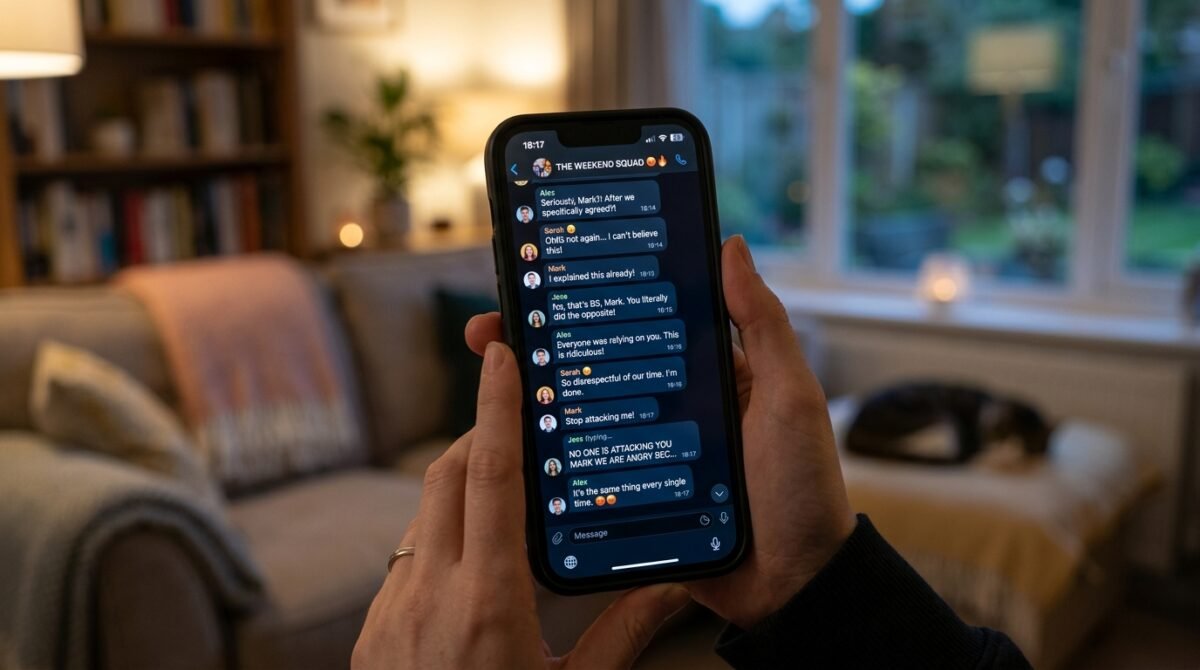
The next day, the realization finally dawned on him. I didn’t reply to his text, and when he called, I let it go to voicemail. He started to panic, not because he was worried about me, but because he was inconvenienced. He didn’t know how to do the laundry, he didn’t know where the diapers were, and he certainly didn’t know how to soothe a newborn who had developed a serious case of the witching hour.
He decided to take his frustration to the family group chat. He sent a series of messages that revealed exactly how little he understood about the situation. He framed himself as the victim, the long-suffering father who was being ‘abandoned’ by his wife for no reason. He wanted my mother and his mother to side with him, to tell me to come home and take care of the house.
“I don’t know what’s gotten into her. I’m just trying to work through this busy week, and she’s disappeared with the baby without even telling me where she is. This is incredibly selfish. I have responsibilities, and now I’m stuck here alone with no help.”
— Mark (Family Group Chat)
My mother, who had been waiting for this moment, didn’t hold back. She had seen him at the hospital, and she had seen the way he treated me. She replied to the group chat with a level of precision that was both terrifying and satisfying. She didn’t need to know the full extent of the gaming; she just needed to know that her daughter was alone with a newborn while her husband was playing games. The response was brutal.
His mother, however, was a different story. She tried to defend him, saying that he was a ‘modern man’ who just needed to ‘find his rhythm.’ My mother tore that apart, citing the reality of postpartum recovery and the absolute requirement for partnership. It was a bloodbath in the group chat, and for once, I was sitting on the sidelines, watching someone else fight my battles. It was the most empowering feeling I had experienced since the baby was born.
I finally replied to the chat, not to argue with him, but to state facts. I sent a photo of the retreat, a short message explaining that I was receiving the care I needed, and that I would be home when I was ready. I finished by saying that I hoped he enjoyed his time with his console, as he clearly didn’t have time for anything else. The group chat went dead silent for ten minutes, and then my phone started blowing up with support.
The Reality of Solitude
At the retreat, I began to heal. The professionals there were incredible. They helped me with breastfeeding, with my physical recovery, and most importantly, with my mental health. I learned that I didn’t have to be everything to everyone. I learned that my worth wasn’t tied to how much I could sacrifice for a man who didn’t appreciate it. Every day, I felt stronger, more capable, and more detached from the life I had left behind.
Mark, meanwhile, was falling apart. I knew this because he started sending me emails. He realized that the house was a mess, the baby was screaming, and his game was no longer a refuge—it was a prison. He couldn’t play when he was trying to feed the baby, and he couldn’t feed the baby when he was trying to play. He was experiencing the reality of parenthood, and he was failing. He wanted me to come back and ‘fix it,’ to be the one who handled the labor while he handled the fun.
I didn’t go back. I extended my stay by another week. I told him that I needed the time to recover, and that he was capable of taking care of himself and the baby. It was a test, and I knew he would fail. He needed to feel the weight of his own choices. He needed to know that if he wasn’t going to be a partner, he couldn’t expect me to be his support staff. The silence from him became desperate, then angry, and finally, resigned.
I spent my evenings sitting on the balcony, watching the sunset, holding my daughter. I thought about the life I wanted for her. I wanted her to see that her mother was strong, that she didn’t accept less than she deserved, and that she prioritized her own well-being. I realized that my marriage was a mirror of my self-worth, and it was time to polish that mirror until it showed something true. I wasn’t just resting; I was shedding.
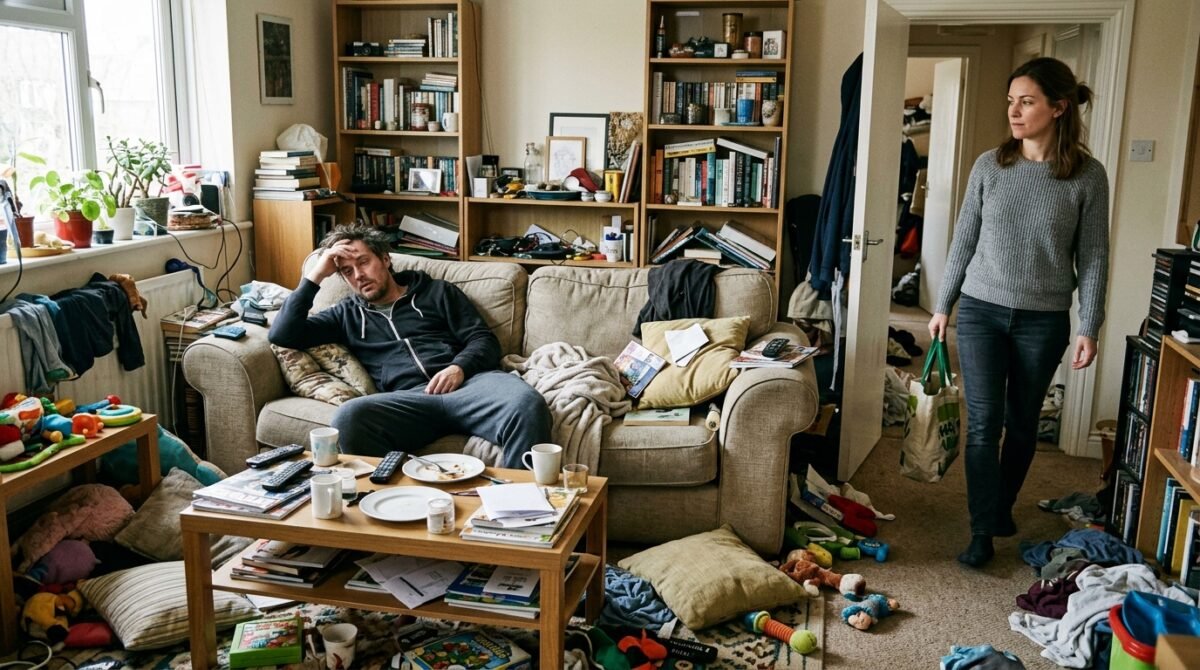
When I finally went back home, the house was a disaster. There were empty takeout containers everywhere, the laundry was piled up to the ceiling, and the smell of neglect was palpable. Mark was sitting on the couch, exhausted, his eyes bloodshot, his console still running. He looked at me, not with relief, but with resentment. He expected me to walk in and immediately start cleaning. I didn’t. I walked into the nursery and started caring for my baby.
The Final Confrontation
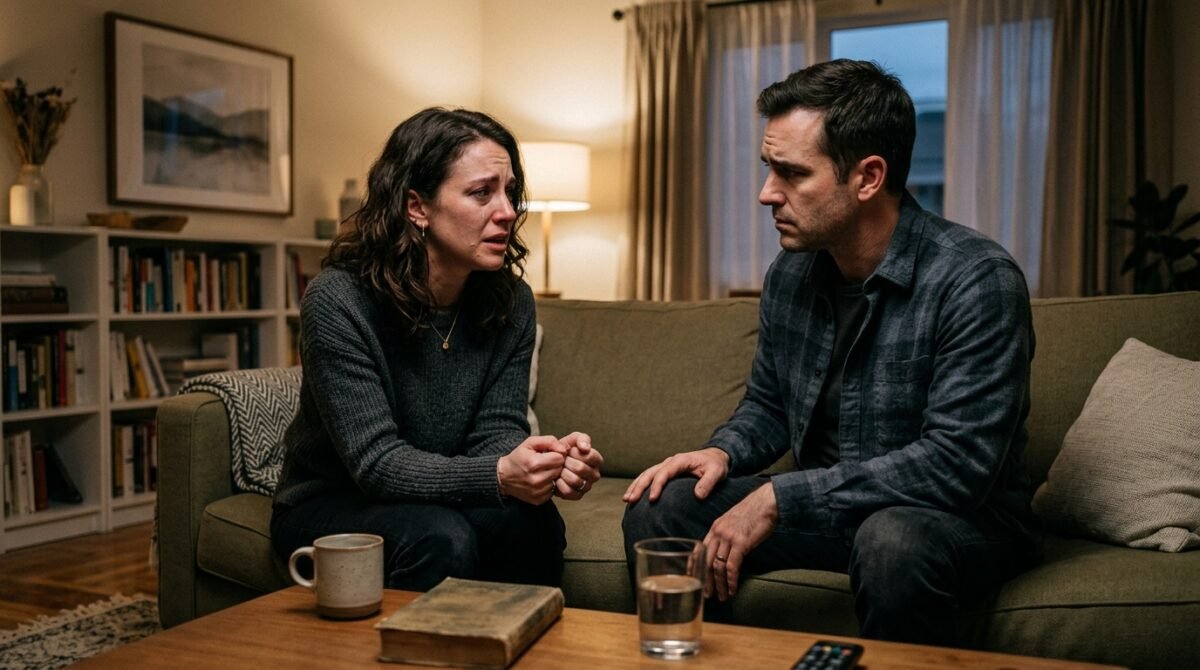
When the baby was down, I walked into the living room and sat down across from him. I didn’t ask him how his week was. I didn’t ask about the game. I told him that we needed to talk about our future. I laid it all out: the lack of support, the obsession with the game, the emotional abandonment during the birth, and the reality that I was no longer willing to be a secondary priority in his life.
He tried to interrupt, to make excuses, to blame the ‘stress’ of the new expansion. I stopped him. I told him that his excuses were just a way to avoid taking responsibility for his life. I told him that he had a choice: he could be the man I needed, or he could be the man he was currently acting like, but he couldn’t be both. I told him I wanted a divorce unless things changed drastically—like, therapy, a commitment to his role as a father, and a total reassessment of his relationship with gaming.
“I’m not asking you to give up your hobbies. I’m asking you to grow up. You have a daughter, Mark. She doesn’t care about your raid progress. She cares if you’re there. And right now, you aren’t. You’re a ghost in this house. And I am done living with a ghost.”
He was stunned. I think he expected me to just go back to normal, to accept the status quo because that’s what I had always done. He didn’t realize that the woman who left for that retreat was not the same woman who came back. I was no longer afraid of being alone. I was already alone in that marriage, and I had realized that being alone was better than being with someone who didn’t see me.
He tried to argue, to minimize my feelings, to suggest that I was ‘overreacting.’ I told him that if he thought I was overreacting, he was free to leave. He didn’t leave, of course. He stayed, but the dynamic had shifted. He knew that I was serious. He knew that the line had been drawn, and that I was standing on the other side of it, waiting to see if he would cross it to join me.
The next few weeks were the hardest of my life. We went to therapy, we talked, and we fought. It was messy and painful, but for the first time, we were actually talking. He had to face the reality of his addiction, and I had to face the reality of my own codependency. It was a long road, but it was the only road that led to something real. We are still working on it, but the balance has shifted. He’s not a perfect father, but he’s present, and that’s a start.
Reddit Weighs In: The Verdict
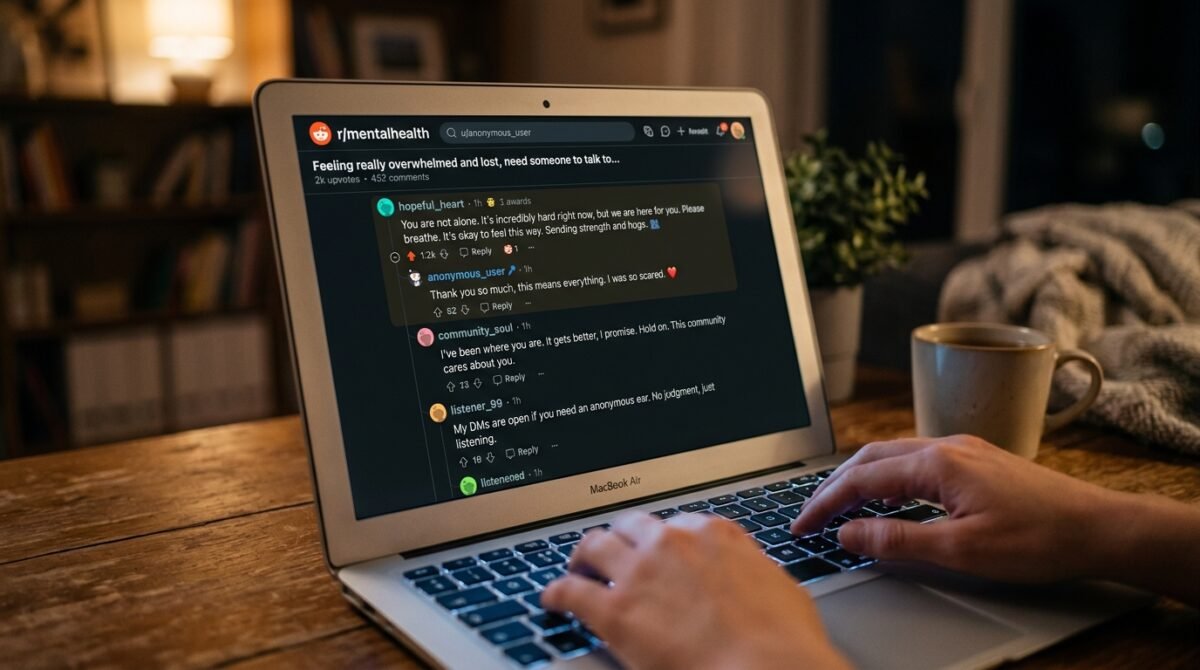
I decided to share my story on Reddit to see if I was losing my mind. The response was overwhelming. Thousands of people reached out, sharing their own experiences with gaming addiction in relationships, postpartum abandonment, and the struggle for equality in parenting. It was both validating and heart-wrenching to see how common this issue was, and how many people felt the exact same way I did.
“NTA. Your husband isn’t just a gamer; he’s an emotionally absent partner who failed you at the most vulnerable time in your life. The fact that he was more worried about a video game than your delivery is unforgivable. You did the right thing by leaving and putting your needs first. Don’t go back to normal. Hold the line.”
— u/SupportivePartner (28.4k upvotes)
There were also, of course, the dissenters. Some argued that I was ‘punishing’ him too harshly, that gaming was his ‘only stress relief’ and that I should have been more understanding. They claimed that I had ‘ruined’ his hobby and that I was being controlling. It was interesting to see how people perceived the situation, and it only confirmed my belief that society still has a long way to go in terms of expecting equal partnership in marriage.
“ESH. He’s definitely wrong for ignoring you, but you just up and left without a real conversation? That seems like a pretty extreme reaction. You could have tried to talk it out more instead of just ‘booking a retreat’ and abandoning him. Communication is key, and you both failed at that.”
— u/DevilAdvocate2023 (1.2k upvotes)
Reading these comments was like looking into a mirror of our own issues. It showed me that people will always find a way to justify bad behavior, but it also showed me that there is a massive community of people who believe in boundaries, respect, and mutual support. I didn’t care about the people who thought I was wrong; I cared about the people who understood that I was fighting for my dignity.
The most important takeaway from the thread was the realization that I wasn’t alone. Thousands of women (and men) had been in the exact same position, and they had all come out the other side stronger. They encouraged me to keep pushing for therapy, to keep the boundaries firm, and to never settle for less than I deserved. It was the collective wisdom of thousands of people, and it gave me the strength to keep fighting for my family.
I am now more confident than ever that I made the right decision. Whether my marriage survives or not, I know that I have reclaimed my life. I am no longer a bystander in my own existence. I am the architect of my own happiness, and I will never again let someone else’s priorities define my reality. The internet may not always be right, but in this case, the support was the validation I needed to keep moving forward.
Financial Lessons and Future Boundaries

Looking back at the financial side of everything, it’s clear that I had to take control of my own future. During that time, I set up a separate bank account and consulted with a financial advisor. I realized that if I wanted to leave, I needed to know exactly what my options were. Money isn’t just money; in a marriage, it’s security. I should have done that years ago, but better late than never. I learned that financial independence is the ultimate form of boundary-setting.
We also had to have a very difficult conversation about our budget. I wanted to make sure that our money was being spent on things that mattered—like childcare, therapy, and savings for our daughter—rather than on unnecessary gaming gear or luxury items. It was a struggle to get him to see the difference, but we eventually reached an agreement. Every dollar had to be accounted for, and we had to be transparent about where our money was going.
I also set a very clear rule: no gaming during family time. If the baby is awake, he’s not allowed to be on his PC. If we are eating dinner, the phones are away. These seem like basic rules, but for us, they were revolutionary. It took a while for him to adjust, and there were many arguments, but he’s finally starting to understand that time is a finite resource, and it’s meant to be shared, not hoarded.
We also implemented a ‘one-in, one-out’ policy for his gaming equipment. If he wants a new piece of gear, he has to get rid of an old one. This might seem trivial, but it helped him understand that he couldn’t just keep adding to his collection without any regard for our space or our budget. It was a small step, but it was a step toward a more sustainable and balanced lifestyle.
The biggest lesson I learned was that boundaries aren’t meant to punish; they’re meant to protect. They protect the relationship, they protect the family, and they protect the individual. Before this, I didn’t have any boundaries; I was a door mat. Now, I have a firm, clear set of expectations, and I’m not afraid to enforce them. If he wants to be part of this life, he has to be an active, present participant. Anything else is no longer an option.
The Current State of Our Family
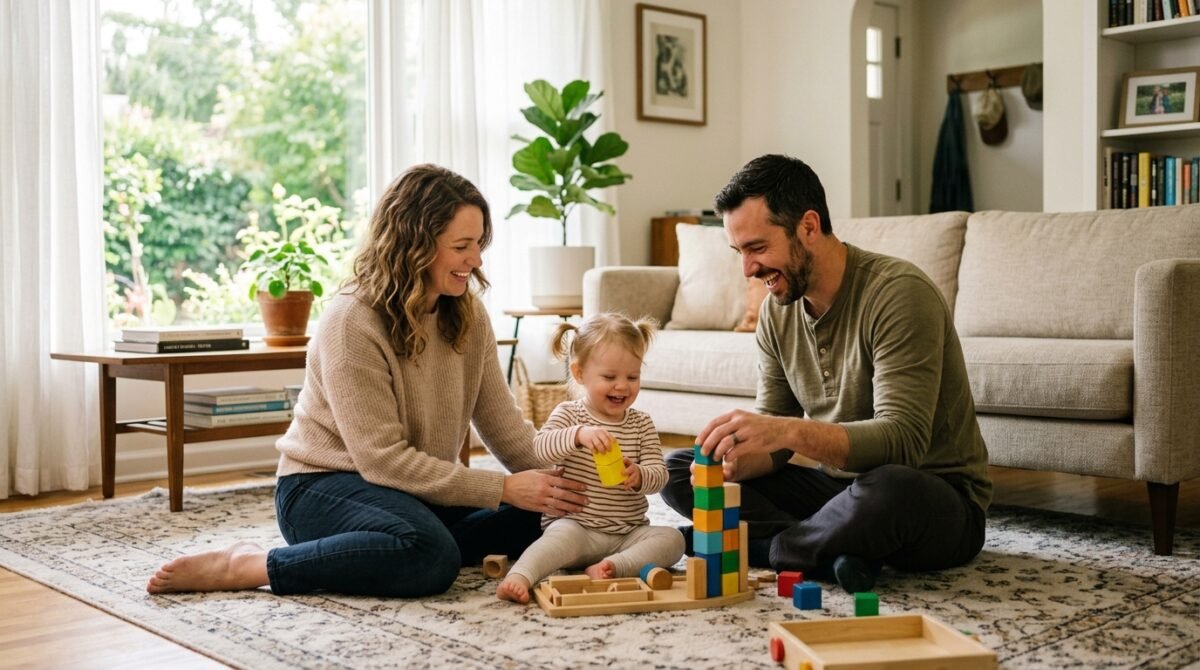
Today, things are different. Mark is a better father, though he still has his moments. He’s learning to be present, to put the controller down, and to actually engage with our daughter. It’s not perfect—there are still days when I have to remind him to be more attentive—but the progress is undeniable. He’s taking his role as a parent more seriously, and that’s all I can ask for right now.
We still go to therapy, and it’s helped us navigate the resentment that built up over those early months. We’re learning to talk about our needs without attacking each other, and we’re learning to listen to each other without feeling defensive. It’s a slow process, but it’s a healthy one. We’re building a new foundation, one that’s based on mutual respect and shared responsibilities.
Our daughter is thriving. She’s surrounded by love, and she has two parents who are, for the most part, present in her life. She doesn’t know about the drama, and she never will. That’s the most important thing to me. I’m doing everything I can to give her the best start in life, and that includes modeling what a healthy, balanced relationship looks like.
I also have my own life. I’ve started working again, I have my own hobbies, and I’m focusing on my own growth. I’m not waiting for Mark to make me happy anymore. I’m making myself happy, and that’s been the biggest change of all. I’m no longer defined by his choices; I’m defined by my own actions.
If you’re in a similar situation, know this: you aren’t alone. You deserve respect, you deserve support, and you deserve a partner who is there for you, especially in the most important moments of your life. Don’t be afraid to take a stand, don’t be afraid to set boundaries, and don’t be afraid to prioritize your own well-being. It’s your life, and it’s worth fighting for.
Conclusion
This journey has been a testament to the power of setting boundaries and the importance of self-respect. What began as a crisis born of neglect has evolved into a lesson about reclaiming one’s worth within a partnership. I learned that silence is not the same as peace and that true love requires active participation, not just presence. By choosing to step away and prioritize my own recovery and my child’s needs, I forced a confrontation that was long overdue, creating the necessary friction for actual change to occur.
I am still here, still navigating the complexities of marriage and parenthood, but I am doing so with my eyes wide open. The resentment hasn’t vanished, but it has been replaced by a sense of purpose and a commitment to a life that honors my contributions. I hope this story serves as a reminder to anyone feeling lost in their own relationship: your needs are valid, and you have the right to demand the partnership you were promised.
What about you? Have you ever had to draw a line in the sand to save your own sanity in a relationship, or have you experienced a similar disconnect in your own family dynamic? Let’s talk in the comments below. Do you think I was too harsh, or was this the necessary wake-up call my husband needed?
What's your verdict on this dilemma?
Vote below to contribute to the official community consensus.

Have a Dilemma Keeping You Up at Night?
Share your real-life feud, wedding chaos, or relationship crossroads anonymously with our editorial team.
What do you think ?
0 Comments🛡️ Comments are moderated to protect community integrity. Your comment will appear once approved by the editorial team.