

They say that money changes everything, but I never imagined it would change the people I’ve trusted for a decade. For years, Sarah and I were inseparable. We navigated the trials of graduate school, the crushing weight of entry-level jobs, and the quiet struggles of adulthood together. We were each other’s support system, the people we called at 2:00 AM when the world felt like it was crashing down.
When I finally secured a prestigious government grant for my environmental research, the atmosphere shifted. It wasn’t just a win for my career; it was the financial stability I had spent years dreaming about. I felt like I could finally breathe. But while I was looking toward a future of meaningful work, Sarah had a different vision entirely.
Her 30th birthday was approaching. It was meant to be a milestone, a celebration of surviving another decade. Yet, instead of a simple dinner or a modest gathering, Sarah began speaking of a week-long luxury excursion to the Amalfi Coast. To her, this wasn’t just a trip; it was a birthright. And in her mind, my grant wasn’t just funding for my research—it was a communal pot.
The moral dilemma started as a subtle suggestion and morphed into a full-blown demand. She didn’t just want me to attend; she expected me to subsidize the expenses for the entire trip, including her share, because I could ‘afford it now.’ This is the story of how that expectation shattered a ten-year friendship, the fallout of the group chat, and the harsh lessons I learned about boundary-setting.
The Subtle Seeds of Financial Entitlement
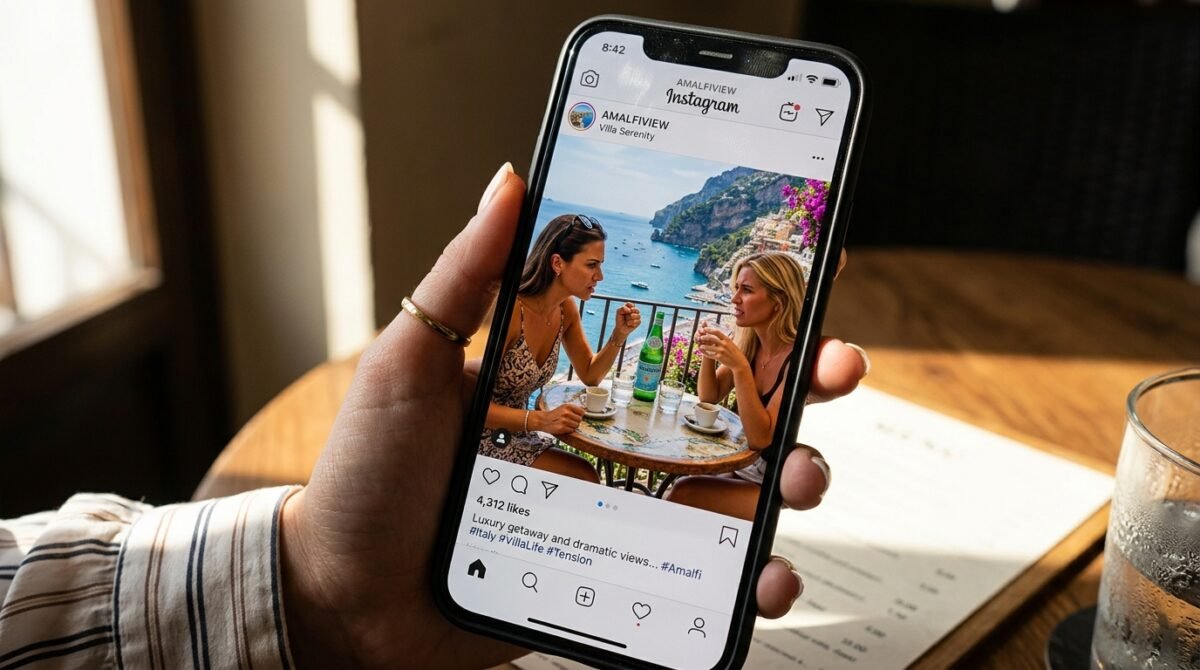
It began over a casual brunch, three weeks after the announcement of my grant. Sarah had been unusually quiet, scrolling through her phone with a focused intensity that made me uneasy. She finally slid her phone across the table, showing me a picture of an ultra-luxurious villa perched on the cliffs of Italy.
“This is the place, Clara,” she said, her voice dripping with expectation. “It’s perfect for the big 3-0. I’ve already done the math for the group, but honestly, with your new funding, we could really make this trip something to remember. Something truly elevated.”
I felt a cold prickle of apprehension at the back of my neck. “Sarah, that place looks incredible, but it’s astronomically expensive. I’m happy for you, but I have to be responsible with my budget. That grant is strictly for my field equipment and site travel, not for personal indulgence.”
She laughed, a sharp, dismissive sound. “Don’t give me that, Clara. You’ve been living on ramen for five years. You owe yourself a break, and frankly, you owe it to your best friend to celebrate this win properly. We’re in this together, aren’t we? That’s what you always said.”
“I’m not asking you to pay for everyone, I’m asking you to be the person who makes the dream possible for the birthday girl. It’s a drop in the bucket for you now, and you know it.”
— Sarah, during our first confrontation
That phrase, ‘in this together,’ felt like a trap. I realized then that she didn’t view my professional success as a personal achievement; she viewed it as a communal resource that she had priority access to.
The Group Chat Ambush
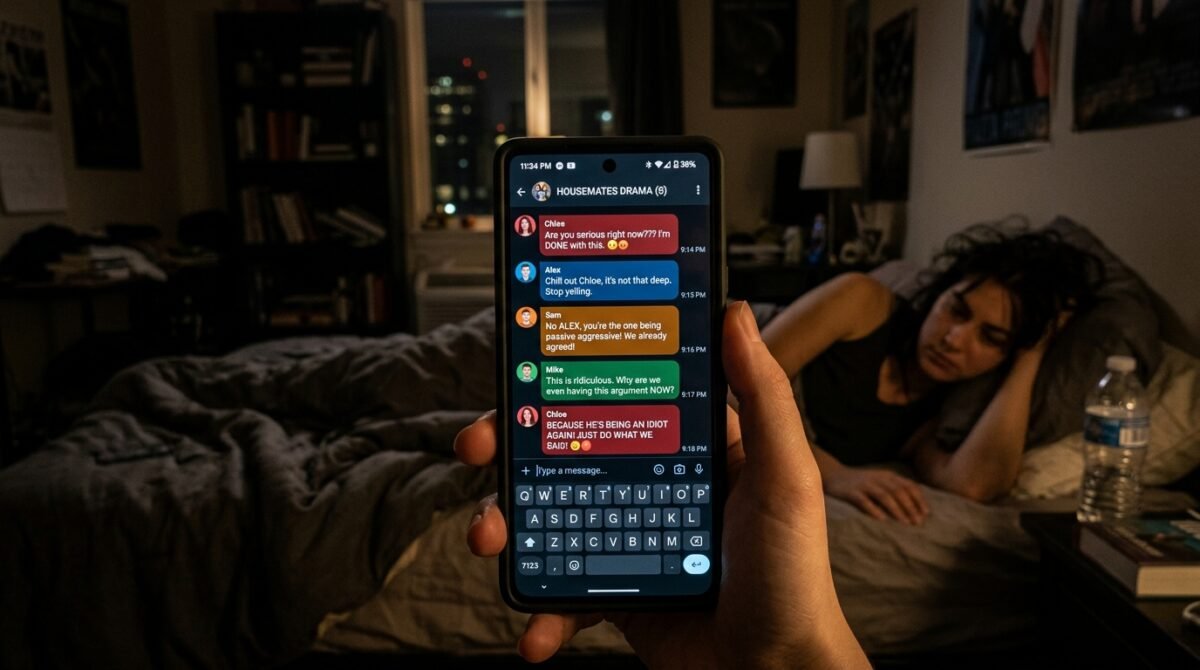
Two days later, I was added to a group chat titled ‘Amalfi 30th Extravaganza.’ I looked at the member list: Sarah, her cousin, her two college roommates, and me. The first message was a long, detailed itinerary accompanied by a spreadsheet that calculated the cost per person, with my name highlighted in a different color.
The breakdown was blatant. Sarah had assigned me the ‘Corporate Sponsorship’ share, which included not just my own room, but the remaining balance of the villa rental and the cost of her private airfare. I stared at the screen, my blood pressure rising. I hadn’t agreed to any of this.
I typed a message, then deleted it, then typed it again. My thumb hovered over the send button. I felt a mix of anxiety and righteous anger. I had to set a hard boundary, but the pressure of the other participants—people I barely knew—was suffocating.
“Hey everyone, I’m seeing this spreadsheet, but I need to clarify: I am only responsible for my own travel and lodging costs. I won’t be funding the villa or any additional group expenses.”
— The message I sent to the group chat
Within seconds, my phone began vibrating incessantly. The silence that followed in the chat was heavy, replaced almost instantly by a flurry of messages questioning my loyalty and my ‘sudden change in personality’ since getting the grant.
The Accusations of Greed

The backlash was immediate and personal. Sarah didn’t take the rejection to the group; she called me directly, her voice trembling with a practiced, performative sadness. She painted herself as the victim, claiming that I was intentionally humiliating her in front of her family and friends.
“I can’t believe you’d do this to me,” she sobbed. “I supported you through every single rejection letter you got while applying for that grant. I was the one listening to you cry. And now that you have a little success, you’re too good for us? You’re acting like a stranger.”
I tried to remain calm, but the manipulation was infuriating. “Sarah, supporting me during my career journey doesn’t mean you have a claim on the money I earn. This isn’t about being ‘too good.’ It’s about the fact that I have professional responsibilities, and I’m not a bank.”
She didn’t listen. She pivoted to personal attacks, bringing up every instance over the last ten years where she had paid for my coffee or a movie ticket. She was keeping a ledger of small favors, and she was cashing them in all at once, multiplied by a thousand percent.
The conversation ended with her hanging up on me, leaving me shaking in my living room. I felt the weight of ten years of friendship crumbling under the pressure of a single, misguided expectation. It was clear that to Sarah, I wasn’t a person; I was a utility.
The Intervention of the Mutuals

The next day, the fallout expanded. I received a message from one of our mutual friends, someone I considered relatively neutral. She told me that Sarah had been telling everyone that I was ‘flashing my new money’ and ‘denying my friends a once-in-a-lifetime experience out of pure spite.’
I was shocked. I hadn’t spent a dime on myself yet; I was still driving the same beat-up sedan and eating the same cheap meals. The narrative Sarah was weaving was designed to alienate me from our entire social circle. It was a classic smear campaign.
I had to decide whether to defend myself or stay silent. If I said nothing, I would lose people I cared about. If I spoke up, I would be ‘the dramatic one.’ I chose to send a single, factual message to the mutual friend, including a screenshot of the spreadsheet Sarah had created.
“I’m not being spiteful. I’m being asked to pay for a luxury vacation for five people. Here is the math Sarah sent. Does this seem reasonable to you?”
— My response to the mutual friend
The friend went silent for a long time. When she finally replied, her tone had shifted completely. She had no idea Sarah had asked for such an extreme amount of money. The reality was starting to surface, but the damage to the social dynamic was already done.
The Midnight Confrontation at the Office

Sarah showed up at my research office unannounced. She knew exactly when I would be there because she had been my ‘plus one’ for so many late-night sessions in the past. She walked in without knocking, carrying a bottle of wine and a look of forced reconciliation.
“Let’s just move past this, Clara,” she said, setting the wine on my desk, right next to my grant documentation. “We can compromise. Maybe you don’t pay for the airfare, but you cover the villa. It’s just money, and you’re going to get more. Don’t throw away a decade for a few thousand dollars.”
I looked at her, really looked at her, and realized I didn’t know this person. Or perhaps, I had been ignoring who she really was for years. The entitlement was so deep that she couldn’t even process the word ‘no’ as a valid response.
“Sarah, please leave,” I said, my voice steady for the first time. “This isn’t a negotiation. It’s a boundary. I am not paying for your trip, and I am not having this conversation again. You are violating my space and my comfort.”
She looked around my office, her eyes hardening. “You really think you’re better than everyone now, don’t you? You think that grant makes you an elite. You’re just a sellout, Clara. A cheap, ungrateful sellout.” She turned and walked out, leaving the wine on my desk. I threw it in the trash without opening it.
The Reddit Trial: Asking for Perspective

I posted my story on a popular forum, needing to know if I was losing my mind. The response was overwhelming. Within hours, the post had thousands of upvotes and comments that ranged from supportive to brutally analytical. It was a digital mirror, showing me that I wasn’t the one in the wrong.
“NTA. This isn’t a friendship; it’s an extraction. She doesn’t see you as a peer, she sees you as a resource. The fact that she’s using your shared history to guilt-trip you is textbook manipulation. Run.”
— u/ReasonableObserver, 15.2k upvotes
Another user broke down the financial toxicity of the situation. It was helpful to see the numbers laid out objectively, detached from the emotional baggage I had been carrying. It confirmed that the ‘expected’ contribution was nearly 40% of my total living expenses for the next six months.
“She’s not celebrating her birthday. She’s hosting a fundraiser where you are the sole donor. If she wanted a trip, she should have saved for it. Don’t set yourself on fire to keep her warm.”
— u/FinancialTruthSeeker, 8.4k upvotes
Reading these comments felt like a weight lifting. The internet, often a source of chaos, was providing me with the clarity I desperately needed to hold my ground.
The Final Severing

Following the online feedback, I felt empowered to take the final step. I didn’t want a long, drawn-out explanation. I knew anything I said would be twisted and used against me. I sent a final, brief text to Sarah, blocking her number immediately afterward.
“I have decided that I will not be attending the trip, nor will I be contributing to any costs. I’m taking some time away to focus on my work and my mental health. Please do not contact me again.”
The silence that followed was peaceful. For the first time in weeks, my phone stopped buzzing with accusations and demands. I felt a strange, melancholy sense of loss, but beneath it was a profound relief. The ‘friendship’ had been a weight I hadn’t realized I was carrying until I dropped it.
I spent that weekend focusing on my research. I bought a small, modest treat for myself—a new fountain pen I’d wanted for years—and felt a genuine sense of joy. It wasn’t about the money; it was about the freedom to choose how I spent it.
I knew there would be gossip, and I knew Sarah would play the victim to anyone who would listen. But that was no longer my reality to manage. The boundary was set, the bridge was burned, and I was finally moving forward on my own terms.
The Aftermath: Seeing the Truth

Months later, I heard through the grapevine that the trip had been scaled back significantly. Sarah had eventually found someone else to ‘sponsor’ a portion of it, but the tension in the group had been palpable. The resentment didn’t end with me; it simply moved to the next person who dared to say no.
I realized that Sarah’s behavior wasn’t a one-time lapse in judgment; it was a pattern of survival. She needed people around her who could be controlled, who could be leveraged for her lifestyle. I had simply been the most convenient mark because of the timing of my grant.
I also saw how many of our other friends started to distance themselves from her. It’s hard to maintain a friendship with someone who treats you like a line item on a budget. The group, which had once been so tight-knit, began to fracture in the wake of her entitlement.
I reconnected with two of our old friends who had been in the group chat. We met for coffee, and they apologized for their silence. They told me that seeing me stand up for myself had given them the courage to stop accepting Sarah’s ‘demands’ for various things over the years. It was a domino effect.
The experience taught me that real friendship isn’t about proximity or history; it’s about mutual respect. When that respect is replaced by entitlement, the friendship is already over. The money was just the catalyst that made the decay impossible to ignore.
Why We Struggle to Say No

I’ve spent a lot of time reflecting on why it took me so long to cut the cord. There is a deep-seated cultural pressure to be ‘generous’ when you have success, especially among peers who started from the same place. We are taught to be loyal, to share, and to support one another.
But generosity shouldn’t be coerced. When a demand is made under the guise of friendship, it ceases to be a request and becomes a shakedown. Recognizing the difference is the most important lesson I’ve learned. It’s not selfish to protect your resources; it’s necessary for your independence.
Many people find themselves in similar traps—co-signing loans, funding ‘business ventures’ that aren’t viable, or paying for vacations they can’t afford. The fear of being seen as the ‘bad guy’ is a powerful tool for manipulators. But the ‘bad guy’ is simply the person who refuses to be exploited.
I’ve learned to value my ‘no’ as much as my ‘yes.’ My career, my health, and my financial stability are the foundations of my life. Letting someone else chip away at them to serve their own ego is a betrayal of myself. Setting boundaries is not an act of aggression; it’s an act of self-preservation.
If you find yourself in a position where you feel guilty for saying no, ask yourself: would this person be asking if the roles were reversed? Would they sacrifice their security for you? If the answer is no, you have your answer.
The Final Verdict: Where I Stand Now

Today, my life is quiet, focused, and genuinely my own. The research project is progressing well, and I have surrounded myself with people who celebrate my success without needing to consume it. The drama of the Amalfi trip is a distant memory, a cautionary tale I tell myself when I feel tempted to over-extend for others.
I still occasionally see glimpses of Sarah on social media. She’s on to the next ‘extravaganza,’ the next set of friends, the next group chat. I don’t feel anger anymore, just a profound sense of relief that I’m no longer part of that cycle. I wish her well, from a very safe distance.
The most important thing I gained from this isn’t the grant money or the career success. It’s the knowledge that I am capable of standing alone. I don’t need a ‘best friend’ to validate my choices or to define my worth. I define my worth by the work I do and the integrity I maintain.
To anyone reading this who feels trapped by an entitled friend: you have permission to leave. You don’t owe anyone your future, your savings, or your peace of mind. The right people will respect your boundaries; the wrong ones will leave, and that is a net gain for your life.
I am grateful for the journey, for the hard lessons, and for the strength I found when I finally decided to walk away. The best investment I ever made wasn’t in the research, but in myself.
Conclusion
The story of my friendship with Sarah is a stark reminder that entitlement can poison even the longest-standing bonds. When money enters the equation, it often acts as a magnifying glass, revealing the true nature of the people around us. I chose to prioritize my future over a vacation I didn’t want, and in doing so, I protected my integrity.
The reaction from the online community was a vital part of my healing process. It reminded me that setting boundaries is not only acceptable but necessary. The lesson here is clear: you are the steward of your own life and resources. Do not apologize for protecting what you have worked so hard to build.
Now, I turn it over to you. Have you ever had a friend demand that you finance their lifestyle because of your success? How did you handle the pressure, and what boundaries did you have to draw to protect your sanity? Share your stories in the comments below—let’s discuss the fine line between support and exploitation.
What's your verdict on this dilemma?
Vote below to contribute to the official community consensus.

Have a Dilemma Keeping You Up at Night?
Share your real-life feud, wedding chaos, or relationship crossroads anonymously with our editorial team.
What do you think ?
0 Comments🛡️ Comments are moderated to protect community integrity. Your comment will appear once approved by the editorial team.