
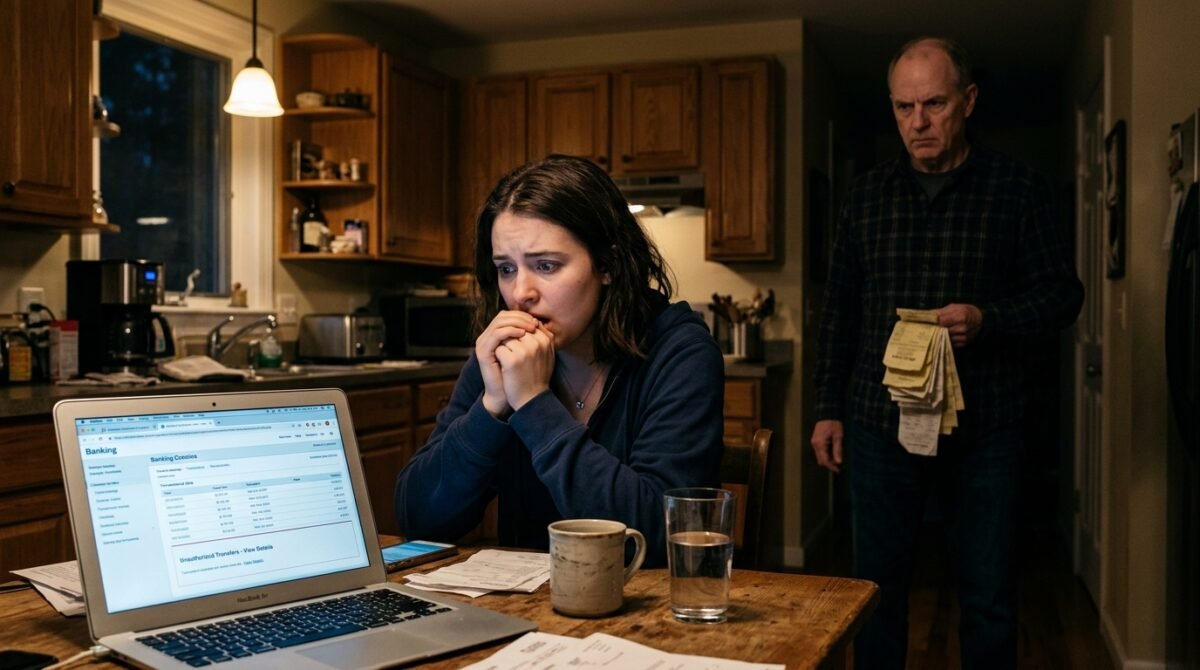
Grief is a strange, shapeless thing. For three months, I existed in a fog, moving through the motions of funeral arrangements, legal paperwork, and the hollow ache of losing my biological mother. She was the anchor in my life, the person who made the house feel like a home even when things were strained with my stepfather, Richard. After the funeral, when the dust settled and the lawyers finally sent over the estate documents, I felt a singular, quiet relief. I wasn’t rich, but I had enough from her life insurance and savings to pay off my student loans and maybe, just maybe, find a place of my own.
That relief lasted exactly forty-eight hours. I was sitting at the kitchen island, trying to figure out how to transition into living alone with Richard, when he walked in with a thick manila folder. He didn’t offer condolences. He didn’t ask how I was sleeping. He simply cleared his throat, pushed a stack of papers toward me, and told me it was time to settle the ‘family accounts’ before I made any rash decisions with my inheritance.
I opened the folder, expecting funeral costs or maybe a request to help with the property taxes. Instead, I found a meticulously typed spreadsheet. Column A: Date. Column B: Item. Column C: Cost. It started in the fall of 2014. It was a list of every school lunch he had packed or paid for, every field trip fee, and even a few ‘misc’ charges for sneakers and school supplies. My heart hammered against my ribs. Was this really happening? Was he seriously trying to claw back the money I had just inherited by billing me for my own childhood?
The moral weight of the situation felt crushing. For years, I had walked on eggshells to keep the peace between them, but now that the mediator was gone, the mask was slipping. Richard wasn’t just a grieving widower; he was a cold, calculating man who viewed my existence as a series of financial transactions. I realized then that the home I lived in was no longer a sanctuary, but a battlefield where the currency was guilt and the price of entry was my future.
The Three-Ring Binder of Resentment
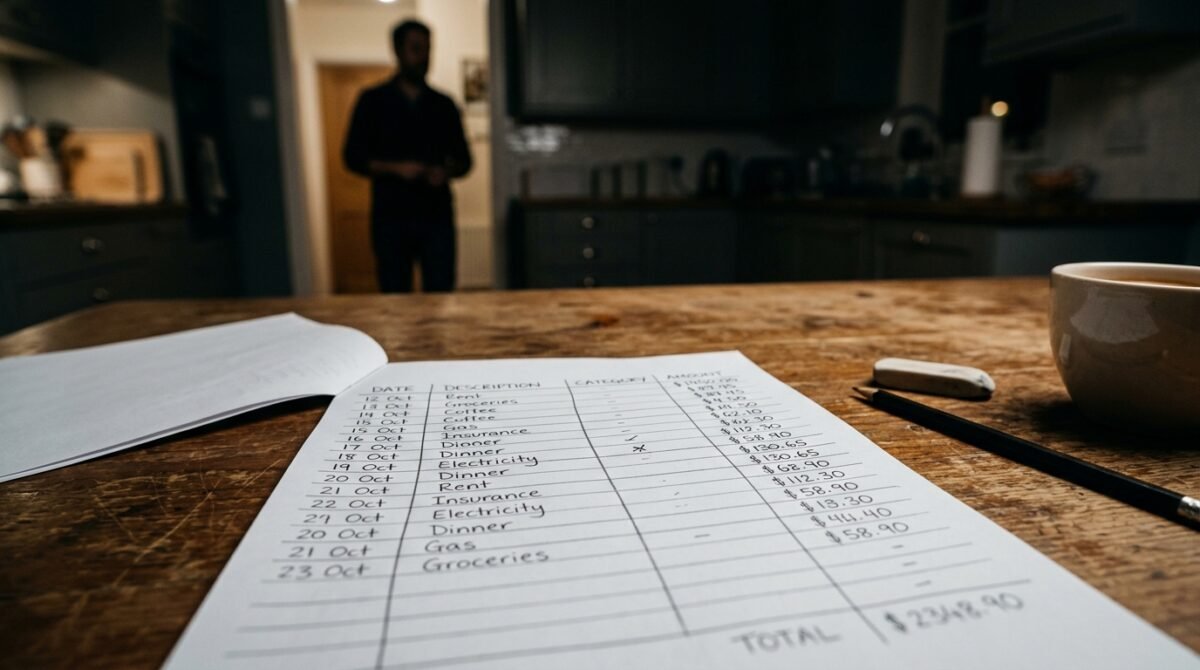
When I finally processed the document, I couldn’t help but laugh—a dry, humorless sound that seemed to startle Richard. He stood there, arms crossed, waiting for me to pull out my checkbook. The audacity of it was so profound that it felt like a hallucination. He had labeled the binder ‘Reimbursement Schedule: Childhood Expenditures,’ as if he were a debt collector working for a corporation rather than a man who had been my legal guardian for a decade.
I looked up at him, my voice trembling but clear. ‘Richard, are you serious? You want me to pay you back for lunch money you gave me when I was fourteen?’ He didn’t even blink. He adjusted his glasses and started explaining the ‘logic’ behind his request. He spoke about the cost of inflation, the missed interest on his savings, and the ‘burden’ of raising a child who wasn’t his own flesh and blood. Every word felt like a physical blow to the memory of my mother.
“I provided for you when your own father couldn’t be bothered. Your mother would have wanted you to be fair. It is only right that the estate covers the investment I made in your growth.”
— Richard, during our first confrontation
I felt a hot surge of anger that burned through my grief. I reminded him that my mother worked two jobs to keep the household running, and that he had used her salary to cover most of those expenses anyway. But facts didn’t matter to Richard. He had decided that I owed him, and he was going to use every psychological trick in the book to make me believe it. He made it clear that if I didn’t pay, he would find a way to contest the will, claiming he was owed ‘unpaid labor’ as a step-parent.
The sheer absurdity of the situation started to sink in. I looked at the totals on the spreadsheet: $42,600. It wasn’t just lunch money; it was a fabrication of a life of debt. I realized then that he had been keeping this list for years, waiting for the exact moment my mother was gone so he could leverage my inheritance against me. I decided right then and there: I wouldn’t pay a single cent, but I needed to be smart about how I handled him.
The Digital Paper Trail of Manipulation

I knew I couldn’t confront him alone. I needed proof. I spent the next few hours scouring my old emails and texts, looking for anything that contradicted his narrative. I found plenty. My mother had been the one to pay the school fees; she had even sent me texts about how Richard had ‘forgotten’ to buy groceries again and she had to stop on her way home from her shift. I started taking screenshots, building my own file to counter his bizarre claim.
By the time dinner rolled around, the tension in the house was thick enough to choke on. Richard hadn’t moved from his armchair in the living room. He kept glancing at his phone, no doubt checking his bank account or perhaps messaging his sister, who had always been his biggest enabler. I walked past him and felt the urge to scream, but I kept my composure. I had learned from my mother that keeping quiet was often the best defense against his volatile temper.
“Just checking in to see if you’ve had time to review the balance. The estate executor needs to know how we are handling the ‘outstanding obligations’ by Friday.”
— Text message from Richard
The text arrived at 9:15 PM while I was locked in my bedroom. I stared at the screen, the blue light illuminating the dark room. He was trying to pressure me into a timeline that didn’t exist. There was no executor forcing me to pay; he was just trying to create a sense of urgency to make me panic. I typed a response, then deleted it, then typed it again. I needed to be cold, firm, and legally sound.
I eventually decided to send a short, neutral reply. I told him I would have my lawyer review the ‘request’ and get back to him. The moment I hit send, his mood shifted. I heard him pacing in the hallway, his footsteps heavy and aggressive. He knocked on my door, but I didn’t open it. I told him through the wood that I was finished talking about it for the night. He muttered something under his breath about ‘ungrateful brats’ before storming off to the kitchen to pour another drink.
The Unsolicited Opinion of the Family Group Chat

The next morning, the drama exploded in the family group chat. Apparently, Richard had decided that the best way to get his money was to turn the rest of the family against me. He posted a vague, sob-story version of events, painting me as a spoiled heir who was refusing to help out the man who had ‘sacrificed everything’ to raise me. My phone started vibrating incessantly with messages from relatives I hadn’t spoken to in years.
My aunt, Richard’s sister, was the first to chime in. She didn’t have the full story, but she was more than happy to jump to conclusions. She sent a barrage of messages about how family is ‘about supporting each other’ and how I should be ashamed for ‘withholding’ what was rightfully Richard’s. It was a classic smear campaign, and it was working beautifully. I watched as cousins I barely knew started ‘liking’ her messages.
“I can’t believe you’re being this cold. Richard raised you for ten years. You have the inheritance, he has nothing. Just pay the man and be done with it. It’s not worth the family rift.”
— Aunt Sarah, in the Family Group Chat
I felt a deep, sickening pit in my stomach. Was this really what my family was like? Did they really believe that my mother’s death was an opportunity for Richard to cash out? I realized that I couldn’t engage with them on their level. If I tried to explain, I would just be feeding the fire. I decided to take the high road, even if it meant being the villain in their warped version of reality. I muted the chat and put my phone on ‘Do Not Disturb.’
The isolation was hard, but it was necessary. I spent the day reading up on inheritance laws and realizing that, legally, Richard had absolutely no claim to my money. The ‘debt’ he was talking about was entirely fabricated, and even if it weren’t, there was no contract, no agreement, and no legal standing. He was bluffing, and he was betting on my ignorance to get what he wanted. I felt a surge of strength I hadn’t felt in months.
Consulting the Reddit Hivemind

I knew I couldn’t keep this entirely to myself, and I needed an objective perspective. I turned to the one place where people weren’t afraid to tell you the truth, no matter how brutal it was. I typed out my story, keeping it as factual as possible, detailing the spreadsheet, the demands, and the pressure from the extended family. I clicked ‘Post’ and waited, my hands shaking. Within ten minutes, the comments started pouring in.
The consensus was overwhelming, and it was the validation I desperately needed. People weren’t just saying I was in the right; they were telling me to run. They pointed out the psychological abuse, the financial coercion, and the sheer audacity of the demand. It felt like a weight was lifted off my shoulders to know that I wasn’t crazy for thinking this was completely insane.
“Run. Do not pay him a single penny. This is emotional and financial abuse, plain and simple. He is trying to manipulate you because he knows he has no legal claim. Get a lawyer, change your locks, and get out of that house immediately.”
— u/LegalEagle88 (Top Comment, 18.2k upvotes)
Another commenter went into the details of the ‘lunch money’ debt. They broke down the math and showed how even if it were a legitimate expense, the statutes of limitations and the lack of a formal agreement made it unenforceable. Seeing the logic laid out by someone with legal experience gave me the confidence to stand my ground. I wasn’t just a grieving kid anymore; I was a person with rights, and I was going to fight for them.
I spent the rest of the night reading through the comments, feeling a strange sense of camaraderie with strangers on the internet. They gave me the roadmap I needed: freeze my credit, document every interaction, consult a real estate lawyer, and prepare to move out. The path forward was clear, even if it was going to be difficult. I finally felt like I had a plan to reclaim my life from Richard’s grip.
The Afternoon the Locks Changed

The next day, I didn’t wait for Richard to come home. I knew he would be at his job until five, which gave me a narrow window of time. I had already packed my most important items—my mother’s jewelry, my documents, and my laptop—into my car earlier that morning. It was time to execute the final step of my escape plan. I had hired a locksmith to meet me at the house while Richard was away.
Watching the locksmith work was surreal. Each turn of the screwdriver felt like a symbolic severance of the ties that bound me to that house. When he handed me the new keys, I felt a rush of adrenaline that was almost overwhelming. I was finally free. I didn’t need to stay there anymore. I didn’t need to face Richard every morning at breakfast. I was done.
“Are you sure you want to change the locks? If he’s on the lease or the deed, this might get complicated.”
— The Locksmith, asking a valid, concerned question
I explained that the house was in my mother’s name and that I was the sole executor and beneficiary. I had the paperwork to prove it, and I had already cleared it with the estate attorney. The locksmith gave me a sympathetic nod and finished the job. As I drove away, I looked back at the house one last time. It had been my home, but it had also been a prison, and I was never going back.
I drove to a friend’s apartment, feeling the weight of the last few months start to dissolve. I sent a simple, cold text to Richard: ‘The locks have been changed. You have no legal claim to this property or my inheritance. Please do not contact me again except through my lawyer.’ I didn’t wait for a response. I blocked his number, blocked his sister, and for the first time in a long time, I finally breathed.
The Legal Ceasefire

Two weeks later, the situation had shifted from a personal feud to a formal legal matter. Richard tried to retaliate by filing a claim against the estate, but it was laughed out of the lawyer’s office. My attorney, a sharp woman named Martha, had a field day with his ‘spreadsheet.’ She pointed out the lack of any evidence, the inconsistent dates, and the blatant attempt at extortion. It was clear that Richard was going to lose, and he was going to lose hard.
He sent a series of desperate, angry emails to my lawyer, claiming that he was ‘owed’ for the emotional support he provided during my mother’s final illness. It was a pathetic attempt to save face, and it only confirmed what I had known all along: he was a bottom-feeder who cared more about money than the woman he had married. Martha handled it with grace and cold professionalism, sending back a brief letter stating that any further harassment would result in a restraining order.
“Your client’s claims are not only baseless but border on harassment. We have compiled a record of his attempts to extort funds from the estate. If this persists, we will be forced to seek legal remedies.”
— Excerpt from my lawyer’s letter to Richard
I felt a strange sense of pity for him, briefly. He had lost his wife, his stepchild, and his reputation, all because he couldn’t let go of his greed. He could have been a part of my life, a support system, but he chose the path of the antagonist. He was alone in that house, and I hoped he would eventually realize that the money he was so desperate to get was never worth the bridges he had burned.
The legal proceedings were exhausting, but they provided the final closure I needed. When the estate was officially settled and I walked away with everything that belonged to me, I didn’t feel the rush of excitement I thought I would. Instead, I felt peace. The chapter of my life involving Richard was officially closed, and for the first time in a long time, I could finally start writing the next one on my own terms.
Reclaiming My Narrative

Now, six months later, I’ve moved to a different city and started a new job. The process of moving on hasn’t been easy—the trauma of the last year still bubbles up occasionally—but I’m finding my footing. I have my own apartment, my own routine, and for the first time, a sense of ownership over my life. I don’t look back at the past with regret, but with a hard-won wisdom that I hope will serve me well in the future.
I’ve kept the ‘spreadsheet’ as a reminder. It’s sitting in a box at the bottom of my closet, a physical testament to the bullet I dodged. Sometimes, when I feel like I’m doubting myself, I pull it out and look at the ridiculous rows of ‘lunch money’ and ‘sneakers.’ It serves as a reminder that my value isn’t tied to what someone else thinks I owe them, and that my future isn’t something that can be bought or sold by a bitter man.
“Boundaries aren’t about keeping people out; they’re about deciding who gets to be in. And sometimes, those who were closest to us are the ones we need to keep the furthest away.”
— My therapist, reflecting on my journey
The lessons I learned were hard, but they were invaluable. I learned that family isn’t just about blood or the roles people play; it’s about mutual respect, love, and support. I learned that you don’t owe anyone your life, your money, or your sanity, no matter what they claim you ‘owe’ them for the past. Most importantly, I learned that it’s okay to say no to people who want to drain you dry.
To anyone out there dealing with a similar situation—someone demanding repayment for your childhood or trying to coerce you into giving up your inheritance—don’t let them win. Document everything, get professional help, and don’t be afraid to walk away. Your worth is not a spreadsheet. Your future is yours to own, and it is entirely up to you how you want to spend it. Don’t look back.
The Reddit Community Reacts

My update post on Reddit reached the front page, and the support was overwhelming. People shared their own stories of step-parents who tried to claim ‘reimbursement’ for raising them, and it was eye-opening to see how common this kind of behavior was. It wasn’t just my story; it was a phenomenon of entitled, manipulative guardians who viewed children as investments that needed to pay dividends.
The community was divided on one thing: whether I should have confronted Richard more directly or just walked away. Some people were ‘Team Confrontation,’ arguing that I should have publicly shamed him at a family dinner. Others were ‘Team No-Contact,’ arguing that silence was the best way to deny him the power he wanted. Reading the debate helped me understand that there is no ‘right’ way to handle a toxic person; there is only the way that helps you heal.
“I had a stepdad exactly like this. He tried to charge me for ‘utility costs’ after I turned eighteen. I blocked him and never looked back. Best decision of my life. You did the right thing.”
— u/NoMoreGames (Upvoted 15.4k times)
The most touching comments were from people who had been in my position and were now living happy, independent lives. They reminded me that this, too, shall pass. They gave me hope that the scars of this experience would fade, and that I would eventually be able to look back on this chapter as a turning point, not a defining moment. I felt less alone than I had in years.
I still check the post occasionally, especially when I’m feeling down. It reminds me that I made the right choice, and that there’s a whole world of people out there who understand exactly what I went through. The internet can be a cruel place, but in this instance, it was my lifeline, my support system, and my vindication. I’m grateful for every single person who took the time to read my story and offer their support.
Finding Closure in the Small Things

Closure isn’t a single event; it’s a series of small, quiet moments where you realize the hurt has lost its power. For me, it was buying my first set of groceries without feeling like I needed to track them. It was finally getting a good night’s sleep without worrying about who was pacing in the hallway. It was realizing that my mother’s love wasn’t tied to the financial ‘debts’ Richard tried to invent.
I spent some time volunteering at a local charity, trying to put back into the world some of the kindness that I felt was lacking in my home life. Helping others who were in tough situations made me realize that I was strong enough to survive this, and that I could use my experience to help others who might be feeling trapped. It was a therapeutic shift from victim to survivor, and it felt empowering.
“Healing is not linear. There will be days when you feel like you’re right back at the beginning, and that’s okay. Just keep moving forward.”
— A piece of advice I found in a self-help book
I still think about my mother often. I know she would have been heartbroken by Richard’s behavior, but I also know she would have been proud of how I stood up for myself. I like to think she’s watching over me, cheering me on as I build this new life. That thought brings me more comfort than any amount of money ever could. I’m finally living for me, not for anyone else.
If you’re reading this, know that you aren’t alone. Your story matters, and your boundaries are worth fighting for. Whether you’re dealing with a toxic relative, a manipulative boss, or a difficult situation, know that you have the power to change your circumstances. Take the leap, set the boundary, and start living the life you deserve. You won’t regret it.
Lessons Learned from the Fallout

Looking back, the most important lesson I learned was the value of my own autonomy. For years, I had let Richard dictate my self-worth, my financial decisions, and my sense of ‘duty’ to the family. I had allowed him to define what I owed and what I deserved. Breaking free from that required a radical shift in perspective—I had to stop seeing myself through his eyes and start seeing myself as the person I actually was.
I also learned the importance of financial literacy. If I hadn’t taken the time to understand my own finances and the legal reality of the estate, I might have been bullied into paying him just to make him go away. Knowing your rights, understanding your assets, and being prepared to defend them is a form of self-care. It’s not just about money; it’s about protecting your future from those who would try to steal it.
“Your money is a tool. Your inheritance is a resource. Don’t let someone else’s greed dictate how you use it. You are the architect of your own future.”
— Advice from a financial advisor during the process
Finally, I learned that it’s okay to cut off people who don’t add value to your life, even if they’re family. We’re often taught that we have to put up with toxic behavior because ‘they’re family,’ but that’s a lie. You are allowed to protect your peace, your mental health, and your future. If someone is consistently making you feel less than, if they’re trying to manipulate you, or if they’re trying to harm you, you have every right to remove them from your life.
I’m finally at peace. The drama is behind me, the legal battle is over, and I have the rest of my life ahead of me. I am no longer a footnote in Richard’s narrative; I am the protagonist of my own. And that, in itself, is the greatest inheritance I could have ever asked for.
Conclusion
The story of my inheritance and the ‘lunch money’ battle is, in many ways, a cautionary tale. It’s a reminder that grief can bring out the worst in people, and that sometimes the people we trust the most are the ones who will try to take the most from us. But more importantly, it’s a story of survival, of standing up for yourself when the world seems determined to tear you down, and of finding the strength to walk away from a toxic situation.
I want to thank everyone who has followed this journey. Your comments, your support, and your own stories have made all the difference in the world. I hope that by sharing this, I’ve helped at least one person realize that they don’t have to accept being treated like a financial asset, and that they have the right to set boundaries—no matter how much pushback they get.
What about you? Have you ever had to deal with someone trying to claim money you didn’t owe them, or someone who tried to use your family connections to manipulate you? Share your stories in the comments below. Let’s keep the conversation going and continue to support each other as we navigate these difficult, often murky waters of family and finance. Your voice matters.
What's your verdict on this dilemma?
Vote below to contribute to the official community consensus.

Have a Dilemma Keeping You Up at Night?
Share your real-life feud, wedding chaos, or relationship crossroads anonymously with our editorial team.
What do you think ?
0 Comments🛡️ Comments are moderated to protect community integrity. Your comment will appear once approved by the editorial team.